Why a Beautifully Styled Room Can Still Leave Your Eyes Tired

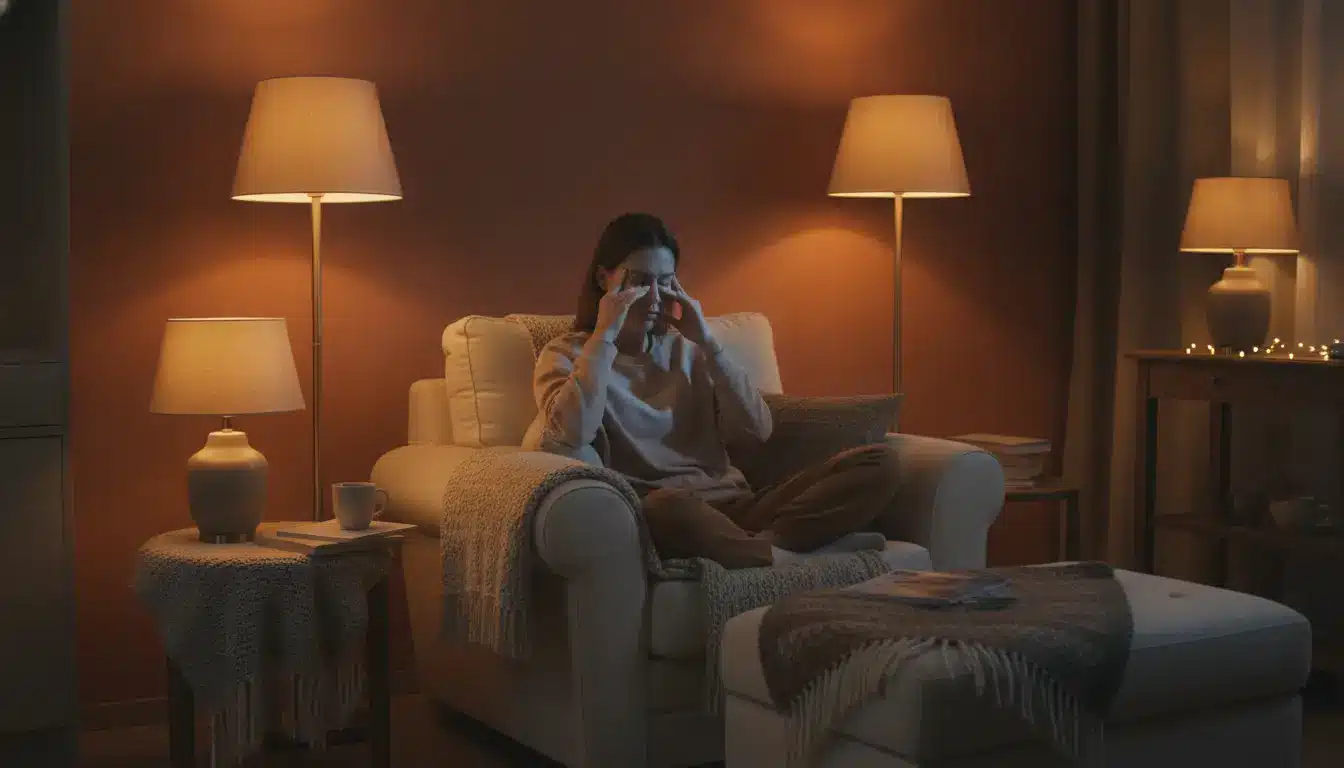
You chose the soft rug, the warm bulbs, the calming paint, and the curtains that filter the afternoon light exactly right. But by 8pm, your eyes still ache when you sit down to read. The room did its job. The problem is somewhere else.
Most home advice about rest stops at decor. Going one layer deeper is worth the trouble, because the fix people reach for first is rarely the one that solves it.
The Problem Often Isn’t the Room
Think about how a normal day loads your eyes. A phone check in bed at 7am. A laptop for the next several hours. A tablet at lunch, then back to the laptop. Then a phone again on the couch, in dimmer light, held closer than it should be. By the time you settle into your beautifully styled reading nook, your eyes have been working at close range for ten or twelve hours straight.
This kind of sustained near-focus strain has a name. Computer vision syndrome covers the cluster of dryness, blur, headaches, and tired eyes that follow long stretches on digital screens, and the American Optometric Association notes that the discomfort tends to climb the longer you’re on them.
The room you walk into after all that isn’t the cause. It’s where you finally notice.
Why the Obvious Decor Fix Only Goes So Far
The instinct is to redecorate your way out of it. Swap the harsh overhead for warm lamps. Add a dimmer, move the couch to catch north light, repaint in a softer white. All of it helps, and none of it is wasted.
But a room has a ceiling on how much it can do. A cozy corner can lower the demand on your eyes; it can’t correct how your eyes are focusing. If you’re squinting through an outdated prescription, fighting dry contacts after a long day, or holding a book six inches closer than you used to, even a well-chosen lamp can only carry so much of the load.
The lamp helps. Your eyes are still doing the hard part. That’s the honest answer people rarely say out loud. Styling a restful home is half the equation. The other half is the pair of eyes walking through it.
What Actually Makes a Home Feel Kind to Your Eyes
On the room side, the usual suspects still apply: layered warm lighting instead of one bright overhead, matte finishes that don’t bounce glare, a comfortable chair at a sensible distance from the book, and screens that aren’t the brightest thing going after dark. On the personal side, the list is shorter.
Get your prescription checked once a year has gone by. Take breaks during the day so the room isn’t inheriting ten straight hours of screen fatigue. And be honest about whether your glasses and contacts still fit the life you’re living now.
For some people, that last one opens a bigger conversation. If your contacts feel dry by dinner or your glasses keep slipping while you cook, procedures like LASIK are worth consideration. They aren’t a decor upgrade, but they can change how your eyes arrive in a room at the end of a long day. That belongs on the same shelf as the lamp choice, not a different one.
A Delightful Space Is a Comfortable One
A home that feels good to be in doesn’t ask anything extra of you. The paint, the lamps, the soft chair in the corner set the stage. What makes the whole thing land is walking into it with eyes that aren’t already worn out.
Treat the room and the eyes as one project instead of two, and the difference at 9pm is hard to miss.