How to Remove Pen Ink from Clothes After Drying Without Damaging

Dried pen ink is one of the trickier stains to deal with. Heat from the dryer bonds ink to fabric fibers, which makes it harder to lift than a fresh stain. But in most cases, the right product and a little patience can still save the garment.
This article covers five tested methods. It also explains what works for each ink type and how to match the treatment to your fabric.
What to Check Before You Start Treating the Stain
Jumping into treatment without checking a few things first can make the stain worse. Take a minute to do this before you open any cleaning products:
- Read the garment care label to know which temperatures and products are safe to use
- Identify the fabric type, since delicate fabrics like silk and wool need a much gentler approach
- Check the ink type, because ballpoint, gel, permanent marker, and water-based inks each respond differently
- Test every cleaning product on a hidden area first to make sure it does not fade or damage the fabric
- Do not put the garment back in the dryer until the stain is completely gone
How to Remove Pen Ink from Clothes After Drying: 5 Methods
Not all ink stains respond the same way. The fabric also changes what will work. Start with Method 1 and only move to the next if the stain remains. Each method includes what you need, how to use it, and a tip to help you get better results.
Method 1: Rubbing Alcohol
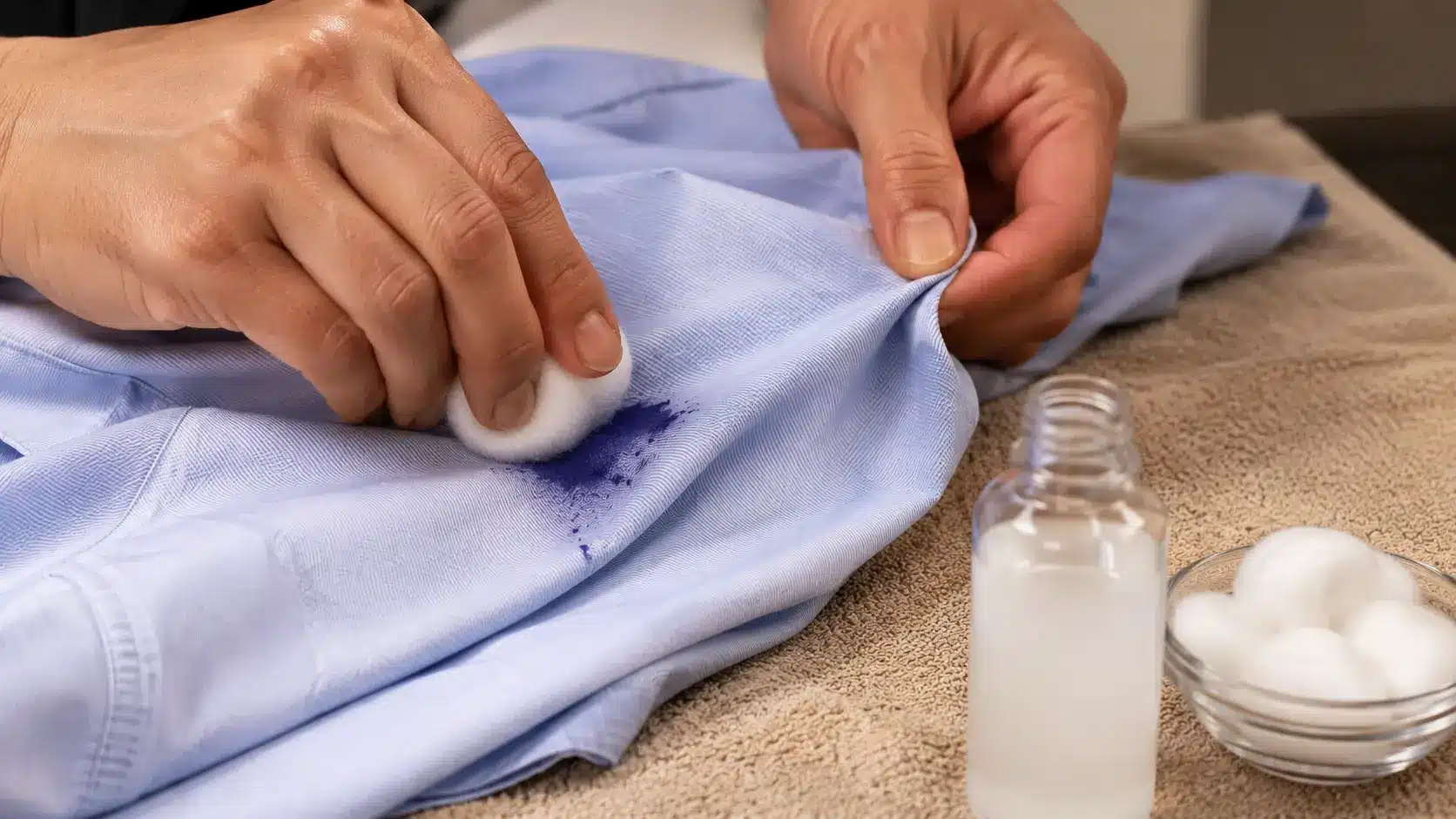
Best for: Cotton, denim, polyester, and most everyday fabrics
What you need:
- Isopropyl rubbing alcohol (70% or higher)
- Cotton balls or a clean white cloth
- An old white towel
- Liquid laundry detergent
Steps:
- Lay the garment flat and slide the old towel underneath the stained area
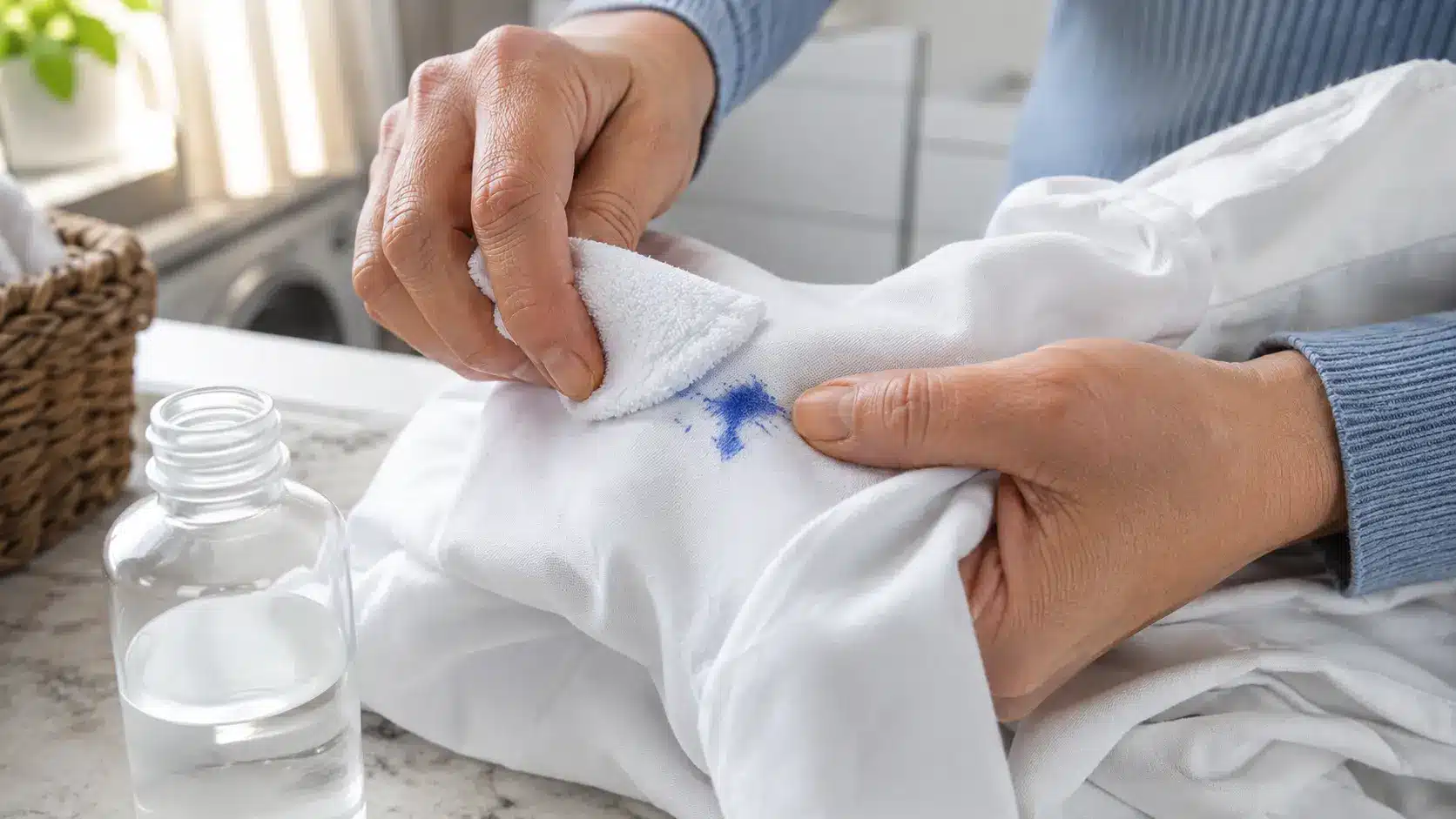
- Soak a cotton ball in alcohol and press it onto the stain without rubbing
- Blot from the outer edge toward the center to stop the stain from spreading
- Swap to a fresh cotton ball every time the old one picks up ink
- Once the stain fades, apply a small amount of liquid detergent directly onto it
- Leave the detergent on for 10 to 15 minutes, then rinse with cool water
- Wash at the temperature shown on the care label
- Hang to air-dry and check the stain before the garment touches any heat source
Tip: For stains that went through the dryer, soak the area in alcohol for 5 minutes before blotting. The extra contact time helps loosen ink bonded deep into the fibers.
Method 2: Dish Soap and Baking Soda Paste
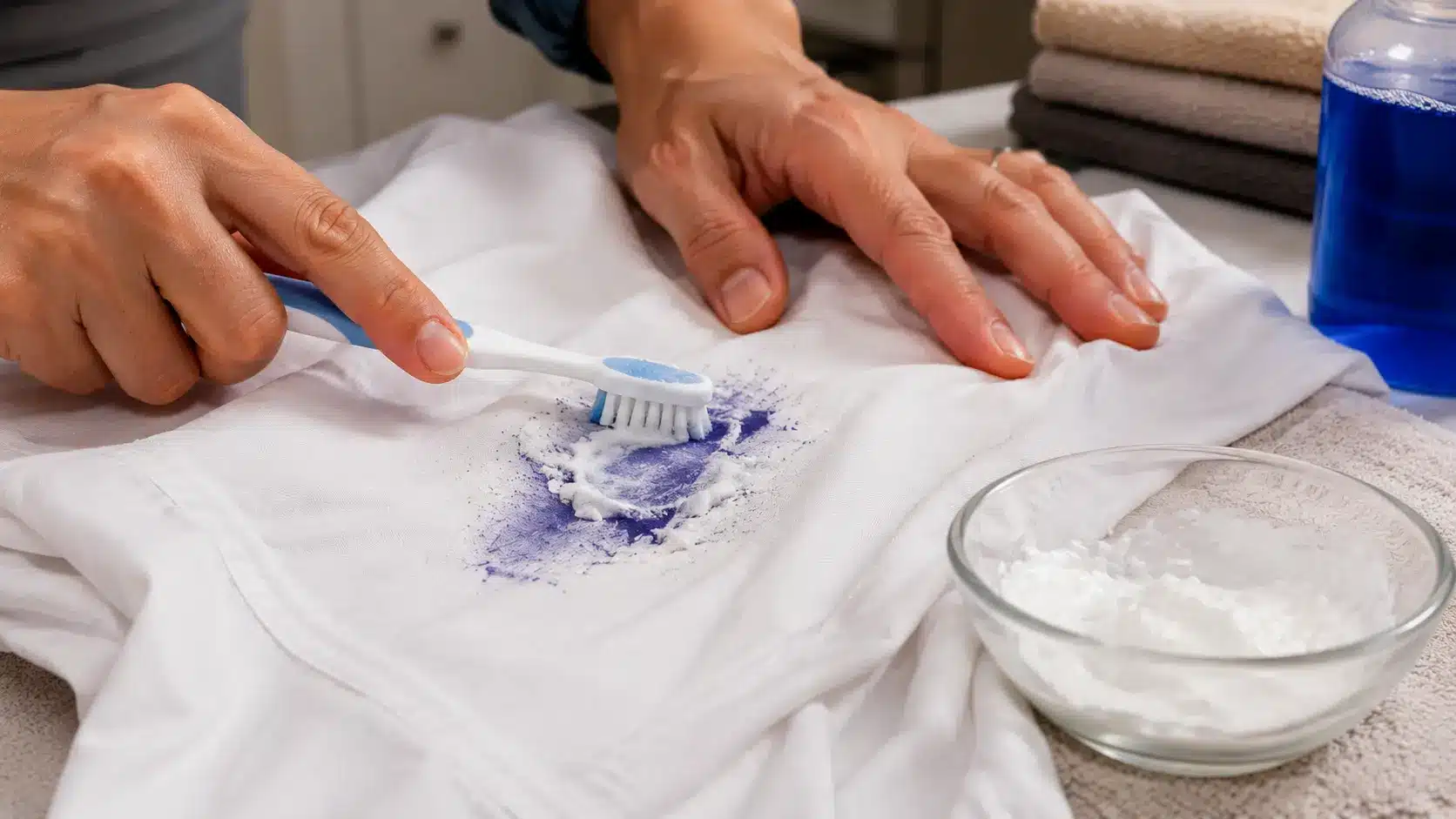
Best for: Thick dried ink on cotton, linen, and colorfast fabrics
What you need:
- Dish soap
- Baking soda
- Soft-bristled toothbrush
- Cool water
Steps:
- Mix one part dish soap with two parts baking soda until it forms a thick paste
- Spread the paste onto the dried ink stain and press it in lightly
- Leave it for 20 minutes so it can work into the stain
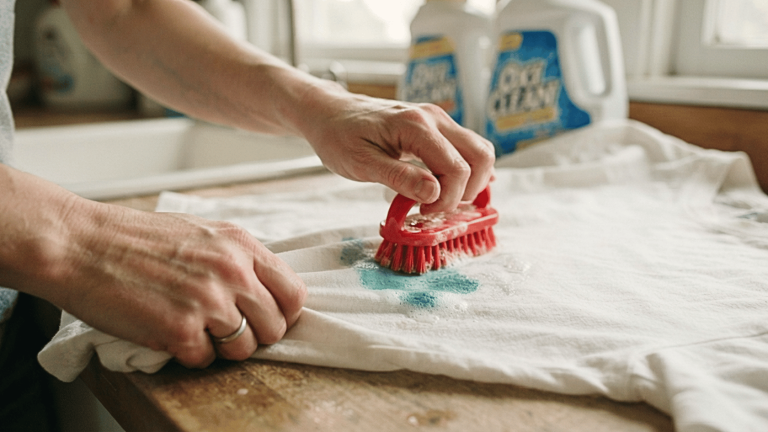
- Use the toothbrush to scrub gently in short strokes along the fabric grain
- Rinse with cool water and check how much ink has lifted
- Repeat once more if the stain is still holding on
- Wash normally and air-dry completely before checking the result
Tip: Baking soda acts as a mild abrasive that lifts ink particles. Dish soap breaks down the oil base. Together they go after the stain from two angles at once.
Method 3: Hand Sanitizer
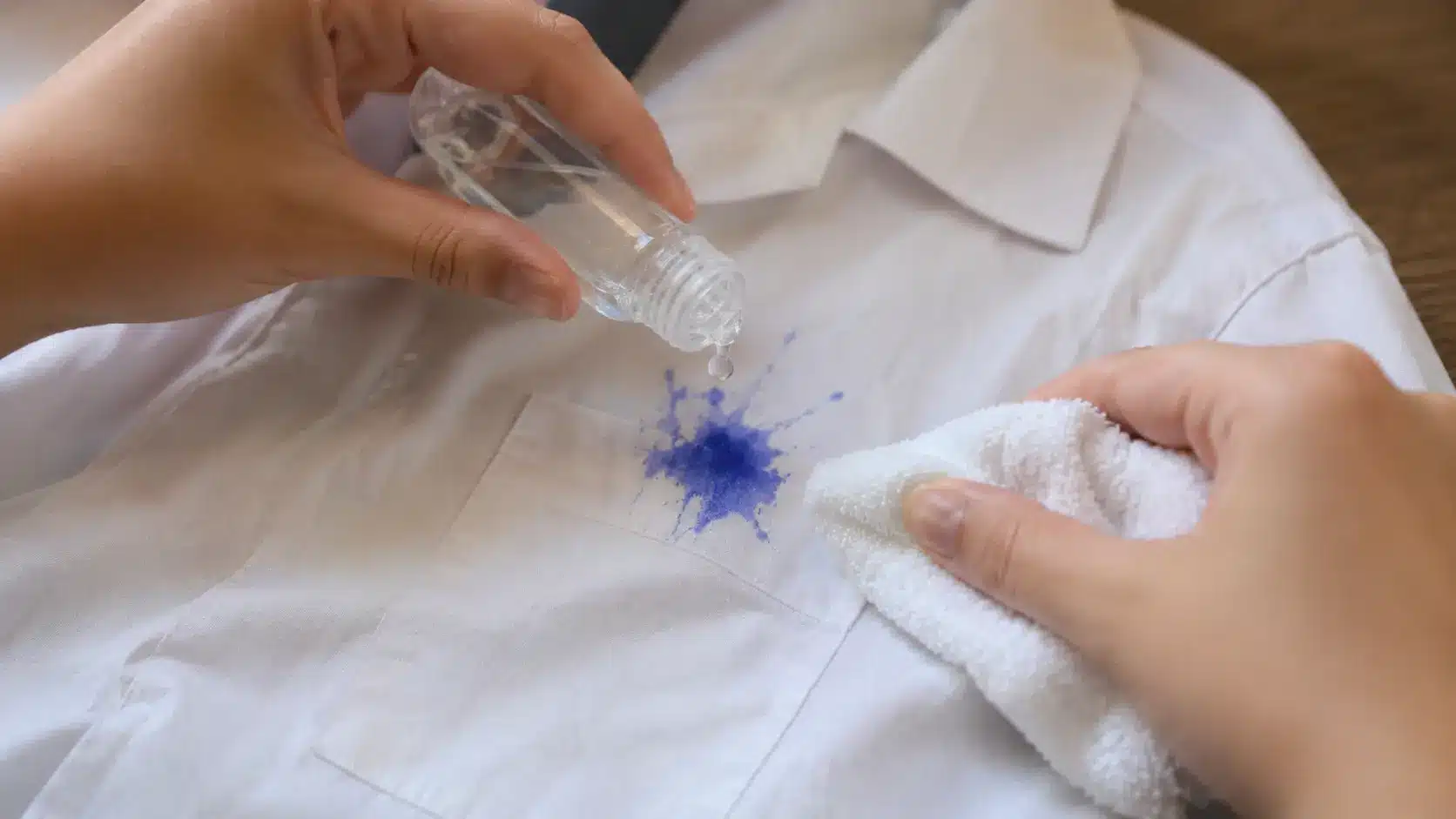
Best for: Ballpoint pen ink on polyester, blends, and school uniforms
What you need:
- Alcohol-based hand sanitizer
- Liquid laundry detergent
- Clean white cloth
- Cool water
Steps:
- Squeeze a small amount of hand sanitizer onto the stain and spread it evenly
- Wait 5 minutes for the alcohol to start breaking the ink bond
- Press a clean white cloth firmly onto the stain and blot without scrubbing
- Reapply sanitizer and keep blotting until the stain starts to lift
- Work liquid detergent into the area and leave it for 10 minutes
- Rinse with cool water, then run the garment through a normal wash cycle
- Air-dry fully before inspecting, since wet fabric can hide how much ink remains
Tip: Hand sanitizer works best on stains that have not gone through multiple dryer cycles. For older, heat-set stains, use Method 1 first and follow up with this as a second pass.
Method 4: White Vinegar Soak
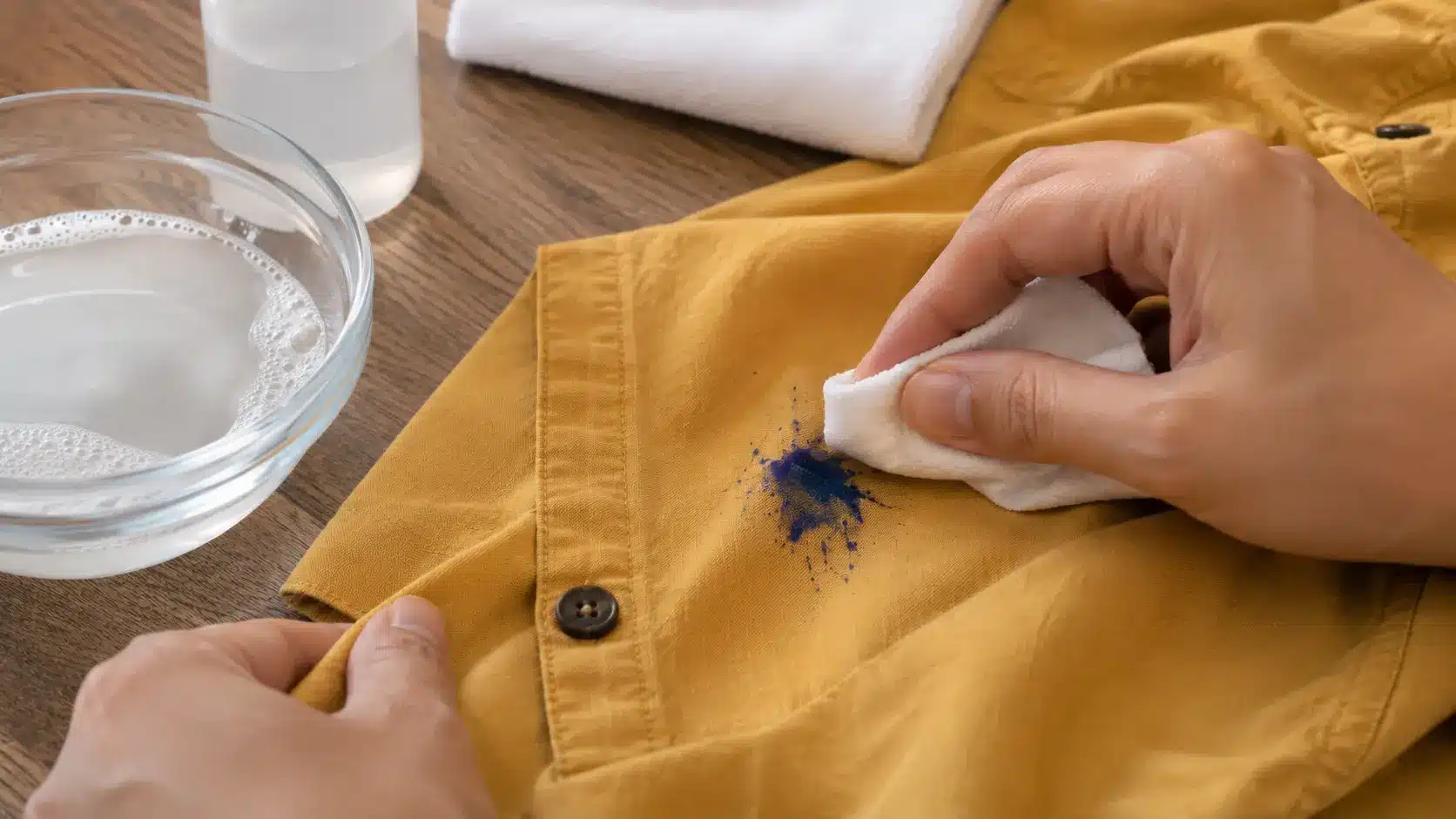
Best for: Colored garments, water-based ink, and fabrics sensitive to alcohol
What you need:
- White vinegar
- Dish soap
- Small bowl
- Clean white cloth
- Cool water
Steps:
- Mix two parts white vinegar with one part dish soap in a small bowl
- Dip a clean cloth into the mixture and dab it directly onto the ink stain
- Let the solution sit on the stain for 15 minutes without rubbing
- Press a dry cloth onto the area and lift gently to pull ink off the fabric
- Rinse with cool water to remove the solution completely
- Check if the stain has lightened and repeat if needed before washing
- Wash on a gentle cycle and air-dry flat to protect the fabric shape
Tip: White vinegar is acidic enough to break down water-based inks without stripping color. If you are unsure whether your fabric is colorfast, this is the safest method to start with. The same spot-test-first approach used for cleaning white upholstery applies here too.
Method 5: Commercial Stain Remover
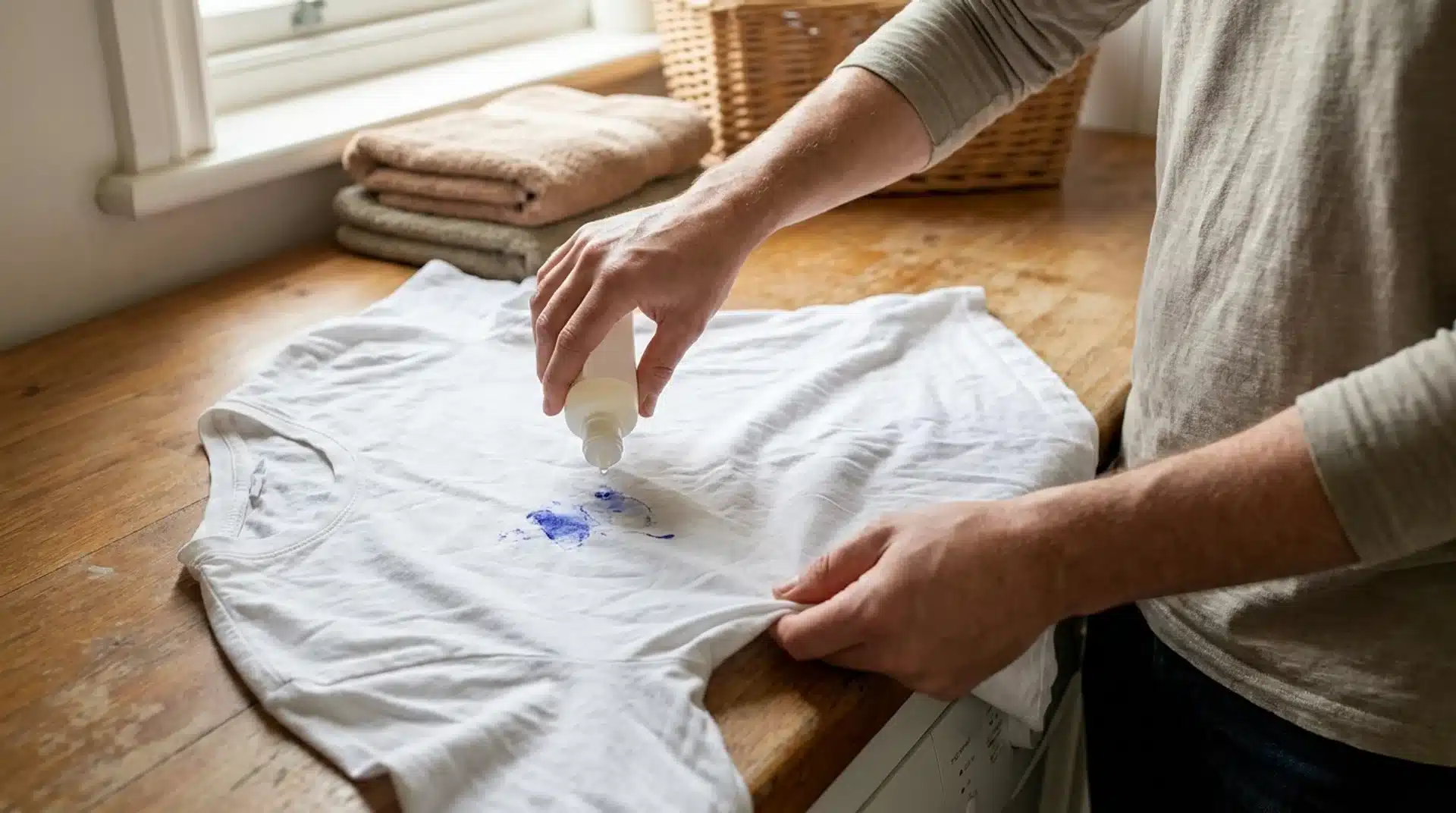
Best for: Permanent marker, gel pen ink, and stains that have been through the dryer more than once
What you need:
- Ink-specific commercial stain remover
- Clean white cloth
- Paper towels
- Cool water
- Liquid laundry detergent
Steps:
- Read the product label fully before applying anything to the fabric
- Test the remover on a hidden seam or inner hem and wait 5 minutes before proceeding
- Apply the remover directly onto the stain per the product instructions
- Place paper towels underneath to absorb ink as it lifts
- Leave for the recommended time, usually 5 to 10 minutes
- Blot with a clean white cloth without scrubbing
- Rinse thoroughly with cool water to remove all product residue
- Wash normally and air-dry before checking the final result
Tip: Enzyme-based removers work better on dried ink than standard spot treatments. They break down ink at a molecular level rather than just lifting the surface layer.
Which Method Works for Each Ink Type
Using the wrong method on the wrong ink type can make the stain harder to remove. Here is what works best for each:
| Ink Type | Best Starting Method | Notes |
|---|---|---|
| Ballpoint pen ink | Rubbing alcohol or hand sanitizer | Oil-based ink; follow up with liquid laundry detergent |
| Gel pen ink | Dish soap and cool water | Move to rubbing alcohol only if the stain is still visible after the first pass |
| Permanent marker | Rubbing alcohol, repeated rounds | One of the harder stains; expect multiple treatments |
| Water-based ink | Liquid laundry detergent and warm water | The easiest to remove; often lifts with detergent alone |
How Bad Is Your Stain? A Visual Breakdown
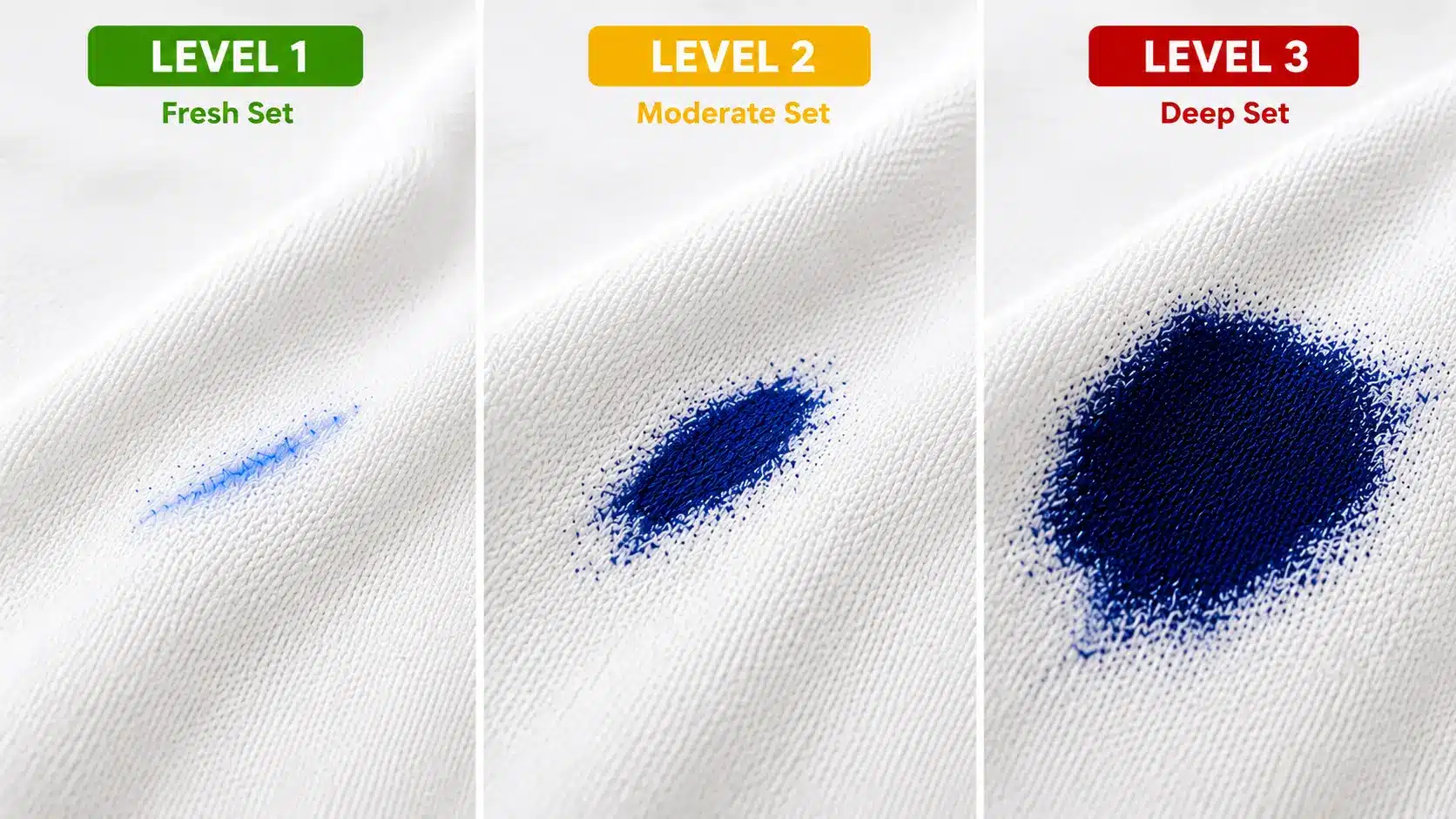
Knowing where your stain falls helps you pick the right method without wasting time on treatments that will not work.
| Stain Level | What It Looks Like | Time in Dryer | Best Method |
|---|---|---|---|
| Level 1: Fresh Set | Light mark, soft edges | One cycle | Method 1 or Method 3 |
| Level 2: Moderate Set | Darker mark, slightly stiff fabric | One to two cycles | Method 2 or Method 4 |
| Level 3: Deep Set | Bold dark stain, fabric feels stiff | Multiple cycles | Method 5 or professional cleaning |
| Level 4: Spread Stain | Ink has bled outward beyond the original spot | Any | Professional cleaning only |
A Level 1 stain might lift in one session. A Level 3 stain may need two or three passes with a stronger method. If the ink has spread outward like Level 4, take the garment to a dry cleaner before more heat or water makes it worse.
How to Remove Dried Ink From Different Fabrics
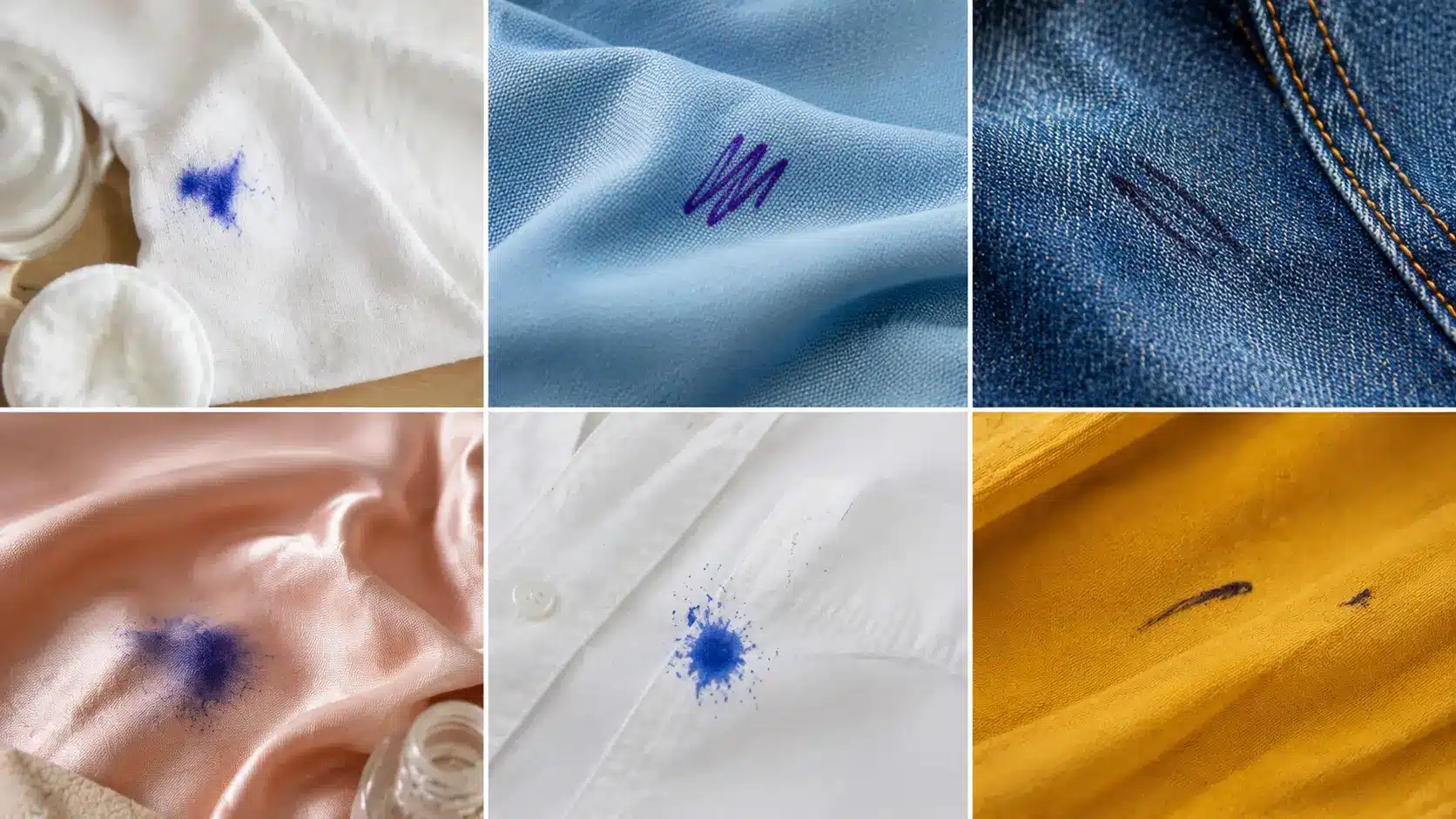
The method that works on denim can ruin silk. Before you apply anything, identify your fabric type so you treat it the right way the first time.
1. Cotton and Linen
Both fabrics usually tolerate rubbing alcohol well. Always test on a hidden seam before treating the stain directly.
2. Polyester and Synthetic Blends
Use a small amount of alcohol and work gently. Aggressive scrubbing can distort or pill synthetic fibers.
3. Denim
Blot repeatedly with rubbing alcohol, apply liquid detergent, and wash the jeans inside out. Inside-out washing protects the color and surface finish.
4. Wool and Silk
Skip DIY treatments for these fabrics. Blot gently with a damp cloth to lift any surface residue. Then take the garment to a professional dry cleaner as soon as possible.
5. White Clothes
After treating with alcohol and detergent, an oxygen-based stain remover can help lift remaining discoloration, as long as the care label allows it.
6. Colored Clothes
Always test for colorfastness before using alcohol, vinegar, or commercial products. Apply a small amount to an inside seam and wait a few minutes before checking for any color change.
Mistakes That Make the Stain Worse
The first time I tackled a dried ink stain, I rubbed hard with a damp cloth and turned a small mark into a wide smear. Blotting pulls ink out. Rubbing drives it deeper.
I also rinsed under warm water too soon, which set the stain darker. Use cool water only until the ink has fully lifted. And do not reach for two products at once; mixing chemicals can discolor fabric and create fumes.
One mistake that cost me a shirt: I grabbed a colored towel to blot and ended up transferring dye onto the fabric. Always use white. The other one I still regret is putting the garment back in the dryer before fully checking. The heat locked in the last bit of ink, and it never came out.
Removing Pen Ink from Clothes After Drying
Removing dried pen ink from clothes takes patience, the right product for the ink type, and a commitment to blotting rather than rubbing.
Start with the gentlest method that suits your fabric, treat it properly, then air-dry and check before exposing the garment to any more heat.
If one round does not fully remove the stain, repeat the process rather than reaching for a stronger chemical. Most stains respond to persistence more than to force.
Frequently Asked Questions
Can Dettol remove ink stains from clothes?
Dettol is not designed as a fabric stain remover and may discolor or damage some materials. Use rubbing alcohol or a commercial ink stain remover after first testing on a hidden area of the garment.
What is the best stain remover for pen ink?
Rubbing alcohol or an alcohol-based ink stain remover works well on most washable fabrics. Apply it gently, blot the stain from the outside inward, and follow with liquid laundry detergent before washing.
What dissolves pen ink on fabric?
Rubbing alcohol, alcohol-based hand sanitizer, and commercial ink removers can break down many types of pen ink. The best choice depends on the ink and fabric type, so always spot-test first.
Can you remove ink stains after they have dried and been washed?
Yes, though it takes more effort. Heat-set stains require stronger products or repeated treatments. Start with rubbing alcohol and work up to a commercial enzyme-based remover if needed.
Will vinegar remove ink from clothes?
White vinegar works well on water-based inks and colored garments that are sensitive to alcohol. It is less effective on oil-based ballpoint or permanent marker ink. Mix with dish soap and blot rather than rub.
Does hand sanitizer remove dried ink stains?
Hand sanitizer with a high alcohol content can lift ballpoint pen ink from polyester and blended fabrics. It works best on stains that have not gone through multiple dryer cycles.