13 Best Indoor Houseplants for Cleaner Air and Healthier Rooms

Your home holds more than furniture and family. Everyday products like carpets, paint, and pressed wood release compounds into the air you breathe.
You spend most of your time indoors. The EPA estimates indoor air can be 2 to 5 times more polluted than outdoor air. That makes what is floating in your air worth thinking about.
Indoor plants are one of the most talked-about options for healthier indoor spaces. Some people add them for greenery. Others want plants that clean the air. Both are fair reasons to start growing.
This post covers the best indoor plants for air quality. You will find information on care level, lighting, pet safety, and room placement for each one.
Can Indoor Plants Clean Your Air?
Yes, but only within limits.
In 1989, NASA scientists showed that plants can absorb certain airborne compounds, including formaldehyde, benzene, and trichloroethylene, under controlled lab conditions.
Those were sealed test chambers, though. Your living room works very differently.
However, Iowa State University Extension points out that the controlled testing environment does not directly translate to real-world indoor conditions.
The dynamics of indoor air quality are far more complex. Meaning that:
Indoor plants may help support indoor air quality, but they cannot replace an air purifier or proper ventilation.
Think of plants as a helpful addition to your space. They work best when paired with good ventilation, regular cleaning, and HVAC filtration. They are not a substitute for those things.
What Are VOCs?
VOCs, or volatile organic compounds, are gases released by common household products. Paint, pressed wood furniture, carpet, and cleaning sprays all emit them. At low levels, they cause little harm.
At higher concentrations, they can irritate the eyes, throat, and lungs. Formaldehyde, benzene, and trichloroethylene are the most common VOCs found in home air. The plants on this list target these specific compounds.
13 Best Indoor Plants for Air Quality
Below are 13 plants that support cleaner indoor spaces, chosen for their ease of care, light needs, and how well each fits real homes across the US.
1. Snake Plant (Sansevieria)
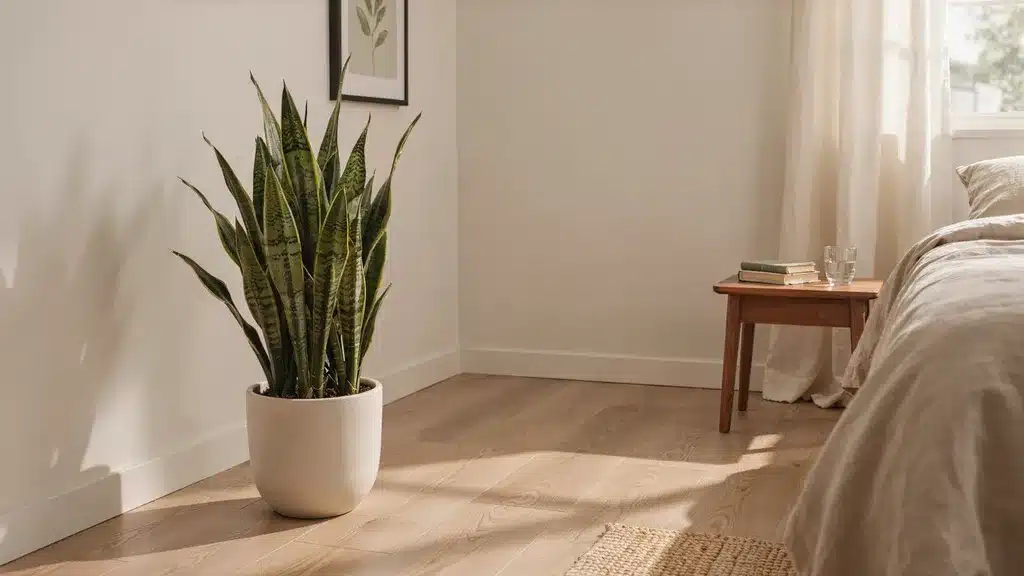
- Air quality benefit: Absorbs formaldehyde and nitrogen oxides
- Light: Low to bright indirect light
- Care level: Beginner
- Best room: Bedroom
- Pet safety: Toxic to pets if eaten
The snake plant is one of the most forgiving plants you can grow indoors. It handles low light and needs watering only every two to three weeks.
It works especially well in bedrooms because it continues releasing oxygen during the night.
2. Spider Plant (Chlorophytum comosum)
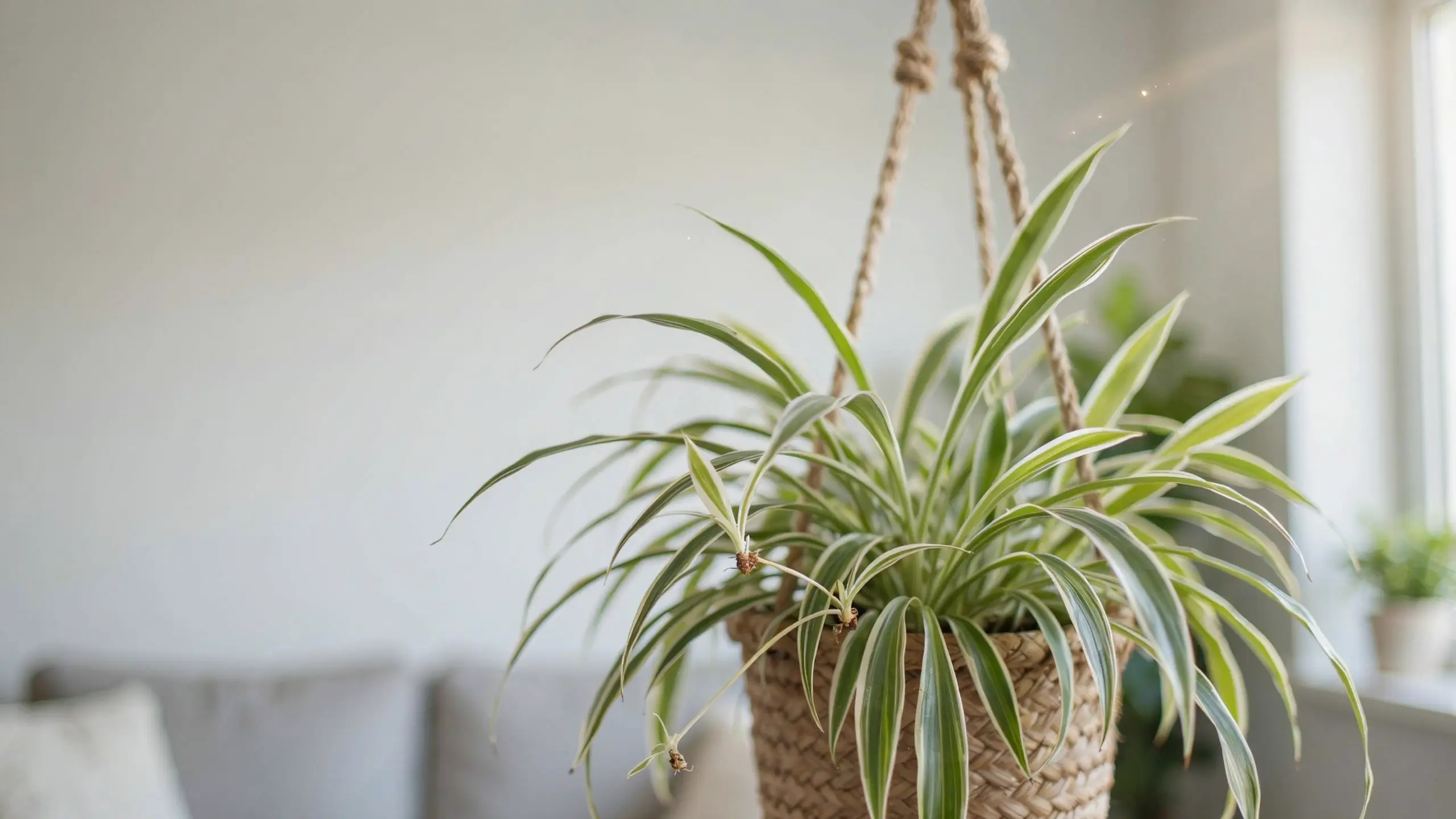
- Air quality benefit: Absorbs formaldehyde and carbon monoxide
- Light: Bright indirect light
- Care level: Beginner
- Best room: Living room, bedroom
- Pet safety: Non-toxic to cats and dogs
Spider plants grow quickly and propagate easily. They look great in hanging baskets. New plant owners love them because they bounce back quickly from small care mistakes.
3. Peace Lily (Spathiphyllum)
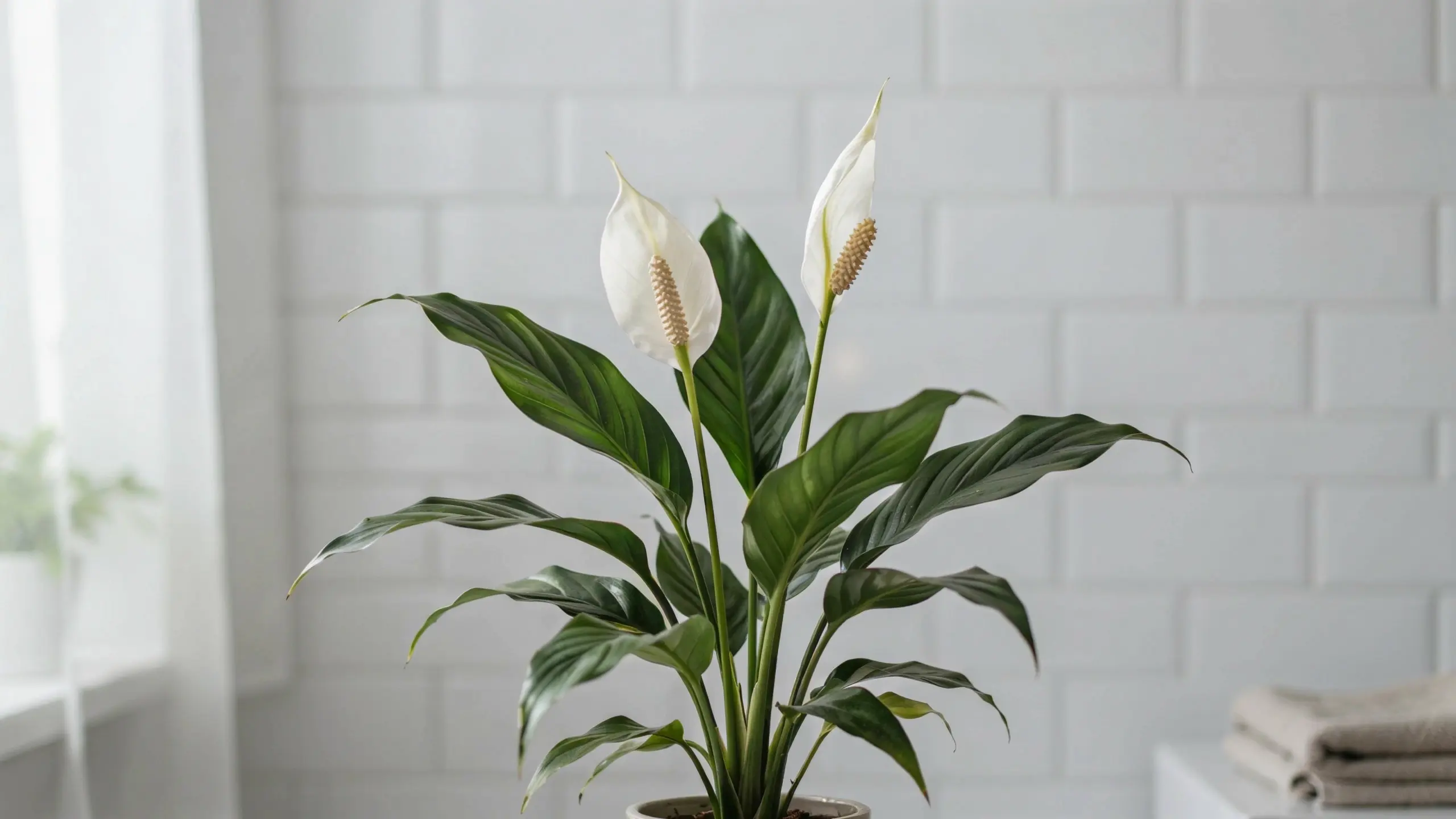
- Air quality benefit: Absorbs benzene, formaldehyde, and ammonia
- Light: Low to medium indirect light
- Care level: Moderate
- Best room: Bathroom, bedroom
- Pet safety: Toxic to pets
Peace lilies prefer humid spaces, so bathrooms with natural light are a good match.
They produce white flowers and droop slightly when thirsty, making watering straightforward. Keep them out of reach of cats and dogs.
4. Golden Pothos (Epipremnum aureum)
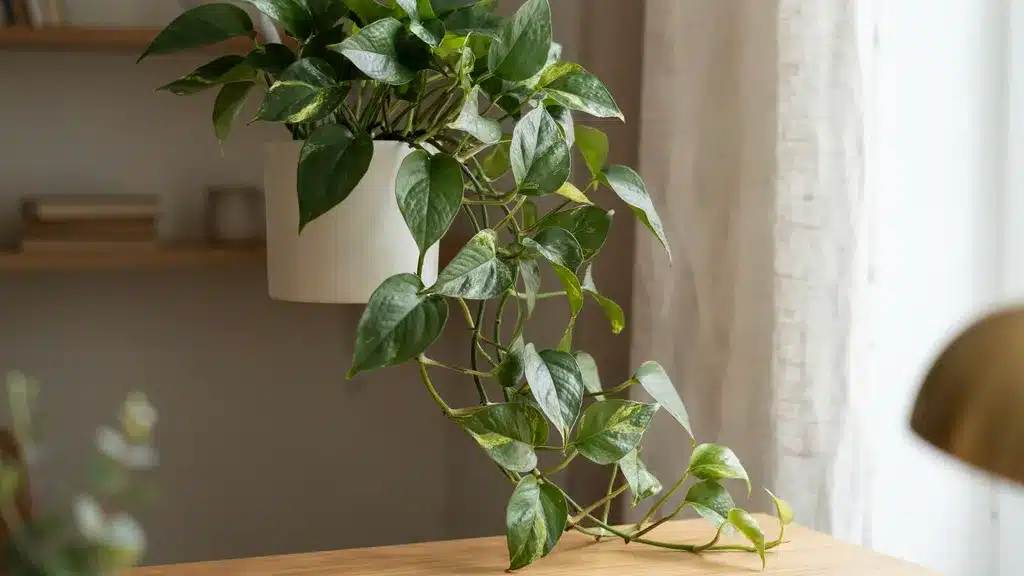
- Air quality benefit: Absorbs formaldehyde, benzene, and xylene
- Light: Low to bright indirect light
- Care level: Beginner
- Best room: Office, shelves
- Pet safety: Toxic if eaten by pets
Pothos is one of the easiest houseplants you can grow. It tolerates low light and recovers well from missed watering.
Darker leaves signal it needs less light. Place it on a high shelf or let it trail from a hanging basket.
5. ZZ Plant (Zamioculcas zamiifolia)
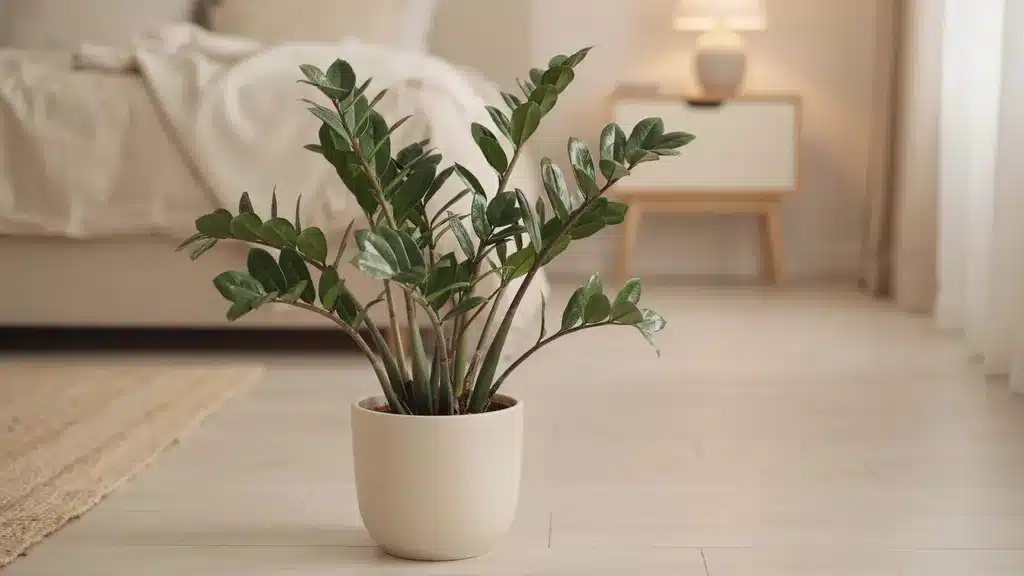
- Air quality benefit: Absorbs airborne toxins in indoor spaces
- Light: Low to medium indirect light
- Care level: Beginner
- Best room: Office, bedroom
- Pet safety: Toxic to pets
The ZZ plant is built for neglect. It stores water in its thick roots and handles drought well. It thrives in darker rooms, which makes it a reliable office plant.
6. Aloe Vera
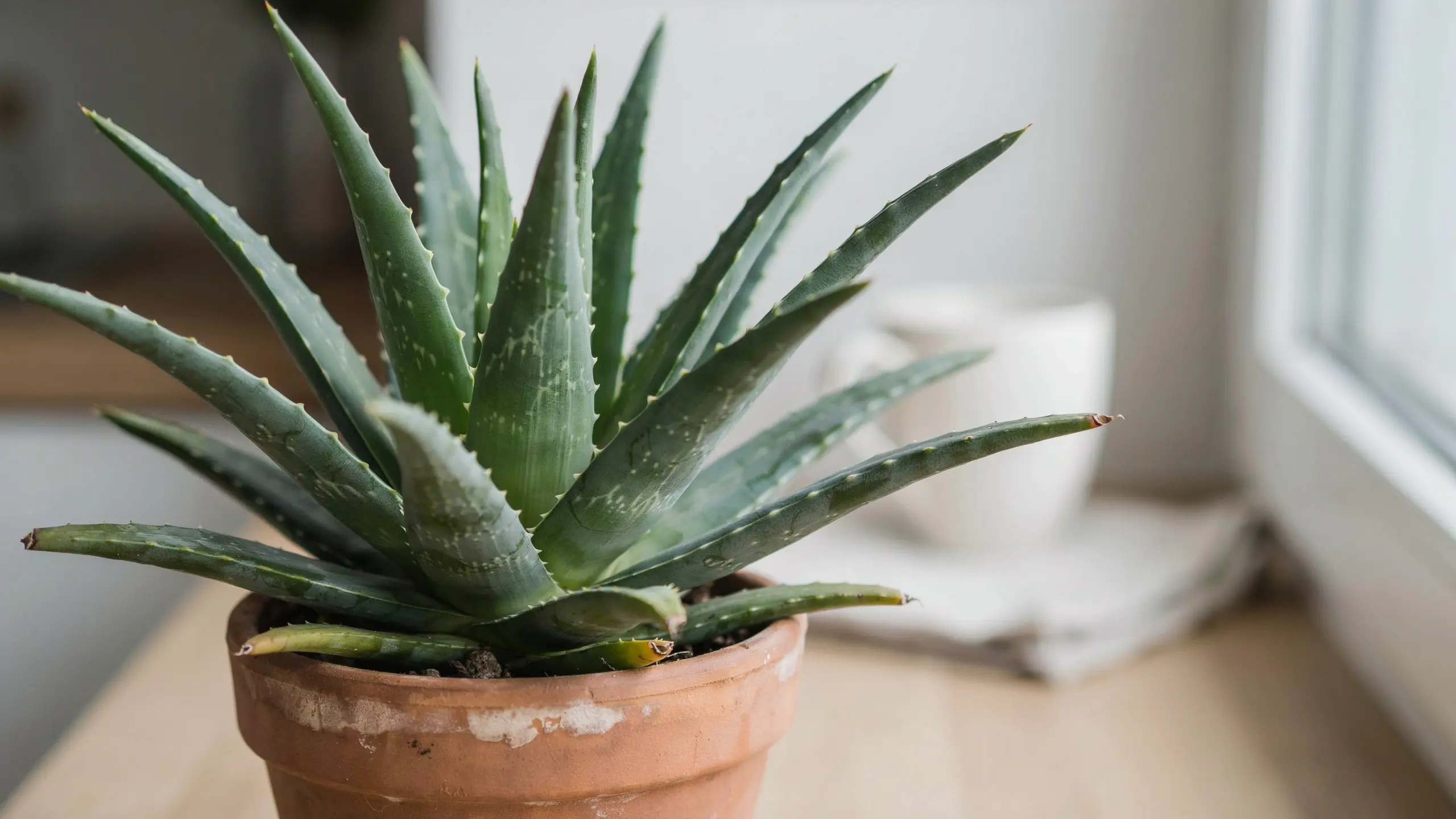
- Air quality benefit: Absorbs formaldehyde and benzene
- Light: Bright, direct, or indirect light
- Care level: Easy
- Best room: Kitchen, windowsill
- Pet safety: Toxic to pets
Aloe vera is compact and useful. The clear gel inside the leaves can soothe minor skin burns. It needs bright light and very little water, so a sunny kitchen windowsill suits it well.
7. Boston Fern (Nephrolepis exaltata)
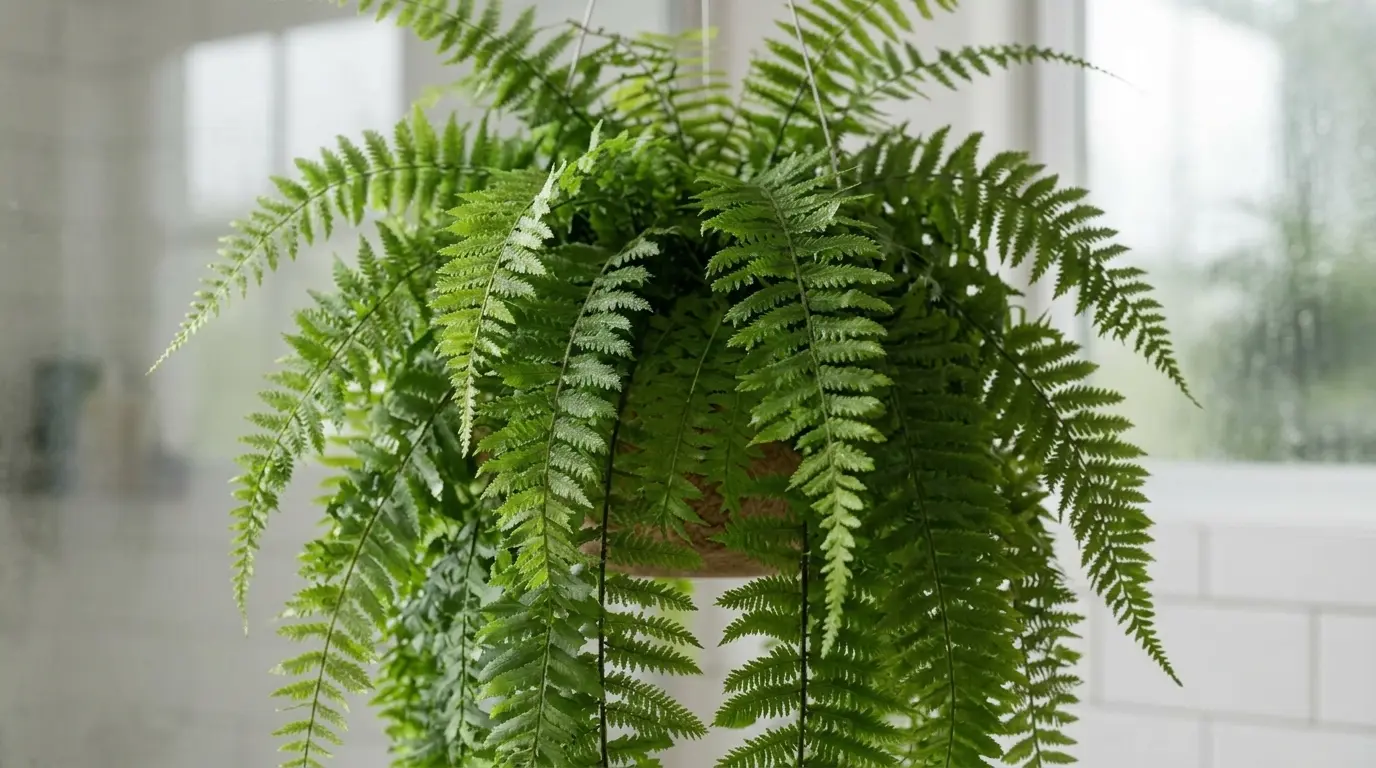
- Air quality benefit: Absorbs formaldehyde and xylene
- Light: Bright indirect light
- Care level: Moderate
- Best room: Bathroom, kitchen
- Pet safety: Safe for cats and dogs
Boston ferns love humidity. A bathroom with a window is a great spot for them. Keep the soil consistently moist and mist the leaves regularly.
This is one of the better pet-safe choices on this list.
8. Bamboo Palm (Chamaedorea seifrizii)
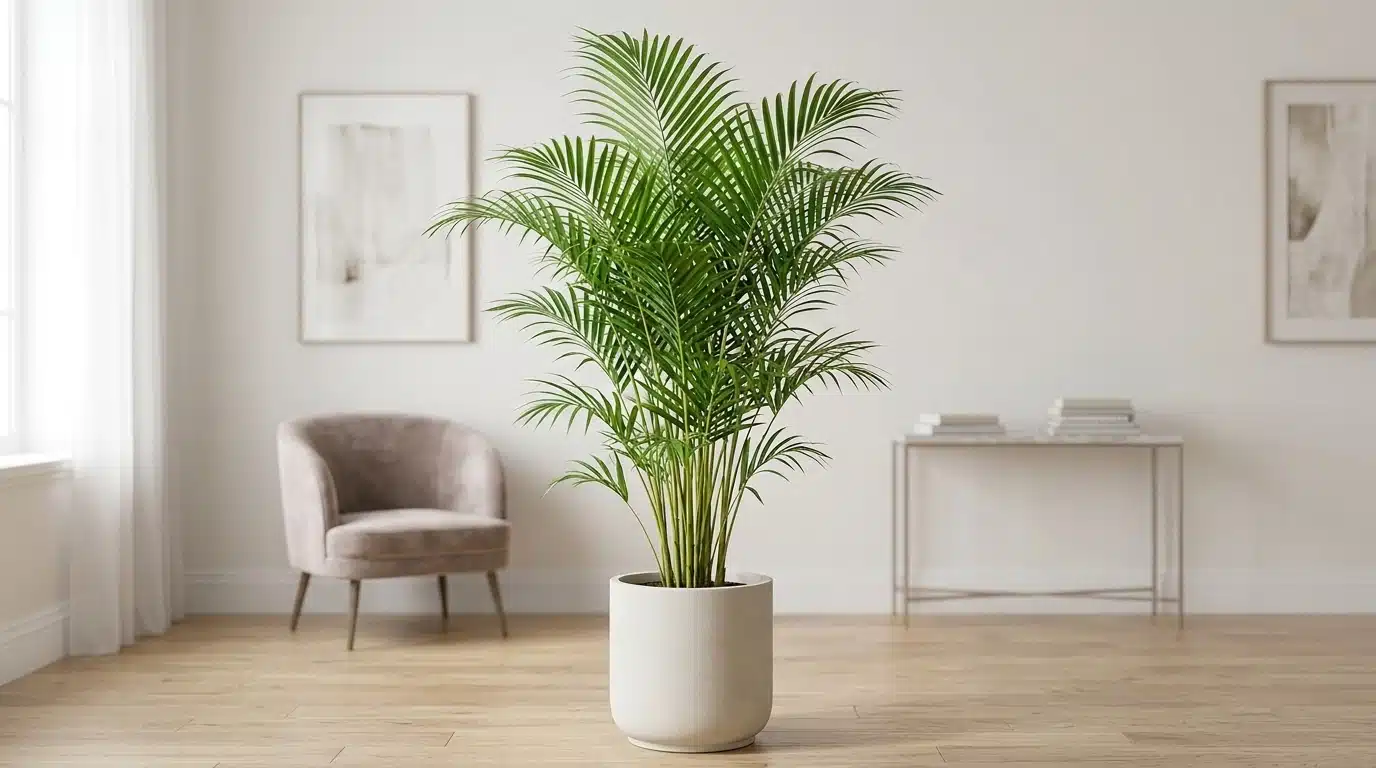
- Air quality benefit: Absorbs formaldehyde, benzene, and trichloroethylene
- Light: Bright indirect light
- Care level: Moderate
- Best room: Living room, entryway
- Pet safety: Safe for cats and dogs
The bamboo palm adds a tropical look to larger spaces. It grows several feet tall and works best as a floor plant in a well-lit room.
It is one of the few large plants that is safe for homes with pets.
9. Rubber Plant (Ficus elastica)
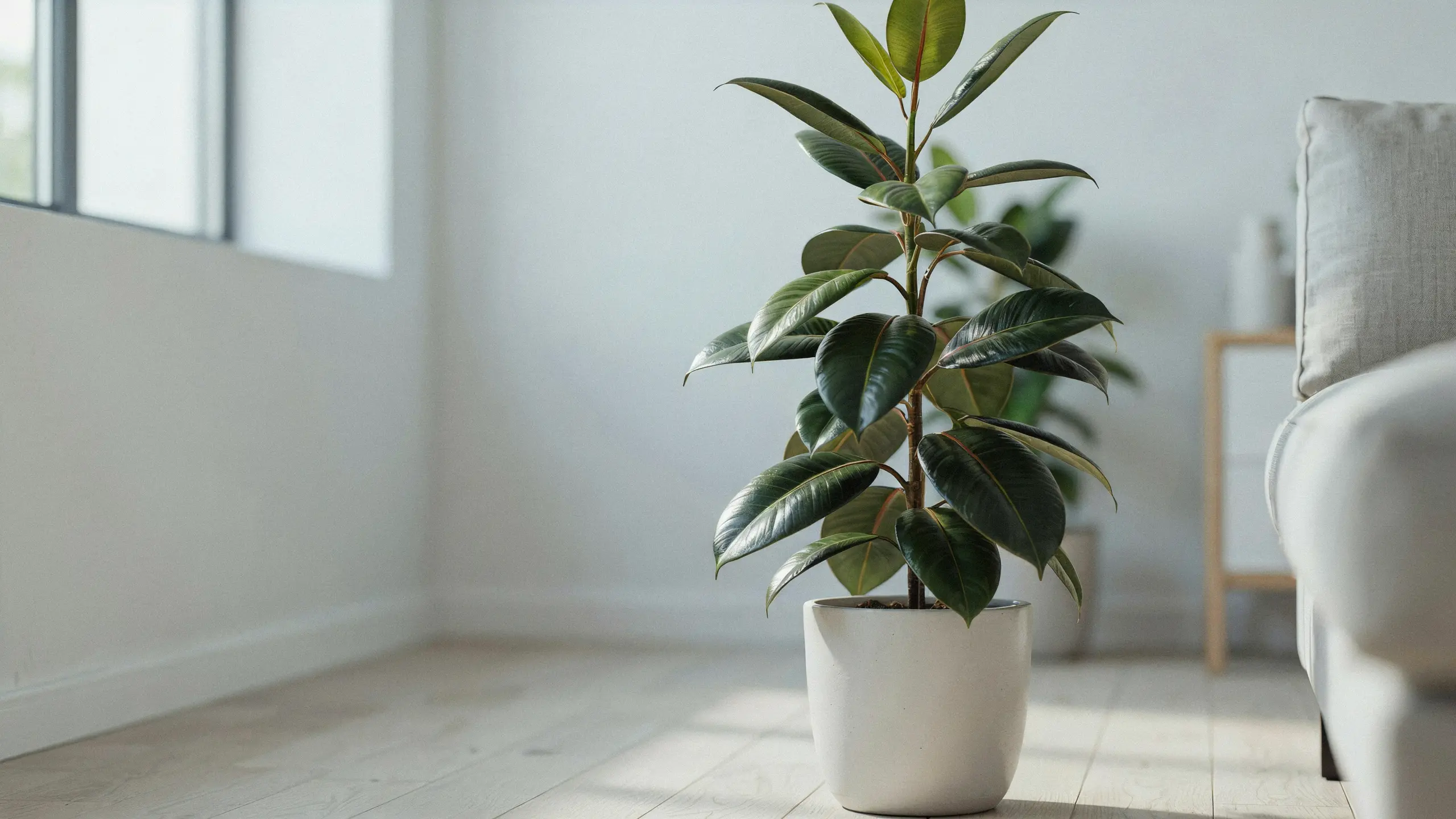
- Air quality benefit: Absorbs formaldehyde
- Light: Bright indirect light (avoid direct sun)
- Care level: Easy
- Best room: Living room, office
- Pet safety: Toxic to pets
The rubber plant has broad, glossy leaves and tolerates dimmer rooms well. Water it every one to two weeks.
It is a low-maintenance option for anyone who wants a large-leaf plant without high effort. It fits well in a small living room as a statement piece on the floor.
10. Dracaena (Dracaena fragrans)
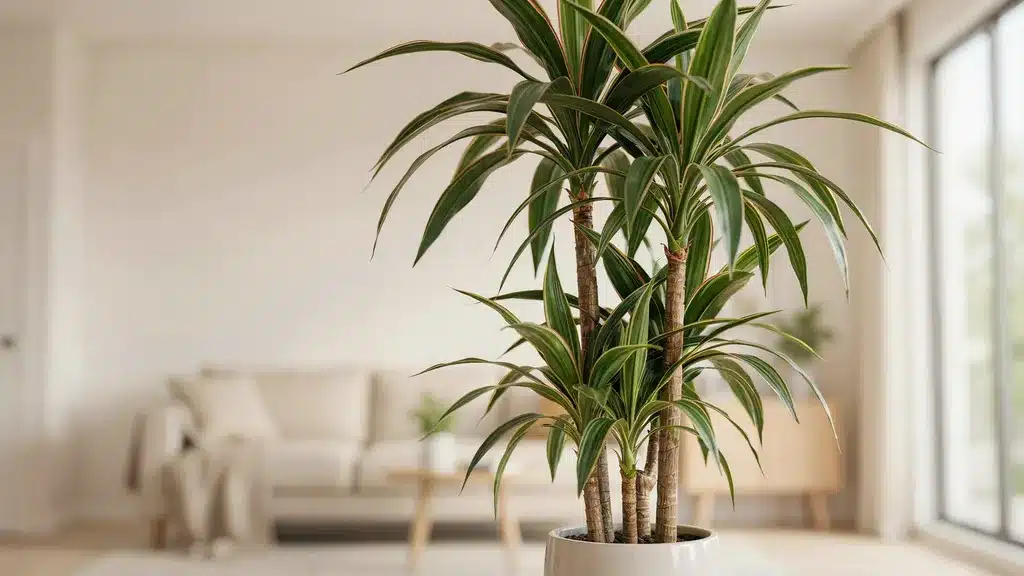
- Air quality benefit: Absorbs trichloroethylene and formaldehyde
- Light: Low to medium indirect light
- Care level: Easy
- Best room: Office, living room
- Pet safety: Toxic to pets
Dracaena, also called the corn plant, tolerates low light and can grow quite tall over time.
It is popular in offices because it handles periods of little care. A good pick for beginners who want a statement plant.
11. English Ivy (Hedera helix)
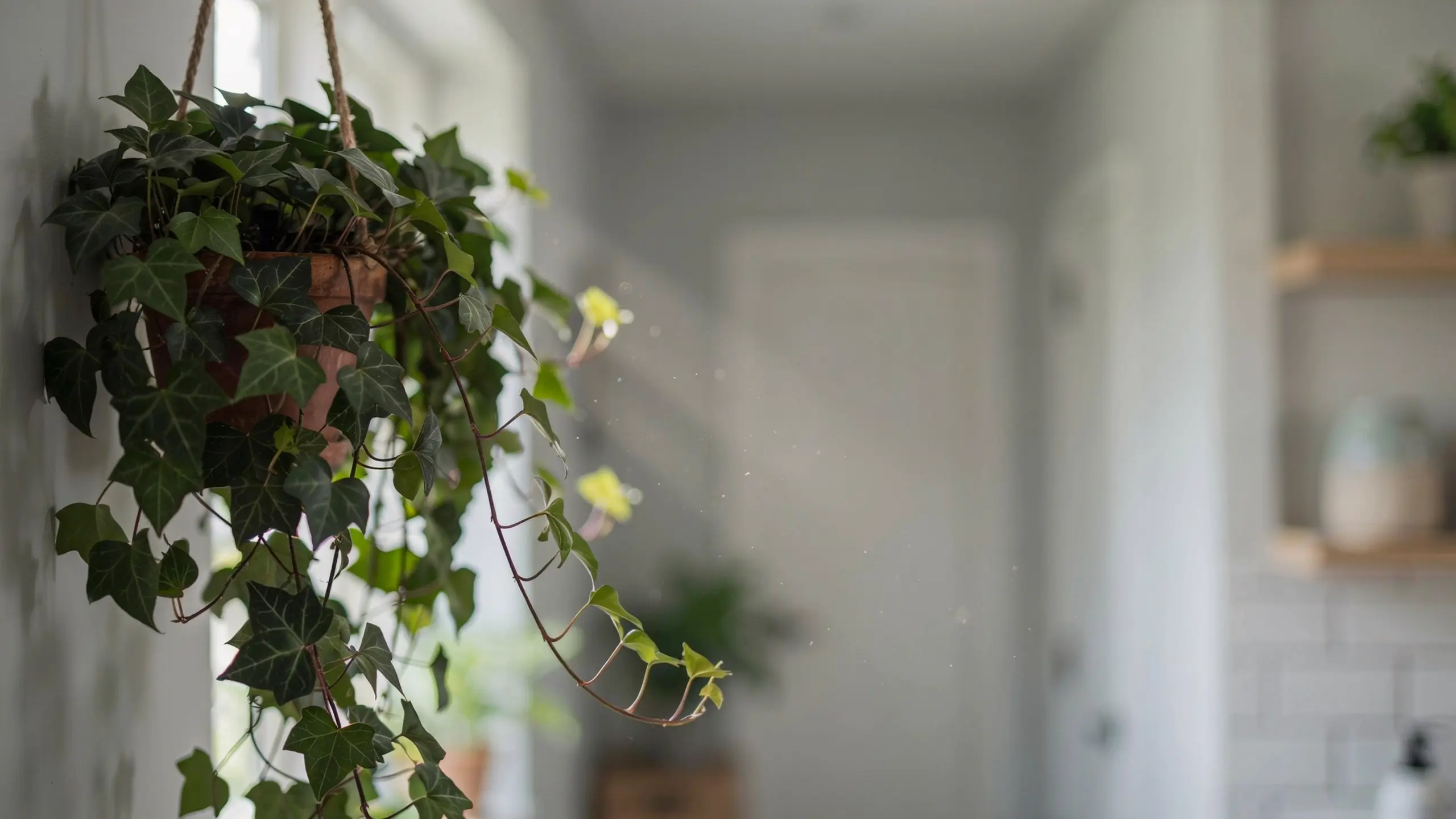
- Air quality benefit: Absorbs formaldehyde and benzene
- Light: Bright indirect to moderate light
- Care level: Moderate
- Best room: Bathroom, kitchen, elevated spaces
- Pet safety: Toxic to pets if chewed
English ivy trails well and looks attractive in hanging baskets or on high shelves.
It prefers cooler spots and good airflow, but can be more prone to spider mites than other plants on this list.
12. Areca Palm (Dypsis lutescens)
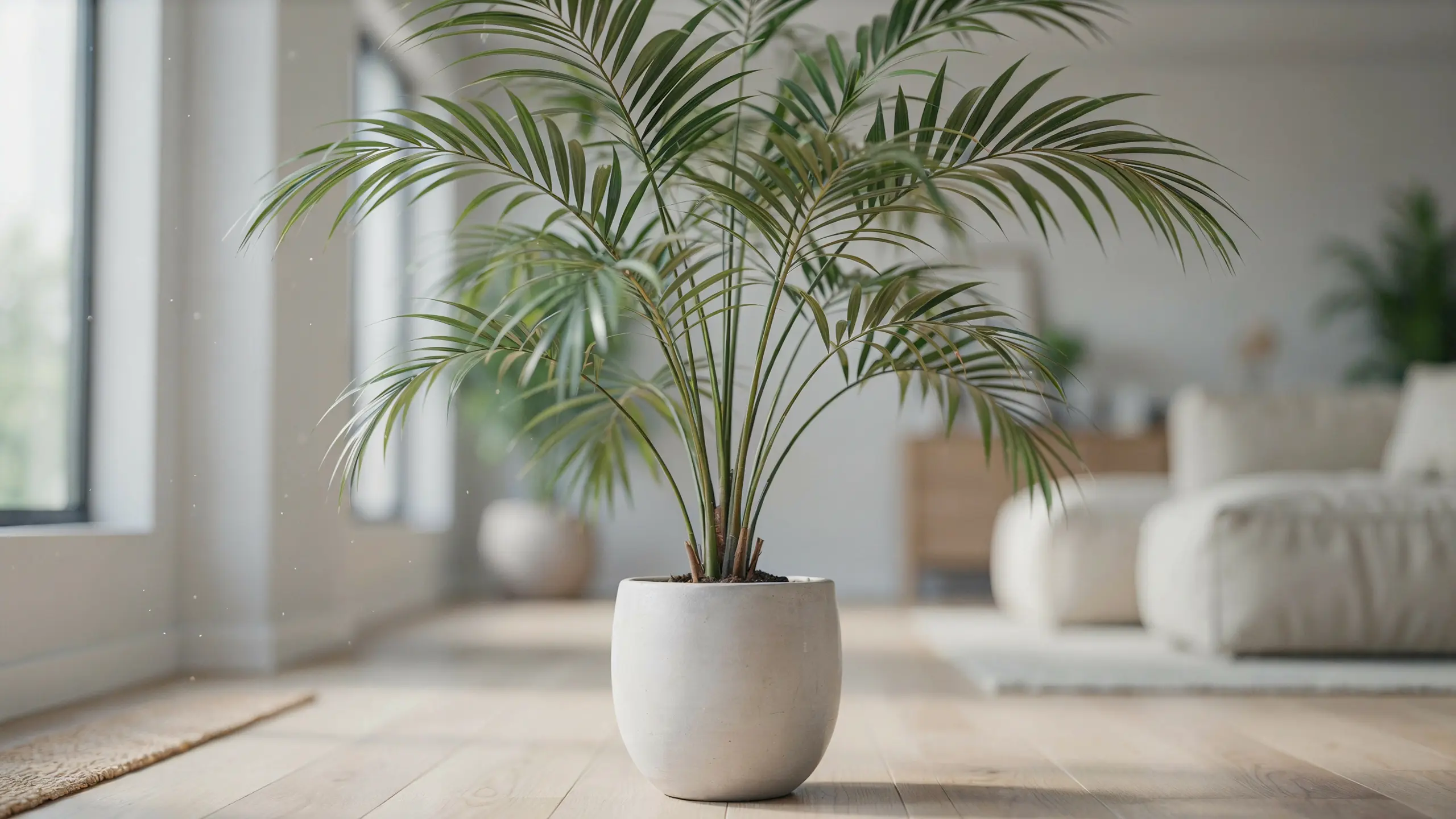
- Air quality benefit: Releases moisture and supports indoor humidity levels
- Light: Bright indirect light
- Care level: Moderate
- Best room: Living room, entryway
- Pet safety: Safe for cats and dogs
The areca palm is a large tropical plant that releases moisture through its leaves.
This helps maintain a more comfortable humidity level in dry rooms. It needs regular watering and occasional leaf cleaning.
13. Chinese Evergreen (Aglaonema)
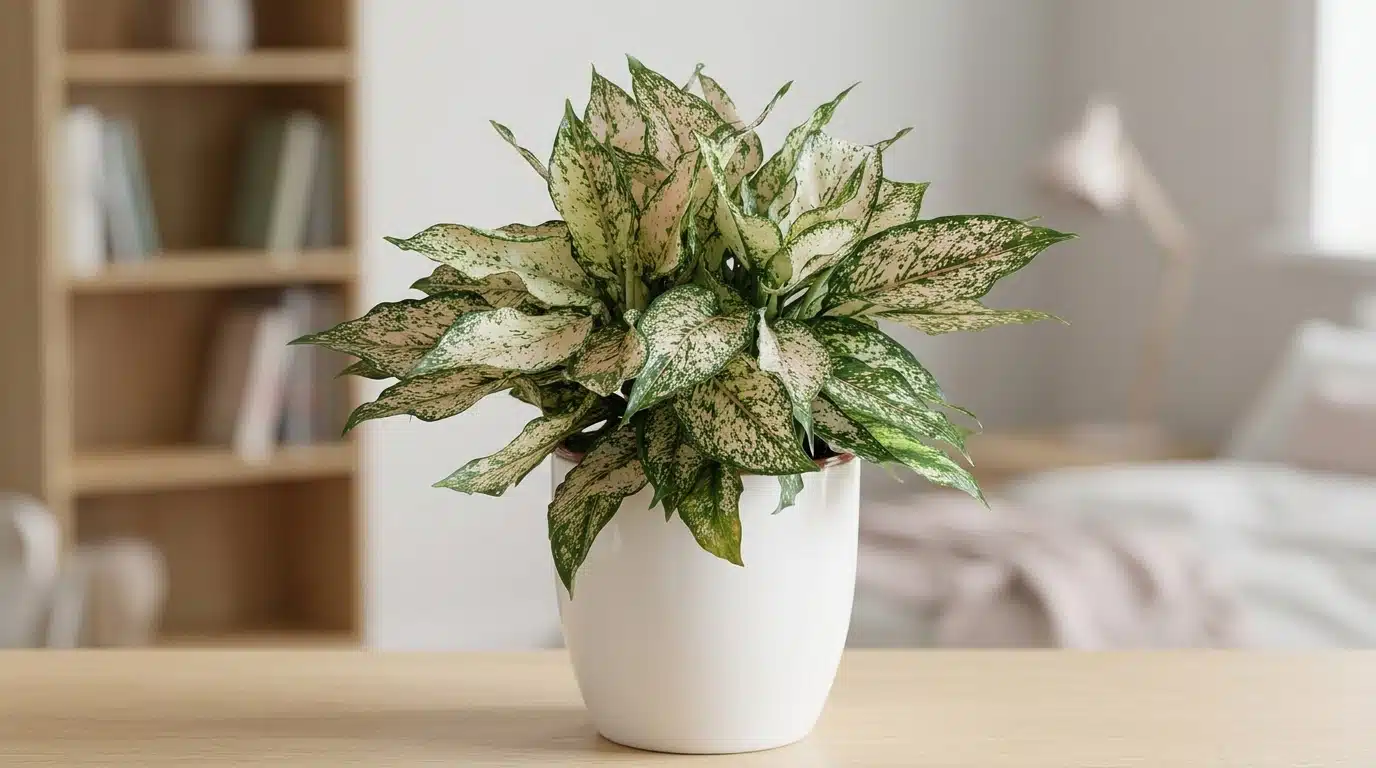
- Air quality benefit: Absorbs common indoor toxins
- Light: Low to medium indirect light
- Care level: Beginner
- Best room: Office, bedroom, low-light corners
- Pet safety: Toxic to pets if consumed
Chinese evergreen comes in many leaf colors and handles missed watering without complaint.
It fits low-light corners where other plants fail, making it one of the best plants for beginners and busy households.
How Many Plants Do You Actually Need?
NASA, cited by Cornell Cooperative Extension, recommends one healthy plant in a 6- to 8-inch pot for every 100 square feet of living space. A standard bedroom runs about 130 square feet.
One well-placed snake plant or spider plant is a solid starting point. The larger the plant, the more leaf surface it has to filter the air around it.
The soil matters too. Cornell’s research notes that microorganisms in the potting soil also help break down airborne toxins over time. A healthy, well-watered plant will filter more than one that is struggling.
Where Can You Buy Air-Purifying Plants?
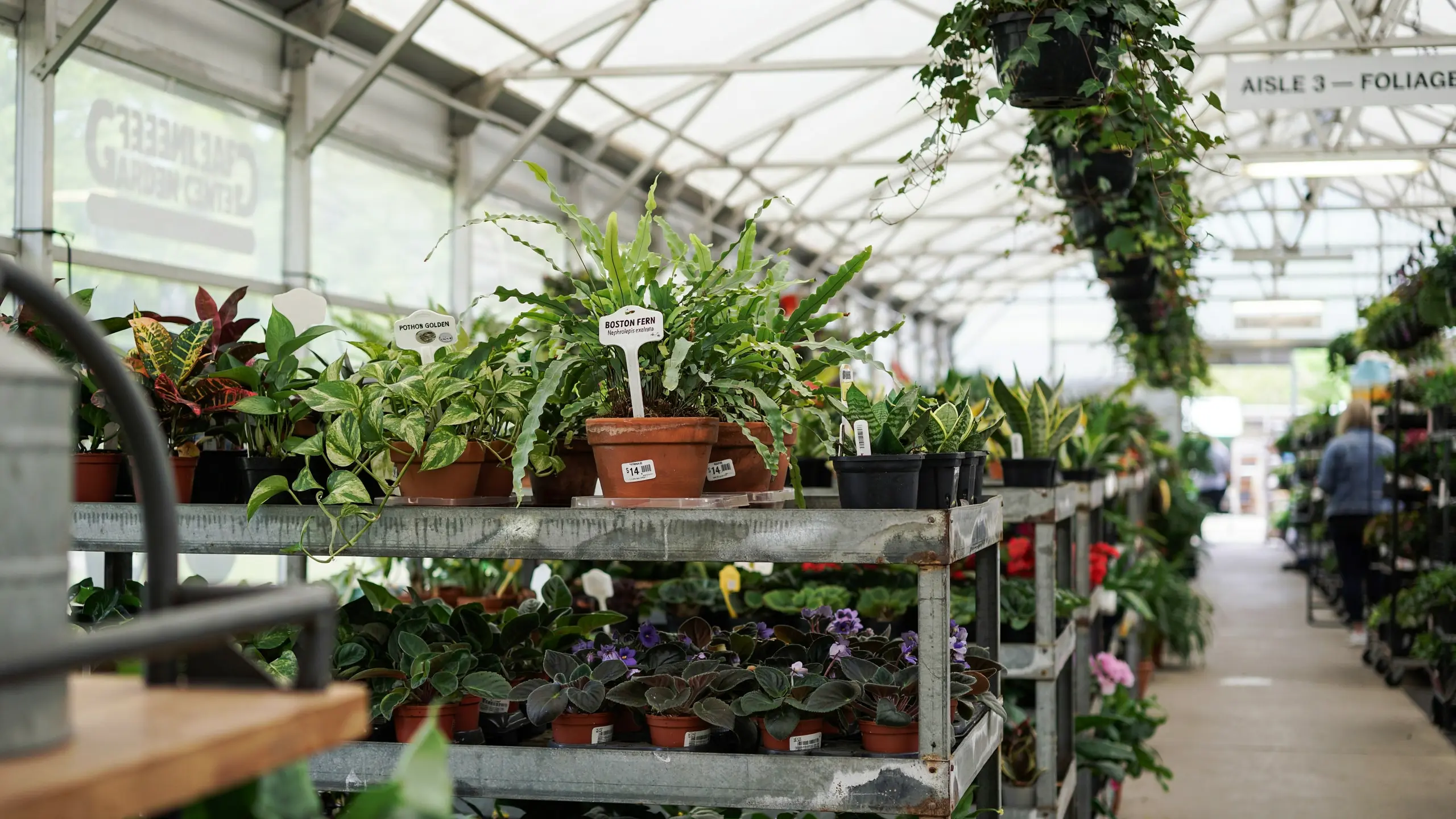
You have several solid options for finding healthy plants across the US:
Local Nurseries and Online Retailers
A local nursery lets you inspect the plant before you buy. Staff can provide care advice tailored to your region and climate. Online retailers are a good option when local stock is limited.
Here are some nurseries and retailers I found online:
Home Improvement Retailers
Stores like Home Depot and Lowe’s carry popular indoor plants at beginner-friendly prices. These are especially good for common varieties.
What Care Do These Plants Need?
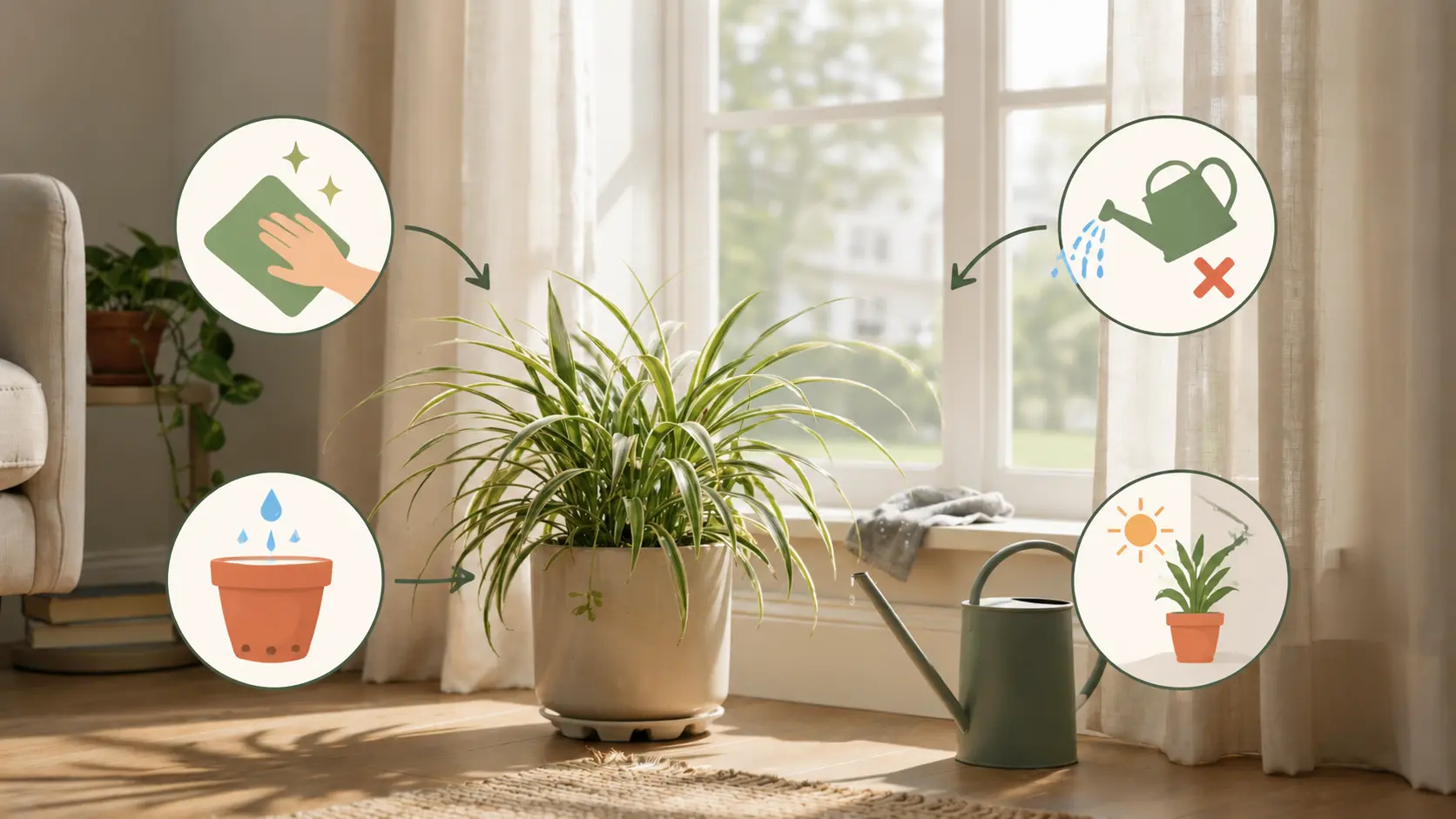
Healthy plants filter more effectively. Here are four simple habits to build:
- Clean the leaves regularly: Dust on leaves reduces light absorption. Wipe them with a damp cloth every few weeks.
- Avoid overwatering: Root rot is a more common problem than underwatering. Let the soil dry out between sessions for most varieties.
- Match plants with light: Do not place low-light plants in harsh direct sun. Read the care label before choosing a spot.
- Use pots with drainage holes: Standing water damages roots quickly. Always choose terracotta pots or containers that allow excess water to drain.
A Greener Tomorrow
Choosing the best indoor plants for air quality comes down to what works in your home.
A snake plant in a low-light apartment beats a high-maintenance fern that wilts in two weeks.
Start with one or two plants that match your light conditions and care routine. You do not need a full indoor garden to make a difference in how your space feels.
Pick the right plant, put it in the right spot, and give it consistent basic care. That is all it takes. If you are rethinking your room layout to accommodate new plants, planning your space in advance can save you a lot of trial and error.
Frequently Asked Questions
Can Indoor Plants Remove Mold Spores from the Air?
Some plants prefer humid rooms where mold can grow, but no houseplant reliably removes mold spores. Address the moisture source directly for lasting results.
Do Air-Purifying Plants Work in Large Open Rooms?
Plants show stronger results in smaller, enclosed spaces. In large open areas, mechanical air filtration is more reliable.
How Often Do Indoor Air-Quality Plants Need Repotting?
Most indoor plants need repotting every one to two years. Move to a pot one size larger when roots start coming out of the drainage holes.
Are Air-Purifying Plants Safe Around Young Children?
Several plants on this list are toxic if swallowed, including peace lily, pothos, and English ivy. Keep these out of reach of young children and pets at all times.