How to Hang a Mirror on the Wall (Without It Falling)

Most mirror disasters start with confidence. Someone grabs a drill, picks a random spot on the wall, hangs the frame, steps back, and the mirror tilts sideways as if it’s trying to escape the room.
Does this sound familiar? The truth is, learning how to hang a mirror properly is less about strength and more about smart preparation.
You just need a few accurate measurements, the right anchor, and solid wall support to make the whole process easy and quick.
This blog walks you through everything you should know before hanging a mirror, including mirror types, hanging hardware, wall placement, essential tools, and clear installation steps.
So grab your measuring tape and the necessary tools, and get started. Your mirror deserves a good spot on the wall, not on the floor.
What You Need to Check Before Hanging a Mirror?
Three quick checks before you drill can save you from crooked placement, weak wall support, and unnecessary damage.
Spend five minutes here, and the rest of the job becomes far easier and far less stressful.
1. Identify the Types of Mirrors
Different mirror styles need different support systems for a safe and secure wall installation.
Choosing the right mirror for your needs can make the entire process much smoother and hassle-free. Bathroom mirrors also follow specific sizing rules that directly affect how and where you hang them.
| Mirror Type | Best Support Method |
|---|---|
| Framed Mirror | Screws or anchors |
| Frameless Mirror | Clips or adhesive mounts |
| Decorative Mirror | Lightweight hooks |
| Full-Length Mirror | Heavy-duty anchors |
2. Check the Hanging Hardware on The Back
The hardware attached to the back of your mirror tells you the quickest and most secure way to mount it on the wall.
- Wire hangers allow quick position adjustments after mounting
- Sawtooth hangers suit lightweight mirrors only
- D-rings provide stronger and more reliable support
- Keyhole mounts create a flat, flush finish against the wall
Weigh the mirror before buying any hardware. Step on a bathroom scale and note your weight. Then hold the mirror and step on again. The difference is the mirror’s exact weight. Match that number to the weight rating printed on your anchor packaging before you buy anything.
3. Decide the Best Placement for the Mirror
Good positioning helps the mirror sit naturally in the space while improving balance, light, and overall room flow. On grey or neutral walls, a well-placed mirror can reflect natural light and make the room feel noticeably larger.
- Center the mirror on the wall or above furniture for a balanced look.
- Keep the mirror at eye level, roughly 57 to 62 inches from the floor to the mirror’s center — and leave enough space underneath.
- Avoid hanging oversized mirrors too high on the wall.
4. Decide the Best Hanging Method
Knowing the correct hanging method is important to keep your mirror secure.
The appropriate method depends on the mirror’s weight, the wall type, and the hardware attached to the back of the frame.
Identify your wall type before you drill. Drywall is standard in most homes built after the 1940s. Plaster walls appear in older homes and are far more brittle; standard drywall anchors can crack the surface. Use toggle bolts with picture hooks on plaster instead. For brick or concrete walls, you need a masonry drill bit and masonry anchors rated for the mirror’s weight.
- The nails or screws method is best for lightweight mirrors with wire or sawtooth hangers
- Drywall anchors are ideal for medium-weight mirrors when no stud is available
- Toggle bolts provide strong support for heavy mirrors on drywall
- Mirror clips commonly used for frameless bathroom mirrors
- Adhesive strips suitable only for very lightweight decorative mirrors
Pro Tip: Always check the mirror’s weight rating before choosing a hanging method. Heavier mirrors should be mounted directly into wall studs for extra long-term stability.
What Are the Rules for Hanging Mirrors on the Wall?
Before putting a single hole in the wall, it’s important to know a few basic rules for hanging a mirror.
- Keep the mirror centered on the wall or above nearby furniture
- Hang most mirrors so the center sits 57 to 62 inches from the floor. This works for comfortable, natural viewing in most rooms
- Leave 5 to 8 inches of space above any furniture placed underneath
- Use anchors or studs that match the mirror’s actual weight
- Avoid placing oversized mirrors too close to ceilings or corners
- Always check alignment with a level before making permanent holes
- Use two hooks for wider or heavier mirrors to reduce side-to-side shifting
Tools and Materials Needed to Hang a Mirror
Having the right tools within reach before you start to hang a mirror helps keep the installation process fast and secure.
These are the basic tools that you need for accurate measurements and secure mounting.
Check this list before you begin.
| Tool | Why You Need It |
|---|---|
| Measuring Tape | Marks the correct placement dimensions |
| Pencil | Creates light guide marks on the wall |
| Level | Keeps the mirror perfectly straight |
| Drill or Screwdriver | Installs screws and anchors firmly |
| Hammer | Drives nails into the wall when needed |
| Stud Finder | Locates secure framing behind drywall |
Step-By-Step Process to Hang a Mirror Properly
Following each step in order makes the difference between a mirror that looks professionally installed and one that feels loose, uneven, or unsafe.
Take your time with each stage. The final result will show the effort you put in.
Step 1: Mark the Hanging Position
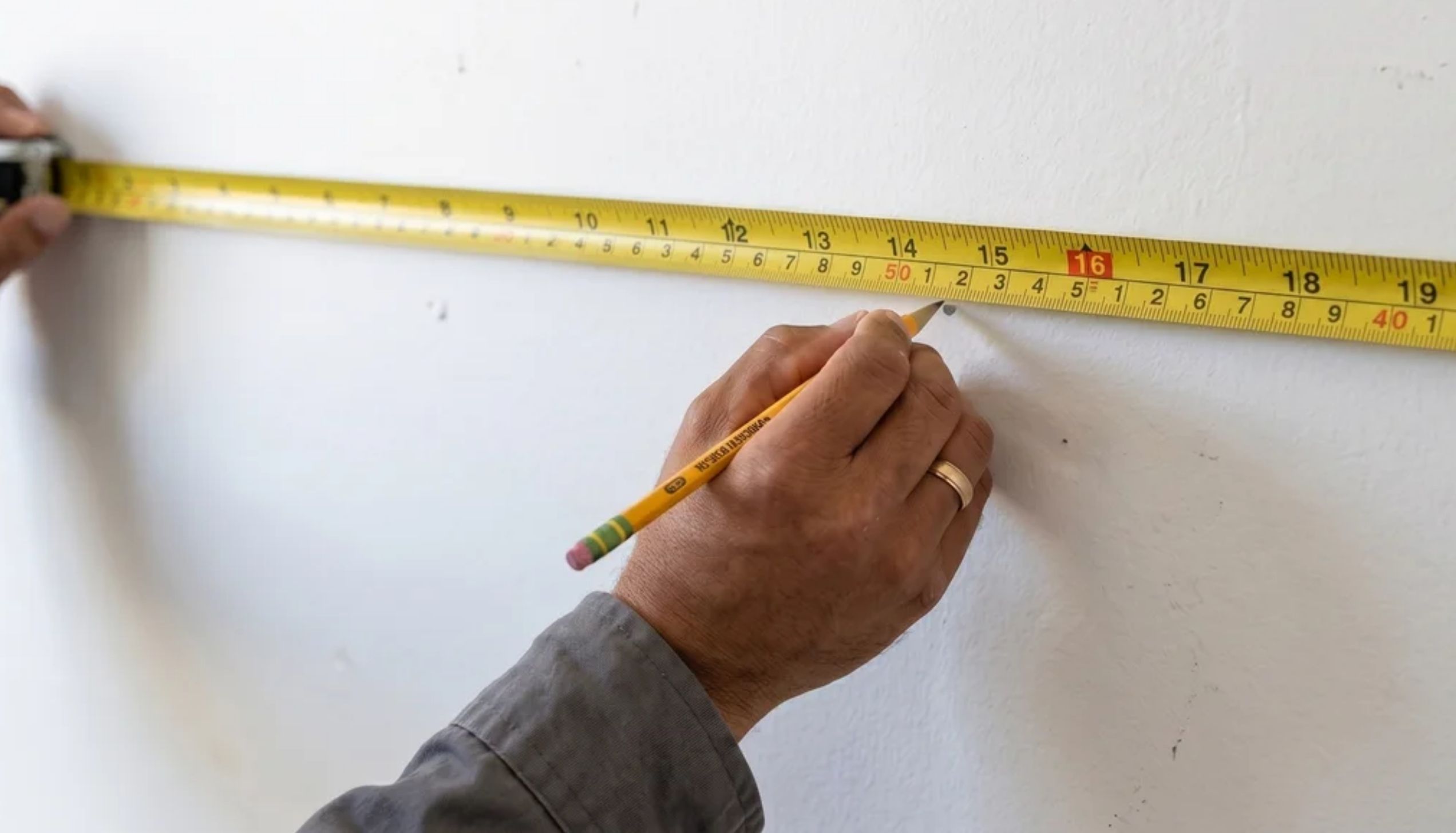
Measure the wall width first and lightly mark the center point with a pencil.
Decide the mirror height before drilling. Aim to hang the mirror so its center falls 57 to 62 inches from the floor; this works for most rooms and most people.
If the mirror hangs above a console table or dresser, leave 5 to 8 inches of space between the top of the furniture and the bottom edge of the mirror so the two pieces do not feel cramped together.
Use a level to confirm straight alignment before making any permanent holes in the wall. Double-check your measurements once more.
Step 2: Install the Anchor or Screw
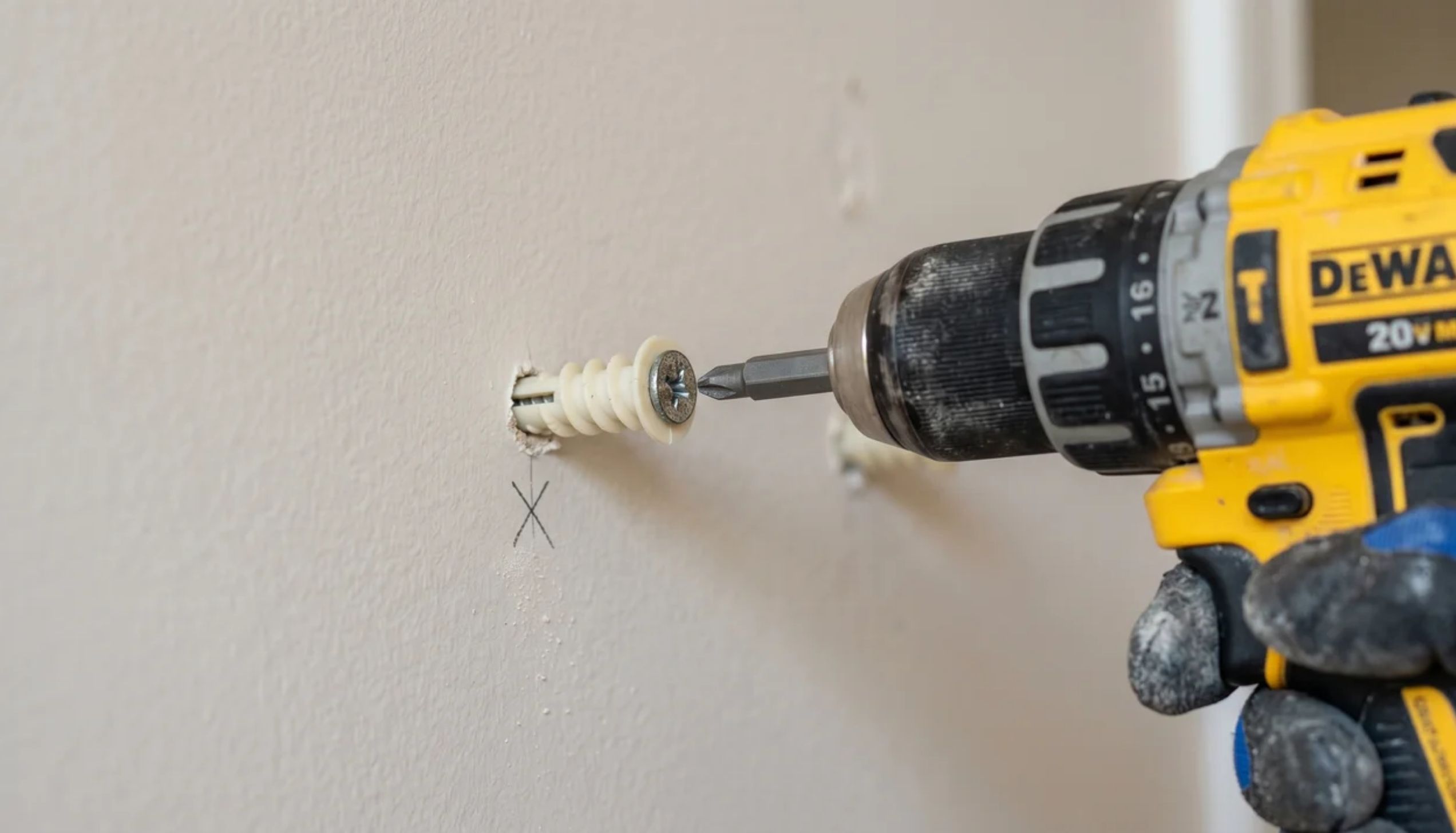
Choose anchors based on the mirror’s size and wall material.
Lightweight mirrors may only need screws or nails, while medium and heavy mirrors require drywall anchors or toggle bolts for stronger support.
On plaster walls, avoid standard drywall anchors. They can crack the surface. Use toggle bolts instead, and drill slowly to reduce the risk of splitting. For brick walls, use masonry anchors and a masonry bit. Insert the anchor carefully.
Avoid overtightening, which weakens the drywall around it. Leave enough of the screw exposed so the hanging wire or bracket can sit securely.
Step 3: Hang the Mirror Carefully
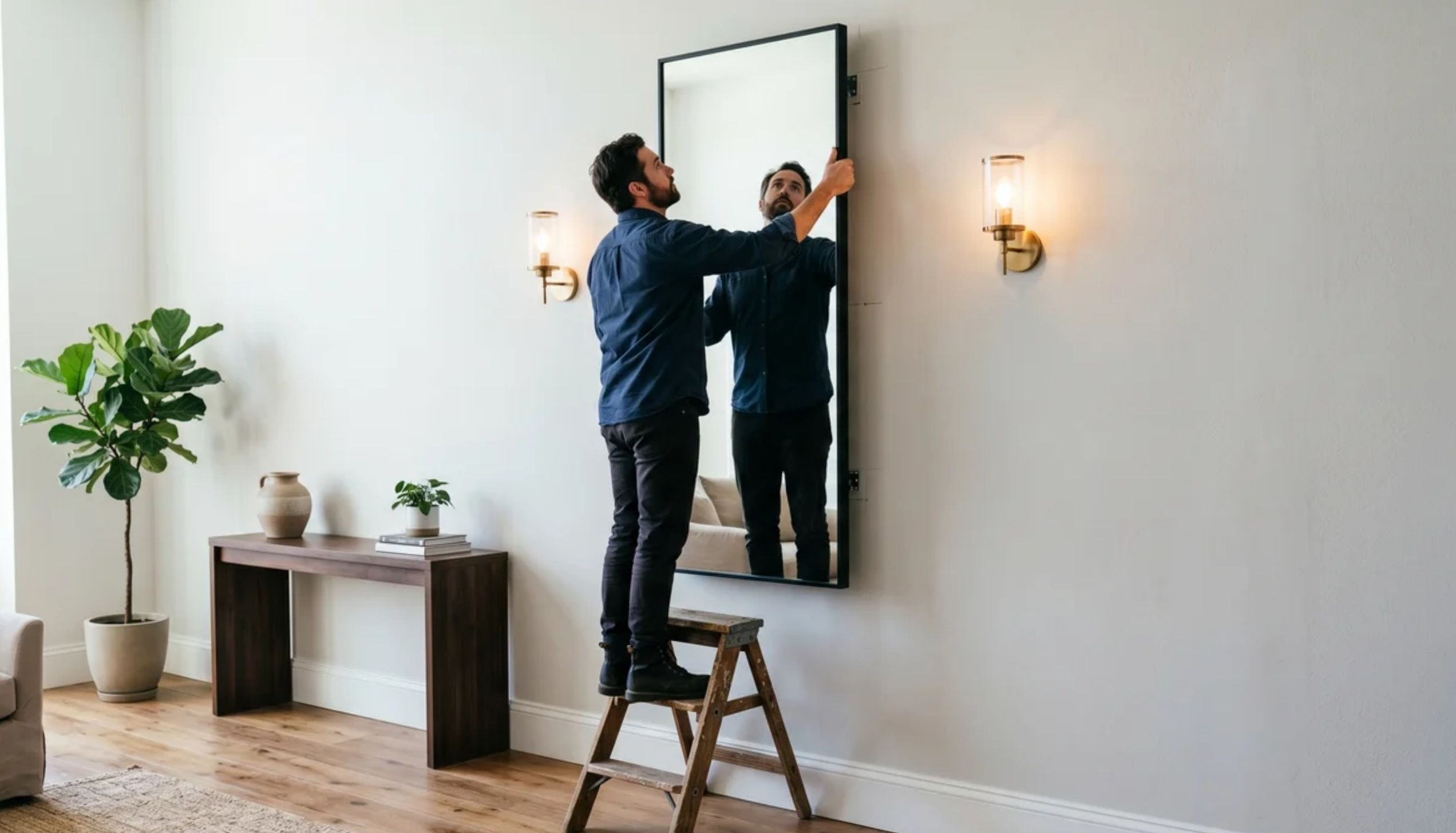
Lift the mirror slowly and guide the hanging hardware onto the installed screws or hooks. Large mirrors can feel awkward to handle on your own.
Once the mirror is mounted, gently release pressure while checking that the frame sits flush against the wall.
Avoid pushing too hard; sudden pressure may loosen anchors or shift the hardware out of position.
Step 4: Make Sure the Mirror Is Level
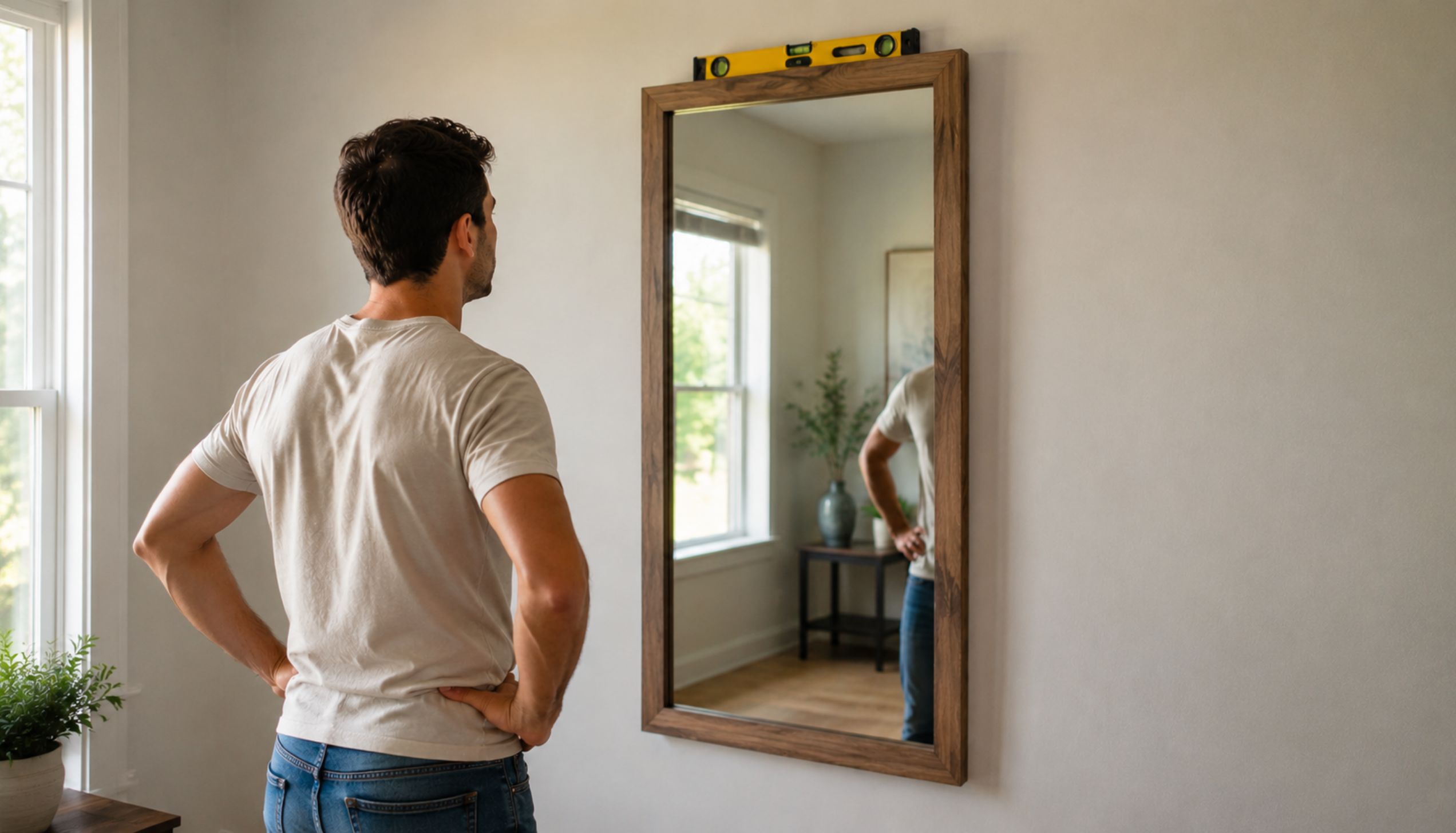
Final alignment checks help the mirror look clean, balanced, and professionally finished inside the room.
Place a level across the top edge of the frame and check alignment from both sides. If the frame tilts, adjust the hanging wire or reposition the hooks until it sits balanced.
Step back a few feet after leveling. Make sure the mirror looks visually centered within the space before you walk away.
Common Mistakes to Avoid While Hanging a Mirror
Even careful DIYers run into these problems. Knowing what usually goes wrong before you start gives you a real advantage.
These are the most common hanging mistakes that lead to crooked frames, damaged walls, and unstable fixtures, along with how to avoid each one.
- Using weak anchors for heavy mirrors: Always check the weight rating before buying any hardware
- Skipping stud checks before drilling: Drywall alone cannot safely carry heavy mirrors for long
- Ignoring mirror weight limits: This is the most frequent cause of anchor failure and wall damage
- Hanging without using a level: Even a slight tilt becomes very obvious once the mirror is up
- Placing the mirror too high or off-center: Eye-level placement almost always looks the most natural
Can You Hang a Mirror Without Drilling Holes?
Yes, you can hang a mirror without drilling holes using alternatives such as adhesive mounting strips, heavy-duty double-sided tape, mirror clips with adhesive backing, or strong mounting glue designed for mirrors.
These options work best for lightweight mirrors and smooth, clean surfaces, but you should always check the product’s weight limit and prepare the wall properly by cleaning and drying it first.
For heavier mirrors, non-drilling methods may be less secure, so using a professional-grade adhesive or a no-drill hanging system is recommended to avoid damage or accidents.
Conclusion
Now you have a clear, practical understanding of how to hang a mirror the right way, from checking your hardware to landing a level, secure finish.
Good placement, correct anchors, and clean measurements do most of the work. The steps are straightforward once you know what to look for.
Before you drill, take two extra minutes to measure and confirm your anchor strength. That small habit protects your wall and keeps your mirror exactly where it belongs.
Found this guide helpful? Share it with a friend who has been putting off this exact project. Got a question about a tricky wall or an oddly shaped mirror?
Drop it in the comments below we will read and answer everyone. Now go hang that mirror!
Frequently Asked Questions
What is the Easiest Way to Hang a Mirror?
The easiest method uses wall anchors and screws matched to the mirror’s weight to provide secure, stable support.
Is it Safe to Hang a Mirror on Drywall?
Yes, as long as you use proper anchors, toggle bolts, or wall studs that can support the mirror’s full weight.
How to Hang a Mirror Without Hooks?
Use mirror clips or adhesive mounting brackets, or attach D-rings to the back frame before securing the mirror to the wall.