The Community Concussion Guide: A Step-by-Step Field Manual for Schools and Clubs

For community sports presidents, school athletic directors, and safety compliance officers, running a successful sports program requires a deep commitment to regulatory risk management. Managing multi-team tournaments, scheduling training sessions, and coordinating volunteer staff are highly demanding tasks that leave little room for error when it comes to player welfare. Among the various responsibilities that fall upon a volunteer club committee, handling head trauma with absolute procedural consistency is an absolute priority. Mild traumatic brain injuries are complex, invisible events that cannot be managed using traditional, outdated paperwork without exposing an entire organization to immense legal liabilities. Reviewing a modern, comprehensive concussion protocol guide gives sports administrators a positive, clear, and legally defensible framework to manage player health with confidence. By transitioning your organization away from scattered email threads and physical forms toward an integrated digital compliance system, you can easily protect young athletes from secondary impact risks while securing a robust operational shield for your institution.
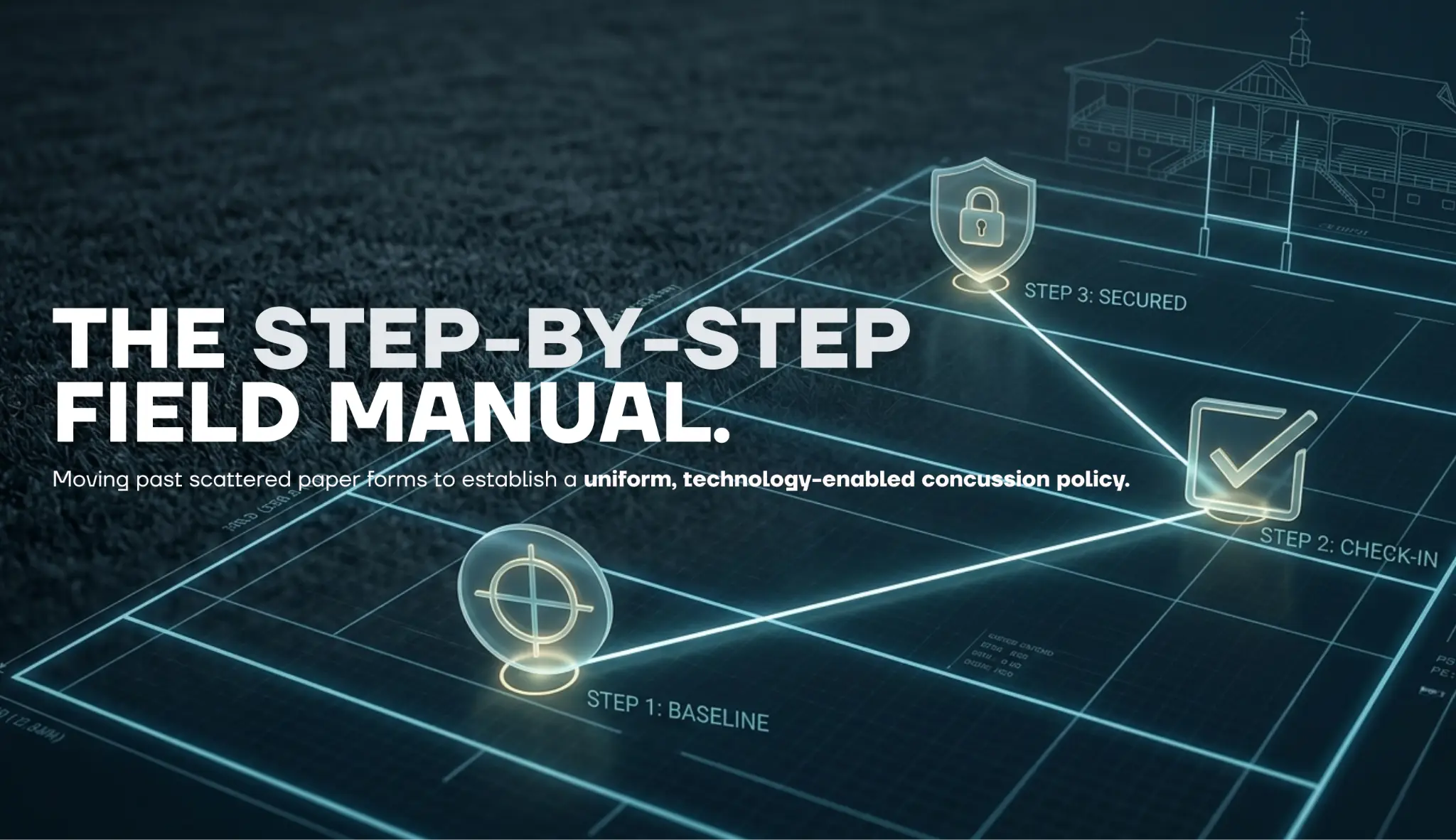
The secret to establishing a resilient sports culture relies on moving past old-fashioned, reactive safety models to adopt a uniform, technology-enabled concussion policy. A gold-standard field manual requires breaking down your organizational responsibilities into three distinct, non-negotiable phases: pre-season preparation, immediate match-day execution, and the long-term post-incident workflow. When an athletic department integrates these three phases into a single, cloud-connected system, it successfully removes human error from the equation, ensuring that strict duty of care is maintained from the first pre-season drill to the final whistle of the year.
Phase 1: Pre-Season Preparation – Establishing the Digital Baseline
The first major phase of a modern concussion management policy must be executed weeks before the first official whistle blows on match day. Every human brain carries a unique personal signature regarding cognitive processing speed, verbal memory, spatial awareness, and fine balance control. When an athlete sustains a hard collision during play, a doctor or first aid coordinator cannot accurately assess the severity of the neurological disruption without knowing what that specific individual’s brain looked like in its healthy, uninjured state.
To build an accurate pre-season foundation, sports committees must mandate that every registered player joins a centralized digital platform during the registration process. Using their own smartphones or tablets, athletes complete brief, scientifically validated cognitive exercises designed to measure their unique executive function markers under non-fatigued conditions. The software records these precise results and locks them securely into the athlete’s digital profile, creating an immutable baseline snapshot.
This proactive approach completely redefines your clinical safety margins if an injury occurs during the season. Instead of comparing an injured athlete’s post-knock cognitive data against a generic, population-wide national average, medical team members can instantly compare the post-injury data directly against the player’s own healthy benchmark. This specific data tracking allows clinicians to catch even the most subtle cognitive changes that would be missed during a traditional visual check, ensuring your club’s safety metrics are driven by clear, individualized data rather than administrative guesswork.
Phase 2: Match-Day Execution – The “Recognize and Remove” Blueprint
The second phase of the compliance guide takes place directly on the field, where high-pressure match-day dynamics frequently test an organization’s safety policies. Weekend sports fields are naturally loud, intense, and emotionally driven environments. When a player receives a heavy blow to the head or body, team trainers, parent volunteers, and coaches are forced to make immediate safety decisions while simultaneously managing substitution lines, anxious onlookers, and competitive match play.
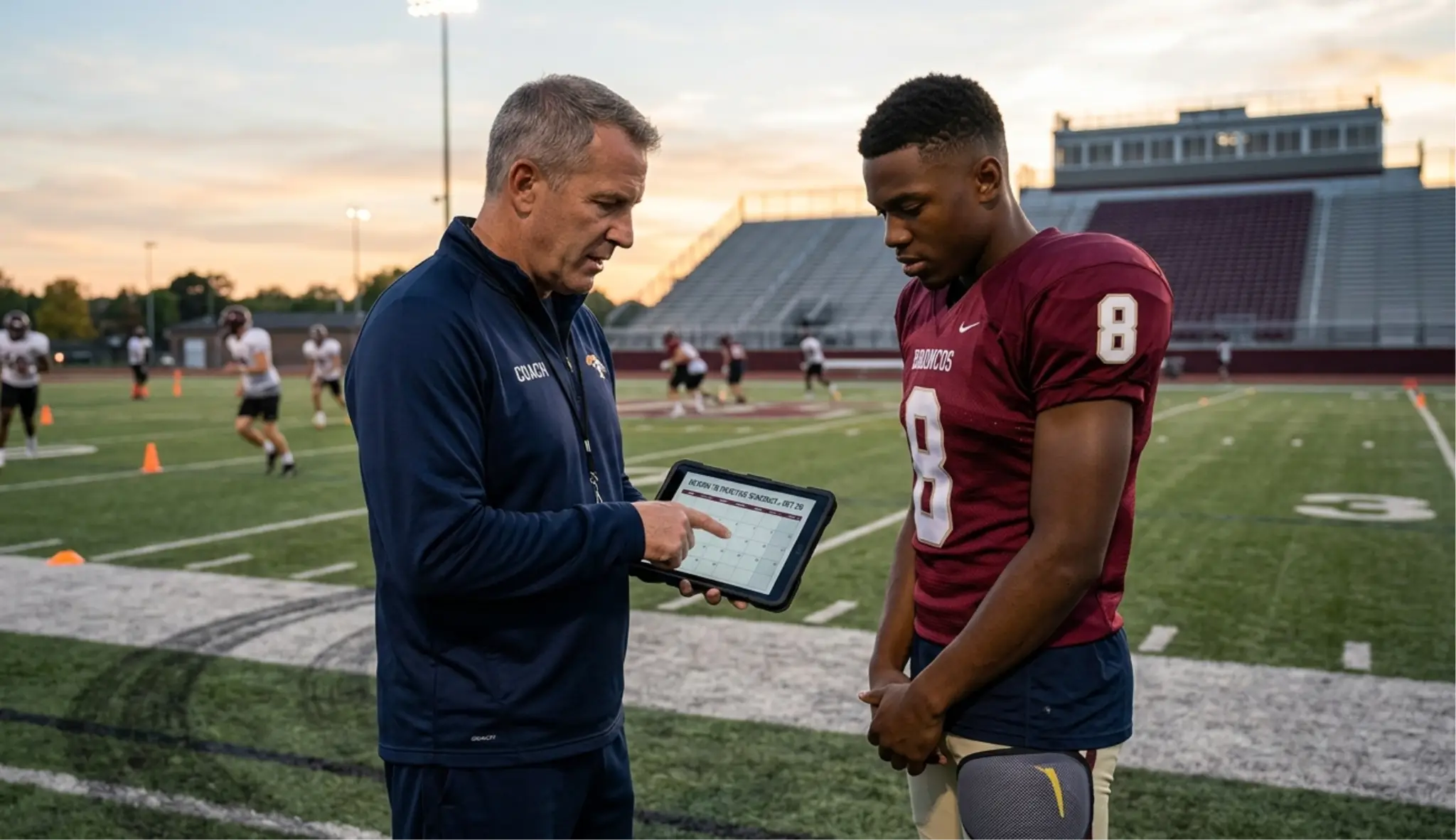
To ensure absolute adherence to modern player safety rules under pressure, first responders must follow a strict, non-negotiable “Recognize and Remove” workflow enabled by step-by-step mobile prompts. The moment an official or trainer suspects a significant head impact, the player must be removed from the field immediately, with zero exceptions made for the match score, time remaining, or the player’s importance to the team.
Once the athlete is safe on the sideline, the first responder uses a mobile application to execute a rapid, plain-language screening. The software guides the user through an immediate check for high-level clinical red flags, including neck tenderness, double vision, seizure activity, or repeated vomiting, which require immediate emergency transport to a hospital.
If no red flags are recorded, the app directs the user through standard memory checks, balance evaluations, and physical symptom tracking scales. Because the evaluation logic is automated on a smartphone screen, the system completely removes personal bias or individual coaching preferences from the assessment. If the app flags even a single cognitive or physical variation from standard safety levels, it automatically generates a firm removal directive, preventing the player from returning to the field for the remainder of the day and sending an encrypted summary straight to the player’s primary caregivers.
Phase 3: Post-Incident Workflow – Digital Logging and Clear Boundaries
The final phase of a robust concussion guide covers the multi-week recovery window that follows an official match-day incident log. Neurological healing from a concussive blow is a non-linear process that cannot be rushed without exposing an athlete to extreme neurological risks, such as prolonged post-concussive syndrome or Second Impact Syndrome, a catastrophic condition caused by sustaining a secondary head injury before the initial trauma has completely healed.
To manage this critical window safely, your digital policy must enforce automated, software-enforced safety blocks across your entire organizational database. The moment a sideline incident is recorded during a match, the player’s profile is automatically locked on the master team roster. This means their name is completely blocked from active training lists, digital match sheets, and team selection options across all divisions.
The player’s profile remains locked in this secure state as they progress through a mandated, multi-stage Graduated Return to Sport and Learn pathway. This digital roadmap breaks the recovery timeline down into distinct, sequential milestones, including relative cognitive rest, light aerobic exercise, non-contact sport drills, and full-contact practice. The system requires a designated symptom-free period to elapse at each individual stage before the software allows the user to log progress.
Throughout this entire post-injury timeline, the centralized application bridges the communication gap between all relevant parties. The system sends automated check-ins to parents to track symptom trends, updates school athletic directors regarding necessary classroom modifications, and informs team coaches regarding what specific physical drills the athlete is legally permitted to perform. This complete connectivity ensures that the child’s brain is protected across all environments, culminating in a secure digital upload portal where a certified General Practitioner or sports neurologist must submit an official medical clearance certificate before the software will unlock the player’s profile for match-day selection.
Structural Analysis: Traditional Paper Policies vs. Automated Compliance Guides
Reviewing the specific operational features, workflow steps, and risk mitigation metrics between old-school physical files and modern cloud-connected tracking highlights why digital data logging delivers superior institutional safety.
- Baseline Norm Capture: Traditional paper systems lack individualized baseline data, relying entirely on post-injury subjective guesses. Digital guides capture secure, pre-season cognitive benchmarks for precision comparison.
- Sideline Assessment Enforcement: Legacy systems rely on unguided memory checks, loose clipboards, and informal coach evaluations. Cloud networks utilize step-by-step digital prompts that automate validated medical screenings.
- Cross-Venue Communication: Analog methods depend on unreliable verbal handovers or delayed emails between parents, schools, and coaches. Integrated apps provide automated, real-time push notifications that keep all stakeholders aligned instantly.
- Roster Eligibility Control: Traditional clubs rely on verbal assurances or unverified paper notes to clear players for matches. Centralized systems enforce automated software locks that prevent any roster appearance until an official GP sign-off is uploaded.
By evaluating these direct operational contrasts, school principals, regional board members, and club presidents can clearly see that a modern safety policy requires an automated digital infrastructure to be genuinely effective.
Securing Permanent Data Archives for Long-Term Insurance Protection
Beyond the immediate, undeniable benefits to individual athlete safety, integrating a digitized concussion infrastructure delivers a significant long-term dividend to your organization’s administrative compliance and financial resilience. Under Australian personal injury law, statutory limitation periods for minors are heavily extended, meaning an athlete who sustains a head injury during a school or club match retains the legal capacity to file a civil suit for negligence many years after they reach adulthood.
This extended liability window means that an administrative team could easily receive a formal subpoena regarding a historical sporting incident that occurred ten, fifteen, or twenty years prior. If your organization relies on outdated physical storage boxes, local hard drives, or legacy email accounts, locating the exact medical clearance documentation from decades ago is an almost impossible challenge. If the paperwork cannot be produced during legal discovery, the institution is left completely defenseless against claims of historical negligence.
A premium digital safety platform completely eliminates this existential risk by archiving every single sideline assessment, parent communication log, and official GP clearance form in an encrypted, cloud-based database indefinitely. These historical logs are completely unalterable, creating a permanent record of your institution’s strict adherence to its duty of care.
When it comes time to renew your organization’s public liability and director insurance policies, being able to demonstrate a pristine, digitally verified history of concussion management allows you to negotiate significantly lower premiums. It proves to insurance underwriters, government regulators, and the broader community that your organization manages local sports with the highest levels of modern, responsible leadership.
Conclusion: Committing to a Compliant and Safe Sporting Future
Deciding on the operational safety framework for your school or community sports program is a critical leadership choice that directly impacts the physical future of your young athletes and the financial stability of your organization. Continuing to run an athletic department using outdated paper files, unguided sideline evaluations, and loose verbal clearance loops leaves your volunteer staff unsupported, your organization legally exposed, and your players unprotected from severe neurological risks.
By integrating a uniform digital concussion guide into your organization’s seasonal framework, you successfully establish an absolute perimeter of safety around your sport community. Pre-season digital baseline testing captures an undeniable cognitive norm for every athlete, automated mobile prompts take the guesswork out of acute match-day screenings, and structured return-to-play roadmaps ensure that no child ever returns to a contact environment prematurely. Take absolute control of your organization’s safety strategy today, phase out the unreliable analog systems, and invest in a modern, cloud-connected policy network that keeps your players fully protected and your sporting future completely secure.
____________________________________________________________________________
Steven Lagrimas is a freelance writer specializing in STEM, business, health, politics, and the social sciences. His work explores the intersection of society, governance, innovation, and emerging global trends shaping communities and industries today.