Benjamin Moore Chantilly Lace (OC-65) Undertones Guide

Choosing the right white paint is harder than it looks. One wrong pick and your walls can feel cold, dull, or just off.
That’s where this Chantilly Lace undertones: Benjamin Moore paint guide comes in. This color looks simple but behaves differently depending on your lighting and decor.
Understanding its undertones saves you time, money, and headaches from repainting.
Read on to learn what makes Chantilly Lace unique, how it reacts to light, what colors pair best with it, and where it works beautifully in your home.
What Is Benjamin Moore Chantilly Lace and Its Undertones?
Benjamin Moore Chantilly Lace is a bright, adaptable white that never feels stark despite its cool base.
It reflects light well but shifts with lighting conditions. North-facing rooms read cooler, while south-facing rooms receive sunlight that adds slight warmth.
Surrounding colors matter too. Warm woods soften it, while blues and grays sharpen its crisp tone. Compared to White Dove, it stays noticeably more neutral.
Characteristics of Benjamin Moore Chantilly Lace
Knowing the exact specs of a paint color helps you make a more confident buying decision.
Here are the key details of Benjamin Moore Chantilly Lace at a glance:
|
Feature |
Details |
|
Paint Code |
OC-65 |
|
Color Name |
Chantilly Lace |
|
Color Type |
Crisp, bright white |
|
Undertones |
Subtle gray with slight blue hints |
|
LRV |
90.04, Reflects a lot of natural and artificial light |
|
Hex Code |
#F2EFE4, a clean, near-pure white |
|
RGB Values |
RGB(242, 239, 228), very light with minimal color shift |
These specs confirm why Chantilly Lace remains one of the most trusted whites for both modern and traditional interiors.
Best Uses for Chantilly Lace in A Home
Chantilly Lace works well on walls, trim, cabinets, and ceilings, adding brightness and clarity to interiors. Its neutral base and high LRV make it one of the most flexible whites for any room.
1. Chantilly Lace on Wall

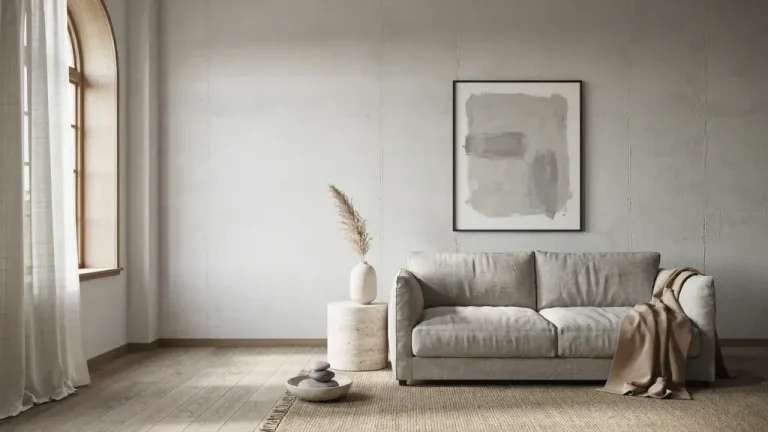
On walls, Chantilly Lace creates a clean, airy backdrop that doesn’t compete with furniture or decor. It suits contemporary and classic spaces alike.
Its neutral base lets bold furniture and artwork take center stage, making it a smart choice for rooms where the decor does the talking.
2. Getting Clean, Crisp Trim

Used on trim in semi-gloss or satin finishes, it provides contrast against matte walls. This highlights architectural details without changing the perceived color.
The finish difference alone adds visual depth and makes moldings and door frames stand out cleanly.
3. Cabinets in Chantilly Lace

Chantilly Lace works on dark, light gray, or white-white cabinets. Its low pigment content means coverage is best achieved with primer plus two to three coats.
Compared to Simply White, it may require an extra coat for full opacity, but the crisp, clean result is worth the effort.
4. Painting Ceilings with Chantilly Lace

Painting ceilings in Chantilly Lace enhances natural brightness and creates a unified white palette that complements walls and trim.
It also makes low ceilings feel slightly higher by reflecting light evenly across the surface.
How Undertones Affect Color Perception?
Chantilly Lace looks different depending on your lighting, wall colors, and surrounding surfaces.
- Lighting Angle Matters: North-facing windows make it feel cooler, while south-facing light or warm artificial lighting adds a softer tone.
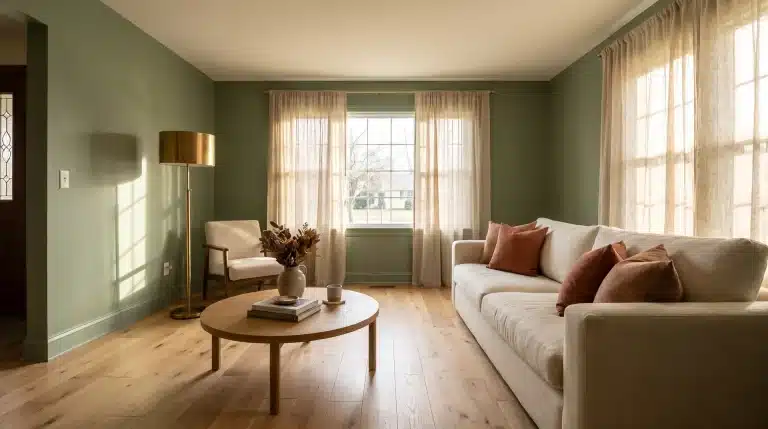
- Adjacent Colors Influence Perception: Warm wood, beige, or tan tones pull out cooler blue undertones, while grays enhance its crisp, neutral effect.
- LRV Amplifies Effects: At 90.04, its high light reflectivity can exaggerate undertone shifts depending on the room.
- Breakdown in Extreme Settings: In very warm interiors, the cool undertones may read slightly muted or blue.
Testing it in multiple lighting conditions and observing it near walls, trim, and furnishings helps anticipate these shifts before committing to a full paint job.
Comparison to Other Whites
Chantilly Lace and other popular whites differ in undertones and brightness, affecting how they look in real rooms.
|
Paint |
Undertones |
LRV |
Perception |
Notes |
|
Chantilly Lace |
Gray/blue |
90.04 |
Very bright, neutral |
2–3 coats needed |
|
Warm |
85.38 |
Softer, warmer |
Easier coverage |
|
|
Yellow |
91.00 |
Versatile, slightly warm |
Reads warmer under artificial light |
|
|
Pink |
91.00 |
Less reflective, warm |
Less bright in north light |
|
|
Neutral |
85.00 |
Slightly muted |
Subtle contrast |
|
|
Gray |
82.00 |
Muted, cooler |
Flat without strong light |
Among these options, Chantilly Lace stands out for its balance of brightness and neutrality, making it the most versatile choice for varied lighting and decor styles.
Pairing Chantilly Lace with Other Colors
Chantilly Lace pairs well with both neutral and subtle warm colors. Its gray-blue undertones create a crisp backdrop that complements shades such as White Dove, Pure White (SW), Simply White, Oxford White, and Decorator’s White.
- Neutral colors: Gray, black, and other soft whites create clean contrast without overpowering the space.
- Warm colors: Creams, tans, and muted beige add warmth but should be used sparingly to avoid shifting the white too warm.
- Colors to avoid: Overly yellow or warm whites can clash with Chantilly Lace, making it look dull or off-balance.
The high LRV and subtle undertones interact with surrounding colors, affecting how contrast and harmony are perceived in real rooms.
Coverage and Finish Considerations
Chantilly Lace has low pigment content, so it often requires a primer and two to three coats for full coverage.
Matte or flat finishes work well on walls and ceilings, while satin or semi-gloss is ideal for trim and cabinets. High-light areas can make thin coats appear streaky, and previous wall colors may show through without proper priming.
In moisture-prone spaces like bathrooms, a satin or semi-gloss finish helps resist wear and staining.
Unlike darker or more pigmented whites, Chantilly Lace does not cover in a single coat, so planning for multiple layers ensures a smooth, even finish.
Quick Tips Before You Paint
Chantilly Lace looks best when properly tested and applied under the right lighting conditions.
These few simple painting tips can help the color appear smoother and more balanced:
- Paint a small patch on your wall and observe it at different times of day before buying a full can.
- Chantilly Lace has low pigment content, so skipping primer often means uneven coverage and wasted paint.
- Use matte on walls and ceilings, and satin or semi-gloss on trim, cabinets, and bathrooms.
- Hold paint swatches near your biggest furniture pieces to spot any unwanted undertone clashes early.
A little preparation goes a long way in making sure Chantilly Lace looks its best once it’s on your walls.
Conclusion
Chantilly Lace is more than just a white paint. Its subtle cool undertones, high LRV, and neutral base make it one of the most adaptable colors for any home.
It works across walls, trim, cabinets, and ceilings, holding up beautifully in different lighting and alongside most decor styles.
If you want a white that feels fresh without looking cold, this is a reliable pick. Test a sample in your space first, observe it across different times of day, and let the light guide your final decision.
Ready to paint? Grab a Chantilly Lace sample from Benjamin Moore and see the difference on your walls.
Have questions or tried this color yourself? Drop your thoughts in the comments below, we’d love to hear how it worked for you.
Frequently Asked Questions
Is Chantilly Lace a Good Choice for Exterior Painting?
Yes, its high LRV and neutral tone make it a versatile exterior choice. It suits most architectural styles and lighting conditions well.
Can Chantilly Lace be Used in Small, Windowless Rooms?
It can, but warm artificial lighting is recommended to offset its cool undertones. This prevents the space from feeling too stark.
Does Chantilly Lace Work Well in Open-Plan Spaces?
Absolutely, its neutral base transitions smoothly between adjoining rooms. It pairs well with most wall colors without creating visual clash.