How to Paint Bathroom Cabinets for a Smooth, Durable Finish

Most bathroom cabinet paint failures are not caused by bad paint colors or poor brushwork. They usually happen because moisture, soap residue, and slick cabinet finishes prevent proper adhesion long before the final coat dries.
Painting bathroom cabinets can update a bathroom for far less than replacing the vanity, but the finish only lasts when the prep, primer, and cure process is handled correctly.
In many DIY projects, peeling starts first around sink edges, handles, and cabinet corners, where humidity and daily contact are highest.
Some cabinet materials also need different primers and drying times than others. The process matters just as much as the paint itself.
Tools and Materials Needed to Paint Bathroom Cabinets
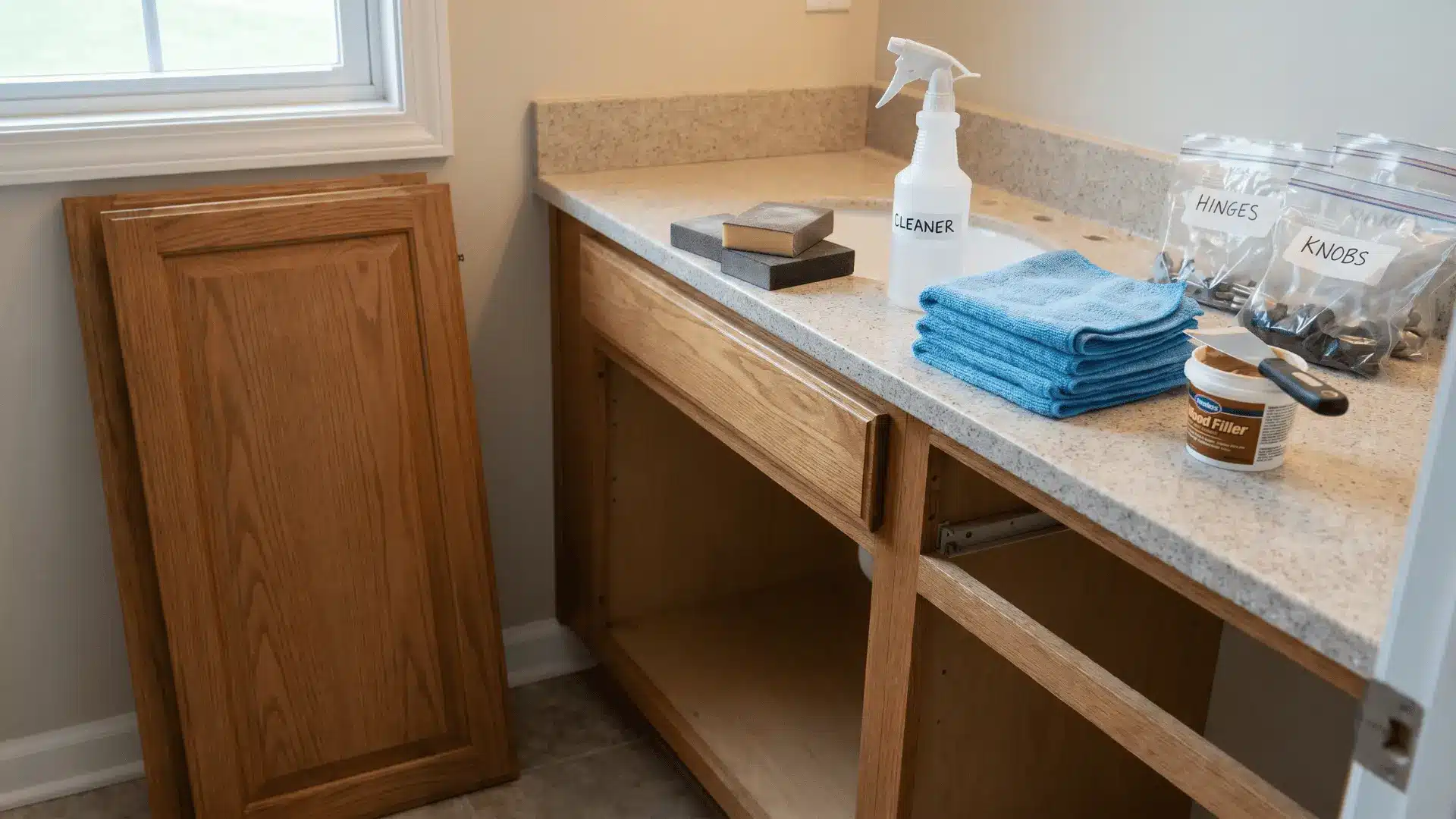
Before starting, gather all tools and materials in one place so the painting process moves more smoothly. Using the correct supplies also helps improve paint adhesion and reduces common finish problems later.
| Tool or Material | Purpose |
|---|---|
| Degreaser or TSP cleaner | Removes soap film, grease, and bathroom residue before sanding |
| 220-grit sandpaper | Scuffs glossy surfaces lightly so primer can grip properly |
| Tack cloth and microfiber cloths | Remove sanding dust before priming |
| Foam roller or mohair roller | Applies smoother paint coats on flat cabinet surfaces |
| Angled paint brush | Handles corners, grooves, and cabinet edges cleanly |
| Painter’s tape and drop cloths | Protect nearby surfaces from paint and sanding dust |
| Screwdriver or drill | Removes cabinet doors, drawers, and hardware before painting |
| Bonding primer | Helps paint attach to glossy or laminate surfaces |
| Shellac-based primer | Works well over oil-based finishes and stain-prone wood |
| Acrylic enamel or alkyd cabinet paint | Creates a harder, more moisture-resistant finish than standard wall paint |
Having these supplies ready before you begin makes each stage of cleaning, priming, and painting easier to manage and helps create a more professional-looking finish.
How to Choose the Right Paint for Bathroom Cabinets?
Paint selection matters as much as prep. Standard wall paint stays slightly flexible and breaks down quickly under daily contact, cleaning, and moisture. The right paint cures into a hard film built to last in a bathroom environment.
- Paint type: Acrylic enamel, alkyd, and urethane-modified alkyd are the best options. All three cure harder than wall paint and hold up better in humid conditions and with repeated cleaning.
- Finish: Satin and semi-gloss are the most practical choices. Satin hides surface flaws better, while semi-gloss is easier to wipe down and holds up slightly better over time. Avoid flat or matte finishes, they absorb moisture and are nearly impossible to clean.
- Primer: Bonding primer is required on glossy or laminate surfaces. Shellac-based primer is the better choice on wood with old oil-based finishes or visible stains, as it prevents bleed-through that would ruin the topcoat.
How to Clean and Prep Bathroom Cabinets?
Cleaning and prep matter more than paint color because primer cannot bond properly over soap residue, grease, or moisture buildup.
The goal is to remove contamination completely and create a light texture so the primer can grip properly. Follow these steps:
Step 1. Remove Cabinet Doors, Drawers, and Hardware
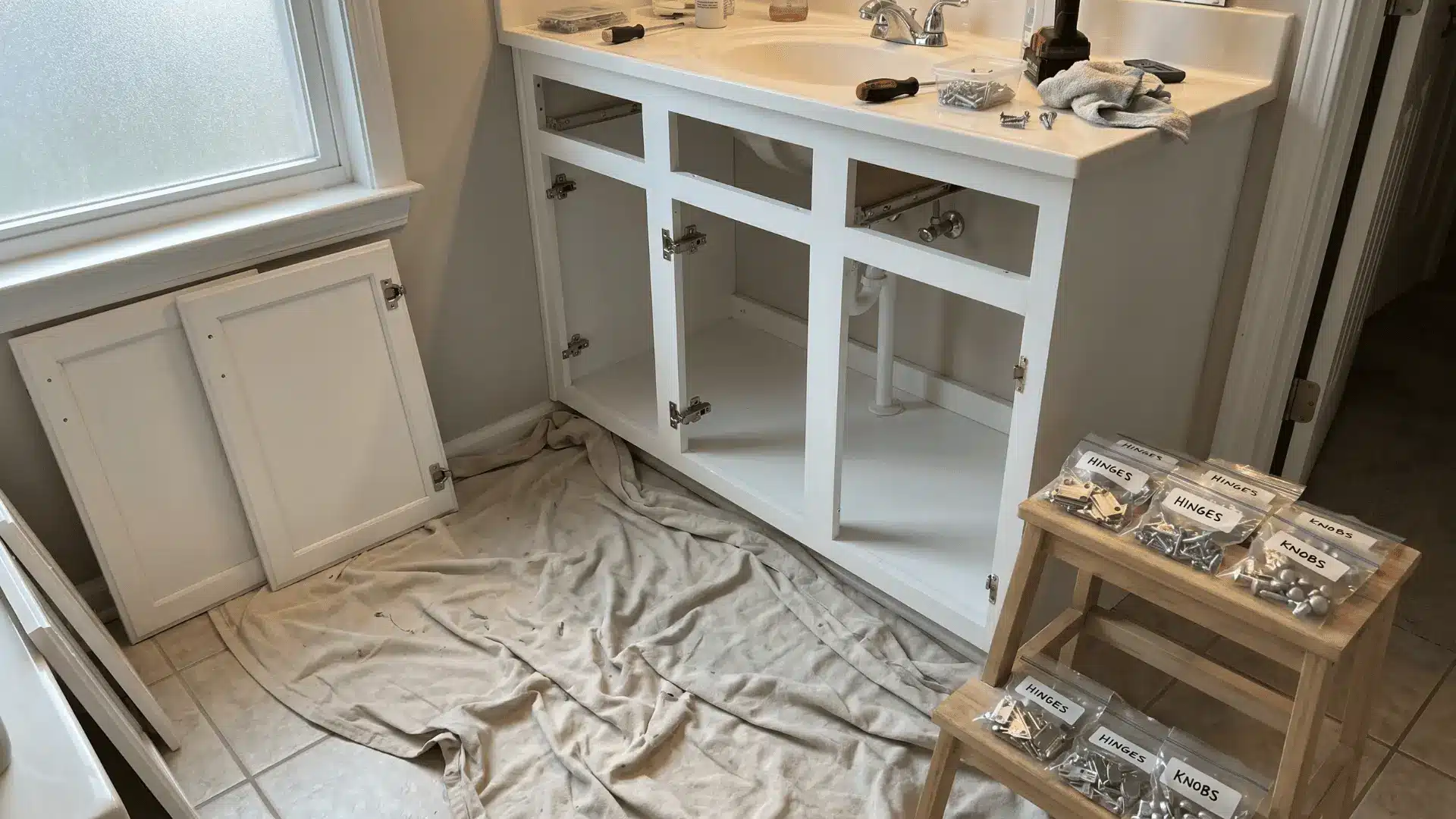
Take off cabinet doors, drawer fronts, hinges, and handles before cleaning or sanding. This makes it easier to reach edges and corners and helps create a smoother painted surfac later.
Label hinges, screws, and doors with painter’s tape or small storage bags so reassembly is easier after painting.
Step 2. Clean, Wipe, and Rinse the Cabinets
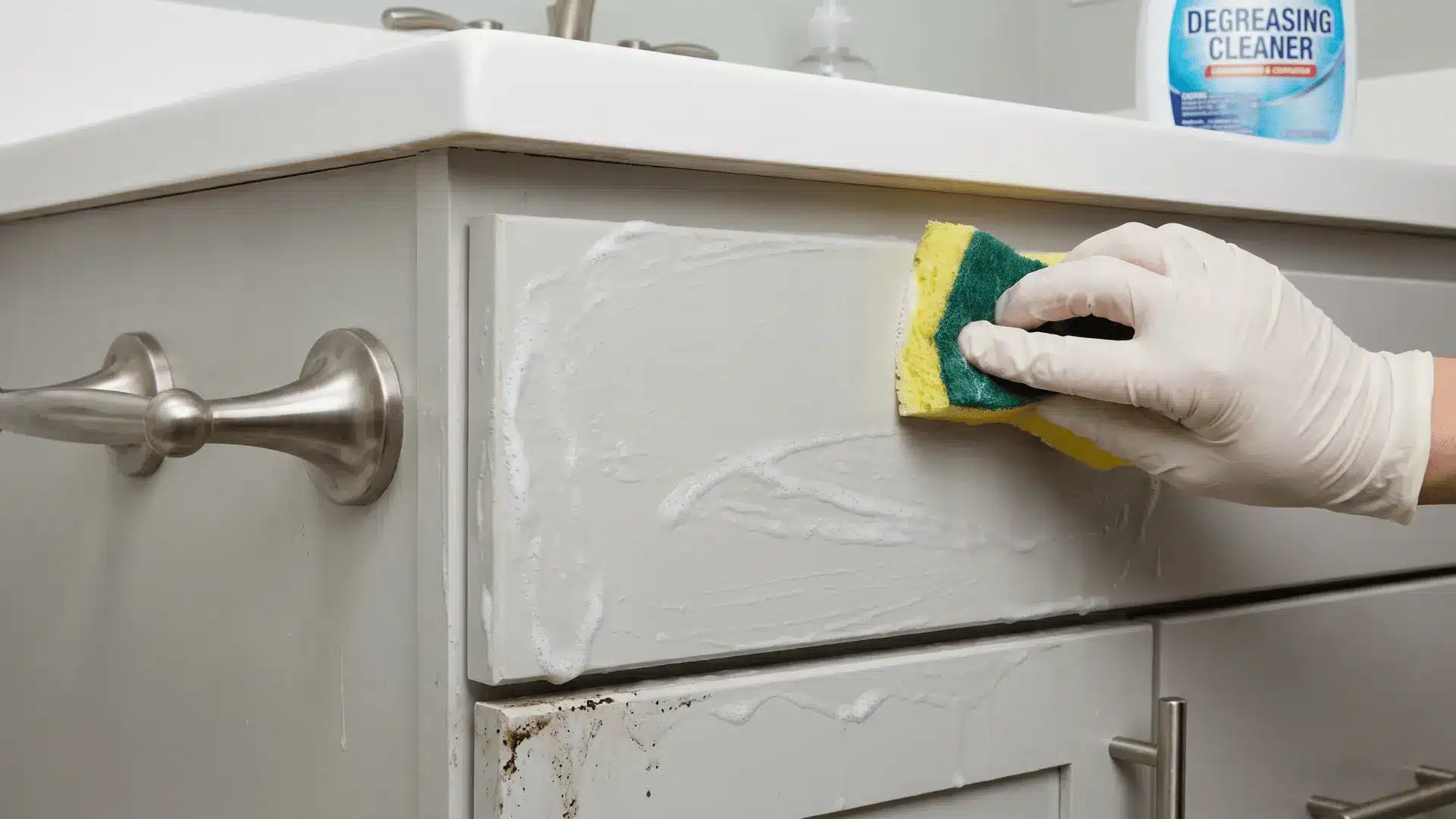
Use TSP, TSP substitute, or a degreaser to remove soap residue, grease, and lotion buildup. Focus extra attention near sink areas and lower corners where buildup is heaviest. Once scrubbed, wipe away loosened residue with a clean microfiber cloth and rinse with clean water to remove any leftover cleaning chemicals that could interfere with primer adhesion later.
Step 3. Let the Cabinets Dry Completely
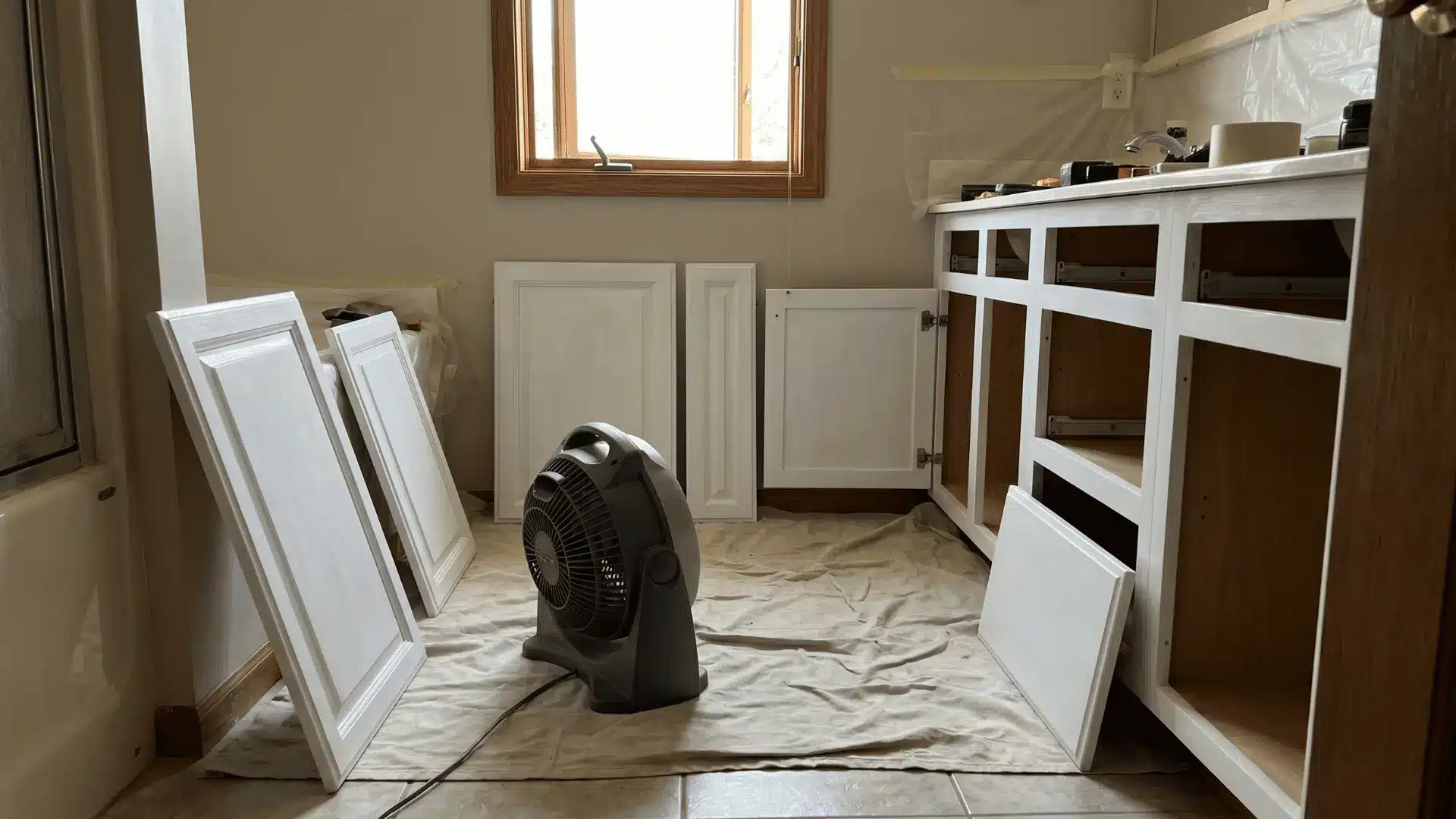
Allow all surfaces to dry fully before sanding or priming. Moisture trapped under the primer can cause bubbling, peeling, or weak adhesion later.
Pay close attention to corners, seams, and MDF edges because these areas hold moisture longer than flat surfaces.
Step 4. Sand the Surface Lightly
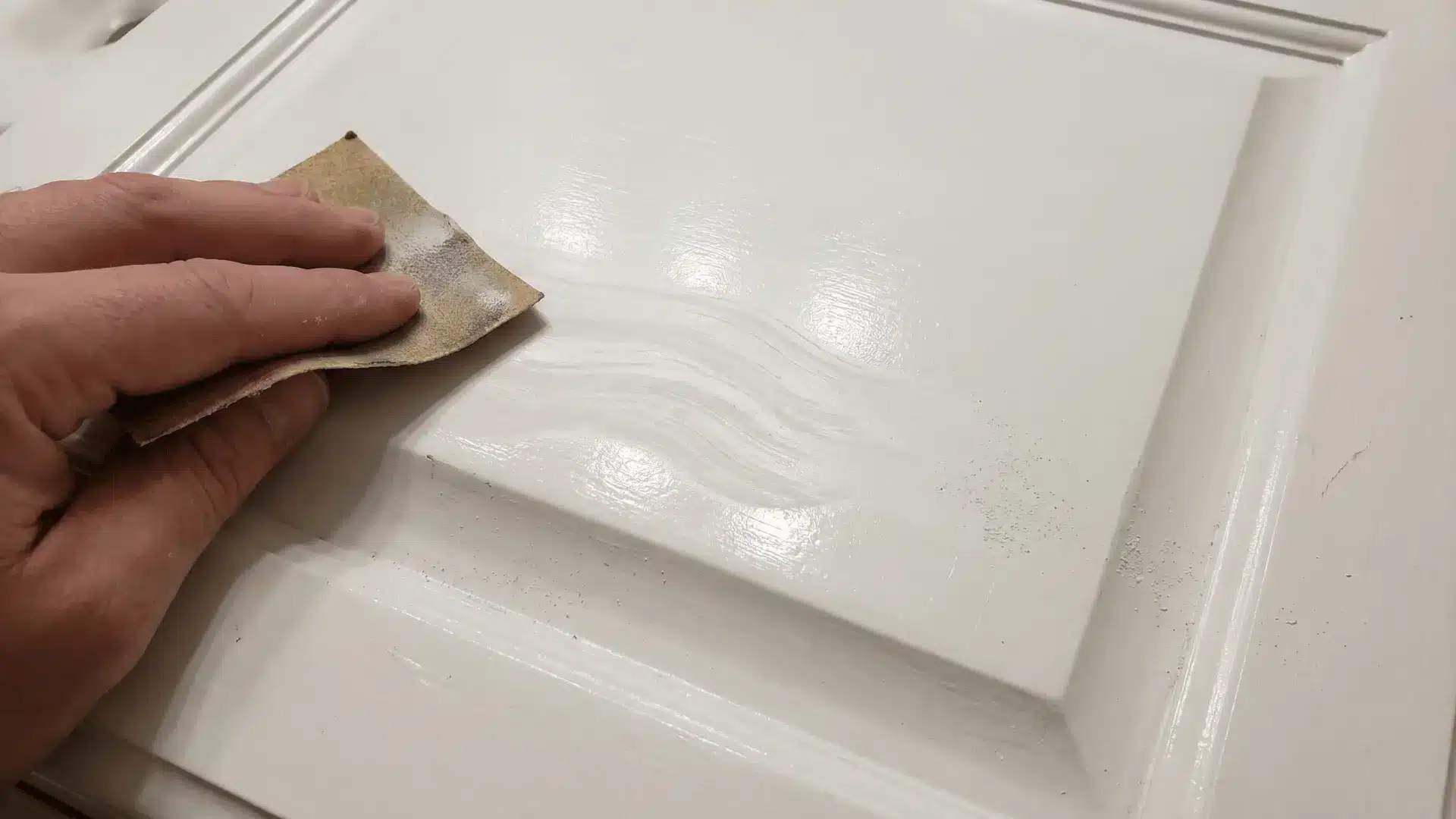
Use 220-grit sandpaper for most cabinets to dull the glossy finish lightly. Use 150-grit only for very glossy or rough surfaces that need more abrasion.
The goal is not to sand down to bare wood. You only need enough sanding to help the primer grip properly.
Step 5. Remove All Sanding Dust
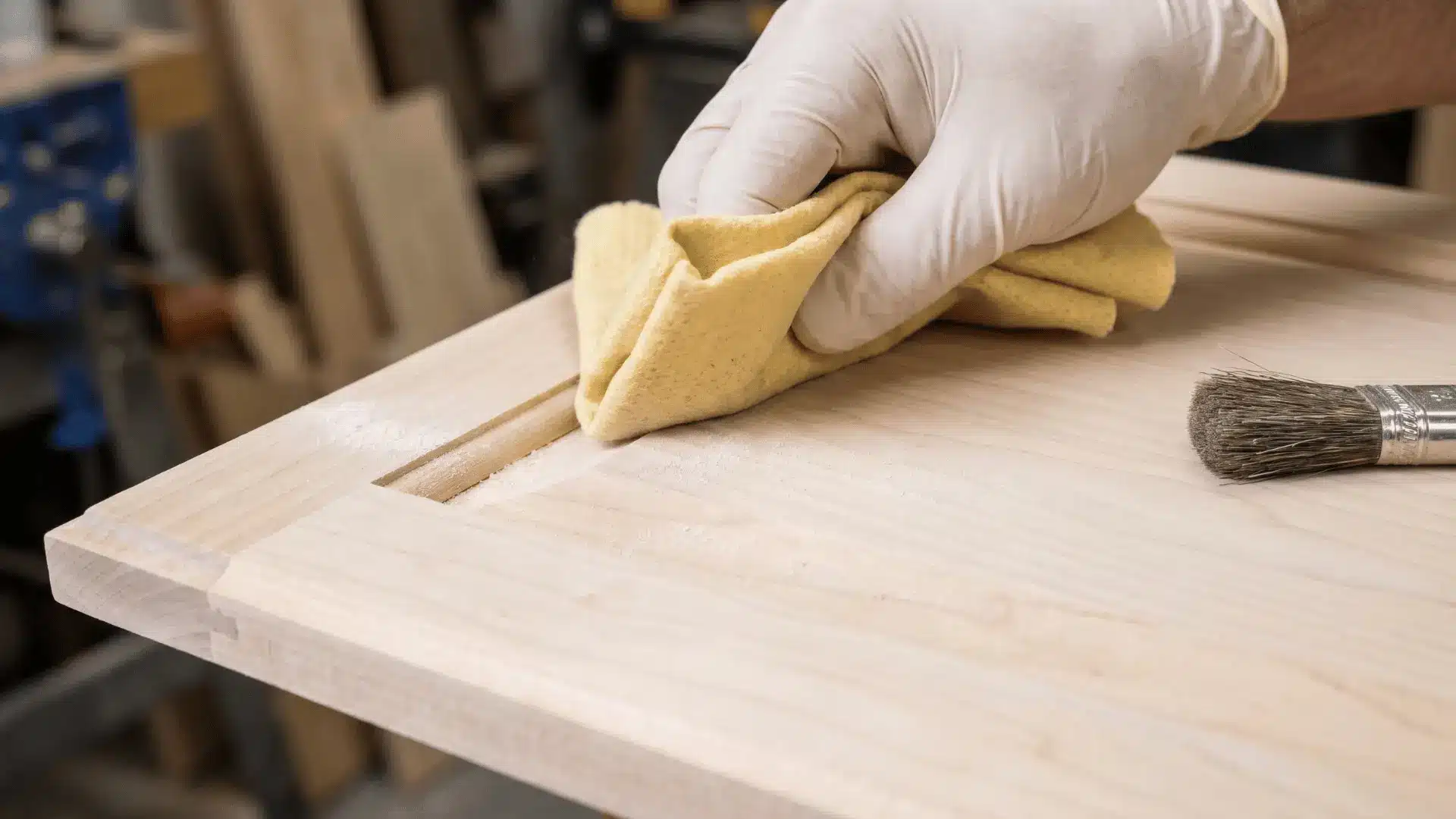
Vacuum sanding dust from corners, grooves, and cabinet edges carefully. Leftover dust can create a rough texture and weaken the primer bond.
After vacuuming, wipe the cabinets with a microfiber cloth and finish with a tack cloth to remove fine dust particles.
Step 6. Repair Dents or Holes if Needed
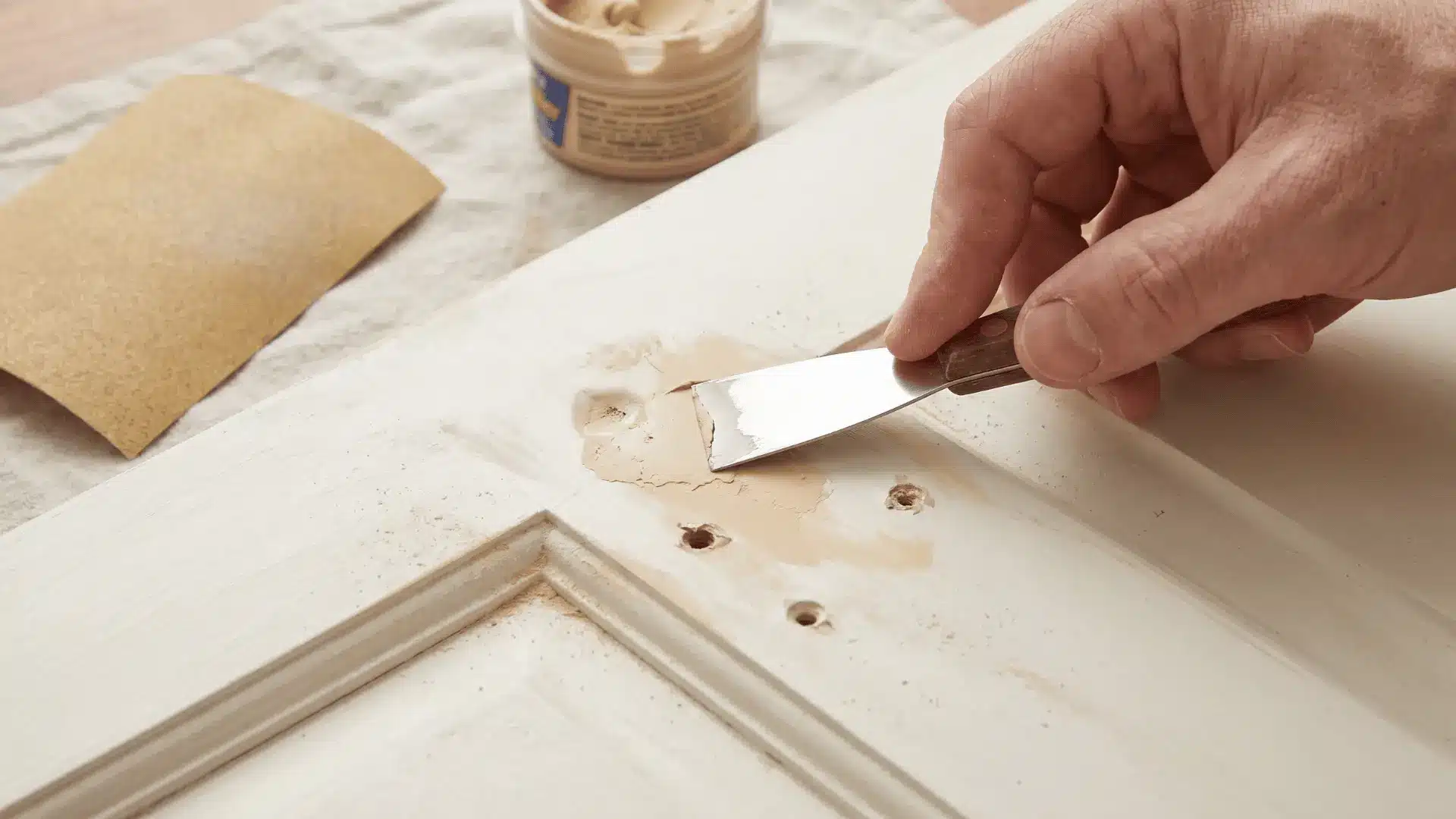
Fill dents, scratches, or old hardware holes with wood filler before priming. Let the filler dry completely, then sand the repaired area smooth so it blends evenly with the surrounding surface.
If the cabinets still feel slick after cleaning, repeat the cleaning step before moving on to primer.
Priming and Painting Bathroom Cabinets
Glossy, painted, or laminate surfaces usually need a bonding primer because standard wall primer does not grip well enough for long-term bathroom use.
Water-based bonding primer works well for most cabinets, while shellac-based primer is better for stains or old oil-based finishes. Acrylic enamel, alkyd, and urethane-modified alkyd paints are the best choices because they hold up better in humid bathrooms.
Satin and semi-gloss are usually the best finishes. Satin hides flaws better, while semi-gloss holds up better and is easier to clean.
How to Apply Primer and Paint?
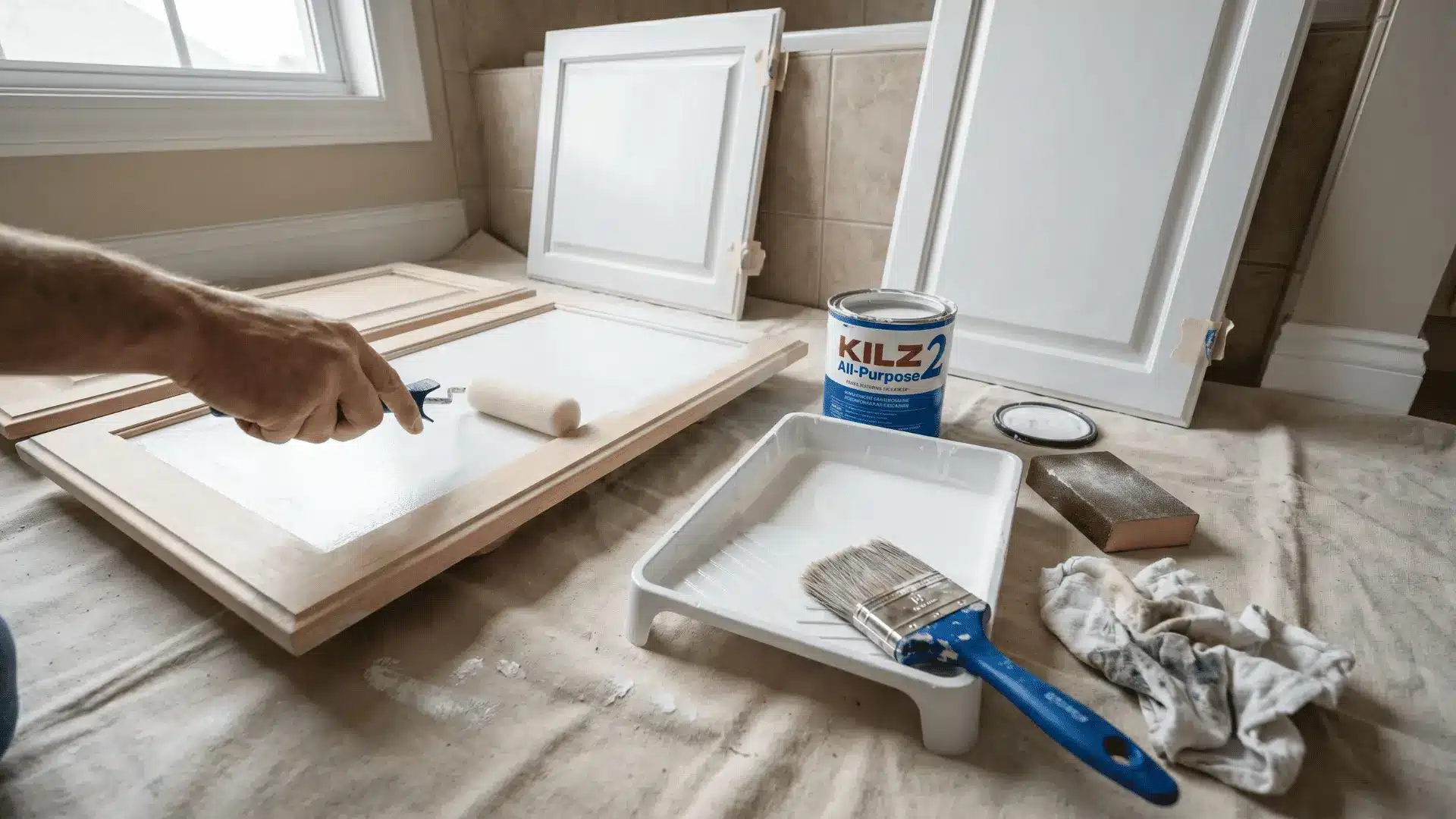
Step 1. Use the Right Tools: Use an angled brush for cabinet corners, grooves, and edges where rollers cannot reach properly. Use a foam or mohair roller on flat cabinet doors and drawer fronts for a smoother finish with less texture.
Step 2. Apply Thin, Even Coats: Thin coats dry more evenly and reduce drips, sagging, and uneven texture. Heavy coats trap moisture and take much longer to cure properly.
Step 3. Let Each Coat Dry Fully: Allow primer and paint to dry completely before applying another coat. Painting too early can weaken adhesion and affect the final finish.
Step 4. Sand Lightly Between Coats: Lightly sand between coats with 220-grit sandpaper to smooth out dust, texture, or raised grain. Wipe away dust fully before applying the next coat.
Step 5. Keep the Bathroom Ventilated: Good airflow helps paint dry and cure more evenly. Avoid painting right after hot showers or in humid conditions because excess moisture can weaken the finish later.
Bathroom Cabinet Paint Drying and Cure Timeline
Fresh cabinet paint may feel dry within 24–48 hours, but it still needs time to cure fully. During this stage, the finish remains soft underneath and can be damaged easily from pressure, moisture, or steam exposure.
| Timeline | What to Do |
|---|---|
| First 24 hours | Keep cabinet doors separated and avoid heavy steam exposure if possible |
| After 24–48 hours | Light handling is usually safe, but avoid rough use |
| First several days | Avoid steam, heavy items, and repeated wiping |
| After full cure | Normal cleaning and daily bathroom use are usually safe |
One of the biggest DIY mistakes is assuming paint is fully finished once it feels dry to the touch.
Common Bathroom Cabinet Painting Mistakes
Most paint problems stem from skipped prep work or rushed drying times. Avoiding these mistakes helps the finish last longer and look smoother.
Common mistakes include:
- Skipping deep cleaning before sanding
- Painting over glossy surfaces without scuff-sanding
- Applying thick paint coats
- Using standard wall paint instead of cabinet enamel
- Painting in a humid bathroom
- Rushing the cure time before normal use
Taking time to prep, paint, and cure the cabinets properly can help the finish stay smoother and last much longer.
Conclusion
Painting bathroom cabinets can refresh the entire bathroom without the cost of replacing the vanity completely.
The biggest factor behind a long-lasting finish is not just the paint itself, but how well the surface is cleaned, primed, and allowed to cure afterward.
Careful prep, controlled drying time, and the right paint system help the coating last longer under daily bathroom use.
Even older or laminate cabinets can look updated with the correct prep process. If you want a smoother, more durable result, take your time at each stage instead of rushing through the project.
Have questions or tips from your own project? Share them in the comments below.
Frequently Asked Questions
Can You Use Wall Paint on Bathroom Cabinets?
Standard wall paint is not ideal for bathroom cabinets because it stays softer and wears down faster. Cabinet enamel and alkyd paints create a harder finish that handles moisture and cleaning better.
Can You Paint Laminate Bathroom Cabinets?
Yes, laminate bathroom cabinets can be painted with the right bonding primer. Light sanding and proper primer selection help the paint grip non-porous laminate surfaces more effectively and last longer.
Why Is My Bathroom Cabinet Paint Peeling?
Bathroom cabinet paint usually peels because of poor cleaning, skipped sanding, wrong primer, or excess humidity. Rushing the cure time can also weaken adhesion and damage the painted surface later.