School & Office Furniture: Buy Smart for Every Space

School and Office Furniture: How to Buy Right for Large Spaces
Table of Contents
- Why Large-Scale Furniture Buying Goes Wrong
- School Furniture — What Institutions Actually Need
- Types of School Furniture and Where They Fit
- Customizable Office Cubicles — The Case for Going Modular
- What to Check Before You Order Cubicles
- Cubicle Types Compared
- Price Ranges
- How to Choose a Supplier
- FAQs
- Conclusion
Why Large-Scale Furniture Buying Goes Wrong
Most procurement mistakes happen before anyone browses a single product page. A facilities manager gets a deadline, a budget, and a rough headcount — and starts ordering without a clear plan for how the space actually gets used.
The result is predictable. Chairs arrive too small for adult users. Cubicle panels block natural light. School desks get replaced within three years because nobody checked weight ratings for daily student use.
The global school furniture market was valued at $5.56 billion in 2024 and is projected to reach $9.08 billion by 2034. The office cubicle market stood at $783.5 million in 2025, growing at 4.6% annually. Both markets are expanding because demand is real — but so is the volume of poor purchasing decisions driving repeat orders.
School Furniture — What Institutions Actually Need
Schools are not offices. The furniture requirements differ in almost every way — users change every year, spaces serve multiple functions, and durability gets tested at a level most commercial environments never see.
Around 54% of schools globally are now prioritizing ergonomic designs. As of 2025, 47% of US schools have adopted flexible or height-adjustable furniture. That is not a preference trend — it is a response to documented health outcomes linked to poor posture and static seating during development.
If you need to Buy furniture for school, the decision goes beyond aesthetics. You are buying something used by hundreds of people daily, often roughly, across a decade or more. Frame strength and surface resistance matter far more than finish color.
Types of School Furniture and Where They Fit
Classroom Desks and Chairs The core requirement for any learning space.
Height-adjustable models are now standard in well-funded institutions — they accommodate different age groups and reduce the need to replace furniture as students grow. Best for: Primary schools, secondary classrooms, special needs environments.
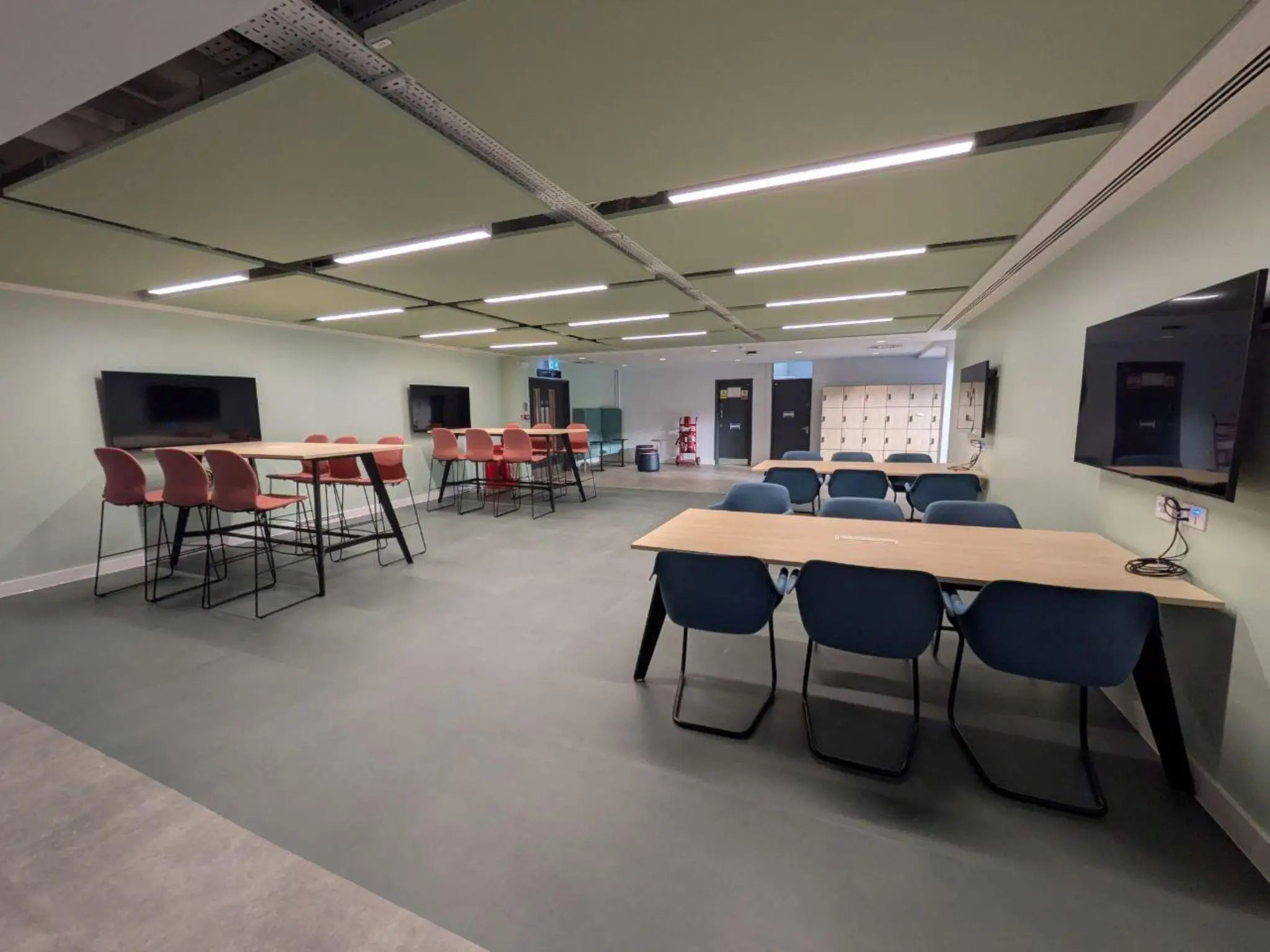
Collaborative and Activity Tables Rectangular tables work for rows. Trapezoidal and curved tables work for groups. The shape of the table determines whether a classroom supports lecture-style teaching, group work, or both. Best for: Universities, libraries, project-based learning environments.
Library and Reading Area Furniture Softer seating, lower shelving, and reading carrels. Modern school libraries function as media and research hubs — furniture needs to reflect that, not just provide somewhere to sit quietly. Best for: School libraries, resource centers, quiet study zones.
Laboratory and Technical Room Furniture Chemical-resistant work surfaces,
adjustable-height benches, proper ventilation clearance. Standard classroom furniture does not belong in a lab. This is a safety issue, not just a specification preference. Best for: Science labs, vocational training rooms, design and technology spaces.
Customizable Office Cubicles — The Case for Going Modular
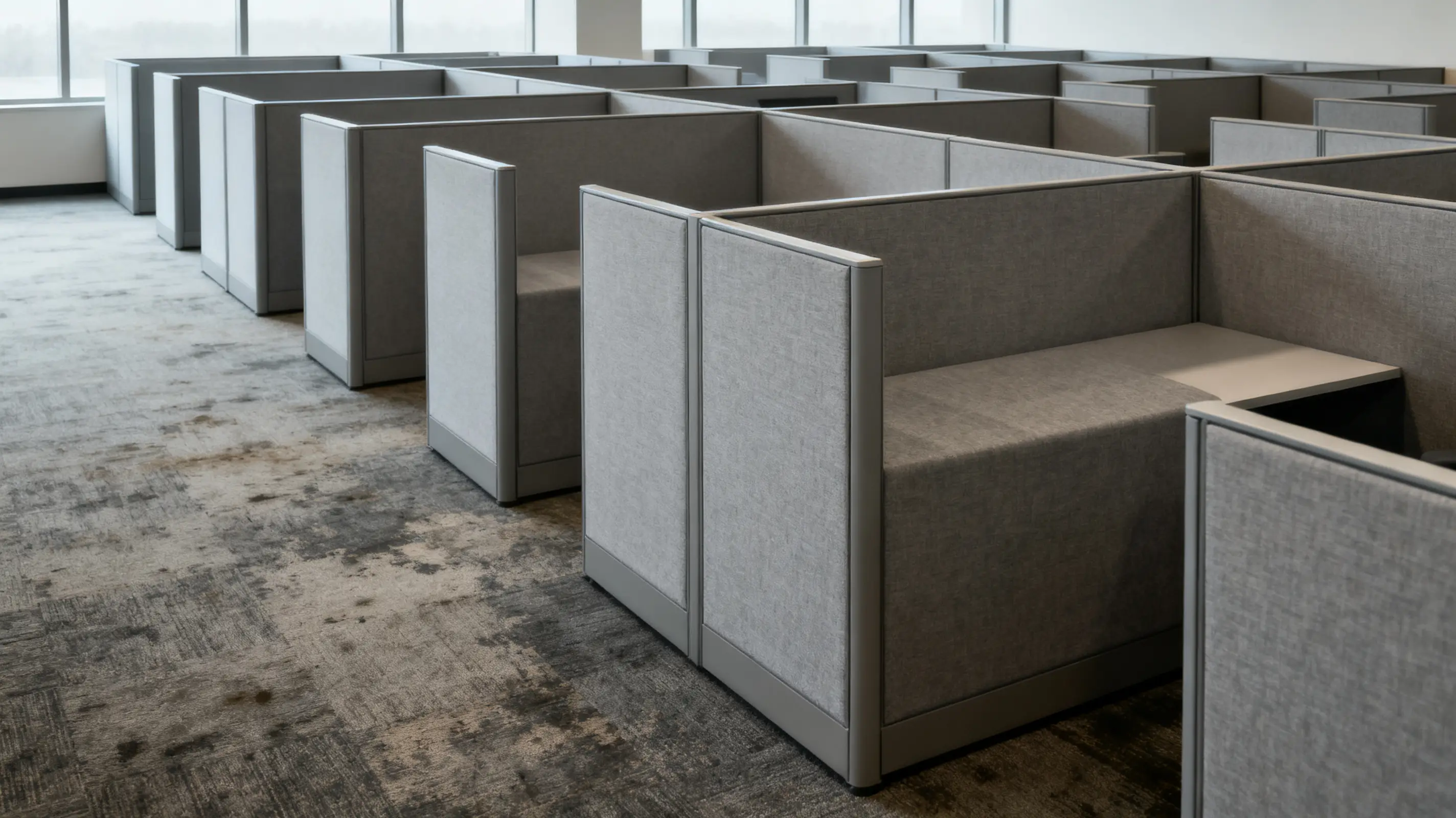
Traditional fixed cubicles made sense when headcounts were stable and layouts never changed. Neither condition applies to most large companies today.
Hybrid work has reshaped how office space gets used. Approximately 30–35% of new corporate installations in 2025 consist of modular systems that can be reconfigured without construction. You move panels, not walls.
For large companies specifically, customizable office cubicles for large companies solve a problem standard products cannot: scale without uniformity. A legal team and a creative team should not be working in identical configurations. Customization means specifying panel height, surface material, power routing, acoustic rating, and finish — at the department level, not just the building level.
Modular cubicle market growth is driven by exactly this demand. Businesses are not going back to one-size-fits-all layouts.
What to Check Before You Order Cubicles
- Panel height: 42–48 inches for open-plan collaboration. 65–72 inches for privacy-focused or confidential roles.
- Surface material: Fabric panels absorb sound. Laminate panels are easier to clean. Glazed panels maintain light in dense layouts.
- Power and data integration: Built-in cable management and power columns are standard in commercial-grade systems. Retrofitting power after installation costs significantly more.
- Acoustic performance: Panel fabric density and mass directly affect sound attenuation. If the system does not specify an NRC (Noise Reduction Coefficient) rating, that is a gap worth questioning.
- Reconfiguration cost: Some systems require a technician for any layout change. Others are designed for in-house reconfiguration with basic tools. For a growing company, this difference adds up fast.
- Frame quality: Steel frames with welded joints outperform clip-together systems under daily commercial use. Check the rated load before specifying overhead storage.
Cubicle Types Compared
|
Cubicle Type |
Panel Height |
Best Use |
Reconfigurab le |
Price Per Station (USD) |
|
Low-Wall Open Plan |
42–48 in |
Creative, sales, collaborative teams |
Yes |
$400–$900 |
|
Mid-Wall Standard |
54–60 in |
General office, admin, HR |
Yes |
$700–$1,400 |
|
High-Wall Privacy |
65–72 in |
Legal, finance, confidential roles |
Partial |
$1,200–$2,500 |
|
Benching System |
None / 12 in |
Hot-desking, hybrid offices |
Yes |
$300–$700 |
|
Full Modular Suite |
Custom |
Executive, department-specific |
Yes |
$2,000–$5,000+ |
Price Ranges for School and Office Furniture
|
Item |
Entry Level (USD) |
Mid-Range (USD) |
Commercial Grade (USD) |
|
Student Desk + Chair Set |
$60–$120 |
$120–$250 |
$250–$500 |
|
Height-Adjustable School Desk |
$150–$300 |
$300–$550 |
$550–$1,000 |
|
Activity / Collaboration Table |
$180–$350 |
$350–$700 |
$700–$1,500 |
|
Lab Bench (per unit) |
$400–$800 |
$800–$1,500 |
$1,500–$3,500 |
|
Office Cubicle (per station) |
$400–$900 |
$900–$2,000 |
$2,000–$5,000+ |
How to Choose a Supplier
Supplier selection matters as much as product selection — especially for orders covering 50 or more units across multiple room types.
For schools, look for suppliers with specific educational references. A company that furnishes corporate offices well does not automatically understand the durability demands of a secondary school environment.
For large-company cubicle orders, the key question is what happens after delivery. Installation support, reconfiguration assistance, and warranty service all require the supplier to remain a functional partner — not just a one-time vendor.
What a Reliable Supplier Provides:
- Verified product specifications, not marketing language
- Sample units available before bulk commitment
- Transparent lead times in writing, with accountability for delays
- Separate warranty terms for frame, surface, and upholstery
- Volume pricing that reflects actual order size
For institutions and businesses needing both school furniture and commercial cubicle solutions under one roof, manufacturer-direct suppliers offer real advantages in pricing and customization. Meet&Co, founded in 2007 and supplying businesses across 100+ countries, provides factory-direct pricing on full commercial and educational furniture ranges — including custom sizing, finishes, and OEM configurations for large-scale orders.
FAQs
What is the most important factor when buying furniture for a school?
Durability under high daily use. School furniture gets used by hundreds of students across multiple years. Frame strength, surface resistance, and joint quality determine real lifespan far more than appearance. For seating, a minimum weight rating of 250 lbs and a hardwood or steel frame are baseline requirements for serious procurement.
How Many Cubicle Stations Fit in 1,000 Square Feet?
Roughly 8–14 stations depending on panel height and configuration. Low-wall benching systems fit closer to 14. Full high-wall privacy cubicles with storage typically fit 8–10. Always allow at least 44 inches of main aisle clearance and 36 inches for secondary aisles — standard ADA compliance minimums for commercial spaces.
Are Modular Cubicles Worth the Higher Upfront Cost for Large Companies?
Yes, in most cases. Modular systems cost 15–30% more than fixed equivalents but eliminate repurchasing when layouts change. For a company that reorganizes annually, savings on reinstallation and replacement typically recover the cost difference within two to three years.
What Material Is Best for School Furniture Surfaces?
High-pressure laminate (HPL) for desks and tables — it resists scratches, moisture, and cleaning chemicals better than painted MDF or veneer. For seating upholstery in school environments, vinyl or a performance fabric rated above 50,000 double rubs handles the daily wear realistically.
What Lead Times Should I Expect for Large Furniture Orders?
Standard stock items ship in 1–3 weeks. Custom cubicle systems and made-to-order school furniture typically require 4–10 weeks from order confirmation. For school-year deadlines or corporate fit-out timelines, confirm the production schedule in writing before signing any purchase order.
Conclusion
Whether outfitting a classroom block or rolling out cubicle systems across a 500-person floor, the core principle is the same — buying right once is cheaper than buying twice.
- School furniture: prioritize durability, ergonomics, and height adjustability over price alone
- Office cubicles: specify panel height, acoustic rating, and power integration before comparing costs
- Both categories: always request sample units before committing to bulk orders
- Supplier selection: verify references, warranty terms, and post-delivery support before signing
- Volume orders: go manufacturer-direct for pricing, customization, and direct accountability
- Lead times: get production schedules in writing — institutional deadlines are not flexible
The right furniture does not just fill a room. It determines how well students learn and how effectively employees work. That is worth getting right.