Curb Appeal on a Budget: Refreshing Your Front Yard Without Draining Your Wallet

You can tell a lot about a house before you ever reach the front door. The lawn, the beds along the walkway, the splash of color near the porch: people read all of it in the few seconds it takes to walk up or drive past. The encouraging part is that you don’t need a five-figure renovation to make that first impression count. Some of the cheapest changes you can make to a property happen outside, in the dirt, with plants that quietly do most of the work for you year after year.
Here’s the thing about budget curb appeal: the smartest money usually goes toward things that come back on their own.
Plant Things That Return on Their Own
That’s exactly why Perennials are the backbone of an affordable front yard. Unlike annuals, which you buy, plant, and replace every single season, perennials die back in winter and return the following spring without costing you another cent. Buy once, enjoy for years. Over three or four seasons, that simple math turns a modest planting into one of the best values in the entire yard.
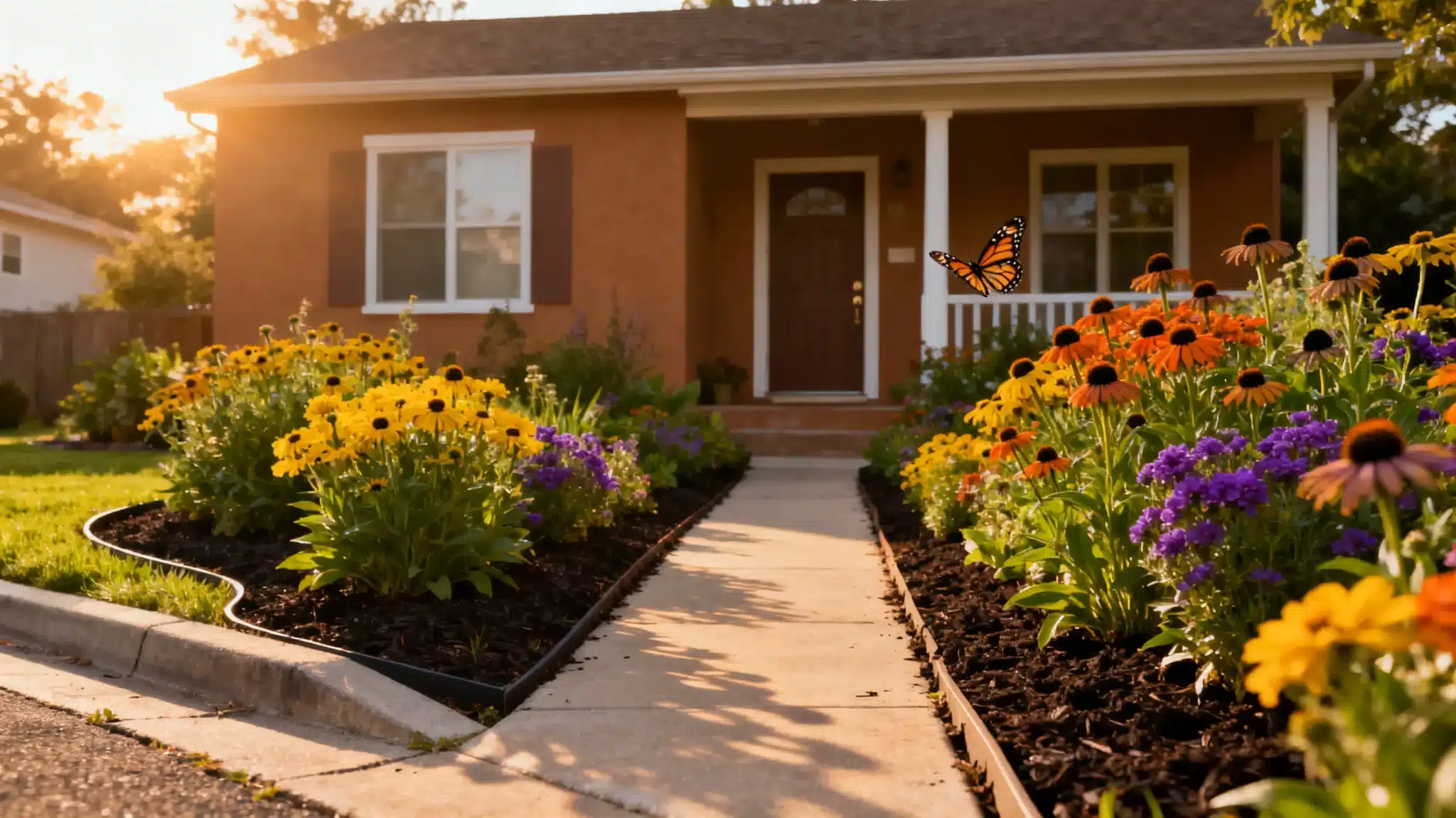
They also reward a little patience. A small perennial that looks unassuming in its first year often doubles or triples in size by year two, filling in beds that would otherwise need expensive nursery-grown fillers. Coneflowers, black-eyed Susans, daylilies, and coreopsis are forgiving by nature. They tolerate uneven watering, and most shrug off the kind of summer heat that finishes off fussier ornamentals. If you’ve ever felt like you have a brown thumb, this is the place to start. Perennials are about as close to a sure thing as gardening gets.
Group Your Plants, Don’t Scatter Them
Where you put plants matters as much as what you buy. A common budget mistake is picking up one of everything and dotting single plants across the yard, which reads as busy and unfinished. Cluster instead. Three or five of the same plant grouped together creates a block of color the eye actually catches from the street. It looks intentional, which is the whole point, and it stretches a small budget, because a tight grouping carries far more visual weight than the same number of plants spread thin.
Repeat a color or a shape in two or three spots and the front yard starts to feel designed rather than random. That sense of cohesion is what neighbors and buyers register as “well kept,” even when they couldn’t tell you exactly why.
Give the Yard Some Life
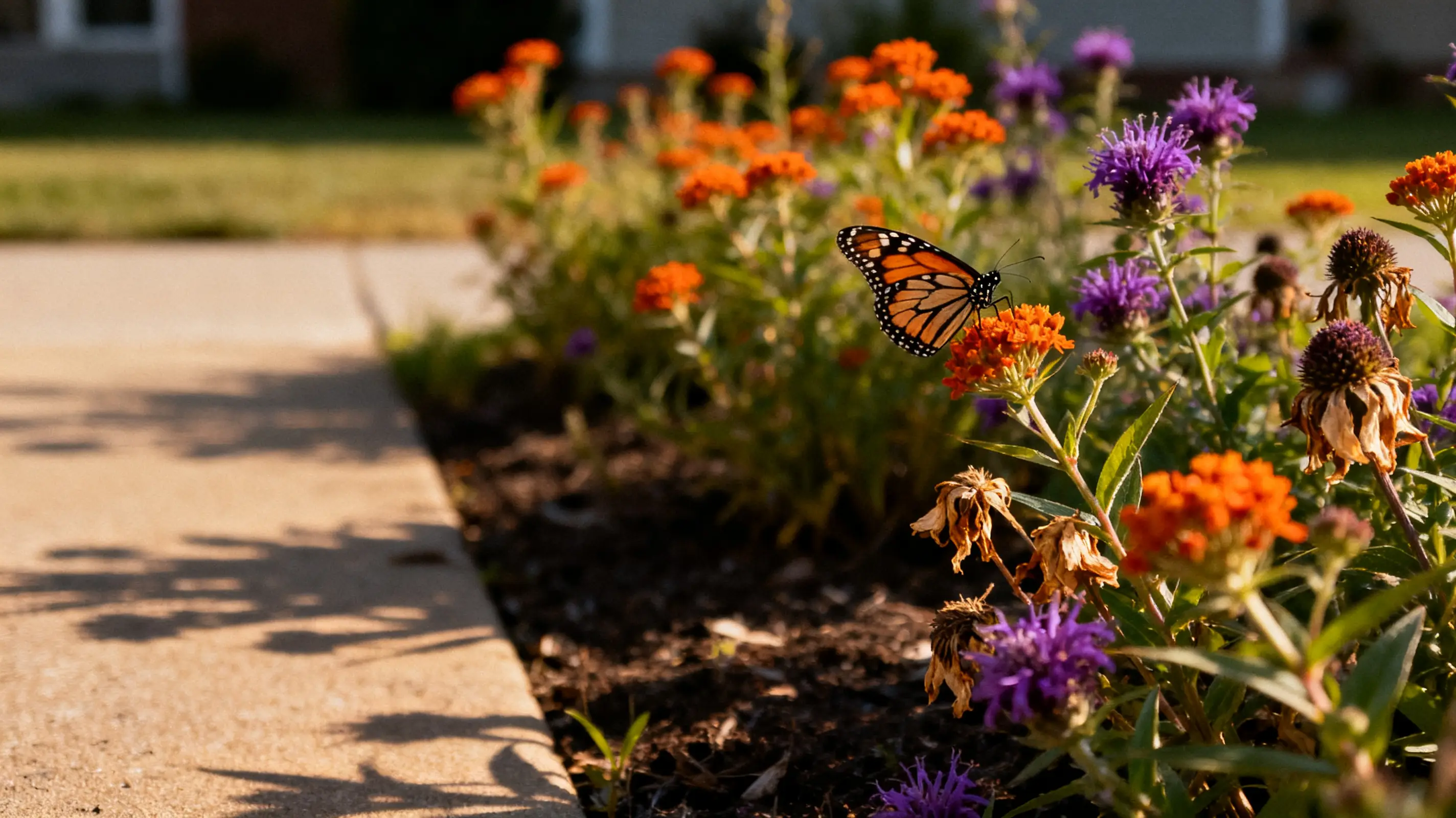
Once the structure is in place, the cheapest way to make a yard feel alive is to invite movement into it. A bed planted with pollinator plants hums with bees, butterflies, and the occasional hummingbird, and that activity does something no amount of hardscaping can match: it makes a space feel warm and lived in. A still yard looks like a photo. A yard with a monarch drifting across it looks like a home.
There’s a practical payoff, too. Many of the strongest pollinator performers, including bee balm, butterfly weed, asters, and goldenrod, are native species that evolved to handle local conditions. That means less watering, less fuss, and fewer replacements down the road. You aren’t only buying flowers; you’re buying lower maintenance. And because natives tend to be tough, they hold their own through the dry stretches of summer when a thirstier garden would brown out and beg for rescue.
The Payoff Goes Past the Looks
None of this is purely cosmetic. The exterior of a home carries real financial weight. According to research reported by Phys.org, homes with strong curb appeal sell for roughly 7% more than comparable properties, a premium that climbs to 10% or 11% in slower markets. On a typical home, that isn’t pocket change. It can translate into tens of thousands of dollars tied directly to how the front yard reads.
What makes plant-based curb appeal so appealing on a budget is the gap between what it costs and what it returns. A handful of well-chosen perennials and a tidy bed might run a couple hundred dollars and a weekend of work, yet they shape the very first thing a visitor or an appraiser sees. Few home improvements give you that kind of return for so little outlay. A kitchen refresh runs into the thousands; a bed of perennials that fills out a little more every year asks for a fraction of that, and it keeps improving long after the receipt is forgotten.
Small Moves That Punch Above Their Price
A few low-cost habits keep everything looking sharp between plantings:
- Fresh mulch. A single layer of dark mulch instantly frames your beds and signals care. It also suppresses weeds and holds moisture, so your plants need less attention.
- Clean edges. A crisp line between lawn and bed, cut with a simple edging tool, makes even a plain yard look professionally maintained.
- Seasonal color near the entry. One or two pots of bright blooms by the door draw the eye exactly where you want it.
- Prune and deadhead. Snipping spent flowers keeps plants blooming longer and stops a bed from looking tired by midsummer.
None of these cost much. Together, they make the difference between a yard that looks neglected and one that looks loved.
One more habit pays off over time: think in layers from the curb back to the house. Low groundcovers and shorter bloomers go up front, mid-height perennials fill the middle, and a taller plant or shrub anchors the back of the bed. That stepped arrangement reads as depth, and depth is what separates a yard that looks planted from one that just looks dug.
Start Small, Then Build
You don’t have to redo the whole yard in one weekend. Pick a single bed, ideally the one nearest the front door, and get it right: a cluster of dependable perennials, a few pollinator favorites, fresh mulch, clean edges. Once you see how much that one change lifts the whole front of the house, you’ll know exactly where to spend your next free Saturday. Curb appeal on a budget was never about spending more. It’s about planting smart, letting time do the heavy lifting, and choosing plants that give back season after season.