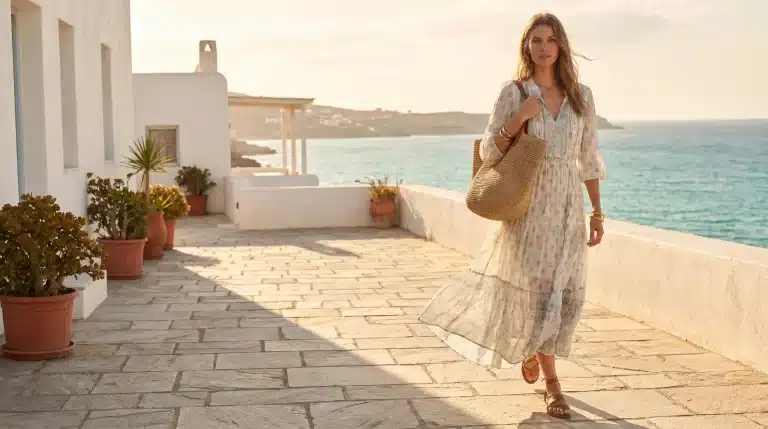

Albania Is Rewriting Mediterranean Summer Tourism

How Albania Is Redefining the Mediterranean Summer Travel Economy
Five years ago, Albania barely registered on most Americans’ travel radar. Today it’s a different story entirely. The country logged 12.5 million international visitors in 2025 – a 7% jump over 2024 – and tourism now accounts for 26.4% of national GDP, generating €5.4-5.6 billion in gross foreign exchange earnings, according to ALTAX economic research. That’s not a regional curiosity anymore. That’s a structural shift in where people choose to spend their summers in Europe.
Why Albania? And why now? Those two questions have very different answers – and both matter.
How Did a Country Most Travelers Overlooked Become One of Europe’s Fastest-Growing Destinations?
The short answer: price, coastline, and timing. Croatia got crowded. Greece got expensive. Montenegro got discovered and then overdeveloped. Albania, sitting right next door on the Adriatic and Ionian coasts, was quietly building infrastructure, expanding airport capacity, and opening its Albanian Riviera to the kind of traveler who knows what a turquoise bay looks like and won’t pay Santorini prices to stand in it.
Numbers back that up cleanly. In 2019, Albania welcomed 6.4 million foreign visitors. By 2024 that figure had reached 11.7 million – an 82% increase in five years, according to INSTAT, Albania’s national statistics office. The momentum didn’t stall in 2025 either. Arrivals rose another 7%, overnight stays by non-resident tourists climbed 80-90% over the same multi-year window, and average visitor spending went up by around 30-35%. These aren’t the numbers of a destination getting a short burst of social media attention. They represent a sustained repositioning in how Mediterranean summer travel gets distributed across the map.
That particular stat suggests Albania is crossing from “adventurous traveler” niche into broader mainstream American awareness, which tends to accelerate growth further once it starts.
The Ground-Level Reality of Traveling Through Albania
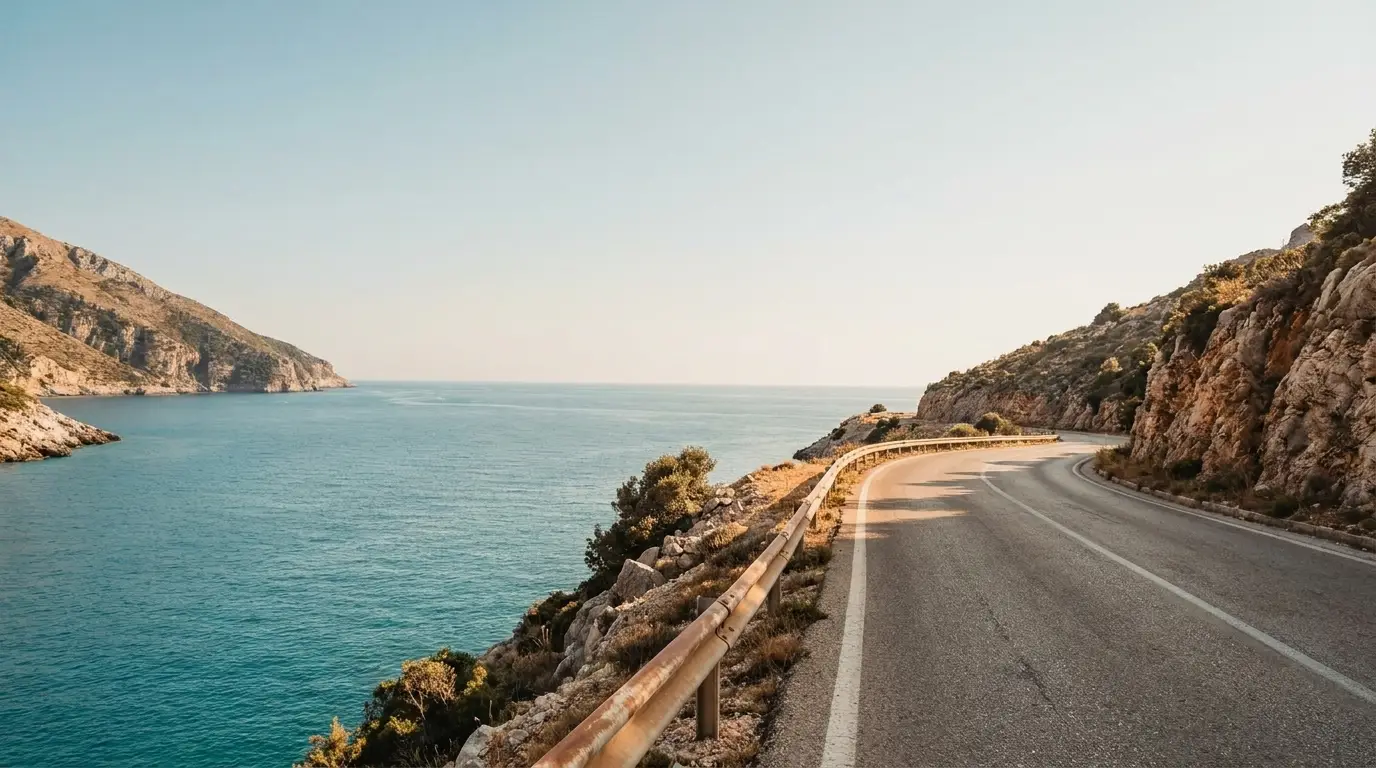
Albania’s appeal is genuine, but it comes with a practical caveat that most travel coverage glosses over. The country is compact – roughly the size of Maryland – but geographically varied in a way that doesn’t suit passive, hotel-bound tourism. The Albanian Riviera stretches south along the Ionian coast, dramatic and largely undeveloped. Berat and Gjirokastër sit inland as UNESCO World Heritage Sites. The northern Alps around Theth and Valbona draw hikers willing to earn the views. Tirana, the capital, is a livelier city than most first-time visitors expect.
Getting between these places requires wheels. Public transport links between regions are improving but still limited – especially outside peak season. Travelers who’ve put in the time to test the options on the ground consistently point toward independent vehicle hire as the practical backbone of any multi-region itinerary. Platforms offering car rental Albania– Localrent among them – have built traction in the market specifically because the no-deposit booking model eliminates the friction point that catches many visitors off guard at foreign rental counters. Pick-up flexibility at Tirana International Airport’s Rinas terminal, or at city locations across the country, means the first logistical headache of the trip disappears quickly.
A family that arrives in Tirana and wants to work south through Berat, down to the Riviera near Saranda, and loop back north through Gjirokastër – that’s a doable week-long itinerary with a hire car that simply isn’t doable any other way without significant time lost and compromises made.
The Economic Story Behind the Tourism Numbers
Tourism in Albania isn’t just a consumer story. It’s becoming a macroeconomic pillar in a way that has policy implications well beyond the country itself. When a sector grows from roughly 20% of GDP in 2019 to 26.4% in 2025, and supports approximately 274,000 jobs – one in every five positions in the national economy – the stakes around managing that growth get serious.
Albania’s National Tourism Strategy (2025-2030) targets tourism revenue above €5 billion annually, with a target of 30 million visitors by 2030.
That tension between ambition and constraint shows up in the investment decisions being made on the ground. The Vlora International Airport, a $170 million project that opened in June 2025 with capacity for 2 million passengers annually, takes pressure off Tirana’s airport – which handled 10.7 million passengers in 2024, more than three times its volume from a decade earlier. The European Investment Bank approved a €50 million loan in early 2025 to address water supply and wastewater infrastructure in northern Albania, acknowledging that the physical systems weren’t keeping pace with visitor numbers.
What separates successful tourism economies from oversaturated ones, according to research published by the World Bank’s Tourism Watch in early 2026, is the quality of coordination between destination management, infrastructure investment, and data-driven planning. Albania’s record so far is mixed – strong on promotion, uneven on enforcement, improving on infrastructure.
A Model Still in Progress
Albania in 2026 sits at a peculiar crossroads. The raw numbers are compelling enough to put it on the itinerary of travelers who’ve already done the obvious Mediterranean circuit and are looking for what comes next. The infrastructure is functional enough for an independent traveler willing to do a bit of homework. The culture, the food, the geography – all of it punches well above the country’s size.
What’s still developing is the policy and management framework that turns a tourism boom into a durable economic model. The 274,000 jobs the sector currently supports could grow substantially under the 2025-2030 strategy – or they could be undercut by the kind of seasonal overcrowding that damaged the reputations of destinations Albania is currently benefiting from.
For travelers considering a Mediterranean summer in 2026 or 2027, the signal is fairly clear. Albania is a destination with genuinely distinctive geography, pricing that still reflects its emerging status, and a hospitality sector working hard to demonstrate that the Balkans can do summer as well as anywhere on the sea. The question isn’t whether it’s worth the trip. It’s whether the trip gets taken before everyone else figures that out too.