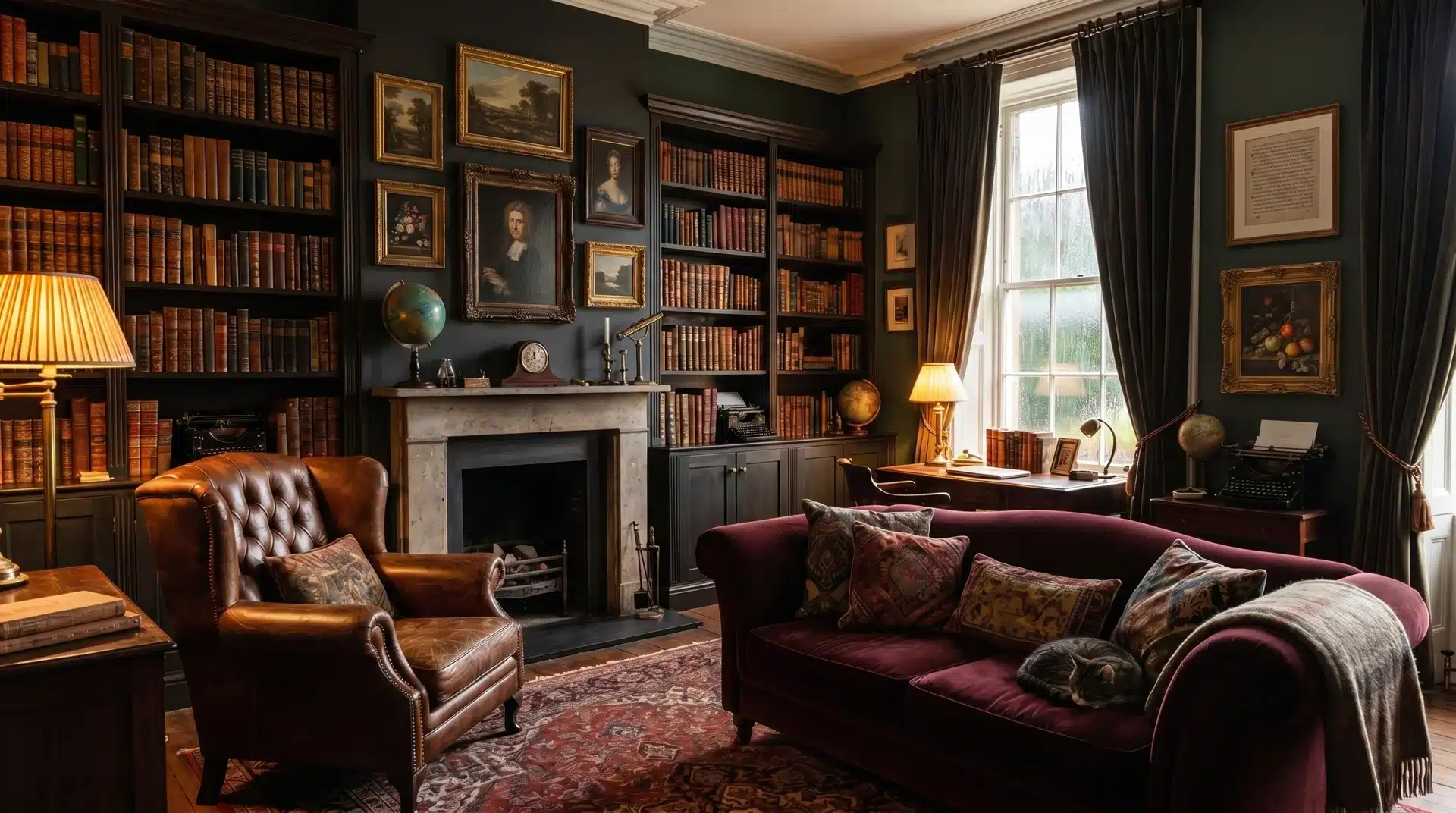
13 Dark Academia Interior Design Ideas Worth Stealing

There’s something about dark academia interior design that pulls you in before you even understand why.
Maybe it’s the smell of old books you can almost imagine. Maybe it’s the way candlelight looks against a deep green wall.
Whatever it is, this aesthetic taps into a specific fantasy: the kind where you’re curled up in a leather chair at midnight, surrounded by towering bookshelves, with a cup of tea going cold on an antique desk.
The good news? You don’t need a centuries-old manor to pull it off. These 13 ideas will show you exactly how.
What Makes a Dark Academia Interior Unique
Dark academia interiors combine mood, texture, and intellectual charm to create spaces that feel like private libraries or historic studies. Going dark or buying antiques alone won’t get you there.
The aesthetic is about layering elements that tell a story. Your story, filtered through the lens of old European universities and classical scholarship.
1. Rich, Moody Color Palettes
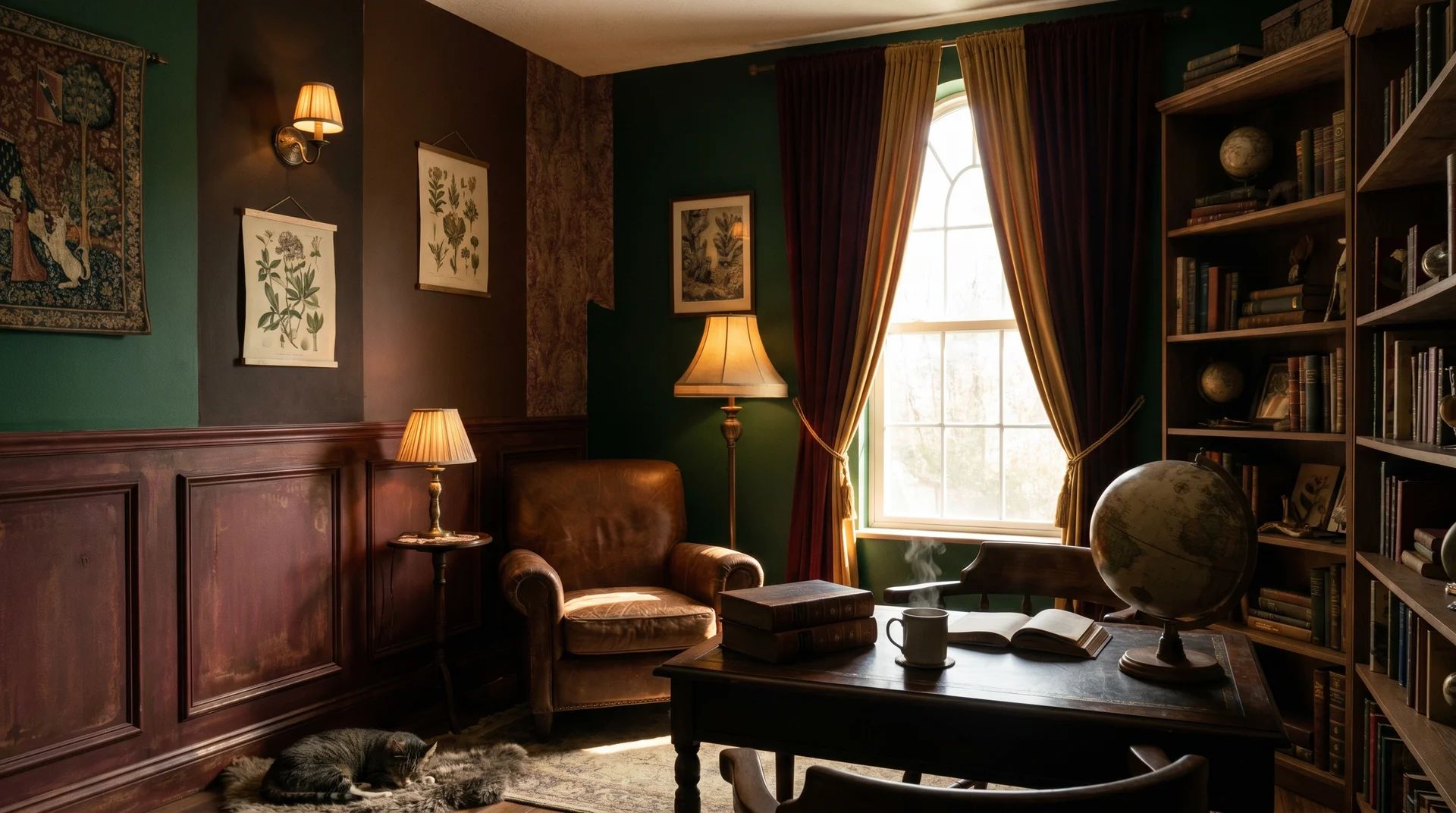
The color palette is where dark academia lives or dies. Deep forest greens, warm burgundies, chocolate browns, and muted taupes are the backbone of this look. Think of the walls of an old Oxford library or the leather spine of a well-read book.
These colors work because they absorb light rather than bounce it, giving rooms a cocooning quality that feels both serious and deeply comfortable.
Muted neutrals like cream, parchment, and dusty gray work well as secondary tones to stop a room from feeling like a cave. Keep everything warm-toned. Cool grays and bright whites will immediately undercut the mood.
2. Textures and Materials That Add Depth
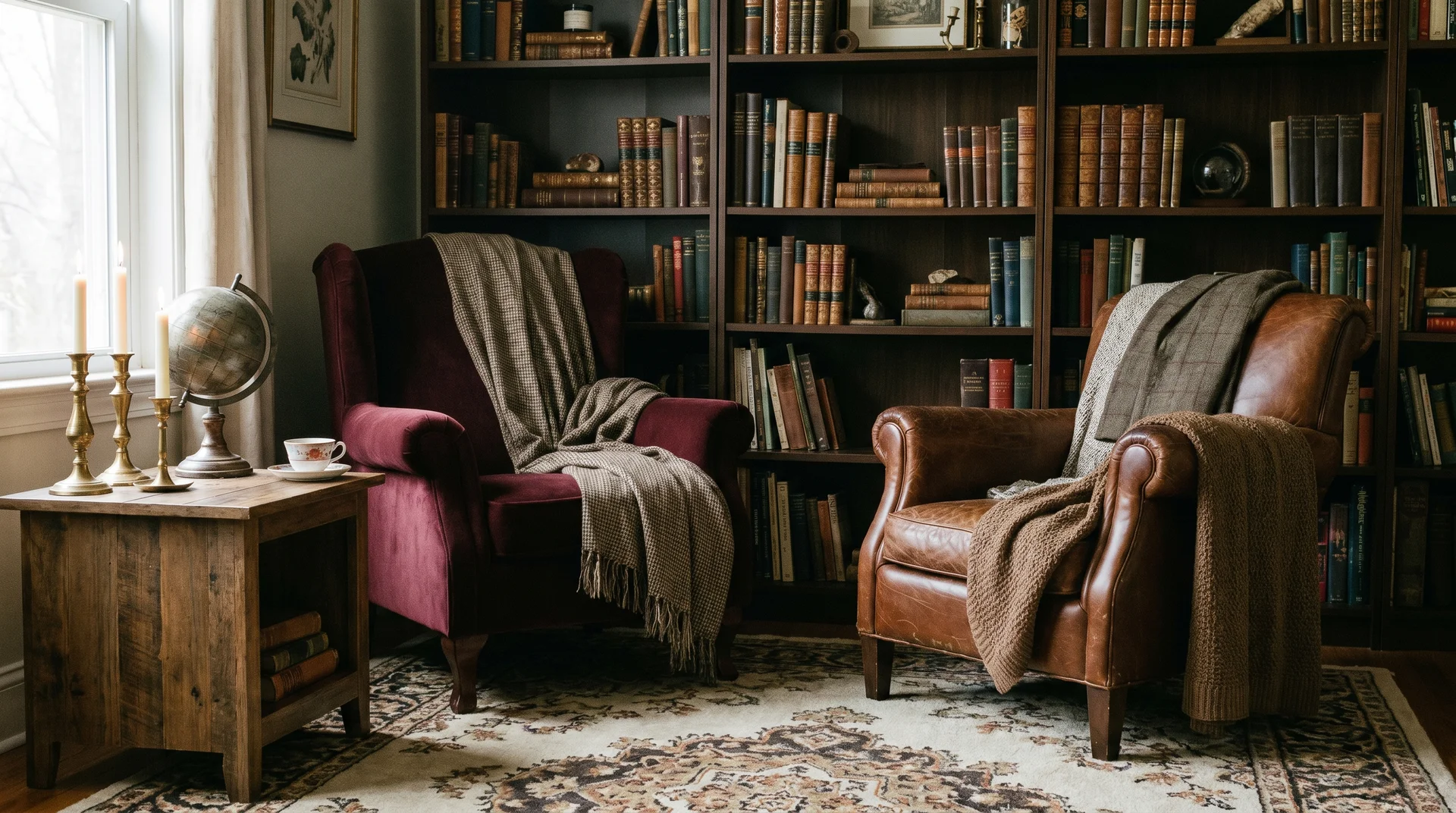
If color sets the mood, texture is what makes you want to stay. Velvet, leather, dark wood, aged brass, and linen are the materials dark academia relies on most. A leather Chesterfield sofa reads differently from a modern sectional.
A brass desk lamp with a warm bulb does something that a chrome pendant just can’t. None of this has to be expensive, either. A flea market mirror with a tarnished gilt frame does exactly the same atmospheric work as a high-end antique.
Mixing textures matters. Pairing the smoothness of a wooden desk with a rough-woven wool rug creates the kind of contrast that keeps a room from feeling flat or set-dressed.
3. Literary and Vintage Decor
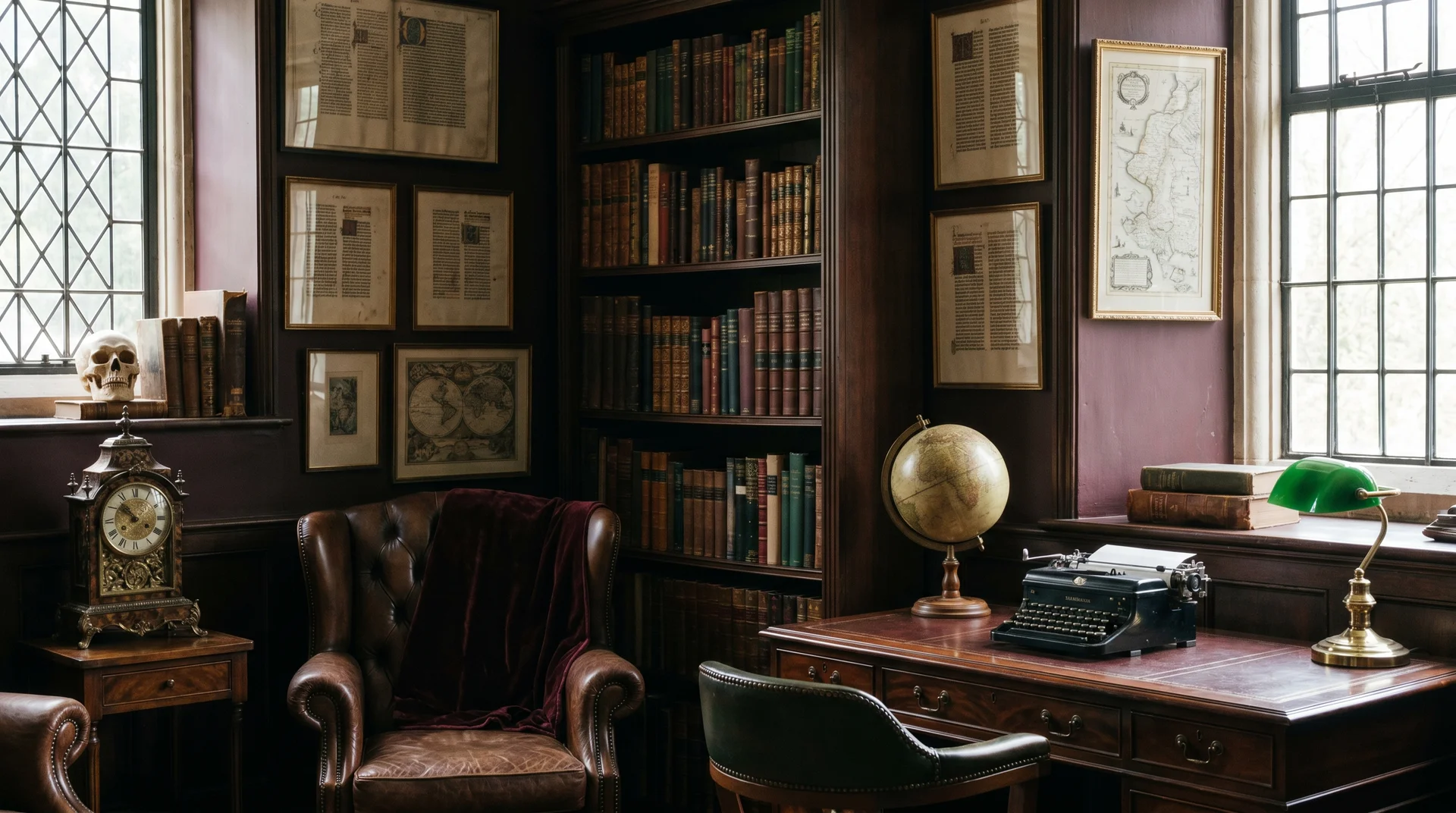
Books are load-bearing in this aesthetic. Not just on shelves, either. Books stacked on desks, tucked under side tables, propped open on a windowsill.
Beyond books, the details that make dark academia feel real rather than costume-y include framed maps or handwritten manuscripts, old scientific prints, anatomical diagrams, globes, hourglasses, and antique clocks.
These items carry the intellectual energy that defines the style. They suggest a person who reads, thinks, and collects.
13 Dark Academia Interior Design Ideas
These 13 ideas provide concrete ways to bring the dark academia aesthetic to your home while keeping it functional and cozy.
1. Floor-to-Ceiling Bookshelves
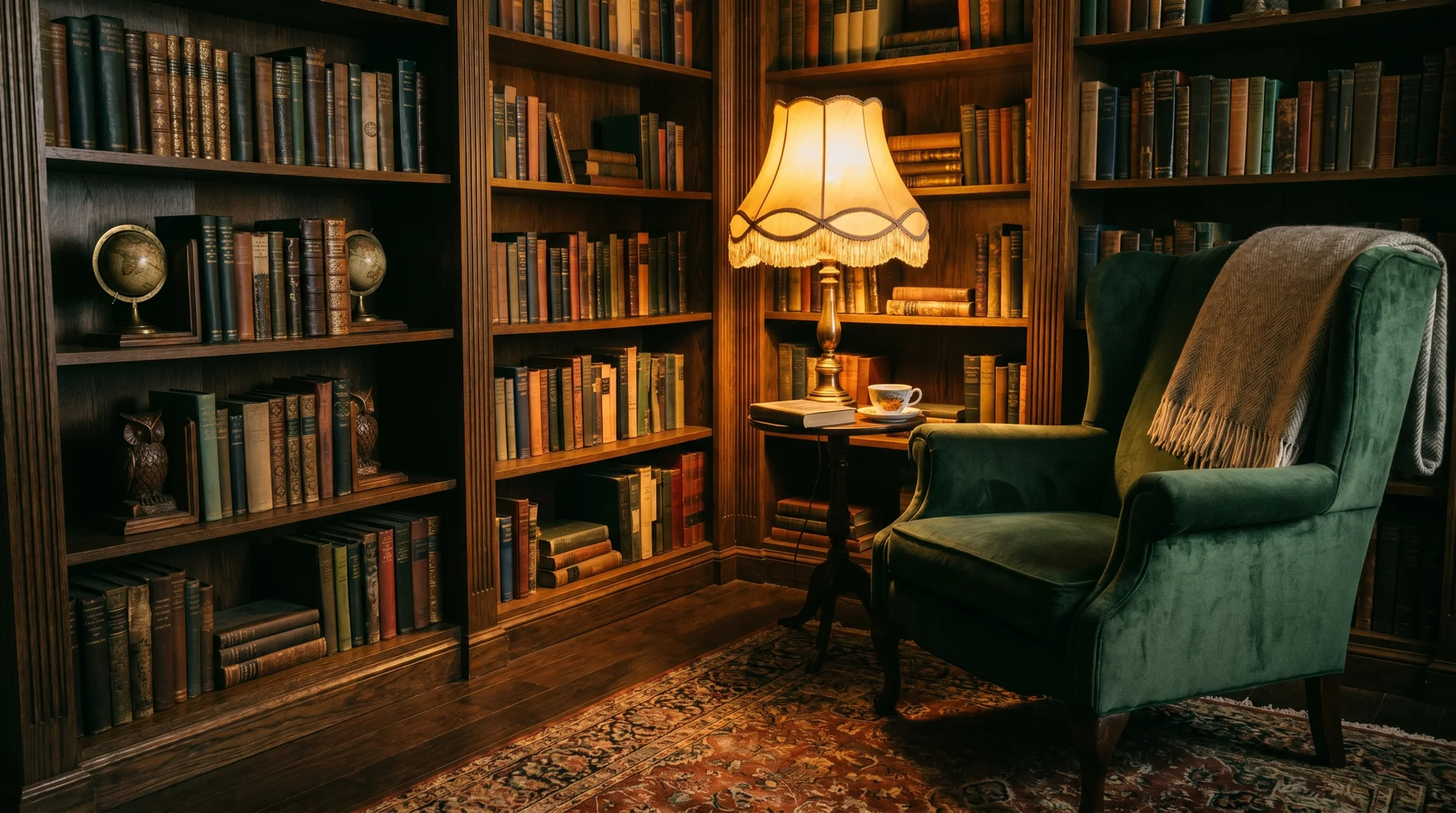
Nothing telegraphs dark academia quite like a wall of books. Floor-to-ceiling wooden shelves, ideally in dark walnut or ebony-stained wood, are the closest thing to a non-negotiable in this style.
Fill them with a mix of old and new books, add decorative brass or stone bookends, and leave a few spaces for small objects, such as a candle, a small bust, or a framed photograph. The visual weight of a full bookshelf wall anchors any room and gives it immediate depth.
2. Antique Desks and Writing Areas
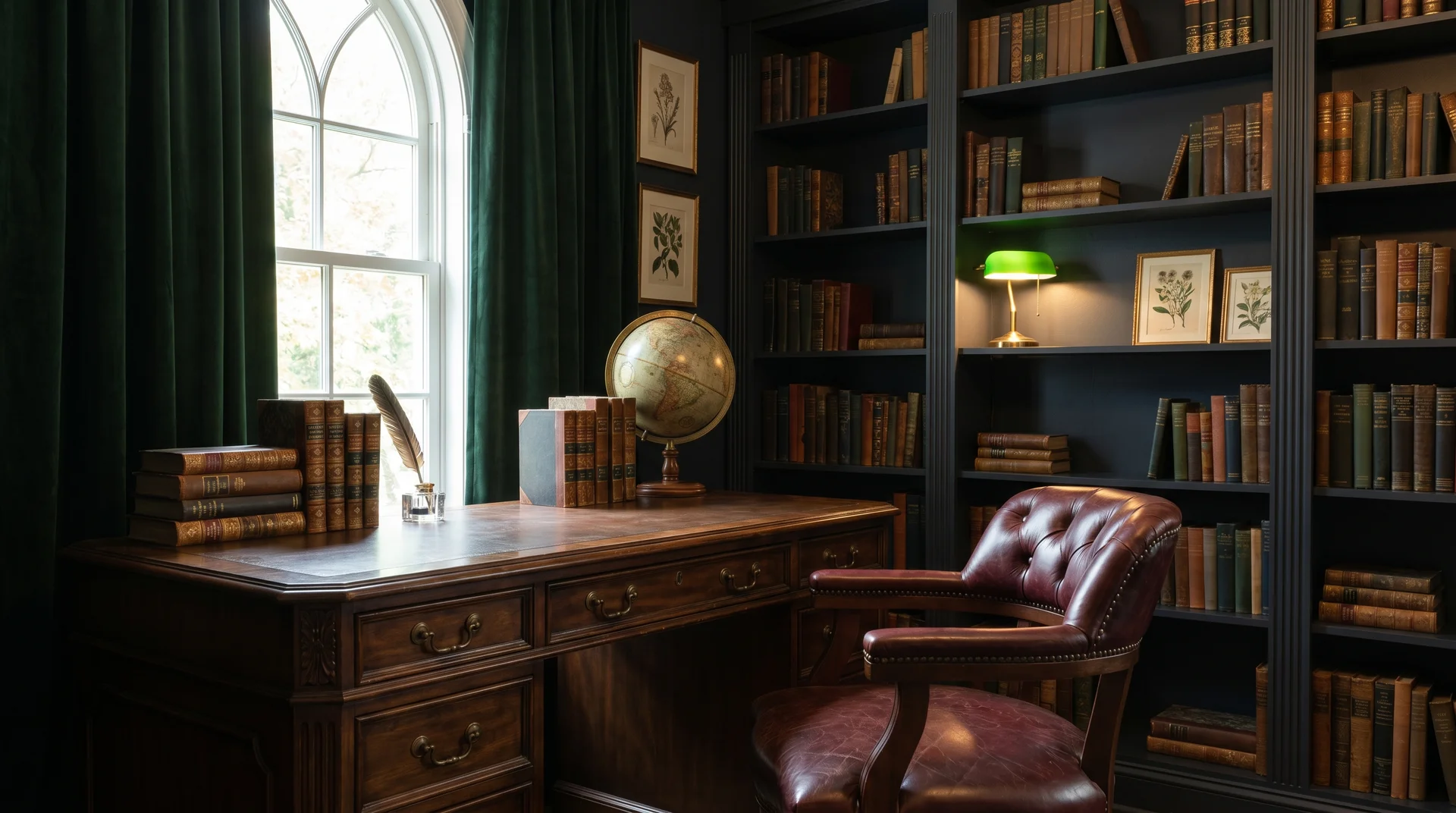
A dark wood writing desk with carved details or tapered legs transforms a corner of any room into a proper study. It doesn’t have to be a genuine antique. Many furniture brands make dark academia-adjacent pieces at accessible prices.
Style it with a blotter, a letter tray, a glass inkwell, and a good desk lamp. The effect is a space that looks like someone actually thinks there, not just scrolls their phone.
3. Moody Wall Colors
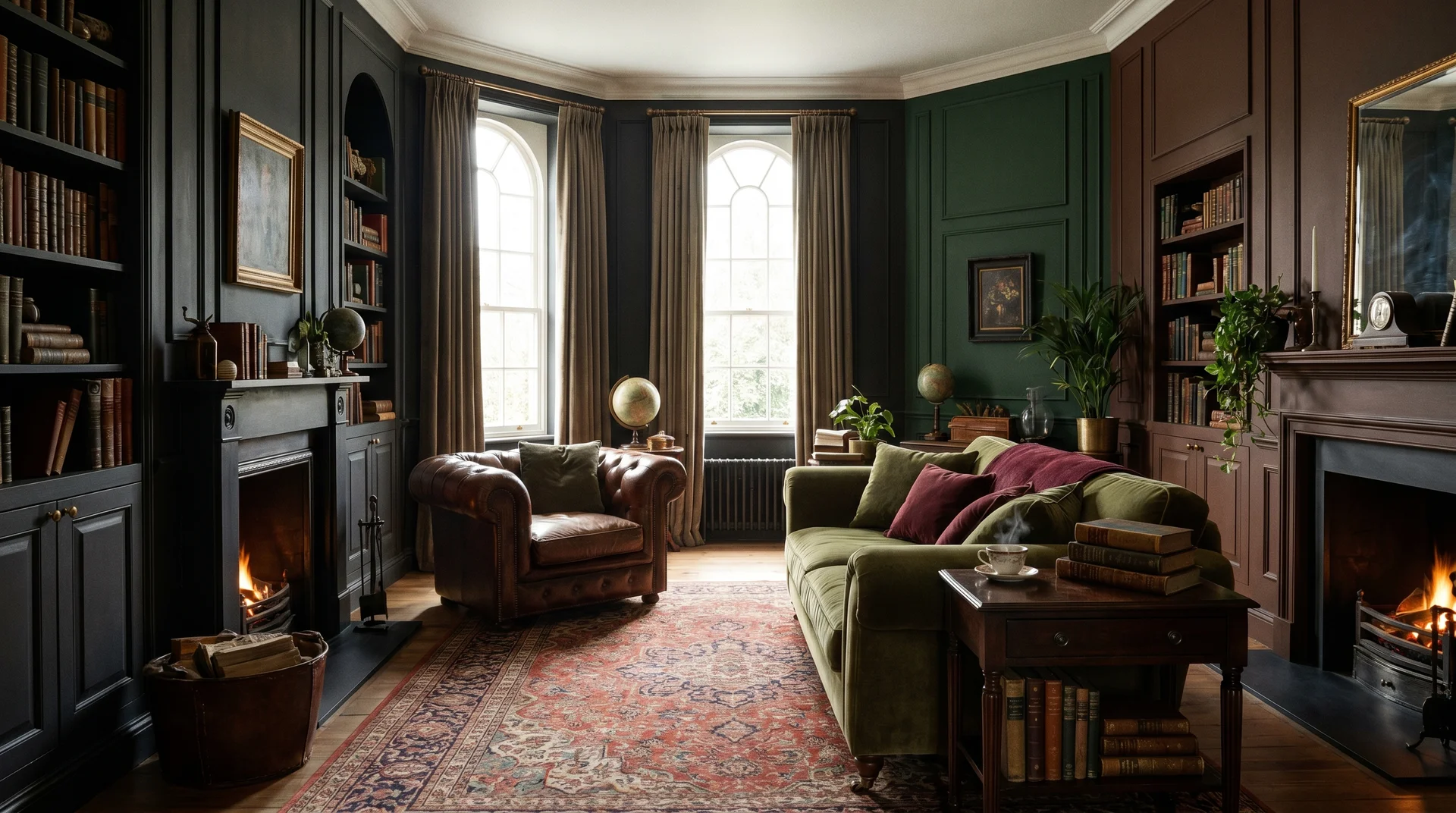
If you’re ready to commit, paint is the fastest way to change the feel of a room. Charcoal, deep hunter green, and warm tobacco brown are the most reliably dark academia wall colors.
A charcoal bedroom feels dramatically different from a white one. A green-walled study is a psychologically different room. For renters who can’t paint, dark-toned wallpaper or large canvas art achieves a similar effect.
4. Leather Armchairs and Seating
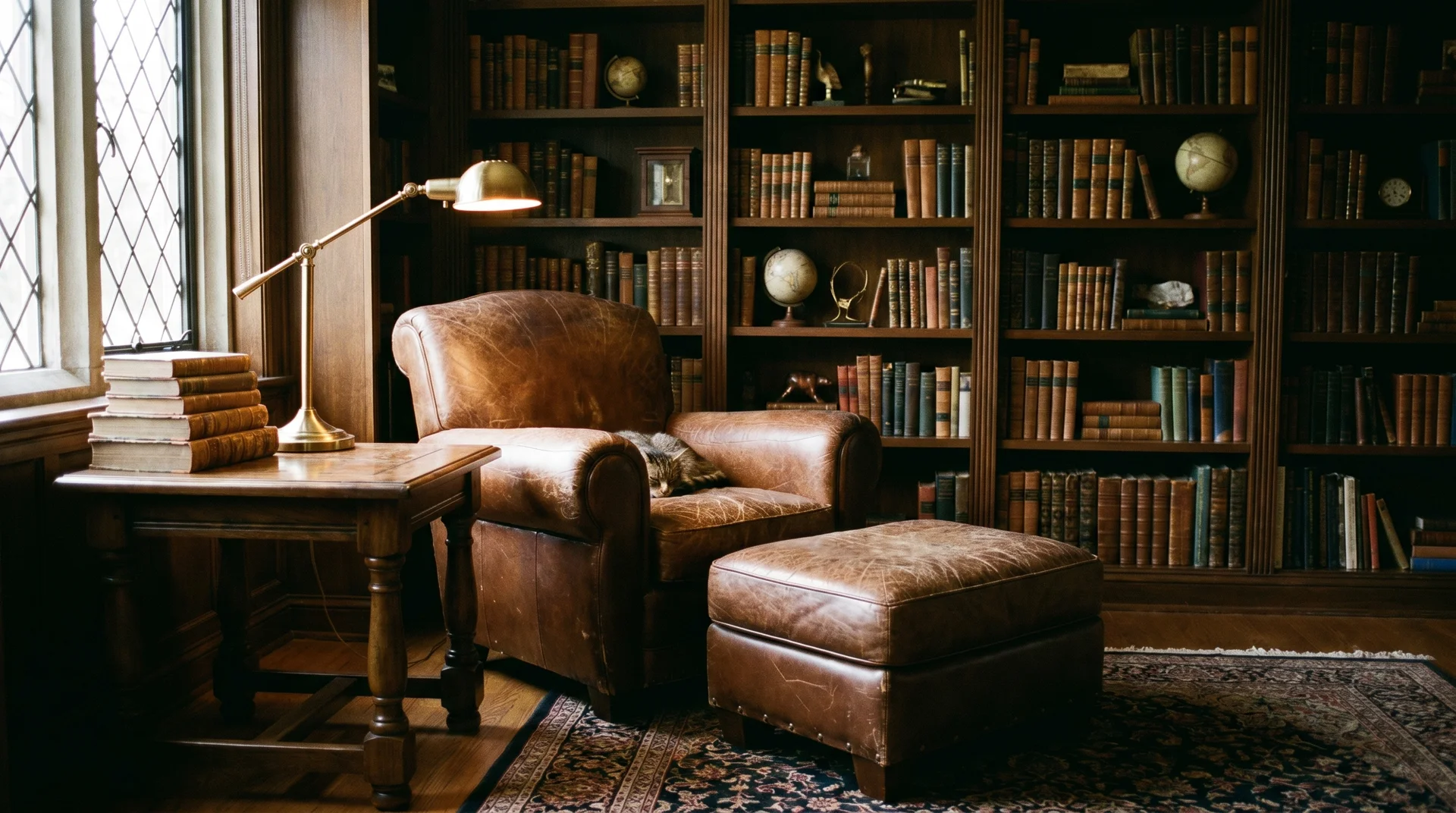
A worn leather armchair is an icon of this aesthetic for good reason. It has the right visual weight, it improves with age, and it signals comfort without looking precious.
A Chesterfield, a club chair, or a simple tufted style all work. If leather is out of budget, a convincing faux-leather or a dark-dyed fabric chair in forest green or burgundy comes close.
Pair it with a small side table, a floor lamp, and a footstool, and you have a reading setup that looks like it belongs in a Gothic novel.
5. Velvet Sofas and Cushions
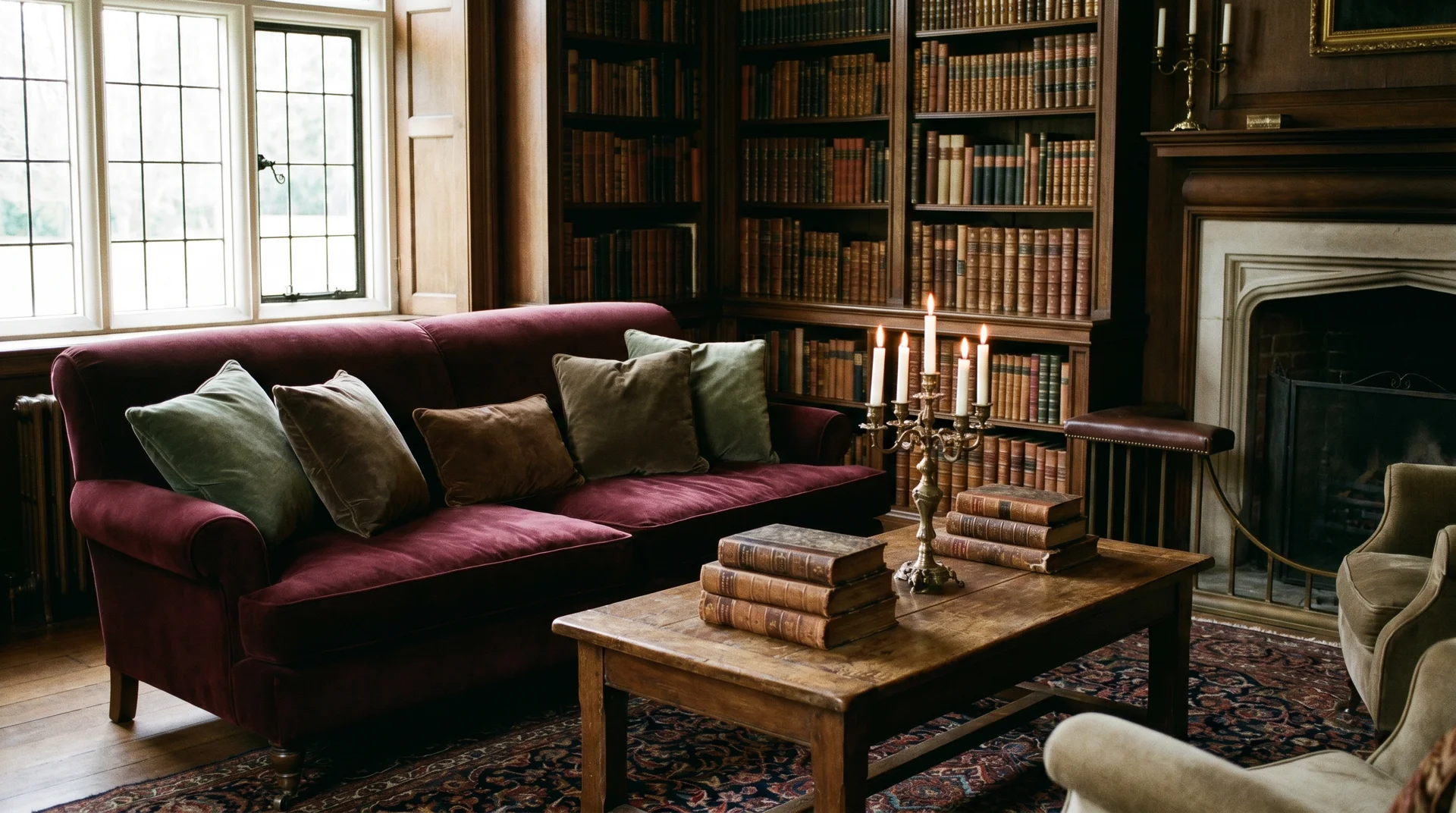
Velvet and dark academia go together the way wool socks and cold floors do. A deep plum, forest green, or midnight blue velvet sofa has the rich, tactile quality that the aesthetic demands.
If a full velvet sofa feels like too much, start with velvet cushions in jewel tones thrown across a neutral linen sofa. In a reading nook, a velvet settee or chaise lounge in a dark jewel tone does the job perfectly.
6. Layered Lighting
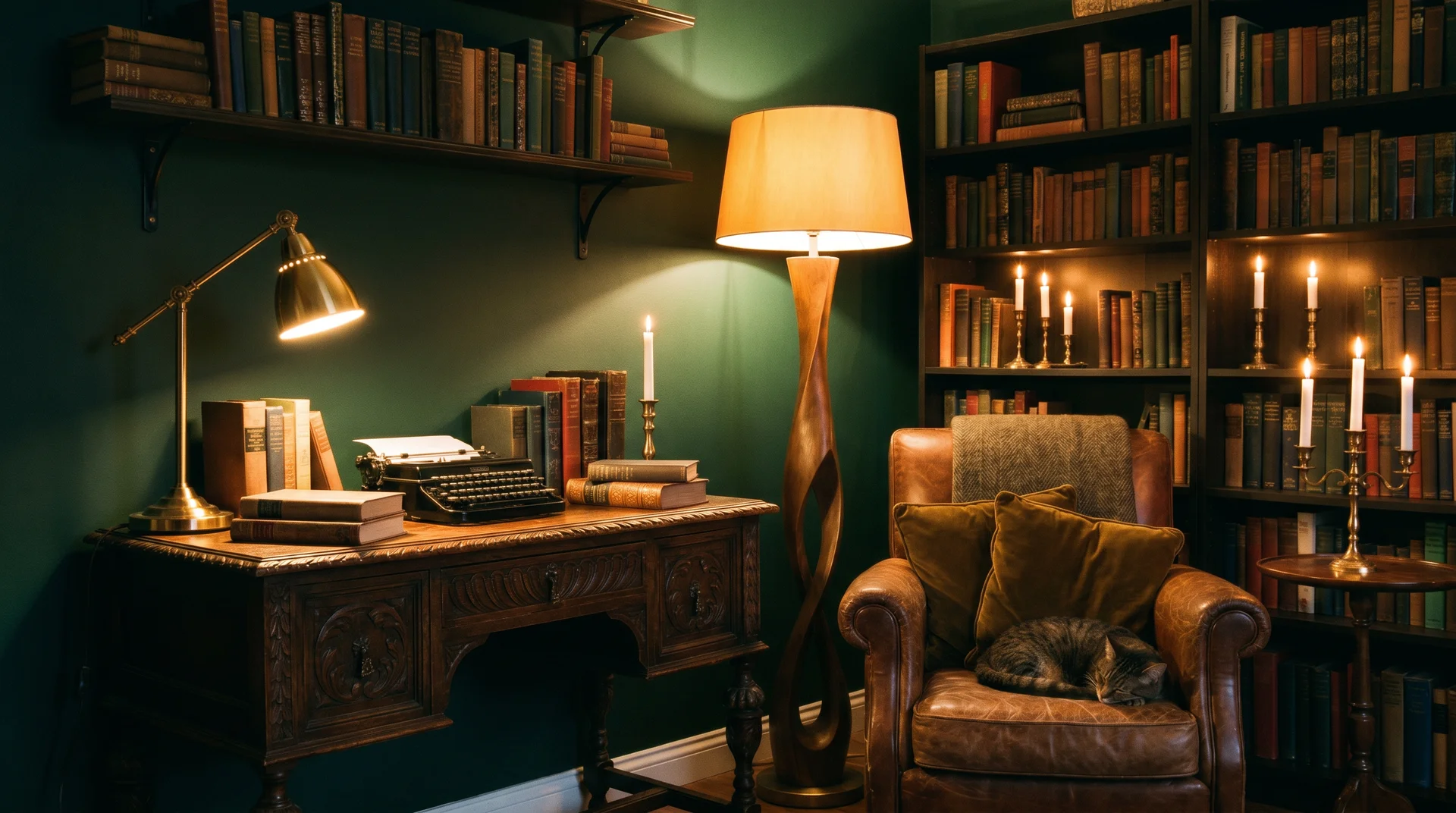
Overhead lighting is the enemy of dark academia interiors. Bright, even ceiling light strips away exactly the atmosphere you’re trying to build.
Instead, layer multiple smaller light sources: a green-shaded banker’s lamp on the desk, a floor lamp beside the armchair, a few candles on the mantle, and maybe wall sconces with warm amber bulbs.
The goal is pools of warm light that make the room feel like early evening, regardless of the actual time.
7. Ornate Mirrors and Frames
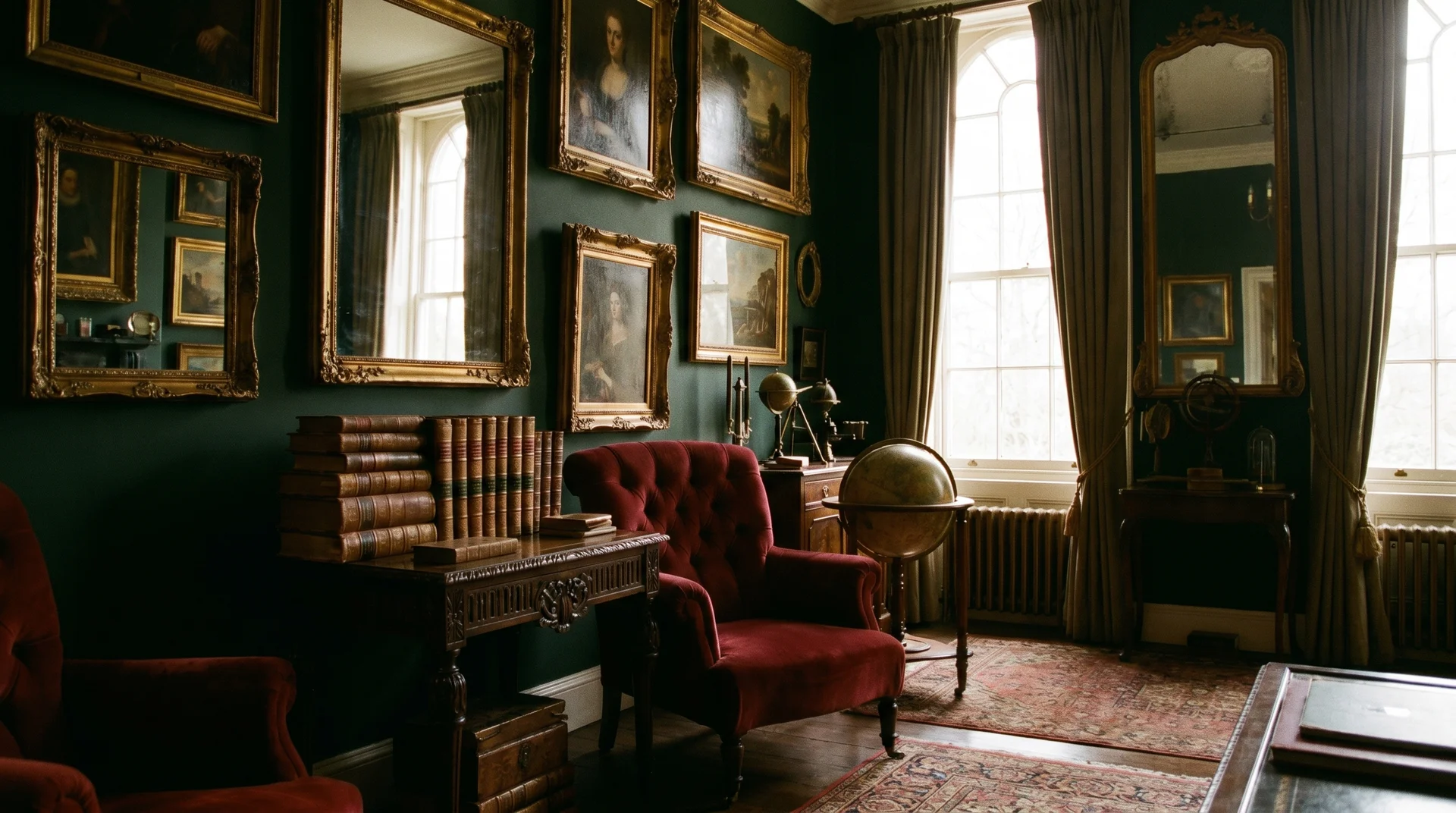
A large vintage mirror with a gilded or ornately carved frame adds visual space and old-world elegance to any wall. It doesn’t need to be a priceless antique.
Thrift stores and estate sales regularly turn up mirrors that, with a little cleaning or a coat of dark gold spray paint, look entirely convincing. The same logic applies to picture frames.
A collection of mismatched gilded frames hung in a gallery wall arrangement reads as curated and intentional.
8. Classical Artwork and Prints
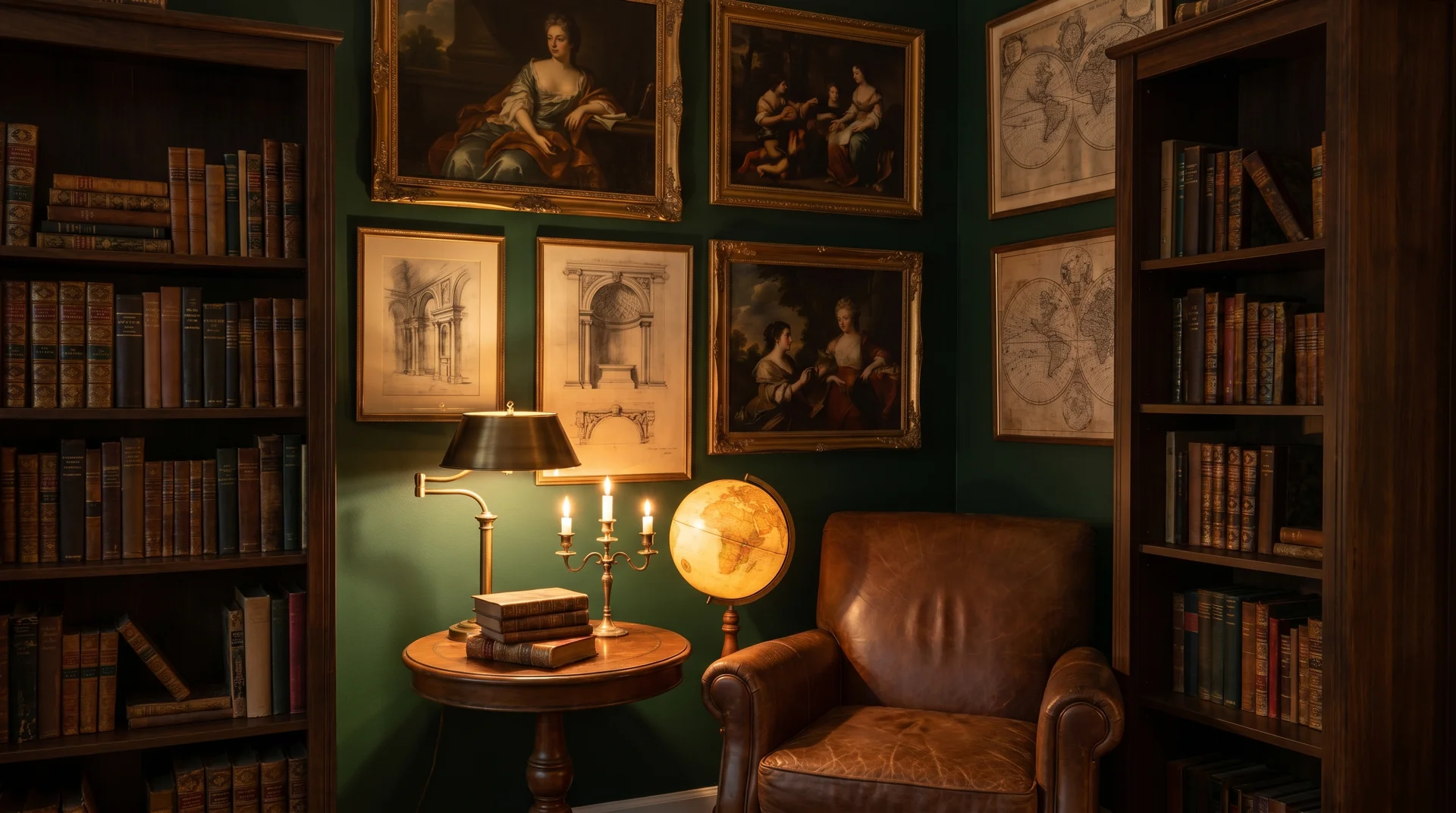
The walls in a dark academia space should seem to have opinions. Old botanical prints, Renaissance-style portrait sketches, antique maps, and astronomical diagrams all fit the brief.
Framed vintage sheet music, handwritten historical documents, and architectural drawings work too. These prints are widely available as reproductions and look far more expensive than they are, especially when properly framed in darker wood or gilded frames.
9. Dark Wood Flooring or Rugs
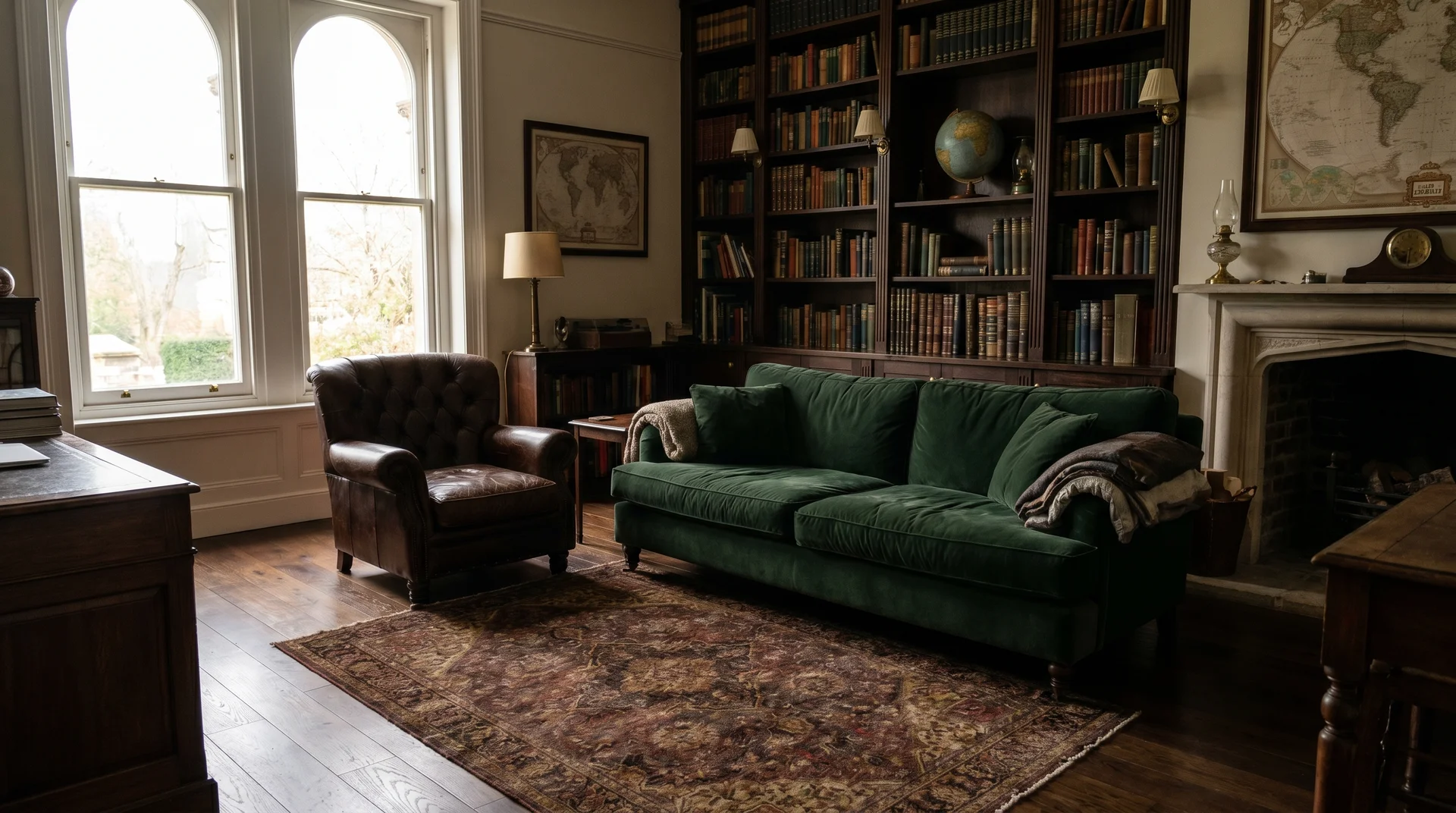
Flooring ties everything together. Dark hardwood floors or parquet are ideal. If your flooring is lighter or you’re renting, a large dark-toned rug does the same visual work. A worn Persian rug in burgundy, forest green, and navy is a classic choice.
It adds pattern, texture, and warmth underfoot while reinforcing the color palette you’ve built in the rest of the room.
10. Brass and Metal Accents
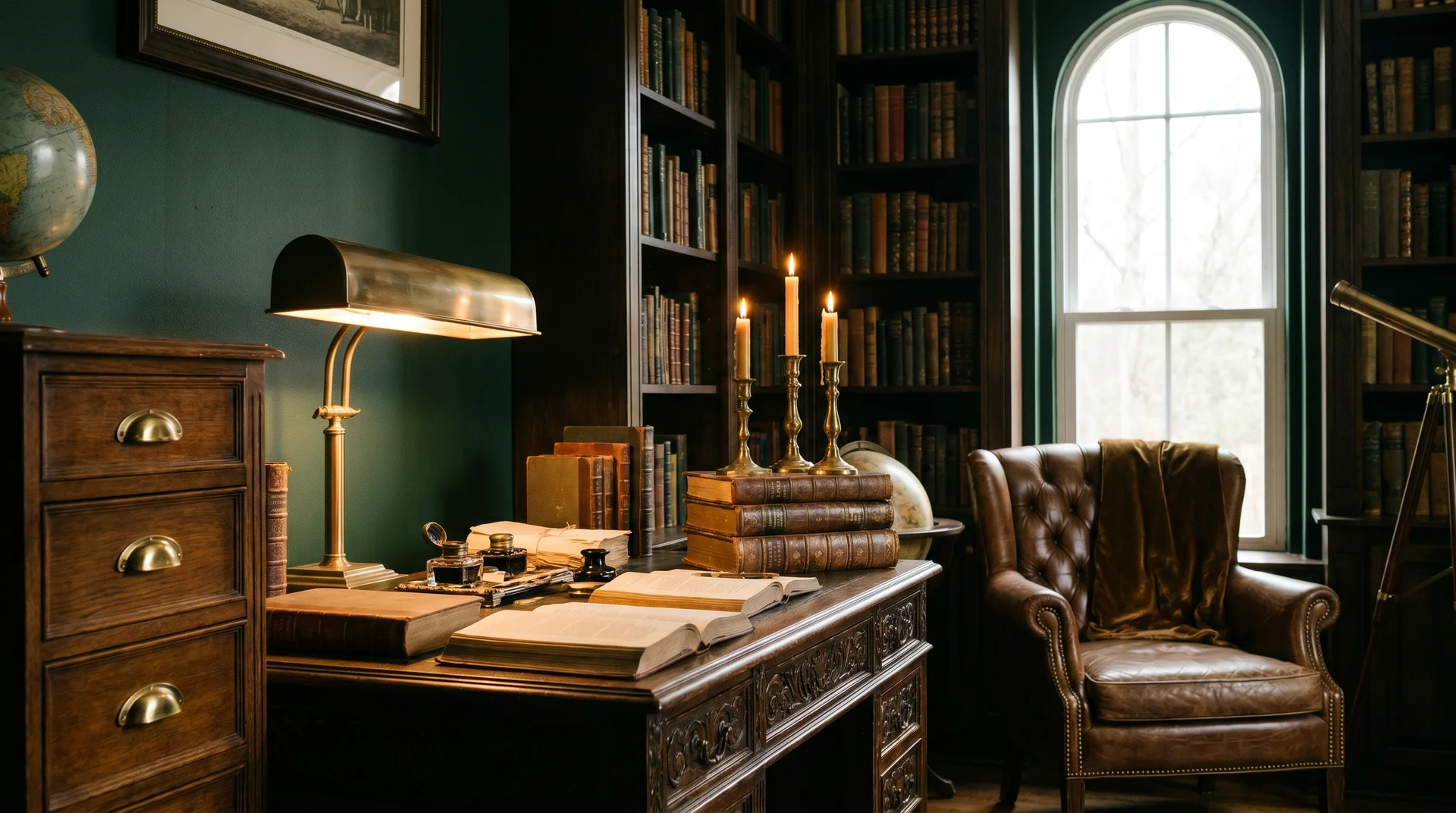
Brass is the metal of dark academia. Antique brass table lamps, drawer handles, candle holders, and picture frame hardware all pull together a room that might otherwise feel more rustic than scholarly.
The warm yellow tone of aged brass plays well against dark wood and jewel-toned velvet. Avoid bright polished brass, which looks modern. The look you want is warmer and slightly oxidized.
11. Indoor Plants for Depth
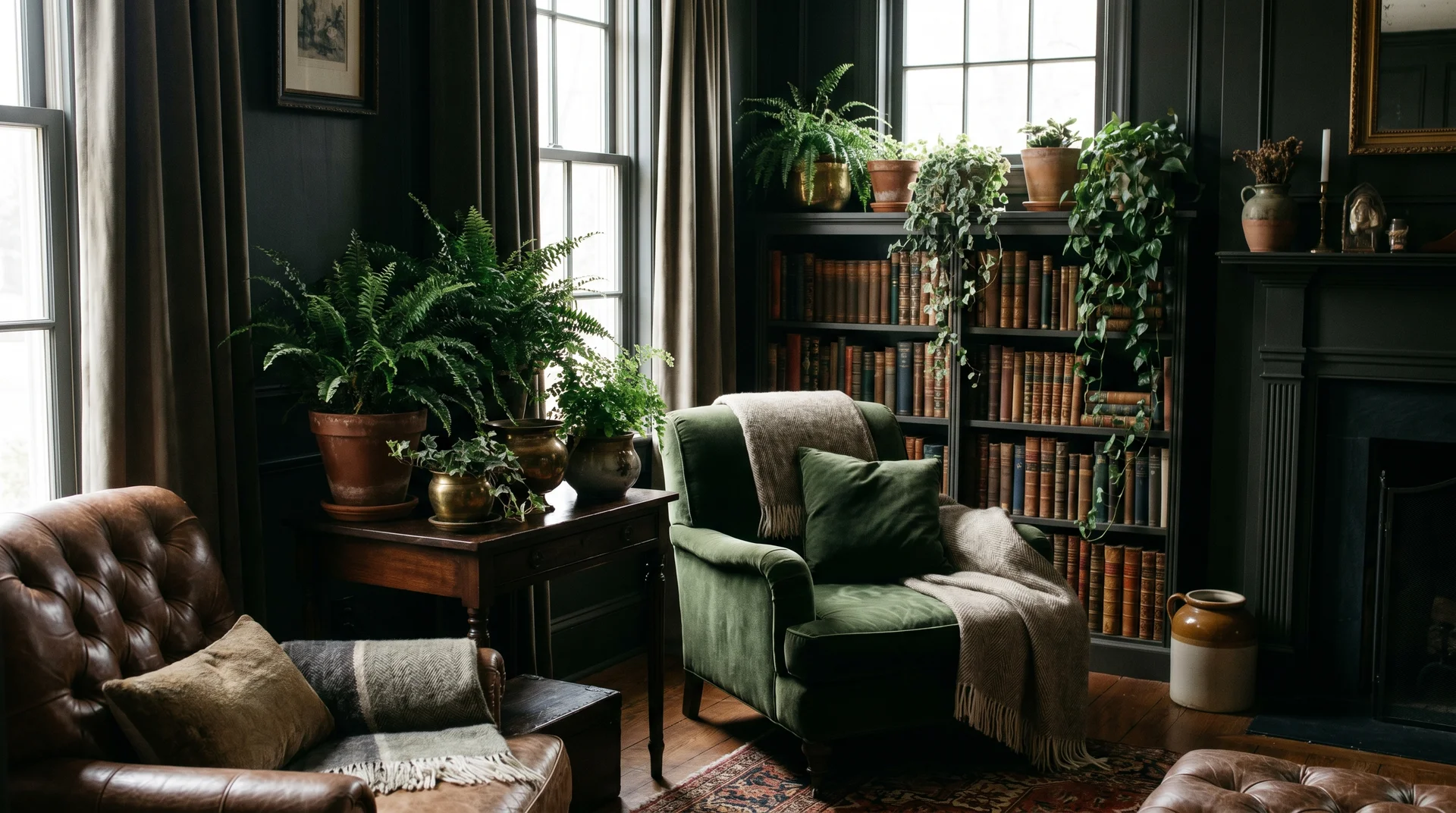
Plants might seem counterintuitive in a style this focused on interior drama, but the right plants add life without disrupting the mood. Ferns, ivy, dark-leafed pothos, and snake plants all carry the look well.
A large fern draped over a dark wooden stand, or ivy trailing from a high shelf, adds just enough organic texture to keep a room from feeling like a stage set.
Terracotta pots and dark glazed ceramics keep the plant styling in line with the overall palette.
12. Cozy Reading Corners
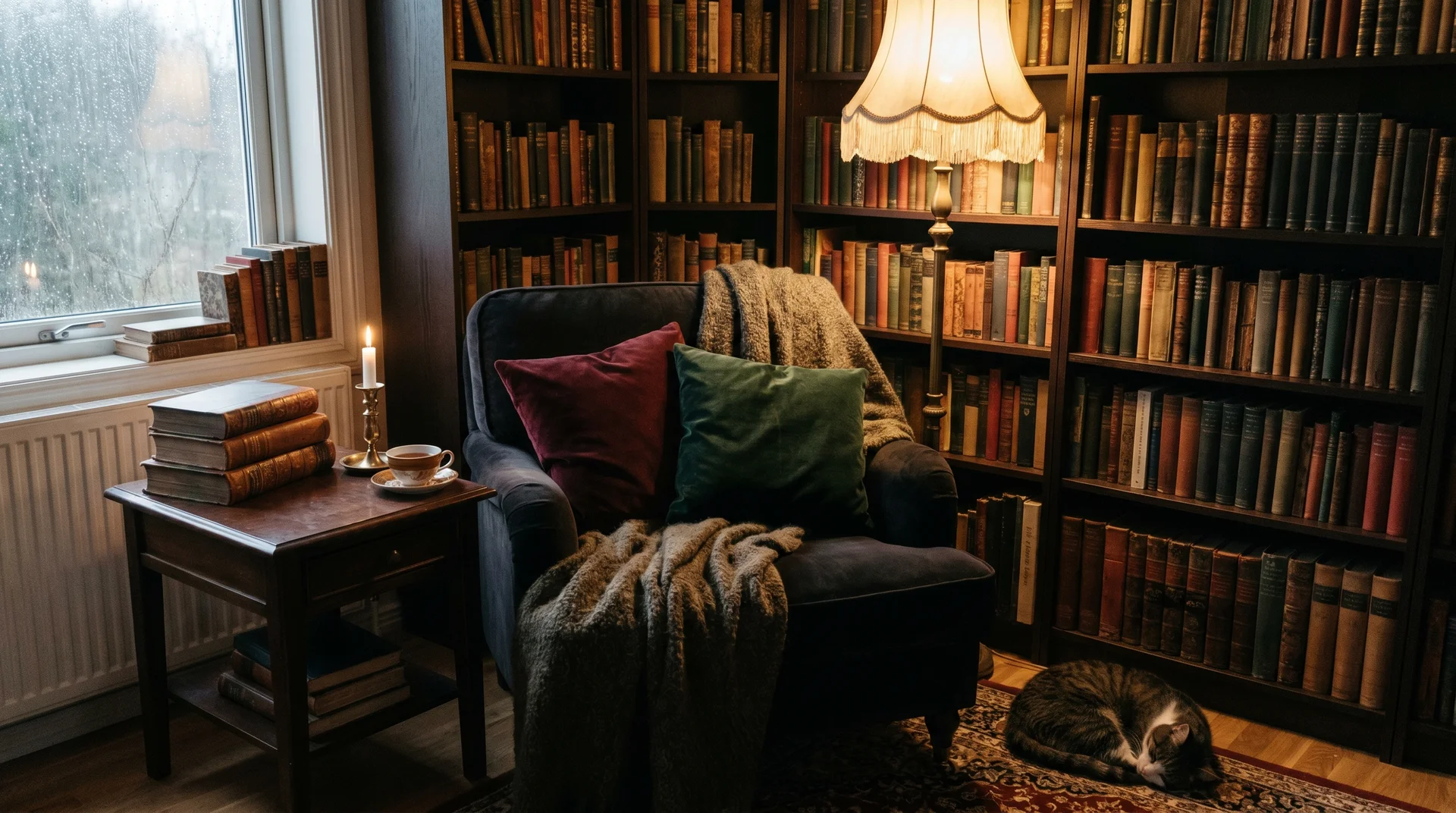
One of the most appealing things about dark academia interiors is the promise of a dedicated reading space.
A good reading corner needs four things: a comfortable chair, good lamplight, a surface for your tea or coffee, and something to put your feet on. A window alcove with a cushioned bench and bookshelves built into the surrounding walls is ideal.
If that’s not an option, even a well-placed armchair in the corner of a bedroom, shielded from the rest of the room by a bookshelf, creates the retreat-like quality that makes this aesthetic so appealing.
13. Thoughtful Personal Items
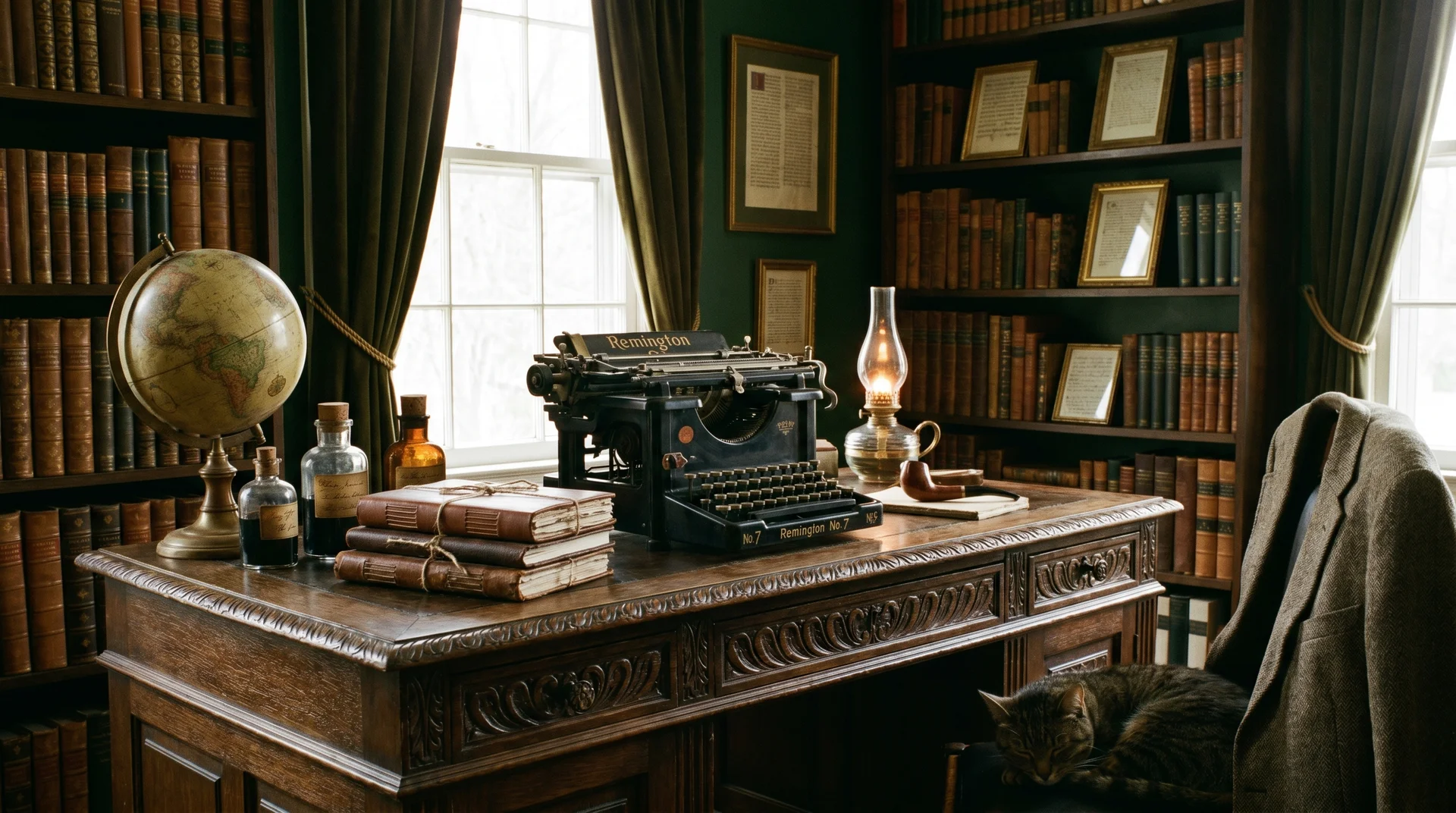
The difference between a dark academia room and a dark academia mood board lies in the presence of personal objects.
A manual typewriter on the desk. A magnifying glass beside a stack of field guides. A collection of fountain pens in a glass jar. Your own old journals, bound with ribbon. A framed letter in faded ink.
These are the things that make the space feel lived in rather than assembled, and that’s what makes this aesthetic work when it really works.
Expert Tips for Dark Academia Interior Design
Follow these tips to get the look right without overdoing it or losing comfort.
- Start with the color palette and commit to it across walls, furniture, and accents. Switching between warm browns and cool grays in the same room creates a muddled effect. Pick a temperature and stick with it throughout.
- Mix textures intentionally. A room with only smooth, hard surfaces feels cold. A room with only soft surfaces feels shapeless. The most visually satisfying dark academia spaces pair leather with velvet, rough stone with polished wood, and linen with aged metal.
- Don’t throw out all your modern furniture. A carefully chosen contemporary lamp or a minimalist side table grounds the space and keeps it from sliding into costume territory. The best dark academia rooms feel like they’ve accumulated over time, not been ordered from a single catalog.
- Layer your lighting; never rely on one source. And keep the wattage low and warm.
- Curation matters more than volume. A few genuinely interesting vintage or literary objects mean more than a room full of generic antique-adjacent decor. Edit ruthlessly.
Common Mistakes to Avoid in Dark Academia Interior Design
Avoid these pitfalls to ensure your dark academia interior feels intentional and stylish.
- The most common mistake is going too dark all at once. Deep colors on every wall, dark furniture, heavy drapes, and minimal lighting all in one room create something that feels more oppressive than atmospheric. Build the moodiness gradually.
- Ignoring lighting is the second biggest error. Poor or insufficient lighting turns a moody room into a gloomy one. That’s a meaningful difference. Even a very dark room needs warm, layered light sources to feel inviting.
- Using modern furniture without any vintage counterbalance loses the scholarly quality that makes this aesthetic distinctive. A few antique or vintage-style pieces are necessary anchors.
- Synthetic fabrics are another trap. Cheap velvet-look polyester, faux wood laminate, and plastic-look brass all undercut the warmth and richness that make this style convincing. Quality of materials is worth prioritizing even over quantity.
Finally, a room that looks good in photos but makes you stiff and uncomfortable when you actually sit in it is not a good room. Comfort is not in conflict with dark academia. It’s part of the point.
Conclusion
Dark academia interior design is one of those rare aesthetics that rewards both thought and restraint. Done well, it creates spaces that feel genuinely personal.
Rooms that look like they belong to someone curious, well-read, and comfortable with depth. Whether you start with a moody paint color or a leather armchair from a weekend market, every choice moves a room closer to that particular kind of quiet drama.
The 13 ideas here aren’t rules. They’re starting points. Take what fits your actual life, leave what doesn’t, and build something that feels like yours.
That, more than any specific piece of furniture or paint color, is what dark academia interior design is really about.