The Complete Home Maintenance Checklist: A Year-Round Guide

The average American homeowner spends 1 to 4% of their home’s value on maintenance and repairs each year. On a $400,000 house, that’s up to $16,000.
And if you skip the routine stuff? Those costs climb fast because small problems left alone turn into expensive emergencies.
A full-year maintenance checklist keeps you ahead of all that. Beyond saving money, it protects the people living inside.
Smoke detectors with dead batteries, carbon monoxide leaks, cracked dryer vents: none of these announce themselves politely.
You find them by looking, and a checklist makes sure you actually look.
Simple Home Maintenance Checklist You Can Follow
To make the idea practical, here’s what a basic home maintenance checklist might look like in a usable format. You can print it, copy it into a spreadsheet, or track it in an app.
1. Monthly Tasks
- Test smoke and carbon monoxide detectors
- Replace or clean HVAC filters
- Check under sinks for leaks or moisture
- Run water in unused bathrooms or drains
- Clean the garbage disposal and dishwasher filter
- Inspect visible plumbing and hoses
2. Quarterly Tasks
- Inspect and clean refrigerator coils
- Check fire extinguisher pressure and placement
- Deep clean vents and exhaust fans
- Inspect windows and doors for drafts
- Review smart home device batteries and updates
3. Seasonal Tasks
- Clean gutters and inspect roof (Spring/Fall)
- Service the HVAC system before peak seasons
- Flush water heater (once or twice a year)
- Inspect attic, basement, and crawl spaces
- Seal cracks in exterior walls or driveway
4. Annual Tasks
- Professional chimney cleaning and inspection
- Full electrical system safety check
- Roof inspection by a professional
- Pest inspection and prevention treatment
- Review home insurance coverage and updates
What Are the Essential Monthly Maintenance Tasks?
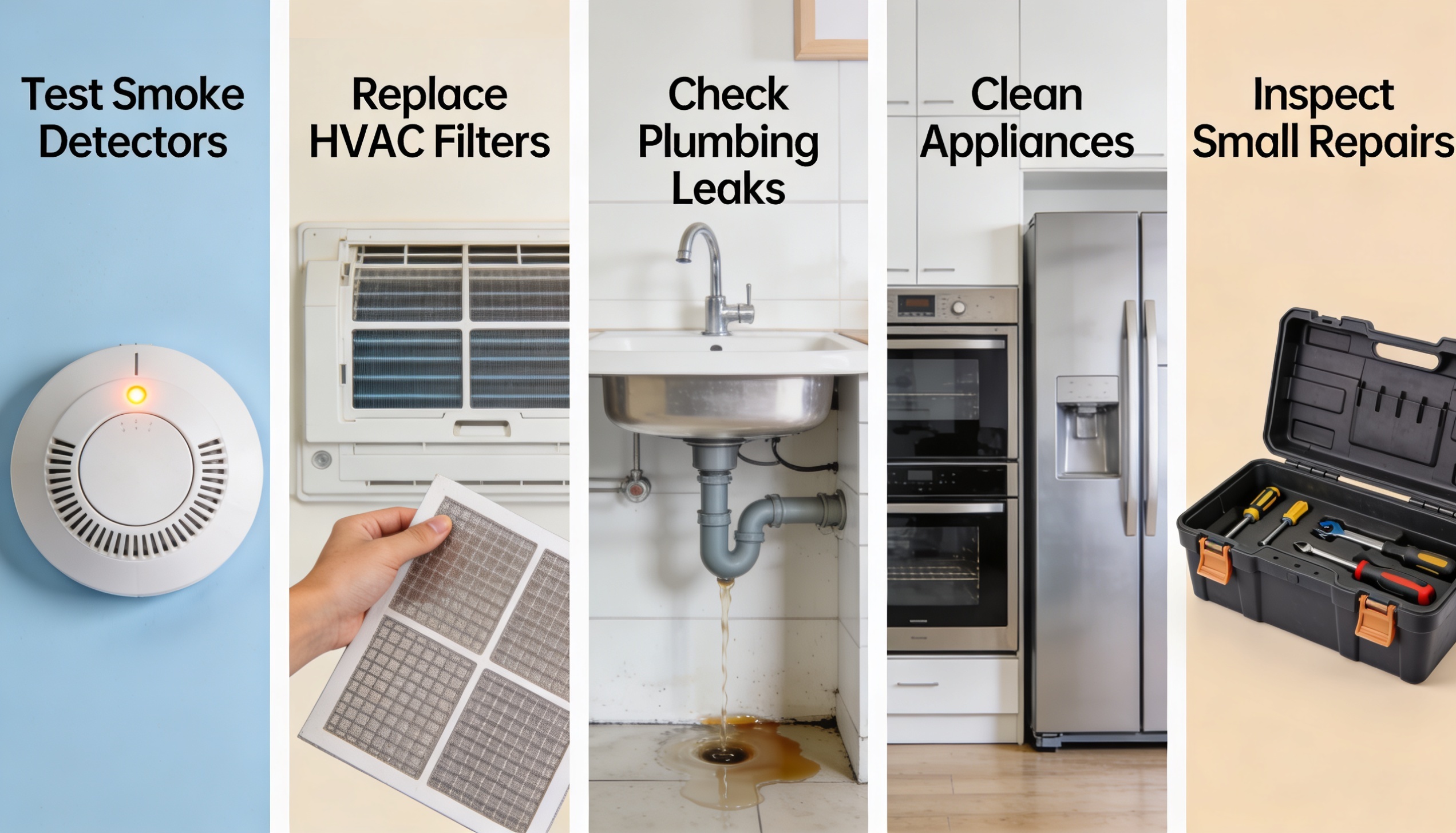
Regular monthly checks prevent small issues from becoming expensive problems.
1. Smoke, CO, and Safety Device Checks
Press the test button on every smoke and carbon monoxide detector. Replace batteries at least once a year.
Check fire extinguishers for pressure and make sure they’re accessible, not buried behind boxes in the garage.
2. HVAC Filter and Vent Cleaning
A clogged HVAC filter forces your system to work harder, increasing energy bills and shortening its lifespan. Check your filter monthly and replace it every one to three months, depending on the type.
While you’re at it, make sure supply and return vents aren’t blocked by furniture or rugs.
3. Plumbing Inspection and Leak Checks
Look under every sink for drips, moisture, or discoloration. Run water in seldom-used fixtures to keep drain traps from drying out (a dry trap allows sewer gas to enter your home).
Check your water heater’s pressure relief valve and inspect visible pipes for corrosion.
4. Appliance Care and Garbage Disposal
Clean your dishwasher filter. Wipe down the fridge coils if they’re accessible. Grind ice cubes and a lemon peel through the garbage disposal to keep it clear.
Check washing machine hoses for bulging or cracking, as burst hoses are among the most common sources of water damage in homes.
5. Minor Repairs and Visual Inspections
Walk through the house and actually look. Peeling caulk around a bathtub, a running toilet, a loose handrail, a cracked outlet cover: none of these are expensive to fix right now, but all of them get worse (and pricier) if you wait.
What Are the Key Seasonal Maintenance Tasks?

Season-specific tasks protect your home from weather-related damage and optimize efficiency.
1. Spring: Roof, Gutters, Yard, and Outdoor Prep
After winter, your roof and gutters need attention. Clear debris, check for missing shingles, and inspect flashing around chimneys.
Test your sprinkler system, reseed bare lawn patches, and look for cracks in the foundation or siding. Service your air conditioner before you actually need it.
2. Summer: Deck, Irrigation, Attic, and Dryer Vent Care
Inspect and reseal your deck if the wood looks faded or if water no longer beads on the surface. Check your attic for proper ventilation and signs of pests.
While you’re working outdoors, take a moment to clear fallen branches, trim overgrown shrubs, and tidy up garden tools so the space stays safe and inviting. If you have children or pets, consider switching to safer backyard care options like non-toxic fertilizers and pet-friendly mulch to keep everyone protected.
Clean the dryer vent duct thoroughly (lint buildup is a genuine fire hazard). Adjust sprinkler heads so you’re watering the lawn, not the sidewalk.
3. Fall: Furnace, Sealing, Window, and Door Prep
Schedule a furnace tune-up before heating season. Replace weatherstripping around drafty doors and windows. Caulk gaps in exterior trim.
Drain and store garden hoses, shut off exterior faucets, and clean gutters again. If you have a fireplace, get the chimney inspected.
4. Winter: Pipes, Roof, Heating System, and Snow Protection
Insulate exposed pipes in garages, basements, and crawl spaces. Keep your thermostat set to 55°F or higher when you’re away to prevent freezing. After heavy snow, check for ice dams.
Test your sump pump if you have one, and keep a clear path to your home’s shutoff valves.
How Can You Prioritize DIY vs. Professional Tasks?

Knowing what you can do yourself versus what requires a professional prevents costly mistakes and ensures safety.
1. DIY-Friendly Jobs Across the Year
Most monthly tasks are within reach for any homeowner: swapping HVAC filters, testing detectors, cleaning gutters, caulking, and basic appliance cleaning. No special training needed. You just need to actually do it.
2. Professional Services to Schedule
Leave HVAC tune-ups, electrical panel inspections, chimney cleaning, roof repairs, and major plumbing work to licensed professionals.
The cost of hiring someone is almost always less than the cost of a DIY mistake on these jobs.
3. Cost and Time Estimates for Each Task
A furnace tune-up typically runs $80 to $150. Chimney cleaning costs $150 to $350. Gutter cleaning runs $100 to $250. Most DIY monthly tasks take 15 to 30 minutes each. Set aside one Saturday per season for the bigger items.
How Should Modern Smart Home Devices Be Maintained?

Smart home devices require regular maintenance to remain functional and secure.
1. Firmware and Software Updates
Smart thermostats, security cameras, doorbells, and smart locks all need software updates. Set them to auto-update when possible, or check manually every month.
Outdated firmware can create security vulnerabilities and cause malfunctions.
2. Sensor, Battery, and Device Checks
Smart smoke detectors, water leak sensors, and motion detectors rely on batteries that degrade over time.
Test them monthly and replace batteries on schedule, rather than waiting for the low-battery chirp at 3 a.m.
3. Cleaning, Placement, and Connectivity Maintenance
Dust and cobwebs interfere with sensors and camera lenses. Wipe devices down periodically and check your Wi-Fi coverage, because a smart device that drops offline isn’t protecting anything.
How Can You Track Your Checklist?
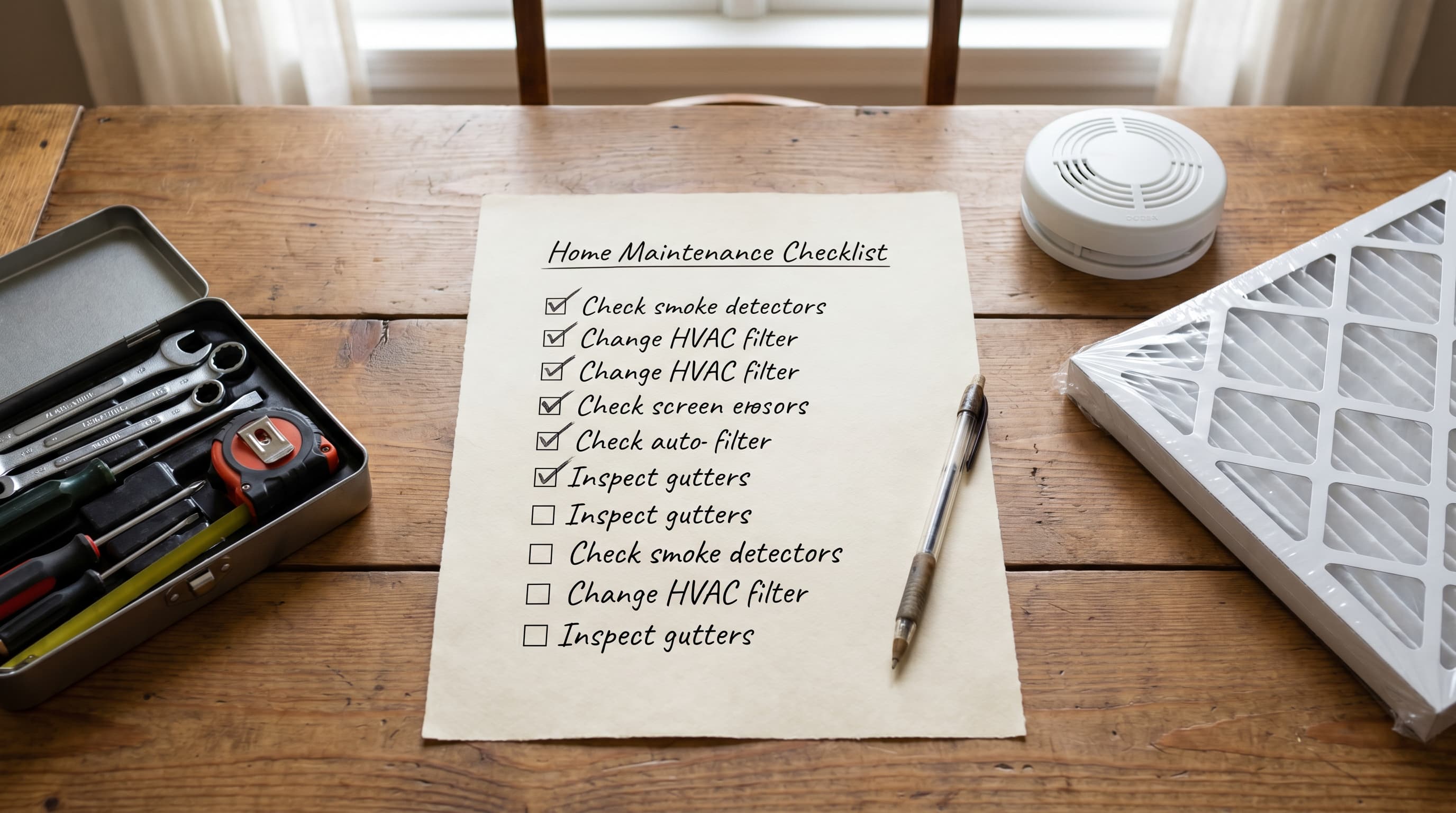
Tracking ensures consistency and helps prioritize the most important tasks.
1. Tools, Printables, and Digital Trackers
A spreadsheet works. So does a printed checklist on the fridge. Apps like Centriq or HomeZada can send you reminders so you don’t have to rely on memory. Pick whatever you’ll actually use.
2. Prioritization by Urgency and Safety
Not every task carries the same weight. Safety items (detectors, carbon monoxide, and electrical issues) come first.
Then water-related tasks (leaks, drainage, pipes), since water damage spreads fast. Cosmetic and comfort items can wait if needed.
3. Scheduling Reminders and Calendar Integrations
Set recurring calendar reminders for monthly tasks. Schedule seasonal tasks in advance, especially professional services that book up weeks ahead.
What Mistakes Should You Avoid?
Avoiding these mistakes saves money and prevents emergencies.
Skipping Seasonal Tasks
It’s tempting to skip the fall gutter cleaning or spring AC service when everything seems fine. But these tasks prevent problems you can’t see yet. By the time you notice damage, the repair bill has multiplied.
Ignoring Small Repairs Before They Escalate
A dripping faucet wastes water and can stain fixtures or rot cabinetry underneath. A small roof leak left alone for a season can mean replacing drywall, insulation, and framing. Fix the small stuff when you spot it.
DIY Mistakes That Risk Safety or Cost
Know your limits. Electrical work beyond changing a light switch, gas line repairs, and structural modifications requires permits and professionals for good reason.
A botched DIY electrical job can start a fire or void your homeowner’s insurance.
Conclusion
Maintaining your home isn’t much interesting, but it’s the most effective way to protect what is probably your biggest financial investment.
A year-round checklist that covers every system, every season, and the specific demands of your region keeps small problems from becoming big ones.
It keeps your family safe and your costs predictable.
Start with whatever format works for you, set reminders, and check things off as you go.