Is Your House Settling? Here Is What to Know

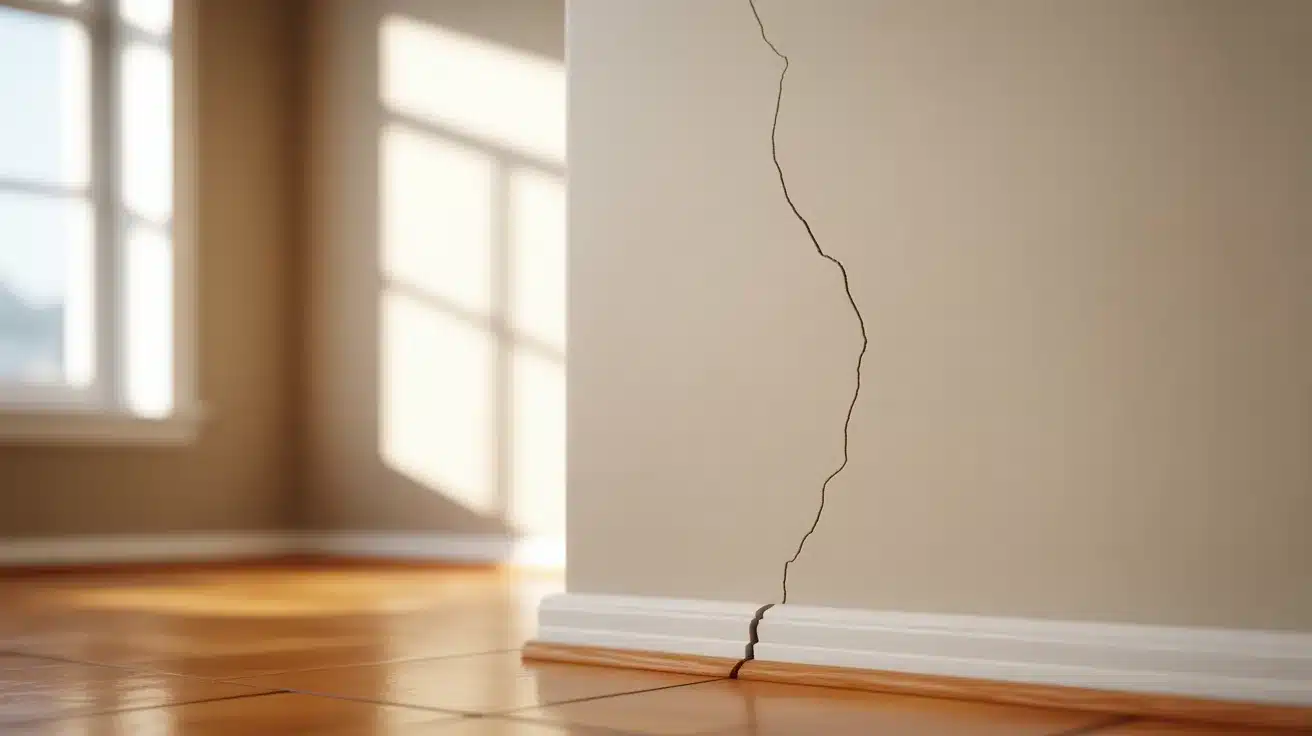
You moved in. Everything looked perfect. Then, three months later, you spot a thin crack running above your bedroom door. Panic sets in fast.
Is the house falling apart? Did something go wrong during construction? Take a breath. That crack is most likely your house settling, and it happens to almost every home.
Houses shift. Foundations press into the ground. Materials dry out and shrink a little. All of this creates small, normal changes you will see over time.
This guide breaks down what house settling actually means, how long it lasts, what those cracks are telling you, and when it is really time to call someone. Keep reading to get the full picture.
What Is House Settling?
House settling is the natural, gradual downward movement of a home as its weight presses into the soil beneath it.
After construction, the ground below compacts, materials such as wood and concrete lose moisture and contract, and the structure slowly reaches a stable position.
As noted in the Foundation Engineering Handbook, settlement refers to the permanent downward shift of a foundation over time. It affects every building, and in most cases, it is completely expected.
How Long Does It Take for a House to Settle?
Most homeowners want a straight answer, and here it is: the bulk of settling wraps up within one to two years. But the full picture is a little more layered than that. Here is how it typically plays out, stage by stage.
First Few Months After Construction
- Wood, drywall, and concrete dry out and begin to contract
- Minor hairline cracks appear in walls and ceilings
- Small gaps may form in door frames or molding
- Slight door misalignments are common and expected
One to Two Years In
- The home goes through a full cycle of all four seasons
- Soil finishes compacting under the weight of the structure
- Most noticeable settling comes to an end during this window
- Foundation experts consider this the point of greatest stability
Beyond Two Years
- Settling continues, but at a very slow, barely noticeable rate
- Homes on clay soil or in areas with extreme weather may shift a little more
- New cracks appearing at this stage are less likely to be normal settling
- Any fresh movement after two years deserves a closer look
What Causes a House to Settle?
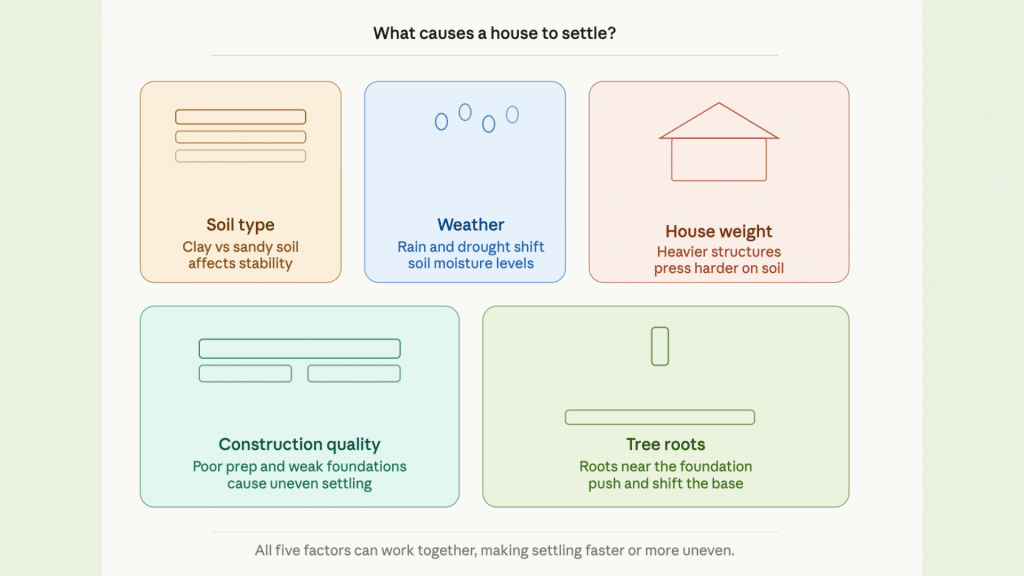
Settling is not random. Several factors work together to control how fast and how much a home moves after it is built. Understanding each one helps you make sense of what you see happening in your walls and floors.
1. Soil Type and Composition
Clay soil absorbs water and swells when wet, then shrinks as it dries out. This repeated cycle puts significant stress on the foundation below.
Sandy soil drains faster but can shift under heavy loads. Poorly compacted soil before construction is one of the biggest contributors to fast, uneven settling.
2. Weather and Moisture
Heavy rain saturates the ground and pushes against foundation walls. A long dry stretch does the opposite, causing the soil to shrink and leave voids beneath the slab.
Both extremes speed up settling and increase the chance of cracks appearing.
3. Weight of the House
The size, materials, and contents of a home all determine how much pressure it places on the ground below. A heavier structure compacts the soil more quickly and puts greater stress on the foundation over time.
4. Construction Quality
Inadequate soil preparation before building leads to faster, uneven settling.
Foundations that are not properly reinforced or supported may not distribute the house’s weight evenly, which can lead to cracking and structural shifts down the line.
5. Tree Roots
Large roots growing near the foundation can press against it over the years.
This uneven, slow pressure causes parts of the foundation to shift, often resulting in diagonal cracks in the walls directly above the affected area.
What Does Normal House Settling Look Like?
Not every sound or mark in your home signals a problem. Here is what typical, expected settling actually produces, so you know what to leave alone and what to keep an eye on.
- Hairline cracks in walls or ceilings: Thin lines less than 1/16 inch wide that stay the same size over time.
- Slightly uneven floors: Minor dips that do not feel unsafe or affect how you use the room.
- Small gaps around door frames: Spaces so minor that they do not stop doors from closing or locking.
- A door that sticks slightly: A frame that shifted a little as the house adjusted to its foundation.
- Faint creaking in the floor: Normal sounds as building materials respond to temperature and humidity changes.
Settling Cracks in a House: Normal vs. Serious
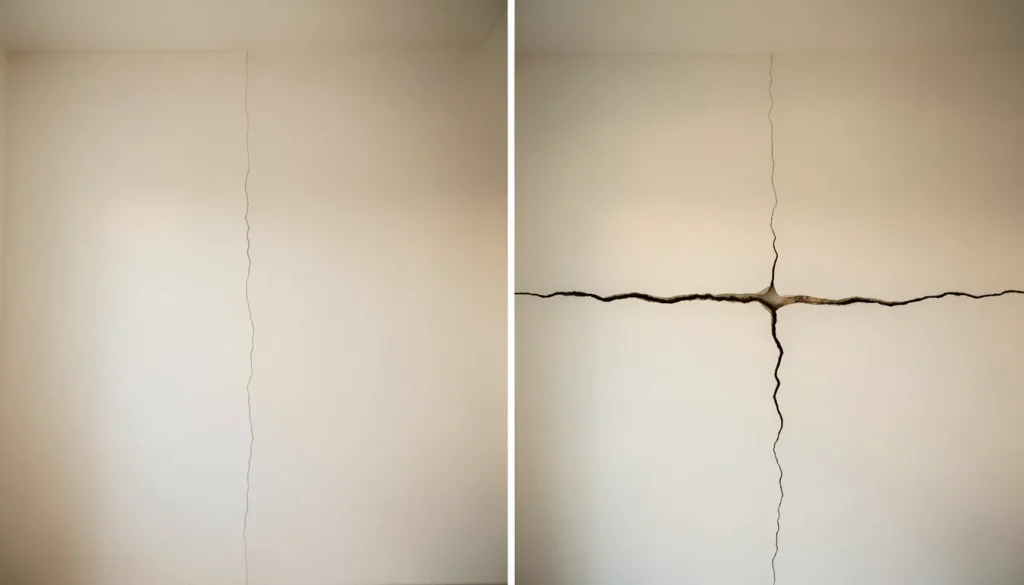
A crack on its own does not tell you much. The direction, width, and growth pattern of the crack reveal whether it is cosmetic or more serious. Use the table below to read what your walls reveal.
| Crack Type | Appearance | Normal or Serious? | What to Do |
|---|---|---|---|
| Hairline vertical crack | Thin, straight, under 1/16 inch wide | Normal | Monitor it. Patch with joint compound once stable. |
| Vertical crack over 1/4 inch | Wide, runs floor to ceiling or across a long stretch | Serious | Call a foundation specialist immediately. |
| Horizontal crack | Runs across the wall from side to side | Serious | Get a professional inspection right away. |
| Diagonal crack (small) | 45-degree angle near a window or door corner | Watch closely | Mark the ends with a pencil and track for 30 days. |
| Diagonal crack (large or growing) | Widening quickly or spreading in multiple directions | Serious | Contact a structural engineer without delay. |
| Stair-step crack | Follows mortar joints in a stair pattern on a brick wall | Serious | Have a professional check for foundation movement. |
How to Monitor Home Settling Cracks at Home
Spotting a crack is just the first step. The real information comes from watching what that crack does over time. Here is a simple approach to tracking it yourself, no special equipment needed.
- Mark both ends of the crack with a pencil and write the date next to it: This gives you a clear reference point for any future growth in length.
- Measure the width with a tape measure and write it down: A baseline number lets you compare accurately on your next check.
- Take a dated photo on your phone: A visual record catches changes you might miss with the naked eye over time.
- Check back every 30 to 60 days: Consistent checks over a few months tell you whether the crack is active or settled.
- Use a crack monitor gauge for precision: These small devices attach directly over the crack and clearly show movement. Most cost under $10 at a hardware store.
- Roll a marble across the floor near the crack: If it rolls steadily in one direction, your floor may be developing a slope worth watching.
| When Should You Call a Professional?
If a crack is wider than 1/4 inch, growing fast, or running horizontally across a wall, stop monitoring and start calling. The same goes for multiple sticking doors, sloping floors, or water in the basement after rain. A professional inspection costs between $300 and $1,000. Catching the problem early almost always keeps the repair bill much lower. |
How to Prevent Excessive House Settling
The single most effective thing you can do is control how water moves around your home. Make sure gutters and downspouts direct water away from the foundation, not toward it.
Keep the soil around your home graded so it slopes away from the base. Fix any plumbing leaks quickly, especially those near or under the slab.
Avoid planting large trees or shrubs close to the foundation, as their roots will eventually push against it.
Walk around your home at least once a year and look for new cracks, gaps, or soft spots in the soil near the base of the walls.
Final Thoughts
House settling is a common issue every home faces. The first couple of years bring the most visible changes, from hairline cracks to a slightly sticky door. That is normal.
What matters is knowing the difference between a cosmetic crack and one that signals a real problem.
Check your walls. Track any cracks you find. Keep water draining away from your foundation. And if something grows fast or looks off, get a professional in early.
A small repair now will almost always cost less than a big one later.
Have you spotted any settling cracks in your home? Drop a comment below and tell us what you found.
Frequently Asked Questions
When to Worry About Foundation Settling?
Worry when cracks grow wider than 1/4 inch, appear horizontally, or are accompanied by sticking doors, sloping floors, or basement water. These are signs that go beyond normal settling.
Will Insurance Cover Foundation Settling?
Standard homeowners’ insurance does not cover routine settling. It is treated as normal wear. Coverage may apply only if a sudden event, such as a burst pipe or an earthquake, caused the damage.
How Serious Is Foundation Settling?
Minor settling is harmless and expected. It becomes serious when it is uneven, fast-moving, or accompanied by structural warning signs such as bowing walls or large diagonal cracks.
What Not to Say to a Homeowner’s Insurance Adjuster?
Never say the damage “has been there for a while” or that you “noticed it a long time ago.” This gives the adjuster reason to classify it as a long-term maintenance issue and deny the claim.