The Architecture of Focus: Designing Home Offices That Inspire

There is a quiet revolution happening within the four walls of our homes. For years, the home office was often an afterthought, a cramped corner of a guest bedroom or a precarious setup at the end of a dining table. However, as our professional lives become increasingly integrated with our personal sanctuaries, the demand for spaces that foster deep focus and creative clarity has never been higher. We are moving away from temporary fixes and toward a more intentional approach to domestic workspace design.
Creating a delightful home office is about more than just finding a flat surface and a power outlet. It is an exercise in environmental psychology. The spaces we inhabit profoundly influence our cognitive load, our emotional state, and our ultimate output. When we curate an environment that balances ergonomic necessity with aesthetic joy, we aren’t just decorating; we are building a foundation for our best work.
Elevating Your Workspace with the Craftsmanship of Staverton
As we look for furniture that bridges the gap between commercial-grade durability and domestic elegance, the heritage of British manufacturing offers a wealth of inspiration. Investing in pieces from Staverton allows homeowners to bring the precision of professional office engineering into a more intimate setting. Their approach to furniture design emphasises clean lines, sustainable materials, and a deep understanding of how people actually move and interact with their desks throughout the day.
When you choose furniture that has been designed with an eye for both form and function, the entire room begins to feel more cohesive. A well-constructed desk acts as the anchor of the space, providing a physical boundary that helps the mind transition into a professional state. This is particularly vital in 2026, where the “always-on” nature of digital communication requires us to have clear, physical markers for when the workday begins and ends.
The Psychology of Light and Colour
Once the foundational furniture is in place, the next layer of design involves the intangible elements that dictate the mood of the room. Light and colour are two of the most powerful tools at a designer’s disposal, yet they are often the most misunderstood.
Maximising Natural Illumination
Natural light is a non-negotiable for a high-performance workspace. Exposure to daylight during the working hours helps regulate our circadian rhythms, which improves sleep quality and daytime alertness. If possible, position your desk perpendicular to a window. This provides ample light without the screen glare that comes from sitting directly in front of or behind a light source.
For those late-afternoon sessions or grey British winters, a layered lighting scheme is essential. Avoid harsh overhead lights that cast deep shadows. Instead, combine a warm ambient light with a dedicated, adjustable task lamp. This allows you to control the focus of the light, reducing eye strain and creating a cosy, cocoon-like atmosphere as the sun begins to set.
Selecting a Productive Palette
Colour choice should be dictated by the type of work you perform. Soft, muted blues and greens are scientifically proven to lower heart rates and promote a sense of calm, making them ideal for high-stress roles or tasks that require long periods of concentration. Conversely, if your work is creative or collaborative, subtle pops of terracotta or ochre can stimulate energy and conversation without becoming overwhelming.
The Ergonomic Essentials: Supporting the Physical Self
We often forget that work is a physical activity. Sitting for extended periods places significant stress on the musculoskeletal system, which is why ergonomics must be at the heart of any delightful office design.
- Chair Selection: Your chair should offer adjustable lumbar support, seat depth, and armrests. The goal is to maintain a neutral spine position where your feet are flat on the floor and your knees are at a ninety-degree angle.
- Monitor Height: The top third of your computer screen should be at eye level. This prevents the “tech neck” associated with looking down for hours on end.
- Keyboard Placement: Your wrists should remain straight and neutral, with elbows bent at approximately ninety degrees.
By prioritising these ergonomic touchpoints, you are making a long-term investment in your health. A workspace that causes physical discomfort will eventually become a space you subconsciously avoid, leading to procrastination and a drop in overall wellbeing.
The Power of the “Biophilic” Office
One of the most significant trends in modern interior design is biophilia—our innate tendency to seek connections with nature. In a workspace, this translates to the integration of natural elements that soften the industrial feel of technology.
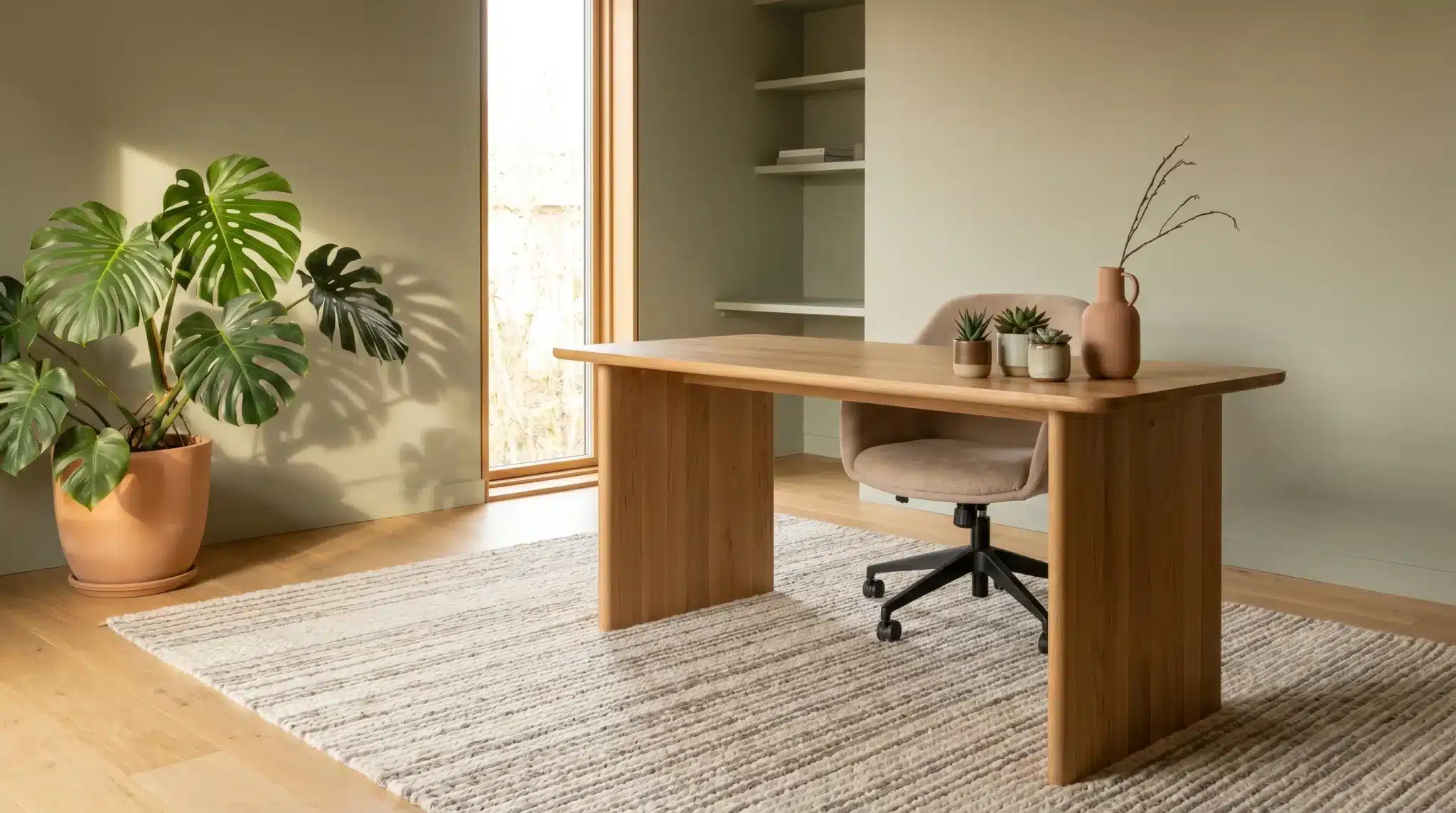
Adding greenery to your office does more than just purify the air. Studies have shown that the presence of indoor plants can reduce stress levels and increase productivity by up to fifteen percent. Whether it is a large, architectural Swiss Cheese Plant in the corner or a small collection of succulents on a bookshelf, the visual connection to the natural world provides a much-needed mental “micro-break” during a busy day.
Beyond plants, consider using natural textures like wool rugs, cork noticeboards, or linen curtains. These materials add acoustic warmth to a room, dampening the echoes that can make video calls feel cold and impersonal.
Curating the Details: Personalisation Without Clutter
The final stage of creating a delightful workspace is the infusion of personality. This is your home, after all, and your office should reflect your tastes and inspirations. However, there is a fine line between a curated space and a cluttered one.
The One-In, One-Out Rule
To maintain a sense of clarity, be ruthless with what occupies your desk surface. Keep only the tools you use daily within arm’s reach. Everything else should be tucked away in integrated storage. A clean desk truly does lead to a clean mind, allowing you to focus on the task at hand rather than the visual noise of unpaid bills or old coffee mugs.
Decorative Intent
Choose a few meaningful objects that genuinely inspire you. This might be a framed piece of art, a ceramic vase from a memorable holiday, or a high-quality fountain pen. These items serve as “anchors,” providing a sense of comfort and continuity. When you surround yourself with things you find beautiful, the act of sitting down to work becomes an invitation rather than a chore.
Conclusion: A Space for Growth
Designing a home office is an ongoing process of refinement. As your career evolves and your needs change, so too should your environment. By focusing on the intersection of craftsmanship, ergonomics, and personal aesthetic, you can create a space that doesn’t just house your work, but actively enhances it.
Ultimately, a delightful home office is one that respects your time, your health, and your creativity. It is a place where the noise of the outside world fades away, leaving only the clarity required to turn ideas into reality. Whether you are starting with a blank canvas or looking to refresh an existing setup, remember that every small change you make toward a more intentional design is a step toward a more fulfilling professional life.