How to Layer Bedding: Step by Step Guide

Your bed should feel like a five-star hotel experience, not just a place to crash. But most of us throw on a comforter and call it done.
That’s where layering comes in. It’s not complicated, and you don’t need expensive bedding to pull it off. Layering adds comfort, style, and flexibility all at once.
You can adjust for temperature, mix textures, and create a look that actually makes you want to get into bed at night.
In this guide, you’ll learn what layered bedding really means, how to plan your layers, the exact step-by-step process to build your bed, styling tips for pillows, different layering ideas to try, and how to keep everything fresh.
What Is Layered Bedding?
Layered bedding means stacking multiple bedding pieces on your bed to create comfort and style. You use sheets, blankets, duvets, quilts, and throws in a specific order.
This approach gives your bed more texture and visual interest than using just one comforter.
The beauty of learning how to layer bedding is that you can add or remove layers based on the temperature. It keeps you comfortable year-round.
Plus, it makes your bedroom look more inviting and well put together. Think of it as building your bed from the bottom up with different materials and weights.
Before You Start: Planning Your Bedding Layers
Before you start layering your bed, take a moment to plan. Making a few decisions upfront will save you time and help you create a cohesive look.
| What to Decide | Why It Matters |
|---|---|
| Color palette | Keeps the bed cohesive and visually calm |
| Main warmth layer | Determines comfort and layering order |
| Texture mix | Adds depth without clutter |
| Bed size and scale | Prevents bedding from looking undersized |
| Climate and sleep needs | Helps choose breathable or cozy layers |
The 5 Step Process to Layer Your Bedding

Now that you have planned your colors and textures, it’s time to build your bed. Follow these steps for the best results.
Step 1: Start with the Base
Begin with a mattress protector or topper to keep your mattress fresh and add comfort. Then pull a fitted sheet tightly over the mattress. This creates a smooth, clean foundation for everything else. A wrinkle-free base makes the entire bed look more polished.
Step 2: Add the Flat Sheet
Lay your flat sheet evenly across the bed with the finished side facing down. You can tuck it at the foot for a neat look or leave it loose for a relaxed feel. This layer gives you a breathable barrier between your skin and heavier bedding.
Step 3: Place the Main Bedding Layer
Add your duvet or comforter next, centering it so it hangs evenly on both sides. This is your primary warmth layer, so choose the weight based on your climate. Make sure it covers the bed fully without bunching up.
If you don’t already have one you love, good duvet cover sets are worth investing in here. Breathable fabrics in neutral tones layer easily, hold up to frequent washing, and keep this main layer looking polished.
Step 4: Layer a Quilt or Coverlet
Fold a quilt or coverlet across the lower third of the bed for added texture. You can also lay it fully on top if you prefer more warmth. This step adds visual interest and breaks up solid colors.
Step 5: Finish with a Throw
Drape a throw blanket casually at the foot or fold it neatly across one corner. This final touch softens the look and gives you an extra layer to grab on cold nights. Keep it simple so the bed doesn’t look overdone.
How to Style a Bed With Pillows

Once your bedding layers are in place, it’s time to style your pillows. The right pillow arrangement adds height, comfort, and a finished look to your bed.
Back Pillows
- Start with your sleeping pillows or large shams against the headboard
- These form the base and provide the most height
- Use two or three, depending on your bed size
- They should stand upright and create a solid backdrop
Middle Layer
- Add Euro pillows or standard shams in front of your back pillows
- These add structure and make the bed look fuller
- Use two or three Euro pillows for a king bed or two for a queen
- Choose colors or patterns that complement your duvet and sheets
Front Accent
- Finish with one or two smaller accent pillows in front
- A lumbar pillow works well horizontally across the arrangement
- You can also use a decorative square pillow for contrast
- This layer brings personality and ties your color scheme together
- Keep it simple so the bed doesn’t look too busy
7 Layered Bedding Ideas for Any Bedroom
Once you understand how to layer bedding, you can create different styles to match your taste. Here are seven popular layering ideas to try in your bedroom.
1. Hotel-Inspired Look
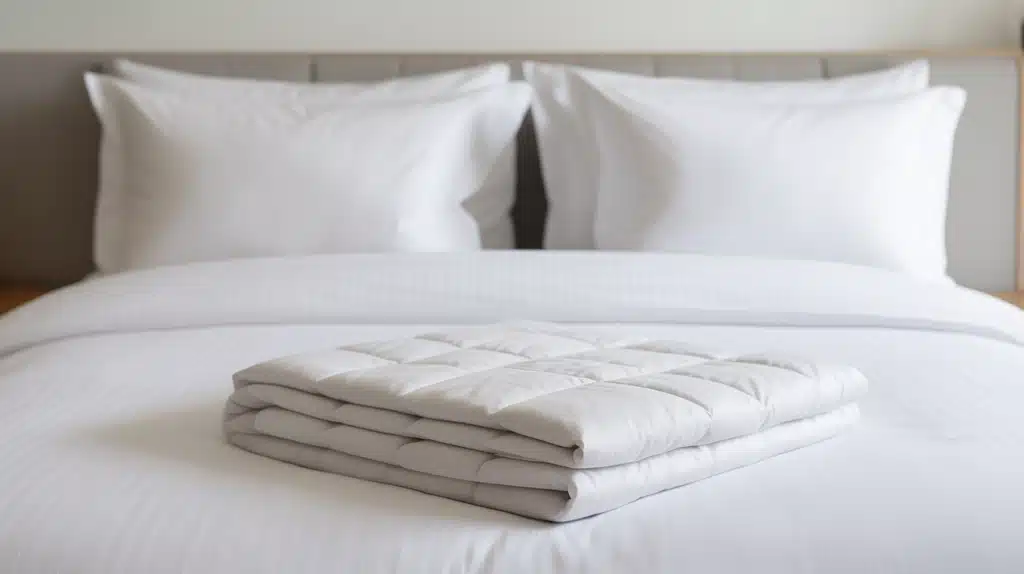
Use crisp white sheets, a plush duvet, and a neatly folded quilt at the foot. This creates a clean, polished feel that looks fresh and inviting. The key is keeping everything smooth and symmetrical.
- Best for: Guest rooms and master bedrooms that need a refined appearance
- Tip: Iron or steam your sheets for that signature hotel crispness
2. Cozy Neutral Layers

Soft neutral tones like beige, cream, and taupe work together beautifully. Add textured throws and woven blankets for warmth without making the space feel heavy. This style is calming and easy on the eyes.
- Best for: Bedrooms where you want to relax and unwind
- Tip: Mix materials like linen, cotton, and knit for more depth
3. Pattern-Mixed Bedding
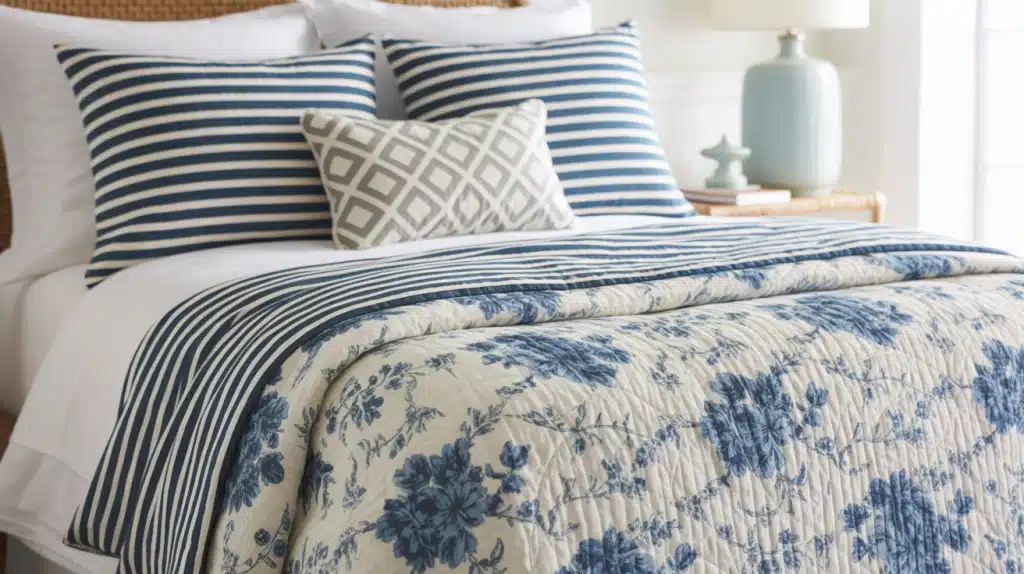
Pair small-scale patterns with solid colors to keep the bed interesting. A striped duvet with a floral quilt can work if the colors match. Balance is key, so the bed doesn’t look chaotic.
- Best for: People who love color and personality in their space
- Tip: Stick to two or three colors max to keep it cohesive
4. Minimal Modern Style

Use monochrome layers in black, white, or gray. Let texture do the work instead of color. A waffle weave blanket or linen duvet adds interest without being loud.
- Best for: Contemporary bedrooms with clean lines
- Tip: Choose high-quality fabrics since texture is the primary focus
5. Cottage-Style Layering

Start with simple white or pastel sheets, then add a patterned quilt on top. Floral or gingham patterns work well here. This style feels charming and relaxed.
- Best for: Country homes or bedrooms with vintage furniture
- Tip: Use softer, worn-in fabrics for an authentic cottage vibe
6. Seasonal Layering

Switch your bedding based on the season. Use light quilts and cotton sheets in summer, then heavier duvets and flannel in winter. This keeps you comfortable all year and refreshes your bedroom regularly.
- Best for: People who experience temperature changes throughout the year
- Tip: Store off-season bedding in vacuum bags to save space
7. Relaxed Everyday Bed

Keep your layers slightly rumpled and casual for a lived-in look. Skip the tight corners and let the duvet drape naturally. This style feels effortless and approachable.
- Best for: Busy households or people who prefer a casual aesthetic
- Tip: Choose wrinkle-resistant fabrics so the bed still looks intentional
How to Maintain Your Bedding Layers
Proper care keeps your layered bedding fresh, clean, and looking its best. Follow these simple maintenance tips to make your bedding last longer.
- Wash sheets weekly: Clean sheets prevent the buildup of oils, sweat, and dust that can damage fabric over time.
- Clean duvet covers every one to two weeks: Duvet covers trap less dirt than sheets, but still need regular washing.
- Wash quilts and coverlets monthly: These top layers don’t touch your skin directly, so they stay cleaner longer.r
- Air out your bedding daily: Pull back the covers each morning to let moisture escape and keep everything fre.sh
- Rotate and fluff pillows regularly: This maintains their shape and prevents flat spots from forming.
What Is the Correct Order to Put Bedding on?
The correct order starts with a mattress protector, then a fitted sheet pulled tight over the mattress. Next, add a flat sheet with the finished side facing down.
Place your duvet or comforter on top as the main warmth layer. After that, fold a quilt or coverlet across the lower third of the bed for texture. Finally, drape a throw blanket casually at the foot.
This order ensures each layer sits properly and looks balanced. You can adjust based on your climate and personal comfort needs.
Summing It Up
Learning how to layer bedding doesn’t require a design degree or a big budget. Start with your base layers, add your warmth, throw in some texture, and finish with a few thoughtful touches.
The result is a bed that looks put together and feels comfortable every single night. You can adapt your layers for any season, any style, and any bedroom size.
The best part is that you can start small and build your collection over time. Try one of the layering ideas we covered and see how it changes the feel of your space.
Ready to change your bedroom? Grab your sheets and start layering today.