Why Your Covered Porch Fails in Winter

Before you pour another mug of coffee on that porch, picture a January morning in central New Jersey. You step onto your covered porch with a hot mug in hand, and the cold railing reminds you that winter has taken over this space. Salt-stained deck boards creak underfoot as if the whole deck is clearing its throat. Then you notice it: a faint sag in the ceiling line you swear was not there last March.
This article explains why a covered porch fails in winter and how intentional design prevents those failures. Problems tend to become visible between November and March, precisely when the porch should feel most inviting. If you have noticed something slightly off about your covered space this season, you are not imagining it. Winter is simply revealing how the structure handles harsh weather.
Why Your Covered Porch Fails in Winter (And How Professional Design Prevents It)
Covered porch failures in winter are rarely bad luck. They are predictable outcomes of design decisions made during warmer months when snow load, freeze-thaw cycles, and trapped moisture seemed like distant concerns. Many porches featured in catalogs are framed for appearance, not for the kind of winter conditions New Jersey and eastern Pennsylvania experience between November and March.
Homeowners usually realize something is wrong around February, when experienced outdoor construction specialists start getting calls about sagging rooflines, popping fasteners, and soft spots in the floor.
The stakes go beyond money. That porch might be where you drink your first coffee before the house wakes up, or where you sit after dinner watching snow fall past the railing. Losing access to that place for months while repairs happen changes the rhythm of daily life and chips away at the value the space is supposed to bring to your home.
This article is not a DIY engineering manual. It is a look at why failures happen and what builders do differently so the space you love does not betray you every time temperatures drop. Understanding the why helps you ask better questions and prepare before the next storm arrives.
The Weight Problem Nobody Calculates
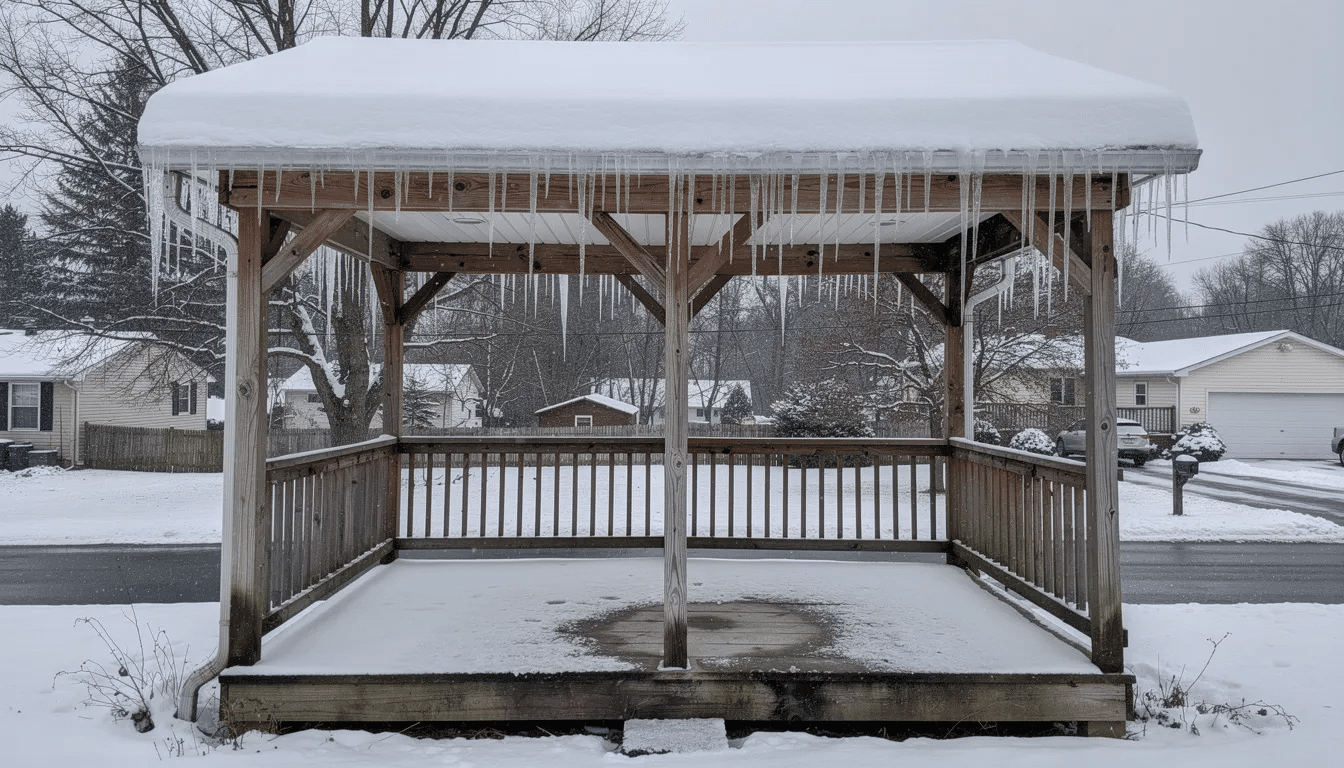
By mid-January in Morris County or Bucks County, a low-slope covered porch roof has often collected snow from three or four storms. Each layer compresses the one beneath it. The lot next door might have a clear driveway, but your porch roof holds weight like a bowl because the pitch was set for looks, not for shedding snow.
Many porch roofs were framed as lightweight add-ons for summer shade, not as structural elements meant to carry repeated loads of heavy, wet snow. Pennsylvania and New Jersey snow differs from the dry powder you see in Colorado.
A few inches of Mid-Atlantic slush can weigh far more than people assume. Wet snow can exceed 40 pounds per square foot when multiple storms accumulate. Many residential porch roofs are not engineered beyond 20 to 30 pounds per square foot.
The compounding effect is subtle but relentless. Snow partially melts during a 45-degree afternoon, refreezes overnight, and then gets buried by the next system. Each cycle increases density and locks ice against shingles and framing.
By late January, spaces between support posts or rafters start to bow slightly. You might only catch it when morning light hits at the right angle, revealing a ripple in the soffit or a hairline crack where the porch roof meets the house wall.
Clearing snow after storms reduces stress on the structure. Use a plastic shovel or soft broom to avoid scratching surfaces. Even removing part of the load makes a difference and lowers the risk of slipping hazards when meltwater drips and refreezes near steps.
Moisture Trapping in Enclosed Designs
“Covered” often means moisture gets trapped instead of properly managed. This is especially true on porches partially enclosed with screens, glass, or vinyl panels that block airflow while creating a microclimate where humidity lingers around the decking, joists, and railings.
Picture a late-winter morning: a thin layer of frost coats the inside railing, and a damp smell rises from the porch floor as the sun finally creeps over the neighbor’s roof. That smell is not just seasonal. It is moisture that found its way into corners, joints, and the hidden seams between your porch roof and the house. The daily cycle repeats. Overnight condensation and frost form on cold surfaces, then afternoon sun warms the air, expanding moisture into cracks where the ledger board meets siding or where posts meet the floor.
Rot usually begins at connection points. The top of a support post, where a beam rests, traps water after snow melts off the roof above. The bottom of that same post, sitting in a puddle of slush for weeks, softens from the inside out.
Because outdoor furniture stays dry and snow is not blowing directly onto the seating area, homeowners assume the structure is protected. Meanwhile, trapped humidity quietly swells wood fibers behind trim boards, creating rot pockets you will not see until spring.
This is why professional porch installation intentionally builds in hidden ventilation paths, drip edges, and flashing details. Properly designed Mid-Atlantic porches use small gaps, vented soffits, and breathable materials so that by March, the place smells clean and dry instead of like wet cardboard. The goal is not to block water entirely. It is to let the structure dry out between storms.
Thermal Expansion Nobody Talks About
Most people imagine winter as a static freeze. February in New Jersey and eastern Pennsylvania does not work that way. Temperatures can swing from the low 20s overnight to the 50s by afternoon. That 30-degree daily jump happens repeatedly, week after week.
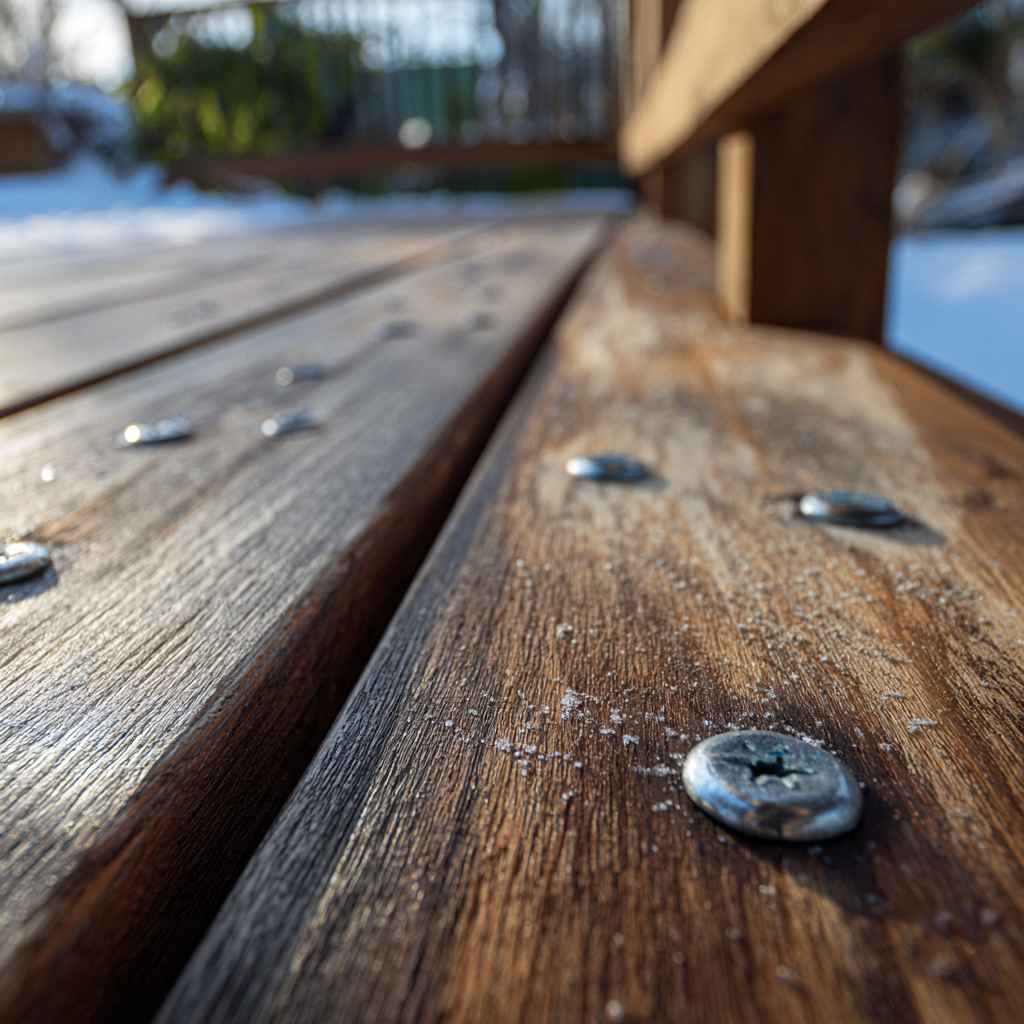
Wood, composite decking, and metal fasteners all expand and contract at different rates as temperatures rise and fall. Metal shrinks faster than wood, which pulls screws and pops joints. Composite porch flooring that seemed rock solid in October can feel slightly hollow or develop small surface cracks after several weeks of this thermal whiplash.
Even premium composite and PVC components creak, shift, and crack when not fastened with winter-aware hardware and expansion gaps.
Look for specific signs: nail heads rising above the surface, screws backing out a fraction of an inch, ceiling fans or light fixtures beginning to wobble as their brackets loosen, railings that no longer line up straight.
Professional builders design for this movement. They select fasteners rated for cold climates, allow controlled expansion gaps at floor edges and railings, and choose hardware that tolerates Pennsylvania winter swings without backing out every season. The difference is invisible in September. It becomes obvious by March.
Design Choices That Hold Up Through Winter
Not every covered porch struggles through winter. The ones that hold their value share a few design principles that matter more than surface aesthetics.
Roof pitch is the first factor. Just a few extra inches of rise across a 10 or 12-foot porch roof can encourage snow to slide off toward the yard instead of sitting heavy above the seating area until late March. A flat or nearly flat porch ceiling looks sleek in photographs, but it holds snow like a tray. A modest slope, sometimes only 3 to 4 inches of drop, reduces load retention significantly and helps prevent ice dams before they start.
Strategic post placement matters as much as materials. A 24-foot front porch needs posts aligned under key beams, properly sized footings set below frost line, and bracing that keeps everything square under wind and snow load. Modern designs use hidden steel hardware, hurricane ties, and connectors chosen specifically to handle years of winter contraction and summer expansion.
Material selection should match the climate, not just the color palette. Pressure-treated framing rated for ground contact works best at post bases where slush pools. High-quality composite decking still needs proper fastening and ventilation underneath to handle blown-in snow and freeze-thaw cycles.
Ventilation design uses vented soffits, carefully placed gaps along porch ceilings, and drainage paths at floor level that stop meltwater from pooling against post bases or the house foundation.
Adding a few extra days during planning can extend a porch’s lifespan by 10 to 15 winters. That tradeoff is worth it when you are still using the space for coffee in late February because it feels solid and dry.
The Real Cost Of Waiting
A homeowner in central New Jersey notices a slight sag in February 2024. Life is busy. She shrugs it off. By winter 2026, that slight sag has become a falling ceiling, and the repair quote has climbed from a few thousand dollars to a full tear-off rebuild approaching $15,000. Prime spring weekends in April and May disappear into demolition debris and construction fencing.
Early intervention costs a fraction of a full rebuild. Reinforcing connections, adding an extra support post, improving drainage, sealing penetration points. These fixes in year one often run between $1,000 and $2,000. Waiting until joists rot and posts lean pushes costs into the $8,000 to $15,000 range. Insurance adjusters complicate things further. Claims classified as deferred maintenance, especially when visible rot or missing flashing is involved, often face denial.
Here’s the good news: winter damage follows a predictable timeline. Homeowners who act after the first warning signs in one season often avoid the expensive rebuild two years later. Inspect after every major snow event. Learn what to look for. Do not hope the problem disappears on its own.
Conclusion: Let Winter Shape The Design, Not Destroy It
Covered porches are not inherently flawed. Rushed, summer-focused designs are the problem. Winter simply reveals what warmer months hide: undersized beams, poor ventilation, connections that were never meant to hold February snow. Failures that create panic in March were set in motion years earlier, when someone prioritized how the space would photograph over how it would perform.
Professional design looks beyond paint colors and furniture layouts. It considers snow load paths, moisture movement, and thermal expansion so the porch feels trustworthy year-round. A covered porch should extend comfort through all four seasons, not raise anxiety every time the forecast calls for a nor’easter. Starting with a winter-respectful plan is the quiet difference homeowners feel but rarely see. That difference is worth getting right.
FAQs: Covered Porches And Winter Failure
How much snow can a typical covered porch hold before structural damage occurs?
Most residential covered porches are not engineered beyond 20 to 30 pounds per square foot. Mid-Atlantic wet snow often exceeds 40 pounds per square foot after multiple storms compound on top of each other. Visible sagging usually appears around 35 pounds per square foot, especially on porches with wide post spacing or low roof pitch. The combination of undersized framing and accumulated weight creates a predictable failure point, which is why many builders recommend removing excess snow where it can be done safely.
Why does my covered porch develop ice dams in winter?
Ice dams form when heat escaping from your house melts snow on the porch roof, which then refreezes at the eaves where temperatures are colder. Poor ventilation between the porch roof and your home’s exterior wall traps that heat and accelerates the melt-freeze cycle. Professional designs include air gaps and vented soffits to prevent heat transfer and let the roof surface stay uniformly cold.
Can I winterize an existing covered porch, or does it need to be rebuilt?
Minor winterization can extend a porch’s life by several years. Adding support posts, improving drainage, and sealing penetration points all fall into this category. However, porches with sagging rooflines, rotted connection points, or undersized beams typically require structural rebuilds to survive repeated freeze-thaw cycles. An inspection can help determine which category your porch falls into before you commit to a plan.
What’s the difference between a three-season porch and a winter-ready covered porch?
Three-season porches prioritize airflow and light protection using minimal structural support. Winter-ready porches account for snow load, include robust moisture barriers, use cold-resistant materials, and incorporate proper roof pitch for snow shedding. The engineering difference is significant. A three-season porch might handle mild autumn weather comfortably but fail under the weight and moisture of a real Pennsylvania winter.
Why do covered porch support posts rot from the bottom up?
Snow and ice melt pools around post bases where moisture gets stuck between the post and porch floor. Freeze-thaw cycles force water into microscopic cracks in the wood. Over multiple winters, this forms rot pockets that compromise structural integrity before you see visible damage on the surface. Proper flashing and drainage at post bases can prevent this pattern.
How often should I inspect my covered porch for winter damage?
Inspect after every major snow event of 6 inches or more, and again in early spring before temperatures stabilize. Look for sagging between support posts, cracks near roof attachments, moisture staining on wood, and loose or popped fasteners. Catching problems in March prevents expensive fixes in May and keeps you from losing prime outdoor months to repairs.
Can poor drainage around my covered porch cause winter structural problems?
Water pooling near foundation points freezes, expands, and shifts support posts out of alignment. Spring thaw creates saturated soil that settles unevenly, pulling posts and beams in different directions. Proper drainage systems should extend at least 6 feet from the porch perimeter and slope away from the structure. Ignoring drainage creates the conditions for the ground around your foundation to move every season.