
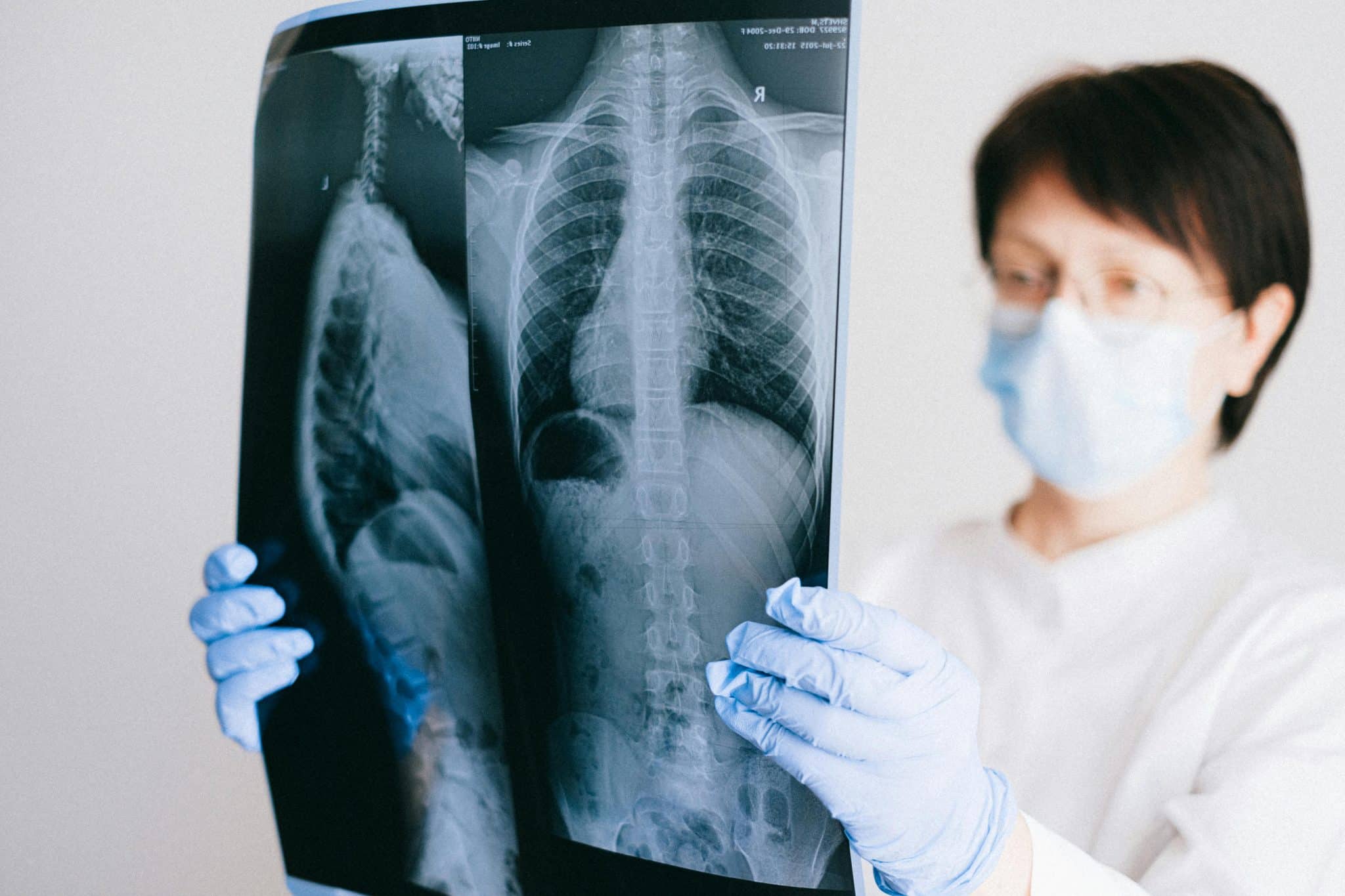
What are the Key Features of A Normal Chest X-Ray?

A chest X-ray is a common imaging test used in Amarillo emergency rooms to quickly assess the lungs, heart, airways, bones, and surrounding soft tissues. Recognizing normal anatomy is essential to detect conditions like pneumonia, lung tumors, pleural effusion, and heart failure. Understanding these features helps healthcare professionals make accurate, timely decisions. This knowledge reduces diagnostic errors and improves overall patient care.
To correctly identify abnormalities, healthcare professionals must first understand the features of an Amarillo emergency room.
Chest X-Ray Projections
The standard chest X-ray is taken in the posteroanterior (PA) view, with the patient standing upright and the X-ray beam passing from the back to the front of the chest. This view provides the most accurate assessment of heart size and lung fields. In some cases, a lateral view is added to evaluate structures behind the heart or to localize lesions more precisely, especially in settings.
Get fast, accurate chest X-rays at the emergency room near me with expert staff and 24/7 service for prompt diagnosis and treatment.
Assessing Image Quality Before Interpretation
Before analyzing anatomical structures, the technical quality of the chest X-ray must be checked, as proper positioning, inspiration, and exposure are key for accurate interpretation. Failure to assess these factors can lead to misinterpretation:
- Inspiration: A well-inspired film should show at least six anterior ribs or ten posterior ribs.
- Rotation: The clavicles should be equidistant from the vertebral spinous processes.
- Penetration: The vertebral bodies should be faintly visible through the heart shadow.
- Positioning: The scapulae should be projected outside the lung fields.
Normal Lung Fields X ray
Clear and symmetrical lung fields are essential. The lungs should show no abnormal opacities, consolidations, masses, or nodules. Bronchovascular markings should taper smoothly toward the periphery. Both the apices and bases should be free of abnormal shadows, indicating healthy lung parenchyma.
Heart and Mediastinum
Assessing the heart and mediastinum is crucial to detect any enlargement, contour changes, or underlying pathology, as well as to evaluate overall cardiovascular health and potential complications:
Heart Size
The heart should occupy less than half of the internal thoracic width on a PA chest X-ray. A cardiothoracic ratio of less than 50% is considered normal in adults. The cardiac borders should be smooth and clearly defined.
Mediastinum
The mediastinum should appear of normal width without widening or abnormal contours. Any deviation from this may suggest vascular or mediastinal pathology, which may require further imaging or urgent medical evaluation.
Normal Tracheal and Bronchial Alignment
The trachea should be centrally located in the upper chest, with a slight rightward deviation at the level of the aortic arch being normal. The main bronchi should appear symmetrical without narrowing or displacement. A midline trachea is a key indicator of normal thoracic anatomy.
Diaphragm and Costophrenic Angles
Both hemidiaphragms should be smooth, dome-shaped, and sharply defined. The right hemidiaphragm is usually slightly higher than the left. The costophrenic angles should be sharp and clear bilaterally, indicating the absence of pleural fluid.
Normal Hilar Anatomy on Chest X-Ray
Normal hilar appearance suggests healthy pulmonary vasculature.The hila, mainly pulmonary arteries and veins, should be symmetrical, with the left hilum slightly higher and no enlargement:
- The left hilum lies slightly higher than the right
- The hila are not enlarged or distorted
- No abnormal masses or lymphadenopathy are visible
Checking the Bones and Nearby Soft Tissues
The ribs, clavicles, scapulae, spine, and proximal humeri should be intact with no fractures. Soft tissues of the chest wall and neck should appear symmetrical without masses:
Bones
The ribs, clavicles, scapulae, spine, and proximal humeri should be intact with no fractures, deformities, or lytic lesions, and the bone density should appear normal without signs of thinning or abnormal growths.
Soft Tissues
Soft tissue structures of the chest wall and neck should be symmetrical, with no swelling, masses, or subcutaneous emphysema, and there should be no abnormal thickening or asymmetry.
Recognizing Normal Anatomical Variations
Some findings may appear unusual but are considered normal variants. These include mild spinal curvature, cervical ribs, slight elevation of one hemidiaphragm, and a prominent thymic shadow in children. Awareness of these variations prevents unnecessary investigations.
Step-by-Step Method for Reading a Chest X-Ray
A structured approach ensures a thorough and consistent evaluation, and the commonly used ABCDE method includes: Airway, Breathing, Cardiac, Diaphragm, and Everything else. This systematic method helps avoid missed findings and ensures no area is overlooked during chest X-ray interpretation:
- A – Airway: Trachea midline
- B – Breathing: Clear and symmetrical lung fields
- C – Cardiac: Normal heart size and borders
- D – Diaphragm: Sharp costophrenic angles
- E – Everything else: Bones and soft tissues normal
Clinical Importance of a Normal Chest X-Ray
A normal chest X-ray helps rule out major thoracic issues and serves as a baseline for future checks. It’s used in routine exams, preoperative evaluations, emergency care, and chronic disease monitoring. Clear lungs, a normal-sized heart, midline trachea, sharp costophrenic angles, and intact bones are key features for accurate diagnosis and patient management.