Japandi Kitchen: Design Guide for a Calm Space

Your kitchen feels too busy. Counters overflow with gadgets you rarely touch.
The space looks cold despite all the stuff filling it. You want something different but not too modern or too bare. That’s where the japandi kitchen comes in.
This style mixes Japanese simplicity with Scandinavian warmth. You get clean lines without the sterile feel. Natural wood meets soft neutrals. Every item serves a real purpose.
This guide walks you through creating your own japandi kitchen. We’ll cover the color palettes that work best, the materials that matter most, and practical design ideas you can use right away.
You’ll learn how to choose cabinets, arrange storage, and blend two beloved design styles into one calm cooking space.
What Is a Japandi Kitchen?
A japandi kitchen blends Japanese and Scandinavian design styles into one calm cooking space.
This design approach brings together the clean lines of Nordic interiors with the natural warmth of Japanese homes. The result is a kitchen that feels both peaceful and practical.
You get a space that looks minimal but never cold. It focuses on what you truly need rather than what simply fills space.
Key Characteristics:
- Japanese and Scandinavian Design Influence: Two design traditions meet to create a style that values both function and beauty in equal measure.
- Minimalism, Warmth, and Function: Every item in the kitchen serves a purpose while contributing to a cozy, welcoming feel.
- Natural Materials and Craftsmanship: Wood, stone, and clay take center stage, showing off quality work and honest construction.
- Balance Between Comfort and Simplicity: The space feels lived in and loved without excess decoration or unnecessary items.
- Calm, Clutter-Free Visual Flow: Open surfaces and thoughtful storage create a sense of order that helps your mind relax.
Materials That Define a Japandi Kitchen
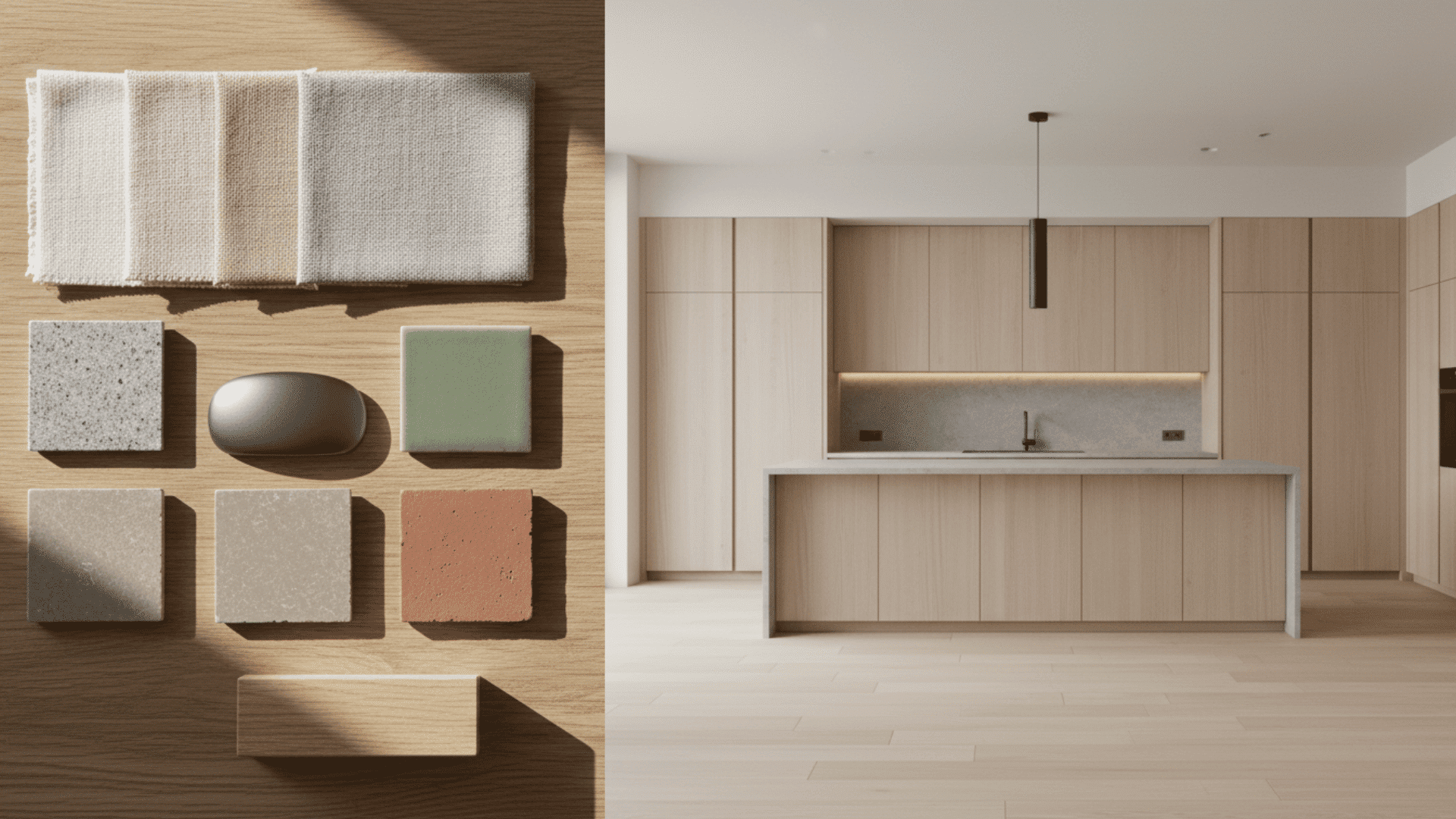
Materials play a central role in achieving the authentic japandi kitchen look and feel. The right choices bring natural beauty and lasting quality to your cooking space.
| Material Element | Description |
|---|---|
| Wood Types Commonly Used | Oak, walnut, ash, and teak in light to medium tones for cabinets and shelving. |
| Stone and Stone-Look Countertops | Granite, marble, soapstone, or concrete for durable, natural surfaces. |
| Matte Finishes Over Glossy Surfaces | Flat finishes on cabinets and fixtures create a softer, relaxed look. |
| Textured Elements for Warmth | Linen, woven baskets, ceramic pottery, and natural fiber rugs add depth. |
| Flooring Options That Suit Japandi Kitchens | Wide-plank hardwood, bamboo, stone tiles, or polished concrete. |
How to Bring the Japandi Style Into Your Kitchen
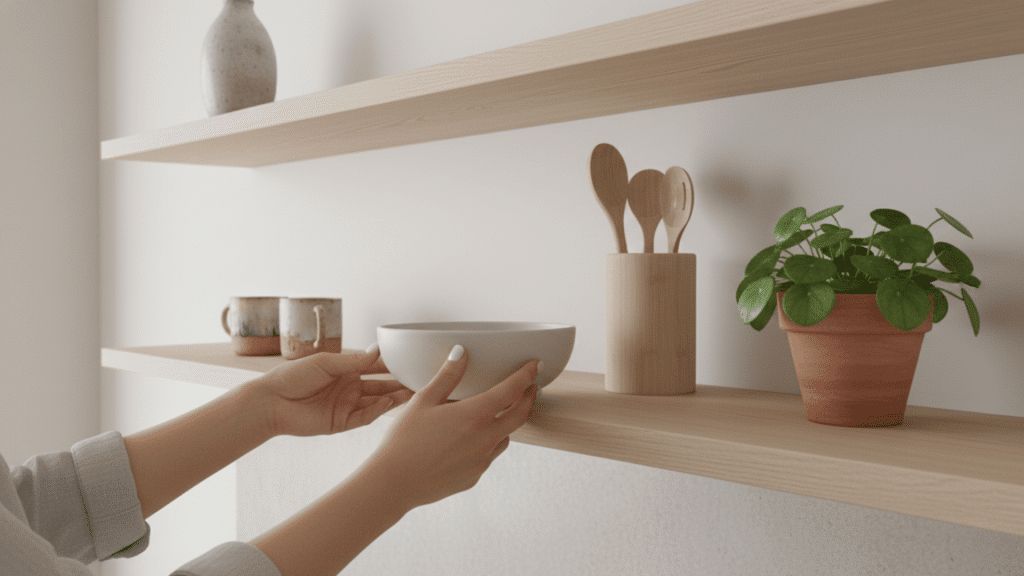
Creating a japandi kitchen does not require a full renovation or expensive overhaul. You can start small and build the look step by step with thoughtful choices.
Step 1: Start With a Minimal Layout and Clear Surfaces
Begin by removing items you do not use daily from your counters. Store appliances, utensils, and decor that only clutter your workspace.
A clean surface gives your kitchen room to breathe. This simple step instantly shifts the mood from busy to calm.
Step 2: Prioritize Function Before Decoration
Every element in your japandi kitchen should earn its place by being useful first. Choose items that serve a real purpose in your cooking routine.
If something looks good but sits unused, it does not belong here. Function guides all decisions in this style.
Step 3: Choose Quality Over Quantity
Invest in fewer items that are built to last decades rather than many cheap alternatives. A solid wooden cutting board or handmade ceramic bowl brings more value than ten disposable versions.
Quality pieces age beautifully and tell a story over time. They also reduce waste and save money in the long run.
Step 4: Focus on Balance Rather Than Symmetry
The japandi kitchen feels harmonious without being perfectly matched on both sides. Mix different textures and tones that complement each other naturally.
Balance comes from how materials and colors work together, not from mirror images. This approach feels more organic and less staged.
Step 5: Keep Visual Noise Low
Limit patterns, bright colors, and competing styles that fight for attention. Stick to a simple color scheme with mostly neutrals and natural tones.
Open shelving should display only what you need and love. Less visual distraction means more mental peace while you cook.
What Colors Work in a Japandi Kitchen
The color scheme in a japandi kitchen sets the foundation for its calm and grounded atmosphere. These colors work together to create visual harmony without overwhelming your senses.
| Color Category | Description |
|---|---|
| Neutral Base Colors Used in Japandi Kitchens | Walls, cabinets, and large surfaces in calm, peaceful tones. |
| Warm Whites, Beige, Greige, and Soft Taupe | Soft, muted shades that feel inviting without visual weight. |
| Earthy Accent Shades Like Muted Green, Charcoal, and Clay | Natural outdoor colors that add depth and organic character. |
| How to Combine Light and Dark Tones Correctly | Light on large areas, dark on small elements like hardware. |
| Why High Contrast Should Be Limited | Sharp contrasts create tension that disrupts the calm mood. |
8 Japandi Kitchen Ideas to Inspire Your Design
These practical ideas show how to apply japandi kitchen principles in real spaces. Each concept can be adapted to fit your home and personal needs.
1. Light Wood Cabinets With Stone Countertops
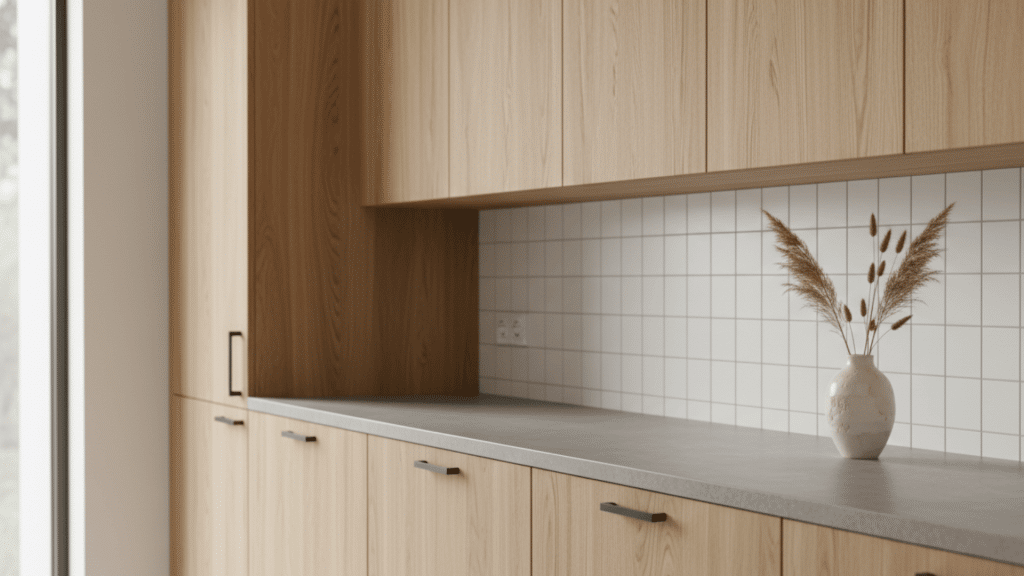
Pair blonde oak or ash cabinets with grey granite or white marble counters. The combination creates a soft contrast that feels natural rather than forced.
- Best Wood Choices: Oak, ash, maple, or birch in their natural light tones.
- Countertop Options: Honed granite, matte marble, or soapstone with minimal veining.
- Why It Works: Light wood keeps the space airy while stone provides durability and visual weight.
2. Neutral Kitchen With Black Accents
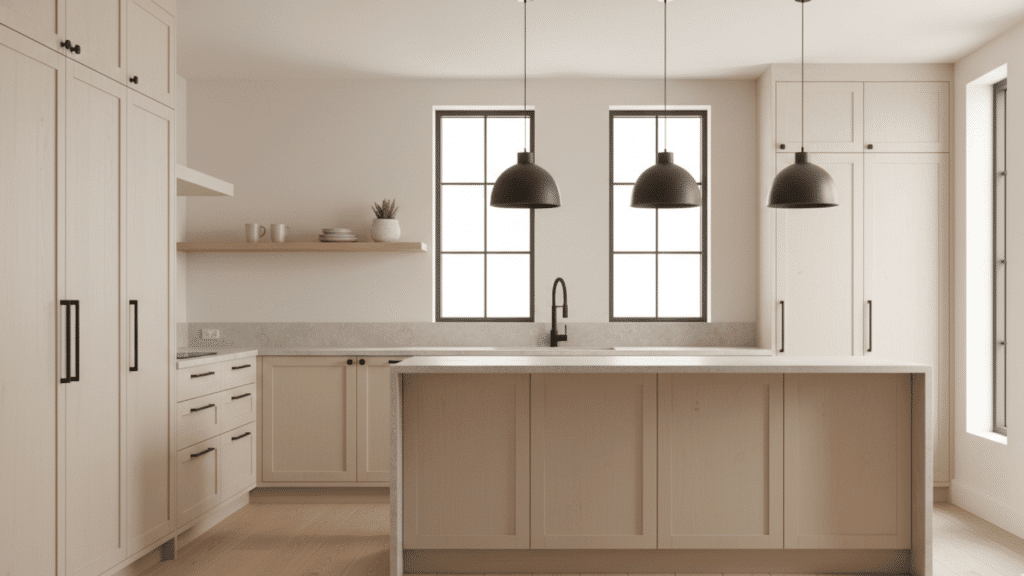
Build your base with warm whites and beiges, then add black through hardware and fixtures. These dark touches create definition without breaking the calm atmosphere.
- Where to Add Black: Cabinet handles, faucets, light pendants, or window frames.
- Balance Tips: Limit black to 10-15% of visible surfaces to maintain softness.
- Impact: Creates visual anchors that guide the eye through your japandi kitchen.
3. Minimal Open Shelving With Ceramics
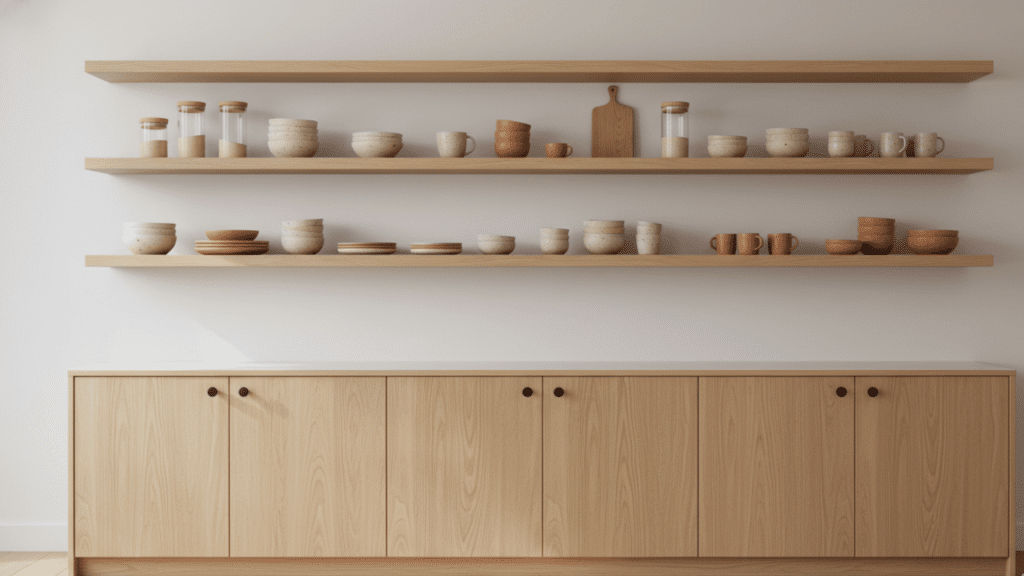
Replace some upper cabinets with simple wooden or metal shelves. Display handmade bowls, plates, and cups in neutral tones.
- What to Display: Everyday dishes, wooden cutting boards, or glass storage jars.
- Shelf Materials: Natural wood, black metal brackets, or floating designs.
- Practical Benefit: Forces you to keep only items you use and love daily.
4. Built-In Storage for a Clutter-Free Look
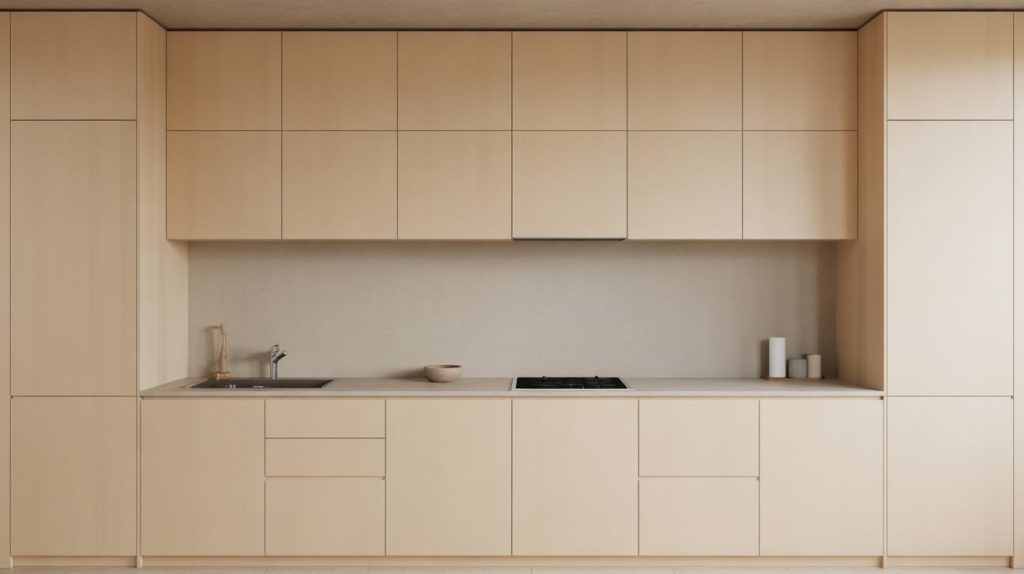
Design floor-to-ceiling cabinets that hide appliances and pantry items behind smooth doors. Everything has a designated spot behind closed fronts.
- Storage Solutions: Pull-out pantries, appliance garages, and hidden trash bins.
- Cabinet Style: Flat-panel doors without visible handles or with minimal pulls.
- Result: Clean surfaces that make your japandi kitchen feel spacious and calm.
5. Japandi Kitchen With an Island
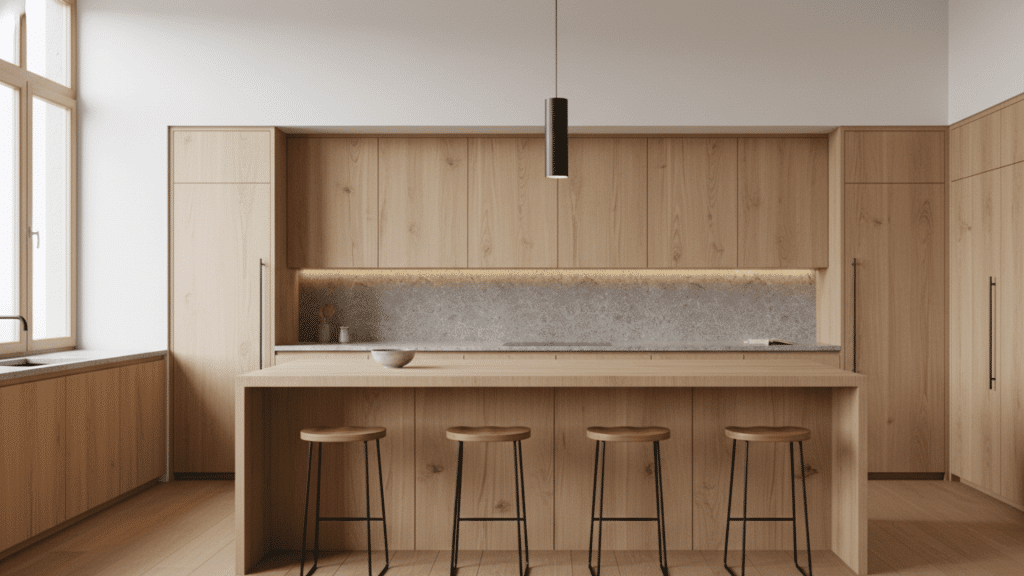
Add a central island in natural wood or stone for extra prep space. Keep the design simple with clean edges and minimal decoration.
- Island Materials: Butcher block wood top or stone surface matching your counters.
- Size Considerations: Allow at least 36 inches of walkway space on all sides.
- Seating Options: Wood or upholstered stools in neutral colors for casual dining.
6. Earth-Tone Kitchen With Textured Backsplash
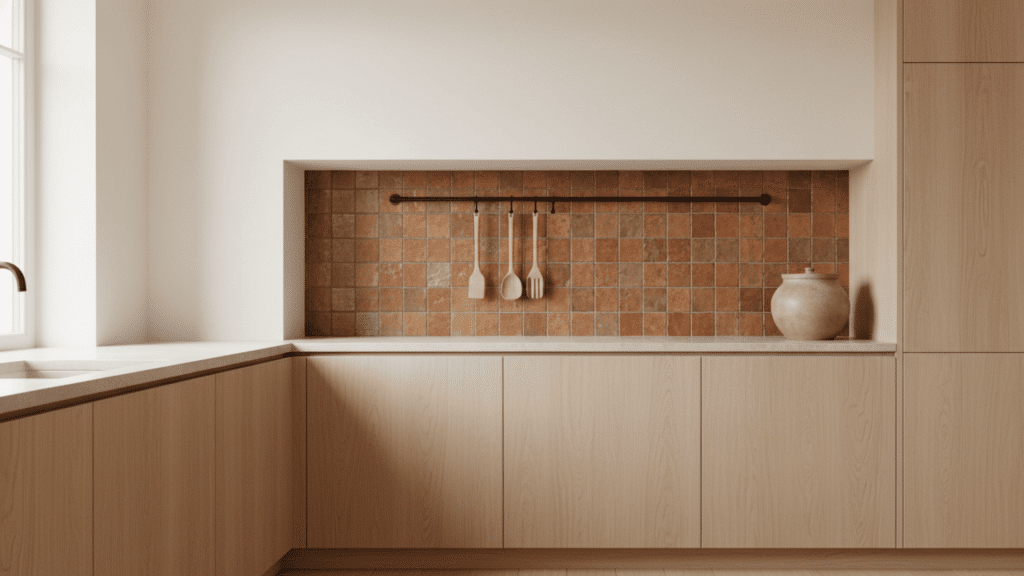
Use terracotta, clay, or rust-colored tiles for your backsplash to add warmth. Textured ceramic brings character without busy patterns.
- Tile Options: Handmade zellige, textured subway tiles, or natural stone.
- Color Range: Warm terracotta, soft clay, muted sage, or charcoal grey.
- Pairing: Works best with light wood cabinets and cream or white walls.
7. Small Japandi Kitchen With Vertical Storage
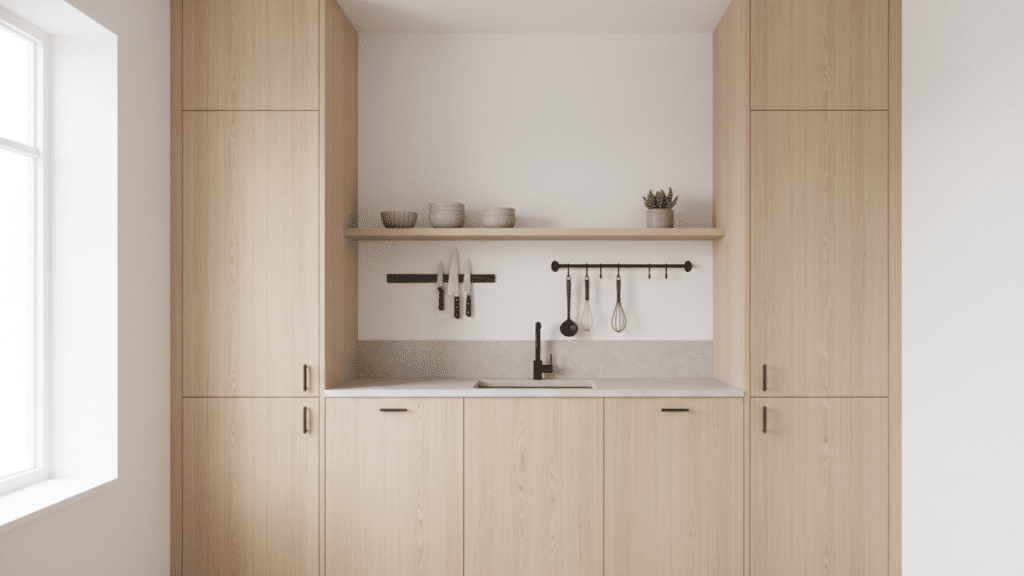
Maximize wall space with tall cabinets and hanging systems for utensils. Light colors make the small space feel larger and more open.
- Vertical Solutions: Floor-to-ceiling cabinets, pegboards, or magnetic knife strips.
- Space Savers: Fold-down tables, pull-out cutting boards, and stackable containers.
- Color Strategy: Stick to whites and light woods to expand visual space.
8. Japandi Kitchen With Natural Light Focus
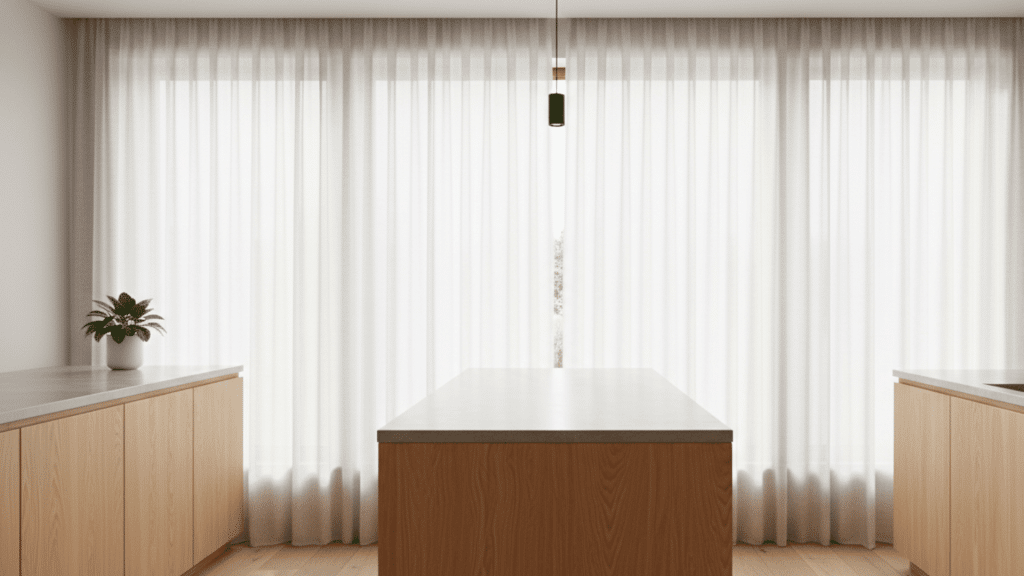
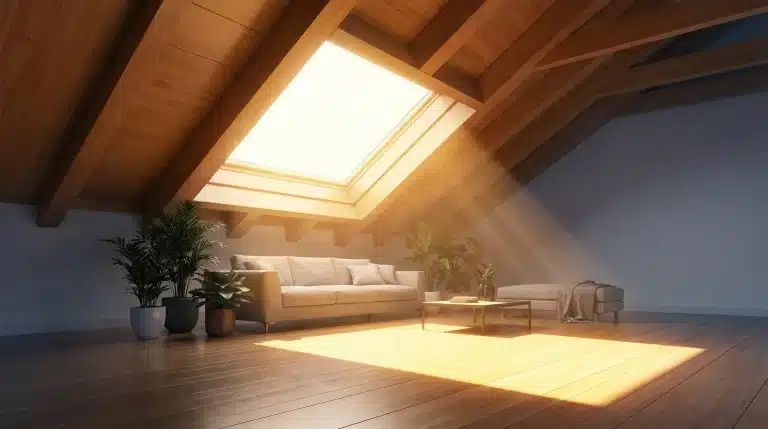
Position your workspace near windows and skip heavy window treatments. Let sunlight flood the room to highlight natural materials throughout the day.
- Window Treatments: Sheer linen curtains, bamboo shades, or leave windows bare.
- Layout Tips: Place sink or prep area facing the window when possible.
- Lighting Layers: Add warm pendant lights for evenings to maintain the cozy feel.
Japandi Kitchen Cabinet and Storage Choices
Smart cabinet and storage decisions keep your japandi kitchen looking clean while staying highly functional. These choices help you maintain the calm, organized feel that defines this style.
- Flat-Panel and Handle-Less Cabinets: Smooth cabinet doors without hardware create unbroken lines that feel peaceful and modern.
- Integrated Storage Solutions: Built-in dividers, pull-out drawers, and hidden compartments organize items without adding visual clutter.
- Closed Storage vs Open Shelving: Use closed cabinets for most storage and limit open shelves to a few carefully curated display areas.
- How to Keep the Kitchen Visually Calm: Store small appliances behind doors and keep countertops clear except for daily-use items.
- Appliance Integration: Choose panel-ready appliances that blend with cabinetry or select models in matte white or stainless steel finishes.
How Japandi Kitchens Blend Japanese and Scandinavian
Japandi kitchens merge two design philosophies that share a love for simplicity and natural beauty.
Japanese design brings respect for craftsmanship, low profiles, and connection to nature through organic materials.
Scandinavian style adds cozy warmth, light wood tones, and practical functionality for everyday life. Together, they create a space that feels both minimal and inviting.
The result is a japandi kitchen that honors quality, removes excess, and celebrates the beauty found in useful objects.
Final Thoughts
A japandi kitchen gives you the calm, functional space you’ve been looking for.
It strips away the excess and focuses on what truly matters: quality materials, thoughtful design, and items that serve your daily life. You don’t need a massive budget or complete renovation to start.
Begin with clearing your counters, choosing natural materials, and sticking to a neutral color palette. Small changes build into a kitchen that feels both peaceful and practical.
Ready to change your cooking space? Start with one idea from this guide today. Share your japandi kitchen progress in the comments below. We’d love to see how you bring this style to life.