

Interior Design Certification: Which to Choose?

So you want to become an interior designer, but the certification options feel confusing.
Should you get a certificate, a degree, or pursue licensure? How much will it cost? Which programs actually lead to paid work?
These questions stop people before they even start.
The interior design field has more credential paths than most careers. Some cost $2,000 and take three months. Others require four years and $100,000. Picking wrong means wasted time and money.
This guide breaks down interior design certification options, costs, and outcomes.
You’ll learn what different credentials mean, which programs employers recognize, and how to choose based on your actual goals. By the end, you’ll know exactly which path fits your situation.
What does an Interior Design Certification mean?
Interior design certification opens doors to new skills and career opportunities. It proves you have specific training in design principles and practices.
Some people earn credentials to start their design careers. Others add certifications to grow their existing work. The choice depends on your goals and where you stand today.
Two Common Meanings of Certification:
The term “interior design certification” actually covers two different things.
- Certificate programs come from schools and training centers. You complete coursework and get an education credential. These programs teach you the fundamentals. They range from a few weeks to several months. You walk away with knowledge and a certificate showing you finished the program.
- Professional certifications require you to pass an exam. You must meet specific requirements first. Organizations like NCIDQ offer these credentials. They show you can meet industry standards. This type takes more time and experience to earn.
Both types have value. Your path depends on what you need right now.
Interior Design Certificate vs Degree vs License
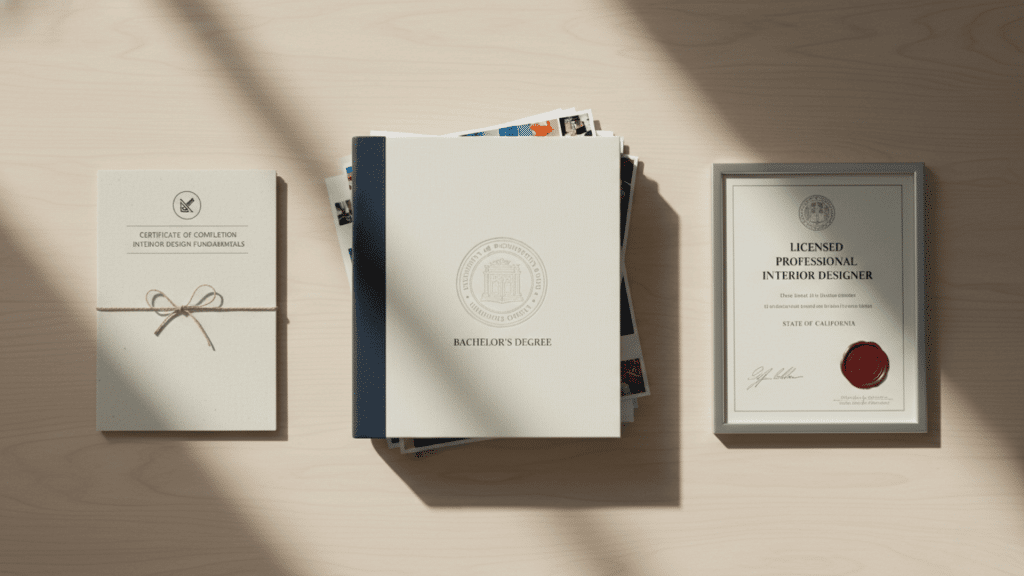
Now that you understand what certification means, you need to know how it compares to other credentials. The differences affect your career path more than you might think.
| Factor | Certificate Program | Degree Program | License |
|---|---|---|---|
| Time to complete | 3 months to 1 year | 2 to 4 years | 2-6 years post-education |
| Cost range | $2,000 to $15,000 | $40,000 to $100,000+ | $500 to $2,000 in fees |
| What it proves | Focused skills training | Comprehensive education | Legal authority to practice |
| Studio hours | Limited or none | 200+ hours of hands-on work | Requires degree studio hours |
| Requirements | Coursework completion | Coursework plus exams | Exam, experience, education |
| Hiring perception | Good for entry roles | Preferred for most positions | Required for regulated work |
| Career scope | Residential and styling | All project types | Commercial and public spaces |
| State recognition | Not regulated | Accreditation varies | State-specific requirements |
7 Well-Recognized Interior Design Certifications
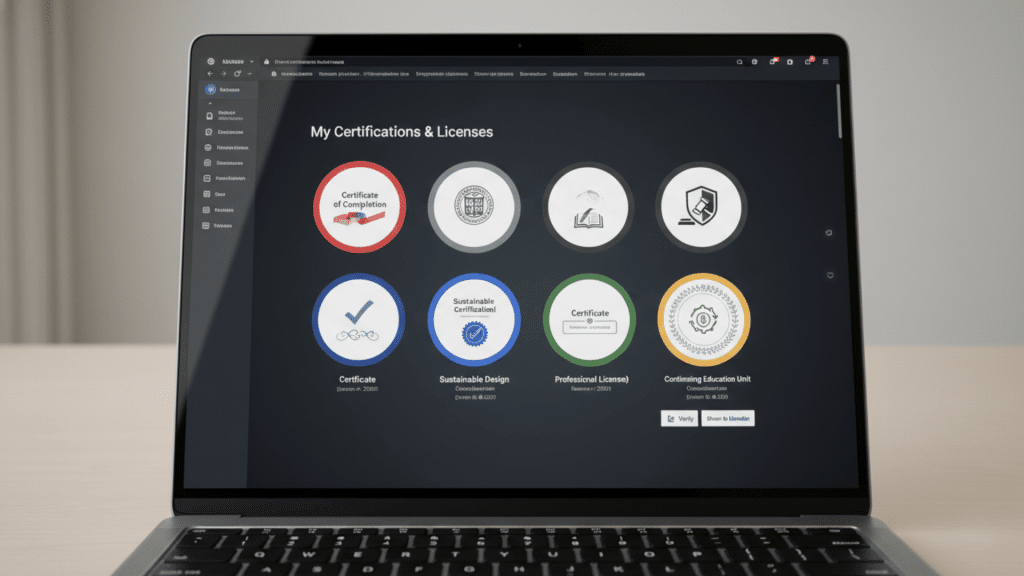
Different credentials serve different career paths and specializations. Here are the certifications that employers and clients recognize most.
1. NCIDQ Certification (National Council for Interior Design Qualification)
This is the gold standard for professional interior designers. Many regulated states require it for licensure. It proves you can handle both commercial and residential projects.
The exam tests your knowledge of codes, materials, and design documentation. Most designers need years of experience before they qualify to take it.
2. LEED Accredited Professional (LEED AP ID+C)
This credential focuses on sustainable interior design practices. You learn to create environmentally responsible spaces. Commercial clients often prefer or require LEED-certified designers.
The certification covers energy use, material selection, and green building standards. It adds value to your services in the commercial market.
3. WELL Accredited Professional (WELL AP)
Health and wellness drive this certification. You study how interiors affect air quality, lighting, and comfort. Clients who care about occupant wellbeing seek out WELL APs.
The credential is growing fast in corporate and hospitality design. It shows you understand the science behind healthy spaces.
4. NKBA Certification (National Kitchen and Bath Association)
Kitchen and bath specialists earn credentials like AKBD, CKBD, and CBD. These prove your technical planning expertise in two high-value rooms.
The training covers plumbing, appliances, storage, and workflow. Homeowners trust NKBA-certified designers with their biggest renovation investments. This specialty can set you apart from general designers.
5. RIDQC Certification (Residential Interior Design Qualification Council)
This credential targets residential designers specifically. It offers recognition outside the commercial NCIDQ path. The certification validates your skills for home-focused projects.
You don’t need years of commercial experience to qualify. It’s ideal if you plan to work mainly with homeowners.
6. ASID Continuing Education Certificates
The American Society of Interior Designers offers ongoing professional development. These certificates cover ethics, sustainability, and specialty areas.
They help you stay current as the field changes. Many designers use ASID courses to meet license renewal requirements. The flexibility lets you learn what matters most to your practice.
7. Interior Design Certificate Programs (University or Accredited Online Schools)
University extension programs and design schools offer educational certificates. These build your foundational skills and portfolio.
They’re different from professional credentials because they focus on learning, not licensure. Programs vary widely in quality and depth. Look for schools with strong instructor backgrounds and hands-on projects.
How to Pick an Interior Design Certification?

Picking the wrong program wastes time and money. Here’s how to find one that actually matches your goals.
Start with the End Goal
Your destination determines which program fits best.
- Hobby to pro: Look for programs that teach business basics alongside design skills.
- Freelancing: Choose certifications that include client management and pricing strategies.
- Employment: Employers want portfolios and software skills, so prioritize hands-on programs.
- Commercial track: Find programs that cover codes, accessibility standards, and contract documentation.
- NCIDQ intent: You need a CIDA-accredited degree program to qualify for the exam later.
Curriculum Checklist (Must-Have Topics)
Strong programs cover these core areas.
- Drafting or CAD basics: You need to communicate designs through drawings and digital tools.
- Building codes awareness: Safety requirements affect every design decision you make.
- Space planning: This teaches you to create functional layouts that solve client problems.
- Lighting design: Proper lighting makes or breaks a space’s mood and usability.
- Materials and textiles: You must understand how products perform in real conditions.
- Design history: Context helps you reference styles and explain choices to clients.
- Client presentations: Selling your ideas matters as much as creating them.
- Procurement: Sourcing and ordering products is part of every project’s success.
Portfolio Outcomes and Feedback Loop
Finishing without portfolio pieces means you’re not job-ready.
- Deliverables by graduation: You should have 3 to 5 complete projects showing different skills and spaces.
- Critiques and mentor review: Regular feedback from experienced designers improves your work faster.
- Project realism: Assignments should mirror actual client scenarios, not just theoretical exercises.
Support and Career Services
Good programs help you beyond the classroom.
- Coaching: Instructors should offer guidance on your specific career questions.
- Alumni network: Connections lead to referrals, jobs, and ongoing learning opportunities.
- Internship help: Programs should connect you with real-world experience options.
- Job boards: Access to exclusive listings gives you a head start.
- Mentorship: Pairing with working designers accelerates your professional growth.
Proof Signals (What to Look For)
Trustworthy programs show evidence of quality.
- Instructor credentials: Teachers should have active design careers or strong industry backgrounds.
- Graduate outcomes: Ask for job placement rates and where alumni work now.
- Transparent syllabi: You should see detailed course outlines before enrolling.
- Third-party recognition: Accreditation or industry partnerships signal legitimate programs.
- Clear assessment methods: You deserve to know how your work gets evaluated.
Cost and Time Required for Interior Design Certification

Budget and schedule matter as much as curriculum quality. Here’s what programs actually cost and how long they take.
| Program Type | Duration | Cost Range | Weekly Time Commitment |
|---|---|---|---|
| Short certificate | 3 to 6 months | $2,000 to $8,000 | 5 to 10 hours |
| Multi-term certificate | 6 months to 1 year | $8,000 to $20,000 | 10 to 15 hours |
| Degree-adjacent programs | 1 to 2 years | $15,000 to $40,000 | 15 to 25 hours |
Hidden Costs People Miss:
Tuition is just the starting point. These extras add up quickly.
- Software subscriptions: AutoCAD, SketchUp, or Adobe Creative Suite cost $50 to $100 monthly. Annual costs reach $600 to $1,200.
- Printing and plotting: Large-format prints for presentations run $20 to $50 each. Expect to spend $200 to $500 per term.
- Materials for projects: Sample boards, foam core, and presentation supplies add another $100 to $300.
- Portfolio website: Professional hosting and domain names cost $100 to $300 yearly.
- Professional memberships: ASID or IIDA memberships range from $150 to $400 annually for students.
- Exam fees for credentials: NCIDQ costs over $1,000 total. LEED and other specialty exams add $300 to $500 each.
Is It Worth It to Get an Interior Design Certificate?
It depends on where you are and where you want to go. A certificate makes sense if you need skills quickly for freelance work or a career change.
The investment pays off when you land better clients or jobs faster than self-teaching would allow. But if you plan to work in commercial design or regulated states, a degree often matters more.
Certificates work best for residential designers, stylists, and those adding specialty skills to existing careers. Consider your market, goals, and budget before deciding.
The right program at the right time is worth it. The wrong one wastes money you could spend elsewhere.
Final Thoughts
Interior design certification can launch your career or take it further, but only if you choose wisely.
The right program matches your goals, budget, and timeline. Certificates work fast for residential designers and career changers. Degrees open doors to commercial work and licensure.
Specialty credentials like NCIDQ, LEED, or NKBA prove expertise that clients and employers value.
Start by defining your end goal. Then check curricula, costs, and graduate outcomes. Look for programs with real portfolio work and instructor credentials you can verify.
Ready to take the next step? Research three programs that fit your path. Compare their offerings against the checklist in this guide. Your design career starts with one informed decision.
What questions do you still have about interior design certification? Drop them in the comments below.