How to Frame a Puzzle: Easy Methods That Work

Finished a puzzle and want to hang it on your wall? Great idea. But here’s where most people mess up.
They grab any frame, slap some glue on, and end up with a warped, crooked disaster three months later.
Framing a puzzle isn’t hard, but it does need the right approach. You have choices. Permanent glue methods, reversible options, backing boards, or ready-made kits.
Each works differently depending on your puzzle size, budget, and where you plan to display it.
In this guide, you’ll learn what to decide before you start, four proven framing methods with step-by-step instructions, how to pick the right frame, and where to buy one that actually fits.
Let’s get your puzzle off the table and onto the wall.
What to Decide Before You Frame a Puzzle?
Before you start framing your puzzle, you need to make a few key choices. These decisions will help you pick the right method and materials. Think about how long you want to display your puzzle.
Consider where it will hang in your home. Check your budget and how much time you have. Making these choices now will save you from mistakes later.
- Permanent vs Removable Display: Do you want to keep the puzzle together forever, or might you take it apart someday? Permanent options use glue, while removable methods let you undo your work if needed.
- Puzzle Size and Thickness (Finished Size Matters, Not Box Size): Measure your completed puzzle with a ruler, not the box dimensions. The actual puzzle might be smaller or larger than what the box says, and thickness affects frame depth.
- Where It Will Hang (Sunlight, Moisture, Traffic): Pick a spot away from direct sun to prevent fading. Avoid bathrooms or kitchens where moisture can damage the puzzle, and choose low-traffic areas to prevent bumps.
- Budget and Skill Level: Frame costs range from $10 for basic DIY to $100+ for custom framing. Beginners should start with simple methods like poster frames, while experienced crafters can try more complex techniques.
- Why Choosing the Method First Prevents Warping and Shifting: Planning ahead stops pieces from sliding during the process. It also helps you pick materials that keep your puzzle flat and secure for years to come.
How to Frame Your Puzzle: Step-by-Step Methods
Now that you know what to decide and which frame to choose, let’s get into the actual framing process. These four methods cover everything from permanent displays to quick, reversible options.
Method 1: Glue the Puzzle and Frame It (Permanent Method)

This method works best if you want to keep your puzzle together forever. Gluing creates a solid, durable display that will last for years.
Materials Needed
| Material | Purpose |
|---|---|
| Puzzle glue or puzzle sealer | Bonds pieces together permanently |
| Wax paper or a plastic sheet | Protects the work surface from glue |
| Foam board or mat board | Provides sturdy backing support |
| Soft applicator (sponge or brush) | Spreads glue evenly across the surface |
| Flat weights | Keeps puzzle flat while drying |
| Standard frame with backing | Holds and displays the finished puzzle |
Step 1: Protect the Surface by Sliding Wax Paper Under the Puzzle
Place wax paper beneath your completed puzzle before you start. This prevents the glue from sticking to your table or work area.
Step 2: Apply Glue Evenly Over the Front, Working It Into Seams
Pour a small amount of glue onto the puzzle surface. Use your applicator to spread it across all pieces, making sure it seeps into the cracks between them.
Step 3: Allow the Puzzle to Dry Fully on a Flat Surface
Let the puzzle sit undisturbed for at least 2-4 hours. Check the glue bottle for exact drying times, as some formulas need longer.
Step 4: Mount the Sealed Puzzle Onto a Backing Board
Once dry, attach your puzzle to foam board or mat board. This adds strength and prevents bending over time.
Step 5: Insert Into the Frame and Secure the Backing
Place your mounted puzzle into the frame face down. Close the backing clips or tabs to hold everything in place securely.
Method 2: Frame a Puzzle Without Glue (Reversible Method)

If you want to keep your options open, this no-glue approach is perfect. You can disassemble the puzzle later if you change your mind about the display.
Materials Needed
| Material | Purpose |
|---|---|
| Adhesive puzzle saver sheets | Holds pieces without permanent glue |
| Firm backing board | Supports puzzle structure |
| Frame with a snug fit | Keeps the puzzle secure inside |
| A smoothing tool or a clean cloth | Removes air bubbles from sheets |
Step 1: Apply Adhesive Sheets to the Back of the Puzzle
Flip your completed puzzle carefully onto a flat surface. Peel the backing from the adhesive sheets and place them on the puzzle back.
Step 2: Smooth Out Bubbles and Align Edges
Press down firmly with your smoothing tool or cloth. Work from the center outward to push air bubbles toward the edges.
Step 3: Attach the Puzzle to a Backing Board
Position your puzzle onto the backing board. Press down to ensure good contact between the adhesive and the board surface.
Step 4: Place It Carefully Into the Frame
Lift the backed puzzle and lower it into your frame. Make sure all edges align properly with the frame opening.
Step 5: Secure the Backing to Prevent Movement
Close the frame backing using clips or tabs. Double-check that nothing shifts when you lift the frame.
Method 3: Mount the Puzzle on a Backing Board Before Framing

This method gives your puzzle extra support and stability from the start. It works especially well for larger puzzles that might sag or bend without proper backing.
Materials Needed
| Material | Purpose |
|---|---|
| Foam board or mat board | Creates a stable mounting surface |
| Spray adhesive or puzzle-safe glue | Bonds puzzle to board |
| Ruler and craft knife | Cuts board to exact size |
| Flat weights | Ensures even bonding pressure |
| Frame with enough depth | Accommodates mounted puzzle thickness |
Step 1: Measure and Cut the Backing Board to Match the Puzzle
Use a ruler to measure your completed puzzle dimensions. Cut the foam board slightly smaller so it fits inside your frame.
Step 2: Apply Adhesive Evenly to the Board
Spray or brush adhesive onto the backing board surface. Work in a well-ventilated area if using spray adhesive.
Step 3: Position the Puzzle Carefully on the Board
Align one edge of your puzzle with the board edge first. Lower the rest of the puzzle slowly to avoid trapping air underneath.
Step 4: Weight It Until Fully Bonded
Place flat weights or heavy books across the puzzle surface. Leave them for the time recommended on your adhesive packaging.
Step 5: Trim Edges and Place Into the Frame
Remove weights and check for any overhanging pieces. Trim if needed, then insert the mounted puzzle into your frame.
Method 4: Use a Puzzle Frame or Frame Kit (Simplest Option)
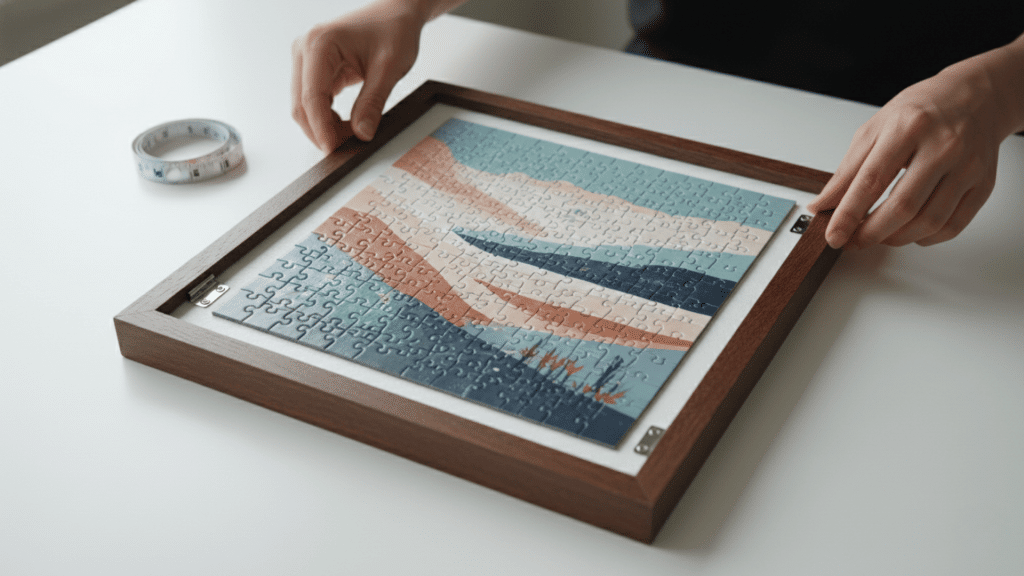
For beginners or anyone short on time, puzzle frame kits are the easiest solution. These frames are designed specifically for puzzles and require no special skills or extra materials.
Materials Needed
| Material | Purpose |
|---|---|
| Puzzle-specific frame or kit | Designed to fit standard puzzle sizes |
| Built-in backing or clips | Secures puzzle without extra materials |
| Measuring tape | Ensures correct frame size selection |
Step 1: Measure the Completed Puzzle Accurately
Use a measuring tape to check the exact height and width. Write down these numbers before shopping for a frame.
Step 2: Select a Puzzle Frame Designed for That Size
Look for frames labeled with your puzzle dimensions. Puzzle frames often come with the right depth and backing already included.
Step 3: Insert the Puzzle Into the Frame
Slide your completed puzzle carefully into the frame opening. Keep it centered so borders look even on all sides.
Step 4: Secure Using Clips or the Built-In System
Close the frame backing using the included clips or tabs. Most puzzle frames have a simple closing mechanism that snaps into place.
Step 5: Hang or Display the Framed Puzzle
Attach hanging hardware to the back if not already installed. Find your chosen display spot and hang your finished work.
What to Look for in a Puzzle Frame?
Choosing the right frame makes a huge difference in how your puzzle looks. The wrong frame can cause warping, shifting, or even damage to your completed work.
| Frame Feature | Key Points |
|---|---|
| Standard vs Puzzle Frames | Puzzle frames have deeper channels and backing systems. Standard frames are too shallow. |
| Frame Depth | Need 1/4 inch minimum. Mounted puzzles need 1/2 inch or more. |
| Glass vs Acrylic | Glass: clearer, scratch-resistant. Acrylic: lighter, safer, but scratches easily. |
| UV Protection & Glare | UV glass prevents fading. Anti-glare reduces reflections. |
| Matting Benefits | Covers uneven edges. Adds professional polish to display. |
Use this guide to match your frame choice with your puzzle needs. Getting these details right the first time saves you from buying a replacement frame later.
How Do I Buy a Frame for My Puzzle?
Buying the right frame starts with accurate measurements and understanding your options. Many people make costly mistakes by guessing sizes or ordering frames that are too shallow. Taking a few extra minutes to measure and plan will save you time and money.
- Measure the Finished Puzzle, Not the Box: Always measure your completed puzzle with a ruler or measuring tape, because box dimensions are often inaccurate or refer to different measurements.
- Account for Backing and Thickness: Add the thickness of any backing board or mounting materials to your puzzle thickness when checking frame depth requirements.
- Choose Standard vs Custom Sizing: Standard frames cost less and arrive faster, but custom frames fit unusual puzzle sizes perfectly and offer more design choices.
- Where to Buy Frames (Online, Craft Stores, Custom Shops): Online retailers like Amazon offer affordable options with many sizes, craft stores let you see frames in person before buying, and custom framing shops provide professional help for special projects.
The biggest mistake is ordering a frame that matches the box size instead of the actual puzzle. Other errors include forgetting to check frame depth, choosing glass that is too heavy for wall mounting, and not considering whether you need UV protection for sunny rooms.
Wrapping It Up
Now you know how to frame a puzzle the right way. You’ve learned what to decide before starting, four different framing methods, how to pick the right frame, and where to buy one.
Whether you choose permanent glue, reversible sheets, backing board support, or a simple frame kit, your puzzle can become lasting wall art.
Pick the method that fits your skill level and budget. Measure carefully, work on a flat surface, and take your time. Your finished puzzle deserves to be displayed properly.
Ready to frame your puzzle? Start with the method that works best for you. Share your results in the comments below.