Every Guitar Enthusiast Should Add a Baritone Guitar to Their Collection Soon

Music lovers are always looking for fresh ways to expand their sound, but buying another instrument should offer more than a new look hanging on the wall. A different guitar should inspire new songs, encourage different playing techniques, and make familiar music feel exciting again.
That is exactly why the baritone guitar has earned a loyal following among musicians across rock, country, blues, metal, surf, and even ambient music. Sitting comfortably between a standard electric guitar and a bass, it creates a voice that is deep, rich, and unmistakable without replacing either instrument. Whether you write original songs or simply enjoy experimenting with new sounds, this unique instrument deserves a place in your collection.
A Different Kind of Sound
One of the first things players notice about the baritone guitar is its deeper, fuller voice. Unlike a standard guitar, a baritone typically features a longer scale length, often between 27 and 30 inches.
That additional length allows heavier strings to maintain proper tension while being tuned lower, commonly to B standard or A standard. The result is a powerful sound that fills more space without becoming muddy.
The lower tuning gives single notes incredible depth while making chords feel larger and more dramatic. Instead of relying on effects pedals to create atmosphere, players can naturally produce a darker tone simply by switching instruments. That makes the baritone a favorite for musicians who enjoy cinematic compositions, modern country riffs, heavy rock, and instrumental music that benefits from a broader sonic range.
Even familiar songs can take on an entirely different personality. Riffs become heavier, melodies feel more emotional, and chord progressions develop a richness that is difficult to achieve with a traditional electric guitar.
Creative Possibilities

Adding another guitar to your collection should inspire creativity instead of collecting dust in a stand. A baritone does exactly that because it encourages players to rethink how they approach songwriting and arrangement. Standard chord shapes remain familiar, but the lower tuning transforms the emotional character of every note.
Songwriters often discover new ideas simply because the instrument responds differently than what they are used to hearing. Fingerstyle arrangements gain additional warmth, while simple chord progressions suddenly sound larger than life. Players who enjoy recording music also appreciate how a baritone can occupy its own space in a mix without competing directly with either bass or rhythm guitar.
This versatility makes it an excellent choice for layering recordings. A standard guitar can provide brightness while the baritone fills the lower frequencies, creating a richer overall sound without excessive equalization or processing. Instead of buying another effects pedal, many musicians find that adding a baritone expands their creative options far more dramatically.
Essential Gear Matters
Although the instrument itself is the biggest investment, supporting accessories also help maximize the playing experience. Quality strings designed for lower tunings maintain proper tension and improve tuning stability. A well-adjusted setup is equally important because heavier strings respond differently than standard electric guitar sets.
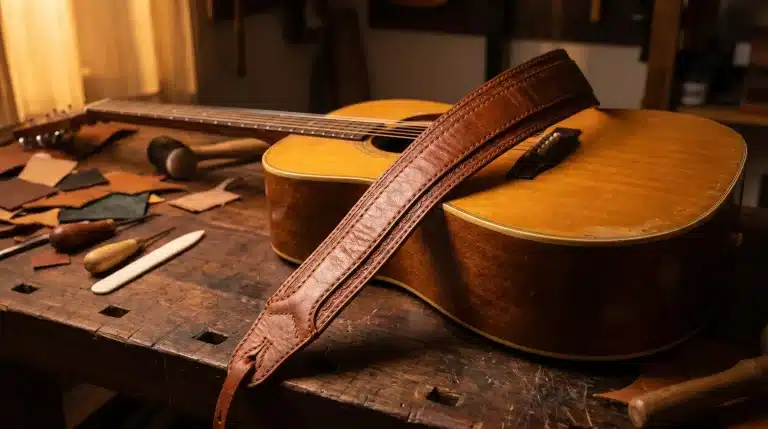
Comfort should never be overlooked either. Since many baritone guitars are slightly heavier and feature longer necks, leather guitar straps provide additional support during long rehearsals or performances. A wider strap distributes weight more evenly across the shoulder, reducing fatigue while helping the instrument remain balanced whether standing or sitting.
Amplifier settings also deserve attention. Because a baritone produces more low frequencies, reducing excessive bass while boosting clarity often delivers a cleaner, more articulate tone. Small adjustments can make the instrument sound focused instead of overwhelming, allowing every note to remain distinct whether playing clean passages or heavily distorted riffs.
Finding Your Style
One reason the baritone continues attracting new players is its flexibility across musical genres. Metal musicians appreciate the crushing rhythm tones without immediately moving to a seven or eight string guitar. Country artists enjoy its warm twang and dramatic low end, while surf musicians use it to create classic instrumental sounds that remain instantly recognizable.
Blues players often discover that slower melodies gain additional emotion, while alternative and indie musicians enjoy experimenting with unusual textures that stand apart from conventional guitar recordings. Ambient players can build expansive soundscapes with only a few sustained notes because the lower register naturally creates depth.
Even if your favorite genre does not traditionally feature a baritone guitar, there are no rules preventing experimentation. Many memorable musical breakthroughs happened because artists ignored expectations and explored unfamiliar instruments. A baritone encourages exactly that type of exploration without requiring players to learn an entirely different instrument.
A Collection Worth Expanding
Building a guitar collection should be about expanding possibilities rather than owning multiple versions of the same instrument. A baritone offers something genuinely different, introducing deeper tunings, fresh songwriting opportunities, and a distinctive voice that standard guitars cannot fully replicate.
Whether you perform live, record at home, or simply enjoy discovering new sounds during practice sessions, it brings lasting value that extends well beyond its unique appearance. Even one afternoon spent exploring its lower register is often enough to understand why so many guitarists eventually decide they never want to be without one.