
Best Fence Types for Your Backyard: A Homeowner’s Guide to Choosing the Right Style and Material

A fence does more than mark your property line. It adds privacy, boosts curb appeal, keeps kids and pets safe, and can raise your home’s resale value.
But with so many materials and styles to choose from, picking the right one can feel overwhelming. This guide breaks it all down clearly.
Why the Right Fence Choice Matters
The wrong fence can cost you more in repairs and maintenance than the installation itself. The right one can last decades with minimal upkeep.
According to home improvement research, fencing consistently ranks among the top outdoor projects that return value at resale.
For more ideas on upgrading your outdoor space affordably, see this guide on budget-friendly home renovation ideas on A Little Delightful.
Comparing the Most Popular Fence Materials
|
Material |
Avg. Cost (per linear ft) |
Lifespan |
Maintenance |
Best For |
|---|---|---|---|---|
|
Wood |
$10 to $30 |
15 to 20 years |
High (stain/seal every 2-3 yrs) |
Classic look, privacy |
|
Vinyl / PVC |
$20 to $35 |
25 to 40 years |
Low (occasional rinse) |
Low maintenance, privacy |
|
Metal / Aluminum |
$30 to $60 |
40 to 60 years |
Very low |
Security, ornamental |
|
Composite |
$25 to $45 |
25 to 30 years |
Low (no staining needed) |
Eco-friendly, durability |
|
Chain Link |
$8 to $18 |
15 to 25 years |
Low |
Budget, pet containment |
Breaking Down Each Fence Type
Wood Fencing
Wood is the most classic choice and gives a warm, natural look that suits almost any home style.
It costs less upfront but requires regular staining or sealing to prevent rot, warping, and pest damage.
Cedar and redwood naturally resist moisture and insects, making them the better long-term wood options over pine.
Vinyl Fencing
Vinyl needs almost no maintenance. A quick rinse with a garden hose is usually all it takes to keep it looking clean.
It resists rot, fading, and pests, and modern vinyl now comes in wood-grain textures that closely mimic natural wood.
The upfront cost is higher than wood, but vinyl typically becomes more cost-effective after about 8 years.
Metal and Aluminum Fencing
Metal fences are strong, long-lasting, and ideal for security without sacrificing visibility.
Aluminum is lighter and rust-resistant, making it a popular choice over wrought iron for most residential properties.
These work especially well as pool fences, front yard boundaries, or decorative garden edging.
Composite Fencing
Composite fencing is made from recycled wood fibers and plastic, giving the look of wood with far less upkeep.
It resists moisture, fading, and insects and is one of the more eco-friendly options on the market.
Expect to pay more upfront, but maintenance costs over 20 years are among the lowest of any material.
Privacy vs. Decorative: Which Style Should You Choose?
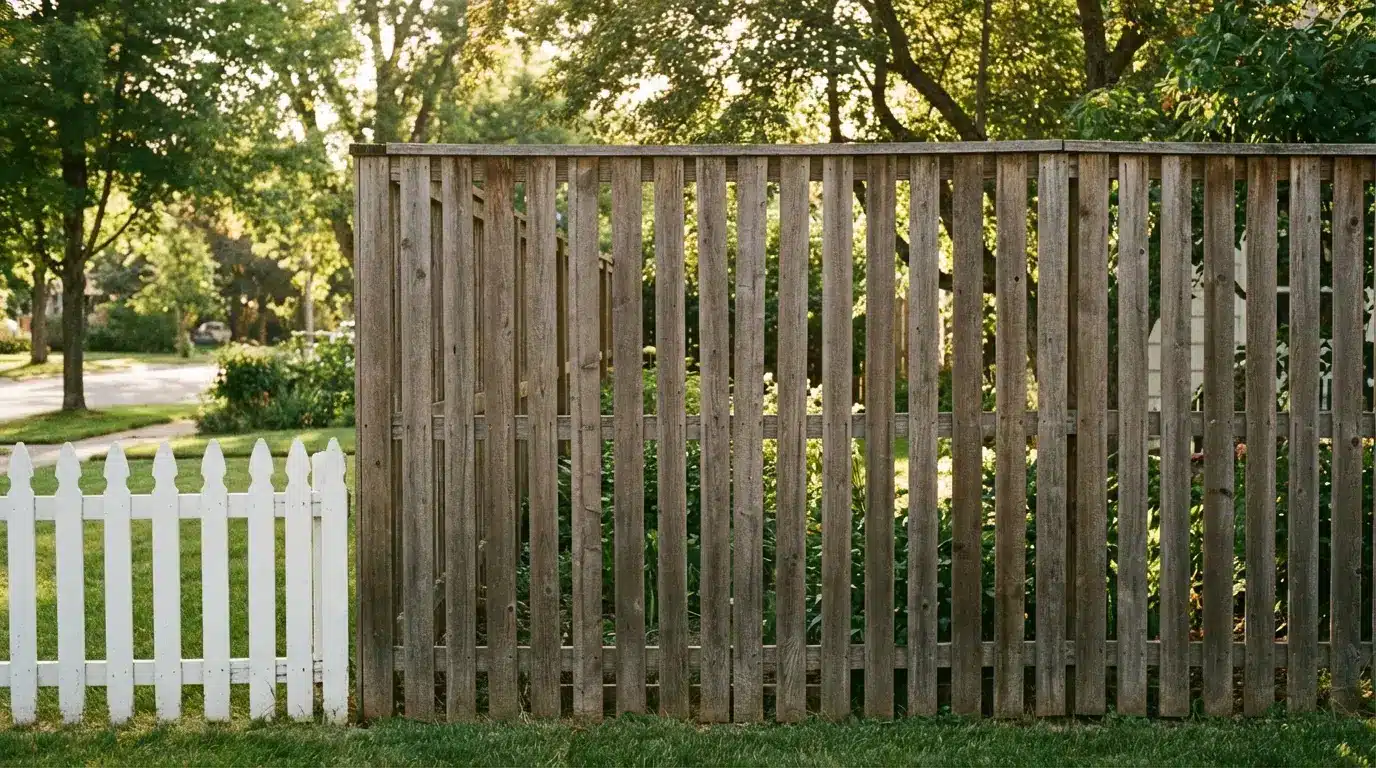
Privacy fences are typically 6 feet tall with no gaps between boards. They are ideal for backyards, pools, and urban properties.
Decorative or picket fences are shorter and more open. They define boundaries and add charm without blocking views.
Semi-private fences offer a middle ground, with small gaps that allow airflow while still limiting visibility.
Style vs. Function Comparison
|
Fence Style |
Height |
Privacy Level |
Best Application |
|---|---|---|---|
|
Privacy (solid boards) |
6 ft |
High |
Backyard, pool, urban lots |
|
Picket |
3 to 4 ft |
Low |
Front yard, decorative |
|
Semi-private (spaced boards) |
5 to 6 ft |
Medium |
Side yards, suburban homes |
|
Split rail |
3 to 4 ft |
None |
Rural properties, large lots |
|
Lattice top |
5 to 6 ft |
Medium |
Garden borders, patio edges |
What to Look for When Hiring a Fencing Contractor
Always ask for proof of licensing, insurance, and references before signing any contract. A reputable contractor will provide all three without hesitation.
Get at least three written quotes that clearly break down material, labor, and warranty information. Vague quotes often lead to surprise charges.
If you are in the Round Rock, Texas area, working with an affordable fencing company that understands local soil conditions and HOA requirements makes the whole process much smoother.
Ask whether your project requires a permit. Many municipalities require one for fences over a certain height or near property lines.
Expert Insight
Dave Brown, owner of Reliable Tree Service and outdoor improvement specialist, advises: “Keep an eye on your fence, clean it once a year, and reapply stain or sealant every one to two years.”
Regular upkeep is far cheaper than premature replacement, regardless of the material you choose.
Before You Install: Things to Check
Mark your property lines accurately before any digging starts. Installing a fence even a few inches onto a neighbor’s property can result in costly legal disputes.
Call 811 (in the US) before digging to have underground utility lines marked. Hitting a utility line can be dangerous and expensive.
If you are replacing an old fence before installing a new one, our guide on how to safely remove your old fence walks you through the full process.
Frequently Asked Questions
What Is the Most Affordable Fence Material?
Chain link is the cheapest at $8 to $18 per linear foot installed. For a more attractive option, pressure-treated pine wood is the next most affordable starting at around $10 per linear foot.
How Long Does a Wood Fence Last?
A well-maintained wood fence lasts 15 to 20 years. Cedar and redwood tend to last longer than pine due to their natural resistance to moisture and insects.
Do I Need a Permit to Build a Fence?
This varies by location. Many cities and counties require a permit for fences over a certain height, near property lines, or around pools. Always check with your local municipality before starting.
What Fence Type Adds the Most Home Value?
A well-installed wood or vinyl privacy fence typically offers the best return at resale. Curb appeal, material condition, and whether it matches the home’s style all play a role.
Can I Install a Fence Myself?
Simple chain link or picket fences are manageable DIY projects. Privacy fences and anything requiring concrete post-setting are generally better left to professionals for structural integrity.
For more outdoor home improvement inspiration, explore proven home improvement tips to boost comfort and value on A Little Delightful.