Art Deco Interior Design: 1920s Style Guide

Walk into a 1920s Art Deco room, and you feel it immediately. The sharp lines. The shimmer of gold against black marble. The way every mirror and light fixture seems placed with purpose.
This style turned homes into glamorous statements during one of history’s most exciting decades. But Art Deco wasn’t just about looking expensive.
It mixed bold geometry with authentic craftsmanship in ways that still feel fresh today.
In this post, you’ll learn what defines 1920s art deco, why it emerged when it did, and how to bring its signature look into your own space without going overboard.
What Is Art Deco Interior Design?
Art Deco is an interior design style that celebrates bold geometry, luxury materials, and modern glamour.
It emerged in the 1920s as a response to the ornate, nature-inspired designs that came before it.
The style broke away from tradition by favoring sharp lines, symmetry, and sleek finishes over curved details and floral patterns.
Art Deco interiors reflected the optimism of the post-war era, blending handcrafted artistry with machine-age precision.
This created spaces that felt both opulent and forward-thinking, making 1920s art deco a defining look of its time.
The Historical Context of Art Deco in the 1920s
The 1920s brought massive social change after World War I ended. People wanted to leave the past behind and focus on progress, pleasure, and a brighter future.
This shift in mindset created the perfect conditions for 1920s art deco to thrive. The style reflected a world that was rapidly modernizing, with new technologies, faster travel, and a hunger for glamour after years of hardship.
Key influences that shaped Art Deco in the 1920s:
- Post-war optimism: Society craved joy, excitement, and luxury after the devastation of war. Interiors became more expressive and celebratory.
- Industrial progress: Mass production and new materials like chrome, steel, and glass made modern design accessible. Factories could create sleek, polished finishes that defined the look.
- Technological advances: Innovations in lighting, machinery, and construction inspired geometric forms and streamlined shapes in 1920s interior design.
- Global influence: Increased travel exposed designers to Egyptian, Asian, and African art. These cultures brought bold patterns and exotic motifs into Western interiors.
- Jazz Age culture: Music, fashion, and nightlife influenced home design. Spaces became more theatrical, with mirrored surfaces and dramatic lighting.
Art Deco vs Art Nouveau: Key Differences
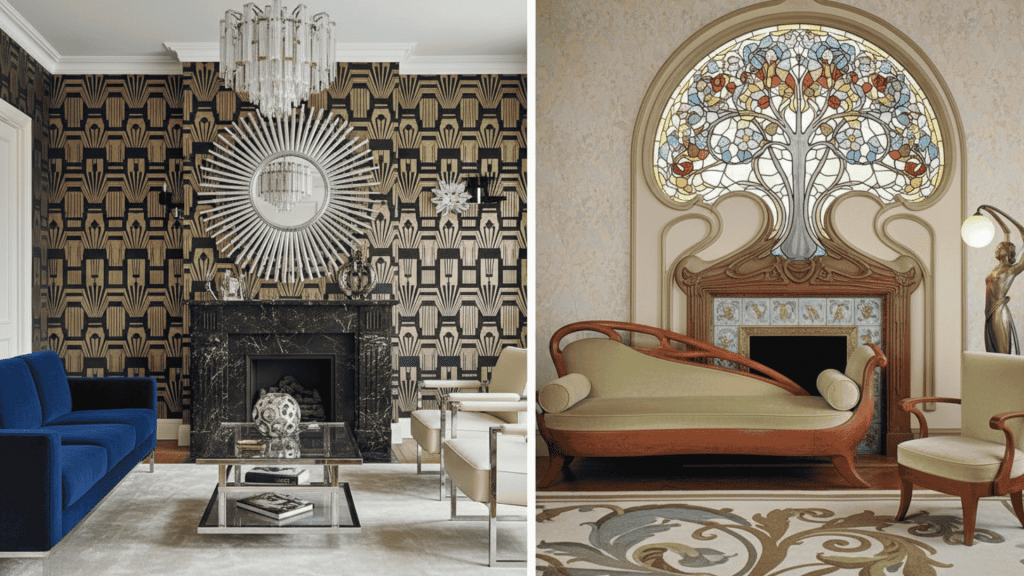
People often mix up these two styles because they sound similar and both are highly decorative. But once you understand the differences, you’ll never confuse them again.
| Aspect | Art Nouveau | Art Deco |
|---|---|---|
| Time Period | 1890s to early 1910s | 1920s to 1930s |
| Visual Style | Flowing curves and organic lines. Nature-inspired motifs. | Sharp angles and geometric shapes. Machine-age precision. |
| Design Focus | Handcrafted artistry. Rejected mass production. | Modern industry. Streamlined luxury. |
| Materials | Wood, stained glass, wrought iron. | Chrome, glass, lacquer, exotic woods. |
| Colors | Soft pastels and earth tones. | Bold jewel tones and metallic accents. |
Why People Get Confused: Both are decorative and appear close in time. The similar names add to the mix-up. Art Deco moved from nature to geometry. It reflected 1920s optimism and industrial growth.
Core Characteristics of 1920s Art Deco Interior Design
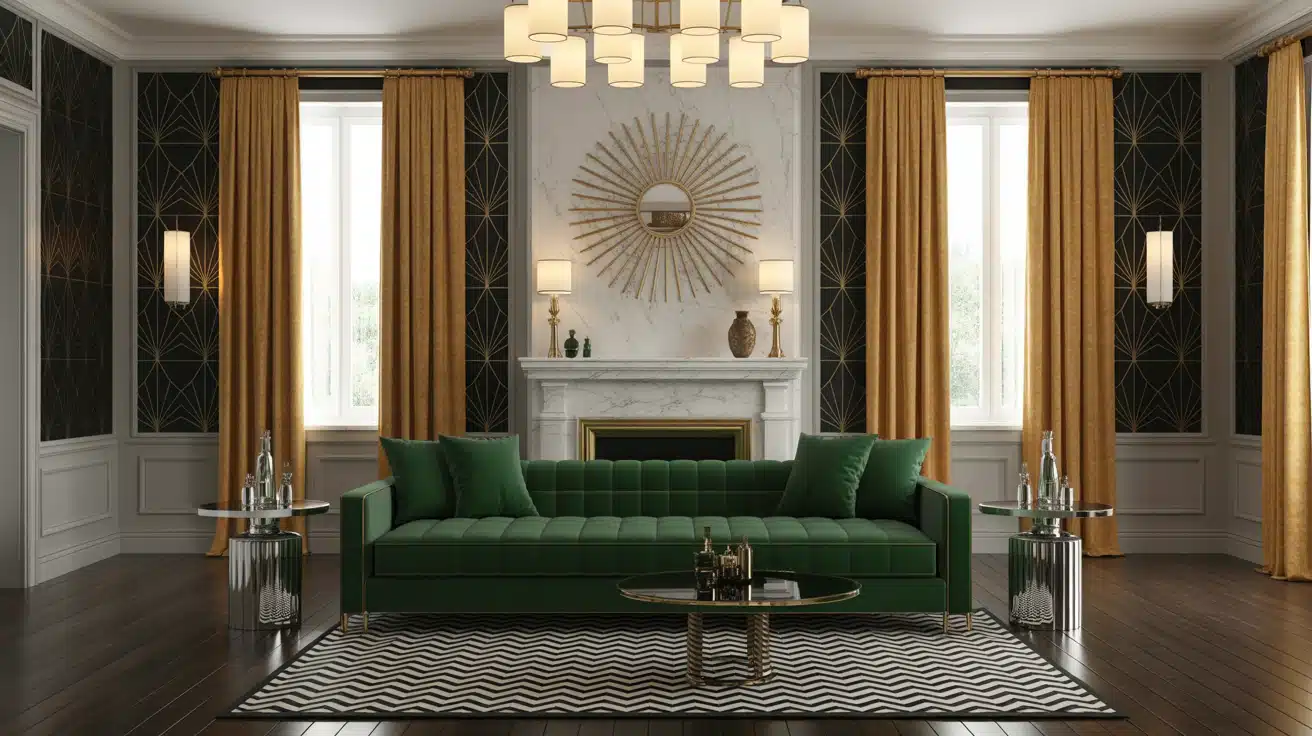
Art Deco interiors had a distinct look that made them instantly recognizable. Here are the five defining features that shaped the 1920s Art Deco style.
1. Strong Geometric Shapes Bold lines, zigzags, chevrons, and stepped forms dominated walls, furniture, and floors. These angular patterns created visual energy and made spaces feel modern and structured.
2. Symmetry and Structured Layouts Room arrangements followed balanced, orderly designs with matching furniture placement on both sides. This created a sense of calm and formality that felt both controlled and luxurious.
3. Luxurious Materials Marble, glass, lacquered wood, and metals like brass and chrome were staples of 1920s interior design. These materials added weight, shine, and richness to every surface.
4. High-Contrast Color Schemes Dark bases in black, navy, or deep green were paired with metallic gold, silver, or bright white accents. This contrast made the rooms feel dramatic and visually striking.
5. Glamorous Decorative Details Reflective surfaces like mirrors, polished metals, and glass panels caught light and added sparkle. These finishes turned ordinary rooms into sophisticated, showstopping spaces.
7 Art Deco Interior Design Ideas Inspired by the 1920s
Ready to bring the 1920s art deco style into your own home? These seven practical ideas will help you capture the glamour and geometry of the era without a complete renovation.
1. Use Geometric Wallpaper or Wall Panels
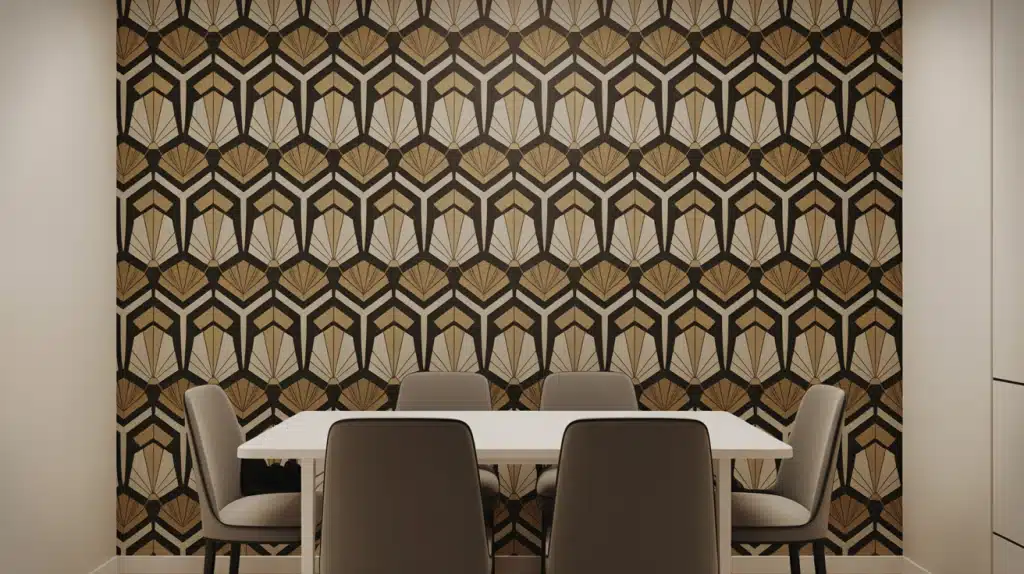
Geometric wallpaper instantly brings 1920s art deco style into any room. Look for patterns with zigzags, chevrons, or stepped designs in bold color combinations.
Wall panels with angular lines or repeating shapes work well in dining rooms or entryways where you want to make a strong first impression.
2. Incorporate Metallic Accents in Lighting or Decor
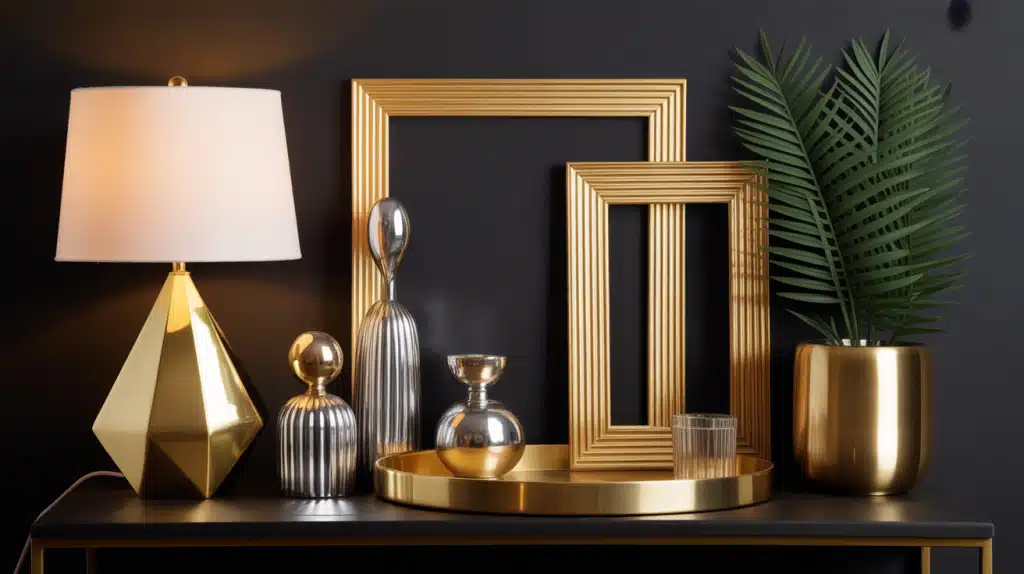
Metallic finishes in gold, brass, or chrome add instant glamour to your space. Use them in table lamps, picture frames, cabinet hardware, or decorative objects.
Even small touches of metal can reference the polished luxury of 1920s interior design without overwhelming the room.
3. Choose Furniture with Curved or Angular Lines
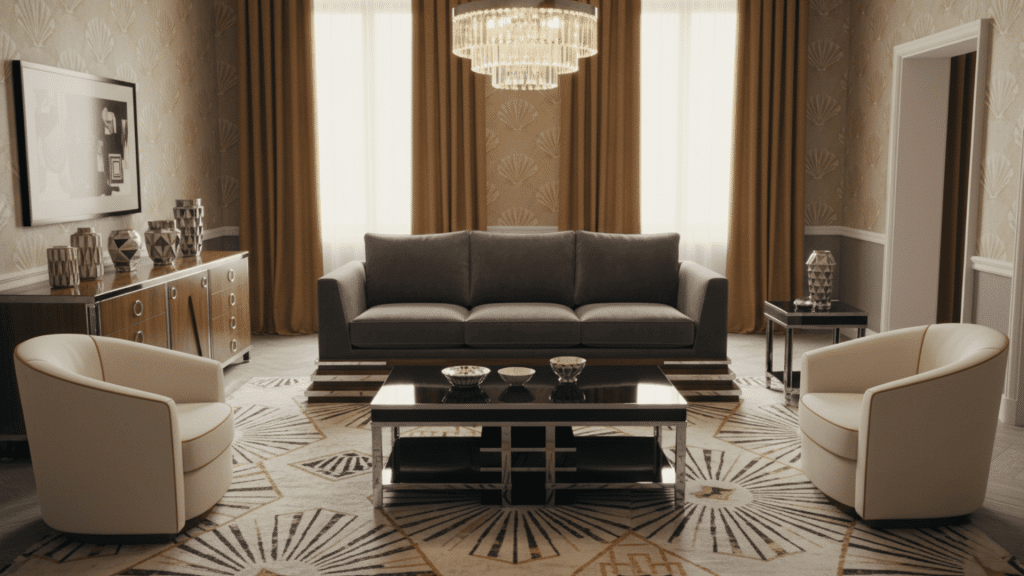
Art Deco furniture features clean silhouettes with either sharp angles or smooth curves. Look for sofas with low profiles, chairs with geometric armrests, or tables with stepped bases.
These pieces create visual interest while maintaining the structured feel that defines the style.
4. Add Mirrors with Decorative Frames
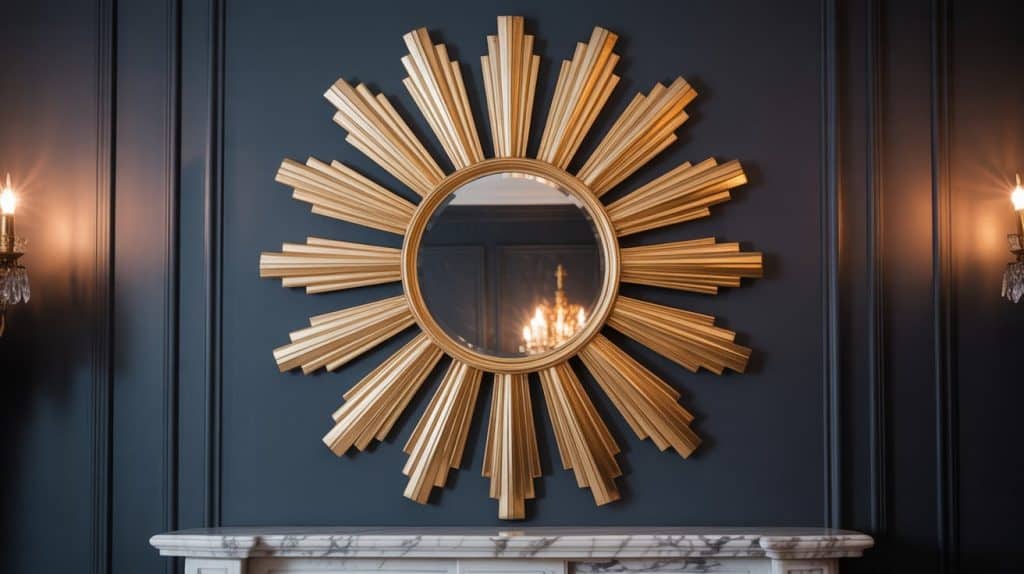
Mirrors were essential in 1920s Art Deco interiors for reflecting light and expanding space. Choose frames with sunburst designs, stepped edges, or geometric patterns.
A large statement mirror over a fireplace or console table can become the focal point of your room.
5. Introduce Jewel-Tone Upholstery
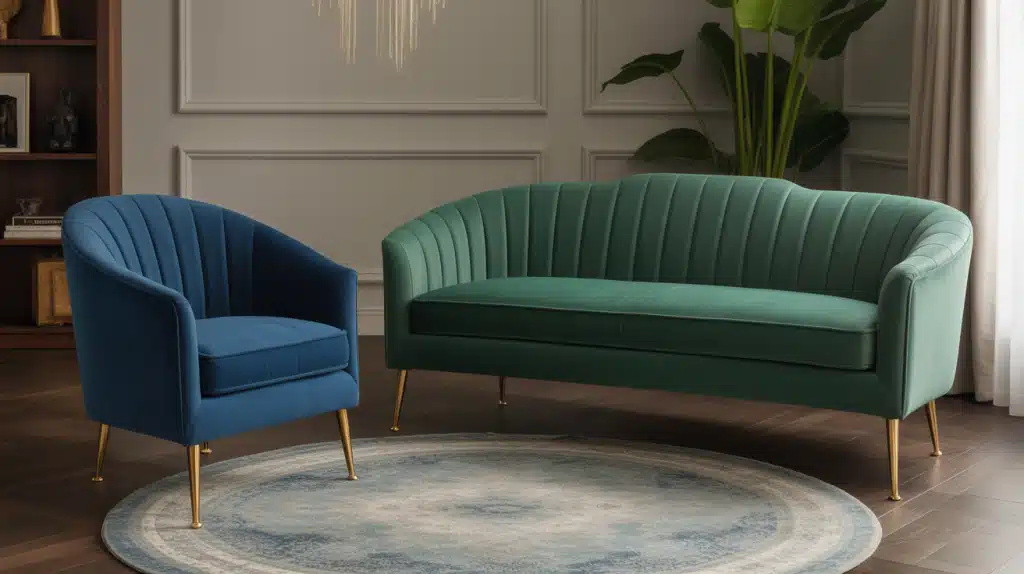
Rich colors like emerald, sapphire, or ruby in velvet or silk fabrics bring depth and luxury. Use jewel tones on accent chairs, ottomans, or throw pillows to add warmth.
These colors work especially well against neutral walls or dark wood furniture.
6. Focus on Statement Lighting Fixtures
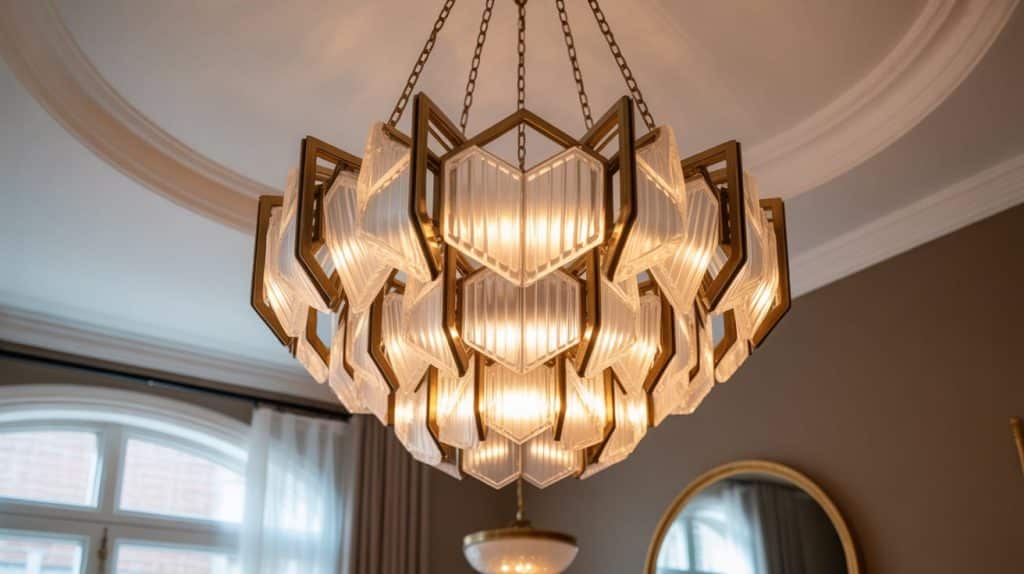
Lighting was treated as sculpture in 1920s Art Deco homes. Look for chandeliers with geometric forms, wall sconces with frosted glass shades, or table lamps with angular bases.
A bold lighting fixture can set the tone for an entire room while providing functional illumination.
7. Layer Textures for Depth and Contrast
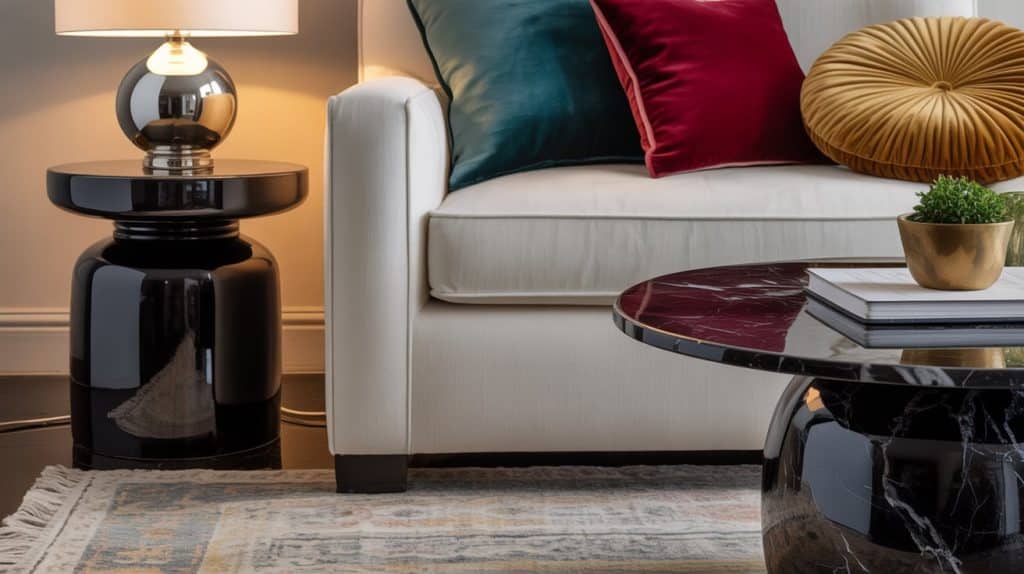
Combine smooth lacquered surfaces with soft velvet, polished metal with natural wood, or glossy tile with plush rugs. This mix of textures creates visual interest and prevents spaces from feeling flat.
Layering different finishes was key to achieving the rich, dimensional look of 1920s interior design.
Color Palettes and Materials in 1920s Art Deco Interiors
The colors and materials you choose define whether a space feels truly Art Deco or just decorative. Here’s what gave 1920s art deco its signature luxurious look.
| Element | Key Features |
|---|---|
| Jewel Tones & Deep Neutrals | Emerald, sapphire, ruby, amethyst, black, charcoal, and navy. Rich, dramatic foundations. |
| Metallic Accents | Gold, silver, bronze, chrome in fixtures and decor. Added glamour and reflected light. |
| Handcrafted Materials | Exotic woods like ebony and zebrawood. Mother-of-pearl inlays. Hand-lacquered finishes. |
| Industrial Materials | Chrome, steel, glass, aluminum. Gave 1920s art deco its sleek, modern appeal. |
| Polished Finishes | Smooth, glossy, reflective surfaces. High-shine lacquer and buffed metals created depth. |
| Why They Mattered | Color and material choices defined the look. Mixed luxury with modernity in 1920s interior design. |
How to Add 1920s Art Deco to Your Home?
You don’t need a complete redesign to bring 1920s art deco style into your space.
Start with one statement feature like a geometric mirror, a jewel-toned velvet chair, or a brass lighting fixture to test the look.
Lighting and accessories are the easiest entry points because they add style without significant commitment or cost. Mix modern furniture with select Art Deco details so your home feels current rather than like a museum.
Keep your room layouts structured and symmetrical to maintain that signature balance, and be careful not to overuse patterns on walls, floors, and furniture at once.
This measured approach lets you enjoy the glamour of 1920s interior design while keeping your space functional and visually clear.
Summing It Up
1920s art deco brought geometry, glamour, and modern luxury together in ways that still inspire interiors today.
From bold geometric patterns to rich jewel tones and polished metals, this style proved that you can be both structured and expressive.
The best part? You don’t need to recreate an entire 1920s interior design scheme to capture its spirit. Start with one strong piece, add metallic accents, or introduce a jewel-toned chair.
Which Art Deco element will you try first in your home? Share your thoughts in the comments below, and let us know if you need help finding the right pieces to get started.