The Everyday Places We Forget to Wear Sunscreen

Think about the last time you packed for a beach holiday. You probably remembered your sunglasses, a hat, and a bottle of sunscreen. Maybe you even packed an extra one, just in case.
Now think about the last time you drove to the grocery store, sat beside a sunny window, or stepped outside for a quick coffee.
Did sunscreen cross your mind?
Probably not. And that’s what makes everyday sun exposure so easy to overlook. We tend to associate sun protection with holidays, swimming pools, and long afternoons outdoors. But sunlight doesn’t wait for us to plan a beach trip.
Some of our most ordinary activities involve more UV exposure than we realize. And the interesting part is that we don’t necessarily need to change those activities. We just need to pay a little more attention to how we protect our skin.
1. That Sunny Spot Beside the Window
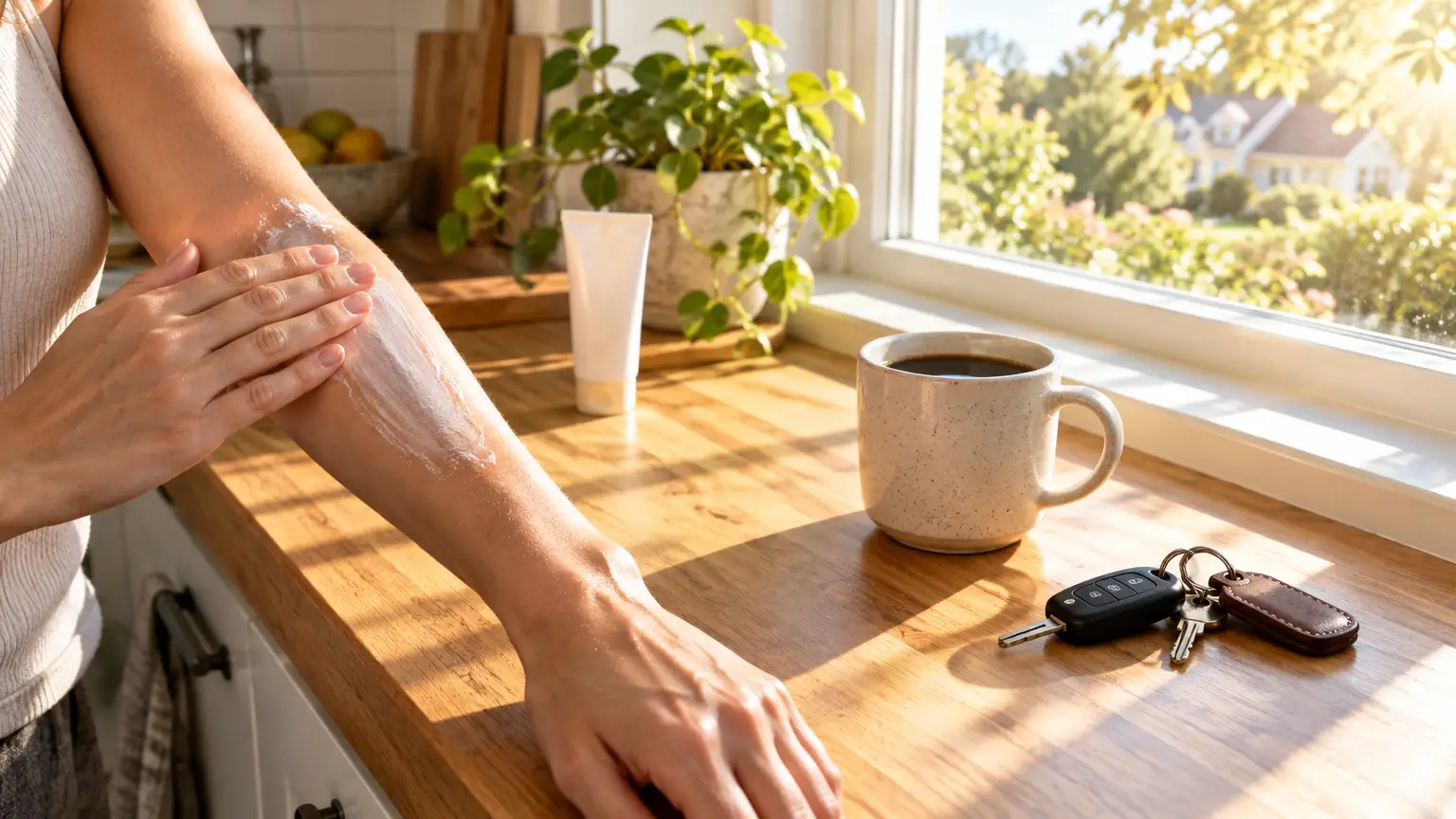
There’s something lovely about sitting beside a window with a cup of coffee. The natural light makes everything feel brighter, and it’s often the nicest place to read, work, or relax.
But here’s something you might not know. Ordinary window glass generally blocks most UVB radiation, the type primarily responsible for sunburn, but some UVA radiation can still pass through.
UVA contributes to skin aging and can also damage skin over time. How much reaches you depends on the type of glass, any protective coatings, and the conditions outside.
The Skin Cancer Foundation’s guidance on UV window protection explains why windows aren’t always a complete barrier against ultraviolet radiation.
Does that mean you should avoid sitting by your favorite window? Of course not. But if you regularly spend long periods in direct sunlight through glass, it’s worth considering UV-protective window film, adjusting the blinds, or using appropriate sun protection.
You can still enjoy the sunlight without ignoring its effects.
2. The Quick Drive That Turns Into an Hour
A quick trip to the store rarely feels like an outdoor activity. You’re inside your car, perhaps with the air conditioning running, and the sun doesn’t seem particularly intense.
But car windows don’t necessarily block all ultraviolet radiation.
Windshields are generally designed to provide substantial UV protection, while the amount of UVA transmitted through side windows can vary.
This is particularly relevant when you’re driving for extended periods and sunlight falls directly onto your face, arms, or hands.
The American Academy of Dermatology’s travel skincare advice recommends protecting exposed skin during car journeys as well as other outdoor activities.
A pair of UV-protective sunglasses, suitable clothing, and sunscreen on exposed areas can help make longer drives more comfortable from a sun-safety perspective.
And no, you don’t need a separate skincare routine just for driving. A sensible morning routine can cover several parts of your day.
3. Your Morning Coffee Run
We often underestimate how much time we spend outdoors during small errands.
Five minutes walking to a café. Ten minutes waiting for a friend. Another fifteen minutes enjoying coffee at an outdoor table.
Individually, these moments don’t feel particularly important. But together, they contribute to our daily exposure.
This is why sun protection makes more sense as a habit than something we reserve for special occasions.
According to the American Academy of Dermatology, broad-spectrum, water-resistant sunscreen with SPF 30 or higher is recommended for protecting exposed skin, alongside shade and protective clothing.
The easiest approach is often to apply sunscreen as part of your morning routine, especially when you expect to spend time outside.
That way, you don’t have to make a separate decision every time you leave the house.
4. Walking the Dog
If you have a dog, you already know that outdoor walks don’t always happen when the weather is convenient.
Some mornings are cool and cloudy. Others are bright and sunny. And sometimes your dog decides that the usual ten-minute walk should become a forty-minute adventure.
It’s easy to remember the leash, waste bags, and water while forgetting about your own skin.
The face and neck aren’t the only areas to consider. Ears, forearms, hands, and the tops of the feet may also be exposed, depending on what you’re wearing.
A wide-brimmed hat can provide useful shade, while comfortable, protective clothing can reduce the amount of skin directly exposed to sunlight.
And when the UV Index is high, choosing a shadier walking route or a different time of day can help reduce exposure.
Your dog still gets the walk. You simply make it a little more sun-conscious.
5. Gardening for Just a Few Minutes
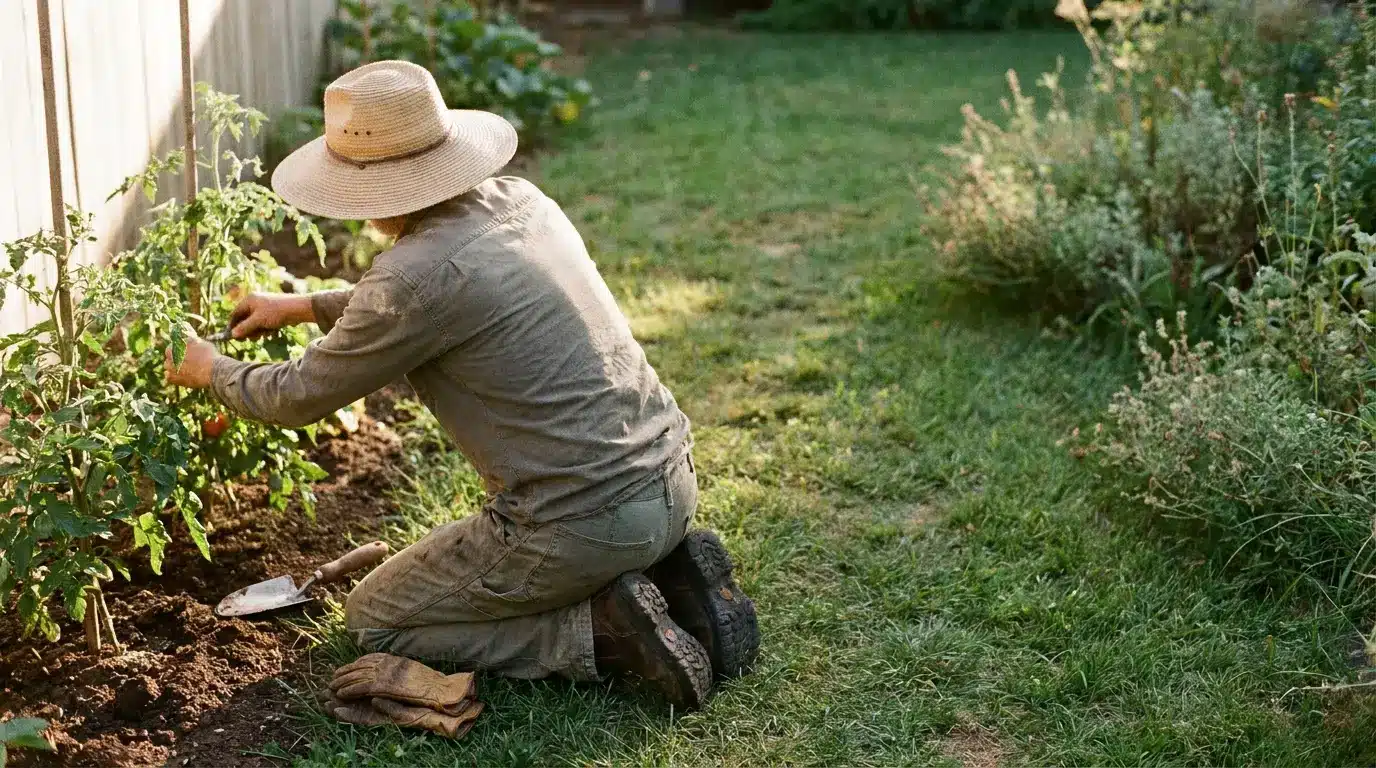
Gardening is another activity that rarely stays as short as we intended.
You step outside to water a plant, notice a few weeds, decide to trim something, and suddenly half an hour has disappeared.
The same thing happens when arranging balcony plants, cleaning outdoor furniture, or tending to a small vegetable patch.
Because gardening often involves bending forward, areas such as the back of the neck, shoulders, and arms can receive direct sunlight.
Protective clothing and a hat are particularly useful for these activities. Sunscreen can help cover areas that clothing doesn’t protect.
And if you’re planning to spend a longer afternoon working outside, remember that sunscreen needs reapplication according to its directions, especially after sweating.
It’s a small part of gardening preparation that can easily become as automatic as picking up your watering can.
6. The School Run and Weekend Errands
For many families, mornings are already busy enough.
There are lunches to pack, bags to find, shoes that mysteriously disappear, and a schedule that somehow becomes more complicated every day.
Adding another step to the routine might sound exhausting.
But sun protection doesn’t have to involve a long skincare ritual.
A comfortable sunscreen can fit into the same few minutes you already spend getting ready. The key is finding something suitable for your skin that you’re happy to use regularly.
Some people prefer lightweight lotions, while others like richer creams or mineral sunscreens containing zinc oxide.
The development of zinc oxide ingredients for mineral sunscreens has helped expand the range of textures and finishes that formulators can create. That matters because a sunscreen that’s pleasant to wear is easier to incorporate into everyday life.
For children, sun-safe clothing, hats, shade, and age-appropriate sunscreen can also become familiar parts of getting ready for outdoor activities.
The aim isn’t to make mornings more complicated. It’s to make protection easier to remember.
7. Outdoor Lunches and Weekend Catch-Ups
There’s something about eating outdoors that makes an ordinary meal feel special.
A café terrace, a picnic in the park, or lunch in the backyard can turn a simple afternoon into something memorable.
But these are also situations where we tend to lose track of time.
You might arrive when the table is shaded, only to find yourself sitting in direct sunlight as the afternoon progresses.
Choosing a shaded seat can make a difference. So can bringing sunglasses or a hat when you know you’ll be outside for a while.
And if your afternoon stretches into several hours, remember to reapply sunscreen to exposed skin as directed.
You don’t need to spend the entire lunch worrying about sunlight. A little preparation lets you focus on enjoying the moment.
Making Sunscreen Feel Less Like Another Chore
One reason people skip sunscreen during ordinary activities is that they don’t always enjoy using it.
Some formulas feel greasy. Others leave visible residue or don’t sit comfortably under makeup. And if you’re rushing through a busy morning, an uncomfortable product is easy to leave behind.
Fortunately, sunscreen comes in different formats, including creams, lotions, sticks, and lightweight fluids.
Different mineral sunscreen formulation examples illustrate how UV protection can be incorporated into products with varying textures and finishes, including lightweight facial formulas and convenient stick formats.
That variety is useful because there’s no single texture that everyone prefers.
A product that feels comfortable on dry skin might seem too rich for someone else. A lightweight fluid may suit one person’s morning routine, while another prefers a moisturizing cream.
Whatever format you choose, look for appropriate broad-spectrum protection and follow the application directions. Convenience shouldn’t come at the expense of using enough sunscreen.
Small Habits Make the Biggest Difference
It’s easy to think of sun protection as something we need only when planning a day outdoors.
But our routines tell a different story.
We drive, walk, garden, run errands, meet friends, and sit beside sunny windows without always considering how much UV exposure those activities involve.
That doesn’t mean we need to avoid sunlight or turn every outing into a carefully planned event.
It simply means being a little more thoughtful.
Keep sunscreen somewhere you’ll remember to use it. Choose protective clothing when practical. Look for shade during longer outdoor activities, and remember to reapply sunscreen when needed.
Most importantly, find a routine that works for your actual life rather than an imaginary perfect schedule.
Because the moments we forget about sun protection are often the same moments that make an ordinary day enjoyable.
And looking after your skin shouldn’t mean missing out on any of them.