A TV Stand That Finally Matches the Mid-Century Mood

The mid century modern look earned its staying power by doing more with less: low lines, warm wood, and legs that lift the piece off the floor so the room reads as open.
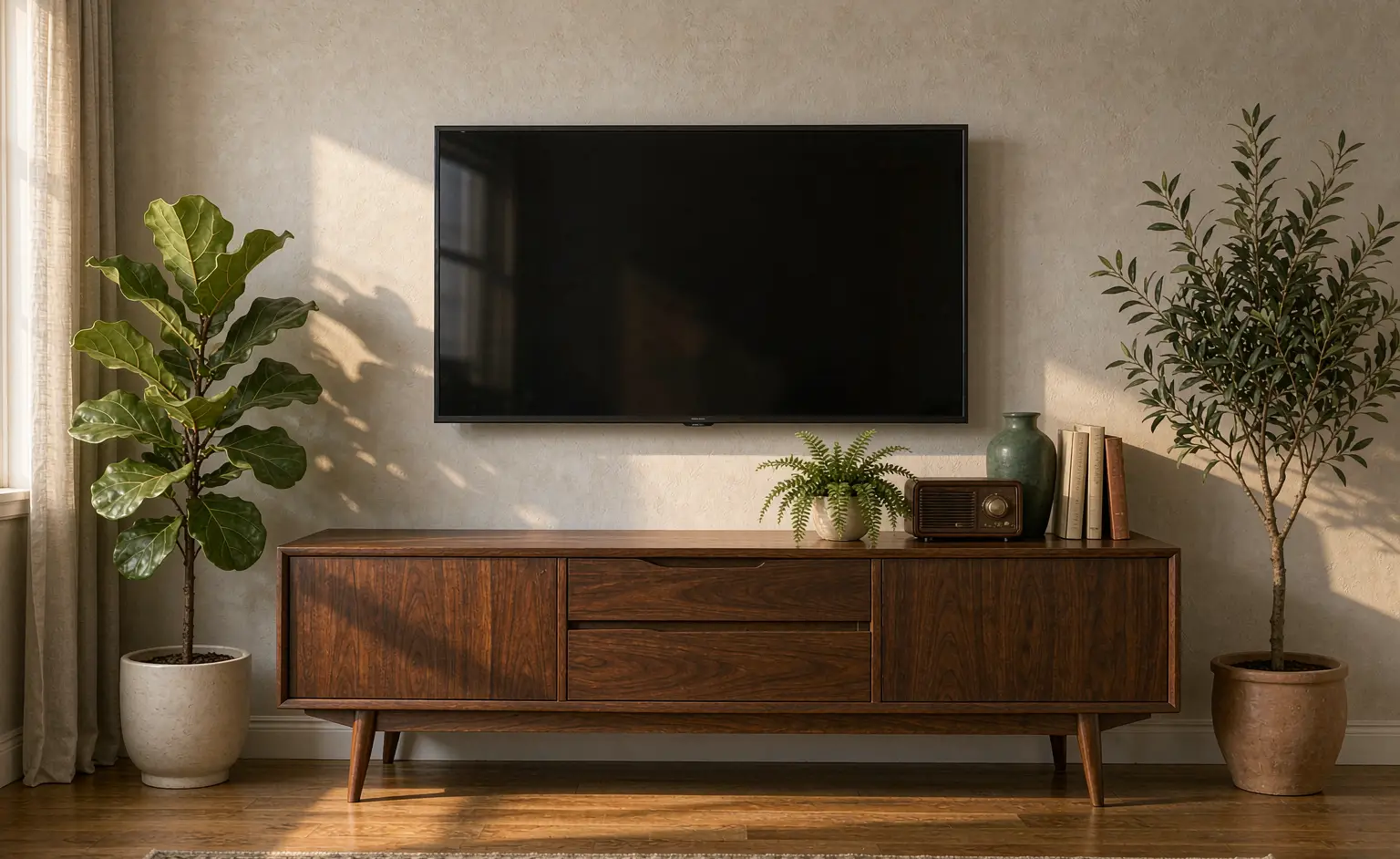
A mid century modern tv stand is the natural anchor for that style, and it pairs just as well with a flat screen as it did with a radio sixty years ago.
What makes the style work is not a single color but a set of proportions. Long, low, horizontal, and honest.
When the TV sits on a piece like this, the technology stops shouting and the room stays calm. The stand becomes furniture first and equipment second, which is the whole point of a designed living room.
Why Low and Long Wins
A low stand keeps the screen at a relaxed eye line and leaves wall space above for art or nothing at all. The long horizontal shape balances a wide sofa and a wide room.
In a small space, low furniture fools the eye into seeing more floor, which makes the room feel bigger than its square footage. Height is the enemy of a cozy room, so keep it down.
A stand that reaches to the ceiling boxes the TV into a tower and kills the calm the style is built on. Measure the wall, then choose a width that spans most of it without touching the corners, and the room will feel planned rather than stacked with a tall block.
Wood Tone Sets the Mood
Walnut and teak are the classic mid century woods, and both bring warmth that black plastic cannot match. A walnut stand against a cream wall is a warm statement that needs no other decoration.
Lighter oak suits a brighter, airier room where you want the wood to whisper rather than speak. The grain does the decorating, so you can skip the knickknacks and let the wood talk.
One good piece of wood does more than a shelf of small objects you dust every week. Pick the tone that matches your floor, because a stand that fights the floor reads as a mistake, while one that echoes it reads as a choice made with care.
Storage Without the Clutter Look
Mid century stands often hide cable and devices behind sliding doors or in open cubbies. The trick is to choose a layout that fits your gear: a center shelf for a console, side cubbies for books or a speaker.
Cable management holes in the back keep cords out of sight. The goal is a front that looks like furniture and a back that behaves like a server rack, without showing either to the room.
If your setup is simple, open cubbies keep it light; if it is busy, doors hide the mess. Match the storage to the mess, not to the photo in the catalog, and the stand will earn its keep every day the screen is off.
Legs That Lift
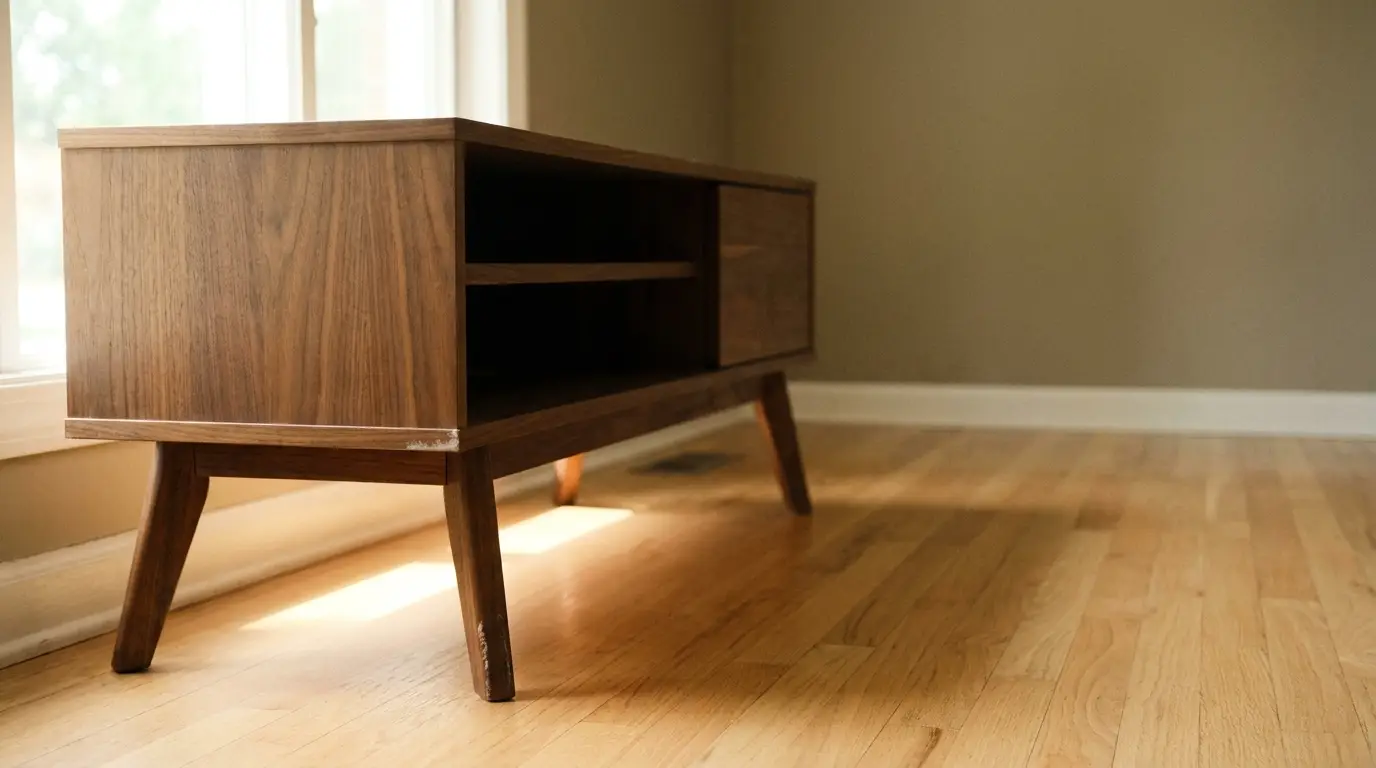
Those angled, tapered legs are not just pretty. By raising the case off the floor, they let light and air pass underneath, which keeps the room from feeling boxed in.
They also make cleaning under the stand simple, a small mercy you will appreciate on the day the remote rolls beneath it. Solid wood legs beat glued on plastic every time for both looks and life, because plastic yellows and loosens while wood only deepens in tone.
Check that the legs are fixed and steady, not wobbly pegs, because a stand that rocks under a heavy screen is a risk you do not want in a room full of people who gather to watch.
Style It With What You Already Own
A mid century stand pairs with more than mid century rooms. Its clean lines sit well against white walls, brick, or even industrial metal. Add a low plant and a single art print above, and the look lands without a full themed room.
Avoid crowding the top with too many objects, because the style reads best with one or two items and empty space between. Restraint is the whole point, and the stand does the heavy lifting while the rest of the room stays calm.
One good lamp beside it, a small tray for the remote, and you are done. The room feels designed because you stopped adding, not because you added more than the next person.
Cable and Surface Care
Dust the wood with a soft, slightly damp cloth and avoid harsh spray that clouds the finish. Keep drinks off the top to prevent rings, and use felt pads under any device you place on it.
Check the cable holes every few months so cords do not work loose and peek past the back panel. A few minutes of care twice a year keeps the walnut looking new long after the warranty ends.
If the stand sits in sun, turn it now and then so one side does not fade faster than the other. Wood rewards attention and punishes neglect, so a small habit protects a piece you will likely keep longer than the TV it holds on top of it.
Size the Stand to the Screen
A stand should be at least as wide as the TV, and a few inches wider reads as more balanced and more secure. Too narrow and the screen looks like it could topple at a touch; too wide and the piece dominates the wall and wastes floor.
Match the height to your seating eye line so the center of the screen sits near your gaze when you lean back, because comfort is a measurement, not a hope. For a 55 inch screen, look at stands from 59 to 70 inches; for a 65 inch, push toward 70.
Leave a few inches of clearance on each side so the piece breathes and the wall does not feel crowded by the electronics it was meant to frame with calm.
Why It Beats a Wall Unit
A full wall unit packs storage but also packs visual weight that a calm room cannot absorb. The mid century stand does the opposite: it holds the screen and a few items, then gets out of the way.
If your gear is modest, the stand plus a couple of open shelves does the job with less bulk and more air. Save the big unit for a true home theater, not the everyday space where you want to relax.
The stand keeps the room human by leaving the floor and the wall mostly open, which is exactly why the style has lasted since the 1950s. Less piece, more room, and the screen finally has a base with as much thought as the picture it shows night after night.
| TV size | Stand width |
| 43 to 50 inch | 47 to 55 inches |
| 55 to 65 inch | 59 to 70 inches |
| 70 inch plus | 70 to 80 inches |
| Your wall | Leave 6 inches clearance each side |
| Leg style | Tapered solid wood, not plastic |
A mid century modern TV stand is one of the few pieces that improves a room while hiding the gear that runs it. Pick low and long, let the wood set the tone, and plan the storage around your actual devices.
Your screen deserves a base with as much thought as the picture it shows. The result is a living room that feels designed rather than assembled, and the stand will still look right long after the TV has been replaced twice over the years.