Polyjacking Concrete: How It Works, Costs and Benefits

Sunken concrete doesn’t just look bad. It creates trip hazards that worsen with each season.
Full slab replacement costs thousands. It also puts your property out of use for days. Polyjacking concrete fixes the problem in hours, for a fraction of the price.
This post covers exactly how polyjacking works, what it costs, and when it is the right fix for settled concrete slabs.
What Is Concrete Settlement?
Concrete settlement happens when the soil beneath your concrete slabs shifts, compacts, or erodes. This creates empty spaces that cause your concrete to sink unevenly.
Common causes include:
- Soil erosion from water runoff
- Poor soil compaction during construction
- Natural settling of fill dirt
- Freeze-thaw cycles
- Tree roots growing beneath slabs
Areas Most Affected by Settlement
Settlement tends to appear in the same places. These are the surfaces most likely to show signs:
Residential Properties: Concrete surfaces in homes face constant pressure from weather, soil movement, and daily use. Driveways develop cracks and uneven surfaces, and sidewalks create trip hazards. Patios pull away from houses. Pool decks sink around the edges.
Commercial Properties: Business properties deal with heavier loads and more traffic. Parking lots develop sunken sections, walkways become safety hazards, and loading docks that are separate from buildings create operational problems.
What Is Polyjacking?
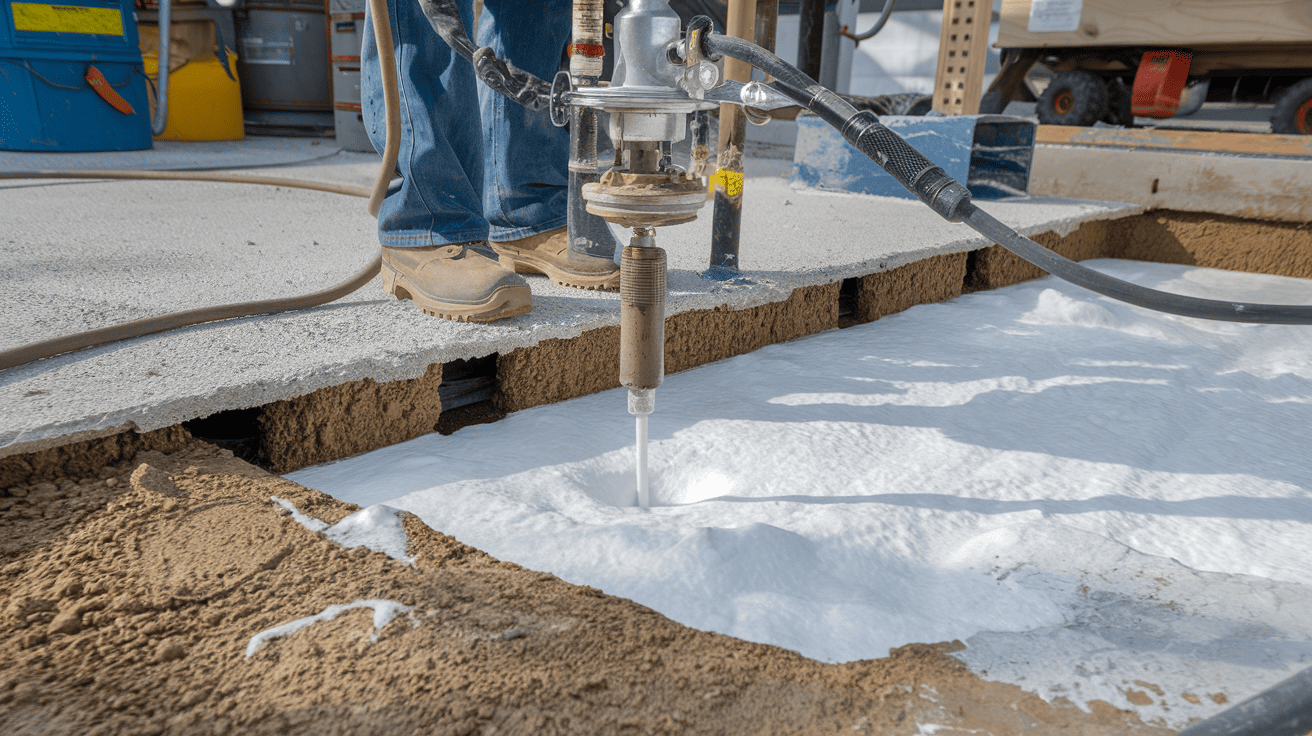
Polyjacking is a concrete repair method that uses expanding polyurethane foam to lift and level sunken slabs. The foam is injected beneath settled concrete. It fills voids and restores the surface to its original position.
The process works by drilling small access holes in the concrete and pumping specialized foam beneath it. As the foam expands, it fills empty spaces in the soil and gently lifts the concrete back into place.
How Does Polyjacking Concrete Work?
Polyjacking works by drilling small holes, injecting expanding foam, and sealing the surface when the slab is level. The full process takes just a few hours.
Step 1: Assessment: A technician examines your concrete to determine the extent of settlement and identify the best injection points.
Step 2: Drilling: Small holes (about 5/8 inch diameter) are drilled through the concrete at strategic locations.
Step 3: Injection: Polyurethane foam is injected through these holes using specialized equipment. The foam expands to fill voids and lift the slab.
Step 4: Monitoring: The technician monitors the lifting process to make sure the slab reaches the correct level without over-lifting.
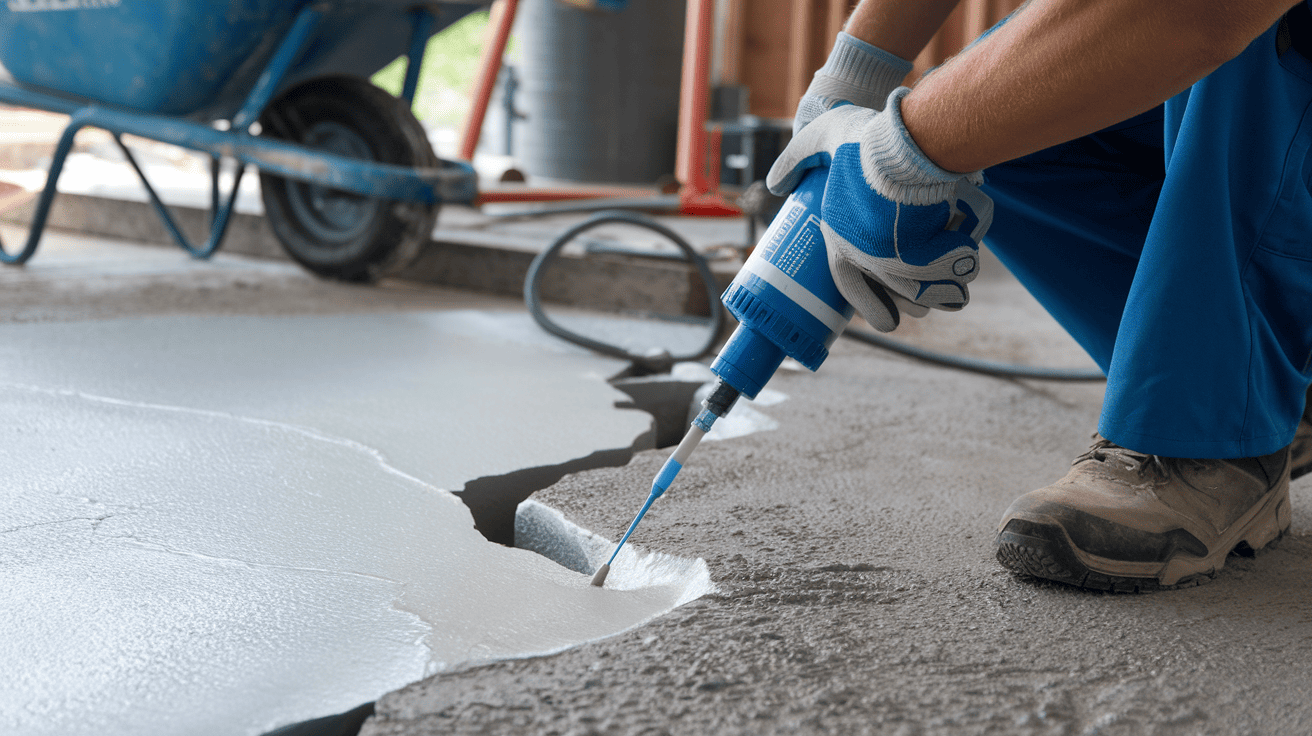
Step 5: Sealing: The injection holes are sealed with concrete patch material, leaving a smooth surface.
Benefits of Polyjacking Concrete
Polyjacking saves time, money, and disruption compared to full concrete replacement. Here is what sets it apart.
1. Cost-Effectiveness
Polyjacking costs 50–70% less than full concrete replacement. While replacement might cost $8–12 per square foot, polyjacking typically runs $3–6 per square foot.
Replacing a 400-square-foot driveway costs $3,200–4,800. Polyjacking the same area costs $1,200–2,400.
2. Minimal Disruption
Most residential jobs take 2-4 hours from start to finish, and you can use your concrete the same day. Unlike replacement, there’s no demolition, hauling, or concrete trucks – just small, sealed holes.
Heavy equipment stays away from your property, protecting your lawn and garden areas.
3. Long-Term Durability
Polyurethane foam is waterproof and won’t deteriorate from water exposure like other materials. The foam actually strengthens the soil beneath your concrete, preventing future settlement.
The material handles freeze-thaw cycles without breaking down or losing effectiveness.
4. Eco-Friendly
Polyjacking keeps existing concrete out of landfills, reducing environmental impact. The polyurethane foam is safe for groundwater and won’t harm plants or animals.
The process uses less energy than manufacturing and pouring new concrete.
Common Applications of Polyjacking
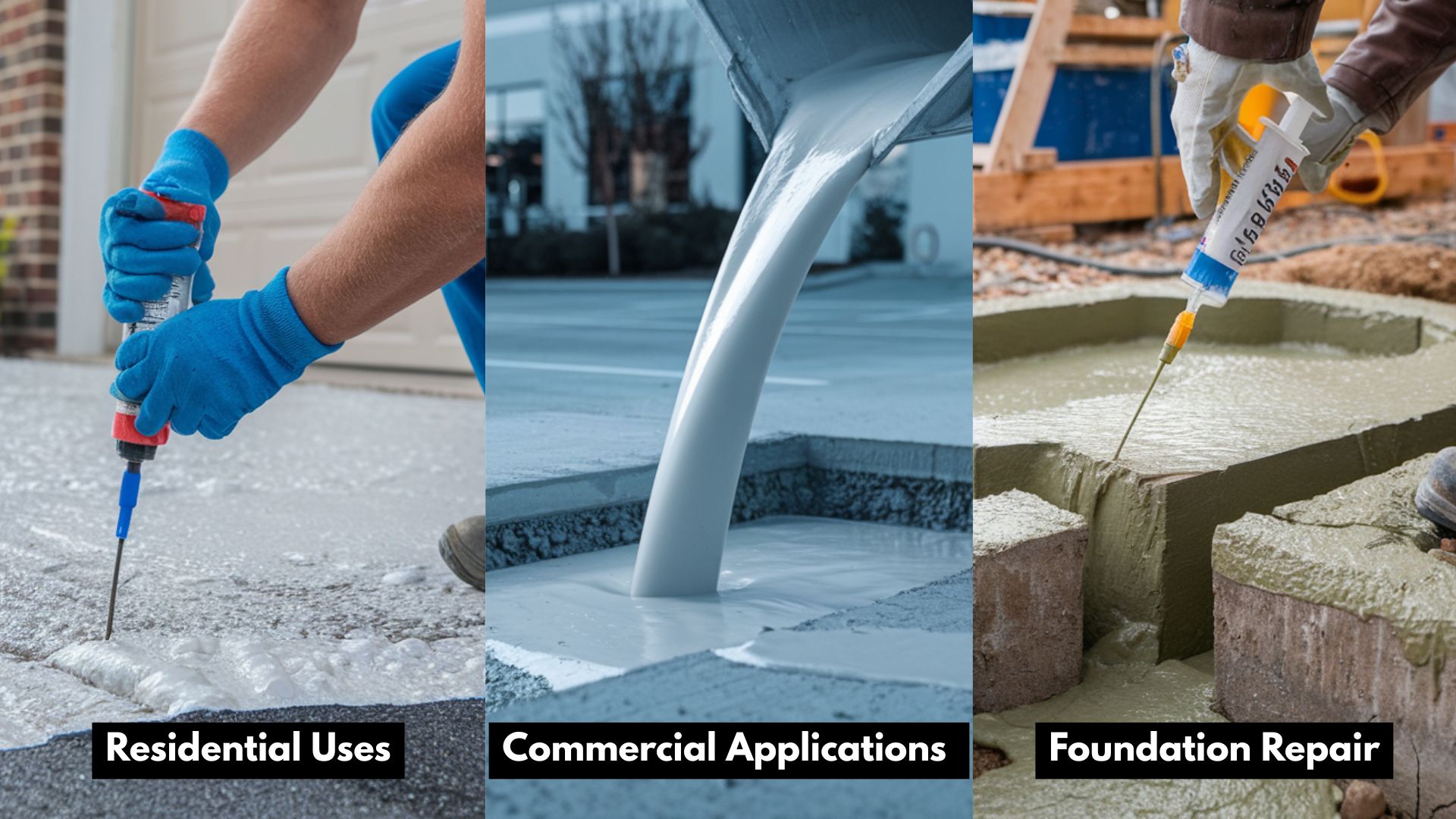
Polyjacking works effectively on various types of concrete surfaces, making it a versatile solution for both residential and commercial properties.
1. Residential Uses
Homeowners use polyjacking to fix multiple concrete problems around their property:
- Driveways: Fix sunken sections that scrape cars
- Sidewalks: Repair trip hazards and uneven surfaces
- Patios: Restore surfaces that pulled away from the house
- Pool decks: Level sunken areas around pools
2. Commercial Applications
Business properties rely on polyjacking for safety and operational efficiency:
- Parking lots: Fix sunken sections and drainage issues
- Walkways: Maintain safe pedestrian access
- Warehouse floors: Level surfaces for equipment operation
3. Foundation Repair
Polyjacking addresses foundation-related concrete issues effectively:
- Settling foundations: Stabilize minor settlement problems
- Basement floors: Level floors with low spots
- Crawl space floors: Maintain structural integrity
Polyjacking vs. Mudjacking
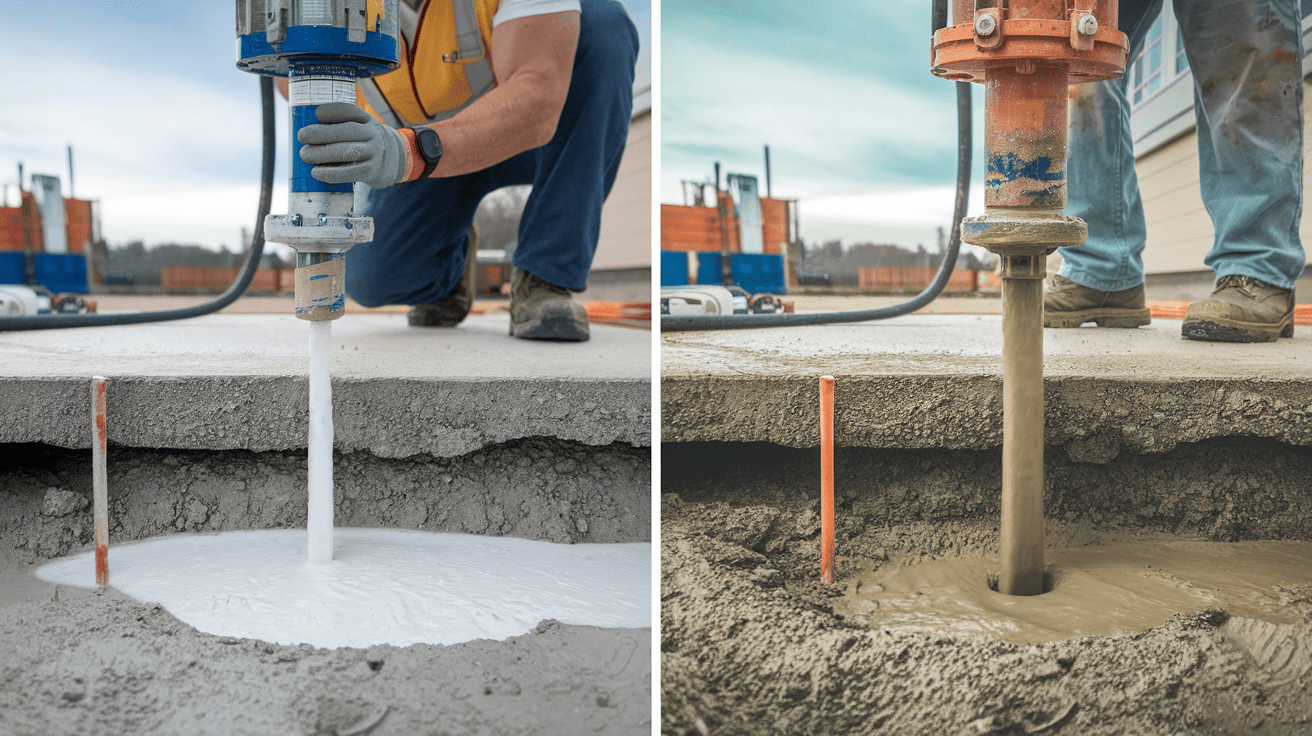
When it comes to lifting settled concrete, you have two main options. Both methods can raise sunken slabs, but they work in very different ways and offer distinct advantages.
Polyjacking Concrete
Polyjacking is a modern concrete lifting technique that uses expanding polyurethane foam to raise settled slabs.
The process involves drilling small holes in the concrete and injecting lightweight foam that expands to fill voids underneath. This method creates a stable, waterproof foundation that prevents future settlement. The foam cures quickly, allowing you to use the concrete within 30 minutes of treatment.
Mudjacking Concrete
Mudjacking is a traditional concrete repair method that uses a mixture of cement, sand, and water to lift sunken slabs. Technicians drill larger holes in the concrete and pump the heavy slurry underneath to fill voids and raise the surface.
This method has been used for decades but requires longer curing times and may need retreatment as the material can wash away over time.
The table below shows how the two methods compare across the factors that matter most:
| Comparison Factor | Polyjacking | Mudjacking |
|---|---|---|
| Materials Used | Polyurethane foam | Cement, sand, and water |
| Weight | 2–4 lbs per cubic ft | 100+ lbs per cubic ft |
| Hole Size | 5/8 inch | 1–2 inches |
| Curing Time | 15–30 minutes | 24–48 hours |
| Durability | 10+ years | 3–5 years |
| Water Resistance | Waterproof | Can wash away |
| Environmental Impact | Non-toxic, recyclable | Heavy materials |
| Initial Cost | $3–6 per sq ft | $2–4 per sq ft |
| Long-term Value | Better total cost | Higher long-term expenses |
| Soil Effect | Strengthens soil | Adds weight to the soil |
While mudjacking costs less upfront, polyjacking delivers better long-term value through durability, performance, and environmental benefits.
Limitations of Polyjacking
Polyjacking works well for most settlement problems, but it is not the right fit for every situation.
- Severe Structural Damage: If your concrete has major cracks, broken sections, or complete structural failure, replacement may be necessary. Polyjacking works best on slabs that are structurally sound but have settled.
- Extremely Large Voids: Massive underground cavities may require soil stabilization before polyjacking can be effective. The foam needs solid ground to work against for proper lifting.
- Active Soil Movement: Areas with ongoing soil instability may need additional soil treatment first. Polyjacking won’t be effective if the ground continues to shift after treatment.
- Very Thin Concrete: Slabs less than 3 inches thick may not be suitable for polyjacking. The concrete needs sufficient thickness to handle the drilling and injection process.
Factors That Could Affect Polyjacking Results
- Soil Type: Clay soils may require special preparation. Sandy soils respond well to polyjacking. Rocky soil can limit foam expansion.
- Moisture: Very wet conditions may affect foam curing. Standing water should be addressed before polyjacking begins. Proper drainage helps ensure long-term results.
- Erosion: Active erosion needs to be stopped before treatment. Proper grading helps prevent future settlement. Drainage improvements may be needed alongside polyjacking.
Conclusion
Polyjacking concrete fixes settlement issues without tearing out the existing slab. It costs 50–70% less than full replacement, cures in 15–30 minutes, and lasts 10 or more years.
It works on driveways, sidewalks, patios, pool decks, and commercial surfaces. It is not the right fit for slabs with major structural damage, active soil movement, or concrete thinner than 3 inches.
Sunken concrete gets worse the longer it sits. Cracks spread. Voids grow. Repair costs rise.
Get a professional assessment today and see if polyjacking can restore your concrete surfaces to like-new condition.
Frequently Asked Questions
How Long Does Polyjacking Concrete Last?
Polyjacking lasts 10 or more years. The polyurethane foam is waterproof and withstands freeze-thaw cycles without breaking down, so it lasts far longer than mudjacking materials.
How Soon Can You Walk or Drive on Polyjacked Concrete?
You can use the surface the same day. The foam cures in 15 to 30 minutes after injection, so there is no multi-day wait as with full slab replacement.
Does Polyjacking Work on All Concrete Surfaces?
Not always. Slabs thinner than 3 inches, badly cracked concrete, and areas with active soil movement are not good candidates for polyjacking.
Is Polyjacking or Mudjacking Better for Sunken Driveways?
Polyjacking costs more upfront but lasts longer, cures faster, and is waterproof. For most driveways, it is the stronger long-term option compared to mudjacking.