
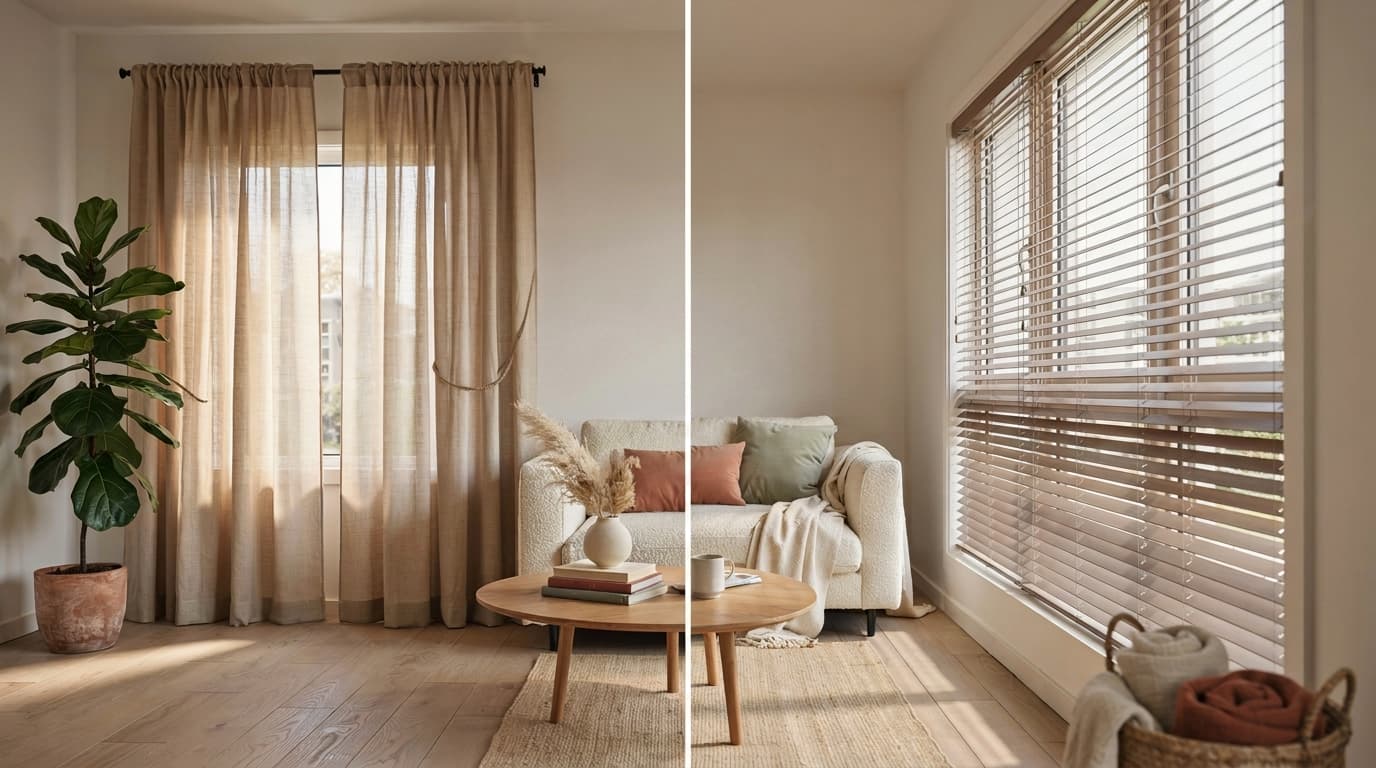
Curtains vs Blinds: Which Covering Works Best for Your Home

Choosing between curtains and blinds is one of those decisions that seems small until you’re standing in a shop, staring at fifty fabric swatches.
Both options do the same basic job of covering your windows, but how they do it and what they bring to a room can be very different. Pick the wrong one, and you could end up with a treatment that looks off, fights your light, or frustrates you every morning.
Curtains bring softness and warmth to a space. Blinds bring precision and a cleaner look. Neither is wrong. It depends on your room, your budget, and how much light control you actually need.
This post breaks down the real differences in the curtains vs blinds debate so you can pick the one that fits your home.
What Is the Difference Between Curtains and Blinds?
Curtains are soft fabric window coverings, while blinds use rigid slats or panels for more precise control of light and privacy.
Curtains are fabric window coverings that hang from rods or tracks. They fall in soft folds and move with a gentle breeze, giving a room a lived-in feel.
Blinds are window coverings made from slats or panels that tilt or raise. Instead of fabric folds, you get clean horizontal or vertical lines.
Quick Comparison Table:
| Feature | Curtains | Blinds |
|---|---|---|
| Material | Fabric | Wood, vinyl, aluminum, or fabric |
| Light Control | Moderate, depends on lining | Precise, adjustable slats |
| Privacy | Good when fully closed | Excellent, adjustable levels |
| Insulation | Strong, especially with lining. Reduces winter heat loss by ~10% | Limited, except for cellular blinds. Reflective types cut summer heat gain by up to 45% |
| Maintenance | Needs washing every 2–3 years | Wipe clean with a damp cloth |
| Style Impact | Soft, warm, cozy | Sleek, modern, structured |
| Typical Cost | $20–$50 for ready-made panels; $200+ for custom | ~$8 for basic vinyl; $200+ for wood or custom |
Key Differences Between Curtains vs Blinds
Curtains and blinds differ mainly in material, light control, privacy, and the overall look they bring to a room.
1. Light Control
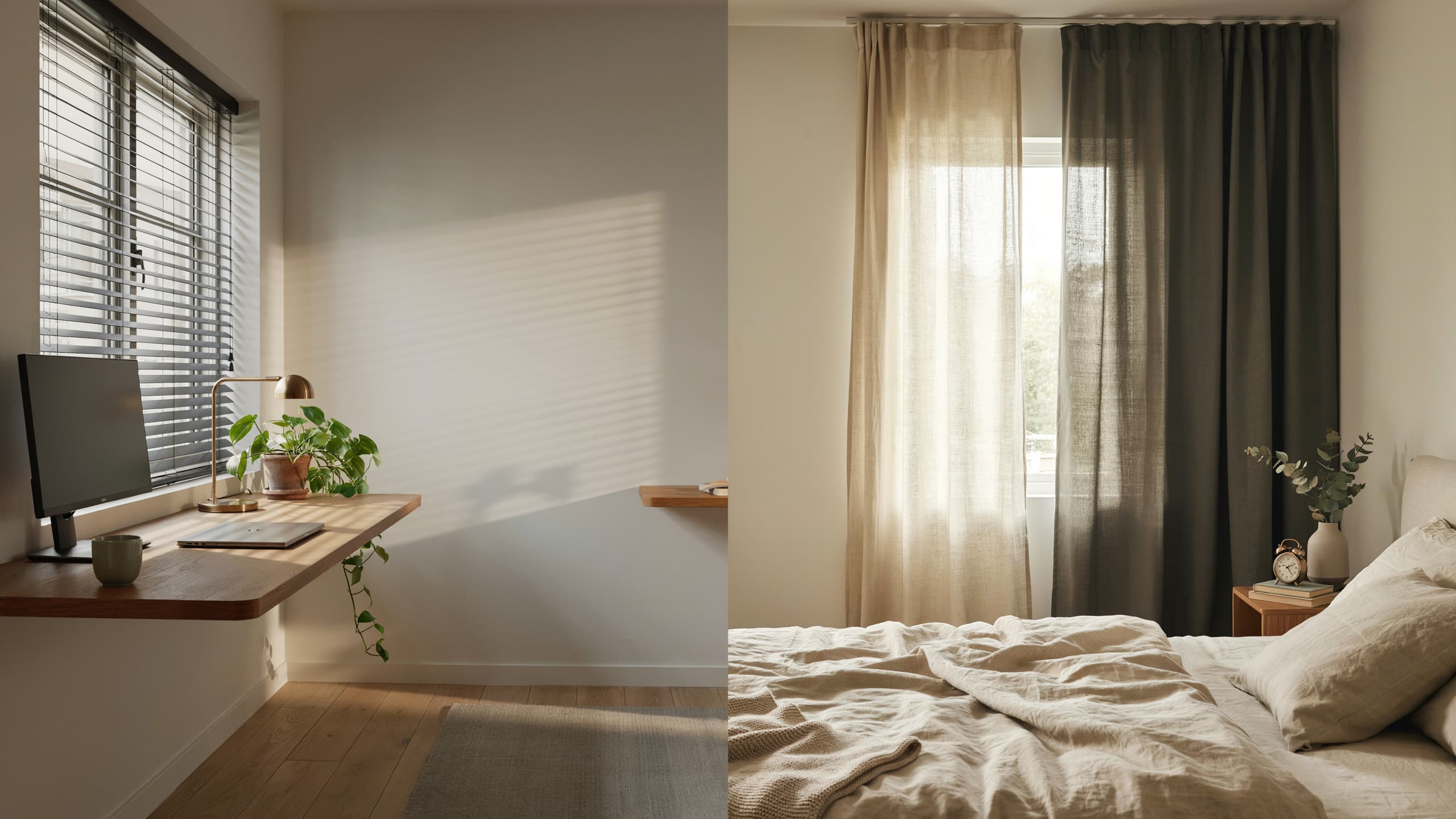
Blinds win when it comes to fine-tuning light. Tilt the slats a little, and you get a soft glow without opening the whole window. Close them fully, and the room goes dark fast.
This makes blinds useful in bedrooms where you want to block early morning sun, or in home offices where screen glare is a problem. Reflective blinds also cut solar heat gain by up to 45 percent in summer. This helps keep rooms cooler on hot days without closing the window entirely.
Curtains work differently. A single layer of fabric either lets light in or blocks it, with less room for adjustment. That said, blackout linings can make curtains just as effective at blocking light as blinds, especially for bedrooms.
Sheer curtains filter light into a soft, diffused glow rather than blocking it outright.
If you want quick, small adjustments throughout the day, blinds are the more practical choice. If you prefer fewer adjustments and don’t mind an all-or-nothing approach, curtains still get the job done.
2. Privacy and Security
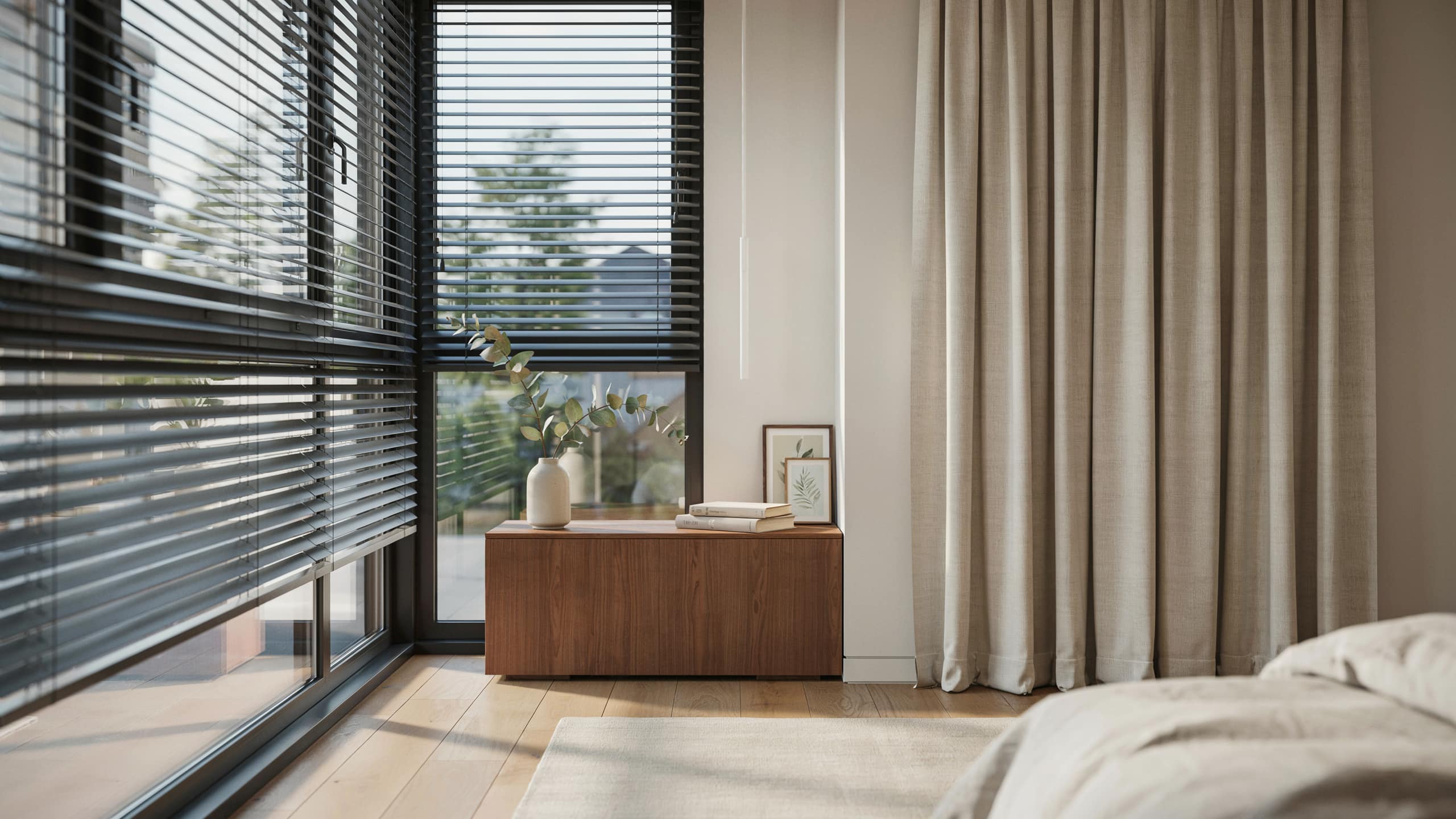
Blinds offer more precise privacy control. You can angle the slats so light gets in, but people outside can’t see through. This is especially useful for ground-floor rooms or homes close to the street.
Curtains offer privacy too, but it’s more binary. Once drawn, thick curtains block the view completely. If you want a little privacy without shutting out all the light, curtains don’t always allow that middle ground the way blinds do.
For security, both options serve as visual deterrents when closed. Layering curtains over blinds is common for ground-floor bedrooms, where both privacy and light control matter most.
3. Style and Interior Design Impact
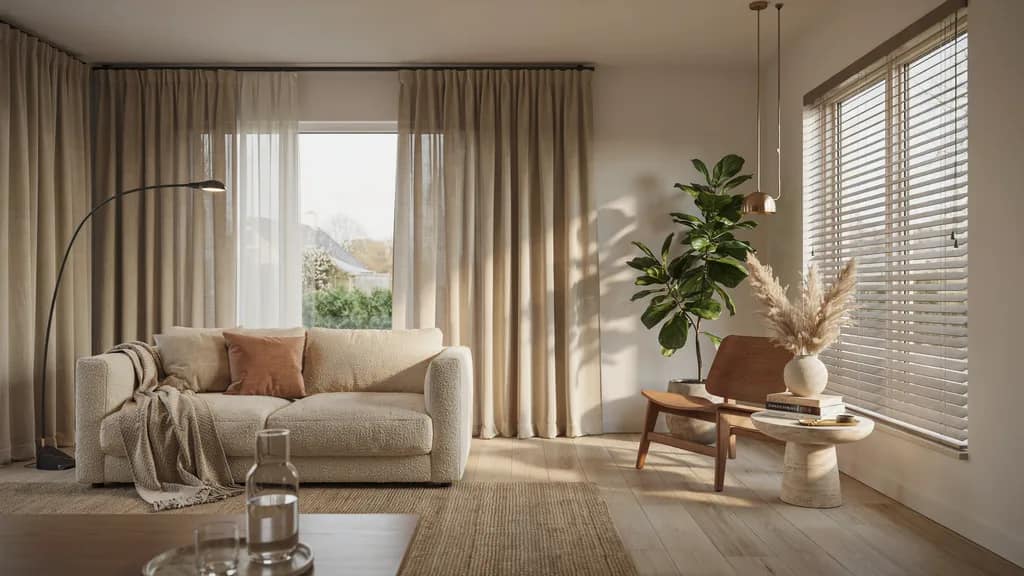
This is where personal taste plays the biggest role.
Curtains bring warmth and texture. A bold print or a rich velvet can act as a focal point in a room, tying together colors and furniture. They soften hard edges — such as large windows in a minimalist space — and add a sense of comfort.
Blinds bring a cleaner, more structured look. They suit modern or minimalist interiors where the goal is simplicity rather than decoration. Wood and faux wood blinds also work well in traditional spaces, offering warmth without the bulk of fabric.
Combining both gives you the function of blinds with the soft visual finish of curtains.
Pros and Cons of Curtains
Curtains offer style and comfort, but they come with a few trade-offs worth knowing.
Advantages
- Add warmth, color, and texture to any room
- Help insulate against heat loss in winter. Thermal curtains with proper lining cut heat loss by around 10 percent
- Soften hard architectural lines like large windows
- Available in countless fabrics and patterns
- Easy to layer with sheers for adjustable light
Disadvantages
- Collect dust and need regular washing
- Can fade with prolonged sun exposure
- Take up more space when drawn back
- Less precise light control compared to slats
- Not ideal for humid spaces like bathrooms
Pros and Cons of Blinds
Blinds bring precision and a tidy look, though they have their own limits.
Advantages
- Offer exact control over light and privacy
- Wipe clean easily, no washing needed
- Fit neatly into window frames without extra bulk
- Suitable for humid rooms like kitchens and bathrooms
- Work well in modern and minimalist spaces
- Cellular (honeycomb) blinds trap air in their cells, making them the most insulating blind option available
Disadvantages
- Can look plain in rooms that need warmth
- Slats may bend or snap with heavy use
- Offer less insulation than lined curtains
- Cords can be a safety concern in homes with young children or pets
- Dust builds up between slats over time
Curtains vs Blinds by Room: Which Is Better?
The best choice depends on the room. Bedrooms and living rooms often suit curtains for their warmth and style. Kitchens, bathrooms, and home offices tend to work better with blinds due to moisture resistance and precise light control.
Homes often use a mix of both, picking whichever fits each room’s specific needs.
1. Bedroom
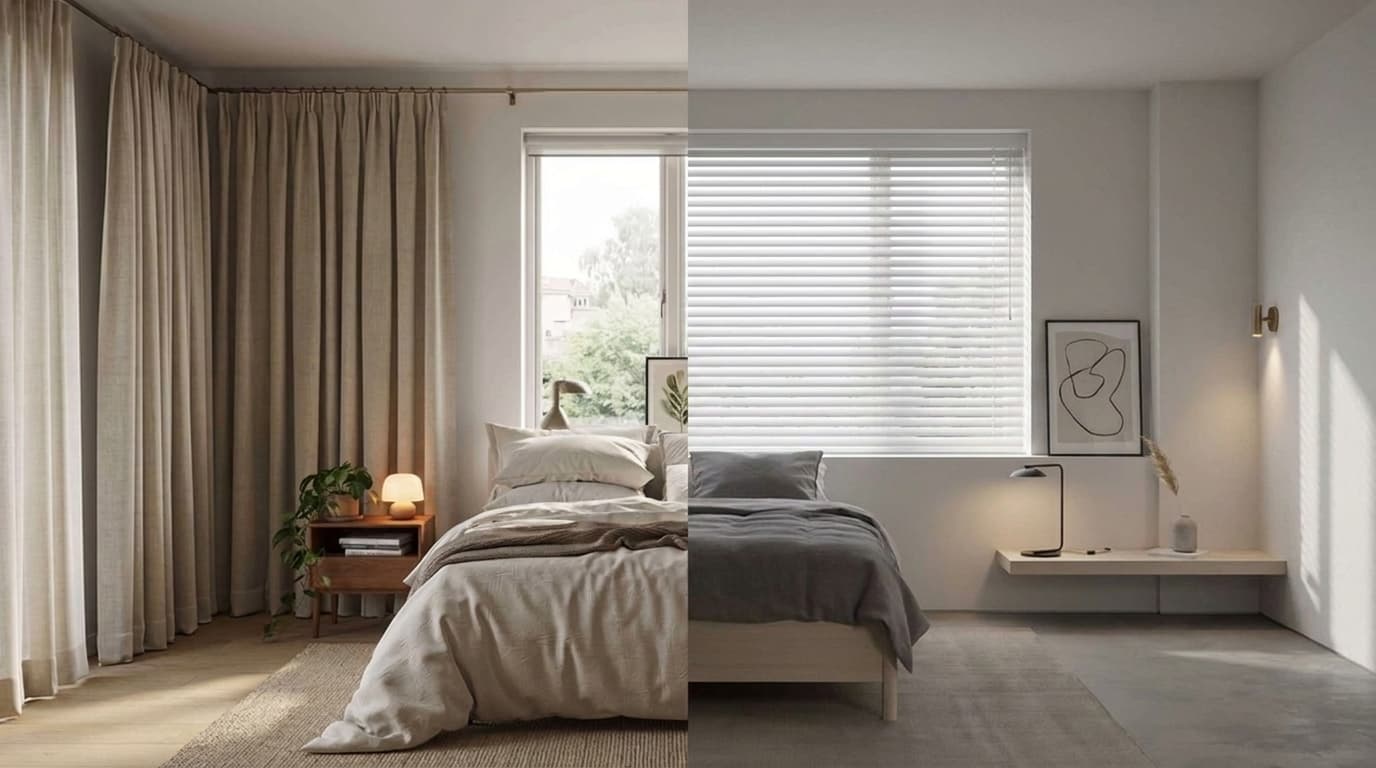
A bedroom’s main job is to help you sleep, so light control matters more here than almost anywhere else in the house.
Curtains with blackout lining block outside light fully and add a soft, warm feel to the room. The fabric also muffles outside noise a little, which helps if you live near a busy road. Mounting curtains inside the window frame reduces the light gaps that open-hang installations can leave at the sides.
Blinds can do the same job with a sleeker look. Blackout roller blinds sit flush against the window frame, leaving no gaps for light to sneak through at the edges — something standard curtains sometimes struggle with.
If you want maximum darkness, layering is the answer: blackout blinds close to the glass, with curtains over the top for warmth and a finished look. For shift workers or light sleepers, this combination blocks streetlights, early sunrise, and passing headlights all at once.
2. Living Room
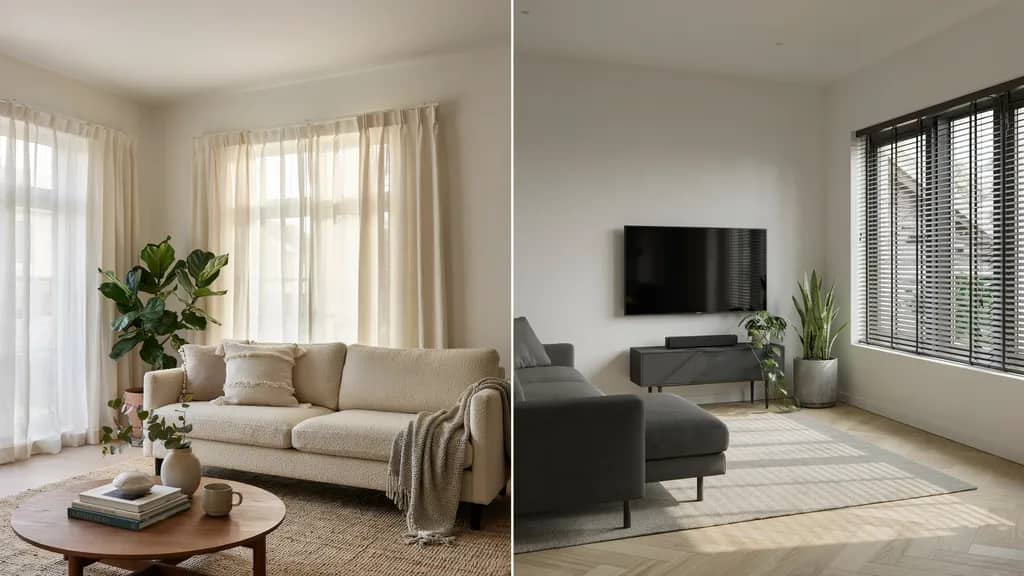
The living room is usually where style takes priority, since it’s the space guests see first.
Fabric curtains soften hard lines, especially with large windows or sliding doors, and add color that ties the room together. Getting the right curtain length matters here; floor-length panels make ceilings feel taller, and windows feel more generous. A patterned curtain can act as a natural focal point next to plain sofas and neutral walls.
That said, living rooms with a lot of direct sun face a different problem: glare on the TV screen and faded furniture over time. Pairing sheer curtains with blinds solves both issues. The blinds handle daily light adjustments, while the curtains add texture and privacy in the evening.
If your living room faces a garden or an open view, blinds also let you keep some light in during the day without sacrificing privacy at night.
3. Kitchen
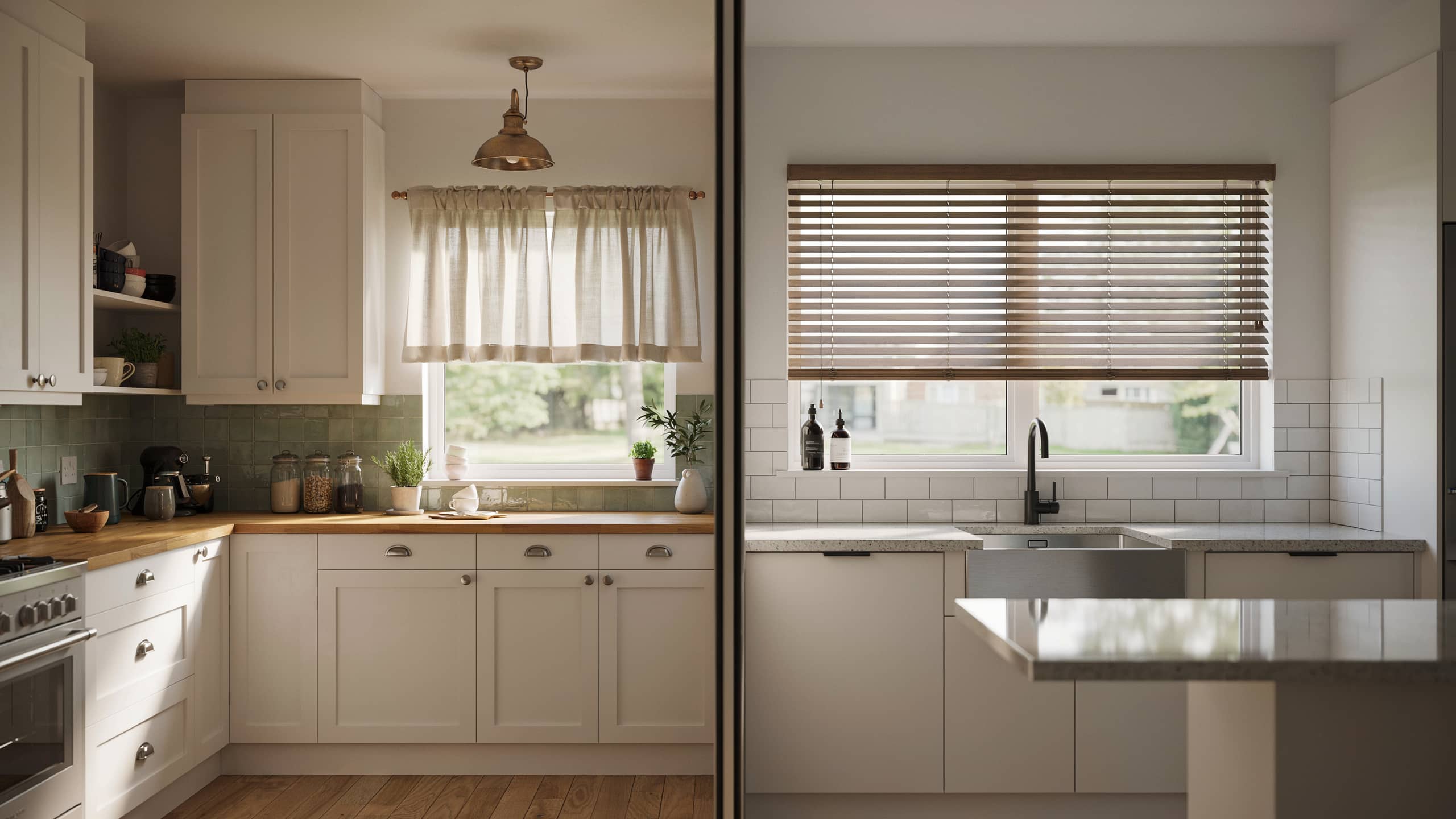
Kitchens deal with heat, steam, grease, and the odd splash, which makes fabric a poor match for the space above a sink or stove.
Vinyl or aluminum blinds resist moisture and wipe clean in seconds with a damp cloth. They also sit close to the window, out of the way of taps, kettles, and reaching arms.
Fabric curtains near a cooking area can trap cooking odors and stain more easily, especially lighter colors. If you still want the look of fabric in a kitchen, a short café curtain paired with a blind underneath can work, but it adds another surface to clean.
For most kitchens, especially smaller ones, blinds remain the more practical option day to day.
4. Bathroom
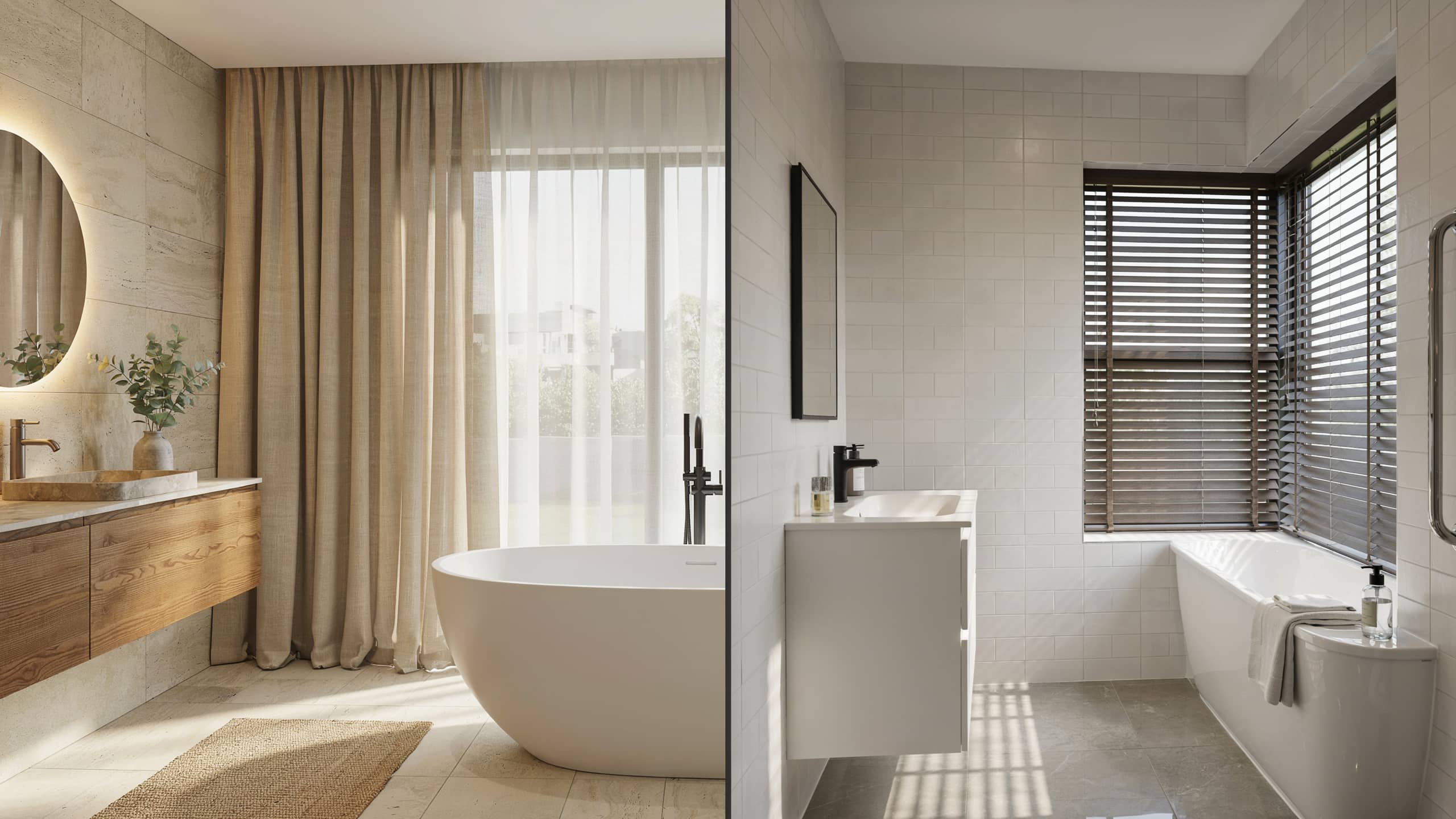
Bathrooms bring constant moisture from showers and baths, and that moisture is hard on fabric.
Vinyl or faux-wood blinds hold up well in humid conditions without warping or developing mold, and a quick wipe keeps them looking fresh. Fabric curtains, unless treated with a moisture-resistant coating, tend to develop mold spots in damp bathrooms over time, particularly in rooms without good ventilation.
This makes blinds the safer choice for daily use, especially in bathrooms with limited airflow or no extractor fan. If privacy from outside is a concern, frosted or textured blinds offer coverage while still letting in natural light.
5. Home Office
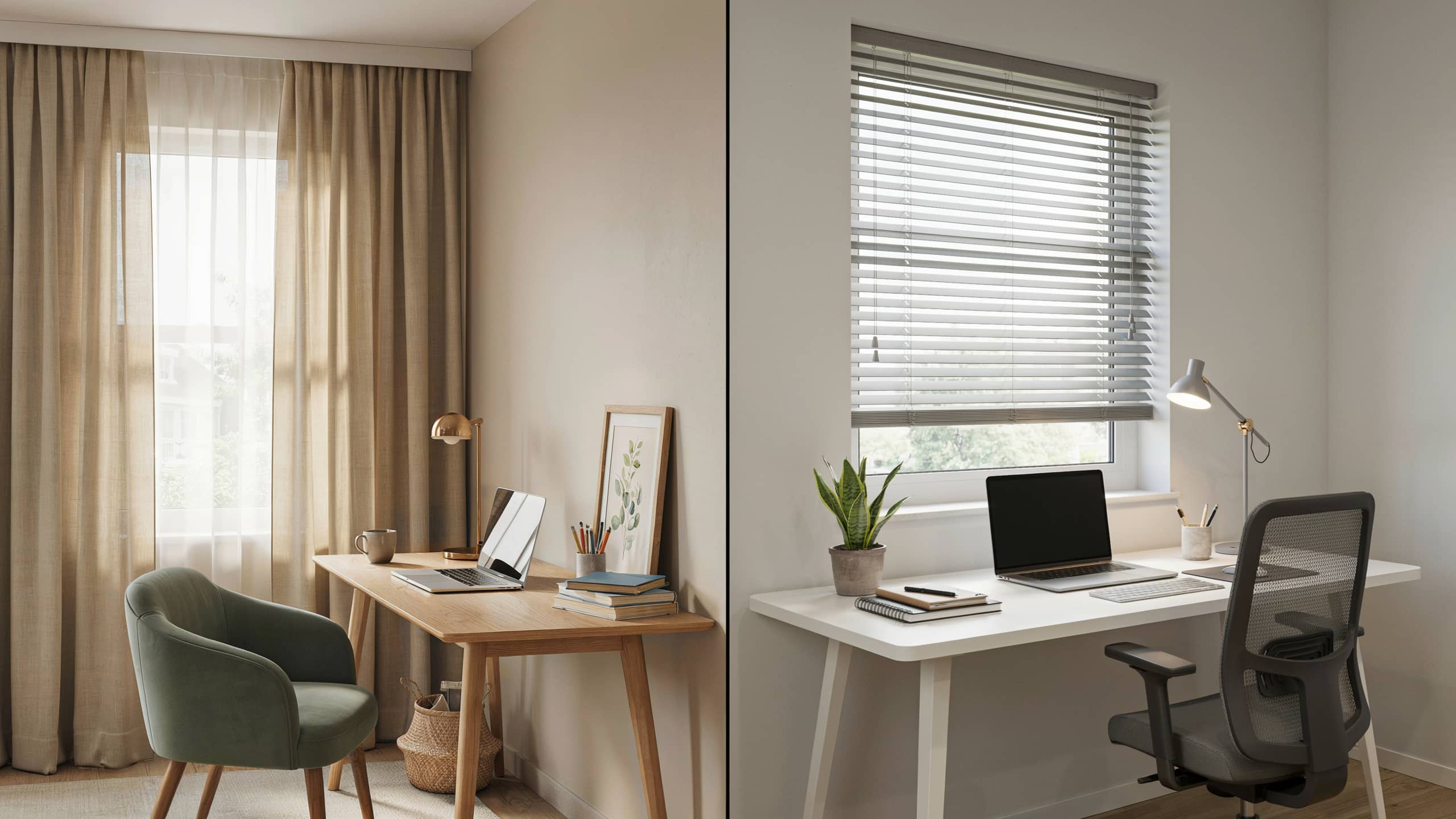
Screen glare is the biggest light problem in a home office, and blinds handle this better than curtains.
Tilting the slats lets you cut glare from a laptop or monitor without completely blocking the window, so the room still feels bright during video calls or long work sessions. For desks positioned directly facing a window, horizontal blinds give the most control throughout the day as the sun moves.
Curtains, by contrast, tend to be more all-or-nothing. Drawing them fully blocks glare but also makes the room feel closed in, which isn’t ideal for a workspace where you want to feel alert and focused.
Adding a simple curtain alongside the blinds works well for evening work sessions, when you want the room to feel less clinical and more comfortable.
Can You Use Curtains and Blinds Together?

Yes, and it’s a practical choice for rooms where you need both function and style. Blinds handle daily light and privacy adjustments. Curtains add texture, warmth, and a finished look to the window.
This pairing works especially well in bedrooms and living rooms. Layering works because each covering does a different job, the practical side and the visual side, without one having to compromise on the other.
Here are the three ways to combine them:
- Blinds for function, curtains for show: Keep the blinds closed for privacy or light control. Use curtains mainly as a decorative frame, drawing them only in the evening.
- Curtains for warmth, blinds for daytime control: Open the curtains fully during the day and rely on blinds to manage sunlight. Close the curtains at night for insulation and a cozier feel.
- Blackout blinds with sheer curtains: Block light completely when needed, but soften the room during the day with a light, airy fabric layer.
For a clean look, choose blinds and curtains in complementary tones rather than clashing patterns. A neutral blind under a patterned curtain, or a plain curtain over a textured blind, keeps the window looking put together rather than busy.
Matching the curtain fabric to other soft furnishings in the room, like cushions or a rug, also helps tie the whole space together.
If budget is a concern, you don’t need to layer every window. Rooms with high light or privacy needs — like bedrooms and bathrooms- benefit most from the combination.
Curtains or Blinds: Which Should You Choose?
| Choose | Best For |
|---|---|
| Curtains | Adding warmth, softness, and a decorative feel to living rooms and bedrooms |
| Blinds | Managing sunlight, improving privacy, and handling moisture-prone areas |
| Both | Combining practical light control with a stylish layered window look |
Your choice should depend on how the room is used and the features you value most. Curtains are a better fit when comfort and design are priorities, while blinds work well for spaces that need flexibility and easy upkeep. For a balanced approach, pairing both options can provide better insulation, privacy, and visual appeal.
Before deciding, consider the overall cost and long-term use. Basic blinds can start at around $8 per window, while ready-made curtain panels usually cost $20–$50.
Energy performance also varies by season; blinds can help reduce summer heat, while lined curtains can help retain warmth during colder months. Combining both can offer year-round benefits.
Conclusion
Curtains and blinds both do the same core job, but they get there in different ways. Curtains bring softness, color, and insulation to a room. Blinds bring precision, easy cleaning, and a streamlined look.
Neither one is the clear winner for every home.
The right choice in the curtains vs blinds decision comes down to the room, your daily habits, and how much control over light you actually need. A bedroom might call for blackout curtains. A kitchen might do better with wipeable blinds. If you can’t decide, layering both gives you the benefits of each.
Think about your space, the room’s function, and how you actually use it each day. Then pick the option that fits your life, not just the look.
Whichever you choose, curtains vs blinds isn’t about right or wrong. It’s about what works best for your home.
Frequently Asked Questions
Which Option is Safer for Homes with Children and Pets?
Cordless blinds are usually the safer choice for homes with children and pets because they remove dangling cords that can pose safety risks. Curtains can also be a good option when installed securely.
Are Curtains Or Blinds Better for Reducing Outside Noise?
Curtains generally perform better for reducing outside noise because thick fabrics absorb sound and soften echoes inside a room. Heavy velvet, lined, or layered curtains can help reduce noise more effectively.
Do Curtains or Blinds Affect the Resale Value of a Home?
Window treatments usually do not have a major impact on resale value, but they can influence how polished and well-maintained a home feels to potential buyers.