Why Your AC Isn’t Cooling: AC Repair Tips for Homeowners

An air conditioning system is one of the hardest-working appliances in any home. When it stops blowing cold air, the problem rarely fixes itself. Understanding what’s going wrong, and knowing when to call a professional, can save homeowners significant time and money.
How Common Is a Failing AC System?
Nearly 90% of U.S. households rely on air conditioning, according to the U.S. Energy Information Administration’s 2020 Residential Energy Consumption Survey. (1)
That widespread use makes AC repair one of the most frequently needed home services in the country. A system that runs but fails to cool is almost always caused by one of a handful of fixable problems like restricted airflow, a frozen evaporator coil, or low refrigerant levels.
For homeowners in South Florida, where heat and humidity are relentless year-round, a malfunctioning cooling system is more than an inconvenience. Local specialists like Air Nifty Air Conditioning in Margate, FL specialize in diagnosing these exact problems.
Their technicians handle the full range of common AC failures. This includes refrigerant leak detection and evaporator coil repairs to thermostat diagnostics and condenser cleaning. They typically complete same-day or next-day service calls.
What a Clogged Air Filter Actually Does to an AC
One of the most overlooked causes of a poorly cooling AC is a dirty air filter. When airflow is restricted, the system strains to circulate air, the evaporator coil loses its ability to absorb heat properly, and energy use climbs.
The U.S. Department of Energy notes that a clogged filter can cause an HVAC system to consume significantly more energy. Over a full cooling season, that adds up to a noticeable increase in energy bills. Replacing air filters every one to three months is one of the simplest and highest-impact maintenance steps a homeowner can take. (2)
The Most Common Reasons an AC Stops Cooling
Dirty or Blocked Air Filters
One of the most common cooling issues is a clogged filter that chokes off airflow throughout the system. When air can’t move freely, the evaporator coil gets too cold and ice forms on its surface. Once ice builds up, the AC stops producing cold air altogether. Swapping out a dirty filter for a clean one often resolves this issue within hours, with no service call required.
Frozen Evaporator Coil
The evaporator coil absorbs heat from indoor air as refrigerant passes through it. If airflow is restricted by a dirty filter, closed vents, or a failing blower motor, the coil temperature drops below freezing and ice accumulates. Homeowners who notice ice forming on the indoor unit or refrigerant lines should turn the system off and let it thaw completely before assessing the next step.
Low Refrigerant Levels
Refrigerant is the substance that makes cooling possible. If levels are low, the system can’t transfer heat effectively, and the air coming from the vents will feel warm or only slightly cool. Refrigerant doesn’t deplete on its own. Low levels almost always indicate a leak somewhere in the system. Signs include hissing or bubbling sounds near the unit, ice on the copper refrigerant lines, and a gradual loss of cooling performance over days or weeks.
Refrigerant handling requires EPA-certified HVAC technicians. This is not a DIY repair. A qualified technician will locate the leak, repair it, pressure-test the system, and recharge it to the manufacturer-specified refrigerant level. Air Nifty’s certified technicians perform refrigerant leak detection and recharge for residential systems, following EPA Section 608 protocols.
Dirty Condenser Coil or Blocked Outdoor Unit
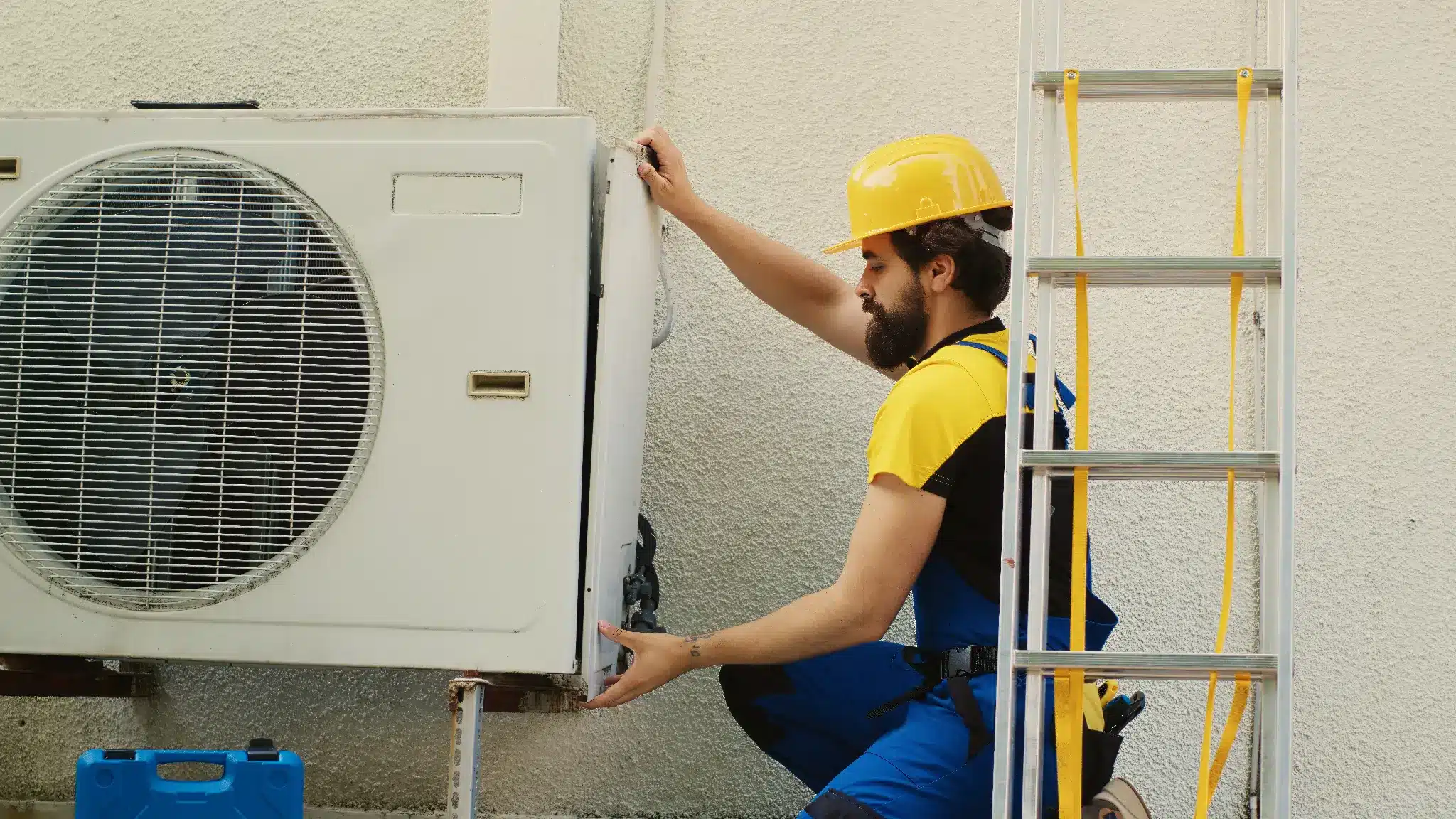
The outdoor condenser unit releases the heat pulled from inside the home. When debris like leaves, dirt, and grass clippings accumulates around the condenser coil, that heat exchange is disrupted and the system’s cooling capacity drops. Keeping at least two feet of clearance around the outdoor unit and periodically rinsing the exterior coils with a garden hose helps maintain proper performance.
Thermostat or Electrical Issues
Sometimes the issue isn’t the AC system at all. A thermostat set to “fan” instead of “cool,” or set to a temperature above the current room temperature, will run the system without producing cold air. Circuit breakers that trip repeatedly signal a deeper electrical issue (often a compressor drawing too much current) that requires professional diagnosis.
DIY Steps to Try Before Calling a Technician
Homeowners can run through a simple checklist before booking a service call:
- Start with the thermostat. Make sure the “Cool” setting is on and the target temperature is noticeably lower than the current room temperature. If the screen is blank, that means it’s best to replace the batteries.
- Inspect and replace the air filter. If it’s gray or visibly clogged, replace it immediately.
- Clear the outdoor condenser unit. Remove debris and rinse the exterior coils with a garden hose.
- Reset the circuit breaker. If the breaker has tripped, reset it once. If it trips again, stop and call a technician.
- Clear the condensate drain line. A clogged drain can trigger the system’s overflow shut-off. Flushing the line with distilled white vinegar often resolves this.
When to Call a Licensed HVAC Technician
Some AC problems are not safe or practical for homeowners to address without professional equipment and certifications. Any of the following symptoms warrant a call to a licensed HVAC technician:
- Ice on refrigerant lines or the indoor unit that doesn’t clear after a full thaw
- Hissing or bubbling sounds near the AC unit, which indicate a refrigerant leak
- A circuit breaker that trips repeatedly after being reset
- Short-cycling, or when the system is turning on and off rapidly without completing a full cooling cycle
- Warm air from vents even after checking filters, thermostat settings, and the outdoor unit
The Real Cost of Ignoring AC Problems
Air conditioning accounts for roughly 12% of total home energy expenditures in the United States, according to the U.S. Energy Information Administration. In hot and humid regions like South Florida, that share is considerably higher. A system running inefficiently due to dirty filters, low refrigerant, or a blocked condenser coil is costing money every hour it runs without being repaired. (3)
The practical approach is to check the basics first, stay current on maintenance, and call a professional when the problem is beyond a DIY fix. Staying proactive with repairs ensures your home remains comfortable and your energy costs stay manageable. Companies like Air Nifty handle refrigerant leak diagnosis, evaporator and condenser coil service, thermostat replacement, and system tune-ups for homeowners who need reliable cooling restored quickly. They handle refrigerant leak diagnosis, evaporator and condenser coil service, thermostat replacement, and system tune-ups for homeowners who need reliable cooling restored quickly.