23 French Country Kitchen Ideas for a Timeless Touch

There is something about a French country kitchen that just feels so timeless yet lived-in.
Perhaps because the style comes from the rural farmhouses of southern France and their exposed stone walls, worn wood tables, and bunches of dried lavender hanging near a window.
But over time, designers brought in a layer of soft European refinement. The result is a look that balances rustic charm with a calm, comfortable beauty.
In this blog, you will find everything you need to bring this look home: core design elements, ideas about color schemes, cabinet styles, layout, materials, lighting, decor, and how to keep it feeling current. Let us get into it.
What are the Core Elements of a French Country Kitchen?
Every French country kitchen shares a set of key design choices. They work together because each one reinforces the other.
- Soft, Muted Color Palette: The colors are never bright or bold. You will see cream, white, beige, sage green, and dusty blue. Moreover, a soft palette makes the space feel open and easy to be in.
- Natural Materials: Wood, stone, brick, and marble do most of the heavy lifting in this style. These textured materials carry a sense of history and are what make the style so grounding.
- Rustic Yet Refined Finishes: Distressed cabinet finishes, aged brass or iron hardware, and plaster-style walls bring the rustic side. But they are balanced by clean shapes and well-chosen details.
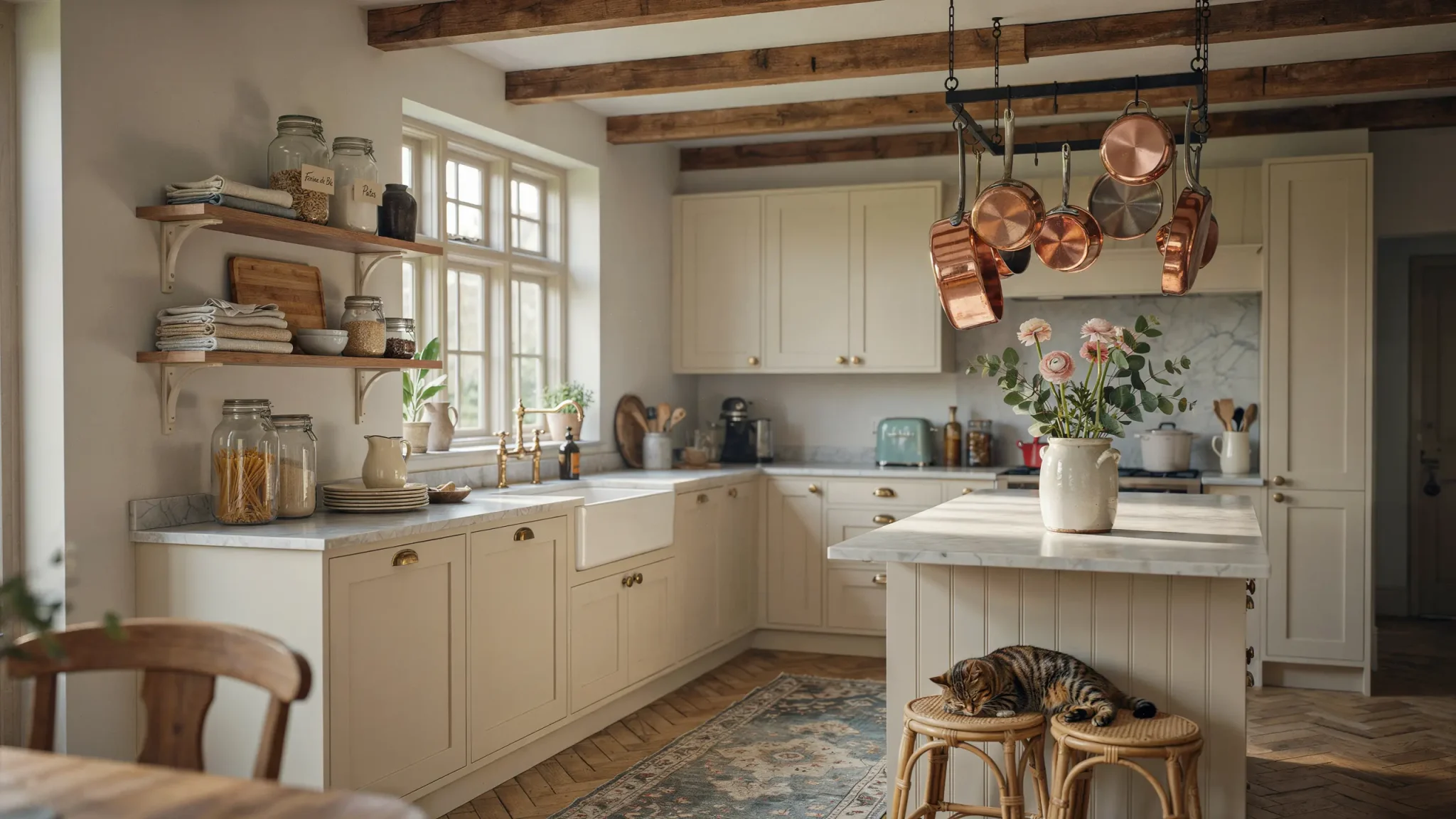
- Signature Decor Accents: Copper cookware, ceramic plates, potted herbs, and linen textiles are the finishing touches. These small items are the signature characteristic of the style.
Psychologically, this combination works because it hits two human needs at once. The natural materials and warm tones create a sense of safety and comfort. The refined finishes and organized styling signal care and quality.
23 Ideas for Your French Country Kitchen
Here are timeless French country kitchen ideas to help you create a space that feels warm, elegant, and lived-in.
1. Add Classic Neutrals as Your Foundation
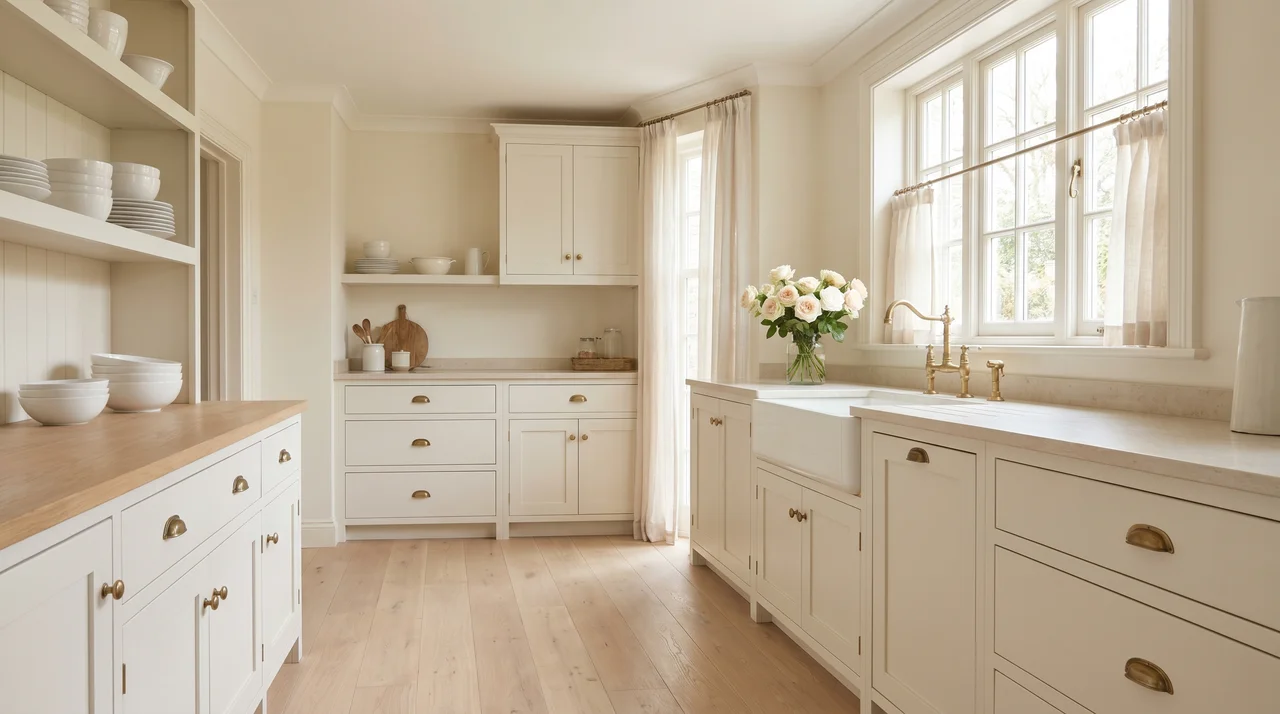
Color is where most French country kitchens begin. Cream, ivory, and warm white create a soft base that reflects light and makes the space feel larger and calmer.
A warm white for cabinets paired with a slightly deeper cream on the walls creates a reliable, timeless combination that works in most US homes.
2. Layer in Soft Countryside Tones for Personality
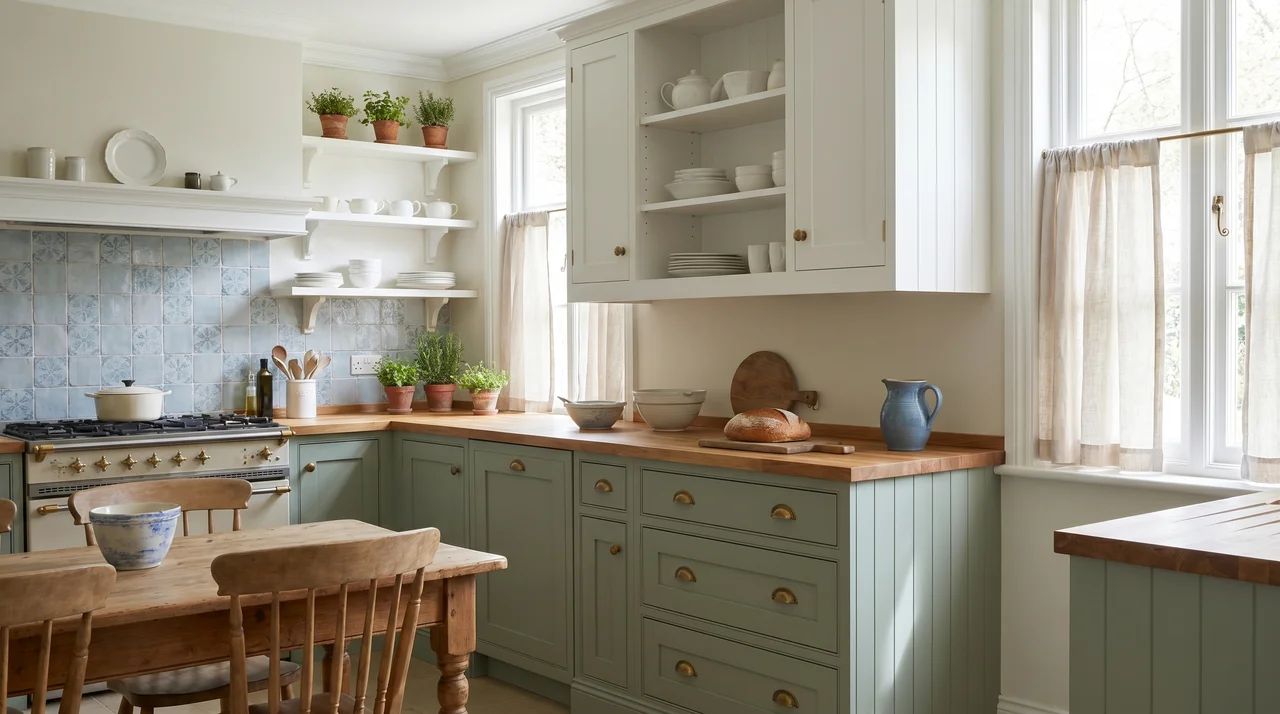
Sage green, muted blue, and pale yellow bring subtle character without overpowering the space.
Sage green lower cabinets with white uppers are especially popular in modern French country kitchens. Muted blue pairs beautifully with natural wood, adding contrast while keeping the palette soft and balanced.
3. Introduce Warm Earthy Colors for Depth
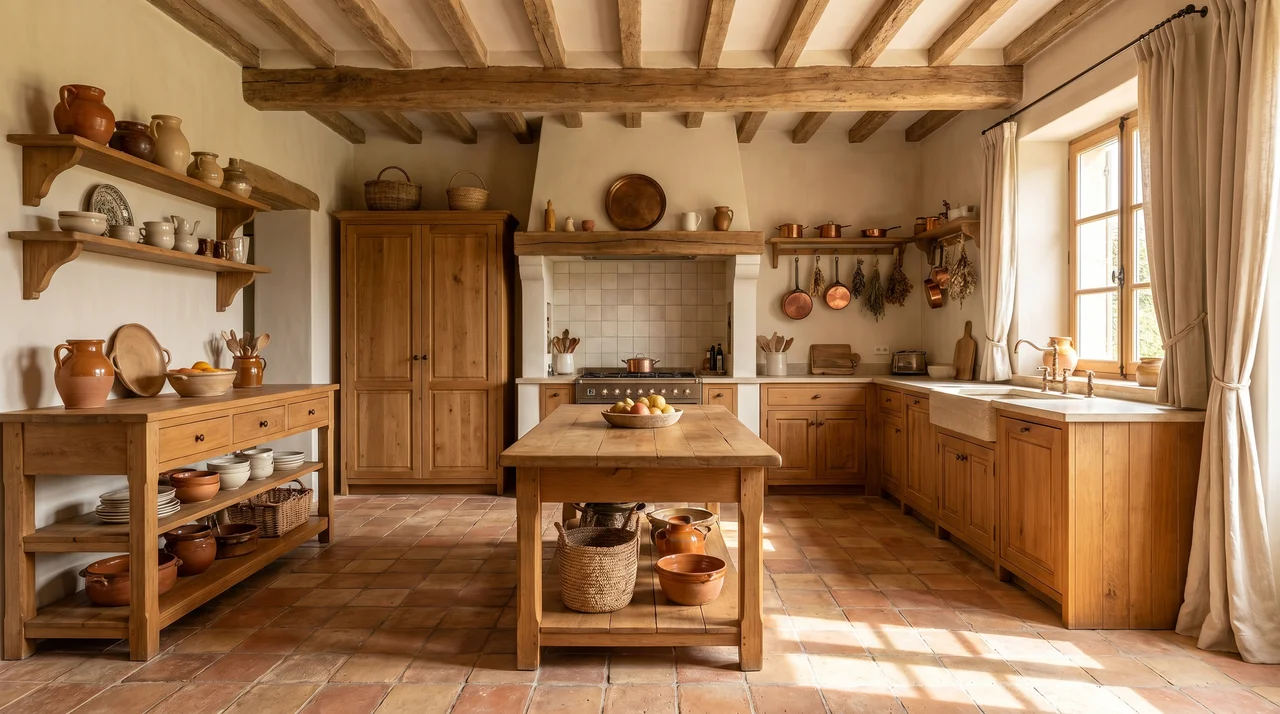
Terracotta, clay, and warm wood tones create a grounded, sun-washed feel that connects strongly to the Provençal influence behind this style.
This palette works especially well for those who prefer a more rustic and lived-in kitchen atmosphere.
4. Adjust Color Choices Based on Natural Light
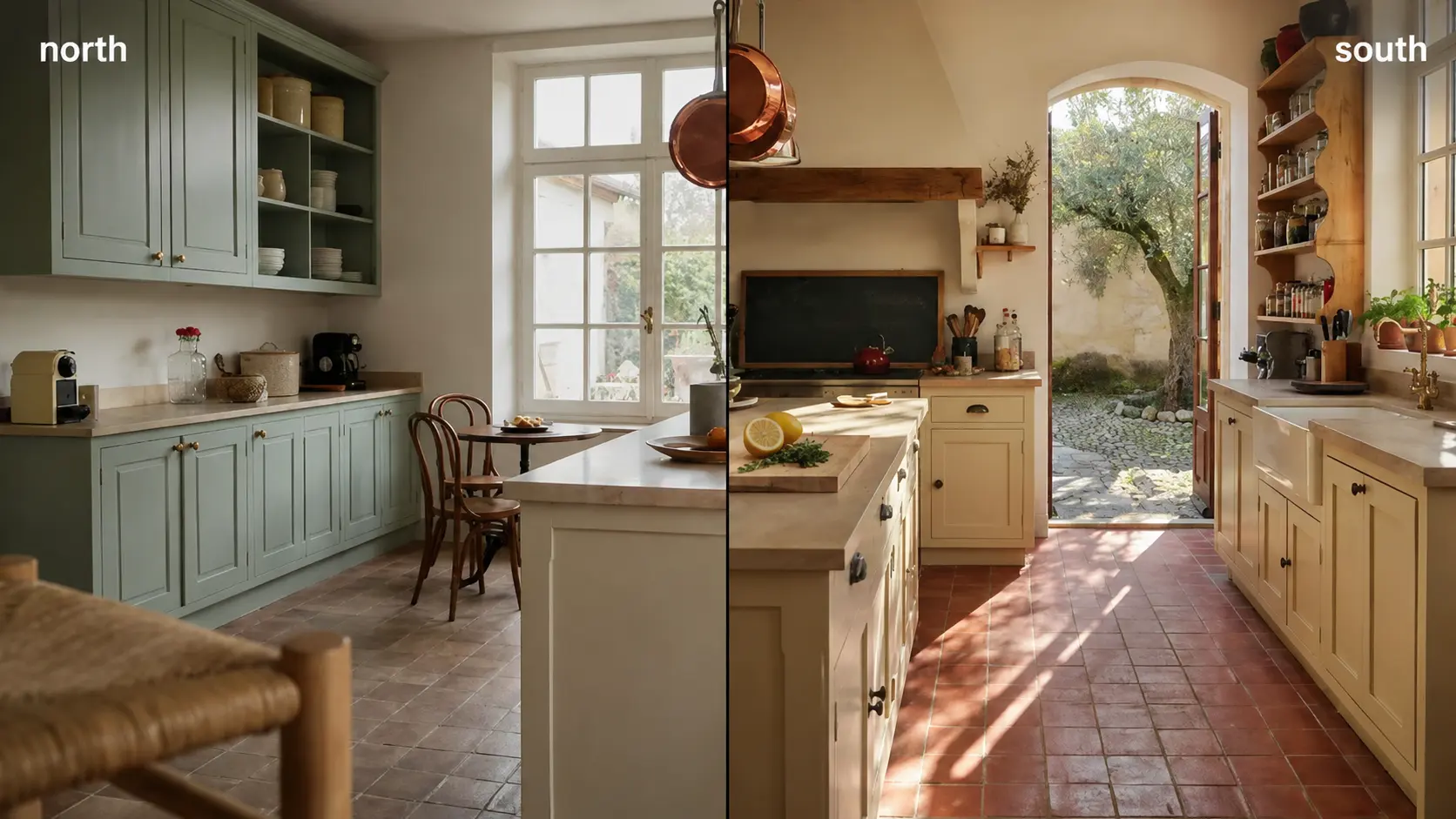
Lighting changes everything. In north-facing kitchens, cool tones like sage or blue can appear flat or gray. Warmer shades such as cream, pale yellow, and terracotta work better in low-light spaces.
South-facing kitchens with strong natural light can handle cooler tones without losing warmth or balance.
5. Choose Distressed Wood Cabinets with Balance
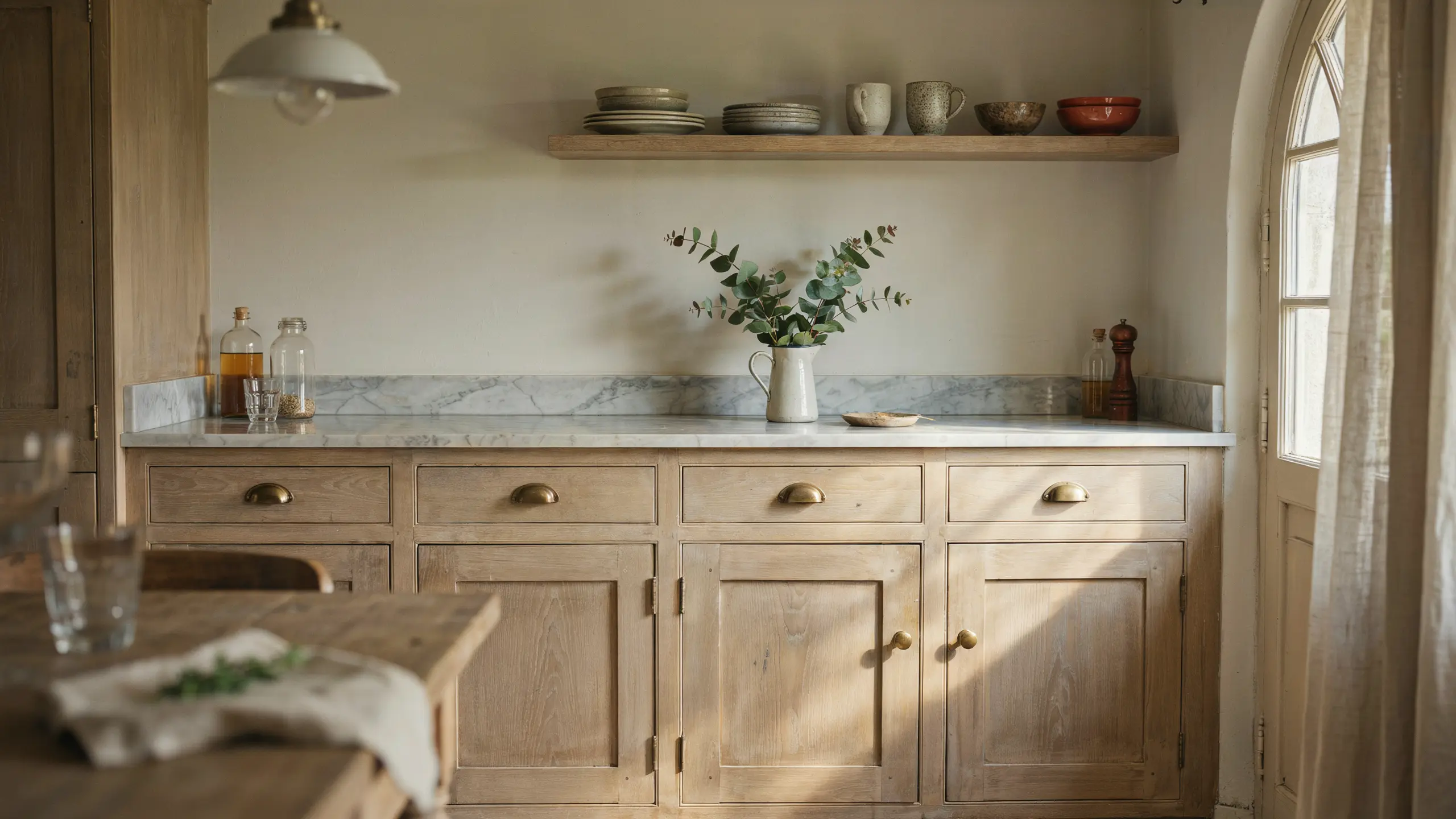
Distressed wood cabinets are a signature feature of French country kitchens, but the key is restraint.
Natural-looking wear should appear along edges and corners, not across every surface. Over-distressing can make the space feel chaotic instead of charming.
6. Use Painted Shaker Cabinets for a Practical Approach
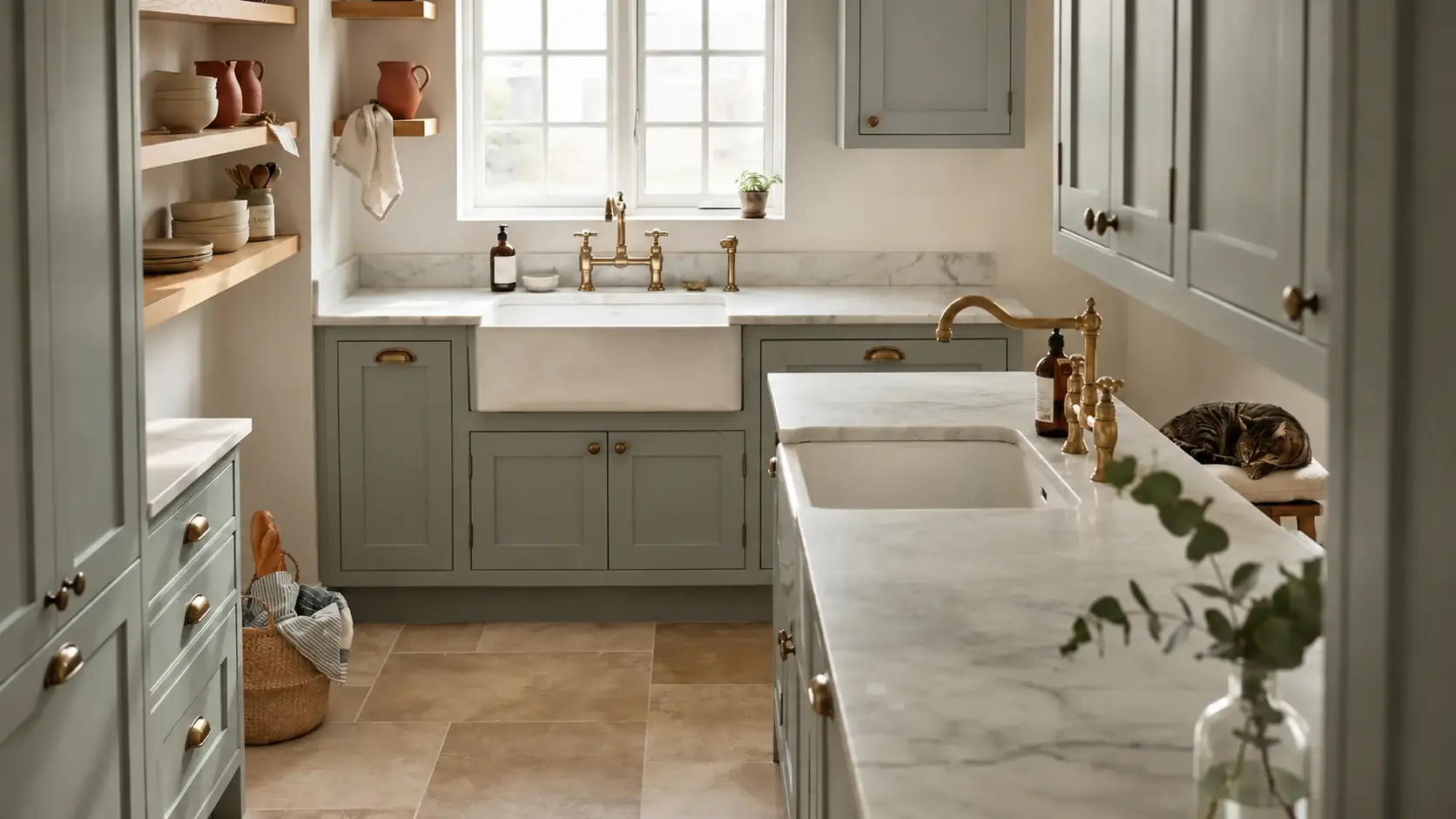
Shaker-style cabinets offer a clean structure that works well with aged finishes like brass or oil-rubbed bronze hardware.
This option delivers the French country feel in a more modern, practical way without relying heavily on distressed finishes.
7. Add Glass-Front Cabinets for Depth and Display
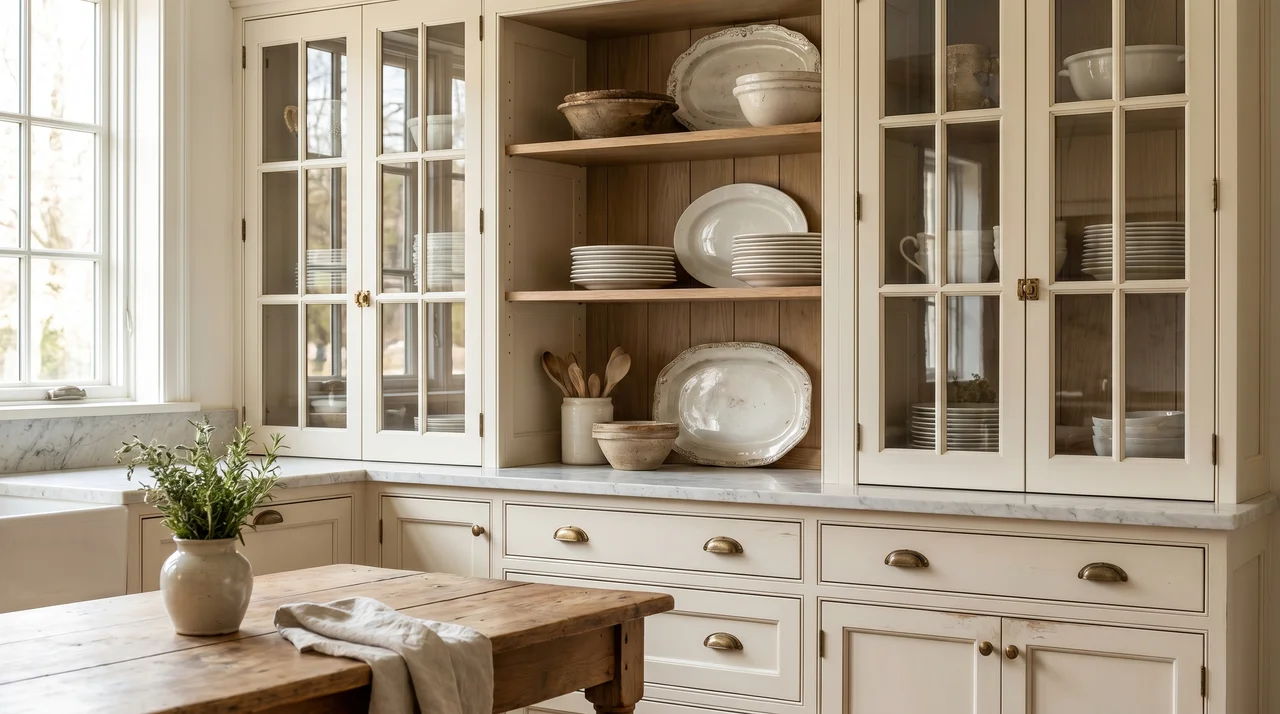
Glass-front cabinets break up solid cabinetry walls and add visual depth.
They work best when used to display simple, intentional pieces like white ceramics, vintage bowls, or neatly stacked dishes.
8. Design Layouts Based on Kitchen Size
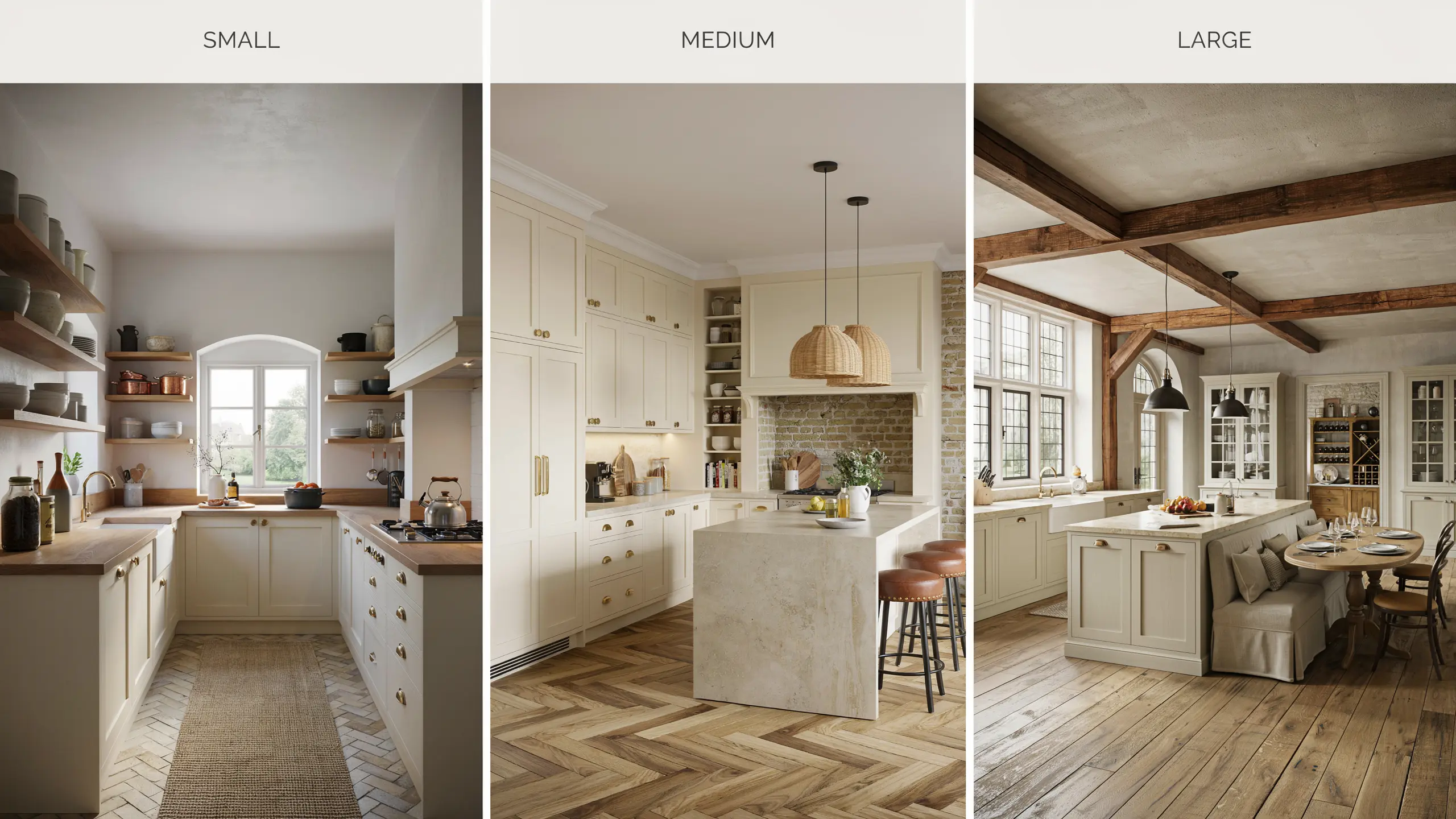
Small kitchens benefit from open shelving, light colors, and minimal decor. Medium kitchens work well with a central island and a mix of closed and open storage.
Large kitchens can include double islands, farmhouse sinks, and separate seating zones while maintaining consistent materials throughout.
9. Anchor the Space with Authentic Materials
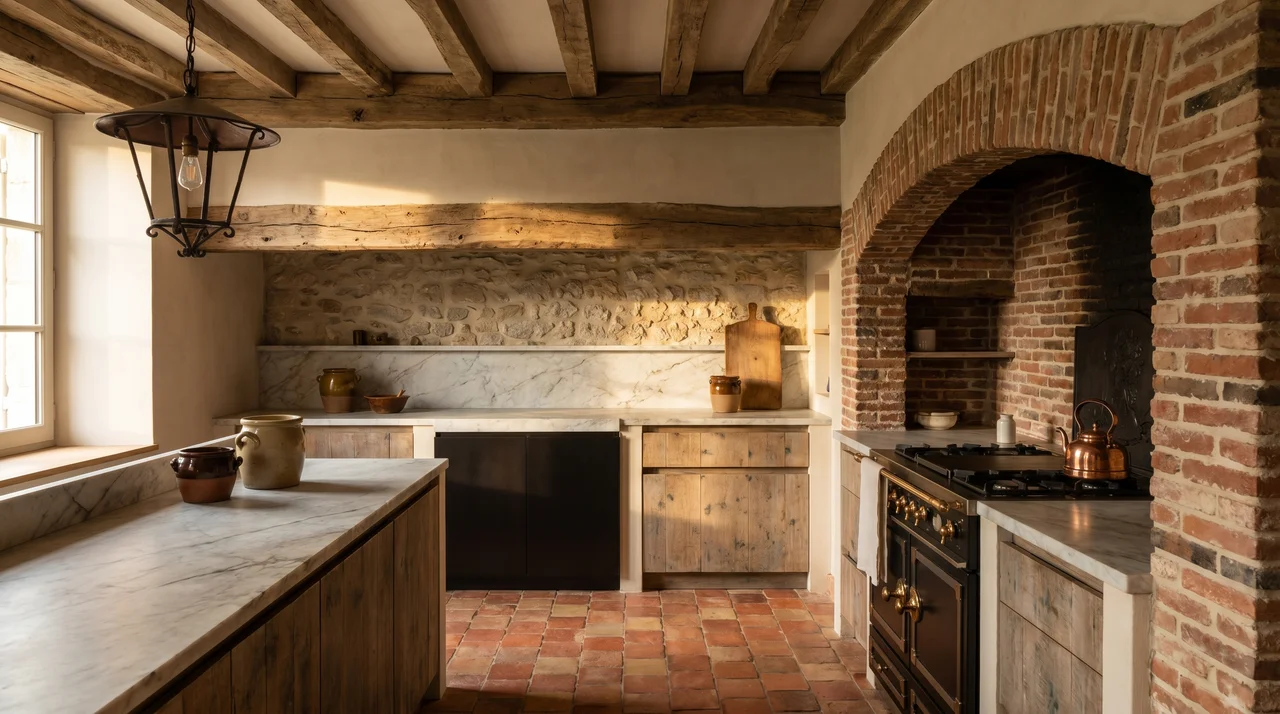
Wood beams, stone, brick, marble, and terracotta define the French country foundation.
The most important rule is balance. Choose two or three main materials and let them lead the design, rather than layering everything at once.
10. Add Accent Stone or Brick Walls for Instant Character
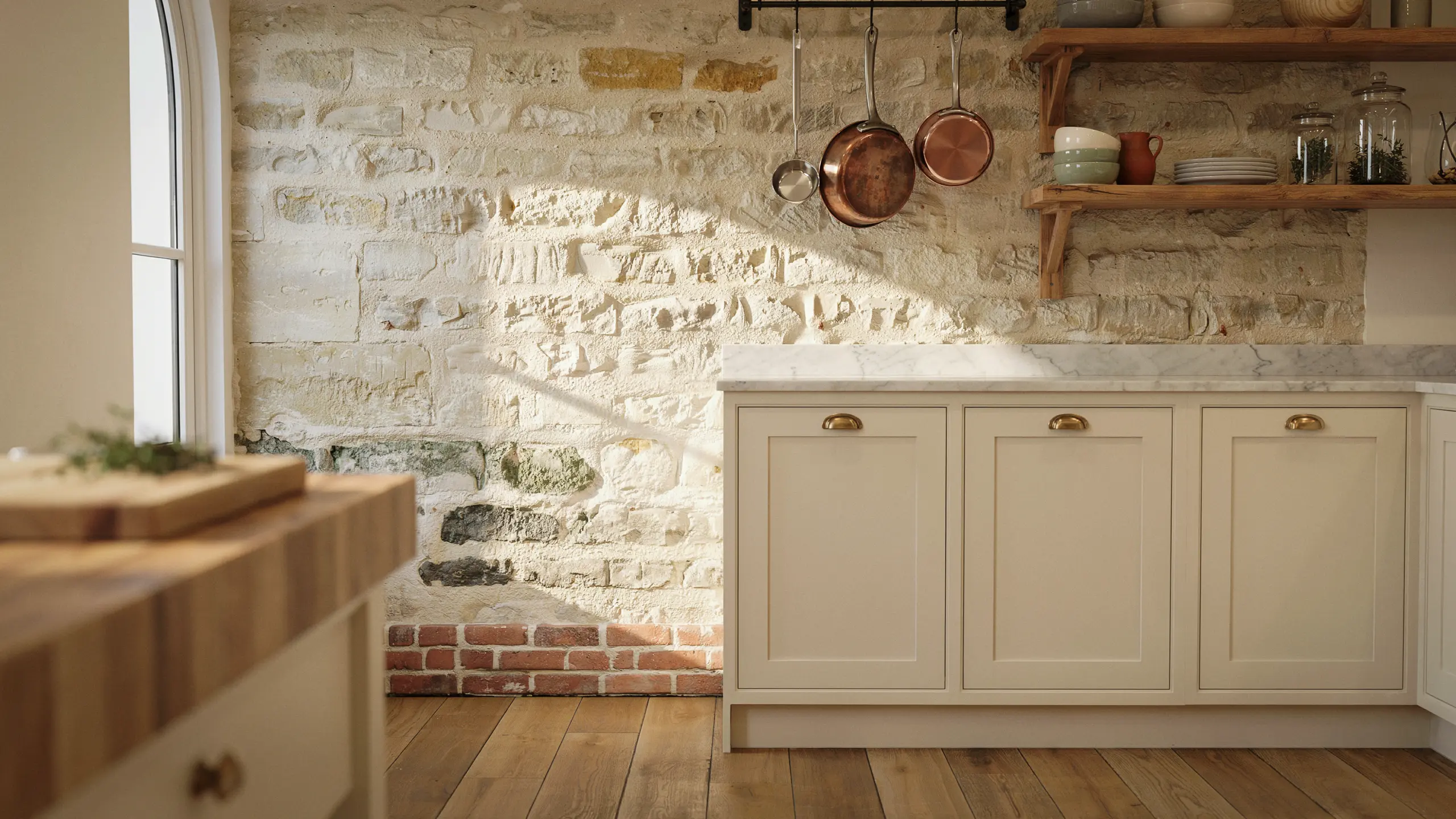
Stone and brick walls bring immediate texture and depth to a French country kitchen. A single accent wall can completely shift the mood of the space.
If the original brick is unavailable, thin-brick veneer panels offer a practical, budget-friendly alternative that still delivers an authentic rustic feel.
11. Use Marble Countertops for a Classic French Finish
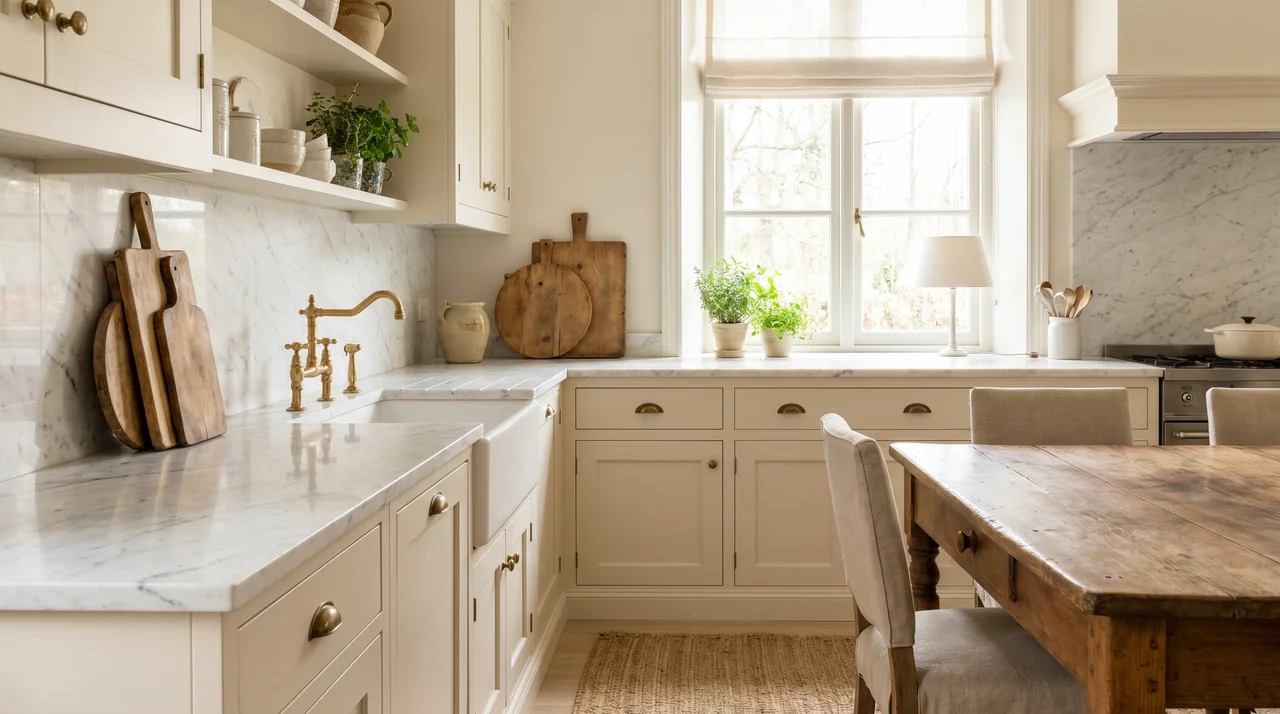
White or cream marble with soft grey veining is the most traditional surface choice in this style. It adds softness while keeping the kitchen elegant and bright.
For lower maintenance, honed quartzite or marble-look quartz offers a similar visual effect with far easier upkeep.
12. Introduce Terracotta Tiles for Warmth and Texture
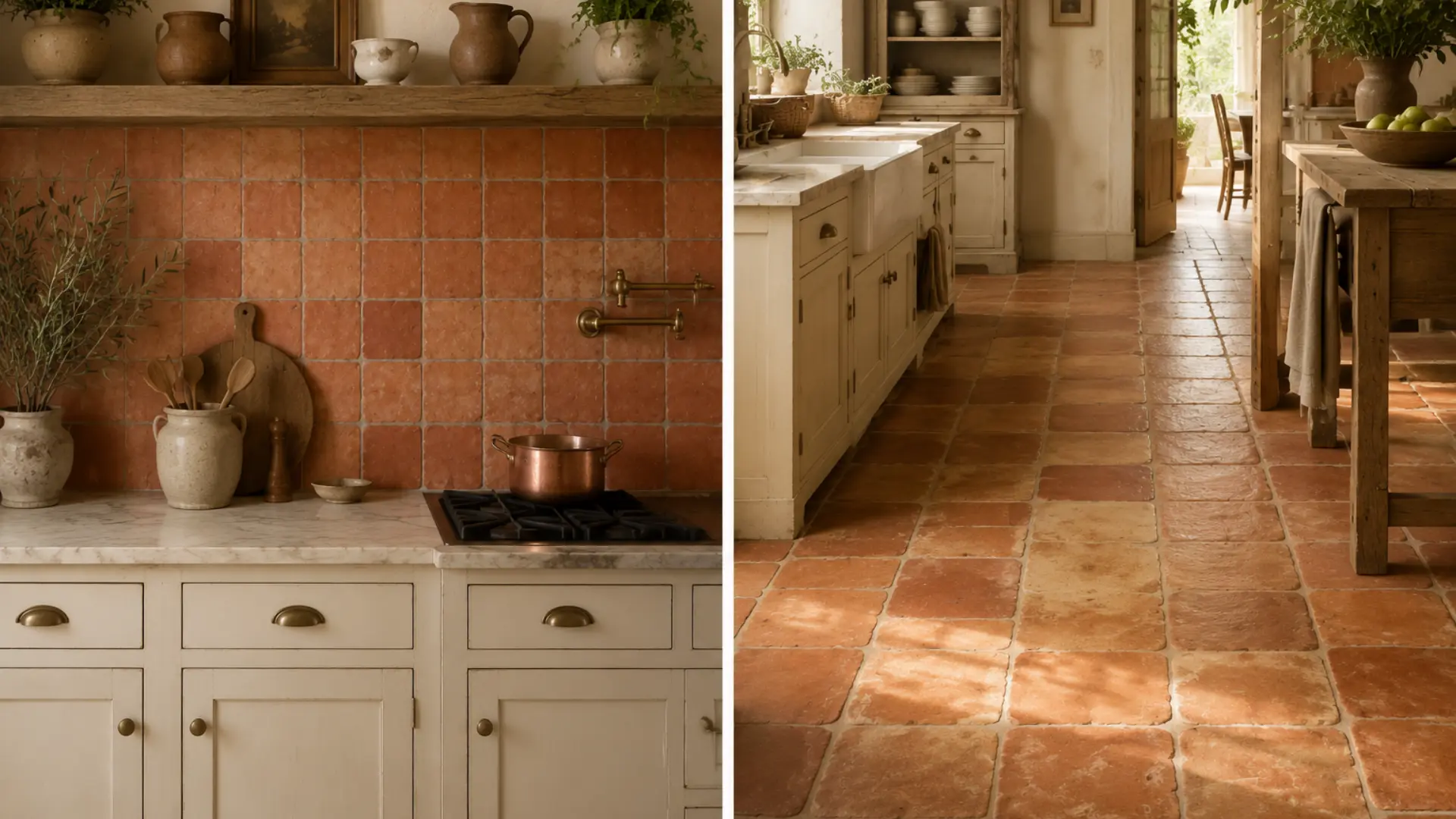
Terracotta flooring or backsplash tiles add a handmade, earthy quality that feels warm and timeless.
They work especially well in US kitchens with plenty of natural light, helping the space feel sun-washed and inviting. Proper sealing is important to prevent staining.
13. Follow the Material Pairing Rule for Balance
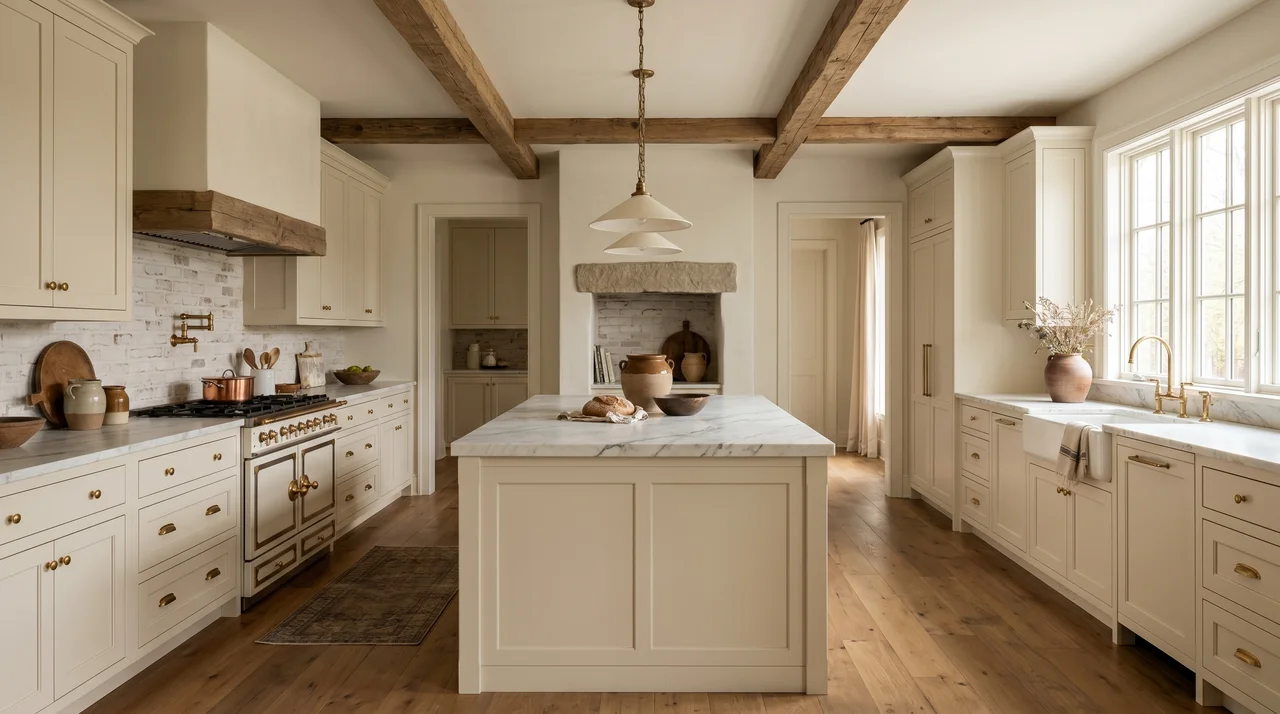
A successful French country kitchen uses restraint. Choose two or three main materials and let them anchor the design.
For example, wood beams, wood floors, and marble countertops already form a complete material story. Adding stone walls, brick, and terracotta together can make the space feel visually heavy and crowded.
14. Add French-Style Chandeliers for Statement Lighting
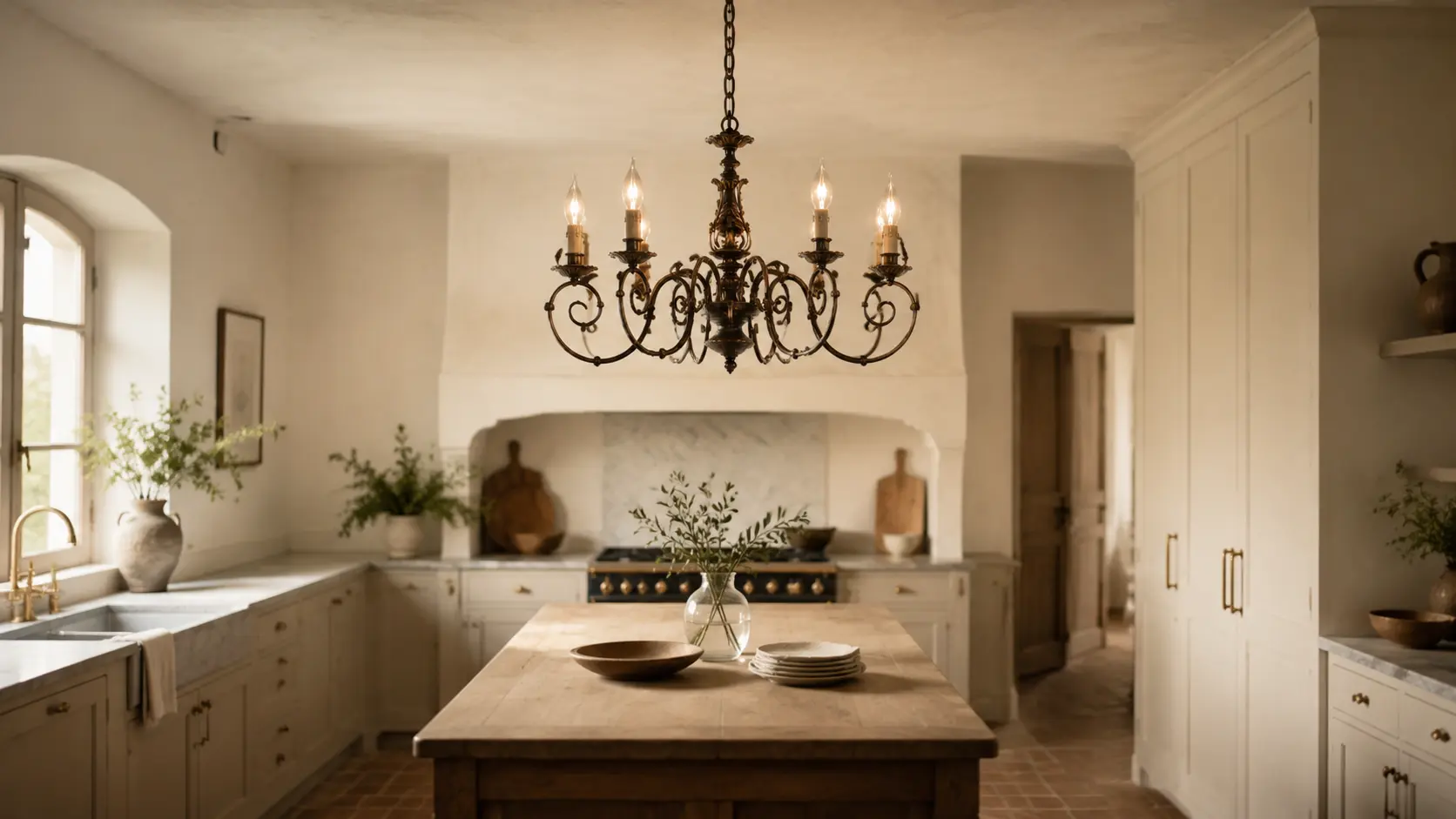
Wrought-iron or aged-gold chandeliers create an instant French-country focal point.
Placed above a dining table or kitchen island, they bring elegance and softness while reinforcing the overall style.
15. Use Brass Pendant Lighting for Warm Functionality
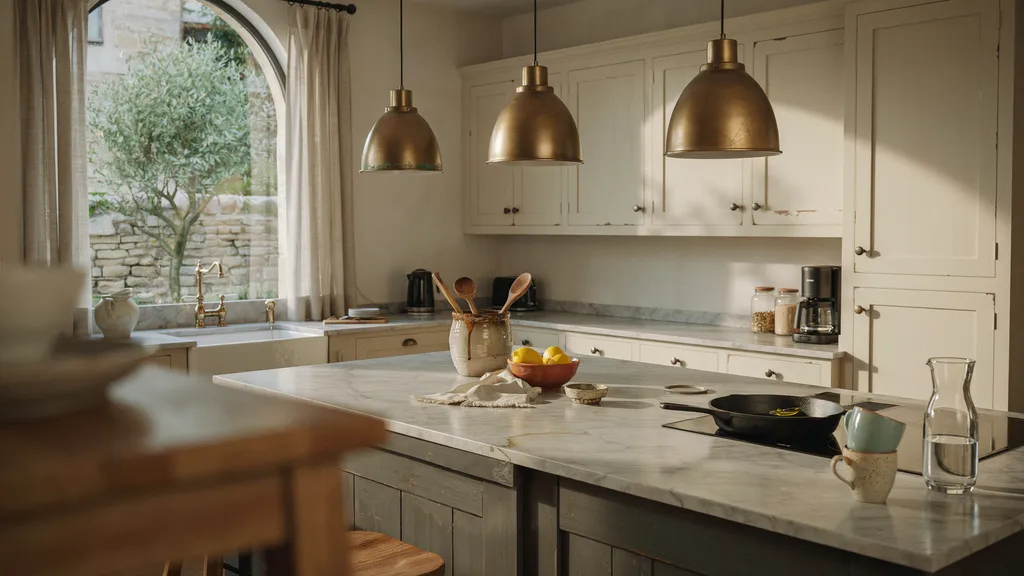
Brass pendant lights are both decorative and practical.
Matte or satin finishes work best, as they age gracefully and blend naturally with wood, stone, and cream-toned surfaces.
16. Layer Lighting for Depth and Comfort
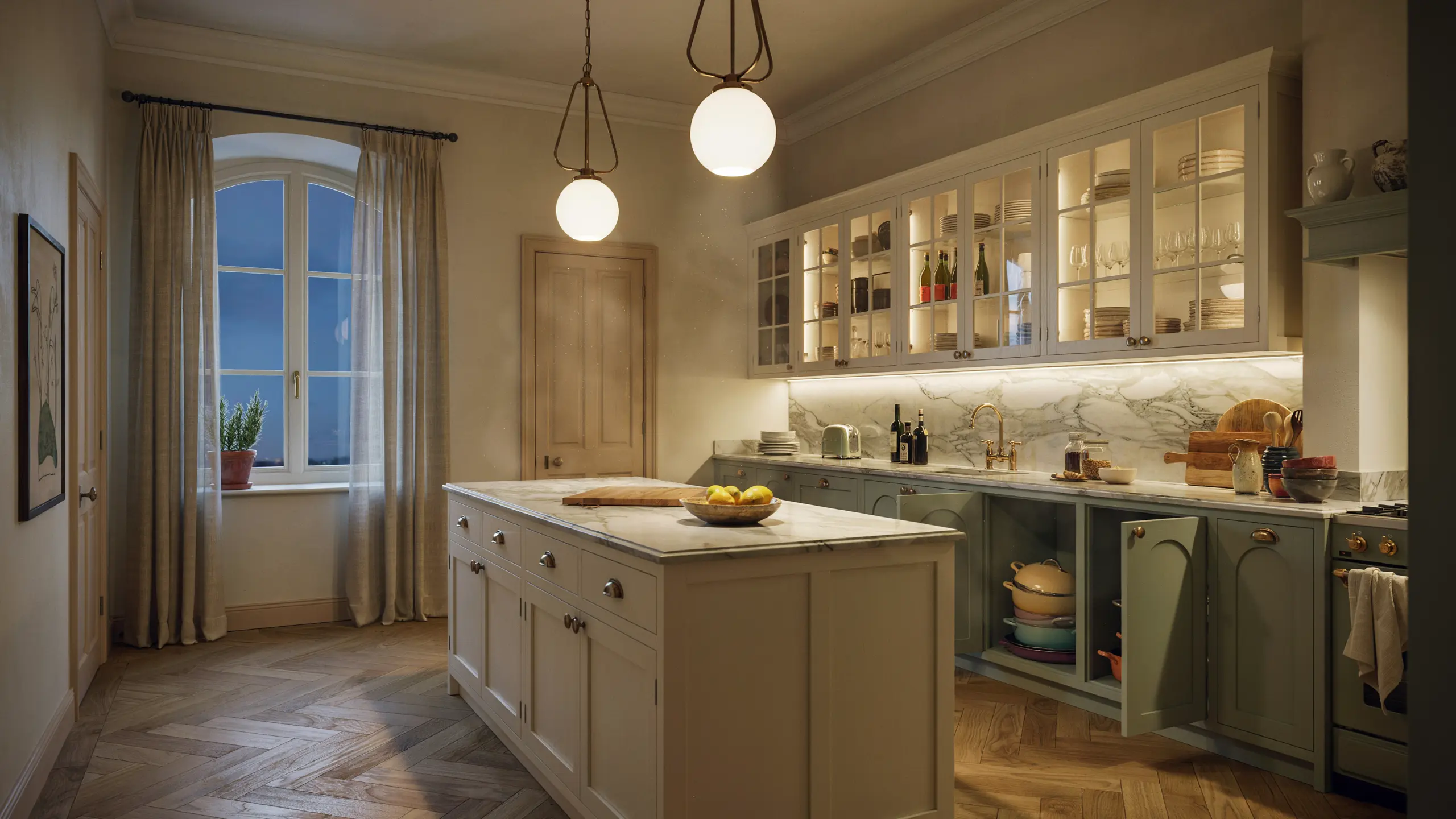
A well-designed French country kitchen always uses layered lighting. This includes overhead ambient lighting, task lighting under cabinets, and subtle accent lighting in display areas.
Warm lighting around 2700K enhances natural materials, while cooler bulbs can make the space feel flat and less inviting.
17. Style Copper Cookware as Functional Decor
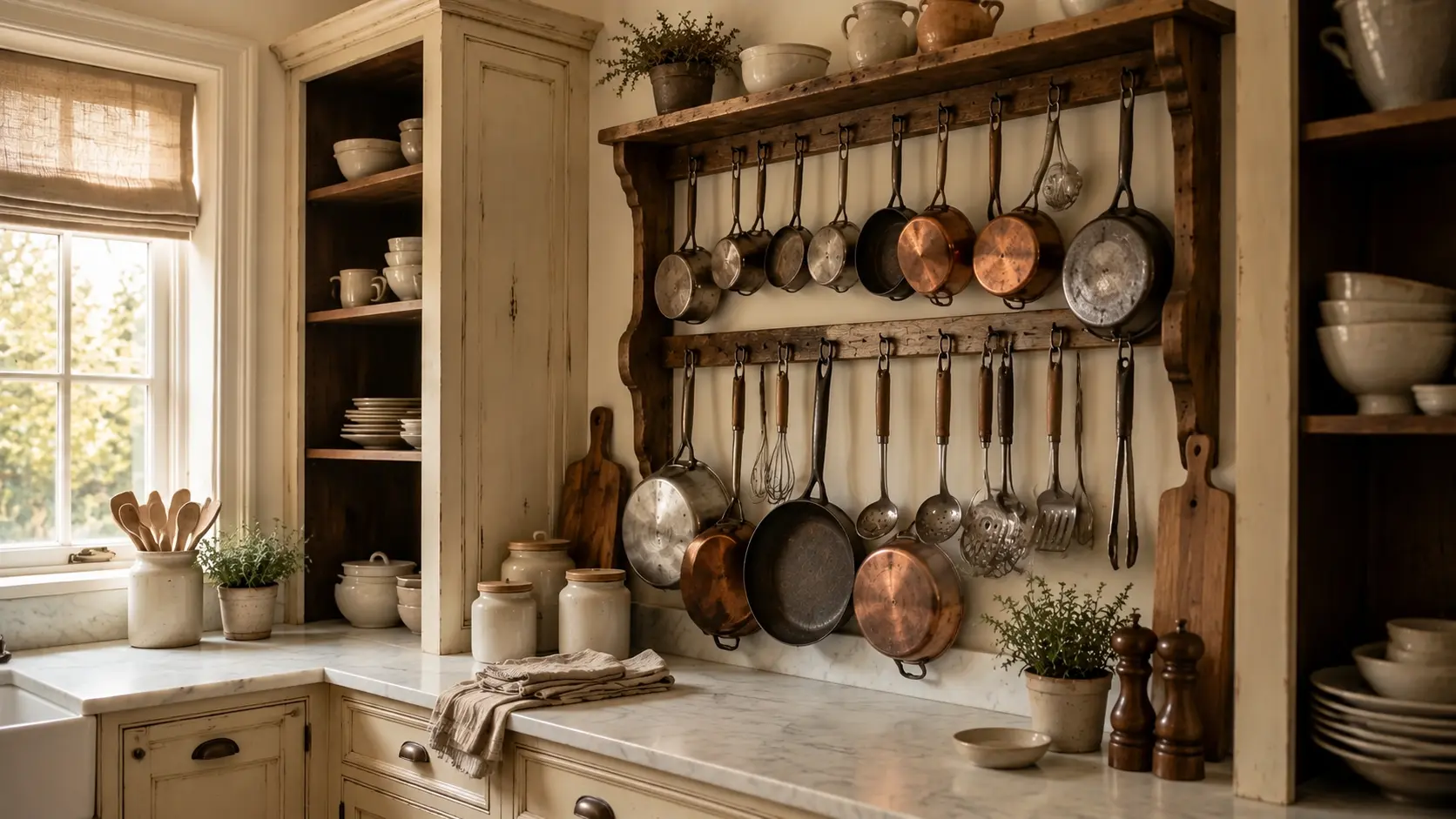
Copper pots and pans are one of the most iconic styling elements in this design style.
Hanging them on a rack or wall hooks adds warmth, texture, and practicality at the same time. The natural patina that develops over time also enhances the rustic character of the kitchen.
18. Style Open Shelving with Intentional Simplicity
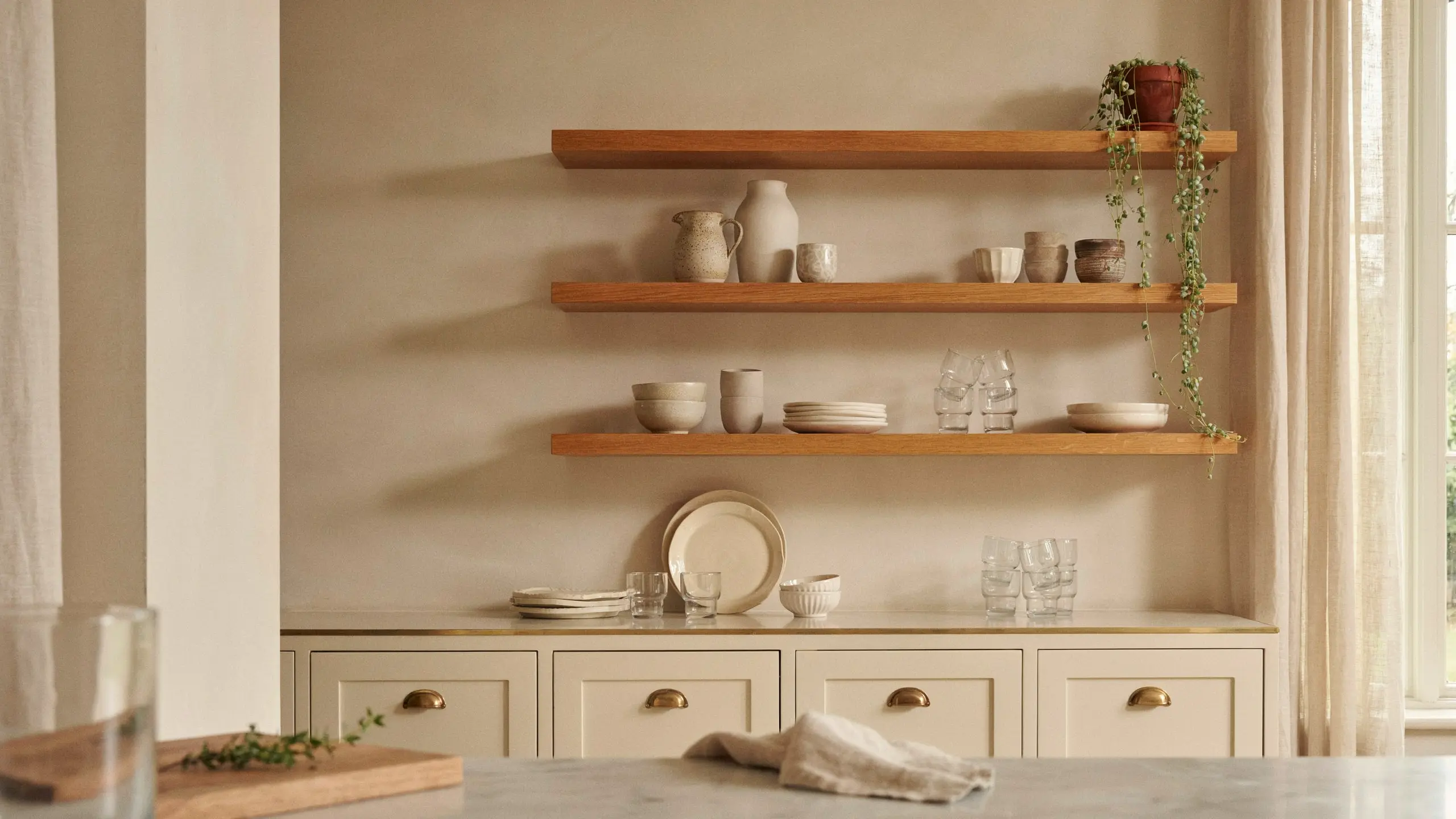
Open shelves should feel curated, not crowded. Combine items of different heights and leave negative space for balance.
A mix of ceramic jugs, stacked plates, and a small plant creates a natural, lived-in rhythm without visual clutter.
19. Use Linens as Shelf Covers for a Soft Finish
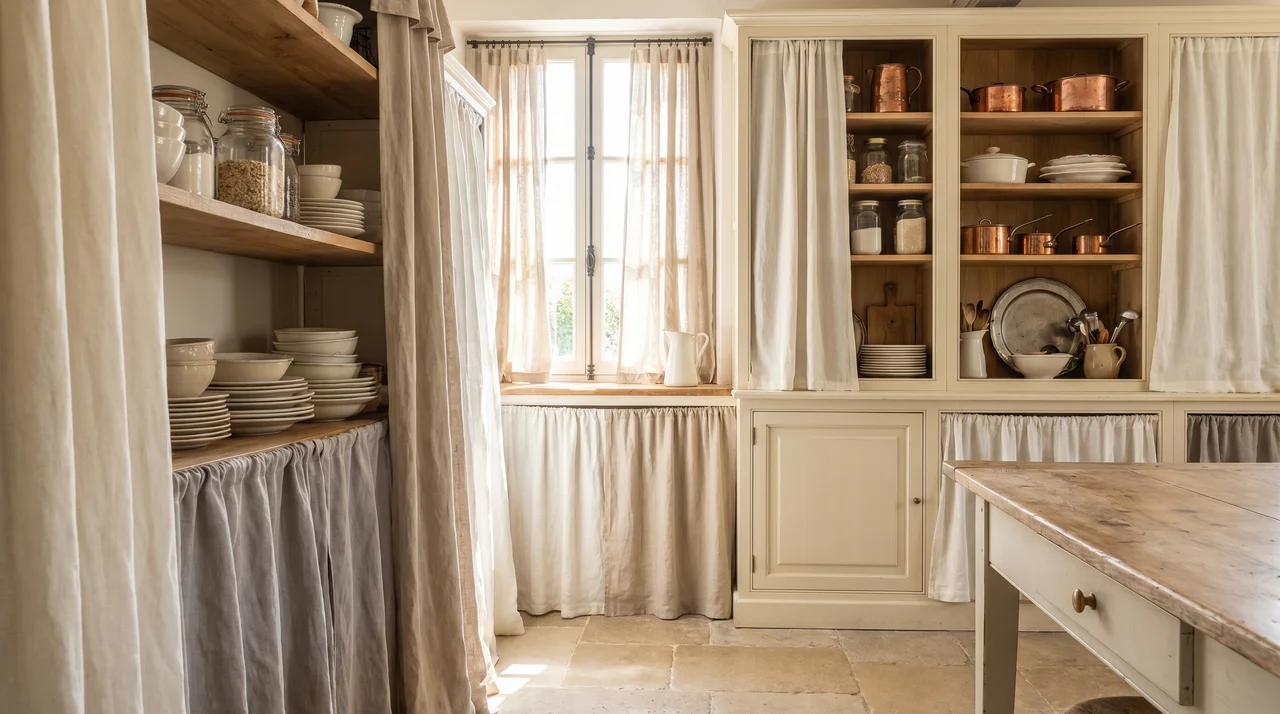
Linen fabric used as shelf covers or light draping over open storage softens the overall look of the kitchen.
Neutral tones like ivory, beige, or soft grey keep the palette calm while adding subtle texture.
20. Add Fresh Herbs and Soft Natural Accents
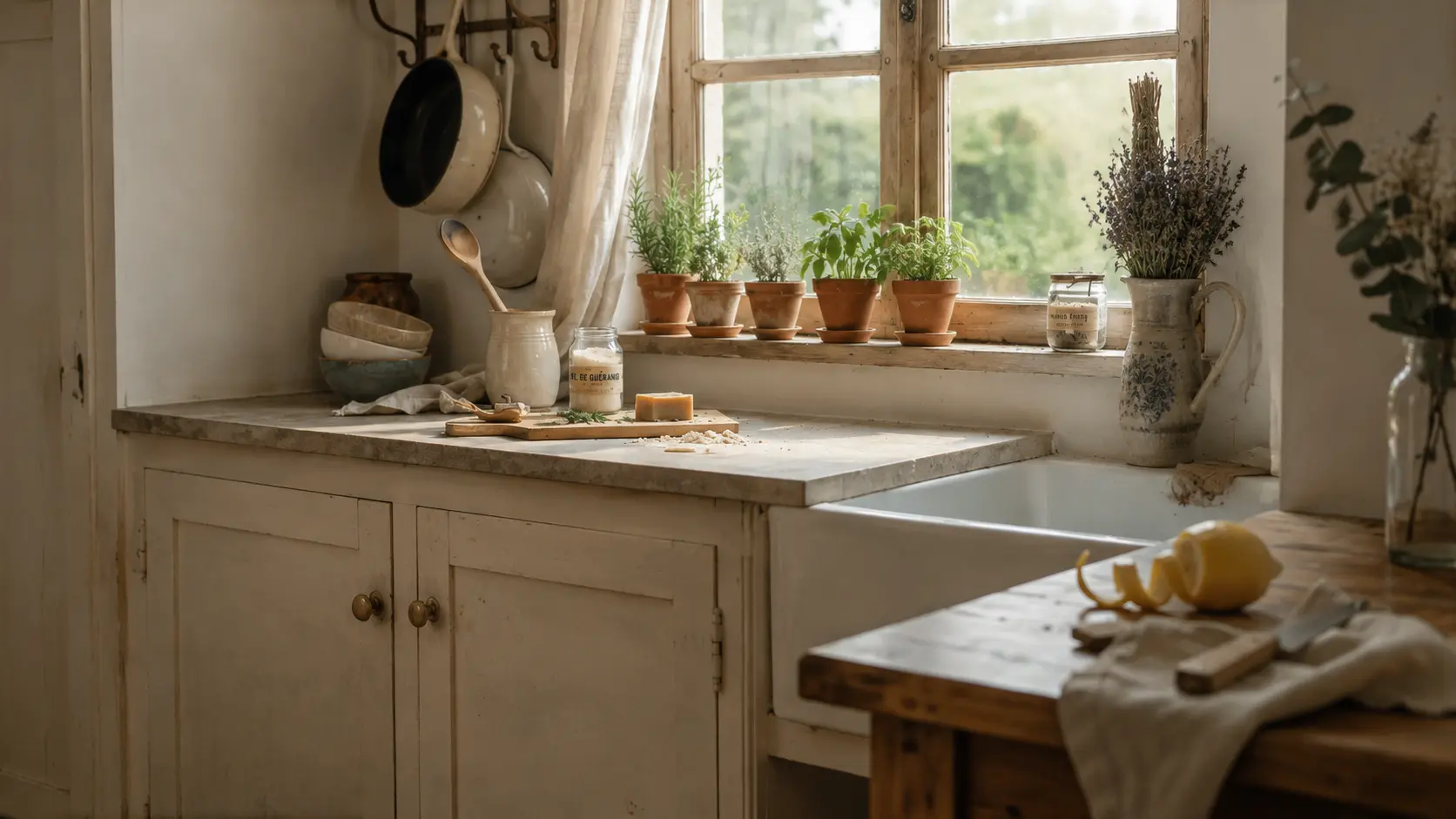
Small herb pots like rosemary, thyme, and basil bring freshness and scent into the kitchen.
Dried lavender or eucalyptus also works well, adding softness and a subtle rustic touch that fits the French country spirit.
21. Use Vintage Ceramics for a Collected Look
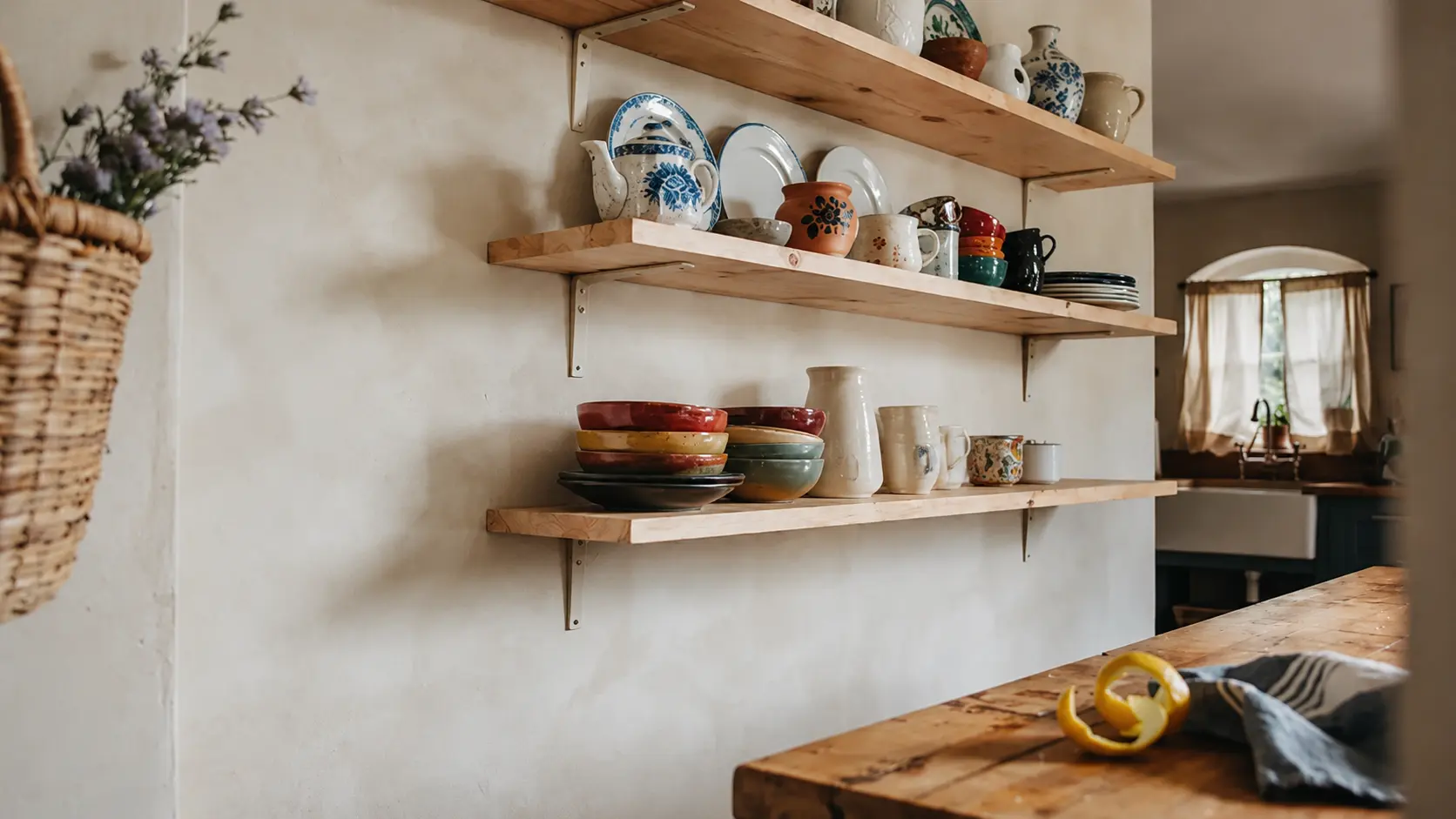
Vintage-style ceramics such as pitchers, crocks, and hand-painted plates add personality and charm.
These pieces do not need to be expensive. Thrift stores and flea markets often offer authentic-looking items that enhance the collected feel of the space.
22. Mix Modern Appliances with Rustic Finishes
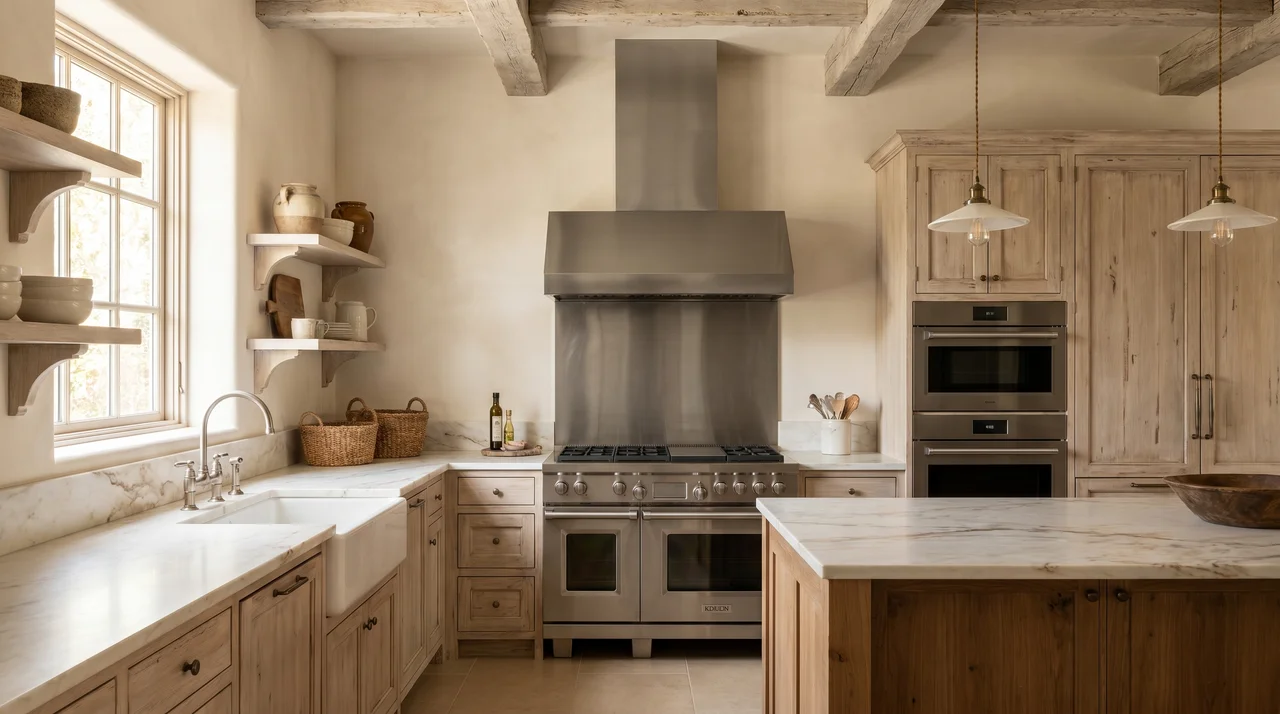
Modern elements can sit comfortably within a French country kitchen when balanced correctly.
Stainless steel or panel-ready appliances work well alongside distressed cabinetry, especially when the overall color palette stays warm and cohesive.
23. Woven Baskets for Warm Texture and Storage
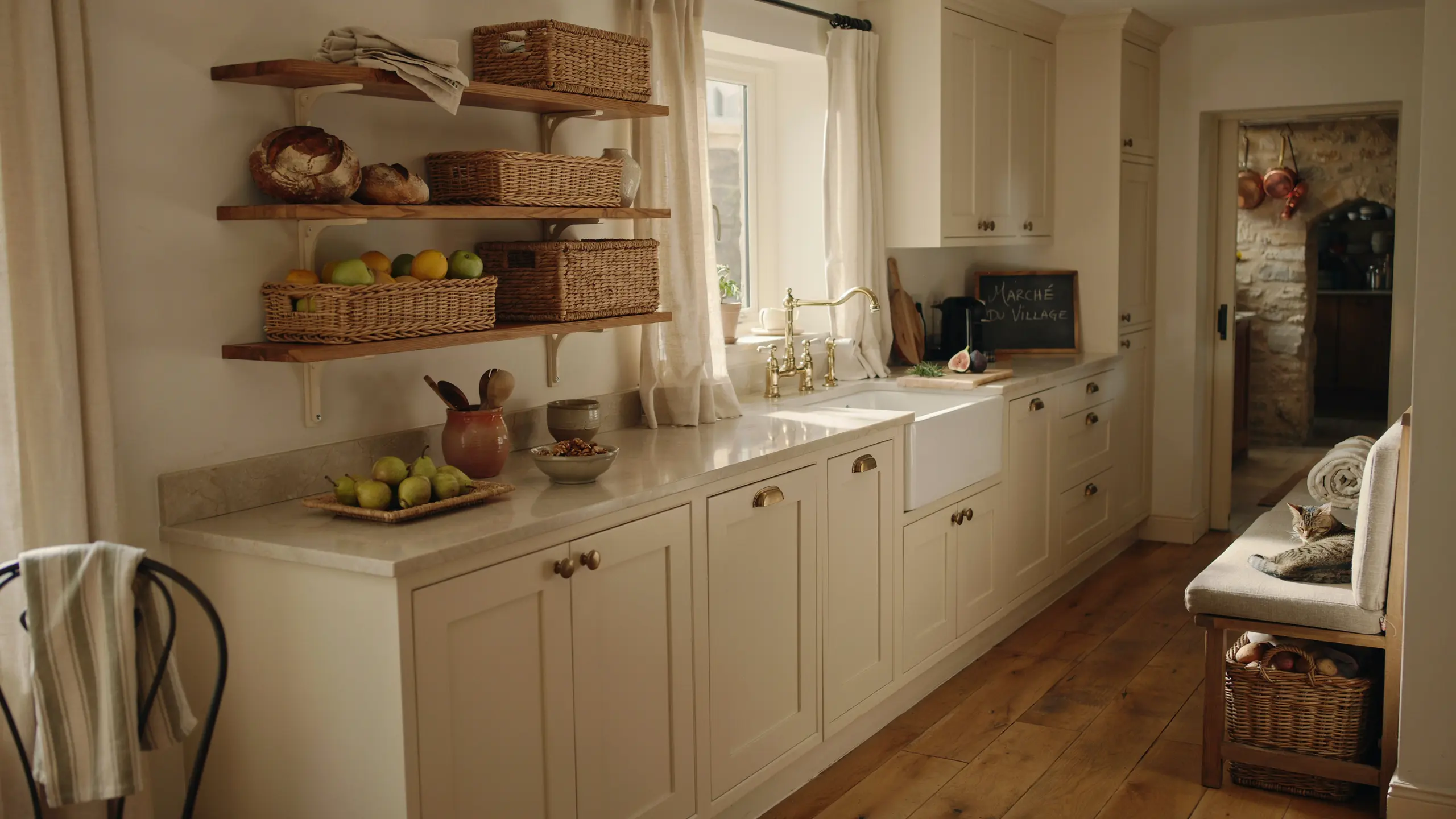
Woven baskets work beautifully for storing fruits, bread, or even extra linens while keeping the space looking relaxed and lived-in.
Natural materials like rattan, wicker, or seagrass blend effortlessly with wood, stone, and cream tones, reinforcing the cozy countryside feel without overwhelming the space.
How to Read French Country Kitchen Photos Like a Designer?
I know you must have saved dozens of photos already. Now what? Here is how to actually use them.
Step 1 – Look at materials first: What surfaces do you see the most of? Is it wood, stone, or plaster? That tells you the material foundation of the design.
Step 2 – Check the color balance: How many colors are in the photo? Most strong French country kitchens use a maximum of two to three colors. Note the ratio.
Step 3 – Study the layout flow: Look at where the open shelves, the island, and the sink are placed. Think about how that layout would work in your actual kitchen size.
Step 4 – Count the decor items: If you count more than five to seven items on display in one area, the space will feel heavy.
Step 5 – Identify the one hero element: Every great French country kitchen photo has one standout feature, a beam, a chandelier, or a bold cabinet color. Find your own element.
Conclusion
A French country kitchen should feel as if it has always belonged to the home, shaped slowly by everyday living rather than by a single design moment.
That quiet comfort is the heart of French country interior design, where texture, tone, and simplicity work together to create ease instead of effort.
You do not need to do everything at once. Start with the color. Get the cabinets right. Add natural materials where you can. Layer in lighting that feels warm. Then add styling details as you like.
This style works in a small Brooklyn apartment kitchen just as well as it does in a large Texas farmhouse.
The principles are the same: natural materials, soft colors, real textures, and a few vintage items.
Frequently Asked Questions
What is the Difference Between French Country and Farmhouse Kitchen Style?
French country leans more European, with softer colors, ornate hardware, and refined finishes like marble. Farmhouse style is typically more rustic, with raw wood and white shiplap.
What Hardware Works Best in a French Country Kitchen?
Aged brass, antique gold, and oil-rubbed bronze are the most common choices. Avoid bright chrome or modern black hardware, as these will work against the warm, aged quality of the style.
Does French Country Style Work in an Open-Plan Kitchen?
Yes, but keep the finishes and palette consistent across the kitchen and dining area. Mixing materials abruptly where the kitchen meets the living space can make both areas feel disconnected.