How to Preserve Flowers: 7 Methods for Every Flower Type

You kept the card. You kept the ribbon. So why are the flowers sitting in the bin?
Whether it’s a wedding bouquet, anniversary roses, or a random bunch you bought yourself on a Tuesday, some flowers feel too good to toss after a week.
The good news: you don’t have to. Learning how to preserve flowers is easier than most people expect, and the method you choose can mean the difference between something that lasts a month and something that lasts a lifetime.
This guide covers 7 methods, including a few that most blogs skip entirely. By the end, you’ll know exactly which one makes sense for your flowers, your time, and what you want to do with them.
Which Flowers Actually Preserve Well?
Some flowers dry beautifully and keep their shape, while others lose color or wilt quickly.
Roses, lavender, and baby’s breath usually preserve well, but delicate blooms like tulips and lilies need more careful handling.
Good for drying: Roses, lavender, baby’s breath, carnations, strawflower, statice, sunflowers, eucalyptus, and hydrangeas. These have lower moisture content and hold their shape reasonably well.
Good for pressing: Pansies, daisies, cosmos, geraniums, anything with flat, single-layer petals. Thick or multi-layered flowers, such as peonies and large roses, tend to brown during pressing.
Tricky to work with: Large hydrangeas are beautiful, but won’t press flat into a frame. Shadow boxes work better for these.
7 Different Ways to Preserve Flowers
Preserving flowers helps keep special memories alive long after the blooms fade.
From simple air-drying to professional freeze-drying, each method offers a different look, texture, and lifespan depending on the type of flower and the result you want.
1. Air Drying
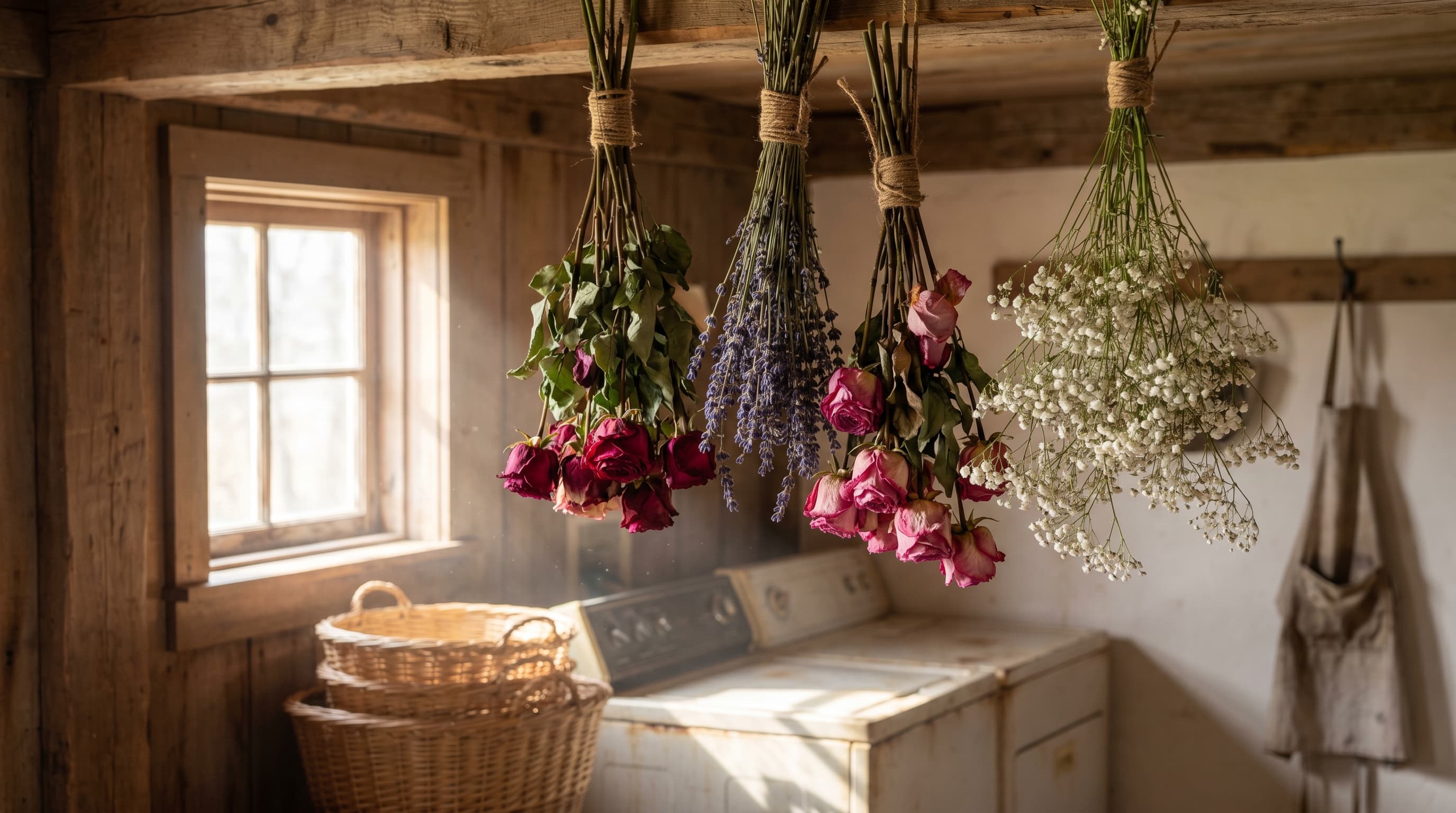
This is where most people start, and for good reason. You need nothing except time and a dark corner.
Strip excess leaves from the stems. Bundle the flowers loosely with a rubber band, not so tight that the heads touch. Hang them upside down in a cool, dark, well-ventilated space.
A closet or basement stairwell works well. Leave them for two to four weeks until the petals feel papery.
Once dry, spray lightly with unscented hairspray or a clear craft sealant to help them hold shape.
Longevity: Several years, though colors will slowly fade with sun exposure.
2. Pressing in a Book
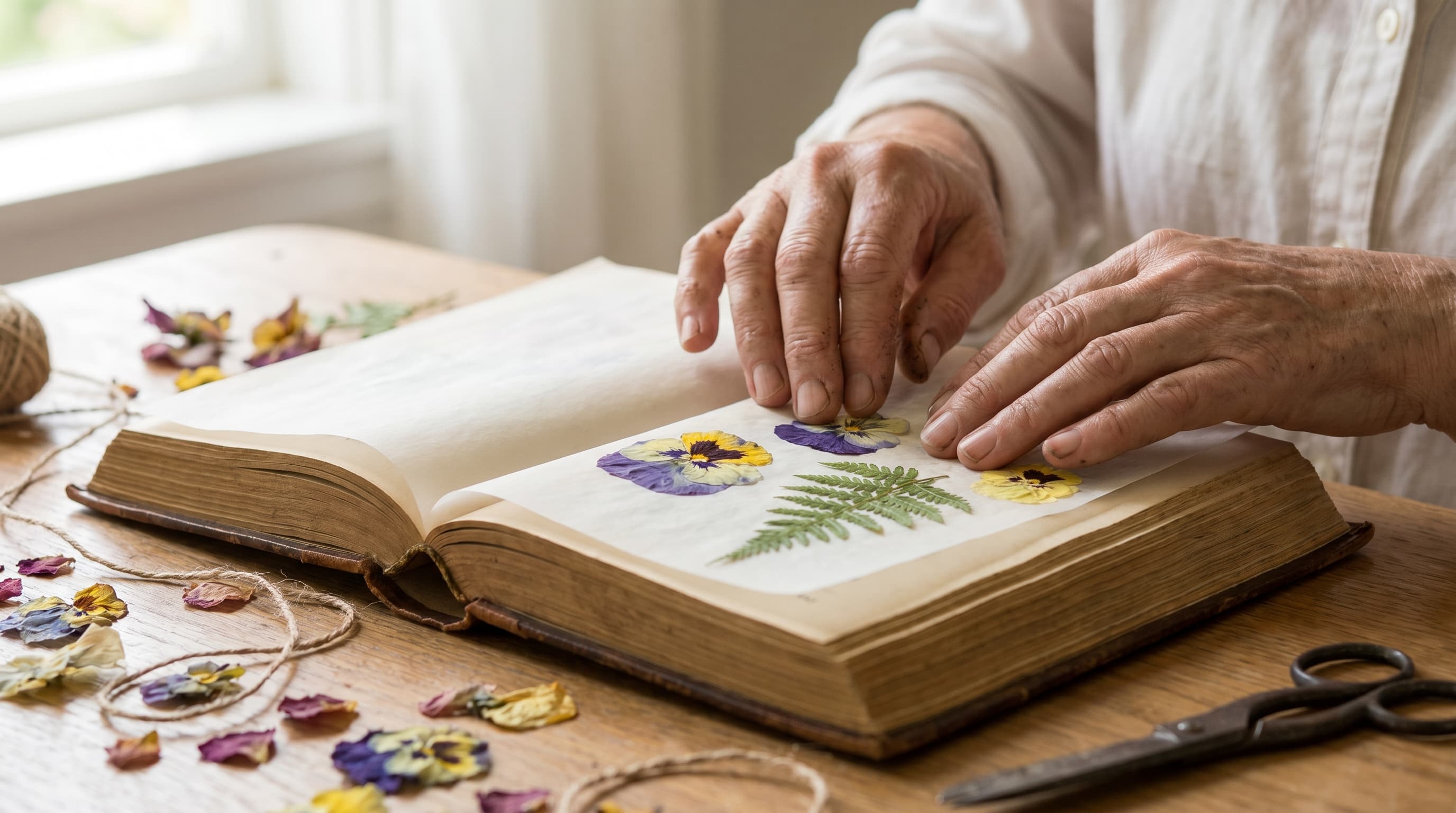
Pressing works best for flat flowers that you plan to use in art, cards, bookmarks, or frames.
Place flowers between two sheets of parchment paper or coffee filters (not newspaper, the ink can transfer). Arrange them so petals don’t overlap.
Put them inside a heavy book, then stack more books or a brick on top. Leave for one to two weeks. Check the paper every few days and replace it if it gets damp.
Faster version: Two ceramic tiles, parchment paper, and a microwave. Microwave in 20-30 second intervals at medium power until the flower feels dry.
Let it cool completely before handling. This takes under 30 minutes instead of two weeks. Once pressed and dried, store between glass or in a sealed frame away from moisture.
3. Silica Gel
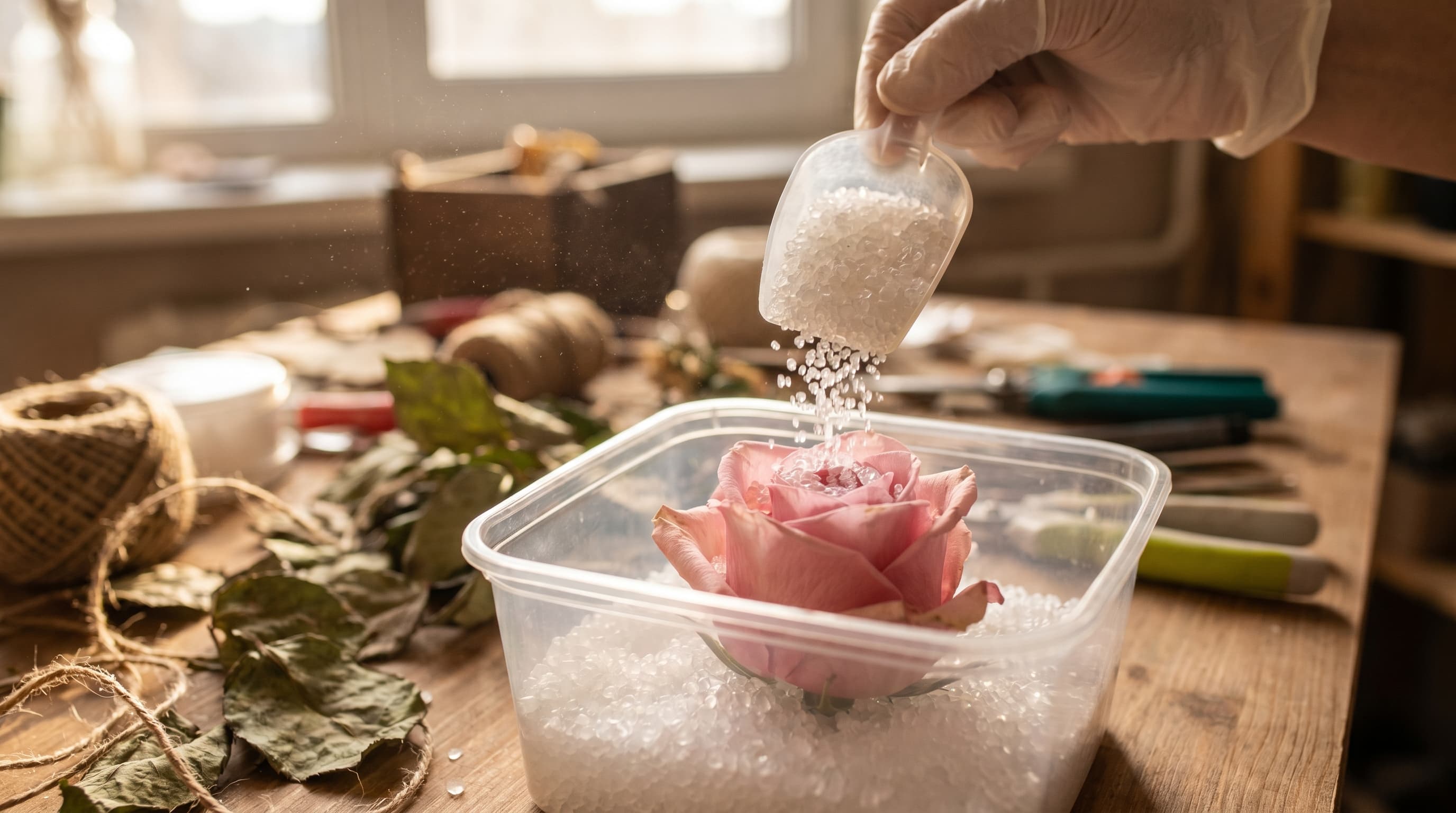
If you want your flowers to look three-dimensional and as close to their original color as possible, silica gel is the method to use. It’s particularly good for bridal bouquets before the ceremony.
Put a layer of silica gel in an airtight container. Trim the stems short and place flowers upright, not touching each other. Slowly pour more gel around and over the blooms — work from the outside in, pinching gel gently into the petals rather than dumping it from above. Seal the container and leave it for five to seven days.
Safety note: Silica gel is toxic. Keep it away from children and pets, and handle with gloves. The container you use should not be used for food afterward.
You can also combine silica gel with a microwave for faster results: 2 to 5 minutes at medium power, then 24 hours of rest before opening. This is the fastest way to get a dry, full-shaped flower.
4. Glycerin
This one gets left out of almost every flower preservation guide, which is a shame because it produces a completely different result from drying.
Glycerin doesn’t remove moisture; it replaces it. The flower absorbs the glycerin solution through its stem, which keeps the petals soft and pliable instead of crispy and brittle.
Blooms preserved this way won’t shatter if you handle them. They also tend to deepen in color rather than fade.
Mix one part vegetable glycerin with two parts hot water, then place trimmed flower stems in the solution for one to two weeks.
This method keeps flowers soft and flexible, making it ideal for wreaths, garlands, eucalyptus, and roses.
5. Wax Dipping
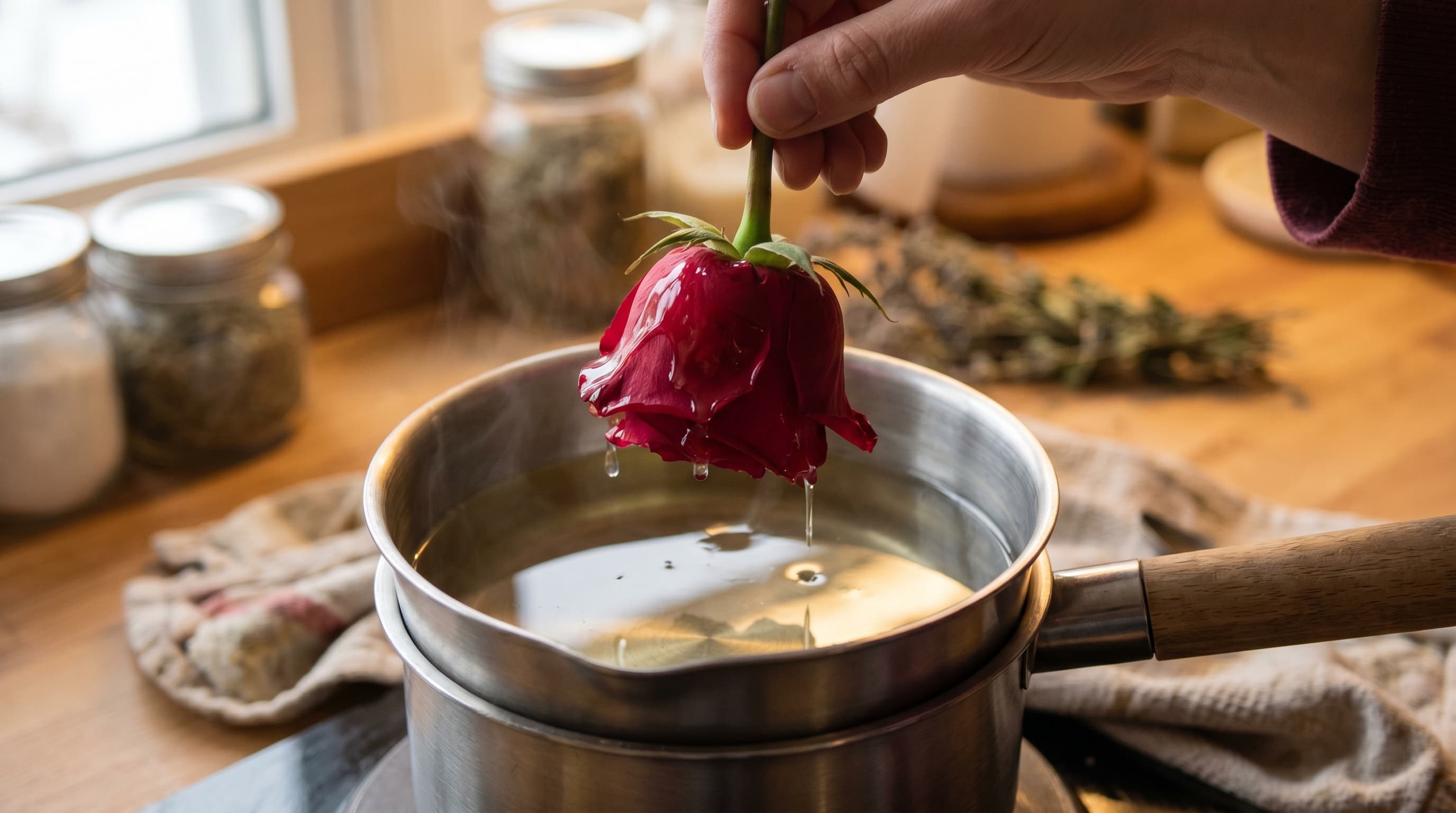
Wax isn’t a long-term solution; it preserves flowers for about a month, but it’s useful if you want blooms that look almost fresh for a short period, like for a display or a photo shoot.
Use soy wax flakes rather than paraffin. Soy melts faster, gives a more flexible result, and is less likely to crack. Melt the wax in a double boiler on low heat.
Dip each flower completely, twirl slowly to coat evenly, then hang upside down to cool. The wax hardens quickly.
Handle wax-dipped flowers carefully. They’re more fragile than they look.
6. Resin Casting
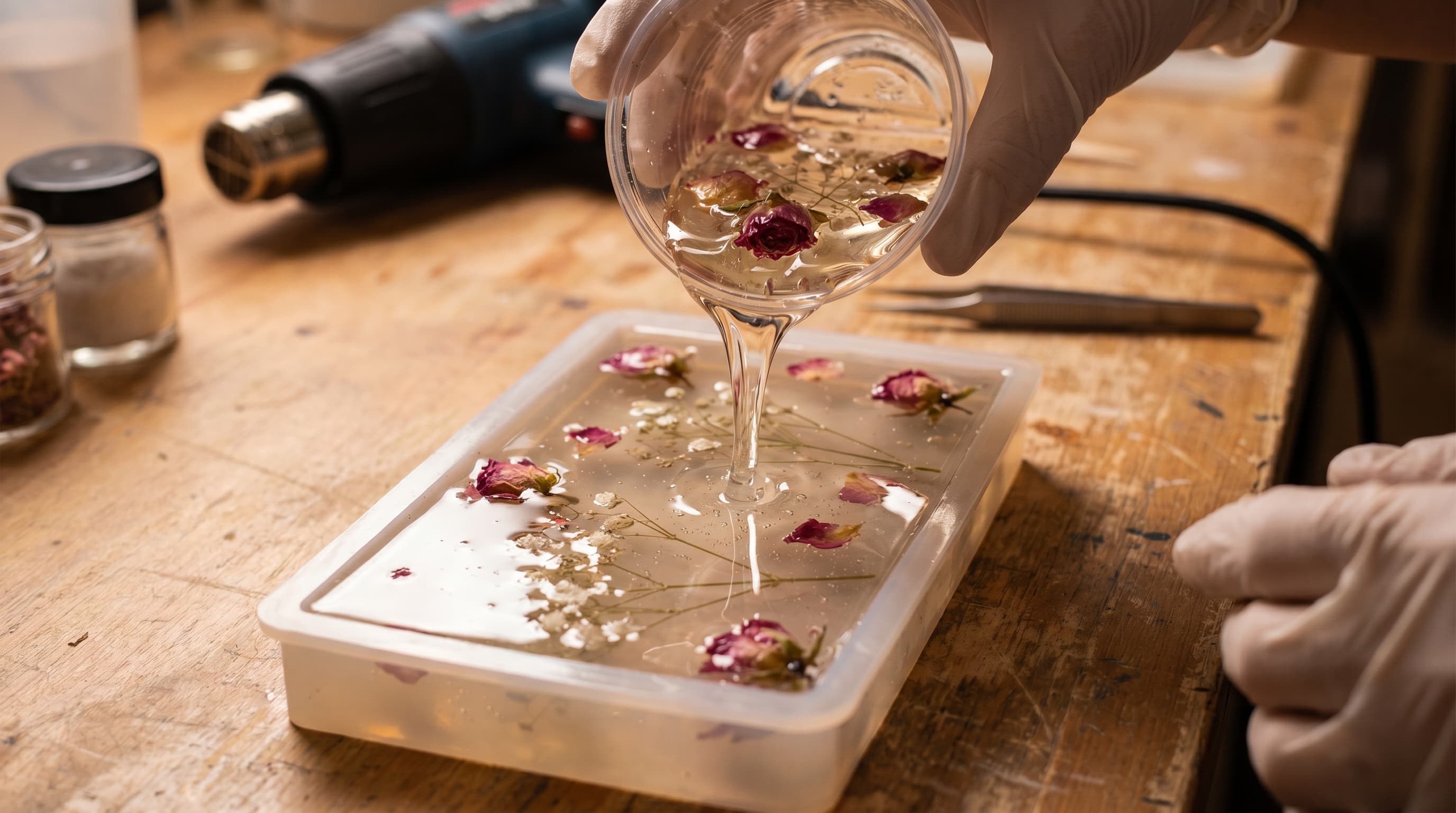
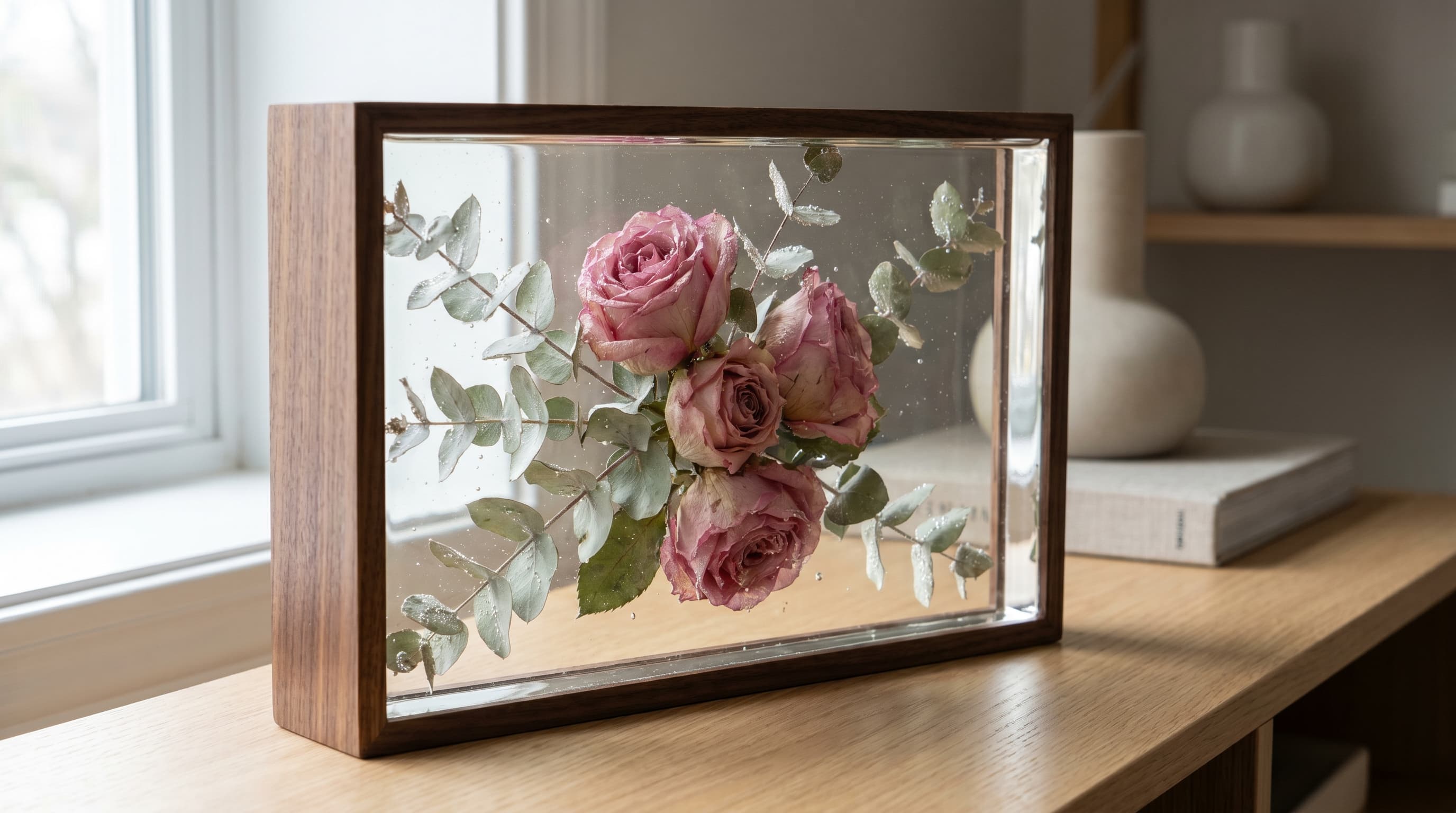
Resin is how you turn a flower into a paperweight, coaster, piece of jewelry, or ornament that could genuinely outlast you.
The one rule: Your flowers must be completely, bone-dry before they go into resin. Not mostly dry, completely dry.
Any moisture trapped inside will cause the resin to go cloudy, and the flowers will rot from the inside. Use one of the drying methods above first.
Once dry, mix epoxy resin according to the product instructions. Work in a well-ventilated area and wear gloves. Resin fumes are unpleasant and can irritate the skin.
Pour resin into a silicone mold in layers, adding flowers at the right depth, and use a heat gun or toothpick to remove air bubbles. Cure time is typically 24 to 48 hours.
Store finished resin pieces away from windows. High heat can cause warping, and direct sun can yellow the resin over time.
7. Freeze Drying
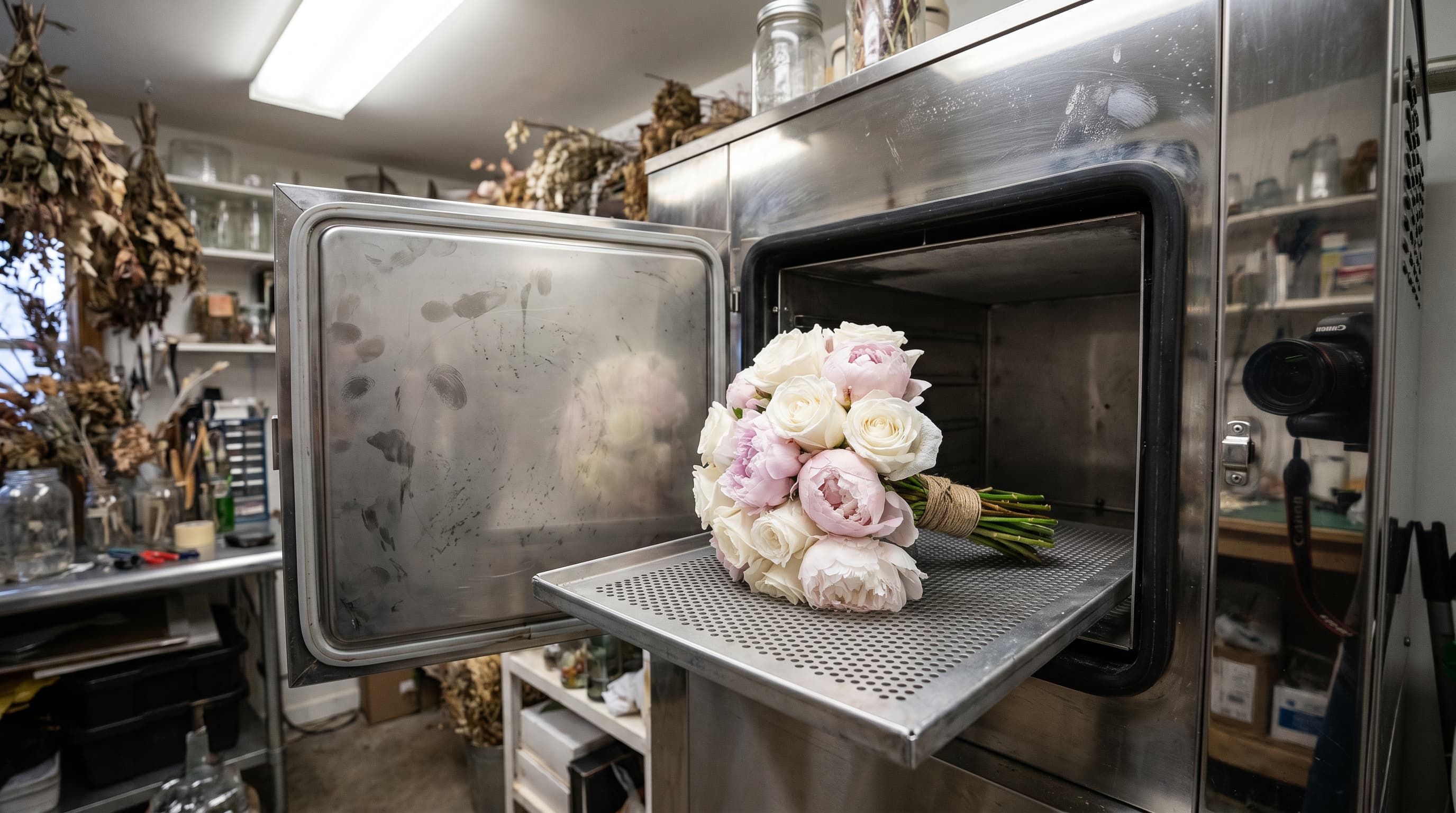
Freeze-drying preserves a flower’s color, shape, and texture better than any home method, keeping blooms looking nearly fresh.
Flowers are frozen first, then moisture is removed under vacuum pressure while they remain frozen. Because the process requires expensive equipment and precise calibration, it’s usually done by professional floral preservation specialists.
Wedding bouquet preservation typically costs between $150 and $400+, depending on bouquet size and display options.
Freeze-dried flowers, displayed indoors and away from direct sun, can last well over a decade.
How to Store and Display Preserved Flowers
This is where most guides stop too soon. You’ve done all the work to preserve the flowers, and then a few months later, they look terrible. Usually, the culprit is one of three things: direct sunlight, high humidity, or heat.
Sunlight bleaches pigment from dried and pressed flowers faster than almost anything else. A beautiful framed arrangement placed in a sunny window will look washed out within a season.
Keep preserved flowers in shaded spots or use UV-protective glass in frames. High humidity causes mold and softening in air-dried or pressed flowers.
A bathroom or a kitchen near the stove is not a good display location. For resin pieces, avoid windowsills in warm climates, as sustained heat can cause slight warping or yellowing.
To clean dried flowers, use a soft paintbrush to gently dust the petals. For glycerin-treated blooms, a dry microfiber cloth works. Never use water or liquid cleaners on dried or pressed flowers.
Expected lifespans:
- Air dried: 1–3 years before significant fading
- Pressed: Several years in a sealed frame
- Silica gel preserved: 1–2 years displayed, longer if sealed
- Glycerin: 1–3 years
- Resin: Indefinitely (decades)
- Freeze-dried: 7–10+ years with care
Why Do Flowers Die?
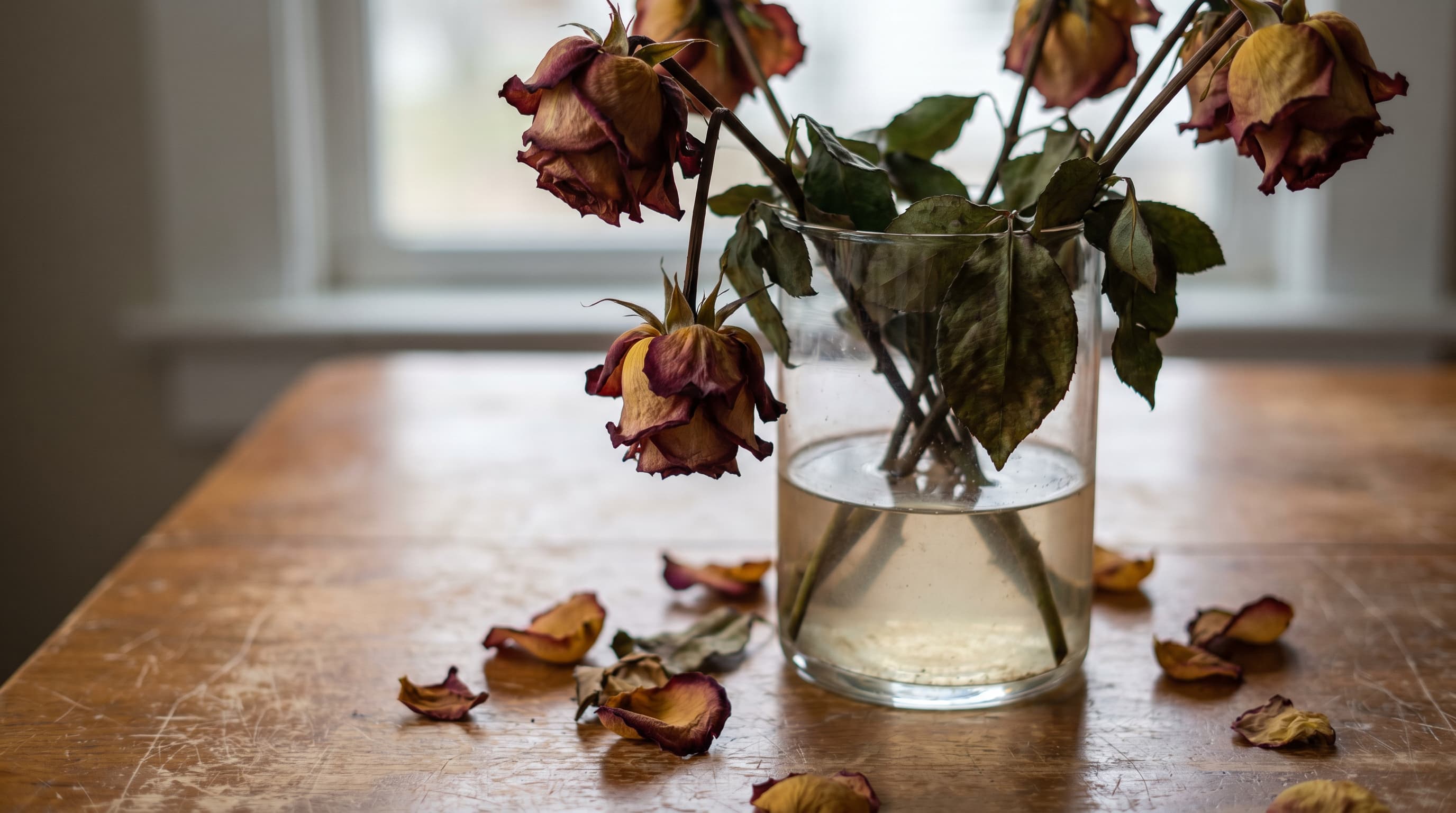
Before choosing a method, it helps to understand what happens when flowers deteriorate.
Three things cause most of the damage: moisture loss, bacterial growth in the water, and ethylene gas, a natural compound released by ripening fruit that speeds up aging in flowers.
Keep your bouquet away from apples, bananas, and citrus on the counter. It sounds minor, but it makes a real difference.
The other thing most people don’t know: timing matters more than technique. Start preserving your flowers before they fully open.
Once petals start dropping or browning at the edges, you’ve already lost some color and structure that no method can restore.
Common Mistakes in Flower Preserving
Waiting too long. This is the most common one. Once petals start to drop or brown at the edges, the flower’s structure is already breaking down.
Drying in a humid space. Hanging flowers in a bathroom or near a kitchen sink is a reliable way to get mold.
Putting fresh flowers in resin. They will rot, discolor, and ruin the piece. Always dry completely first.
Overlapping when pressing. Petals stick together and tear when you try to separate them.
Using the wrong method for the flower. A large, multi-layered hydrangea in a flat frame will look crushed and awkward. A shadow box with air-dried hydrangeas looks much better.
Concluison
The flowers in your vase right now have a longer life than they’re getting now.
Whether you hang them upside down in a closet tonight or send your wedding bouquet to a freeze-drying specialist, the method matters far less than the decision to start before it’s too late.
Air drying costs nothing. Resin costs a little more but lasts decades. Glycerin gives you something you can actually touch.
Every method in this guide solves a different problem. Pick the one that matches what you want to keep and how long you want to keep it.
Preserved flowers aren’t just décor. They’re a Tuesday bouquet you bought yourself, a bouquet from someone who isn’t here anymore, a wedding day you want to hold onto.
Start today. The window closes faster than you think.
Frequently Asked Questions
What Can I Spray on Flowers to Preserve Them?
You can spray dried flowers with unscented hairspray or a floral sealant to help preserve their shape and reduce crumbling. Apply light, even coats from a short distance after the flowers are fully dried.
Can Dried Flowers Cause Allergies?
Yes, dried flowers can cause allergies because they collect dust, pollen, and mold over time. People with asthma or pollen sensitivities may experience sneezing, itchy eyes, or breathing discomfort.
Why Should You Not Keep Dried Flowers?
You should not keep dried flowers for too long, as they can accumulate dust, mold, and allergens over time. They also become fragile, fade in color, and may start shedding petals as they age.