37 Trending Living Room Decor Ideas Designers Actually Use

Finding living room decor ideas that are genuinely different from one another is harder than it sounds. Most lists recycle the same ten suggestions in a different order.
Your living room has a complicated job description. It’s where you crash after a rough Tuesday, where guests form their first impression of your taste, where your dog has claimed one end of the sofa, and where the TV remote goes to die.
Most decor advice ignores this reality. It gives you a Pinterest board when what you actually need is a plan.
These 37 living room decor ideas are organized by what they do, not just how they look. Color, furniture, lighting, textiles, plants, storage, and a few angles that most blogs don’t touch at all.
None of the ideas below repeats. Each one solves a different problem in a different part of the room.
Start with one section. Live with it. Then add the next layer.
Color and Walls
Some of the most affordable living room decor ideas live in this category. Color sets the tone before a single piece of furniture goes in.
Get this wrong, and no amount of throw pillows will fix it. Get it right, and even cheap furniture looks good.
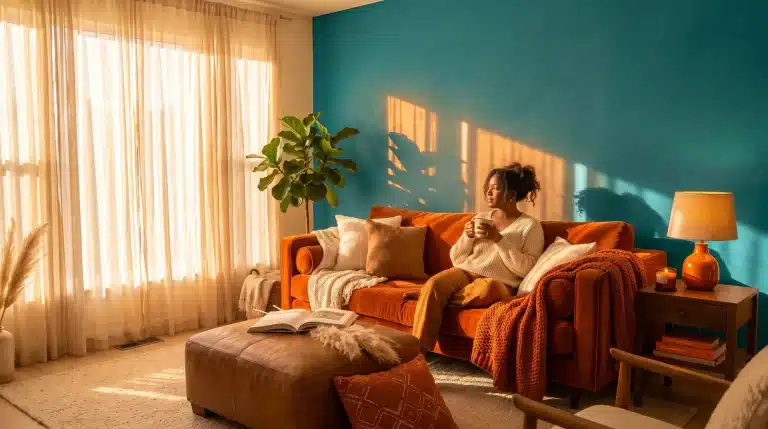
1. Deep Ocean Blue as Your Dominant Accent

Deep ocean blue is a defining shade for living rooms. Interior designer Kara Childress describes it as a color with a “lived-in feel, warm, historical, approachable.”
Use it in proportion: one feature wall behind your sofa or media console works best. Pair with terracotta cushions, warm wood furniture, or creamy white walls.
In small rooms, navy can absorb light, so balance with a large mirror and light flooring. Avoid pairing it with grey and white alone, which can feel cold. Warm neutrals make it inviting.
2. Two-Tone Walls (Color Blocking)

Split a wall horizontally at chair-rail height with a darker shade below and a lighter one above. This two-tone approach is forgiving and adds depth, making narrow rooms feel wider.
Use flat trim or painter’s tape for a clean line. Even two shades of the same color family create subtle contrast without overwhelming the space.
3. Limewash Paint for Wall Texture Without Wallpaper

Limewash is not a paint color. It’s an application technique that leaves organic, cloudy, slightly uneven coverage on the wall, the kind that looks like it took a craftsman three days to do. It actually takes an afternoon.
Brands like Portola Paints sell DIY kits. The process involves applying two coats with a wide brush in circular strokes, slightly wiping back the second coat before it dries.
The result is an old plaster texture that changes appearance with the light, warmer in the morning and more dramatic in the evening.
4. Color Zones in Open Floor Plans

If your living room connects directly to a dining area without a wall separating them, you have one of the most common decorating problems in modern apartments and new builds:
How do you make each area feel distinct without adding a wall?
Color does this for free. Choose a warm terracotta tone for the wall adjacent to your dining table, and a cool slate or deep teal for the seating area.
Even without a partition, your eye reads them as separate rooms. The rug reinforces this: one rug per zone, no overlap.
5. Paint the Ceiling a Darker Shade

Most ceilings are white. White ceilings are fine. But a ceiling painted a shade darker than your walls, even just one step deeper on the same swatch card, creates what designers call a “sky box” effect.
The room feels enclosed in a specific, intentional way rather than just… contained.
This works particularly well in rooms with ceilings 9 feet or taller. Pair it with a hanging pendant light that you want to draw attention to, and suddenly the ceiling itself becomes part of the design.
If you’re nervous about going dark, try it with a muted color. A warm, greige ceiling over cream walls reads as sophisticated without being dramatic.
6. Single-Panel Wallpaper in an Alcove

Full-room wallpaper is expensive, hard to remove, and easy to regret. A single panel, one section of wall between two strips of flat trim, or just the recessed alcove next to a fireplace, costs 80% less and carries none of the commitment.
Right now, large-scale botanical prints and textured grasscloth are the two strongest choices. Grasscloth adds physical texture; botanical prints add movement.
Neither of them dates as quickly as geometric patterns. Install the trim first, paper the section, and the result looks designed rather than like a compromise.
Furniture and Layout
Layout-based living room decor ideas are the most underrated category. The sofa you pick matters less than where you put it. Most rooms are arranged to face the TV.
Most rooms would feel better if they weren’t.
7. Arrange for Conversation, Not Viewing

Arrange seating for conversation, not just TV viewing. Use a U-shaped or circular layout around the coffee table, with the TV off to the side.
This encourages interaction and makes the room inviting. Test with existing furniture before buying anything new.
8. Curved Furniture Silhouettes

Sharp-edged furniture, boxy sofas, rectangular coffee tables, and 90-degree shelving have defined the last decade of modern interiors.
The shift now is toward curves: rounded sofa backs, kidney-shaped coffee tables, arch-back armchairs.
This isn’t about making a room look soft. Curved furniture changes the energy of a space because it doesn’t create hard lines that the eye stops at.
Your gaze moves around the room rather than bouncing between corners. If a full curved sofa feels like too much, start with a rounded coffee table or an arc-back accent chair.
One curved piece in a room of straight lines is actually more effective than an entire room of curves.
9. Low-Profile Furniture to Keep Sightlines Open

Low-profile sofas have a seat height of 16–17 inches, with exposed legs that keep the floor visible.
In rooms with 8-foot ceilings, which are most apartments and entry-level homes, this makes the room feel taller because you can see more of the floor and the walls at once.
Pair a low sofa with a low media console (or a wall-mounted TV), and you suddenly have a room that feels twice the size.
The open space underneath the furniture reads as breathing room rather than wasted space.
10. Rug Sizing: The One Rule Most People Get Wrong

The number-one layout mistake in living rooms is a rug that’s too small. A 5×8 rug under a 3-seat sofa and two armchairs looks like a bath mat in the middle of a room.
Here’s how it actually works: in a standard seating arrangement, all front legs of every piece of furniture should sit on the rug. Not floating in the middle.
Not pushed to the back edge. Front legs on. For a full sofa-plus-chairs setup, you usually need a 9×12 or, at a minimum, an 8×10.
11. Modular Sectionals That Reconfigure

A traditional sectional is a commitment to a specific room shape, to a specific apartment size, to a specific layout. Modular sectionals solve this.
Brands like IKEA’s Söderhamn line and Burrow sell sectionals in individual seat units that connect with clips or brackets.
You can add a unit when you have more space, remove one when you move to a smaller place, and rearrange the whole thing when you want the room to feel different.
They ship flat, which matters more than most people admit when you’re on the third floor of a walkup building.
12. Nesting Tables Instead of a Single Coffee Table

Nesting tables replace a single coffee table with a set of flexible surfaces. They spread out when needed, tuck together to save space, and provide extra spots for drinks or decor.
Aim for 4–6 inch height differences for visual interest.
Lighting
Lighting is where most living room decor ideas fall short. Most living rooms have one light source: the overhead fixture.
This is why most living rooms feel flat, slightly clinical, and completely different from the spaces you see in design photos. Those spaces have three types of light running simultaneously.
13. The Three-Layer Lighting System

Ambient light: your overhead fixture, recessed lights, or ceiling fan with a light kit. This is what most rooms have and nothing else.
Task light: a floor lamp next to a reading chair, a table lamp beside the sofa, a swing-arm wall sconce over a side table. This is the layer most living rooms are missing.
Accent light: LED strips behind a media console, a picture light over a large print, candlelight on a console table. This creates depth by illuminating surfaces rather than the whole room.
Run all three at once, and your living room looks like a room in a design magazine. Run just the overhead, and it looks like a waiting area. The difference costs one floor lamp and a power strip.
14. Sculptural Floor Lamps as Both Light and Art

An arc floor lamp with a long, curved arm extending from a weighted base solves two problems at once.
It provides a task light over a sofa or chair without requiring a side table to hold a lamp, and it fills a corner with visual presence without adding shelving or furniture.
The mushroom lamp (a wide, low dome shade on a slender stem) is currently one of the most widely searched lamp styles in the US.
Brass-finished arc lamps in a Castiglioni-inspired style photograph extremely well and pair with almost any color palette. Either one reads as a considered choice rather than a functional afterthought.
15. Bias Lighting Behind the TV

Bias lighting behind the TV uses warm white LED strips facing the wall, not the viewer. It reduces eye strain, adds depth to the TV wall, and creates a polished, designed look.
Avoid multicolor RGB strips for a living room.
16. Candle Clusters as Scent and Light

Candle clusters add both lighting and subtle scent. Group three to five candles of varying heights on a tray to create flickering light and a gentle aroma.
Choose scents like amber, sandalwood, eucalyptus, or unscented, depending on your room’s style, to make the space feel lived-in and inviting.
17. Smart Bulbs for Mood Without New Fixtures

Smart bulbs let you change a room’s lighting and mood without new fixtures.
Shift from bright daylight to warm amber throughout the day using app-controlled bulbs in existing lamps. Scheduling automates the effect, creating a dynamic, inviting space easily.
Textures, Textiles, and Soft Furnishings
Hard surfaces give a room its structure, defining boundaries and architectural lines. Soft furnishings, rugs, cushions, throws, and upholstered furniture bring warmth, texture, and personality.
They invite people to linger, create comfort, and balance the rigidity of hard materials. Together, they transform a space from functional to welcoming, making it both visually appealing and lived-in.
18. The Pillow Formula for a Sofa That Looks Styled

The perfect pillow arrangement makes a sofa look intentionally styled. For a three-seat sofa: two large square pillows at the back corners, two medium accent pillows in front, and one lumbar pillow in the center.
Mix solids, textures, and subtle patterns for a curated look. For a loveseat, use three appropriately sized pillows.
19. Boucle Fabric

Boucle is a looped-yarn fabric with a pilled, slightly bumpy texture. A boucle sofa or armchair looks expensive in photographs, hides everyday wear better than velvet or smooth linen, and doesn’t show pet hair the way darker fabrics do.
It’s been the dominant upholstery texture in design-forward rooms for the past two years, and there’s no sign of that slowing.
20. Layering Two Rugs

Layer two rugs for style and depth: a neutral flat-weave base rug anchors the space, while a smaller patterned or textured rug on top adds personality.
The top rug looks intentional and can be your investment piece, while the base can be budget-friendly.
21. Weighted Throws as Functional Decor

Weighted throws add both style and function. Folded over a sofa arm, they look cozy while providing warmth, comfort, and stress relief.
Chunky-knit or waffle-weave throws in natural fibers stay put and photograph beautifully.
22. Hang Curtains

Hang curtain rods 4–6 inches from the ceiling to make windows appear taller and more architectural.
Curtains should either graze the floor or puddle slightly; avoid mid-wall or floating lengths, which look awkward.
Plants, Nature, and Biophilic Design
Plant-based living room decor offers one of the best returns on investment. Biophilic design, which brings natural materials and living elements into a room, has dominated design conversations.
Research shows measurable reductions in stress when people spend time in rooms with natural materials and plants. You don’t need to turn your living room into a greenhouse to enjoy the benefits.
23. The Plant Trio Formula

Use the Plant Trio Formula for layered greenery: one tall floor plant, one medium shelf plant, and one small tabletop plant.
This creates visual height variation and keeps the living room lively. Match each plant to the light it needs for healthy growth.
24. Dried Botanicals for Low-Maintenance Texture

Dried botanicals like pampas grass, eucalyptus, cotton stems, and lunaria add texture with zero maintenance.
Perfect for corners with low light, they bring a quiet, earthy quality to neutral palettes. Choose natural bleached versions over dyed ones for a realistic look.
25. Preserved Moss Panels as Living Wall Art

Preserved moss panels create low-maintenance living wall art. No watering, light, or soil needed.
Framed or custom-cut, they add dense, soft texture and visual complexity, working like art while blending effortlessly with your living room decor.
26. Terracotta Vessels and Wabi-Sabi Objects

Terracotta vessels and wabi-sabi objects bring imperfection and warmth to living rooms.
Handmade pots, rough-edged bowls, and raw wooden trays are durable, versatile, and timeless, complementing Japandi, boho, or minimalist spaces without clashing.
Storage, Display, and Organization as Decor
Storage-focused living room decor ideas get ignored because they sound like housekeeping advice. They’re not.
A room can have perfect furniture and perfect lighting and still feel chaotic if the surface objects aren’t handled. Clutter reads as stress, even when you’re not consciously noticing it.
27. Shelf Styling with Odd Numbers

Style shelves using odd numbers for visual balance. Group objects in threes or fives: one tall item, one medium, one small.
Mix materials, natural, reflective, and organic, and leave some negative space to keep the arrangement curated and airy.
28. The Tray Method for Coffee Table Clutter

Use a tray to organize coffee table items and keep clutter contained. Include a candle, small plant, remote, and coasters inside the tray, leaving the rest of the table minimal.
Match the tray material to your room’s style for a cohesive look.
29. Bookshelf Color Blocking

Organize books by color for a styled, visual impact. Group spines in monochromatic or gradient sections, mix in small art objects and plants, and leave a few books with pages facing out for texture.
This quick, cost-free method transforms a bookshelf into a curated feature.
30. Upholstered Storage Ottoman

An upholstered storage ottoman doubles as a coffee table and extra seating while hiding blankets and remotes.
Choose 18–20 inches tall, about two-thirds of your sofa’s length, in durable fabrics like performance velvet or tight boucle.
Add a tray on top (see idea 28), and it functions like a proper surface rather than just a padded block.
31. Handling Tech and Cable Clutter

Tidy up tech and cables to keep your living room looking stylish. Use a cable raceway to hide TV wires, a ventilated box for power strips, and decorative covers for routers.
The same console looks intentional instead of cluttered. The result is the same TV, the same console, and a room where the tech looks considered rather than tolerated.
Niche, Overlooked, and Renter-Specific Ideas
These are the angles that almost no mainstream living room decor blog covers. Each one serves a real need that gets ignored.
32. Acoustic Panels as Wall Art

Fabric-wrapped acoustic panels reduce echo and improve sound in open-plan living rooms while doubling as wall art.
Arch, hexagon, or circular panels add visual softness and function, making TVs, music, and conversation sound better.
33. Pet-Friendly Decor That Doesn’t Look Like It

Pet-friendly decor can be stylish. Use durable fabrics like performance velvet or microfiber, washable slipcovers, and place a styled pet bed in a corner.
This makes pets part of the design instead of something the room has to survive.
34. Renter-Friendly Walls Without Drilling

Renter-friendly walls can look stylish without drilling. Use removable strips for small and medium frames, peel-and-stick wallpaper for a single panel, and lean large artwork against the wall.
Minimal-hardware acoustic panels also add style and function with no damage.
Acoustic slat wall panels (see idea 32) typically mount with minimal hardware or adhesive tabs and cause minimal damage on removal.
35. Japandi Design Not Just “Minimalism With Plants.”

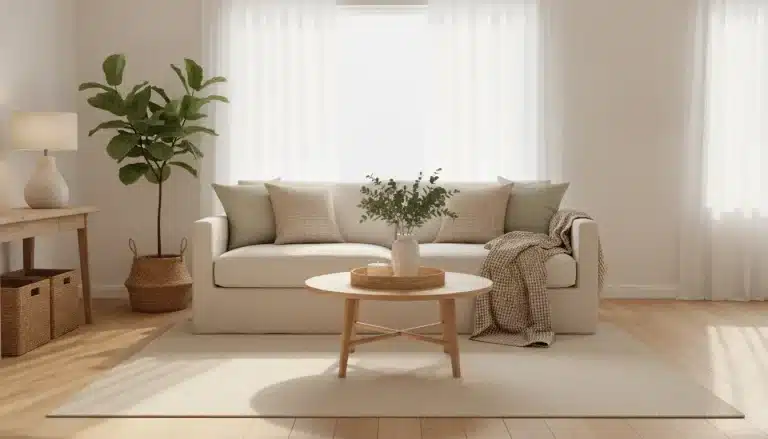
Japandi combines Japanese and Scandinavian design principles: low-profile furniture, natural light, handcrafted objects, and purposeful minimalism.
A Japandi living room features a low wooden sofa with linen upholstery, a single statement plant, warm, neutral walls, and only functional or personal decor, creating a curated, serene space.
36. Quiet Luxury in Interiors

Quiet luxury in interiors focuses on material quality over logos or trends. Think cashmere throws, marble trays, linen curtains, and unbranded furniture.
The result is a room that feels subtly expensive and refined without shouting for attention.
37. One Vintage or Thrifted Anchor Piece

Use one vintage or thrifted anchor piece to set the tone for a room.
A distinctive side table, lamp, or framed painting becomes a reference point for contemporary decor, adding uniqueness, sustainability, and style without high cost.
Conclusion
Decorating a living room isn’t a one-day project with a finish line. The spaces that feel genuinely good to be in got there through small, deliberate decisions made over time a lamp added here, a rug swapped out there, a wall repainted after six months of living with the wrong color.
These 37 living room decor ideas give you a starting point, not a checklist to complete in order. Pick the one that solves your biggest current problem. Live with it. Then pick the next one.
The goal was never a room that looks like a showroom. It was a room that works for how you actually live with your dog on the sofa, your books on the shelf, your candles on the tray. That room is worth building slowly.