Why Can’t You Wear White After Labor Day?

You have probably followed this rule at least a little. Maybe you thought twice before reaching for white jeans in October. Maybe someone in your family said it so often that it just became fact.
The thing is, most people who follow the no-white-after-Labor-Day rule have no idea where it actually came from.
The short version you usually hear is something about rich people and summer.
The real story is messier than that. Honestly, more interesting too.
It was essentially a class war disguised as fashion etiquette, using arbitrary style rules to separate “old money” from newcomers while turning Labor Day into a social deadline.
This post covers why you can’t wear white after Labor Day, where the rule originated, and whether it still matters today.
What is the Rule, Exactly?
The traditional rule covers white clothing between Labor Day (the first Monday in September) and Memorial Day in late May. White dresses, white trousers, white shoes.
The rule is fuzzier on accessories and has always been fuzzier on men than on women.
No fashion authority created it. No designer wrote it down.
It spread entirely through social enforcement, repetition, and the kind of confidence that comes from people who are very sure they know what is correct.
By the mid-20th century, it had become so widely accepted that Emily Post, the definitive American etiquette authority of the era, included it in her books as a genuine guideline.
That gave it a patina of official-ness it had never actually earned.
The Three Theories Behind the Rule
Most articles on this topic pick one theory, present it as settled history, and move on.
The truth is, there are three credible explanations for where this rule came from, and they are not mutually exclusive. They probably all contributed.
Theory 1: The Class War Theory

This is the most widely cited origin and the most likely one.
During the Gilded Age, roughly the 1870s to the early 1900s, America’s industrial boom created a large number of newly wealthy people. Railroad money. Mining money. Finance money.
Old Money families, the ones whose wealth went back generations, found this deeply aggravating. They could not stop the new arrivals from being rich.
But they could make being rich feel inadequate by creating an elaborate invisible rulebook that the newcomers had not been raised with.
White clothing became part of that rulebook. In summer, white was what you wore at your Newport estate or your coastal cottage.
It meant you had leisure time, staff to keep the clothes clean, and the means to spend the summer entirely away from the city. It was a status signal so obvious it barely needed explanation.
The trap came when the social season ended, and Old Money returned to the city. A socially fluent person packed away the whites.
A newcomer, unaware of the rule, might not. And just like that, without a word being said, everyone who knew the code knew who was faking it.
Marie Claire put it plainly: the rule was “one of the subtle jabs the old money crowd used to distinguish themselves from the nouveau riche.”
This was fashion being used as a weapon. Which, if you think about it, is not entirely different from how fashion has always worked.
Theory 2: The Practicality Theory
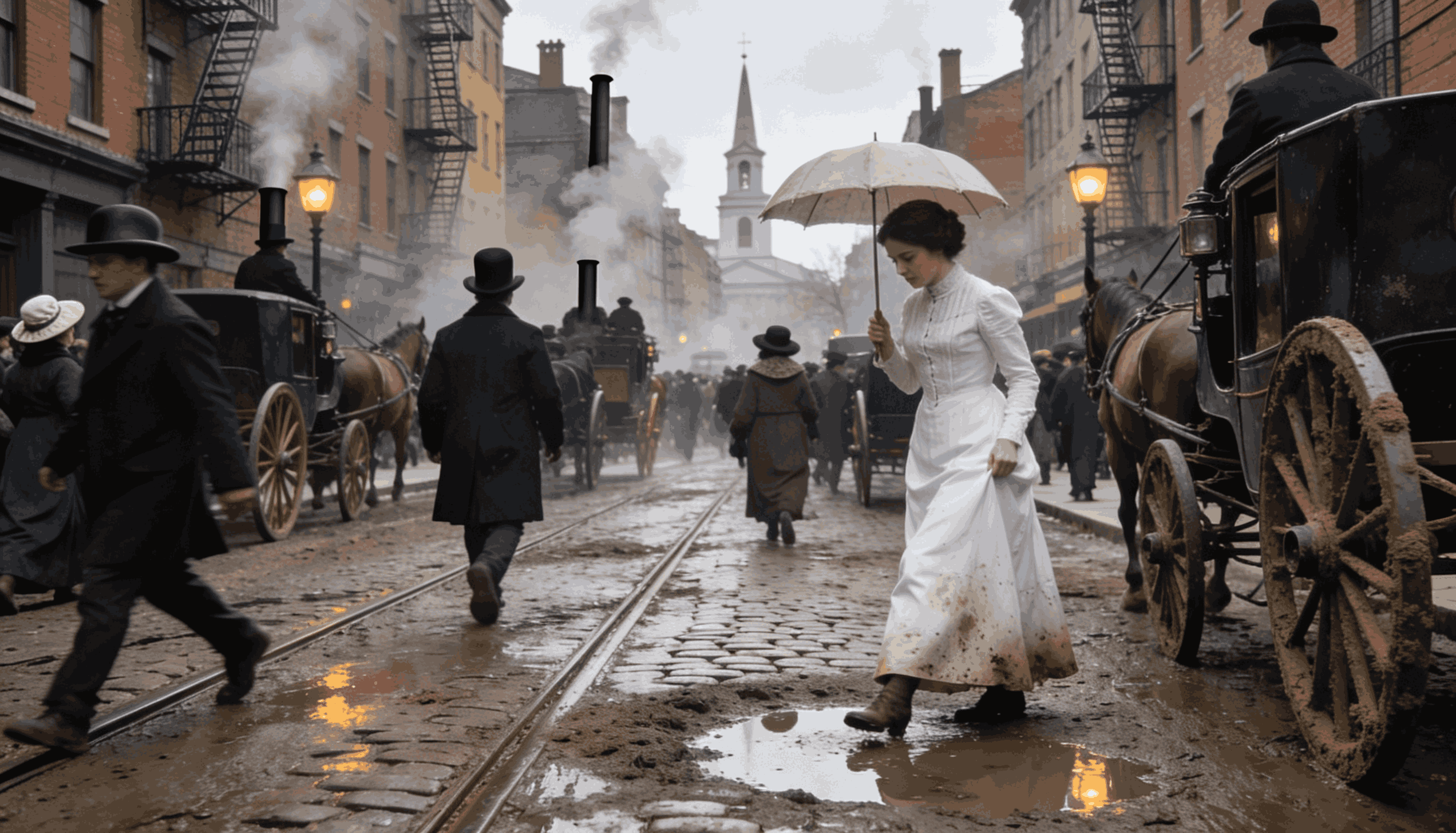
The second explanation has less drama but more common sense.
Before paved streets, before cars, before air conditioning, wearing white clothing in a city like New York in the fall was a bad idea.
Some articles describe the streets of New York City at the time as dirt, “covered in horse excrement, as well as rotting garbage.”
A white dress or white trousers on those streets would not stay white long. Switching to darker, heavier fabrics when the summer leisure season ended was not a social rule.
It was just obvious. You did not wear white in the muddy city because you could not.
This theory explains how the habit started, but not why it persisted well into the 20th century, long after streets were paved and dry cleaning existed.
That persistence probably has more to do with the other two theories.
Theory 3: The Fashion Media Theory

By the 1930s and 1940s, American fashion media was reinforcing the rule through sheer editorial habit.
Vogue and Harper’s Bazaar were based in New York, which has four distinct seasons. Every September, they ran dark, rich-toned fall wardrobes. Every May, the whites came back.
The assumption was that their readers lived by the same seasonal logic. And even if they lived in Florida or Southern California, they still took their style cues from Fashion Avenue.
The result was that a social habit born in the Gilded Age got legitimized by decades of fashion editorial, spreading from a narrow elite code into something the general public simply accepted as true.
Why Labor Day Specifically?
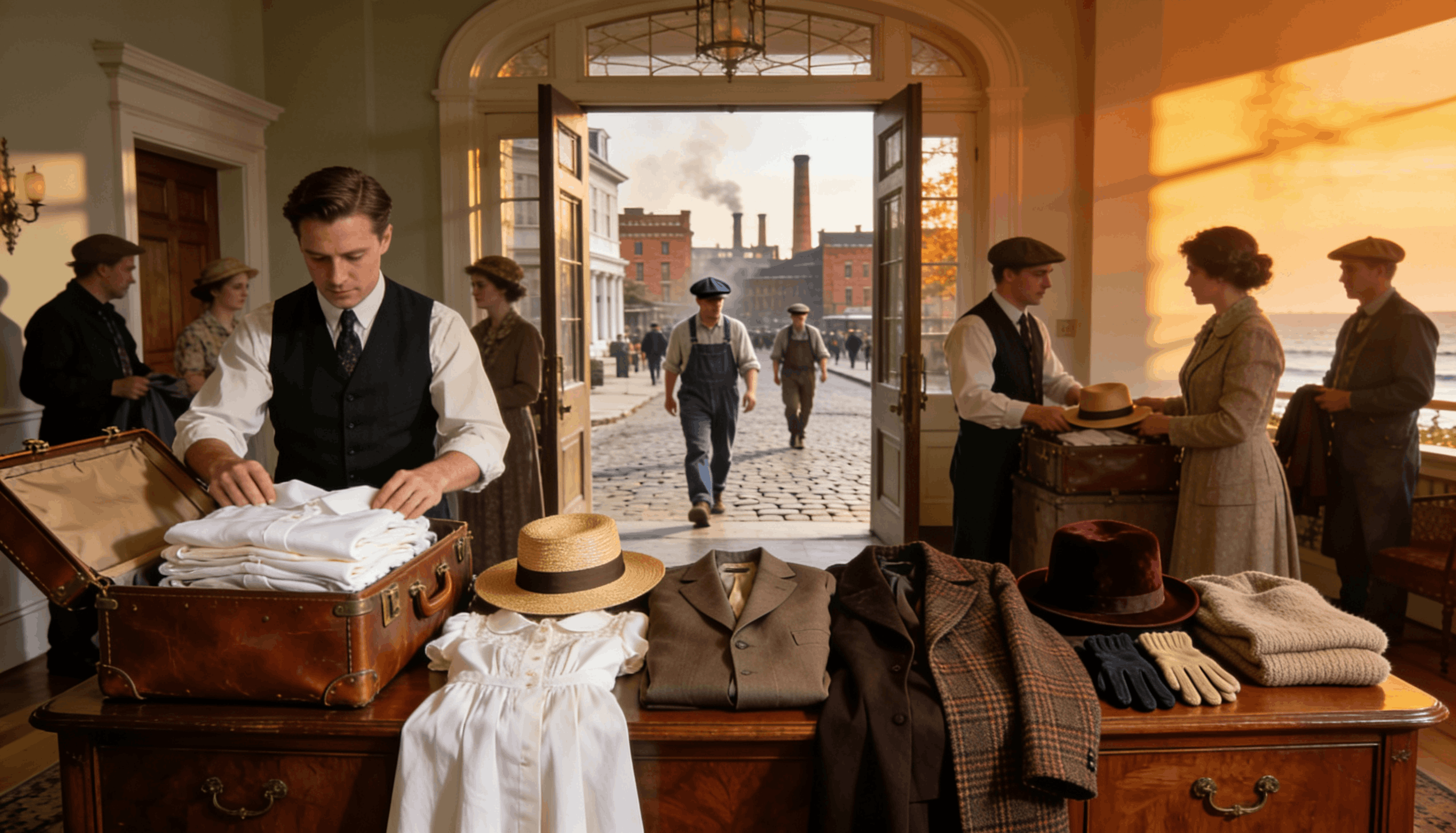
This part does not get nearly enough attention, and it should.
Labor Day became a federal holiday in 1894.
It was established to recognize the labor movement: the workers, the unions, and the people who built the country’s industrial infrastructure, and wanted acknowledgment for it.
A holiday for the working class, in other words.
For Old Money, it had an entirely different meaning. Labor Day marked the end of the summer social season. The parties at Newport wound down. The cottages closed.
Families returned to their city townhouses and their formal autumn routines.
So a holiday created to honor workers became the cultural deadline used by the wealthy elite to enforce a dress code that originally served to separate themselves from those workers.
The irony is almost too on-the-nose. A day for laborers became the day that told you whether you were refined enough to know you should stop wearing summer whites.
That is the rule’s actual foundation. Worth knowing, even if it does not change what you put on in September.
Who Broke the Rule and When
The rule began to lose serious ground in the 1920s, and it quickly fell apart once the right people stopped following it.
- Coco Chanel wore white year-round throughout the 1920s, intentionally rejecting seasonal fashion rules and making white clothing a permanent signature in luxury fashion circles.
- Audrey Hepburn regularly wore white shirts and dresses during autumn and winter, turning year-round white outfits into a timeless part of her understated personal style.
- Marilyn Monroe appeared publicly in white well beyond summer, helping normalize the color across seasons through films, photography, and celebrity fashion influence.
- Tom Wolfe wore his iconic white suit in every season from the 1960s through 2018, transforming white clothing into a recognizable personal trademark rather than seasonal fashion.
And then there is the Emily Post Institute reversal, which should have definitively ended the conversation. Emily Post’s writing gave the rule legitimacy in the realm of etiquette.
Her institute has since walked it back entirely. Their current position is straightforward: “Today, seasonal fashion guidelines are based on the weight of the fabric, not the color.”
The authority that made the rule respectable officially retired it. That is the end of the argument, technically.
So, Why Does the Rule Still Feel Real?

If the rule is officially dead, dismantled by etiquette authorities, fashion editors, and style icons alike, why do so many people still hesitate when they reach for a white piece in September?
Why does it persist?
Christy Crutsinger, a professor of merchandising at the University of North Texas, gave the most honest answer: “People think it, say it, but don’t abide by it.”
The rule exists as a reflex now, not a belief. It gets passed down through families, mother to daughter, the way a lot of style anxiety gets transmitted, long after anyone remembers why it started.
There is also something worth acknowledging about the seasonal shift itself.
Putting away summer clothes and moving to darker, heavier fabrics in autumn is a real sensory transition that many people enjoy.
The ritual of it has value separate from its classist origins. The rule became a container for that instinct, which is probably why it persisted after the original rationale became indefensible.
And honestly? Some social contexts still carry it.
A formal event, a traditional family gathering, a setting where the hosts hold old-fashioned ideas about propriety.
Knowing the rule exists is not the same as being obligated to follow it, but it is useful information about where you are and who you are with.
Conclusion
If you want the honest answer to why you cannot wear white after Labor Day, it is this: you can. You always could.
The rule was a social control mechanism dressed up as a style guideline, and it was never particularly convincing in either role.
It started as a way for old money to identify and exclude new money. It spread through fashion media that assumed everyone lived by a New York seasonal calendar.
The rule survived because people repeated it without questioning its origins, and because the seasonal habit still reflected the practicality of dressing differently as the weather changed.
Wear what fits the season in terms of weight and fabric. Ivory wool in November is not a fashion crime.
A white linen dress in September might feel off, but not because it is after Labor Day. Because linen is a summer fabric, and you are wearing it in autumn.
The calendar never had anything to do with it.
Do you still follow the rule? Be honest. Leave a comment. It is a more common hesitation than people admit.