How to Clean a Fabric Couch Easily at Home?

That mystery stain on your fabric couch won’t clean itself, and the longer you wait, the worse it gets.
Your couch sees more daily action than almost any other piece of furniture in your home.
Spilled coffee, pet hair, dusty cushions, the occasional snack disaster, it all adds up. And while fabric couches are incredibly comfortable, they can feel like a nightmare to clean if you don’t know where to start.
The good news? Knowing how to clean a fabric couch is simpler than most people think.
With the right tools, the correct approach, and a little patience, you can get your couch looking fresh again without a trip to the dry cleaner or an expensive professional service.
Let’s get into it.
What You Need Before Cleaning a Fabric Couch
Before you start, gather everything you need. It makes the process smoother and avoids mid-clean interruptions. Having the wrong tool halfway through a cleaning session can make things messier than they need to be.
| Category | Items |
|---|---|
| Essential Tools |
Vacuum with upholstery attachment Soft-Bristle Brush Microfiber Cloths Spray Bottle Bucket |
| DIY Cleaning Solutions |
Dish Soap + Water White Vinegar + Water Baking soda paste |
| Store-Bought Solutions |
Fabric Upholstery Cleaner Dry-Cleaning Solvent Enzyme-based stain remover |
Keep these within reach before you begin so you won’t have to stop halfway through.
If you have pets or kids, enzyme-based cleaners are especially worth keeping on hand as they break down organic stains more effectively than general-purpose solutions.
Check the Couch Cleaning Code First
Before reaching for any cleaner, check your couch’s care tag. Using the wrong product can do more harm than good, and in some cases, it can permanently damage the fabric.
| Code | Meaning |
|---|---|
| W | Water-based cleaners only |
| S | Solvent/dry-cleaning solution only |
| WS | Either water or solvent-based cleaners |
| X | Vacuum only, no liquid cleaners |
Where to Find the Cleaning Code?
It is typically found on a tag under the cushions or on the couch frame. If the tag is missing or faded, check the manufacturer’s website or the product manual.
When in doubt, always do a patch test on a hidden area before applying any cleaner to the main surface.
How to Clean a Fabric Couch?

Follow these five steps to clean your fabric couch safely and effectively without causing any damage.
Step 1: Vacuum the Couch Thoroughly
Start by removing all loose debris. Use a vacuum with an upholstery attachment to cover the entire surface, including seats, back, armrests, and sides.
A crevice tool helps reach corners and seams where crumbs and dust tend to collect. Don’t rush this step; the more thoroughly you vacuum, the easier the rest of the cleaning process becomes.
Step 2: Spot-Treat Fresh Stains
Act quickly on fresh stains. Blot with a clean dry cloth to absorb as much of the spill as possible. Once the excess liquid is lifted, apply the appropriate cleaning solution based on your couch’s code and gently dab from the outer edge inward to prevent spreading.
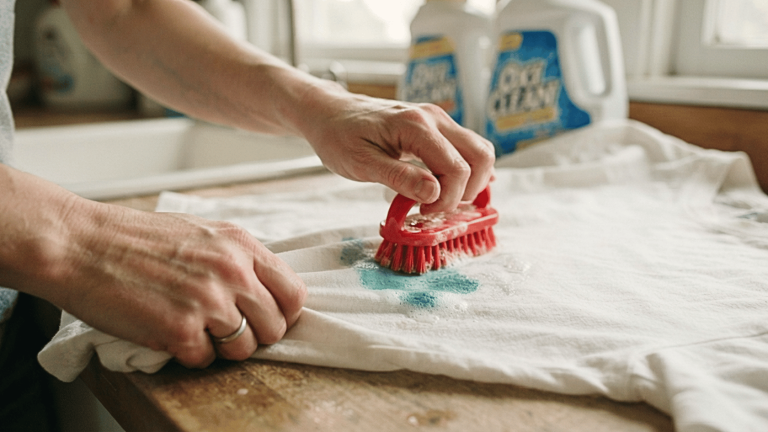
For older or dried stains, loosen the residue with a soft brush before applying the solution, and let it sit for a minute or two before blotting.
Step 3: Clean the Entire Surface
Work in small sections to keep control of moisture. Apply your chosen cleaner lightly, then use a soft-bristle brush or a microfiber cloth with gentle circular motions.
Avoid saturating the fabric as light agitation is all that’s needed to lift dirt without damaging the fibers. Moving section by section also ensures you don’t miss any spots and helps the fabric dry more evenly.
Step 4: Remove Cleaning Residue
Go over each section with a lightly damp cloth or a machine extractor to deep-clean and lift any remaining soap or solution.
Residue left on fabric can attract more dirt over time and leave the surface feeling stiff, so this step is just as important as the cleaning itself. A second pass with a dry microfiber cloth helps pick up any last traces.
Step 5: Dry the Couch Properly
Press dry towels onto damp areas to absorb moisture, then allow the couch to air dry fully. Open windows or use a fan to improve airflow.
Avoid sitting on it until completely dry to prevent moisture buildup and fabric distortion. In humid conditions, a dehumidifier nearby can speed up the drying process significantly.
Video Tutorial
Special thanks to Clean That Up for providing valuable insights in their video, which I referenced while creating this guide.
Common Mistakes to Avoid When Cleaning a Fabric Couch
Small mistakes during cleaning can leave your couch looking worse than before. Here’s what to watch out for.
- Scrubbing instead of blotting: This spreads the stain deeper into the fabric fibers and can cause permanent discoloration
- Using too much water: Over-wetting can cause watermarks, shrinkage, or mold beneath the cushions
- Skipping the vacuuming step: Cleaning over loose dirt pushes grime further into the fabric and makes stains harder to remove
- Ignoring the cleaning code: Using the wrong solution can permanently discolor or damage the upholstery
- Not testing the cleaner first: Always do a patch test on a hidden spot to make sure the product doesn’t affect the fabric color or texture
How Often Should You Clean a Fabric Couch?
Staying on top of cleaning doesn’t take much effort. It’s all about building a simple routine that prevents dirt and stains from building up in the first place.
| Frequency | Task |
|---|---|
| Weekly | Vacuum cushions, armrests, and back; fluff and rotate cushions |
| Monthly | Spot-treat stains, deodorize with baking soda, and wipe down the frame |
| Every 6–12 Months | Full deep clean using an appropriate cleaner or professional service |
If you have pets or young children, consider bumping up the deep clean to every three to four months. High-traffic couches accumulate bacteria, allergens, and odors faster than you might expect.
Conclusion
Cleaning a fabric couch doesn’t have to feel overwhelming. Once you know your couch’s cleaning code, have the right supplies ready, and follow a simple step-by-step process, the whole thing becomes surprisingly manageable.
The key is consistency. A quick weekly vacuum, the occasional spot treatment, and a deep clean every few months will keep your couch looking good and smelling fresh for years to come.
Regular upkeep also extends the life of the fabric, saving you money in the long run. Don’t wait for a big stain or a bad smell to remind you.
So go ahead, flip that cushion, check the tag, and give your couch the care it deserves.
Got a stubborn stain that won’t budge or questions about a specific fabric type? Drop them in the comments, and we’d love to help you figure it out.