Average Bathroom Size: Every Type Explained

Most people never think about bathroom size until they are already mid-renovation, standing in a half-demolished room, wondering why nothing fits.
Here is the thing. The size of your bathroom determines every decision that comes after. It decides which fixtures work, how you move through the space, and whether the layout feels tight or just right.
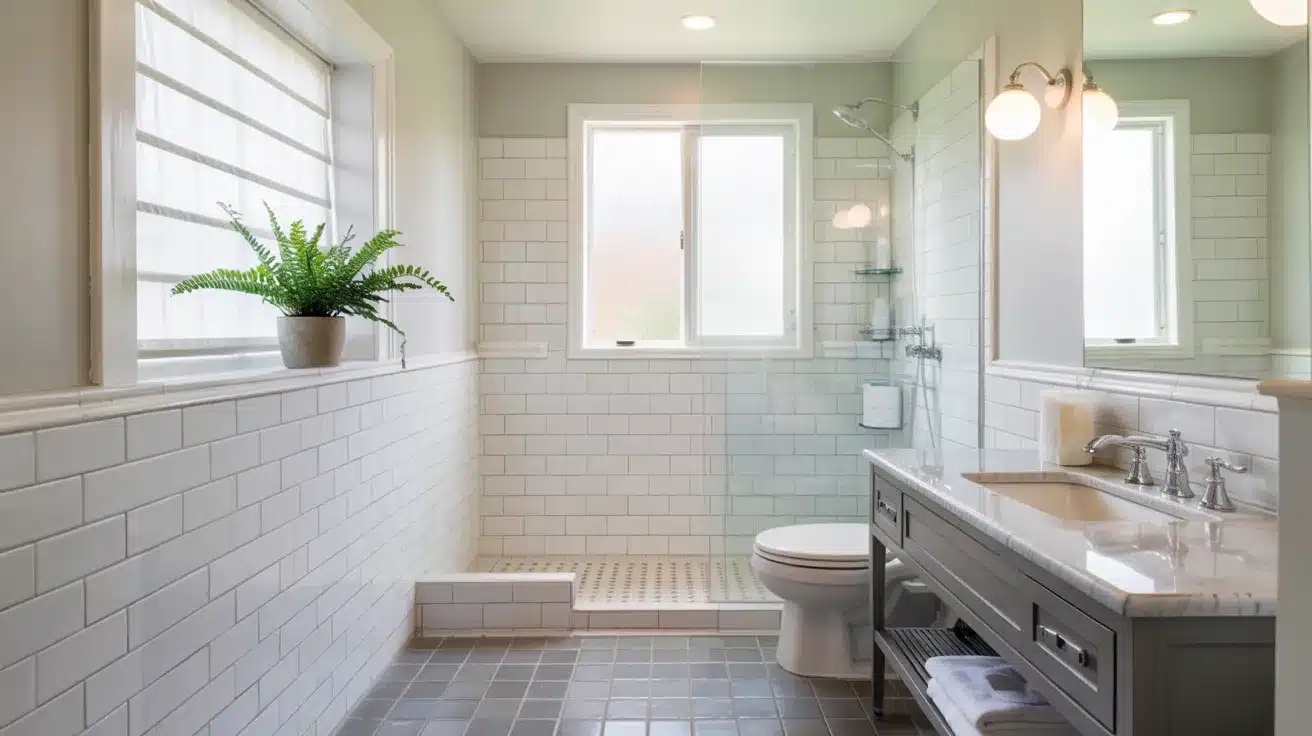
The average bathroom size in the US is about 40 square feet for a full bath. But this number shifts quite a bit depending on the type of bathroom you have.
This guide covers standard dimensions for every bathroom type, fixture sizes, and practical layout advice to help you plan with confidence.
What Is the Average Bathroom Size in the US?
The average bathroom size in the US sits at about 40 square feet for a full bath, but that number tells only part of the story.
Bathroom dimensions vary based on home size, age, and the type of bathroom being measured. Apartments and older homes tend to run smaller, while newer builds offer significantly more room.
Here is a quick breakdown by home type:
- Apartments and older homes: 36–40 sq ft
- Standard family homes: 40–60 sq ft
- Master bathrooms in newer homes: 60–160 sq ft
- Half bathrooms (powder rooms): 15–20 sq ft
These are baselines, not strict rules. Your actual space may fall slightly above or below, depending on your floor plan.
Types of Bathrooms and Their Standard Sizes
Not all bathrooms are built the same. Each type serves a different purpose, and that purpose shapes the standard dimensions you can expect to work with.
1. Full Bathroom
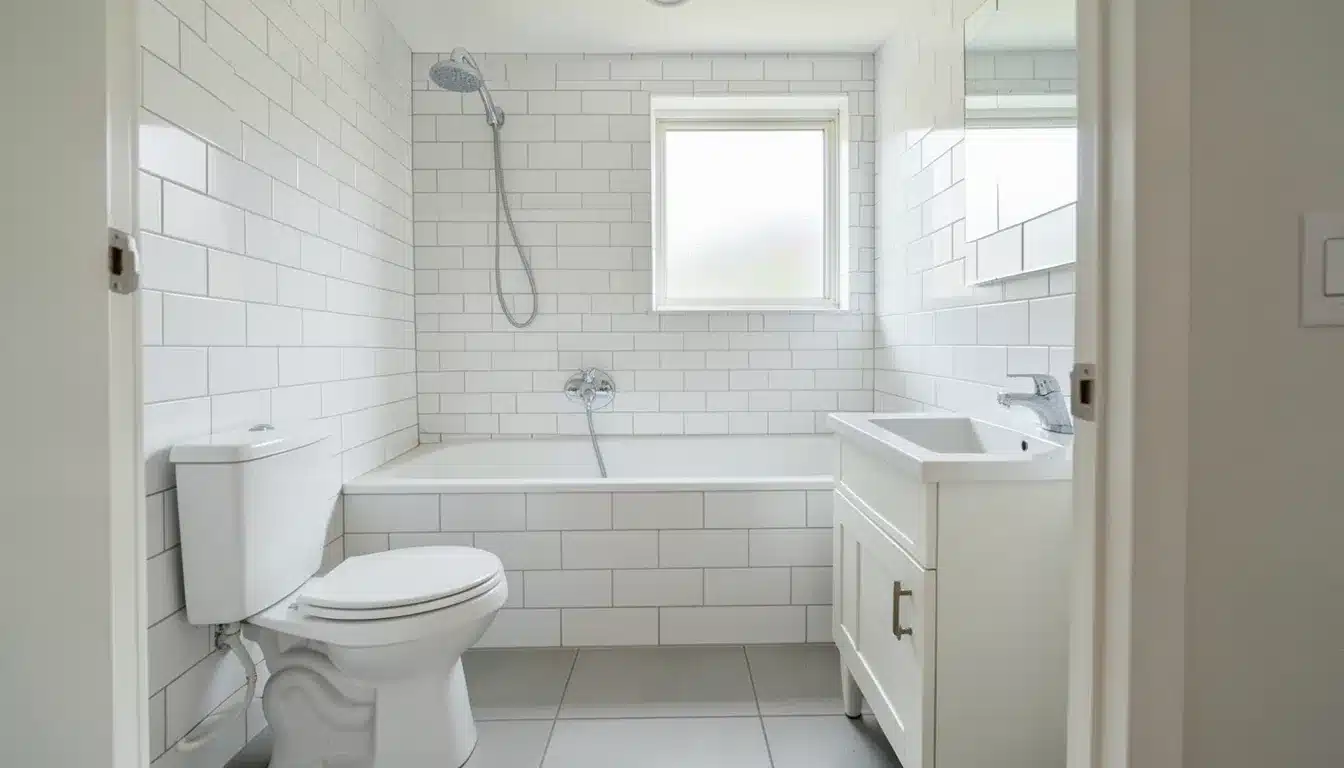
A full bathroom includes all four fixtures: a toilet, sink, shower, and bathtub. The most common layout is 5 ft x 8 ft (40 sq ft), which fits all standard fixtures at a functional minimum.
A 6 ft x 10 ft layout (60 sq ft) provides noticeably more room for movement and storage.
2. Master Bathroom
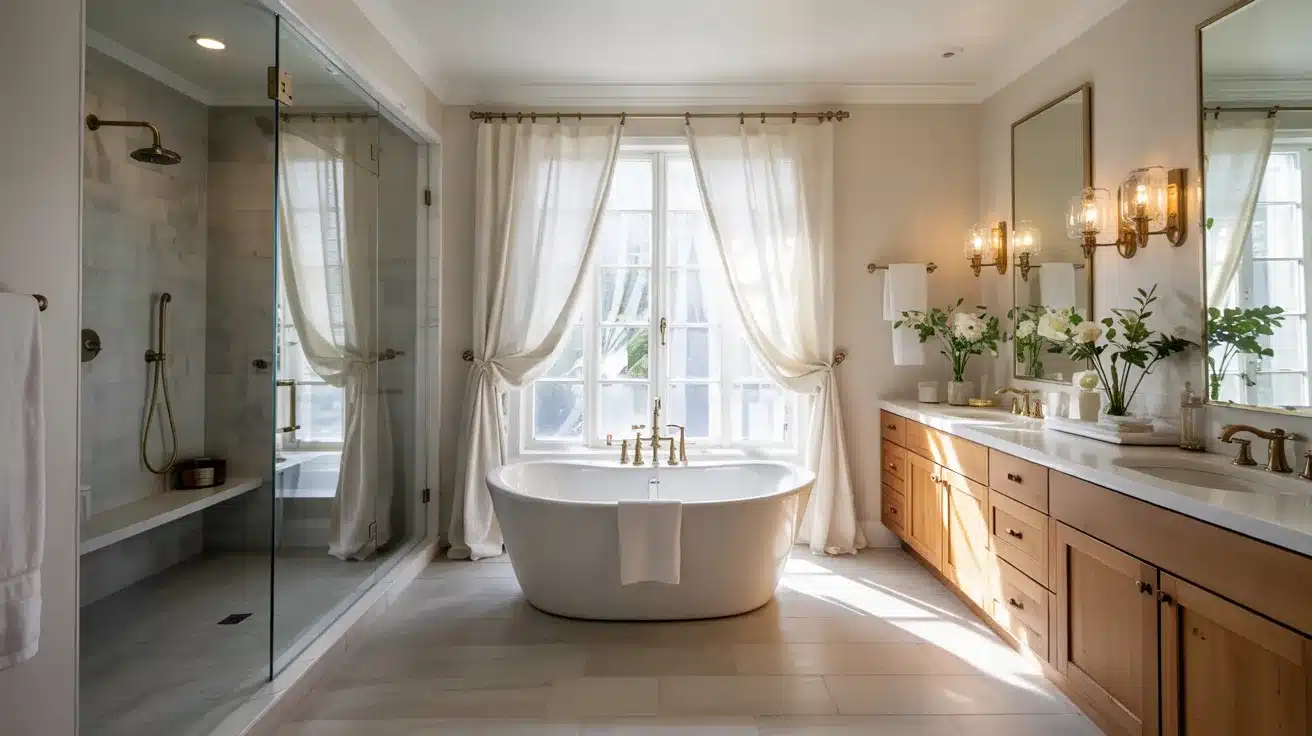
The master bathroom is the largest and most private bathroom in the home, connected directly to the main bedroom.
Older homes typically place it at 40–60 sq ft, while newer construction ranges from 60 to 160 sq ft. Most master bathrooms start at a 10 ft x 10 ft footprint and expand from there based on features.
3. Three-Quarter Bathroom
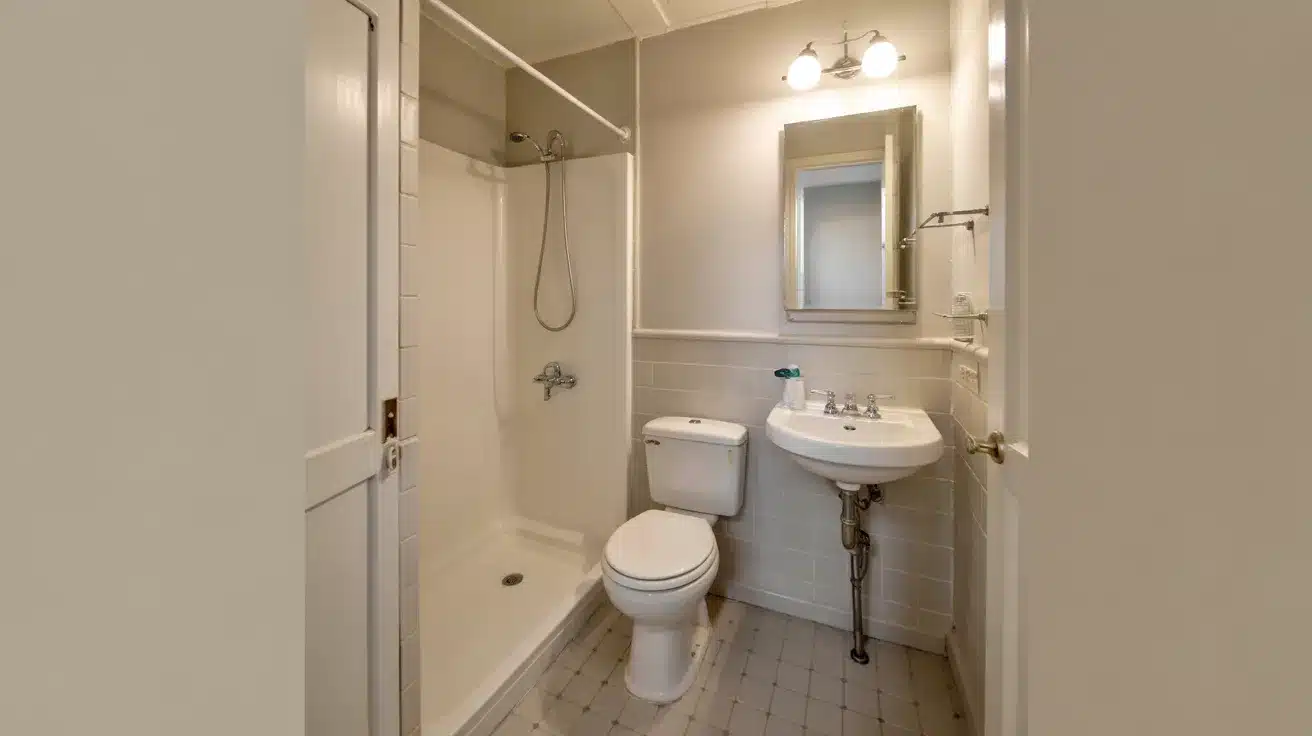
A three-quarter bathroom has a toilet, sink, and shower, but no bathtub. The average size is 35–40 sq ft, with a 5 ft x 7 ft layout being the most common. It functions well as a secondary or guest bathroom in homes with limited space.
4. Half Bathroom (Powder Room)
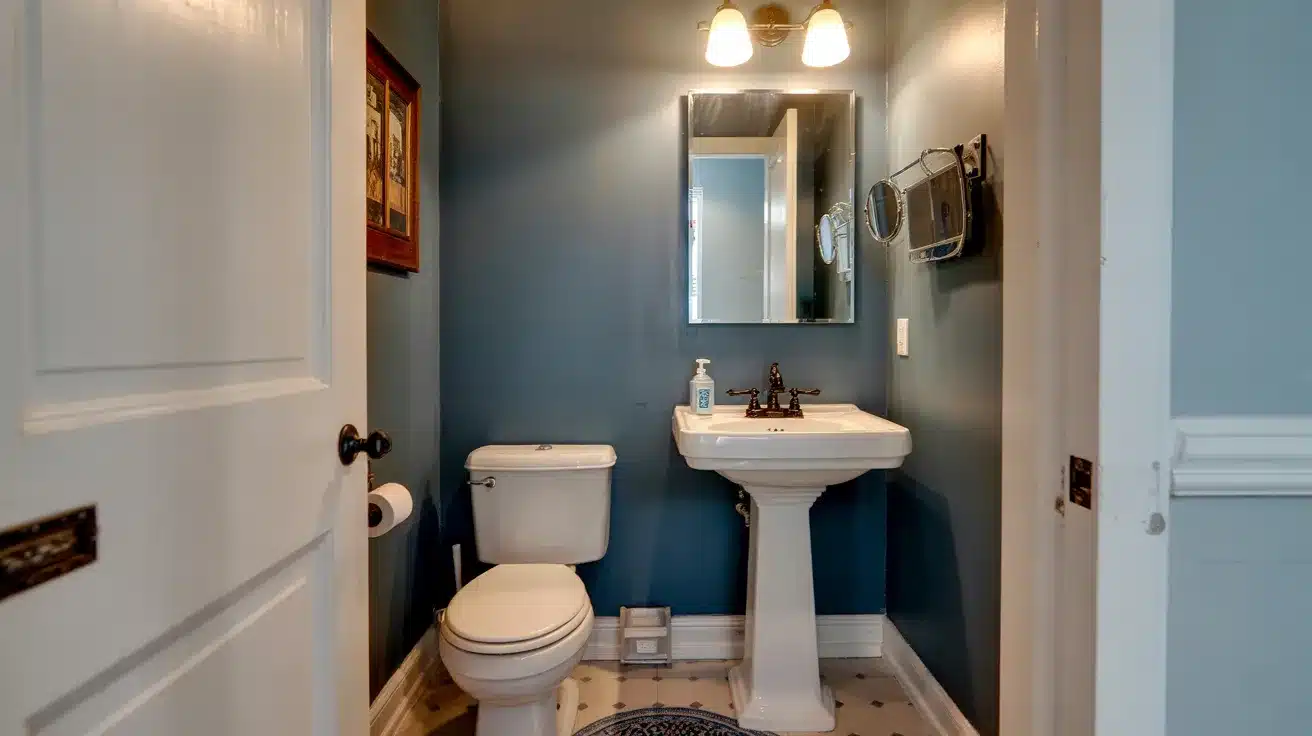
A half bathroom holds only a toilet and a sink, making it the most compact option in any home. Average size runs 18–20 sq ft, with a minimum of 15 sq ft (3 ft x 5 ft) to meet basic building standards.
These are most often placed near living areas for guest access without requiring them to use the main bathroom.
5. Quarter Bathroom
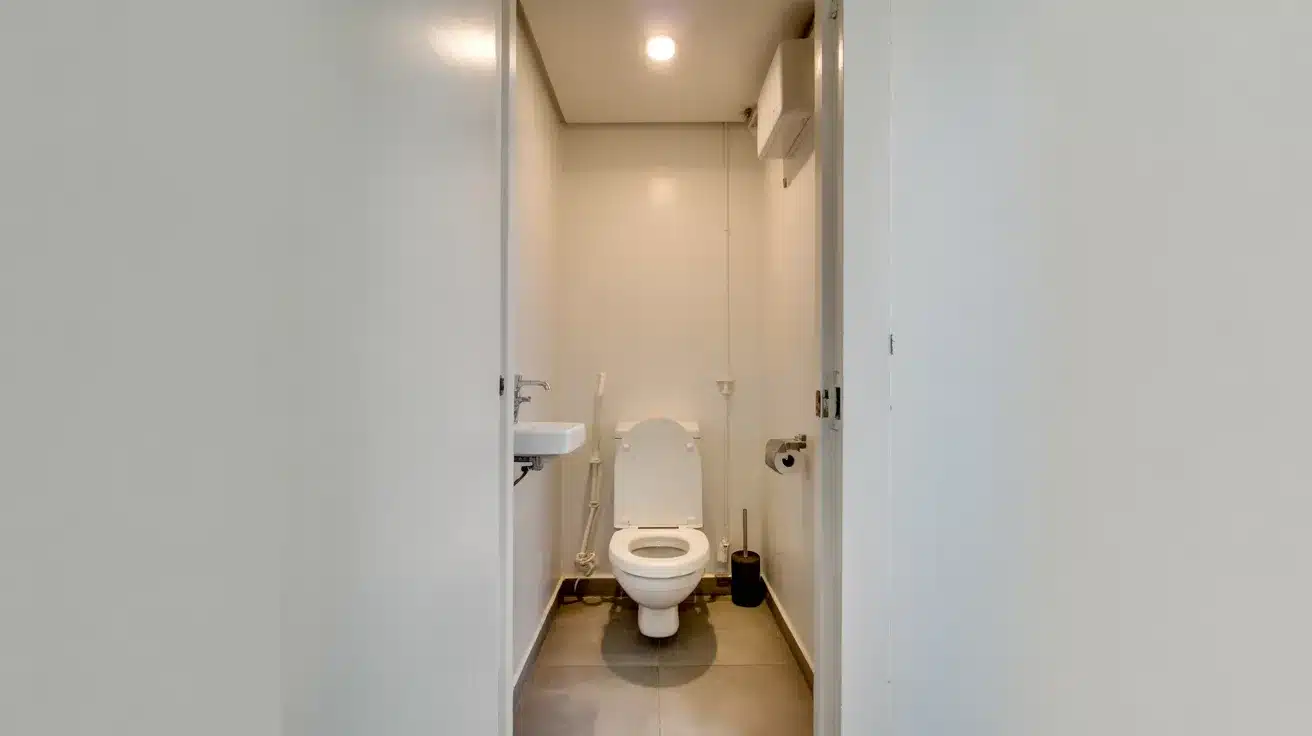
A quarter bathroom contains just one fixture, usually a toilet. It averages 12–15 sq ft and fits into tight spots like basements, garages, or the space beneath a staircase.
This type is a practical way to add basic functionality without a major construction project.
6. Jack and Jill Bathroom

A Jack-and-Jill bathroom connects two separate bedrooms through a shared bathroom with two entry doors.
It typically ranges from 60–80 sq ft and usually includes a double-sink layout with separate zones for the toilet and shower. This setup allows two people to use different parts of the bathroom at the same time.
Ideal Dimensions for Different Bathroom Fixtures
Knowing your bathroom type is only the first step. The next step is understanding exactly how much space each fixture requires. The figures below reflect standards set by the National Kitchen and Bath Association (NKBA) and the International Residential Code (IRC).
- Toilet: 28–30 inches deep, 20 inches wide, seat height of 15–17 inches; comfort height models measure 17–19 inches from the floor.
- Standard Bathtub: 60 inches long, 30 inches wide, and 14–16 inches high — the most widely used size in US homes.
- Soaking Tub: 60 inches long with a depth of 18–24 inches; requires additional floor space and structural floor support.
- Freestanding Tub: 55–72 inches long; needs at least 4 inches of clear space on all sides for cleaning and safe access.
- Shower (Minimum): 30 x 30 inches interior per building code; 36 x 36 inches is the recommended starting point for daily comfort.
- Walk-In Shower: 36 x 48 inches for practical everyday use; 42 x 60 inches for a full walk-in experience.
- Single Vanity: 30–36 inches wide, 20–21 inches deep, and 32–36 inches high.
- Double Vanity: 60–72 inches wide; keep at least 36 inches from each sink’s centerline to the nearest wall.
- Pedestal Sink: 22–27 inches wide and 18–24 inches deep; works well in small half bathrooms where floor space is a priority.
- Bathroom Mirror: Width should match the vanity, with the bottom edge mounted 5–10 inches above the sink.
- Towel Bar: Standard mounting height is 48 inches from the floor.
- Bathroom Door: 32 inches clear opening (34-inch door) for standard use; 36 inches for wheelchair access.
Minimum Clearance Rules and Building Code Requirements
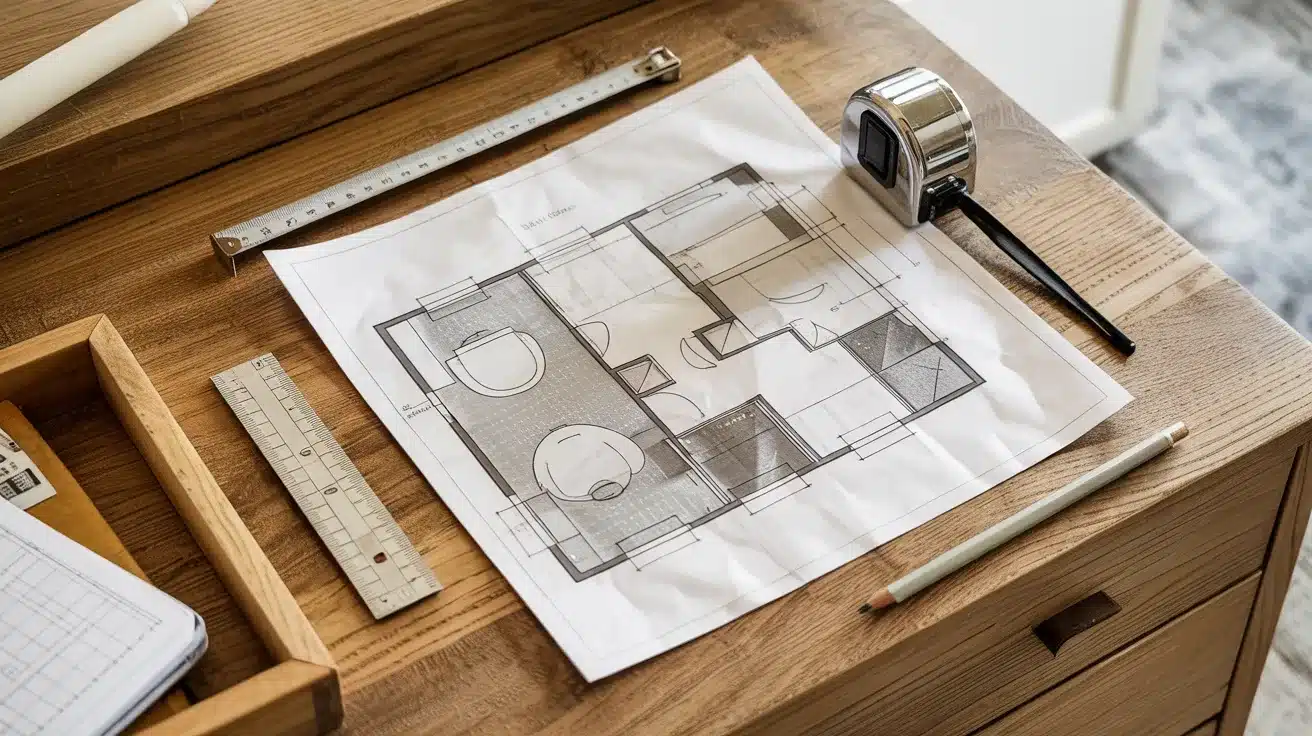
Most bathroom problems during a renovation come from skipping clearance rules. These are not design preferences. Local building codes, based largely on the International Residential Code (IRC), set the minimum safe distances around every fixture in your bathroom.
| Fixture | Minimum Clearance Required |
|---|---|
| Toilet (side to wall or fixture) | 15 inches from the centerline on each side (30 inches total) |
| Toilet (front clearance) | 21 inches minimum; 24 inches recommended |
| Shower (interior size) | 30 x 30 inches minimum; 36 x 36 inches recommended |
| Shower (side clearance) | 24 inches from the nearest wall or fixture |
| Sink (front clearance) | 21 inches minimum |
| Vanity (front clearance) | 30 inches in front |
| Bathtub (front clearance) | 21 inches minimum |
| Walkway inside bathroom | 32–36 inches wide |
| Ceiling height over fixtures | 80 inches minimum |
| Bathroom door (standard) | 32 inches clear opening |
| Bathroom door (accessible) | 36 inches clear opening |
Note: Local codes may differ. Always check with your local building department or a licensed contractor before starting any renovation work.
How Bathroom Size Affects Your Home’s Resale Value
Bathroom size has a direct impact on what your home sells for. Real estate professionals estimate that bathrooms account for 10–20% of a home’s total resale value.
A well-planned bathroom remodel typically returns 64–73% of its cost at resale, and adding a full bathroom can increase a home’s value by up to 20%.
Buyers consistently look for bathrooms that feel open, include both a shower and a soaking tub in the master bath, and offer double vanities.
A bathroom with poor clearance or a cramped, outdated layout can lower perceived value even in an otherwise well-maintained home.
Tips to Make Any Bathroom Size Work Better
You do not need a bigger bathroom. You need a smarter one. These tips apply to every standard bathroom size, from compact powder rooms to full master suites.
For Small Bathrooms (Under 40 sq ft):
- A floating or wall-mounted vanity opens up floor area and makes the room feel less cramped.
- A corner shower takes less floor space than a straight-wall shower layout.
- Light wall colors reflect more natural light and create a stronger sense of space.
- Recessed medicine cabinets add useful storage without adding any depth to the wall.
- A pedestal sink in a powder room gives more visible floor clearance than a cabinet-style vanity.
For Medium Bathrooms (40–60 sq ft):
- Keeping all plumbing on one wall significantly lowers installation and renovation costs.
- A standard 60-inch bathtub fits well in this size range without forcing other fixtures out.
- Shelves above the toilet use vertical space that is almost always left completely unused.
For Large Bathrooms (60 sq ft and above):
- A separate shower and tub setup is one of the most valued features among homebuyers.
- A double vanity improves daily routines for shared bathrooms and adds clear resale appeal.
- Wet and dry zoning keeps water contained and improves the overall flow of the room.
How to Measure Your Bathroom the Right Way?
Before buying any fixture or calling a contractor, measure your bathroom carefully. Start at floor level and measure wall-to-wall, both length and width.
Note any alcoves, bump-outs, or angled walls that reduce usable space. Measure the door swing separately since it occupies real floor area that affects your layout options.
Record the rough-in distance for your toilet: the distance from the wall to the drain center, which is typically 12 inches in most US homes.
Write everything down or sketch a simple floor plan with exact numbers before any shopping or planning conversation.
One inch off on a bathtub measurement can mean a fixture that physically does not fit the space.
The Bottom Line
Bathrooms are small rooms with many rules. Size, clearance, fixture dimensions, and building codes all matter more than most people expect.
You might be starting fresh or fixing what is already there. Either way, knowing the standard bathroom dimensions for your specific type is the first step. After that, fixtures, layout, and flow all start to click.
A well-planned bathroom does not need to be large. It just needs to work for how you actually live.
Got a renovation coming up? Working with a tricky layout or figuring out which fixture fits your space?
Drop your questions or share your experience in the comments below. We would love to hear what you are working with.