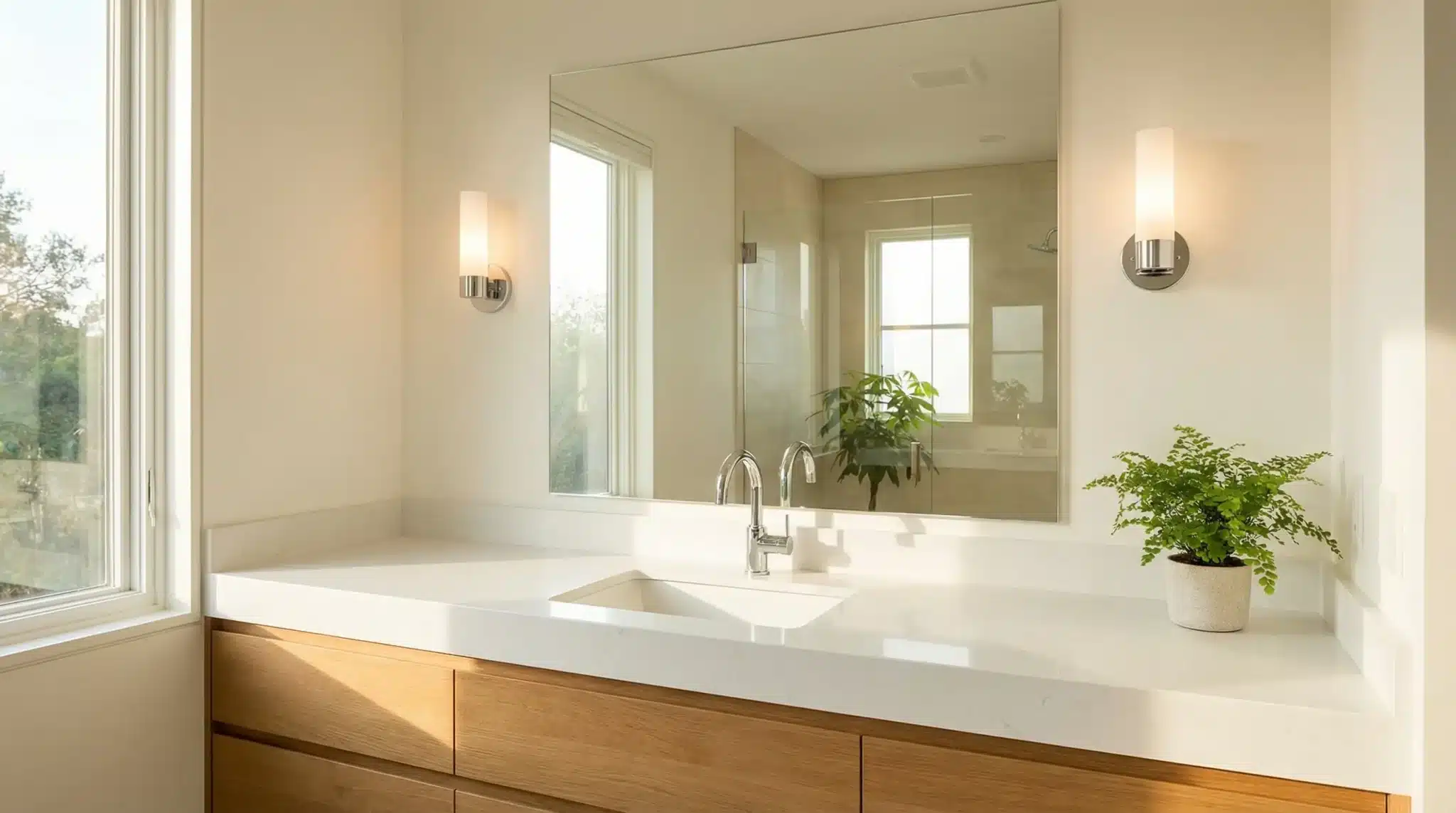
Bathroom Mirror and Sink: Getting the Most Used Part of Your Bathroom Right

When you think about your bathroom, the sink and the mirror are probably the two things you use more than anything else. You stand at the sink to brush your teeth, wash your face, and shave. You look in the mirror to make sure you look presentable before walking out the door. They work together as a pair, and when one of them is off—too high, too small, or poorly placed—you notice it every single day.
A lot of homeowners put most of their renovation budget into the shower or the tub. Those are important, but the sink and mirror combination is what makes the bathroom functional for your actual routine. Getting them right means thinking about height, spacing, and how the two fit together in your space.
This guide covers what you need to know about choosing a bathroom mirror and selecting a bathroom sink that work for your household.
How the Mirror and Sink Work Together
The mirror and the sink are connected in ways that go beyond appearance. You stand at the sink to use the mirror. If they are not aligned properly, the whole room feels off every time you use it.
Visual Balance
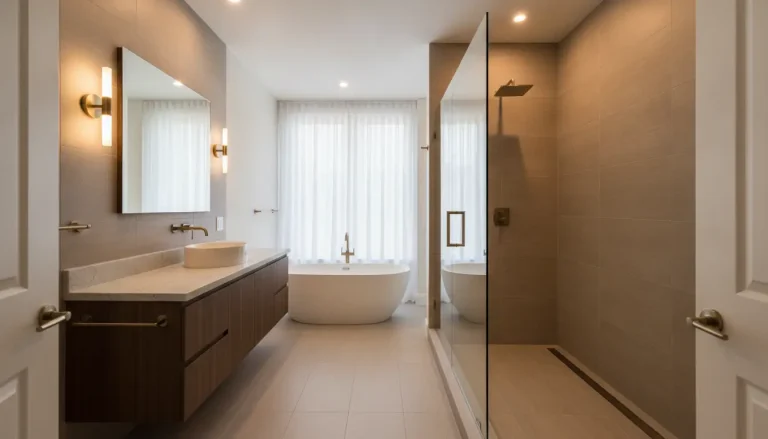
A mirror that is too narrow for the sink and vanity looks out of place. The basic rule is that the mirror should be at least as wide as the vanity. If you have a double sink, you have two options. One large mirror that spans the entire length creates a seamless look. Two separate mirrors, one centered over each sink, give each person their own space.
The height of the mirror also matters. The bottom edge should be low enough for everyone to see themselves without straining. For most adults, that means the mirror starts about four to five inches above the counter.
Practical Alignment
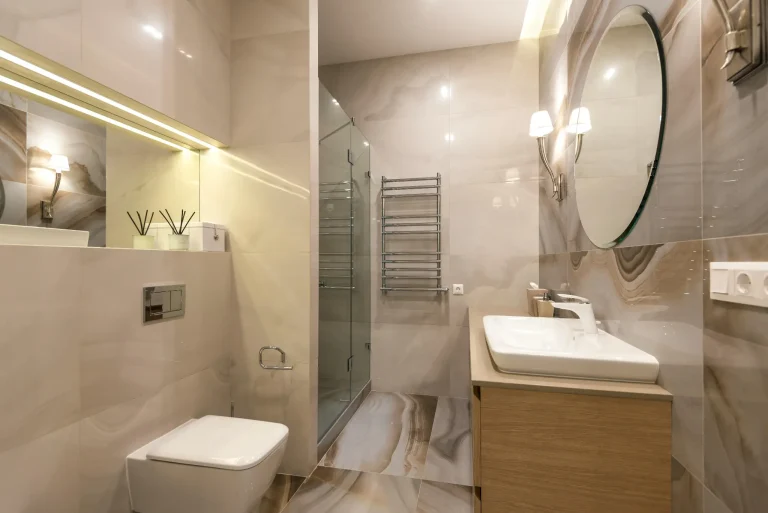
When you stand at the sink to shave or put on makeup, you need the mirror directly in front of you. If the mirror is off-center relative to the sink, you end up leaning to one side. For a single sink, the mirror should be centered directly over the sink. For double sinks, either one large mirror centered over the whole vanity or two mirrors each centered over their respective sink works.
Choosing the Right Bathroom Sink
The sink is where the bathroom gets the most wear and tear. Choosing the right type affects how easy the bathroom is to clean and how well it works for your household.
Drop-In Sinks
Drop-in sinks are the most common type in American homes. They sit in a hole cut into the countertop with a rim that rests on top. Installation is straightforward, and they work with almost any countertop material. The rim catches water and debris, which means you have to clean around it regularly. But for most homeowners, that is a minor trade-off for the ease of installation.
Undermount Sinks
Undermount sinks attach to the underside of the countertop. There is no rim on top. Water and debris wipe directly from the counter into the sink. This makes cleaning easier and gives the bathroom a cleaner look. The downside is that undermount bathroom sink options require a solid surface countertop like quartz or granite. Installation is also more involved.
For homeowners who prioritize easy cleaning, undermount sinks are worth the extra cost.
Vessel Sinks
Vessel sinks sit on top of the counter. They make a strong visual statement but require a taller faucet. The practical consideration is height. The top of a vessel sink is often six to eight inches above the counter. For children or shorter adults, that can make washing hands awkward. Vessel sinks work best in bathrooms where the users are all adults.
Single vs. Double Sinks
In a master bathroom shared by two adults who get ready at the same time, double sinks are a major convenience. Each person has their own space. In a bathroom used by one person, a single sink is usually enough. The extra counter space can be more valuable than a second sink you rarely use.
Mirror Options for Different Sink Setups
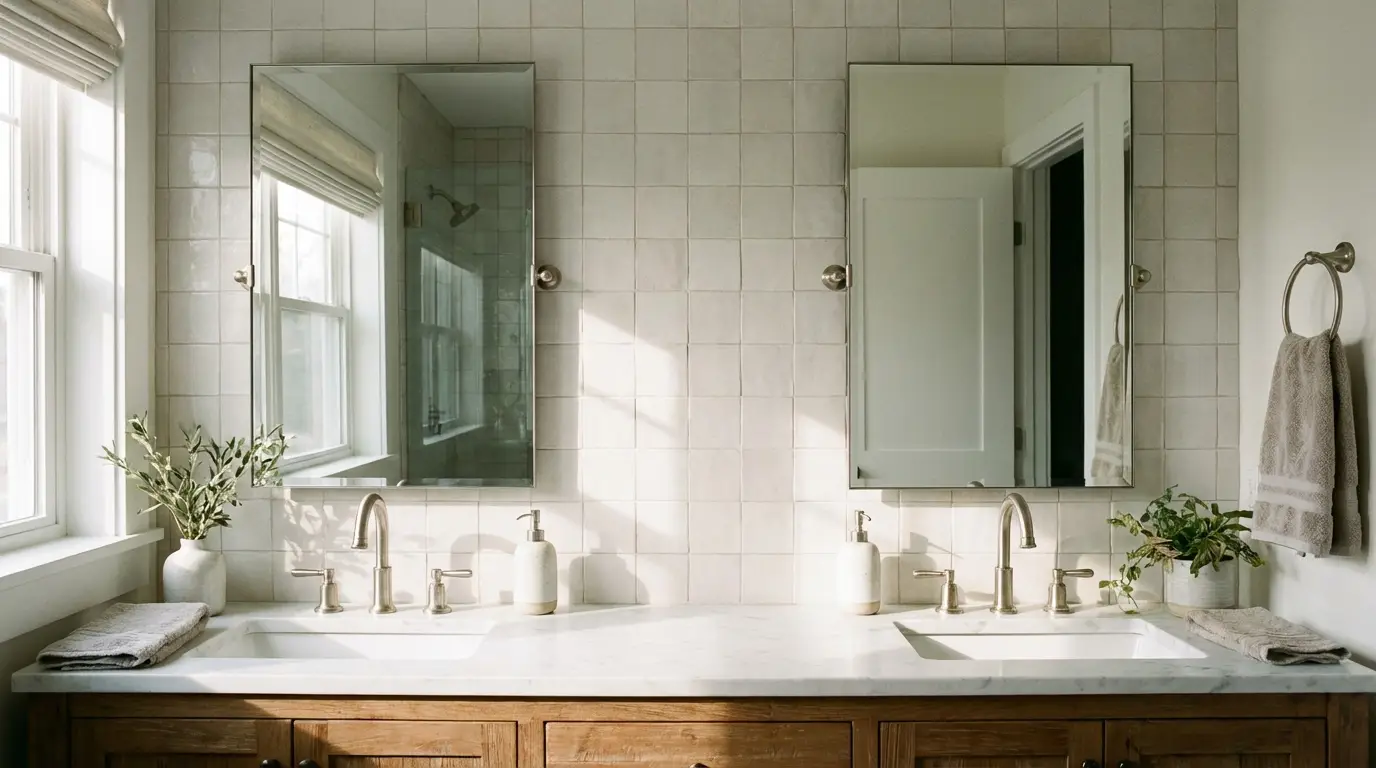
Once you know what sink setup you have, you can choose the mirror configuration that fits.
Single Large Mirror
A single large mirror works well with both single and double vanities. For a single sink, a mirror that spans most of the wall makes the room feel bigger. For double sinks, one large mirror creates a continuous surface. The advantage is simplicity. One piece to clean, one piece to hang.
The downside is that each person does not have their own mirror space, which can be an issue if two people are getting ready at the same time.
Separate Mirrors
Separate mirrors, one over each sink, give each person their own space. This is especially useful in a master bathroom where two people have different morning routines. The challenge is getting the placement right. Each mirror needs to be centered over its sink. If the vanity is very wide, leaving a gap between the two mirrors can work well.
Mirrored Medicine Cabinets
For bathrooms where storage is tight, a mirrored medicine cabinet does double duty. It gives you a bathroom mirror for getting ready and storage behind it for small items. Recessed cabinets that fit between wall studs are the most space-efficient. They sit flush with the wall and do not protrude into the room.
The trade-off is that the mirror surface is broken into sections if the cabinet has multiple doors. Some people prefer the clean look of a single mirror without seams. But in a small bathroom where storage is limited, a mirrored medicine cabinet is a practical solution.
Height and Accessibility
Getting the height right for both the sink and the mirror affects how comfortable the bathroom is for everyone who uses it.
Sink Height
Standard vanity height in newer homes is 36 inches. This works well for most adults. Older homes often have vanities at 30 to 32 inches. If you are remodeling, raising the vanity to 36 inches makes bending over less of a strain.
For households with young children, a step stool is usually the simplest solution.
Mirror Height
The bottom of the mirror should be about four to five inches above the counter. The mirror should be hung so that the tallest person can see their full face without tilting down. If you have separate mirrors over a double sink vanity, hanging them at the same height is important. Use a level and measure carefully.
Counter Space and Storage
The area around the sink is where clutter collects. A well-designed sink and mirror setup helps you keep that area under control.
Counter Space Between Sinks
If you choose a double vanity with two sinks, consider the amount of counter space between them. You need enough room for a soap dispenser and toothbrush holder without feeling crowded. Six to eight inches of space between sinks is comfortable for most households.
If space is tight, a single sink with more counter space on either side can be more functional than two sinks that leave no room for anything else.
Storage Around the Mirror
A bathroom mirror can be more than just a mirror. Adding sconces on either side provides task lighting. A shelf below the mirror gives you a place to set small items. If you have the wall space, adding a small cabinet next to the mirror gives you storage for items you want close at hand but not sitting on the counter.
Materials and Durability
Both the mirror and the sink need to hold up in a wet environment. Choosing the right materials makes a difference in how long they last.
Mirror Quality
A good bathroom mirror should have clear, distortion-free glass. Cheap mirrors sometimes have wavy spots or inconsistent reflections. The backing should be moisture-resistant to prevent dark spots from forming around the edges. A sealed edge also helps keep moisture from seeping in.
If you choose a framed mirror, the frame material matters. Wood frames need to be sealed to handle humidity. Metal frames are less prone to moisture damage but should have a finish that resists corrosion.
Sink Materials
Porcelain and ceramic are the most common materials for bathroom sinks. They are durable, easy to clean, and resist staining. The finish should be smooth and non-porous.
For a modern look, solid surface sinks are another option. The sink and counter become one seamless piece, which makes cleaning easy. The downside is that solid surface can scratch more easily than ceramic.
Making It Work in Your Bathroom
Every bathroom is different. The right combination of mirror and sink depends on your space and how many people use the room.
In a small powder room, a single drop-in sink with a framed mirror above it works well. The simpler the setup, the larger the space feels.
In a master bathroom shared by two adults, a double vanity with undermount sinks and a single large mirror creates a clean, functional space. Each person has their own sink, and the large mirror makes the room feel open.
In a family bathroom where kids of different heights use the space, a single sink with a large mirror hung at adult height works. Add a step stool for the younger kids, and you have a setup that adapts as they grow.
The sink and mirror combination is the most used part of any bathroom. Getting it right means thinking about how you move through the room in the morning and evening. A well-chosen bathroom mirror that is properly sized and placed makes the room feel larger and works better for everyone. Durable bathroom sink options that fit your household size and cleaning preferences save you time and frustration. When both are chosen with care, the bathroom becomes a space that starts your day on the right note.