
Vertical Integration as Part of a National Security Imperative

Why building systems from optics fabrication to full systems integration under one roof isn’t just efficient—it’s a shield for America’s supply chain
When global supply chains seized during the pandemic and tensions with China intensified across the Pacific, the U.S. defense industrial base learned a hard truth: technological power is meaningless without secure access to the critical materials and components that make it possible.
Today, control of the supply chain for advanced rare earth elements, minerals, and raw materials has become a new battlefield—one where America must invest, build, and protect its industrial sovereignty. Across the defense sector, vertical integration has re-emerged not just as a business advantage but as a national security imperative. Made in America is not just a slogan but a critical need for national security.
A Fragile Chain of Dependency
For decades, the United States relied heavily on other countries for to fabricate key components,minerals and raw materials. China still controls over 70% of the world’s germanium and gallium exports—two essential elements used in infrared optics, detectors, and high-performance systems across the U.S. military. These materials are vital for intelligence, surveillance and reconnaissance (ISR) across all domains, space, airborne, ground and maritime.
When China restricted germanium and gallium exports in 2023, global demand drove the market costs to surge by 700%, and the supply chain for optical materials tightened and even stopped. Many programs we subject to cost increases and faced program delays.
“It revealed how exposed we really are,” said one senior Department of War analyst. “Every lens, coating, or component manufactured abroad introduces risk that can be exploited in a moment of tension.”
Building Security Through Vertical Integration
To mitigate those vulnerabilities, companies like Clear Align are supporting development of a fully domestic process—from material refining to finished optics—that restores much of the control to the U.S. defense industrial base.
Clear Align’s vertically integrated model consolidates what once took a many suppliers across several countries into one secure domestic manufacturing operation. Within its U.S. facilities, the company cuts, grinds, polishes, coats optics, then assembles them, and tests complete EO/IR systems, reducing, but not fully eliminating, foreign dependence and cost while compressing lead times from over a year to a few months.
“When we own the entire process—from the boule to the battlefield—we don’t just improve efficiency; we guarantee mission readiness,” says Angelique X. Irvin, Clear Align’s founder and CEO. “Vertical integration gives us speed, security, and certainty when America needs it most.”
This control allows Clear Align to sustain production for programs for space, airborne, ground and maritime, even during supply chain disruptions.
Securing Optical-Grade Materials at the Source
Vertical integration doesn’t end at the factory door. Recognizing that access to critical minerals remains a bottleneck, Clear Align has built direct partnerships with trusted allies to secure optical-grade materials outside adversarial control.
Sourcing Critical Minerals and Raw Material
The company works with suppliers in Africa, Canada, Australia, and select European countries participating in the Mineral Security Partnership (MSP)—a U.S.-led initiative to diversify and secure critical materials vital to defense and high-tech industries.
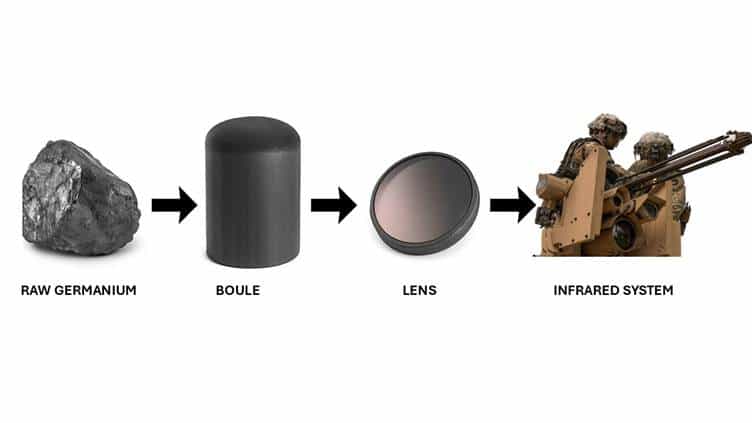
Through these alliances, Clear Align sources silicon, germanium and other materials with reduced lead times—often cutting delivery by 30-80%. Each material batch arrives ready for domestic finishing, ensuring full traceability, ITAR compliance, and adherence to the Buy America framework.
“Working near the source isn’t just about logistics,” Irvin explains. “It’s about building supply chain resilience and strengthening the network of allied countries that share democratic values.”
From Efficiency to Resilience
Vertical integration was once viewed as a cost-control measure; today, it defines industrial resilience. By uniting engineering, fabrication, and assembly and test, vertically integrated firms ensure production continues through trade shocks, export bans, or limited access to critical minerals. This enables military grade camera systems from one not many operations and consolidated production in the united states.
Clear Align’s vertically integrated manufacturing process allows engineers to modify designs, re-polish infrared optics, and re-coat lenses rapidly—without reliance on overseas suppliers. That agility is the practical definition of readiness.
Innovation in Mining and Refining: A New Paradigm for America’s Self-Reliance
To strengthen its defense industrial base and reduce foreign dependence, Clear Align proposes that America must modernize both mining and refining — the first and last stages of the materials lifecycle. Current extraction and processing technologies were developed for an earlier era, when environmental impact and cost efficiency were secondary concerns. Today, the challenge is to produce essential minerals and elements responsibly, affordably, and at scale.
Traditional financiers and large banks often restrict investment to know and proven (though outdated) processing technology and equipment that rely on 20th-century processes. This financing model discourages innovation and locks the industry into high-cost production methods that are neither sustainable nor competitive. What the nation needs now is a new paradigm—one that funds mining and refining innovation to achieve both environmental stewardship and economic efficiency.
Across California, Nevada, Utah, and other resource-rich states, emerging companies and university researchers are developing advanced refining technologies such as plasma separation, electro-chemical extraction, and silicon-based recovery. These processes minimize toxic chemicals and enable the clean isolation of critical minerals like zinc, germanium, copper, indium, silicon, selenium, and—key elements on the periodic table vital to infrared optics, communications systems, and national power infrastructure.
Recent assessments by the U.S. Geological Survey confirm that global demand for critical materials will far exceed supply unless new domestic mining and refining methods are developed. To accelerate this development, the U.S. must leverage federal grants, energy-transition programs, and agency incentives designed to close the gap between dependency on adversarial countries and self-sufficient domestic capability.
All advanced defense and space solutions ultimately trace back to the materials that power them—material science first pioneered by Bell Labs and other organizations. Early material science work at Bell Labs contributed to the optical technology that laid the foundation for innovations that continue to evolve America’s technological capability, driving breakthroughs in sensors, communications, and next-generation defense systems.
Government-level investments and partnerships
The United States (both government and private sector) does invest in foreign mines and mineral rights, especially for critical minerals that are essential for energy, defense, and high-tech manufacturing. However, the level of investment has been taken for granted over the last few decades since materials and their processing were were available and affordable. In today’s climate the US needs to re-energize the focus on owning, partnering and securing raw materials form sources all around the world: as China has been doing.
The U.S. needs to increase and re-energize partnerships and investments through agencies such as:
- U.S. International Development Finance Corporation (DFC) — finance overseas mining and processing projects to reduce dependence on China and other dominant suppliers.
- U.S. Export–Import Bank (EXIM) — provide loans and guarantees for U.S. companies involved in strategic mineral projects abroad.
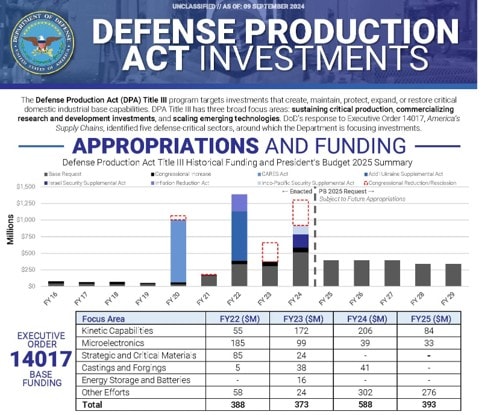
- Department of Defense (DOD) Industrial Base Policy and Defense Production Act (DPA) Title III — fund or back projects that ensure a secure supply of critical materials (like cobalt, nickel, rare earths).
- Department of Energy (DOE) — supports critical minerals supply chains, often through R&D or recycling initiatives.
Multilateral Alliances
The U.S. works with allies through initiatives such as:
- Minerals Security Partnership (MSP) — launched in 2022, includes the U.S., Canada, Australia, the EU, Japan, South Korea, and others. Its goal is to finance responsible mining projects in Africa, South America, and Asia to diversify supply chains.
- Partnership for Global Infrastructure and Investment (PGII) — broader G7 effort supporting strategic infrastructure, including mining and processing.
Strategic Industrial Assets
The Department of Defense now views vertically integrated firms as essential assets. Programs under the Defense Production Act Title III and the Buy America provisions of DFARS increasingly prioritize suppliers demonstrating secure, domestic manufacturing.
Clear Align fits that model. The company operates 100,000 square feet of advanced manufacturing space across three U.S. states—Pennsylvania, New Hampshire, and Florida—all under ITAR and cybersecurity compliance.
Its 35,000 sq ft optical fabrication center in Nashua, NH, is the largest privately held U.S. facilities for infrared optics. Teams perform cutting, grinding, polishing, diamond turning, and thin-film coating of Infrared materials—processes often outsourced overseas.
Other departments handle precision CNC machining, system assembly, and AI-enabled inspection, producing complete EO/IR systems domestically for defense and homeland-security programs.
The Buy America Advantage
Clear Align’s all-U.S. footprint aligns perfectly with the Buy America Act, strengthening domestic manufacturing and securing supply of critical materials. This supports the broader Defense Industrial Base Resilience strategy, ensuring that advanced systems—from airborne ISR pods to persistent surveillance towers—are manufactured without foreign dependencies.
“We view Buy America not as a regulation but as a catalyst,” Irvin says. “It encourages us to invest in American manufacturing, shorten the supply chain, and protect our materials base.”
Economic, Technical, and Strategic Value
The advantages of vertical integration extend far beyond compliance.
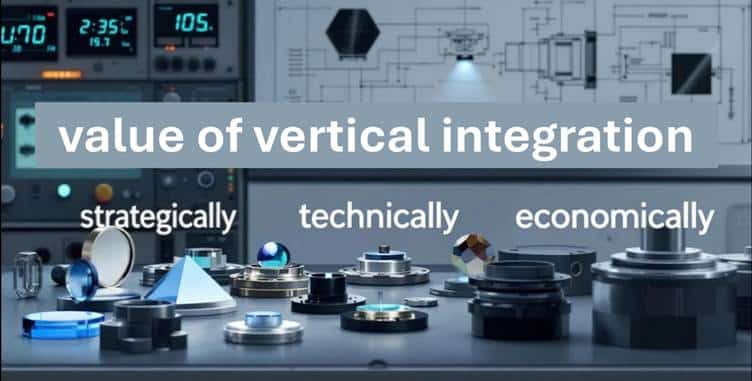
- Economically, in-house fabrication reduces cost, shipping time
- Technically, close collaboration between engineering and production improves performance and accelerates new technology development.
- Strategically, it protects intellectual property and ensures critical systems remain within secure borders.
This combination of control and innovation allows mid-sized U.S. firms to compete on the global stage while maintaining faster delivery, lower lifecycle costs, and faster support and maintenance times.
Rebuilding America’s Optical Arsenal
Rebuilding the optics and infrared manufacturing base is more than economics—it’s a deterrent. Expertise in infrared optics and coatings cannot be re-created overnight.
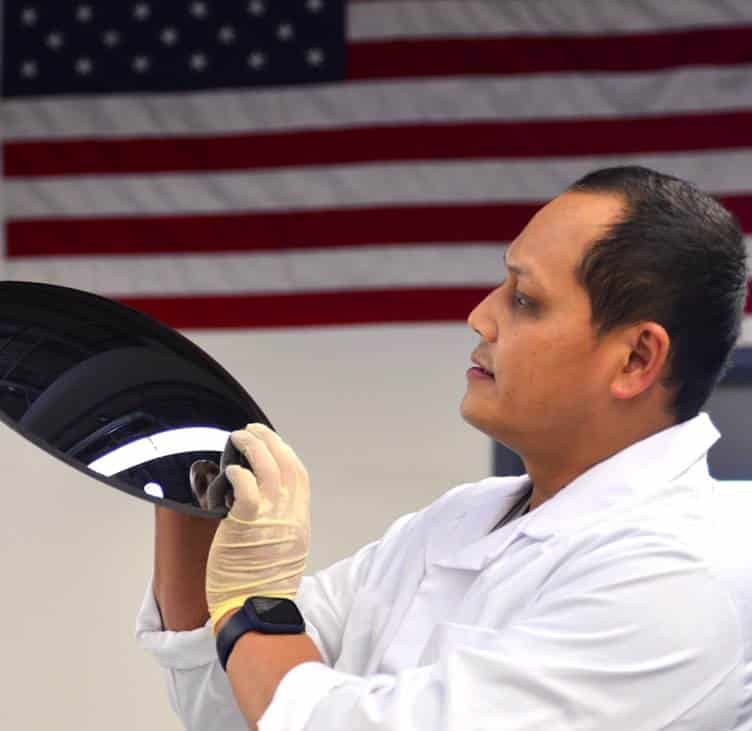
By training optical technicians, coatings experts, and systems engineers, Clear Align and its peers are rebuilding the nation’s critical material workforce.
“Every optic we make here, every engineer we train, adds to the industrial base,” Irvin says. “That’s what real sovereignty looks like.”
Conclusion: Resilience by Design
In an era of contested logistics and great-power competition, manufacturing control is as vital as control over technology. The integration of Buy America policy, allied sourcing, and deep vertical integration provides a blueprint for securing critical minerals, reducing cost, and ensuring supply continuity.
“As the world divides into rival blocs,” Irvin reflects, “our response is clear: make what we need here, with allies we trust. Because when you control your supply chain, you control your destiny.”