Why Cork Board Sheets Work Better Than Most Wall Materials?

Finding wall materials that look great and perform well feels difficult sometimes.You usually have to pick between nice-looking walls or ones that actually reduce noise but cork gives you both.
This natural material absorbs sound, insulates your space, and adds warmth to walls. More designers are turning to it because one material does what typically requires three different products.
We’ll show you how cork reduces noise, regulates temperature, and fits into real home projects.
What Makes it Stand Out in Interior Design?
Cork’s cellular structure sets it apart from other materials. Each sheet contains millions of tiny air pockets that work like natural cushions. These cells trap sound and heat, which makes cork both acoustically and thermally efficient.
Interior designers appreciate cork because it handles multiple problems at once. A single wall covering can reduce noise, add insulation, and create visual interest. That’s the benefit of one material that doesn’t require special maintenance.
The material also adapts to different styles easily. It works in minimalist spaces and warmer, textured rooms.
For people looking to source quality options, interior design cork sheets come in various thicknesses and finishes to match specific project needs.
Cork’s Natural Structure and Key Properties
Cork’s unique cellular makeup gives it multiple functional advantages that other materials can’t match.
Let’s examine each property in detail:
Natural Cellular Structure
- Cork has a honeycomb structure with millions of tiny air-filled cells
- These air pockets make it lightweight, flexible, and naturally compress-resistant
- Cell walls contain suberin, a waxy substance that repels moisture
- Cork bounces back to its original shape after compression
Acoustic Performance
- Noise Reduction Coefficient (NRC) ranges from 0.3 to 0.7 (absorbs 30-70% of sound waves)
- 3mm cork reduces sound by 10 decibels, 6mm by 23 decibels, 12mm by 48 decibels
- Handles mid-range frequencies like conversations, TV noise, and footsteps
- Reduces echo and manages both impact noise and airborne sound
Thermal Insulation
- Air-filled cells act as natural insulation barriers
- Keeps rooms cooler in summer and warmer in winter
- Reduces heating and cooling costs without synthetic materials
Health and Safety Benefits
- Hypoallergenic with anti-microbial and anti-bacterial properties
- Fire-resistant, burns slowly without toxic fumes
- Moisture-resistant to prevent mold and mildew
- Contains no VOCs or harmful chemicals
Self-Healing Properties
- Cell structure closes back up after pushpin removal
- Maintains appearance even with frequent bulletin board use
Understanding Cork Grain Sizes
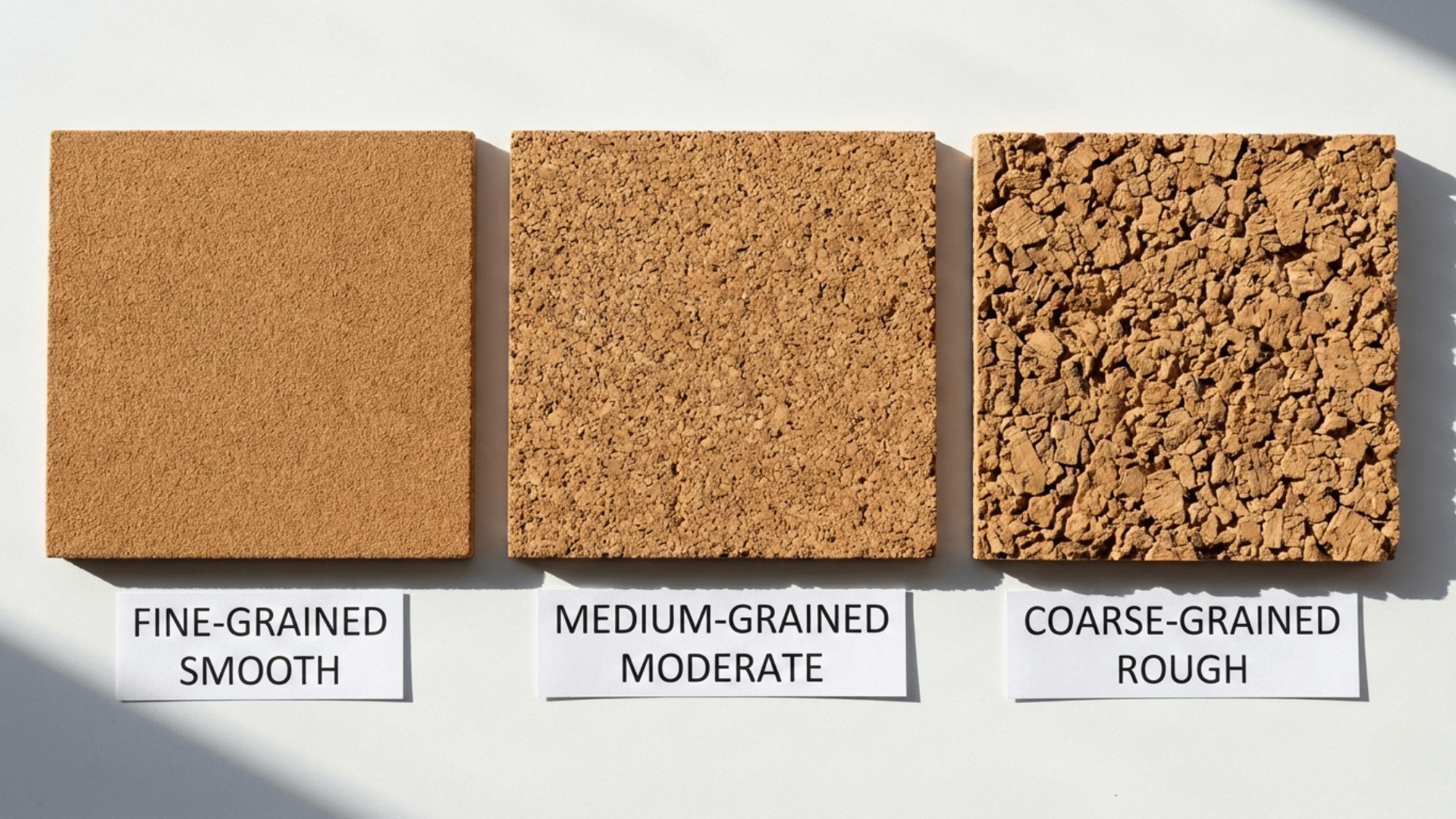
Grain size affects both how cork looks and how it performs. The three main categories range from smooth to textured, and each serves different purposes.
Fine-Grained Cork
Fine-grained cork has a smooth, even surface with low to medium density. It’s the most flexible option and is easy to cut precisely. The refined appearance makes it good for detailed work, and it’s particularly suitable for craft projects and decorative use.
Medium-Grained Cork
Medium-grained cork features moderate texture with medium density. It offers an ideal grip for pushpins while balancing smoothness with function. This is the most popular choice among people because it’s flexible for multiple uses. It works exceptionally well for pin boards and general wall applications.
Coarse-Grained Cork
Coarse-grained cork has a rough, textured surface with high density. This type delivers the best noise reduction and superior thermal properties. It’s the most durable option available and offers professional-grade performance for serious soundproofing needs.
Impact of Thickness on Performance
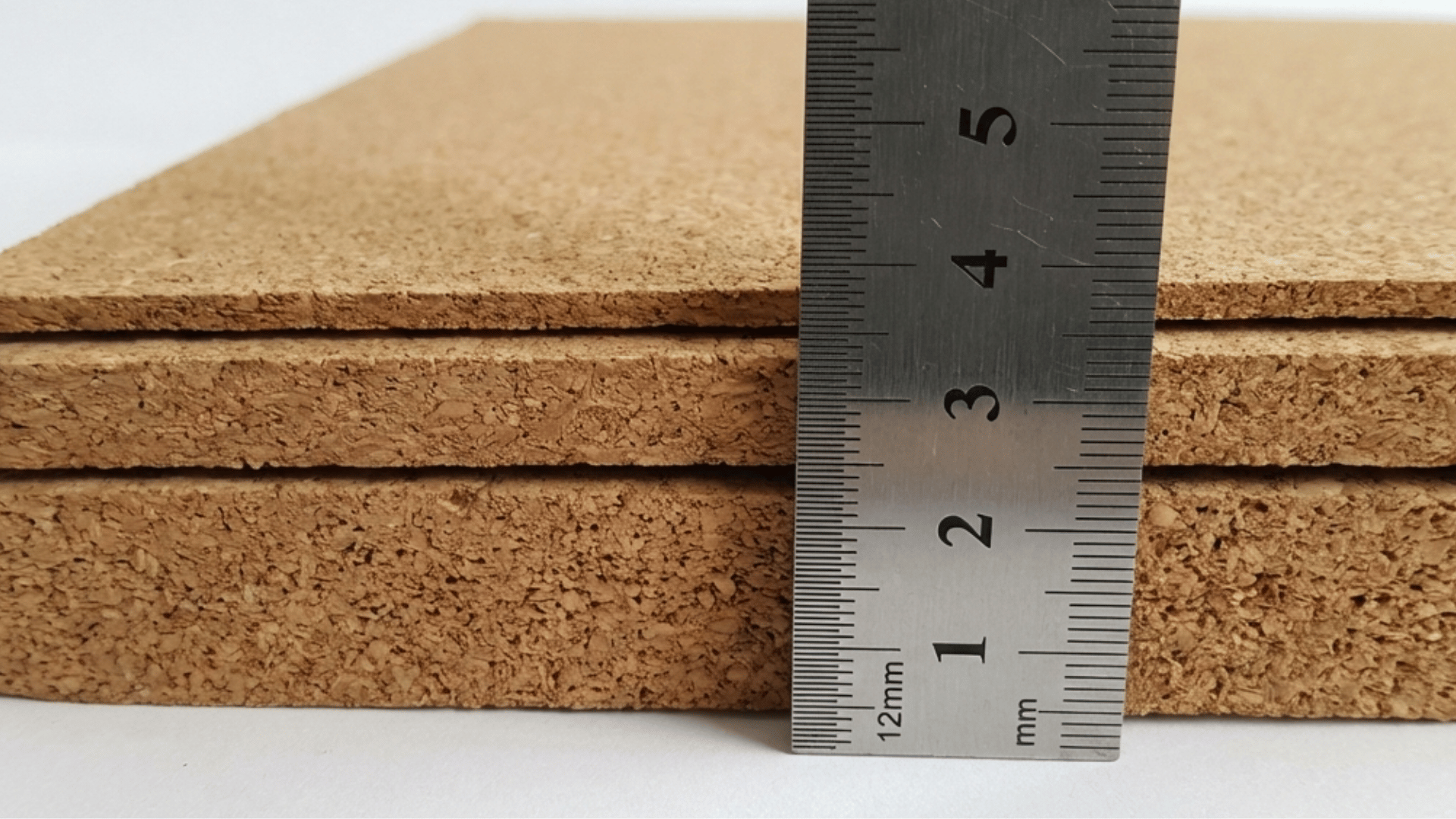
Thickness matters more than most people realize. Thicker doesn’t always mean better; it depends on what you’re trying to accomplish.
3mm – 6mm (Thin)
Thin cork sheets are lightweight and flexible. They provide light insulation and moderate sound absorption. These work well for decorative purposes and light-duty applications where heavy soundproofing isn’t the primary goal.
6mm – 12mm (Medium)
Medium thickness offers balanced weight and rigidity. You get sound thermal insulation and effective noise reduction. This range is ideal for standard wall applications and covers most home project needs.
12mm+ (Thick)
Thick cork sheets are heavy and rigid. They deliver superior acoustic control and maximum thermal efficiency. This thickness range is best for heavy-duty soundproofing and serious insulation requirements, like in music rooms or studios.
Comparing Cork to Other Wall Materials
Cork isn’t the only option for improving wall acoustics and insulation, but it stands out in ways that matter. Here’s how it compares to other popular choices:
|
Material |
NRC Rating |
Pros |
Cons |
|---|---|---|---|
|
Cork |
0.3 – 0.7 |
Natural appearance, sustainable, self-healing, lasts 80+ years, easy DIY install |
Higher upfront cost, requires acclimation |
|
Acoustic Foam |
0.8 – 1.0 |
Highest sound absorption, inexpensive, self-adhesive |
Industrial look, synthetic, degrades over time |
|
Fiberglass Panels |
0.9 – 1.0 |
Excellent sound control, long-lasting |
Irritant to handle, plain appearance, needs professional installation |
|
Standard Drywall |
0.05 – 0.1 |
Low cost, paintable, widely available |
No acoustic benefit, cracks easily, and no insulation |
|
Fabric Walls |
0.2 – 0.5 |
Soft texture, customizable colors |
Collects dust, stains easily, requires frequent cleaning |
Understanding the True Cost and ROI
While cork has a higher upfront cost compared to some alternatives, the long-term value tells a different story.
Initial Investment:
Cork sheets typically range from $3 to $12 per square foot, depending on thickness and grain. DIY installation saves on labor costs since cork is straightforward to work with. Medium-grained cork at 6-12mm offers the best value for most home applications.
Long-Term Savings:
Energy bills drop by 10-15% thanks to cork’s thermal insulation properties. There’s no replacement needed for 80+ years, and the self-healing nature eliminates repair costs from pushpin use. Cork maintains its appearance without refinishing or special treatments.
Return on Investment:
Acoustic foam needs replacement every 5-10 years as it breaks down. Cork’s durability means one-time installation with decades of performance. It adds property value through improved acoustics and natural aesthetics. Eco-conscious buyers increasingly seek out sustainable materials like cork.
Maintenance and Durability
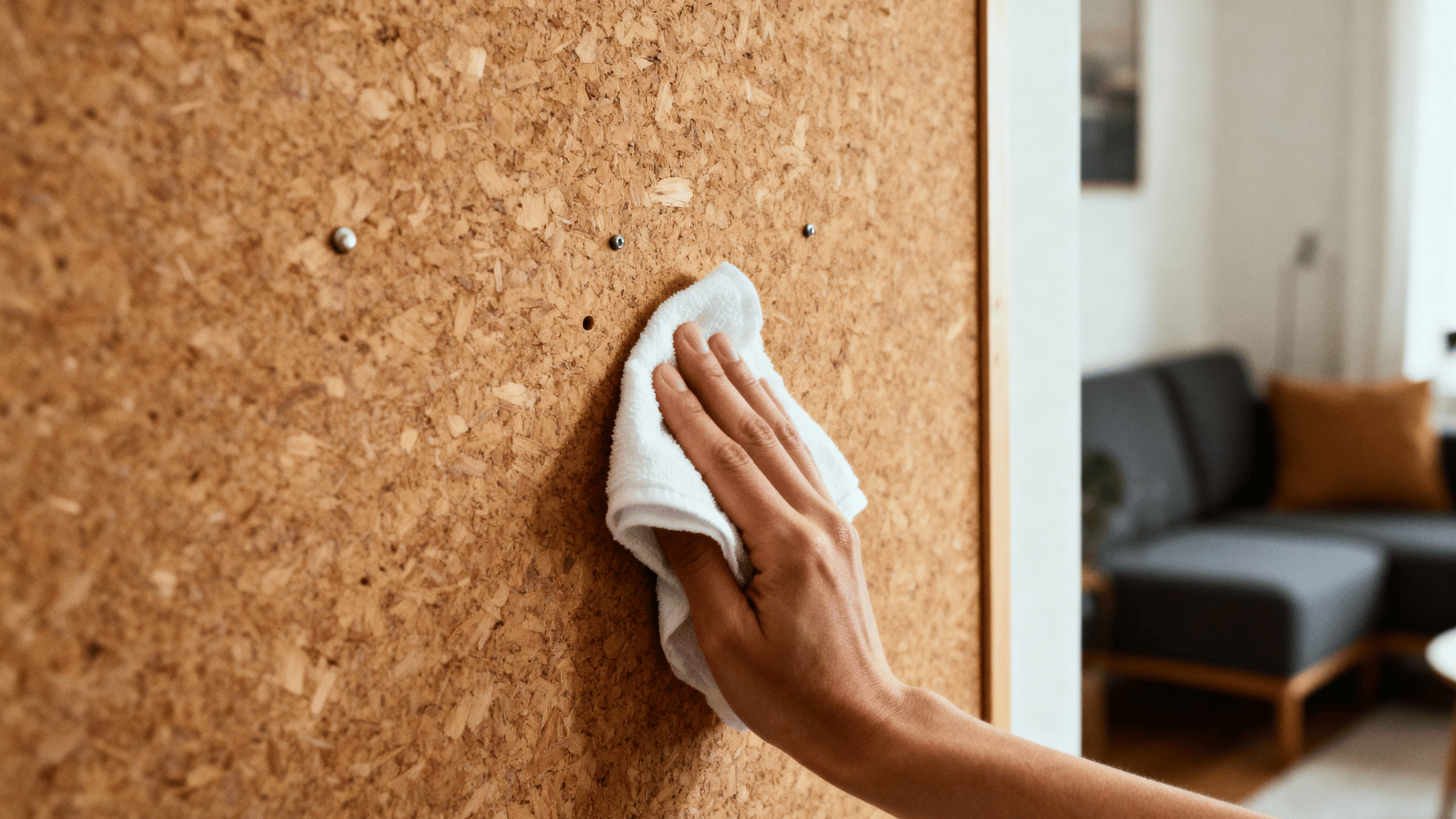
Cork requires almost no upkeep, which is part of its appeal. A quick wipe with a damp cloth handles most cleaning needs. Avoid soaking the surface or using harsh chemicals that might damage the natural material.
The lifespan is impressive. With basic care, cork walls can last 80 years or more. The material resists scratches and general wear naturally. If you use it as a pinboard, those tiny holes close up on their own when you remove the pins.
Keep the cork away from direct sunlight for extended periods, as UV exposure can cause fading over time.
In moisture-prone areas like kitchens, applying a sealant adds extra protection. Otherwise, cork handles humidity well and won’t develop mold or mildew like some wall materials.
The Bottom Line
Here’s what cork actually does: reduces noise by up to 48 decibels, provides natural insulation that cuts energy costs, and lasts 80 years without much care.
Those tiny pushpin holes close up on their own and since only the bark gets harvested, the trees keep growing.Start with one accent wall and you’ll notice the difference in comfort and acoustics immediately