Sustainable Renovation: Why Restoring Aluminium Windows Is a Better Choice?

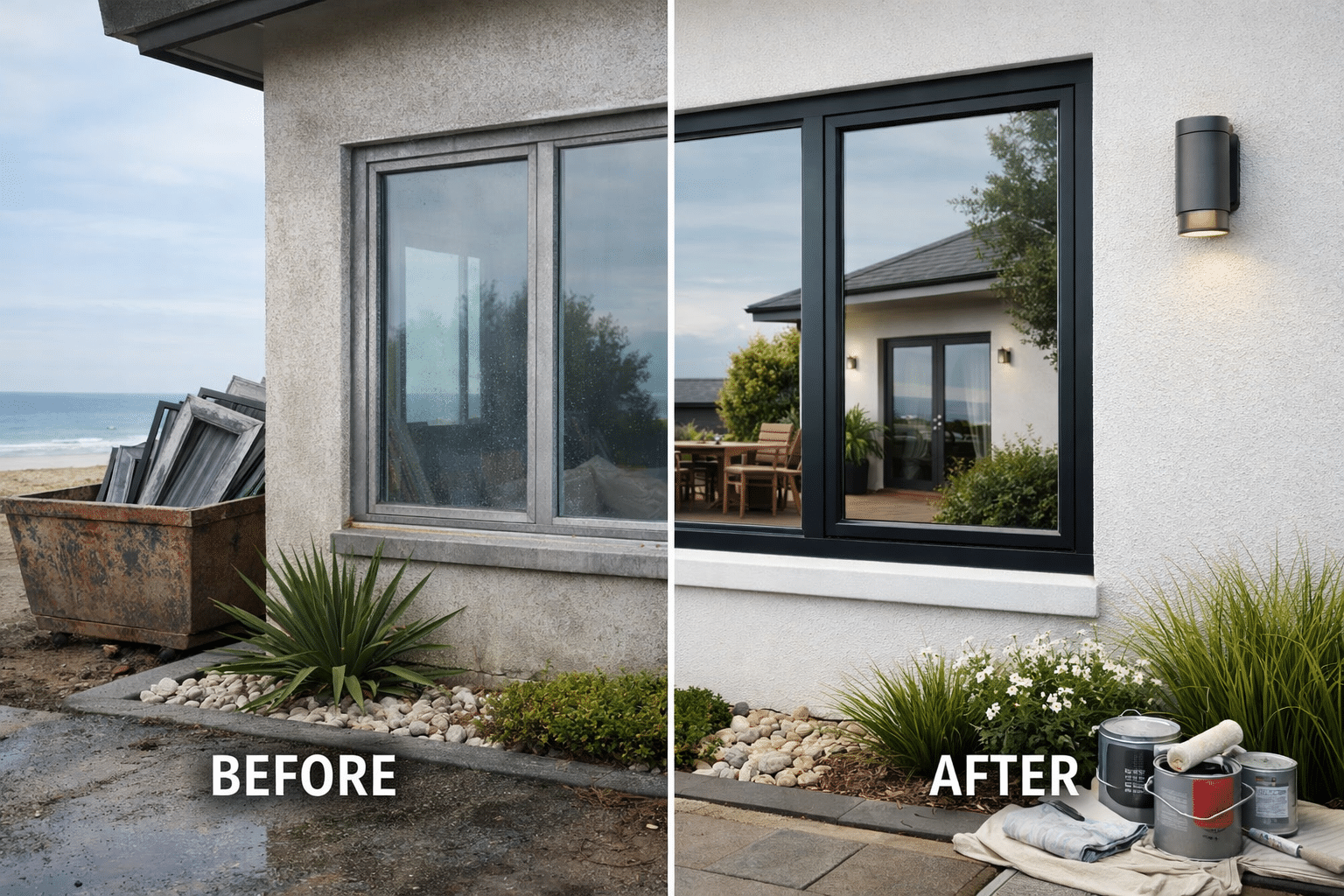
If you are planning a home refresh, windows are one of the most visible signs that a property is dated. Powdery, chalky aluminium frames, patchy colouring, or corrosion near the coast can make an otherwise well-kept home look tired. The default assumption is often: “We need to replace them.”
But for many homes, especially those with structurally sound aluminium window frames, replacement is not the only path.
A more sustainable option is restoration. Reviving what you already have instead of sending serviceable materials to landfill can reduce waste, lower disruption, and still deliver a clean, modern look. Just as importantly, restoration is often the most cost-effective route. Replacing windows typically involves paying for removal and disposal, purchasing new units, and then covering additional follow-on work like patching, repainting, re-sealing, and fixing disturbed trims or reveals.
If your frames are structurally sound but look faded or weathered, Aluminium Revival, an Australian company, specialises in restoring aluminium windows and frames so you can get the visual lift you want without the high price tag and disruption of full replacement.
The hidden waste, and cost, of “rip and replace”
Window replacement generates waste in more ways than most homeowners expect. Old frames and components have to be removed, transported, and disposed of.
Depending on the window system and condition, this can also involve replacing surrounding trims, repairing rendered surfaces, repainting, and re-sealing areas that were disturbed in the process.
Those extra steps do not just create more waste. They also add cost quickly. Even when the new windows themselves are within budget, the total bill can climb once you factor in labour, repairs to surrounding surfaces, and finishing work required to make everything look clean again. Restoration reduces this “hidden scope” by keeping the existing frames in place and focusing work where it matters most.
Aluminium is durable, so it is a prime candidate for restoration
Aluminium is used in windows for a reason. It is strong, dimensionally stable, and designed to last. In many homes, the frame itself remains structurally sound long after the finish has degraded.
That gap between “looks old” and “actually failed” is where restoration makes practical and financial sense. Instead of paying for brand-new windows when the core structure is still performing, restoration focuses on bringing the finish back to life and addressing common issues that affect appearance and longevity. In other words, you are paying to renew what is worn, not to replace what still works.
Waste avoidance is a sustainability win you can see, and a saving you can feel
Sustainable renovation is not only about new “eco” products. It is also about using what you already have wisely and getting the best value from existing materials. Restoring aluminium windows can reduce waste and reduce costs by:
- Keeping existing frames installed rather than discarding large, bulky materials
- Minimising demolition debris around sills, reveals, render, brickwork, and paint
- Reducing the need for new materials that have their own manufacturing footprint
- Avoiding repeat work like repainting large sections of the home exterior after replacement
- Cutting back on project time and disruption, which can also translate into cost savings
A smart option for coastal and high-UV areas
Coastal salt exposure, intense sunlight, and humidity can accelerate fading and surface corrosion. In these conditions, proactive restoration can be a smart sustainability move because it extends the life of existing materials and reduces the frequency of major replacements.
It can also protect your renovation budget long term.
Keeping aluminium frames in good condition helps you delay or avoid the large expense of full replacement, particularly if the underlying structure remains sound and only the surface finish and presentation have deteriorated.
The bottom line: restore first, replace when you must
Replacement will always have a place, particularly when frames are structurally compromised, badly warped, or beyond repair. But for many homes, the most sustainable decision is to restore what is already there.
It is also often the most budget-friendly decision, because it avoids the compounding costs of removal, disposal, new units, and the repair work that replacement can trigger.