Planning a Kitchen Extension? Why Flat Roof Windows Matter

A kitchen extension is often sold as a simple way to “add space.” In reality, the difference between a room you tolerate and a room you genuinely enjoy usually comes down to light. Not just how much light you get, but where it lands, how it changes through the day, and whether it makes the room feel open or flat.
That’s why flat roof windows have become such a defining feature of modern kitchen extensions—especially rear extensions where side windows are limited by boundaries, fences, neighbouring walls, or the extension itself. Get the roof glazing right and the whole space lifts. Get it wrong and you’ll be fighting glare, overheating, condensation, and a room that never looks quite as good as it did in the drawings.
The Daylight Problem Most Extensions Create
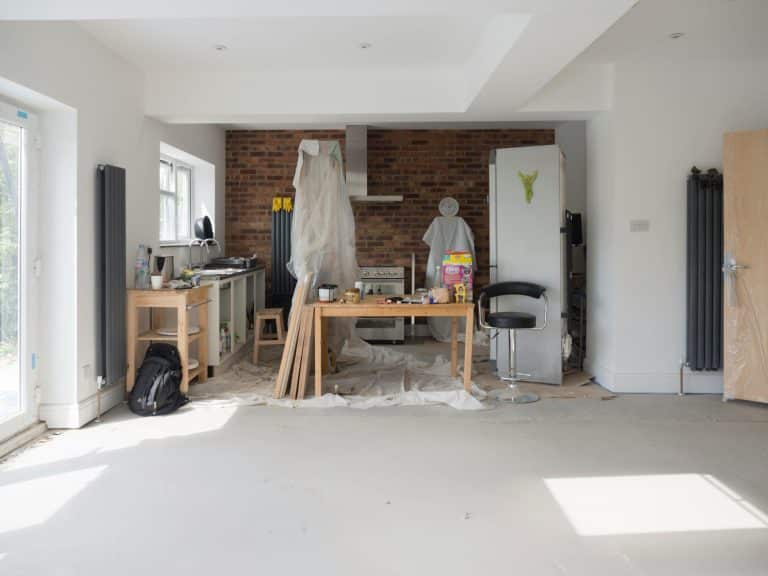
Kitchen extensions frequently deepen the footprint of the home. That depth is great for a family kitchen-diner, but it has an unintended consequence: the original rear wall becomes an internal wall. The point that used to bring daylight into the old kitchen suddenly blocks it.
Even with wide sliding doors, light tends to pool near the back opening and fade as you move inward. On bright days, you can also end up with harsh contrast—bright at the glazing, gloomy near the island—making the room feel narrower than it is.
Why Roof Light Behaves Differently Than Vertical Glazing
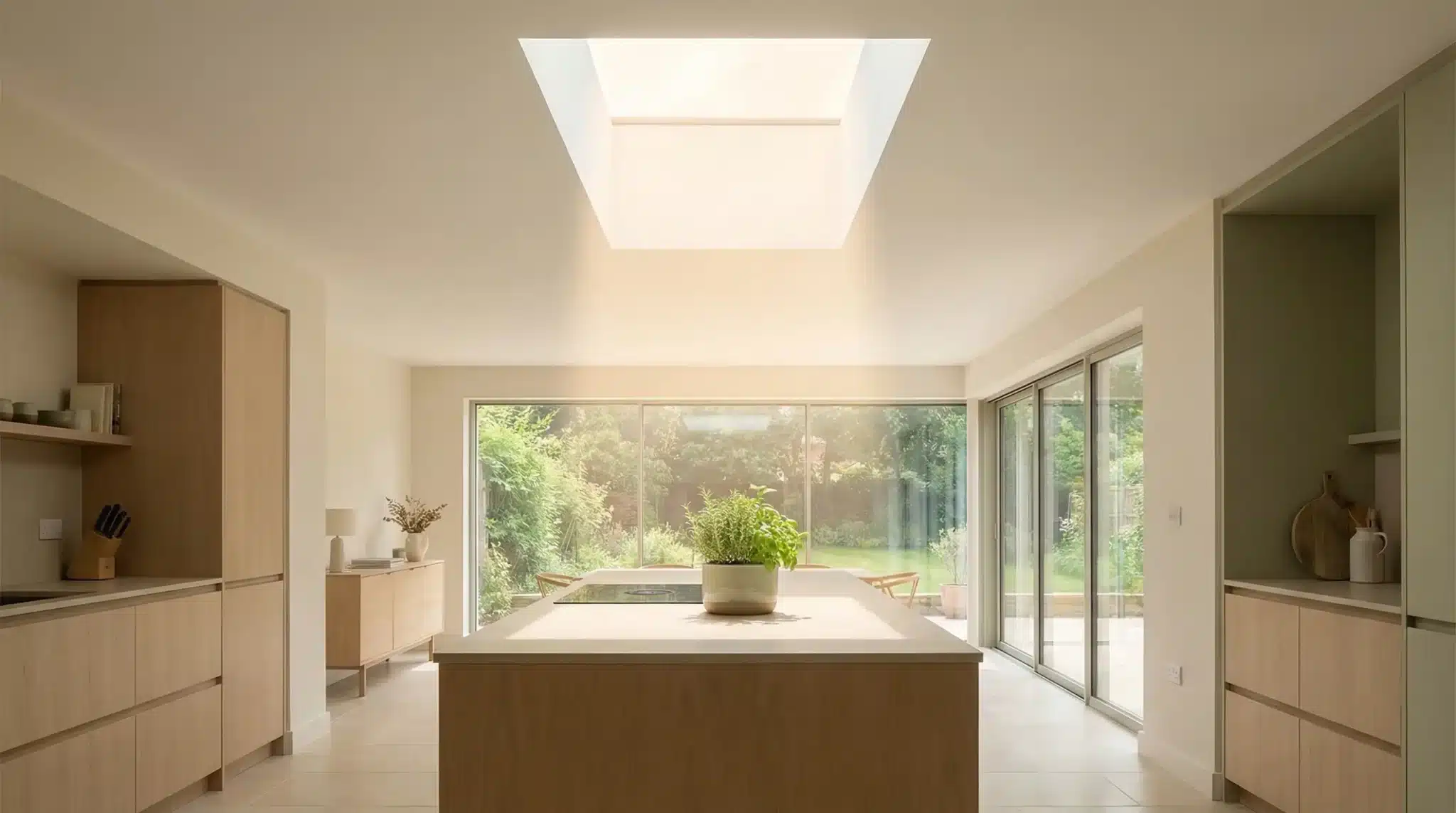
Vertical glazing is directional. It brings light in from one side, which can create long shadows and uneven illumination. Roof glazing is more democratic: it drops light into the centre of the plan, typically where you need it most—over the island, dining table, or circulation route between old and new spaces.
You notice it immediately when you walk into a well-designed extension. The space feels “naturally lit” rather than “lit by the doors.”
What Flat Roof Windows Add Beyond “More Light”
aylight is the headline benefit, but not the only one. Flat roof windows influence how a kitchen performs and how it feels.
A Stronger Sense of Height and Openness
Even if your extension roof is technically low, a well-placed roof window creates visual depth. Your eye is drawn upward, which makes the whole room feel less boxy. This is especially effective in flat-roofed extensions where ceiling height is precious and you don’t want to lose it to bulky structural drops.
Better Zoning in Open-Plan Layouts
Modern kitchen extensions often combine cooking, dining, homework, and lounging in one long room. Roof windows can help define those zones without walls. Place one above the kitchen work area for crisp task light, and another over the dining end for a softer, more social feel.
Ventilation Where You Actually Need It
Kitchens produce heat and moisture. When your only openable glazing is at the back (often near the dining area), steam and cooking smells can linger over the hob and island. An opening roof window above the “working” zone can act like a natural extractor, encouraging warm air to rise and escape.
The Real Design Challenge: Comfort, Not Just Brightness
Here’s the part that trips people up: adding roof glazing is easy; adding roof glazing that stays comfortable year-round is the craft.
In the UK, a south- or west-facing roof window can become a solar collector. Combine that with ovens, hobs, and a room full of people, and an extension can overheat quickly—sometimes even in spring.
At the same time, you don’t want a cold spot under the glass in winter, or regular condensation because warm kitchen air meets a chilly pane.
What to Look for in Modern Glazing
A high-performing flat roof window should manage three things at once: heat loss, solar gain, and condensation risk. If you’re comparing specs and build-ups, it’s worth reading up onenergy-efficient flat glazing solutions so you can weigh options like low‑E coatings, warm-edge spacers, and solar-control layers with a bit more confidence.
You’re not just choosing a window. You’re choosing how the room behaves in July, and how it feels when you step onto cold tiles on a January morning.
Placement: Where Roof Windows Make the Biggest Difference
A common misconception is that roof windows should be centred for symmetry. Symmetry can look great, but performance is usually about position relative to use.
Put Light Where Tasks Happen
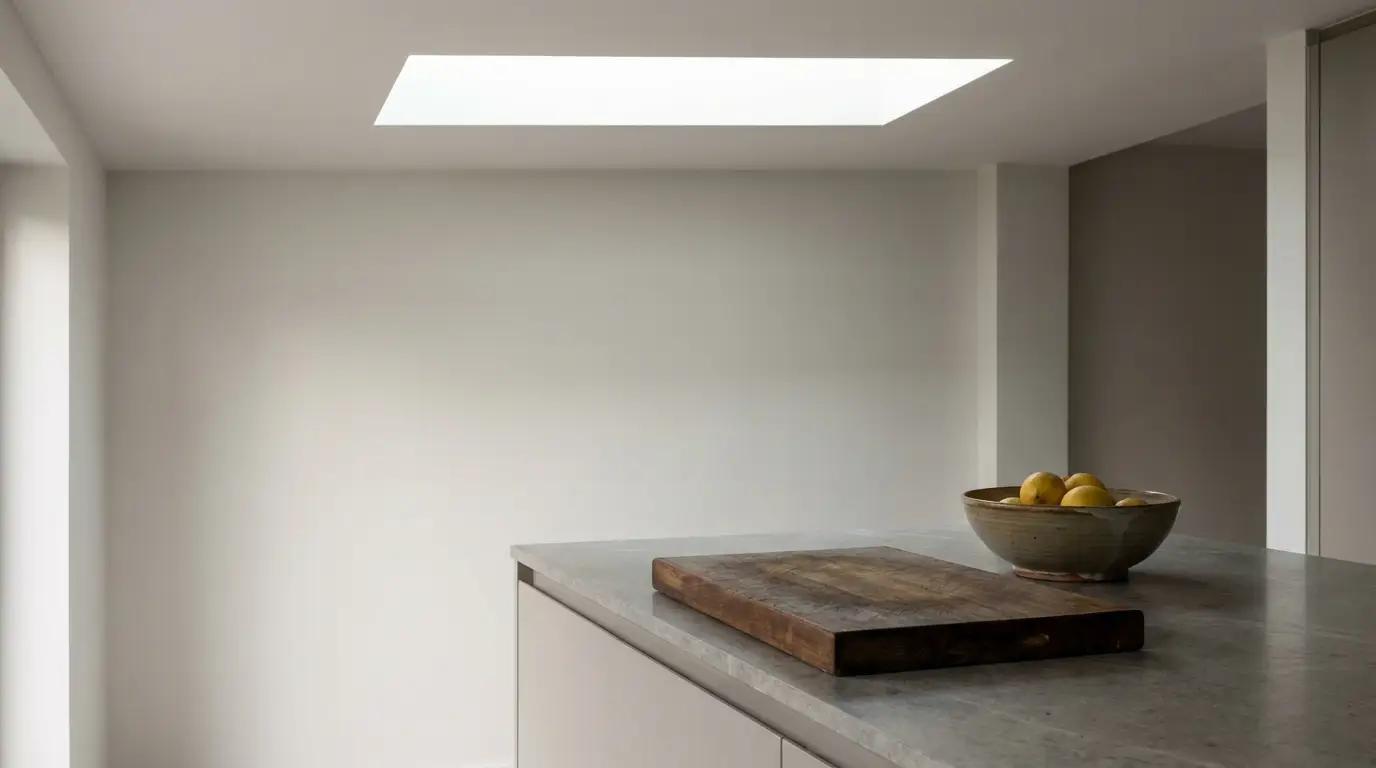
If you’re planning an island with prep space, drop daylight onto it. People instinctively gather around islands, and good overhead light makes the space feel inviting (and makes food look better, which is not nothing).
If the sink faces a blank wall, a roof window above the sink area can remove that “working in a cave” feeling.
Think About Glare and Reflections
Gloss cabinets, stone worktops, and polished floors can bounce light. That can be beautiful—until it isn’t. If you’ve ever struggled to see a phone screen near a bright window, you’ll understand the risk.
To reduce glare:
- Avoid placing roof glazing directly above large glossy surfaces without considering sun path.
- Consider diffused or solar-control glazing if you’re exposed to strong afternoon sun.
- Balance roof windows with softer vertical light to reduce harsh contrast.
(That’s your one checklist—use it early and you’ll prevent a lot of late-stage regret.)
Str
Structure, Drainage, and Buildability: Don’t Leave It to Chance
roof windows sit at the intersection of design and construction. They need to integrate cleanly with the roof build-up, insulation, and drainage strategy.
Falls and Upstands Matter More Than You Think
A flat roof is never truly flat—it needs a fall to shed water. Your roof window detailing must respect that, including correct upstand height and watertight junctions with the roof covering (warm roof systems, membranes, etc.). Done properly, it’s uneventful. Done poorly, it’s the kind of leak that only appears in wind-driven rain—right when you least want to discover it.
Coordinate Early With Steelwork and Ceiling Design
Many extensions rely on steels to open up the rear wall. Roof windows can clash with those structural zones, with joist directions, or with downlights and extractor duct runs. A quick coordination session between designer, engineer, and builder early on can save awkward compromises like a roof light that’s shifted into the wrong place “because the steel was there.”
Planning and Building Regs: What Usually Comes Up
Most roof windows in rear extensions fall under permitted development, but it depends on your property and local constraints. Building Regulations will be more relevant day-to-day:
- Thermal performance: glazing area and U-values affect compliance.
- Safety glazing: roof glazing needs to meet impact safety standards.
- Ventilation: opening lights can support purge ventilation strategies.
- Overheating risk: increasingly considered in design, especially as summers get warmer.
Your designer or architect should guide you here, but it helps to ask the questions rather than assume it’s “handled.”
The Bottom Line: Roof Windows Shape the Experience of the Extension
A kitchen extension is a big investment, and you’ll live with the decisions every day—morning coffee, rushed weeknight dinners, long weekends with friends. Flat roof windows aren’t an optional flourish; they’re one of the most effective tools you have to make the space brighter, calmer, and more comfortable.
Treat them like part of the architecture, not an afterthought. Decide what you want the room to feel like at 9am, at 3pm, and at 9pm. Then design the roof glazing to support that reality. That’s how you end up with an extension that doesn’t just look good in photos—it works beautifully in real life.