How Much Does Countertop Replacement Cost?

Your kitchen countertops are scratched, stained, or just plain outdated.
You want something better but have no idea what to expect financially. Will it cost $1,000 or $10,000? And what exactly are you paying for?
Countertop replacement pricing confuses many homeowners. Materials range from $25 to $200 per square foot. Labor adds another layer of complexity. Hidden costs pop up unexpectedly.
This guide breaks down real numbers. You’ll learn what different materials cost, how labor affects your bill, and which factors push prices up or down.
We’ll also cover innovative ways to save money without cutting corners. Let’s get into the actual costs so you can plan your budget confidently.
Average Cost to Replace Countertops in the US
For most kitchens in the United States, the cost to replace countertops typically falls between $1,500 and $4,500 installed.
Here is a general breakdown:
- Budget projects: $800 to $1,800
- Mid-range projects: $2,000 to $4,500
- High-end projects: $5,000 to $8,000 or more
Smaller kitchens and simple layouts tend to cost less. Large kitchens with islands and premium materials cost more.
The final price depends on several factors. Material choice plays a significant role. Labor costs vary by location. Your kitchen size matters too.
Most landowners spend around $3,000 on average. This covers materials, installation, and removal of old counters. Some pay less, others pay significantly more.
What Is Included in Countertop Replacement Costs
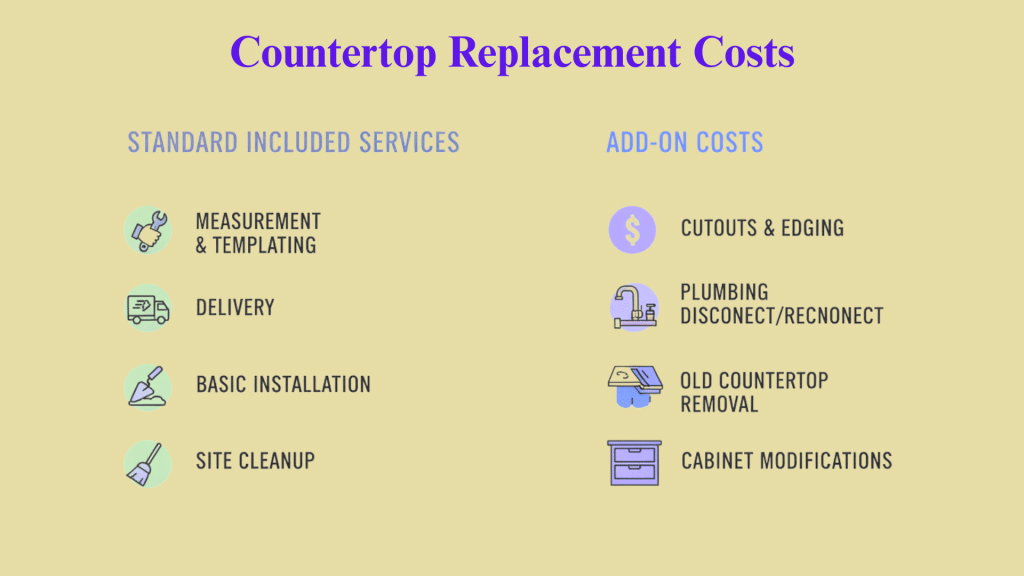
Getting a clear quote upfront prevents budget surprises later. Understanding what’s included versus what costs extra helps you compare contractors accurately.
Standard Inclusions
Most countertop replacement projects include:
| What’s Included | Description |
|---|---|
| Countertop material | The surface material you selected for your kitchen |
| Professional measurements and templating | Accurate sizing to ensure a perfect fit |
| Fabrication | Cutting and shaping the material to your specifications |
| Basic installation | Labor to install countertops in your kitchen |
| Standard edge finish | Simple edge profile, like a straight or eased edge |
Common Add-Ons Not Always Included
These items are often priced separately:
| Add-On Service | Why It Costs Extra |
|---|---|
| Removal and disposal of old countertops | Requires labor and disposal fees |
| Sink, cooktop, or faucet cutouts | Custom cuts based on your appliance sizes |
| Plumbing reconnection | May need a licensed plumber |
| Backsplash installation | Separate the material and labor involved |
| Cabinet leveling or reinforcement | Needed if cabinets are uneven or weak |
Always confirm what is included in writing before signing a contract. Get everything documented. This protects you from unexpected costs.
Ask your contractor for an itemized quote. It should list each service and its price. Compare quotes from at least three contractors.
Some companies bundle services together. Others charge separately for each item. Know the difference before you commit.
Cost Factors That Affect Countertop Pricing

The cost to replace countertops depends on more than just the surface material. Several variables work together to shape the final price.
1. Material Selection
Different materials vary significantly in price, durability, and maintenance needs. Natural stone and engineered slabs usually cost more than laminate or tile.
Budget materials start around $10 per square foot. Premium options can exceed $200 per square foot installed.
2. Total Square Footage
Countertops are priced per square foot, but slab materials may require purchasing more material than the exact measurement due to cuts and seams.
A 30 square foot kitchen might need 35 square feet of material. Waste is part of the process, especially with patterns that need matching.
3. Kitchen Layout and Complexity
Straight countertop runs cost less. Corners, islands, and irregular shapes increase labor and fabrication time. L-shaped kitchens take longer to measure and install.
U-shaped kitchens with multiple angles cost even more.
4. Thickness and Edge Details
Standard thickness and simple edges are the most affordable. Thicker slabs and decorative edges raise costs. A 3cm slab costs more than a 2cm slab.
Ogee or bullnose edges add $10 to $30 per linear foot compared to straight edges.
5. Cutouts and Custom Features
Each sink, cooktop, or faucet cutout adds labor. Undermount sinks and specialty features increase pricing. Standard drop-in sinks are simpler to install.
Cooktop cutouts require precise measurements and careful cutting.
6. Labor Rates
Installer experience, regional labor costs, and material weight all affect labor pricing. Urban areas typically charge more than rural regions.
Heavy materials like granite require more workers and specialized equipment.
7. Removal and Disposal
Removing tile or stone countertops costs more than eliminating laminate due to weight and disposal fees. Tile removal creates dust and debris.
Stone slabs are heavy and require careful handling. Most contractors charge $100 to $300 for removal.
8. Cabinet Condition
Cabinets must be level and strong enough to support new countertops. Repairs or reinforcement add to the total cost.
Warped or damaged cabinets need fixing first. Heavy materials like granite require sturdy cabinet boxes.
Cost to Replace Countertops by Material

Your material choice has the most significant impact on your final bill. Each surface type comes with its own price range, durability level, and maintenance needs.
| Material | Average Installed Cost per Sq Ft |
|---|---|
| Laminate | $25 to $50 |
| Butcher block | $40 to $75 |
| Tile | $30 to $75 |
| Solid surface | $50 to $100 |
| Granite | $45 to $120 |
| Quartz | $55 to $130 |
| Marble | $60 to $150 |
| Quartzite | $70 to $200 |
| Soapstone | $70 to $150 |
| Concrete | $75 to $140 |
| Stainless steel | $80 to $200 |
| Porcelain slabs | $70 to $160 |
How Much Does Labor Cost for Countertop Installation?
Installation is a significant part of your total expense. Labor typically makes up 20 to 40 percent of the total project cost. This portion covers measurement, fabrication, delivery, and installation.
Experienced installers charge more but often deliver better results.
Labor pricing depends on:
- Material weight and fragility: Heavy stone needs more workers and careful handling
- Number of seams: More seams mean more precise cutting and alignment
- Layout complexity: Islands, corners, and angles take extra time
- Installer expertise: Certified professionals charge higher rates
- Minimum job charges: Small projects may still have base fees
Heavier materials and complex kitchens require more labor and specialized equipment.
Stone slabs need lifting equipment and multiple workers. Simple kitchens with straight runs take less time. Most installers charge between $30 and $80 per hour.
| Hidden and Often Overlooked Costs
Common examples include wall damage behind backsplashes, cabinet leveling or reinforcement, plumbing upgrades for undermount sinks, disposal fees for heavy materials, and repairs caused by old adhesive or tile removal. These unexpected expenses can add $200 to $1,000 to your project. Planning for these expenses helps keep the cost to replace countertops within budget. |
Countertop Replacement Cost by Kitchen Size
Kitchen size directly determines how much material and labor you need. Larger spaces require more square footage, additional seams, and longer installation time.
Small Kitchens
Simple layouts with budget materials often range from $800 to $1,800 installed.
- These kitchens typically have 20 to 30 square feet of counter space
- One or two straight runs keep labor costs low
- Laminate or tile materials fit this budget range
- Fewer cutouts mean faster installation
Medium Kitchens with Islands
Most mid-sized kitchens cost $2,500 to $4,500, depending on material and features.
- Standard medium kitchens have 30 to 50 square feet of surface area
- Islands add extra square footage and seams
- Mid-range materials like granite or quartz fit here
- Multiple cutouts for sinks and cooktops increase labor costs
Large or Complex Kitchens
Large kitchens with premium surfaces often exceed $6,000, especially with multiple slabs and custom details.
- These spaces include 50 to 80 square feet or more
- Multiple islands, bars, or breakfast nooks add complexity
- Premium materials like marble or quartzite raise costs significantly
- Custom edge profiles and specialty features push prices higher
DIY vs Professional Countertop Installation

Deciding who installs your countertops affects both cost and quality. Choosing between doing it yourself and hiring professionals depends on material type and your skill level.
| DIY Friendly Options | Professional Installation Recommended |
|---|---|
| Laminate | Granite, quartz, marble, and porcelain slabs |
| Butcher block | Concrete countertops |
| Basic tile in simple layouts | Large islands and complex layouts |
Professional installation reduces risk and protects manufacturer warranties. Most slab materials come with warranties that only apply when installed by certified professionals.
DIY mistakes can be costly to fix. Heavy stone slabs are dangerous to handle without proper equipment.
Hiring professionals saves time and stress. They have the right tools and experience. Most jobs are completed in one to two days.
DIY installation can save $10 to $40 per square foot in labor costs. However, material mistakes can cost hundreds or thousands to replace. Consider your skill level honestly before deciding.
Ways to Lower the Cost to Replace Countertops
Thoughtful planning can reduce costs without sacrificing quality. Here are practical strategies to keep your project affordable.
- Keeping the Existing Sink and Layout: Reusing what you already have saves money on cutouts and plumbing. You avoid paying for new sink cutouts and plumbing reconnection fees.
- Choosing Standard Edge Profiles: Simple edges cost less than fancy decorative options. Straight or eased edges are included in base pricing, while custom profiles add $10 to $30 per linear foot.
- Using Remnants for Islands or Vanities: Leftover slabs from other projects come at a discount. Fabricators sell remnants at 30 to 50 percent off, perfect for smaller surfaces.
- Avoiding Unnecessary Seams: Fewer seams mean less fabrication work and lower labor costs. Each seam requires precise cutting and alignment, adding time and expense to your project.
- Scheduling During Slower Installation Seasons: Off-peak months often bring better deals from contractors. Winter months typically have lower demand, and installers may offer discounts to fill their schedules.
Do New Countertops Increase Home Value?
New countertops improve visual appeal and functionality. Mid-range materials like quartz and granite tend to offer the best balance between upfront cost and resale value.
Most kitchen updates return 50 to 80 percent of their cost at resale. Buyers notice updated countertops immediately. Clean, modern surfaces make your home more competitive in the market.
However, expensive materials do not always guarantee higher returns. Stick with popular choices that appeal to most buyers.
Final Thoughts
Replacing your countertops is a significant investment, but knowing the costs helps you plan better.
Most homeowners spend between $1,500 and $4,500, though your final price depends on material choice, kitchen size, and complexity.
Whether you choose budget-friendly laminate or premium quartz, understanding what drives the cost to replace countertops puts you in control.
Start by getting quotes from three local contractors. Compare their inclusions carefully. Ask about removal, cutouts, and any extra fees upfront.
Ready to move forward with your kitchen upgrade? Share your countertop plans in the comments below. We’d love to hear what material you’re considering!