Frameless Kitchen Cabinets: Buy, Build & Install

Frameless kitchen cabinets look sleek in showrooms. But buying them? That’s where things get tricky.
Poor box materials, weak joinery, and wrong measurements can turn your dream kitchen into an expensive headache. Cabinet retailers don’t always share what separates quality construction from cheap knockoffs.
This guide cuts through the sales talk. You’ll learn what frameless cabinets actually are, how they compare to framed options, what construction details matter before you buy, and where to shop smart.
We’ll also cover measuring basics, supplier red flags, and maintenance tips that keep your cabinets looking great for years. Ready to make a confident purchase?
What Are Frameless Kitchen Cabinets?
Frameless kitchen cabinets are a European-style construction in which doors and drawers attach directly to the cabinet box. You won’t find a face frame here.
The hardware mounts straight to the sides of the box instead. This design is also called full-access or full-overlay cabinetry.
Many manufacturers use the 32 mm system, which refers to precise hole spacing for hardware installation.
This style works best in modern kitchens with clean lines. If you have a small kitchen, these cabinets give you more usable space.
The door sits closer to the cabinet edge, making it easier to access everything inside. They’re popular in contemporary homes where sleek, minimalist design matters most.
Frameless vs Framed Cabinets
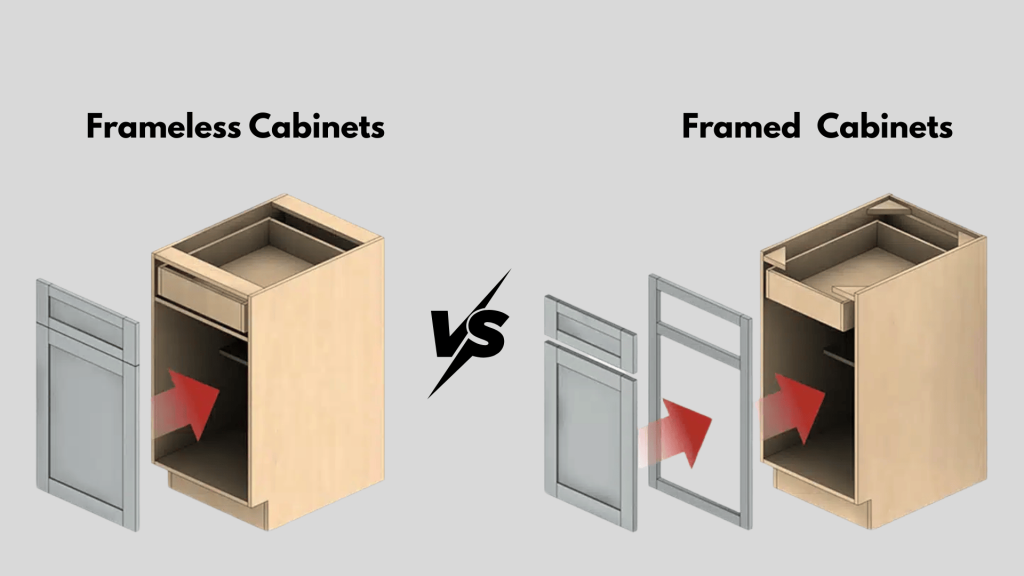
Choosing between frameless and framed cabinets can feel confusing. Here’s a simple breakdown to help you decide which style fits your kitchen better.
| Feature | Frameless Cabinets | Framed Cabinets |
|---|---|---|
| Storage Access | Wider opening with no frame blocking entry. | 1.5-inch frame reduces opening width. |
| Construction | Thicker sides (3/4 inch). Hardware mounts to the box. | The wood frame adds support. Thinner side panels. |
| Door Style | Full overlay covers most of the box. Smooth, flat look. | Partial, full overlay, or inset options available. |
| Best For | Modern kitchens and tight spaces. | Traditional or farmhouse styles. |
Quick Decision Rules:
- Choose frameless if you want maximum storage access and prefer modern, streamlined looks.
- Choose frameless if you have a small kitchen where every inch of space counts.
- Choose framed if you love traditional or transitional kitchen styles with visible craftsmanship.
- Choose framed if you want inset cabinet doors that sit flush with the frame.
- Choose framed if your kitchen design includes decorative molding or raised panel doors.
How To Build Frameless Kitchen Base Cabinets
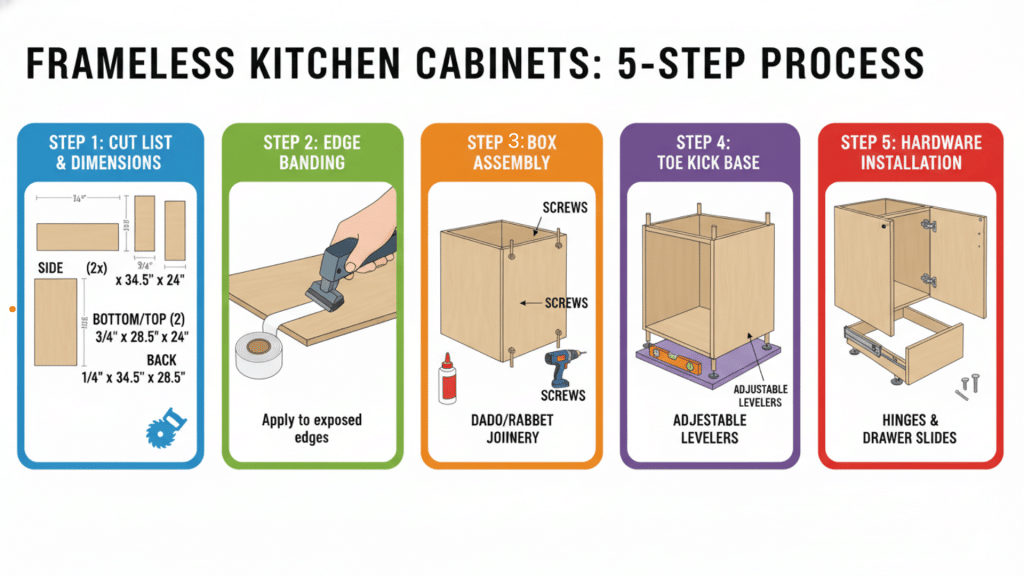
Building frameless kitchen cabinets takes precision. Follow these five steps to create professional-quality base cabinets.
Step 1. Plan The Base Cabinet Size And Cut List
Standard base cabinets are 24 inches deep and 34.5 inches tall with a 4-inch toe kick. Check your door overlay type now, as it affects the box width. Write down every piece: side panels, bottom, back, stretchers, and shelves. Accurate planning saves material and time.
Step 2. Cut Panels And Prep Edges
Cut all panels with perfectly square edges. Small angles create visible gaps between doors. Apply edge banding to visible edges before assembly for a clean finish. Pre-drill shelf pin holes now if you want adjustable shelves, spacing them 1.5 to 2 inches apart.
Step 3. Assemble The Cabinet Box
Join sides to the bottom using dado joints or dowels with glue and screws. Keep corners perfectly square. Add the back panel to stop twisting. Install top stretchers across the front and back to support the countertop and prevent racking.
Step 4. Build And Install The Toe Kick Base
Build a separate toe kick platform 3 to 4 inches tall, set back 3 inches from the front. Level it carefully with shims on uneven floors. Set the cabinet box on top once the base is level. Anchor to wall studs using screws with washers.
Step 5. Install Drawers, Doors, And Hardware
Mount the full-extension slides and test the drawer’s motion. Hang doors with European concealed hinges that adjust in multiple directions. Install handles and add soft-close dampeners if needed. Check that all doors align with even gaps between them.
Pros And Cons Buyers Should Know Before Purchasing
Every cabinet style has trade-offs. Here’s what you need to know about frameless kitchen cabinets before you buy.
| Pros | Cons |
|---|---|
| Full-access openings provide more usable space. | Installation must be precise. Walls need to be straight. |
| Sleek, modern lines with minimal gaps. | Less tolerance for uneven surfaces. |
| Consistent reveals look uniform. | Quality varies by materials and joinery. Check the brand. |
| Modern hinges adjust easily and close softly. | Cheaper options use weak materials that fail quickly. |
Frameless kitchen cabinets offer great benefits for modern homes. But installation quality and material choice matter more than with framed options. Do your research on the manufacturer and installer before committing.
What To Check Before Buying Frameless Kitchen Cabinets
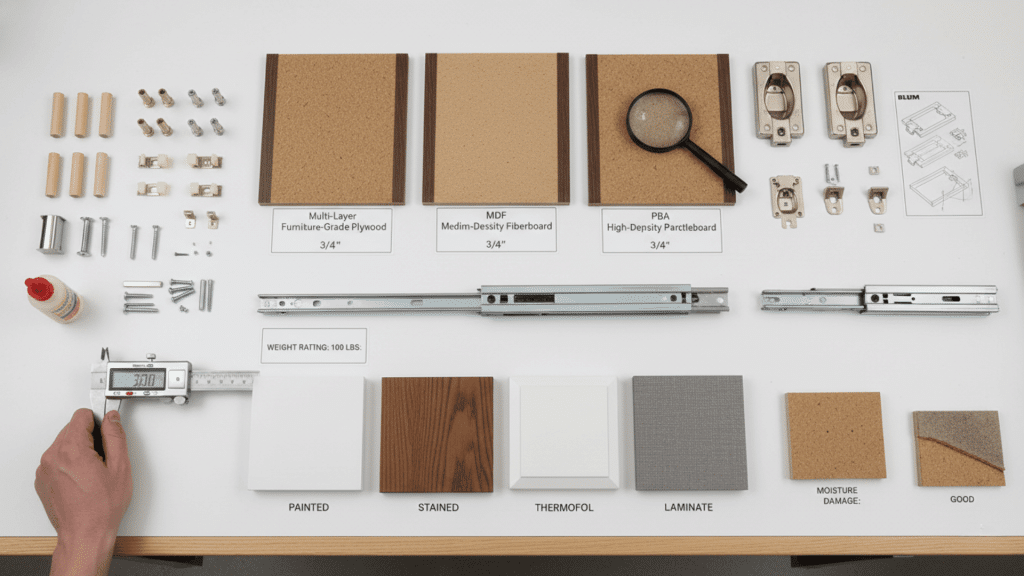
Use this checklist when shopping for frameless kitchen cabinets. These details help you spot quality construction before you buy.
1. Cabinet Box Materials
☑ Plywood: Best choice. Look for 3/4-inch thickness. Handles moisture well.
☑ Particleboard: Budget option. Avoid near water sources.
☑ MDF: Good for painted finishes. Heavier and less water-resistant.
☑ Edge banding: Check that the bands are smooth and firmly attached. No peeling.
2. Joinery And Assembly Signals
☑ Dowel joints: Wooden pegs should fit tightly with no gaps.
☑ Dado grooves: Back panels sit in grooves rather than being nailed on.
☑ Cam-lock connectors: Metal locks are better than plastic ones.
☑ Glue blocks: Corner reinforcements add stability. Check samples.
☑ Metal brackets: L-brackets at joints mean better durability.
3. Hardware Standards
☑ Soft-close hinges: Test in showroom. Doors should close quietly.
☑ Hinge brands: Look for Blum, Grass, or similar quality names.
☑ Full-extension slides: Drawers pull out completely.
☑ Weight rating: Standard drawers need 75-100 lbs. Heavy drawers need 100-150 lbs.
☑ Undermount slides: Cleaner look and handle more weight than side-mount.
4. Finish And Durability
☑ Painted: Multiple coats with smooth surface. No texture bumps.
☑ Stained wood: Even grain with no blotchy spots.
☑ Thermofoil: Check edges for lifting or bubbling.
☑ Laminate: Look for thick material with sealed edges.
☑ Scratch test: Run fingernail gently. Quality finishes resist light pressure.
☑ Moisture warranty: Ask about protection near sinks and dishwashers.
Measuring And Planning Before Ordering
Getting accurate measurements prevents costly mistakes and reorders. Here’s what you need to know before placing your cabinet order.
| Topic | What You Need To Know |
|---|---|
| How To Measure | Measure walls at multiple heights. Note outlets, plumbing, and appliances. Retailers need wall dimensions and plumbing locations. |
| Fillers | Thin strips filling gaps between cabinets and walls. Add 3-6 inches per run. |
| End Panels | Finished panels covering exposed cabinet sides. |
| Toe Kicks | Recessed space at cabinet bottom, 3-4 inches tall. Usually included. |
| Crown Molding | Optional trim at the top of wall cabinets. Sold by linear foot. |
| Scribe Molding | Hides gaps at uneven walls. Budget 10-15% extra. |
| Professional Measurement | Best for complex layouts. Costs $0-500. Reduces reorder risk. |
| DIY Measurement | Works for simple runs. Use a laser measure. Double-check everything. |
Where To Buy Frameless Kitchen Cabinets?
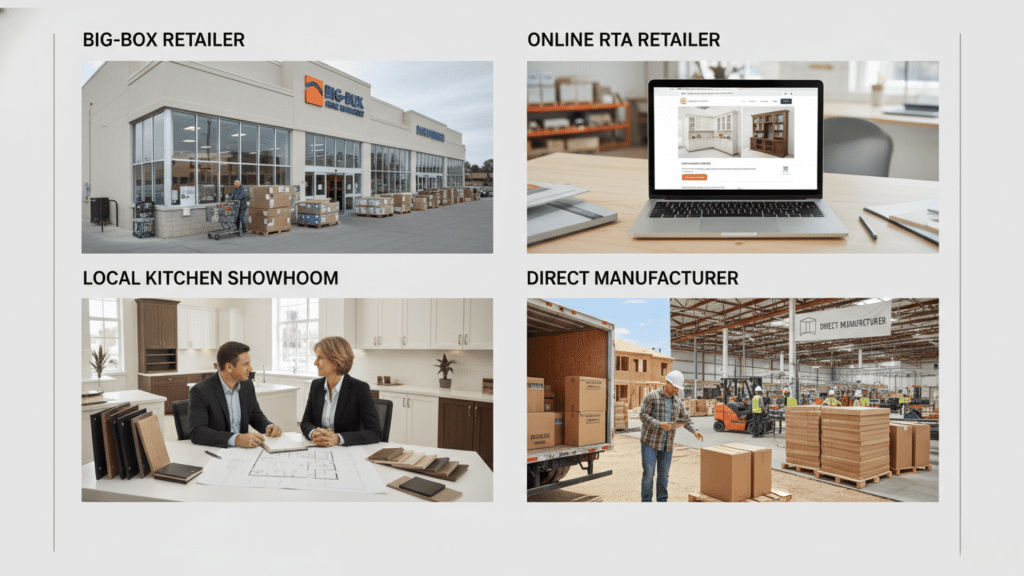
Finding the right supplier for frameless kitchen cabinets depends on your priorities. Here’s where to shop based on what matters most to you.
- Big-Box and National Retailers: Best for fast availability and showrooms, but verify box specs, warranty exclusions, and lead times before ordering.
- Online RTA Retailers: Best for value and wide selection, but check assembly instructions, the return policy for opened boxes, and the speed of replacement parts.
- Local Kitchen Showrooms And Dealers: Best for design help and local accountability; ask about brand options, upgrade pricing, timeline, and installation standards.
- Direct From Manufacturers Or Factory-Direct Importers: Best for competitive pricing on custom specs, but verify certifications, shipping logistics, and who handles damages or missing parts.
- Contractor-Preferred Suppliers: Best for multi-unit projects with consistent SKUs and jobsite delivery, though they often require contractor accounts for trade pricing.
How To Vet A Retailer Or Supplier?
Before buying frameless kitchen cabinets, verify these key details. Check for full specs: box thickness, shelf material, back panel type, and edge banding quality. Review warranty length and what voids it.
Ask for lead times by door style and finish. Confirm shipping method, damage policy, and inspection window. See if they offer sample doors with clear refund rules.
Test their responsiveness by calling with questions and asking about the replacement part speed.
Red flags to avoid: Missing specs, vague “quality plywood” claims without details, no written damage policy, extremely low prices, poor communication, and reviews mentioning slow customer service.
The Bottom Line
Frameless kitchen cabinets offer a modern look and better access to storage. But quality varies wildly between suppliers.
Now you know what to look for: solid box materials, strong joinery, reliable hardware, and proper finishes. You understand the difference between frameless and framed options.
You have a checklist for vetting retailers and spotting red flags. Accurate measurements and smart planning prevent costly reorders. Take your time researching suppliers.
Ask tough questions about warranties and construction specs. Check samples before committing to full orders. Your kitchen deserves cabinets that last decades, not just years.
What questions do you still have about buying frameless kitchen cabinets? Drop a comment below and let’s talk through your specific situation.