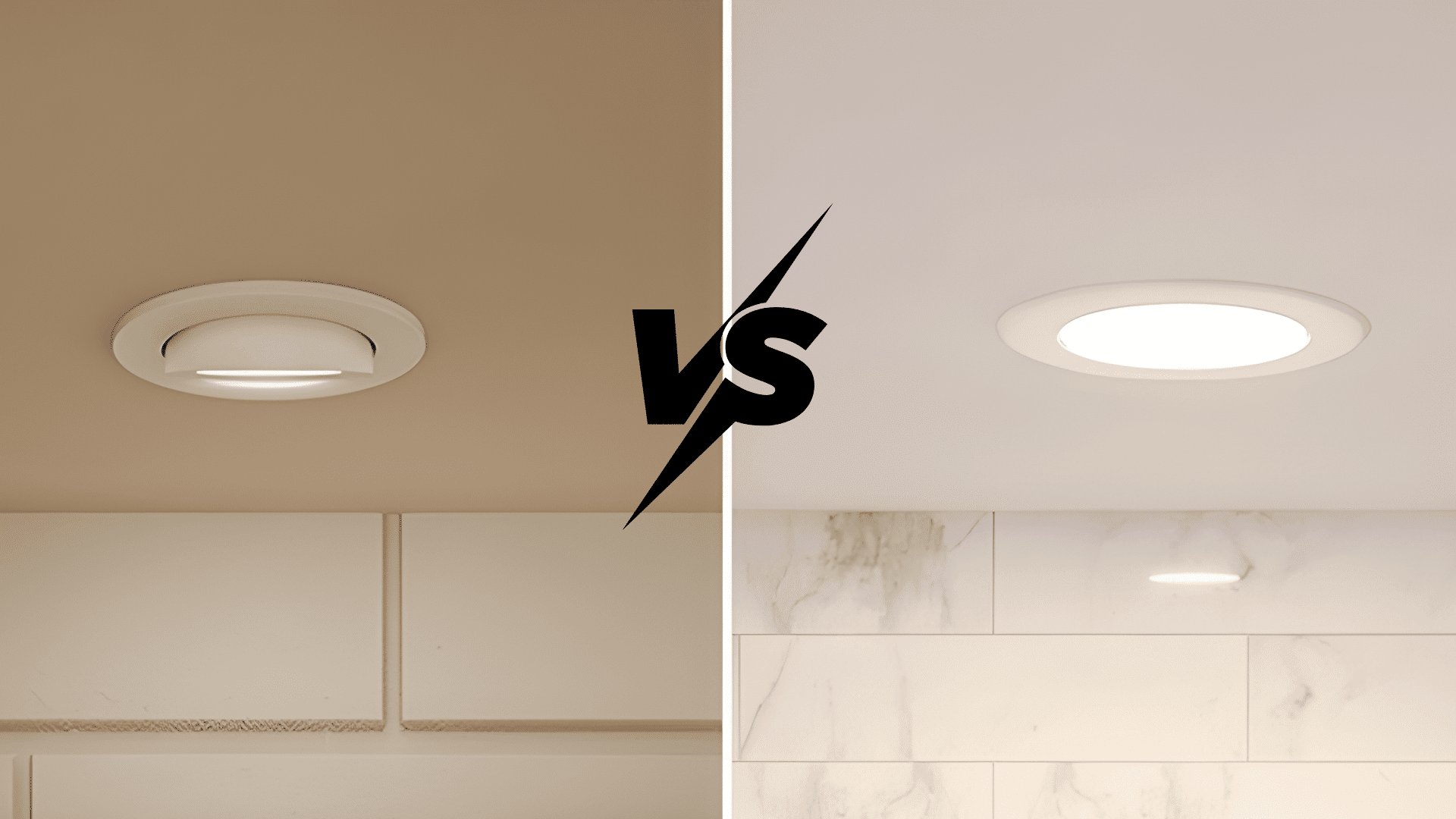
Can Lights vs Recessed Lights: Which Is Right?

Ever stood in a lighting store feeling perplexed by all the options? Can lights, recessed lights, and canless lights all sound similar but mean different things.
Many people pick the wrong type and end up frustrated with installation problems or lights that don’t fit their ceiling space.
The difference is simpler than you think. Can lights need a metal housing, while canless options fit right into your ceiling. Each works better for specific situations.
In this blog, you’ll learn what can lights are, how they compare to canless options, the pros and cons of each type, and step-by-step installation tips to help you choose the proper lighting for your home.
What Are Can Lights?
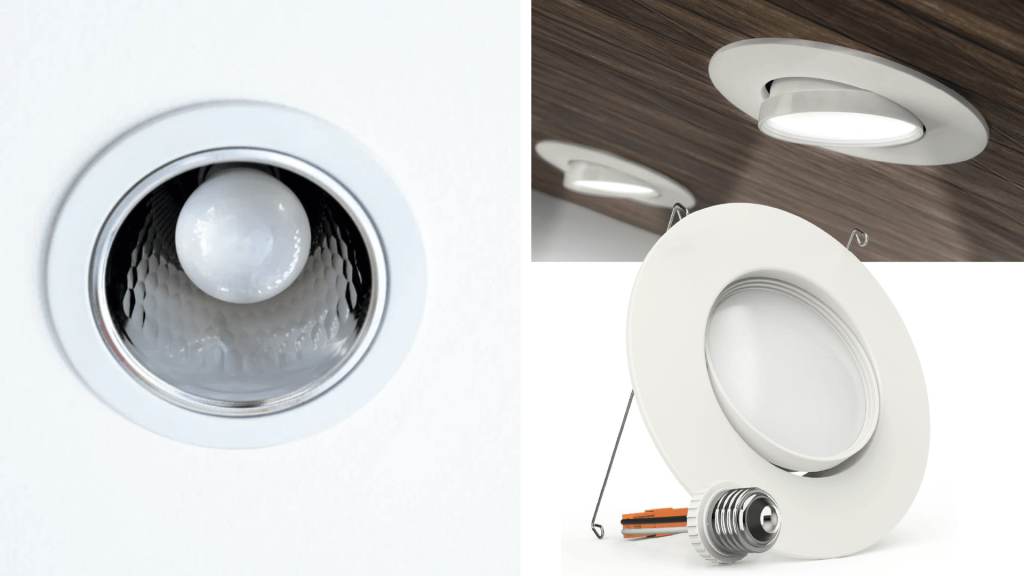
Can lights are lighting fixtures installed directly into your ceiling. They sit flush with the surface, creating a clean and modern look. The fixture includes a cylindrical metal housing that holds the bulb.
This recessed design means the light doesn’t stick out or take up visual space in your room. Can lights work well in almost any room where you want lighting without visible fixtures hanging down?
Common Applications of Can Lights:
- Kitchens: Perfect for task lighting over counters and work areas where you need bright, focused light.
- Living Rooms: Used for ambient lighting or to highlight specific features like artwork or built-in shelves.
- Hallways and Bathrooms: Provides general lighting in smaller or narrow spaces without cluttering the ceiling.
Pros and Cons of Can Lights
Can lights have benefits and drawbacks you should know before installing them? Here’s what works and what doesn’t.
| Pros of Can Lights | Cons of Can Lights |
|---|---|
| Versatile – Works for ambient, accent, or task lighting in any room. | Installation Challenges – Needs a housing can, which can be difficult to install in older homes. |
| Energy Efficient – LED bulbs save energy and last longer. | Space Constraints – Requires enough space above the ceiling for the housing unit. |
| Wide Range of Options – Available in multiple sizes, trims, and finishes to match your style. | Maintenance – May need more upkeep, especially in older systems with several parts. |
What Are Recessed Lights?
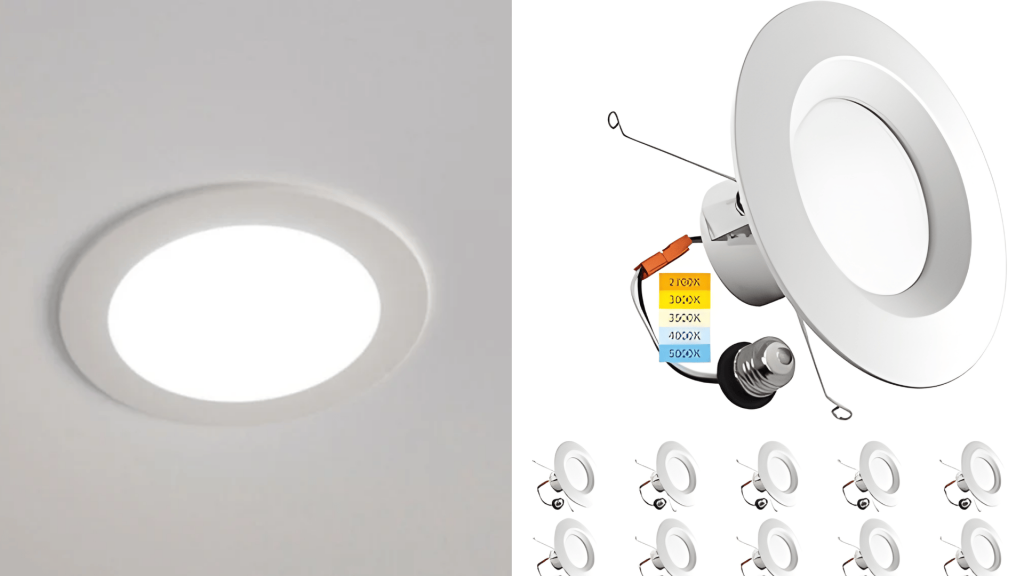
Recessed lights are a broader term that covers can lights and other ceiling fixtures that sit flush with the surface. These lights come in various trim styles and finishes, making them work well with different home designs. While can lights are one type, recessed lights also include fixtures with adjustable housings or special trims for focused lighting.
Types of Recessed Lights:
- Fixed Trim Recessed Lights: Standard, non-adjustable lights for general room illumination
- Adjustable Trim Recessed Lights: Lights with a pivoting feature for task lighting or highlighting specific areas
Key Features:
- Sleek, minimalistic design that blends with ceilings
- Wide variety of trims and finishes to match any home style
- Works for general, accent, or task lighting needs
Pros and Cons of Recessed Lighting
Recessed lights are gaining popularity for good reasons. But they have limits too.
| Pros of Canless Recessed Lighting | Cons of Recessed Lighting |
|---|---|
| Slim Design – Low profile works great for homes with limited ceiling space. | Less Versatile – Fewer options for trims and finishes compared to traditional can lights. |
| Easy to Install – No housing needed makes installation faster and simpler. | Potential Overheating – Can overheat without proper installation since there’s no housing protection. |
| Energy Efficient – Built-in LED technology saves energy and lasts longer. | Not Suitable for All Spaces – May not work in ceilings with insulation or high humidity areas like bathrooms. |
Can vs Canless Recessed Lighting: What’s the Difference?
The main difference between can lights and canless recessed lights comes down to installation and housing needs.
Can lights use a metal housing unit, while canless lights skip the housing altogether. This affects how they install, how much space they need, and how they look in your home.
Can Lights:
Can lights require a metal housing, often called a “can,” that installs into your ceiling. This housing holds and protects the bulb inside. The can needs several inches of space above the ceiling to fit correctly, which means they won’t work in every home.
Canless Recessed Lighting:
Canless lights don’t need any housing or can at all. They fit directly into the ceiling opening, creating a sleek look. This makes them perfect for spaces with low ceilings or limited clearance above. The slim design also gives a more modern appearance.
Considerations When Choosing Between Can and Recessed Lighting
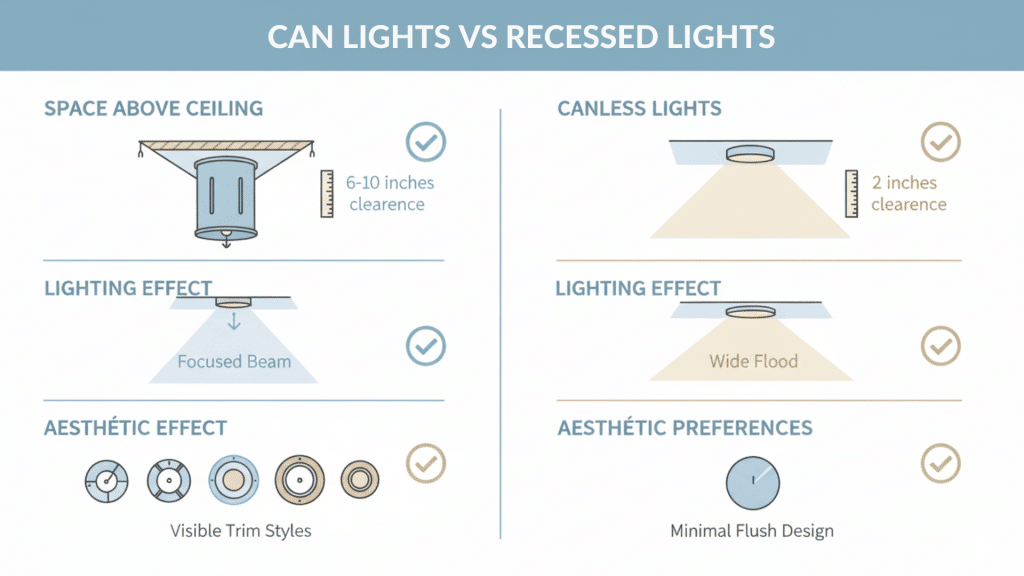
Think about these factors before choosing your lighting type. Your ceiling space, lighting needs, and style preferences all matter.
1. Space Above the Ceiling
- Can Lights: Need several inches of clearance above the ceiling for the housing. Won’t work in homes with low ceilings or limited space.
- Canless Recessed Lighting: Works great when there’s little to no space above the ceiling. They fit directly into the opening for a clean look.
2. Lighting Effect
- Can Lights: Provide both general room lighting and focused task lighting. This flexibility works well for different uses.
- Canless Recessed Lighting: Usually offers more focused, directional light. Best for accent lighting or highlighting specific spots.
3. Aesthetic Preferences
- Can Lights: Come in many trim styles and finishes. You can match them to your room’s design and decor.
- Canless Recessed Lighting: Give a modern, minimal appearance. They blend right into the ceiling without any visible trim or edges.
How to Install Can Lights
Installing can lights takes more work than canless options, but it’s manageable with the right tools.
Step-by-Step Installation:
-
Turn Off the Power: Always disconnect electricity before starting any electrical work.
-
Mark the Placement: Use a pencil to mark spots on the ceiling where you want the lights.
-
Cut the Hole: Use a drywall saw to cut an opening for the housing can.
-
Install the Housing: Place the housing can into the ceiling opening and secure it firmly.
-
Wire the Fixture: Connect the electrical wiring to the fixture and make sure it’s secure.
-
Install the Trim and Bulb: Add your chosen trim and bulb once the housing is set.
-
Test the Light: Turn the power back on and check that the light works properly.
How to Install Canless Recessed Lights
Canless lights are simpler to install since they don’t need a housing can.
Step-by-Step Installation:
-
Turn Off the Power: Start by turning off the electricity at the breaker box.
-
Mark the Placement: Decide where you want the lights and mark those spots on the ceiling.
-
Cut the Hole: Use a hole saw to cut the ceiling opening for the fixture.
-
Install the Light: Place the canless fixture into the hole and make sure it fits snugly.
-
Wire the Fixture: Connect the electrical wiring and secure the fixture in place.
-
Test the Light: Turn the power back on and test the light to confirm it works.
Which Is Right for You? A Quick Comparison
Choosing between can lights and canless recessed lighting depends on your ceiling space and style preferences.
Can lights work well if you have enough clearance above your ceiling and want more options for trims and finishes? They give you flexibility in how your lights look.
Canless recessed lighting is better if you have limited ceiling space, want faster installation, or prefer a modern, minimal look. They’re also great for retrofit projects where you’re updating existing spaces.
Think about your ceiling height, installation comfort level, and the look you want before making your choice.
Final Thoughts
Choosing between can lights and canless recessed lighting doesn’t have to be complicated. Can lights offer versatility and more trim options, but they need extra ceiling space.
Canless lights provide easier installation and work great in tight spaces with a modern look.
Your decision should come down to three things: how much space you have above your ceiling, your installation skills, and the style you want.
Both options can transform your home’s lighting. The right choice depends on your specific needs and space limitations.
Ready to upgrade your home lighting? Consult with a lighting professional to get personalized advice, or explore more lighting guides on our site to make the best choice for your space.