Bohemian Interior Design: Characteristics, Ideas and How to Style

You saved the photos. You pinned the rooms. The rattan chairs, the macrame wall hangings, the trailing plants on every shelf.
Then you tried it at home. It looked cluttered instead of cozy. Something was off, but you could not name it.
The challenge with bohemian interior design is this: the style looks effortless, but it works on real principles. Layering without intention just creates a mess.
This post covers what bohemian style actually is, its defining characteristics, and specific ideas you can use room by room, without starting from scratch or spending a lot.
What is Bohemian Interior Design?
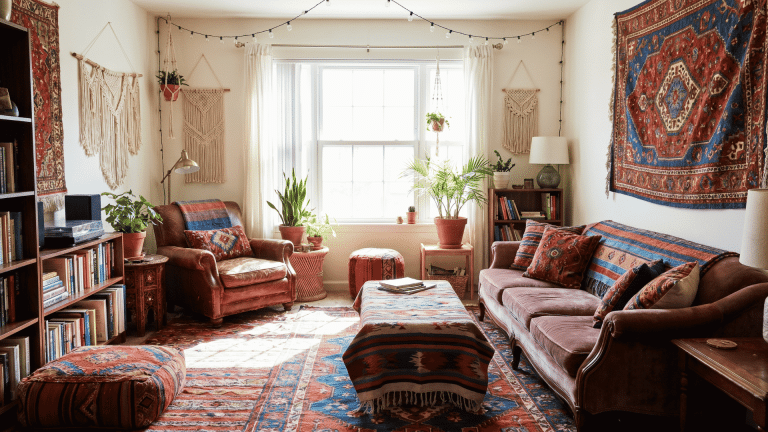
Bohemian interior design is a free-spirited, eclectic decorating style that combines natural materials, layered textiles, vintage furniture, plants, and global influences. The result is a space that feels warm, personal, and collected over time.
Also called boho or boho-chic, the style puts personal expression ahead of matching sets or strict rules. A typical boho room might include a woven rug, a rattan chair, handmade pottery, and vintage artwork. Nothing needs to match. Everything needs to feel right together.
Where Did Bohemian Style Come From?
The word “bohemian” originally described artists, writers, and creatives in 19th-century Paris. They followed unconventional lifestyles and rejected materialism. Their homes reflected travel, craft, and personal expression.
Interior design adopted these same ideas. Today’s boho spaces carry that same creative spirit, combining handmade textiles, cultural finds, and natural materials into something that feels lived-in rather than decorated.
Bohemian Style Interior Design Characteristics
These six elements form the foundation of every successful boho space. Get these right and everything else falls into place.
- Layered Textures and Textiles. Texture is what separates a boho room from a plain one. Without it, even the right furniture falls flat. Combine rough wood, soft linen, woven jute, and embroidered cushions to build real depth.
- A Grounded Color Palette: Color in a boho room is not random; it follows a clear base. Jumping between too many shades without an anchor kills the warmth. Pick earthy neutrals or jewel tones as your base, then pull the other into accents only.
- Natural Materials Synthetic finishes break the visual language that makes boho spaces feel cohesive. Natural materials do the opposite; they belong together without trying. Choose rattan, raw wood, jute, clay, linen, and bamboo over plastic or laminate alternatives.
- Global and Vintage Influences: A boho room should feel as if it were built over time, not bought in one afternoon. Each piece needs a sense of origin or history. Bring in Moroccan lanterns, Turkish kilims, block-printed throws, or carved wooden objects from different cultures.
- Plants, Always Plants, add life and movement that no decor piece can replicate. A room without greenery tends to feel still and flat. Group pothos, snake plants, or trailing ivy at different heights using terracotta pots and woven hanging planters.
- Sustainability and Intentional Buying: In 2025, how you source matters as much as what you buy. Mass-produced items rarely carry the character boho spaces need. Choose secondhand furniture, handmade ceramics, and repurposed pieces from thrift stores, estate sales, and craft markets.
21 Bohemian Interior Design Ideas You Can Try
These are specific ideas drawn from real boho rooms. Start with one. Add more over time.
1. Layer Two Rugs Instead of One
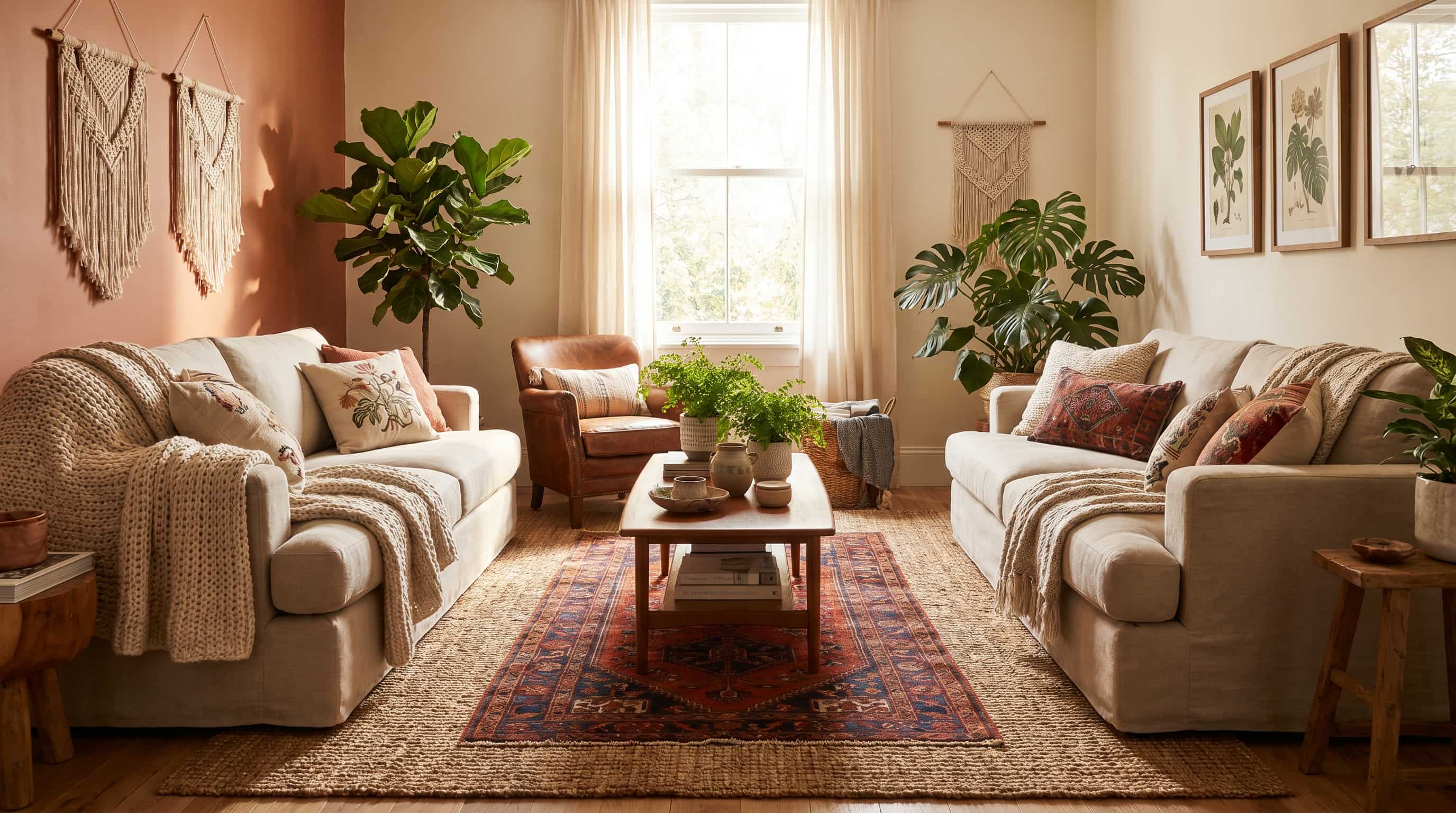
Use a large natural jute rug as the base. Place a smaller patterned kilim or vintage rug on top. The contrast in texture and pattern creates depth right away.
- Base: neutral jute, durable and affordable
- Top layer: kilim or vintage rug for pattern and color
- Size rule: the top rug should be roughly half the size of the base
2. Hang a Large Macrame Wall Piece
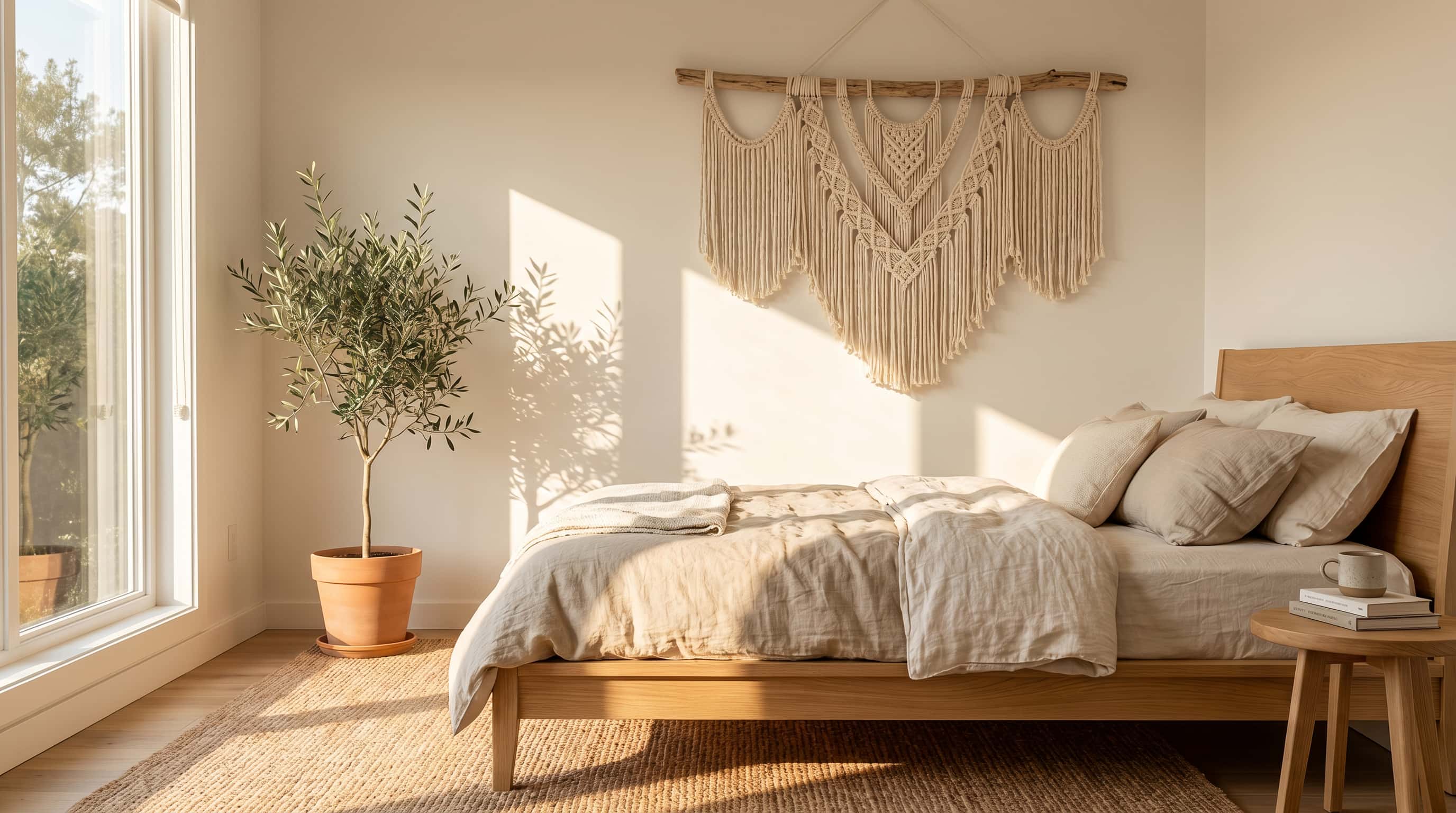
A macrame hanging above a sofa or bed replaces the need for other wall art in that spot. Natural cotton macrame works in almost every boho color palette. Look for handmade versions at craft markets or on Etsy; an irregular texture reads as more authentic than machine-made.
3. Build a Gallery Wall With Mixed Frames
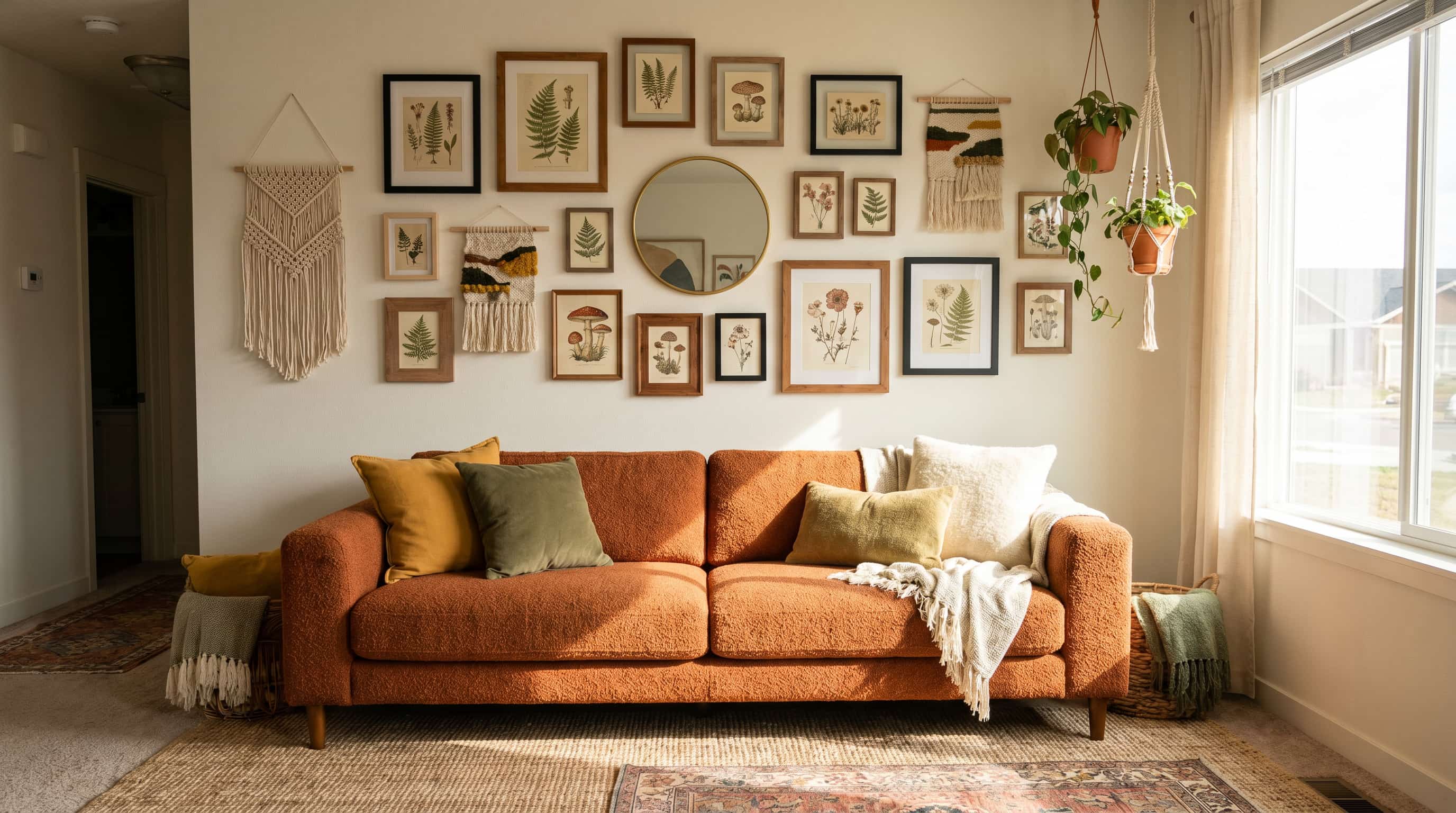
Mix wooden frames, thin black metal frames, and unframed canvas pieces. Add a small mirror, a textile swatch, and a pressed botanical print. The variety of textures and scales is the whole point.
- Mix frame materials: wood, metal, wicker
- Include at least one non-photo element (textile, mirror, pressed leaf)
- Vary sizes from small to large
4. Use a Vintage Trunk as a Coffee Table
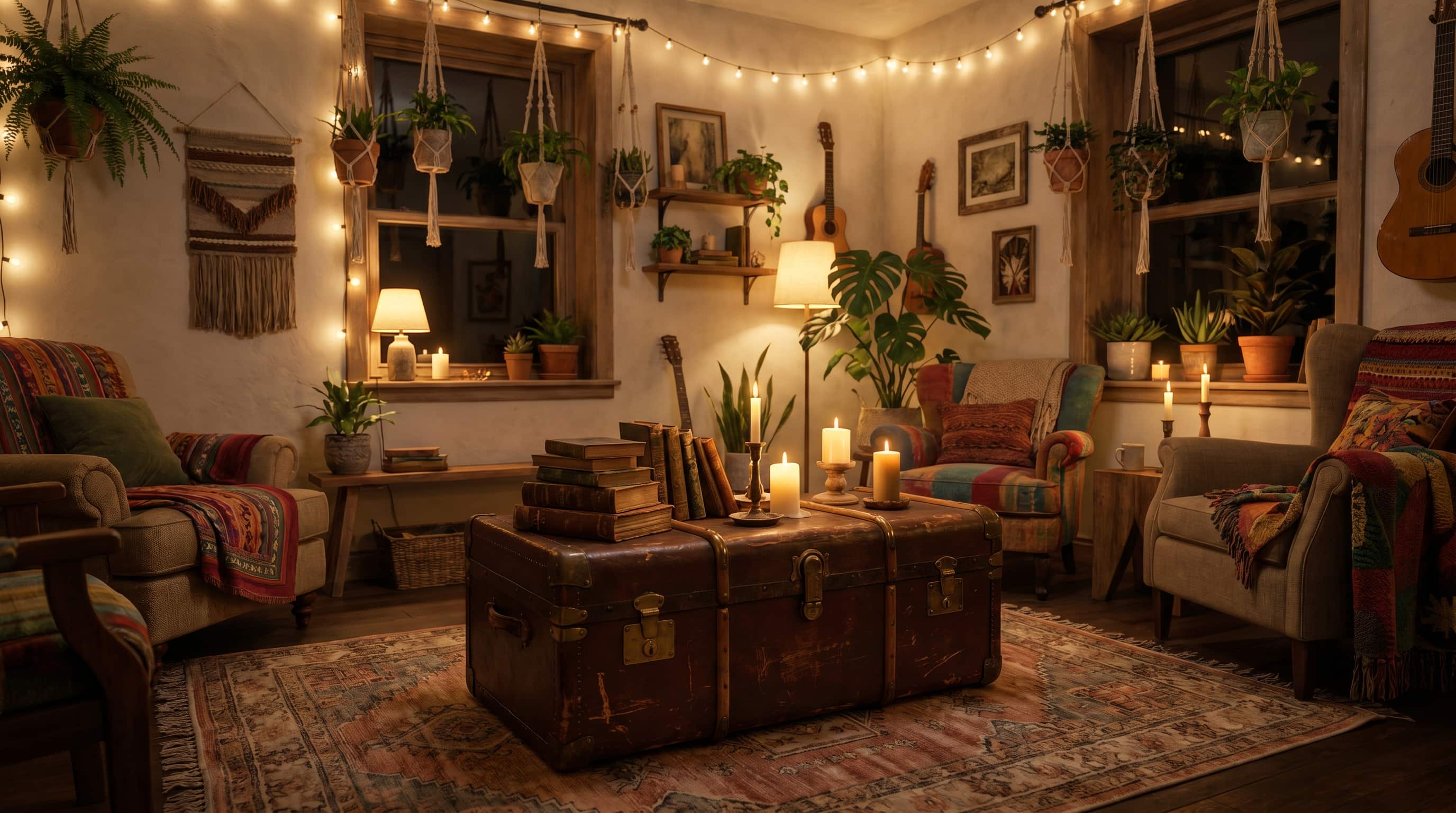
A wooden or leather trunk with visible wear adds storage and character at the same time. It looks like it came from somewhere interesting, because it probably did.
Thrift stores and estate sales are the best places to find these. They cost very little and last for years.
5. Start With a Neutral Sofa
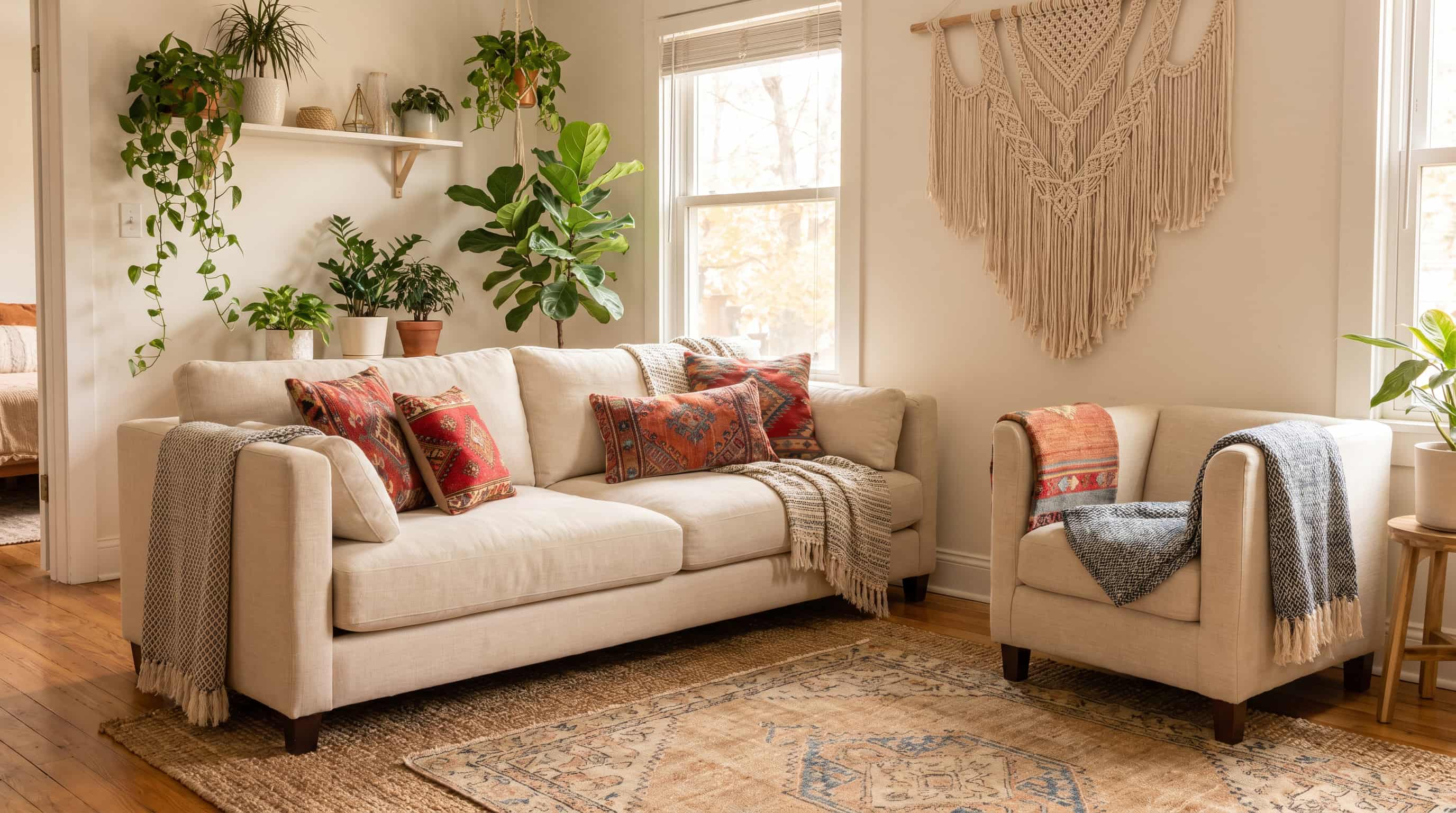
A cream or warm gray sofa gives you something to layer against. A kilim rug underneath, a macrame wall hanging above, and a mix of patterned throw pillows that hold together as a boho living room.
Bold statement pieces work better as chairs, poufs, or accents than as the main sofa. If you are choosing between sofa styles, low-profile and casual silhouettes tend to suit boho spaces best.
6. Add Floor Cushions or a Moroccan Pouf
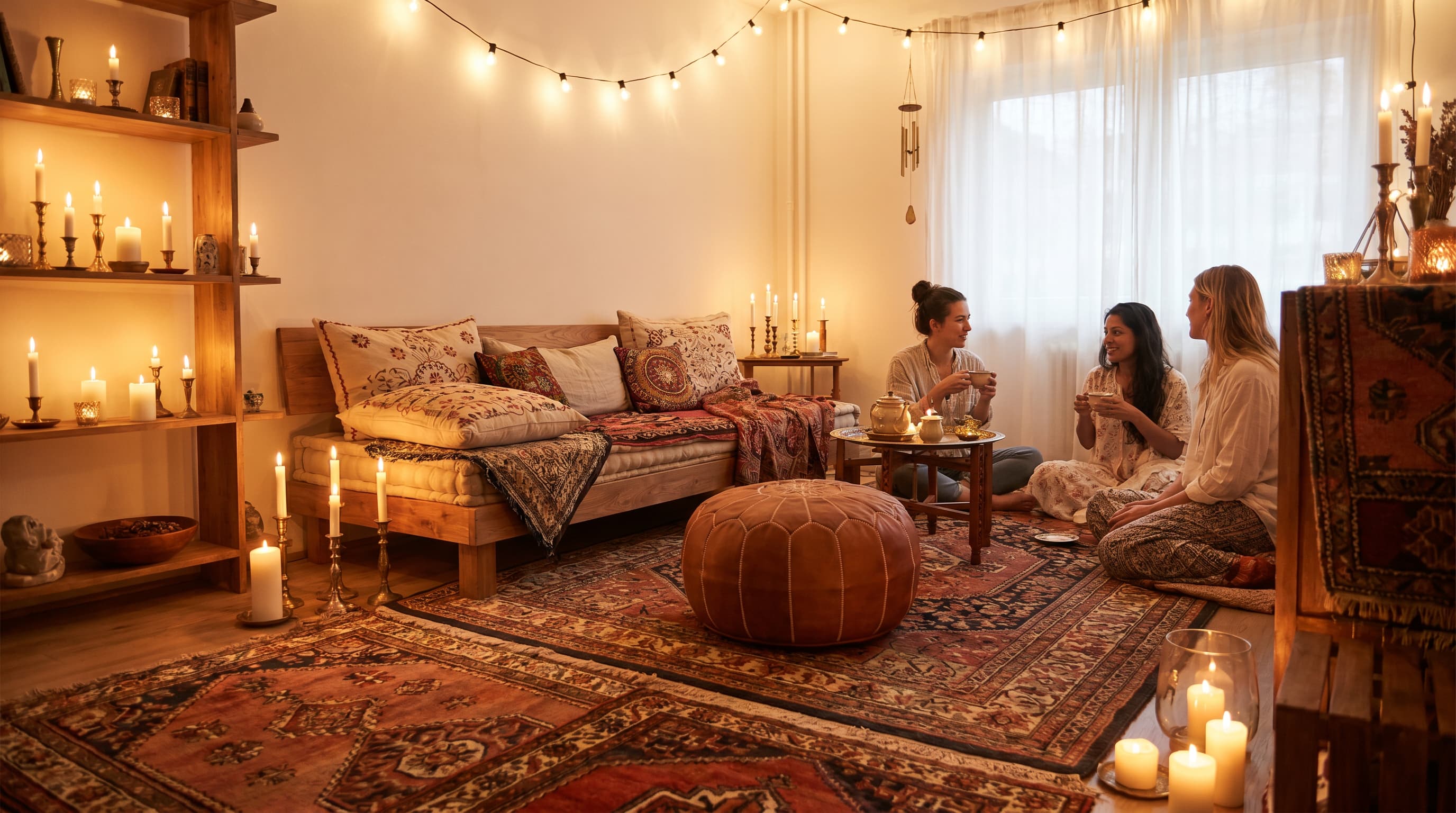
Low-level seating is one of the clearest signals of a boho room. A Moroccan leather pouf or a large floor cushion in embroidered fabric makes a space feel relaxed in a way that matching armchairs do not.
- Moroccan leather poufs: durable, pack flat, classic boho
- Large floor cushions: affordable, easy to store, very flexible
- Woven ottomans: work as both seating and a side table
7. Drape Fabric Over Furniture
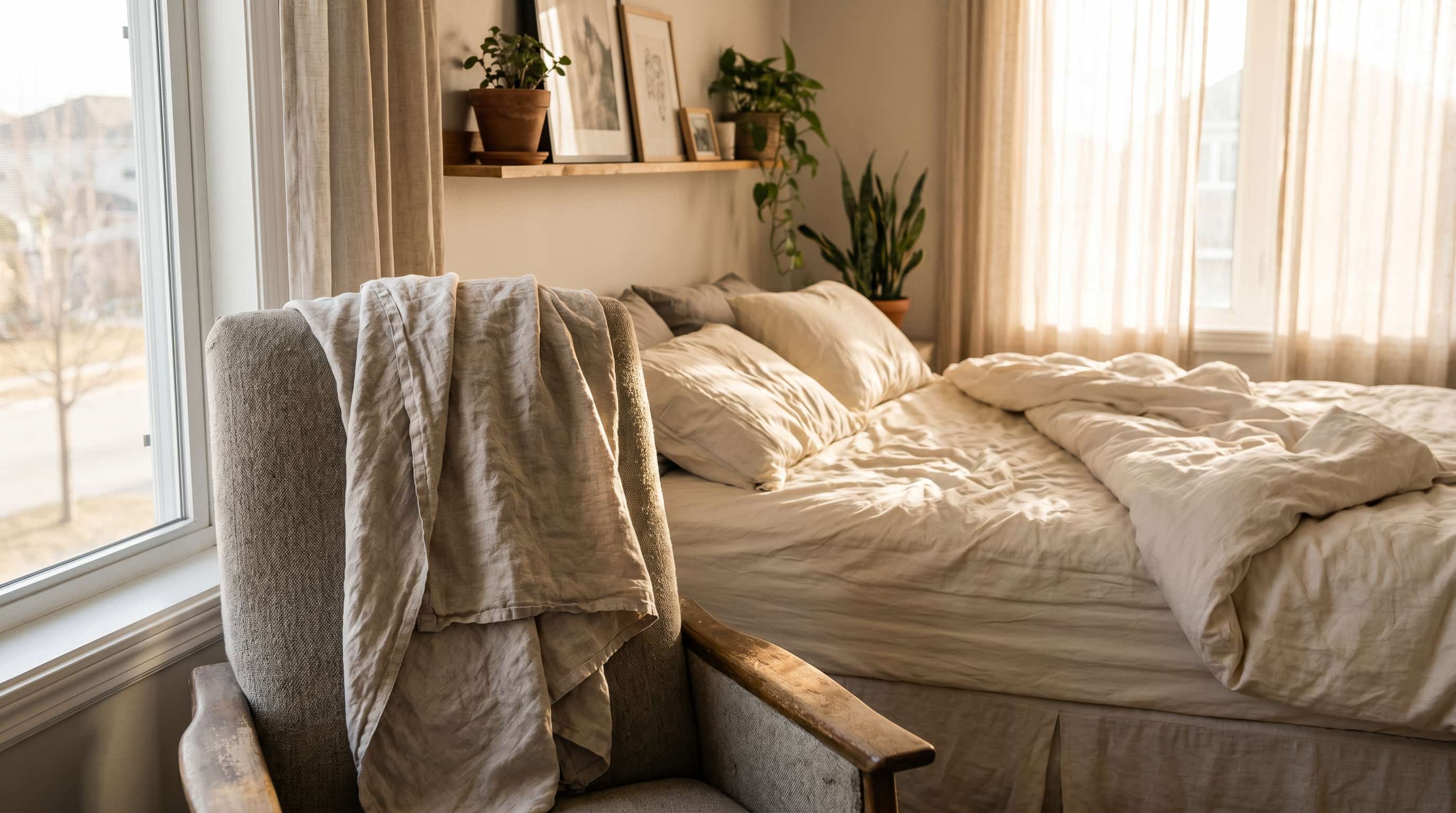
A linen throw is draped loosely over the arm of a sofa. A printed cotton blanket folded at the foot of a bed.
Draped fabric softens furniture and adds color with no permanent commitment. It also makes a room feel lived-in immediately.
This works especially well if your main furniture is from a flat-pack store. The fabric layers break the visual uniformity.
8. Swap Plastic Storage for Woven Baskets
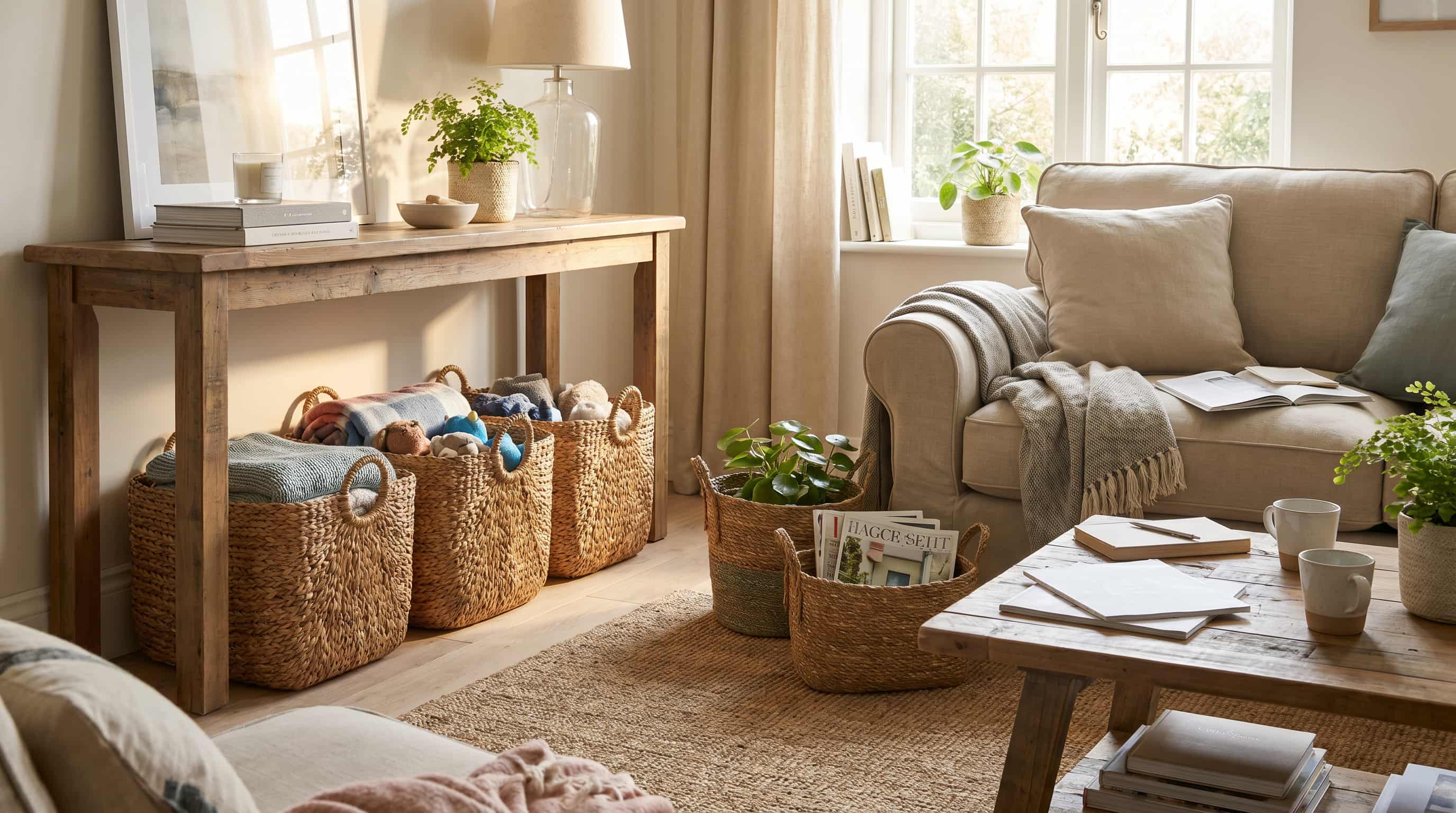
This applies to every room in the house. Blanket storage, bathroom essentials, magazine holders, laundry.
Wicker and seagrass baskets cost very little and immediately replace the visual noise of plastic bins. Even changing one or two bins in a room makes a visible difference.
Pro Tip: Large market baskets make great laundry hampers. Smaller lidded baskets work for bathroom counters.
9. Use Only Warm Bulbs Throughout the Space
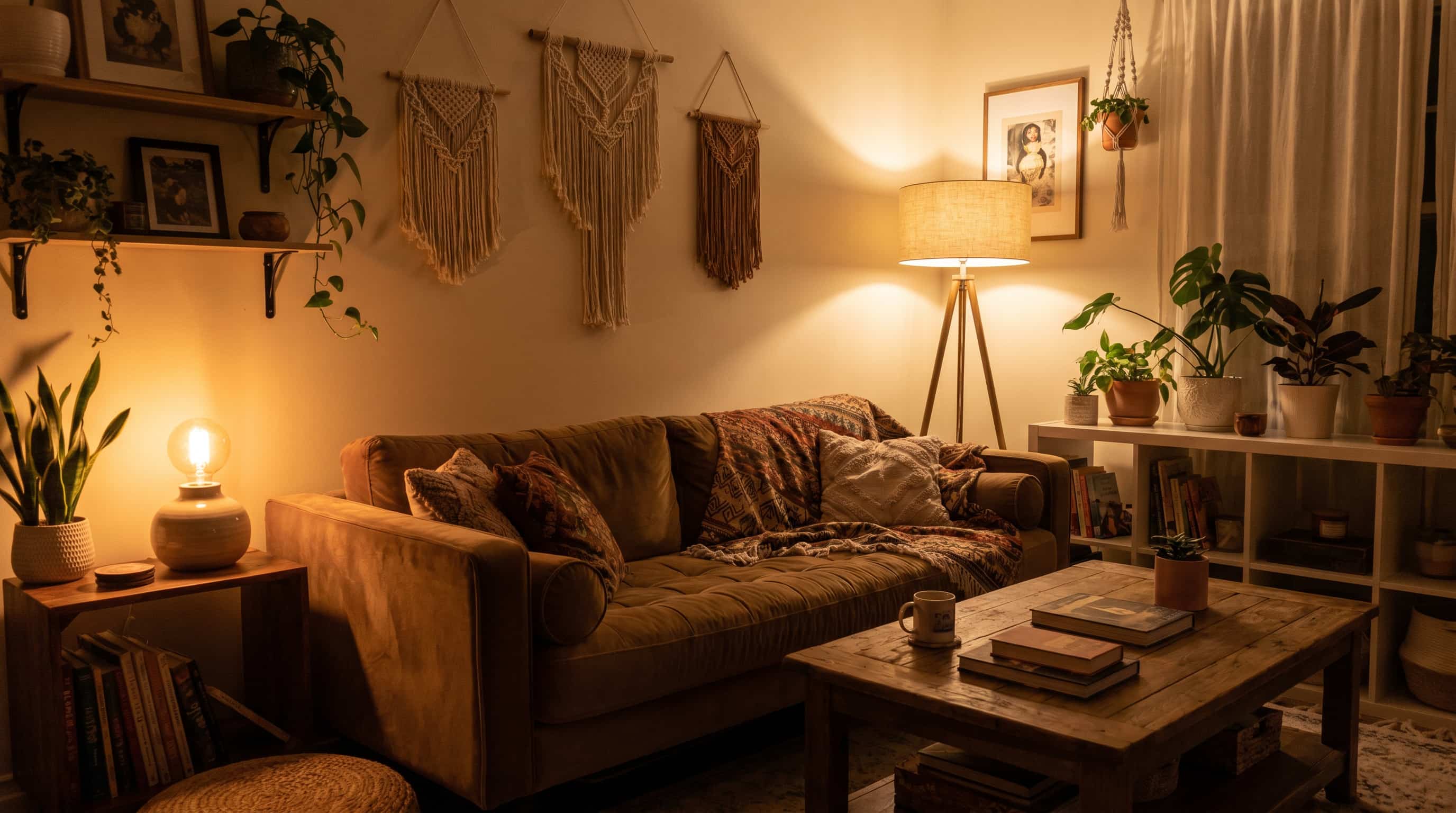
This is the single most underrated move in boho design. Overhead lighting alone drains the warmth from any boho room.
The style depends on layered, ambient light from multiple sources at different heights.
Rattan pendant lights are the most recognizable boho choice, but brass floor lamps, woven table lampshades, and candles do just as well.
One firm rule: use only warm bulbs, 2700K or lower. Cool white light turns a carefully layered boho room into a well-lit storage unit.
10. Hang String Lights Behind a Sheer Canopy
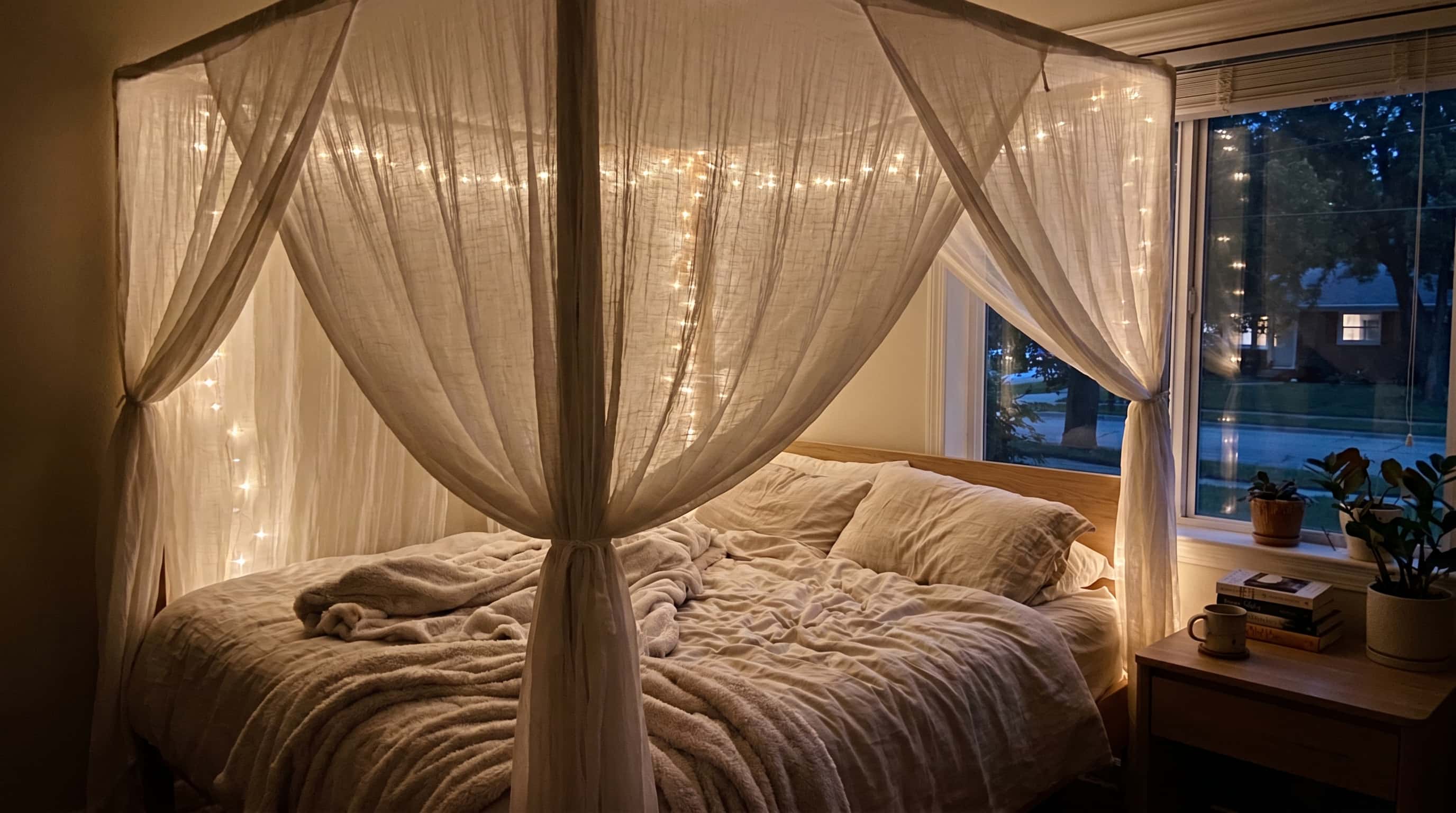
Warm-toned string lights draped behind sheer white or cream curtains create soft, ambient light in a bedroom. It costs very little.
Use the warm-toned kind, not cool white. Cool white string lights work against the boho palette.
This works especially well draped across a wall, around a bed frame, or over a window.
11. Display Collected Objects on Open Shelving
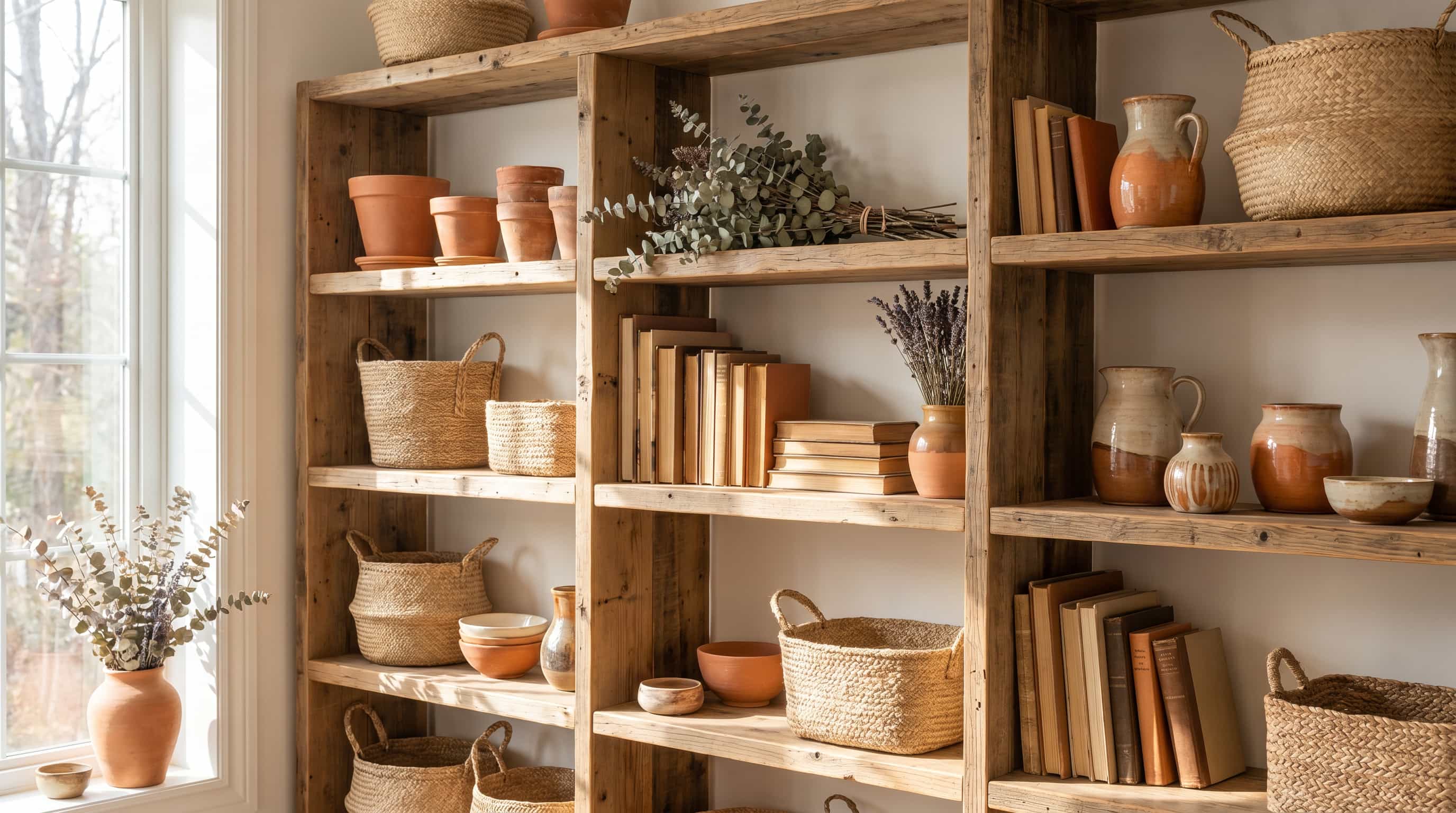
Group items in threes or fives. A clay pot, a small carved wooden piece, a bundle of dried botanicals, a stack of woven coasters, a stack of worn paperbacks.
Imperfect groupings feel more authentic than symmetrical arrangements. The pieces do not need to match. They need to share a general warmth of material and color.
- Odd numbers look more natural than even numbers
- Mix heights: tall items at the back, shorter ones at the front
- Leave some space. Crowded shelves look cluttered, not collected.
12. Use Earthen Oil Lamps or Candle Clusters
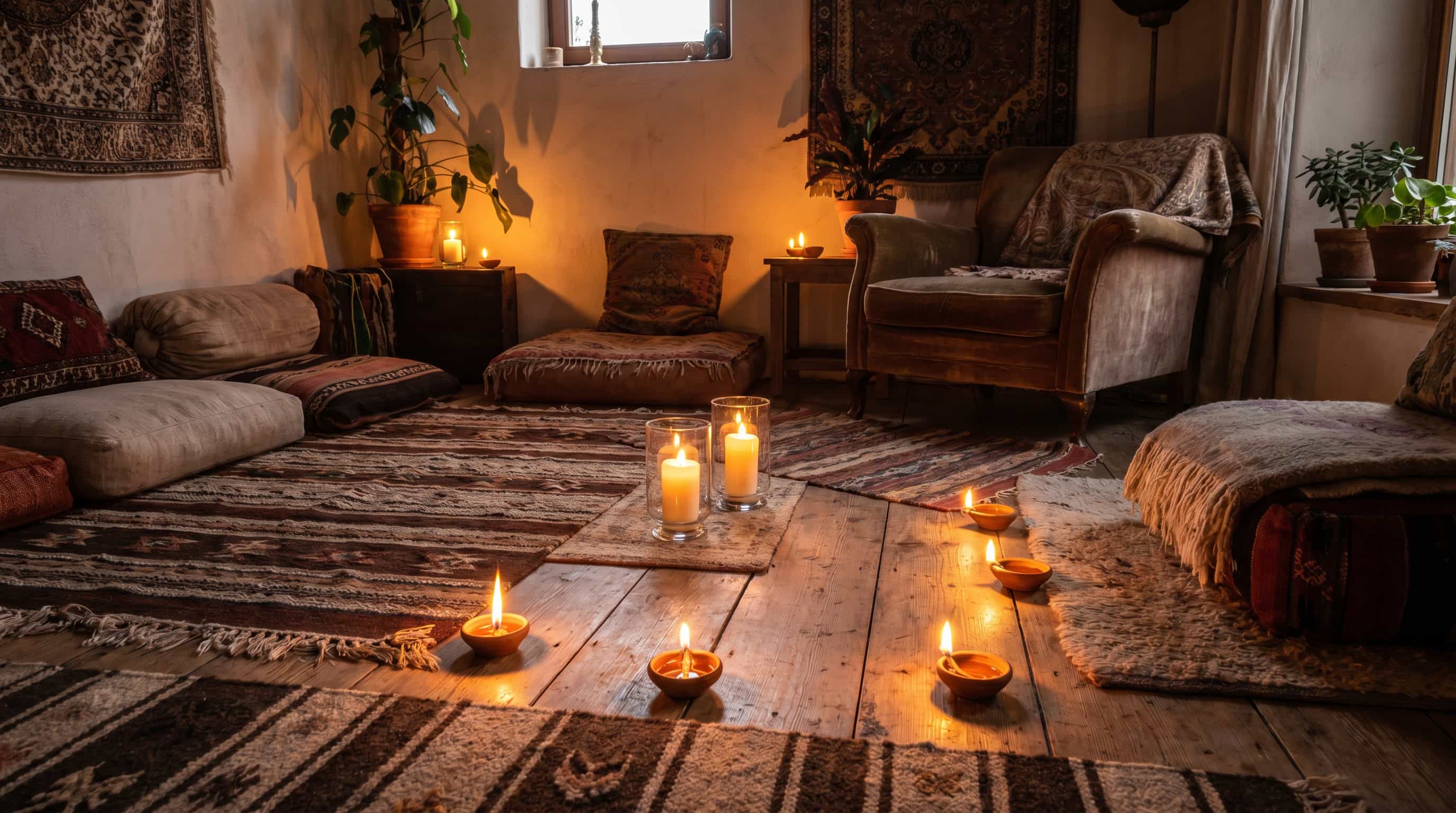
The quality of light from an oil lamp or a cluster of candles at floor level cannot be replicated by overhead bulbs.
Even five minutes with these lights changes the whole atmosphere of a room. Oil lamps in terracotta or clay work especially well in boho spaces.
Small candle clusters grouped on a wooden tray or a vintage plate feel intentional rather than scattered.
13. Add a Sheer Canopy Over the Bed
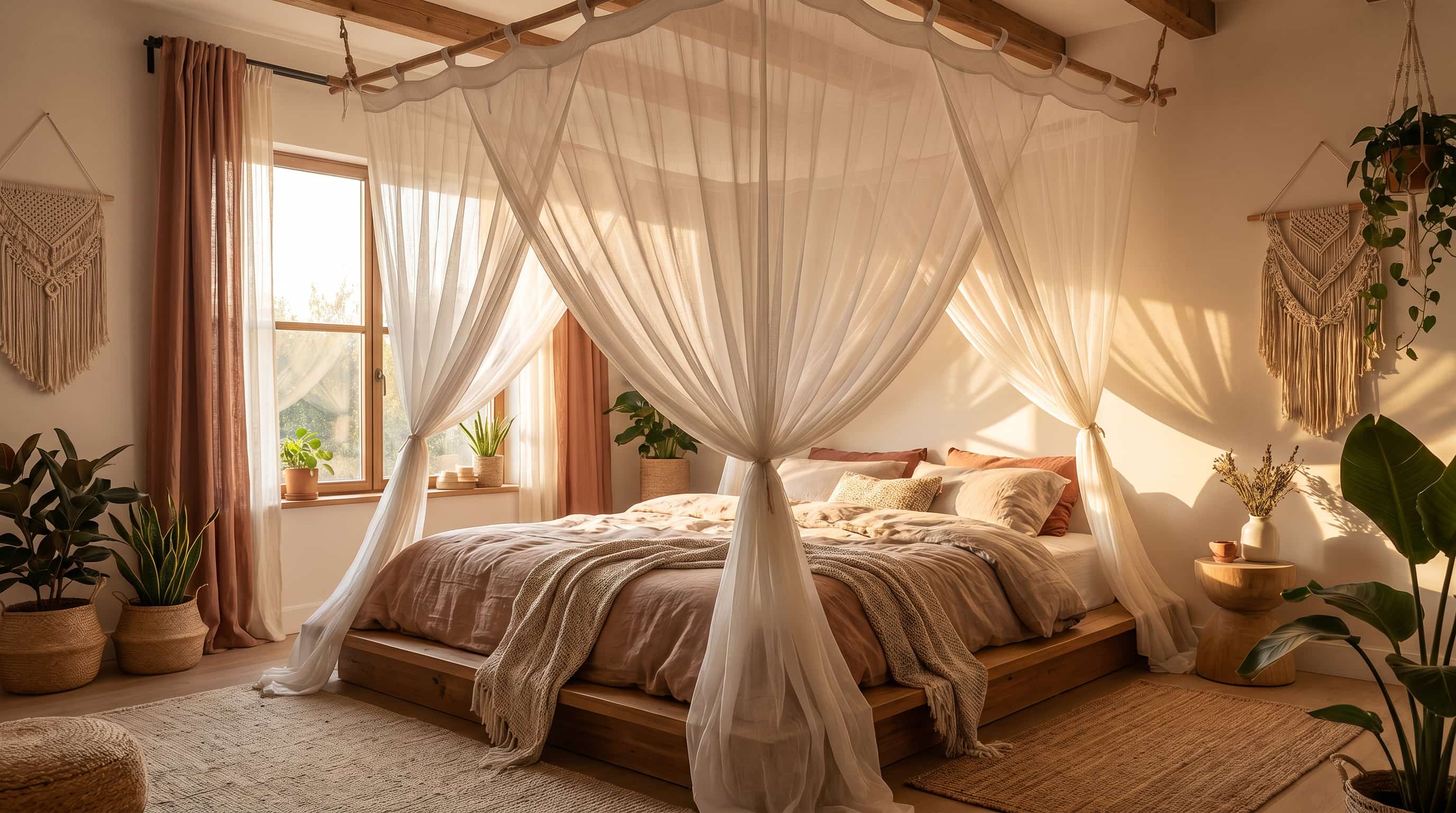
A sheer canopy draped from the ceiling or around a simple wooden bed frame immediately changes the feeling of a bedroom.
You do not need a canopy bed frame to do this. A ceiling hook and lightweight sheer fabric cost very little. The effect is significant.
14. Layer the Bed Itself
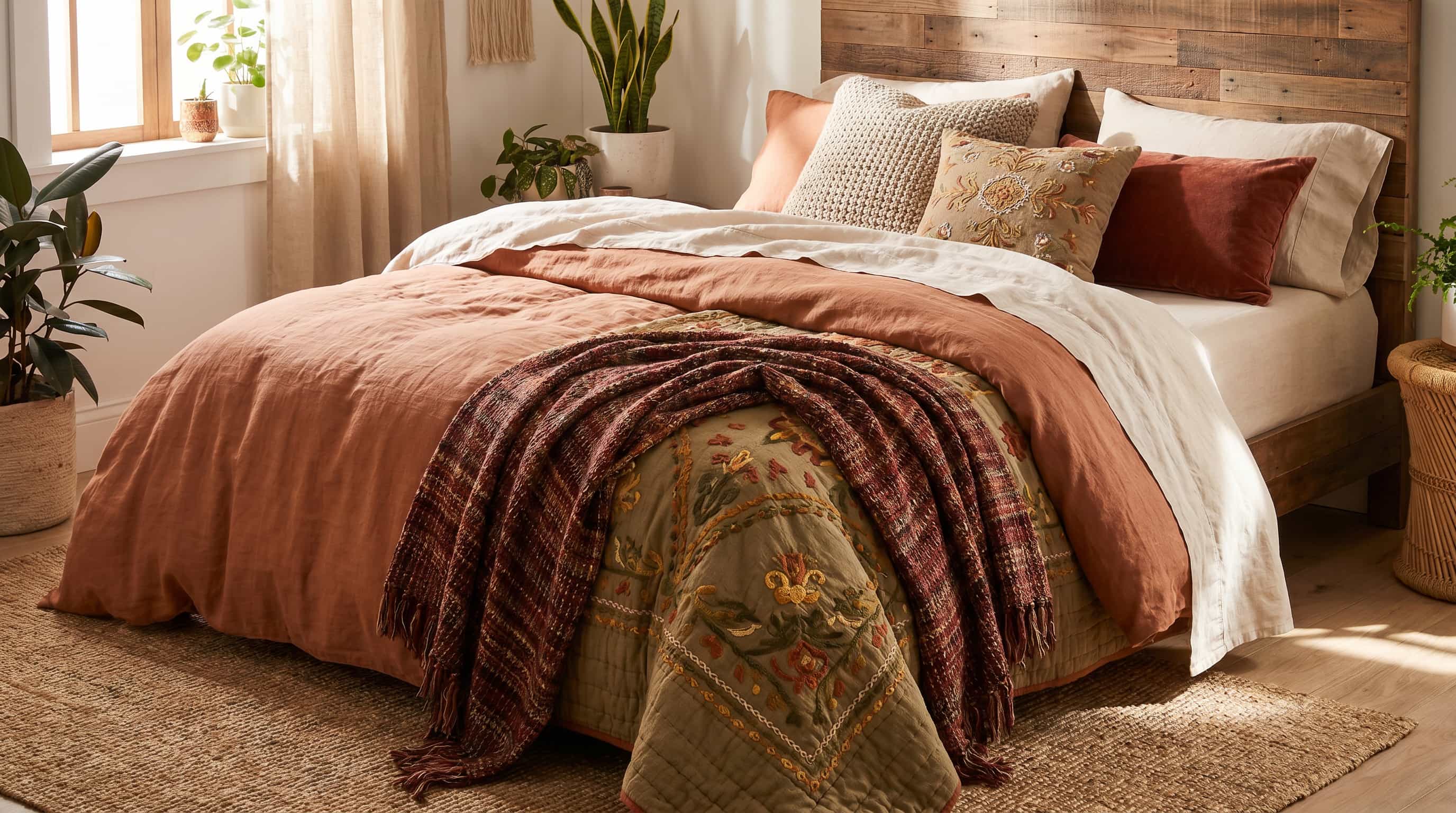
The boho bedroom is where layering really pays off. A linen duvet under an embroidered quilt.
A patterned throw at the foot. A mix of cushions in different sizes and fabrics. Each layer should appear visually distinct from the others.
- Base layer: linen or cotton duvet in a neutral
- Middle layer: embroidered quilt or woven blanket with a pattern
- Top layer: printed cotton throw, loosely folded at the foot
- Cushions: mix of sizes, fabrics, and textures
15. Choose a Low Wooden Bed Frame
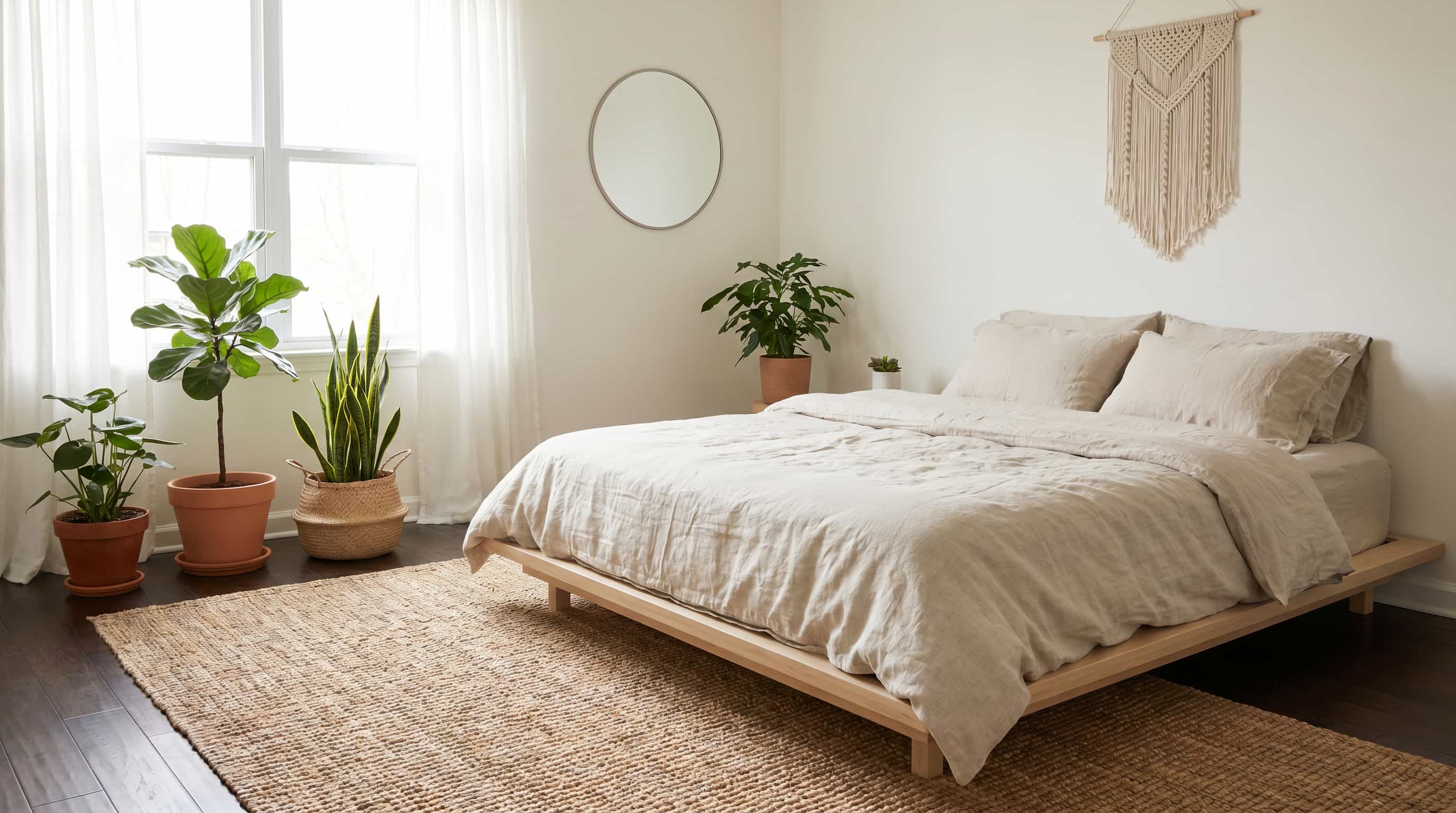
A low wooden bed frame, or a mattress placed on a low platform, feels more authentically boho than anything raised on a traditional frame.
The lower the profile, the more relaxed and grounded the room feels. It also makes a small bedroom look larger.
16. Style the Bedside Area Like a Collected Corner
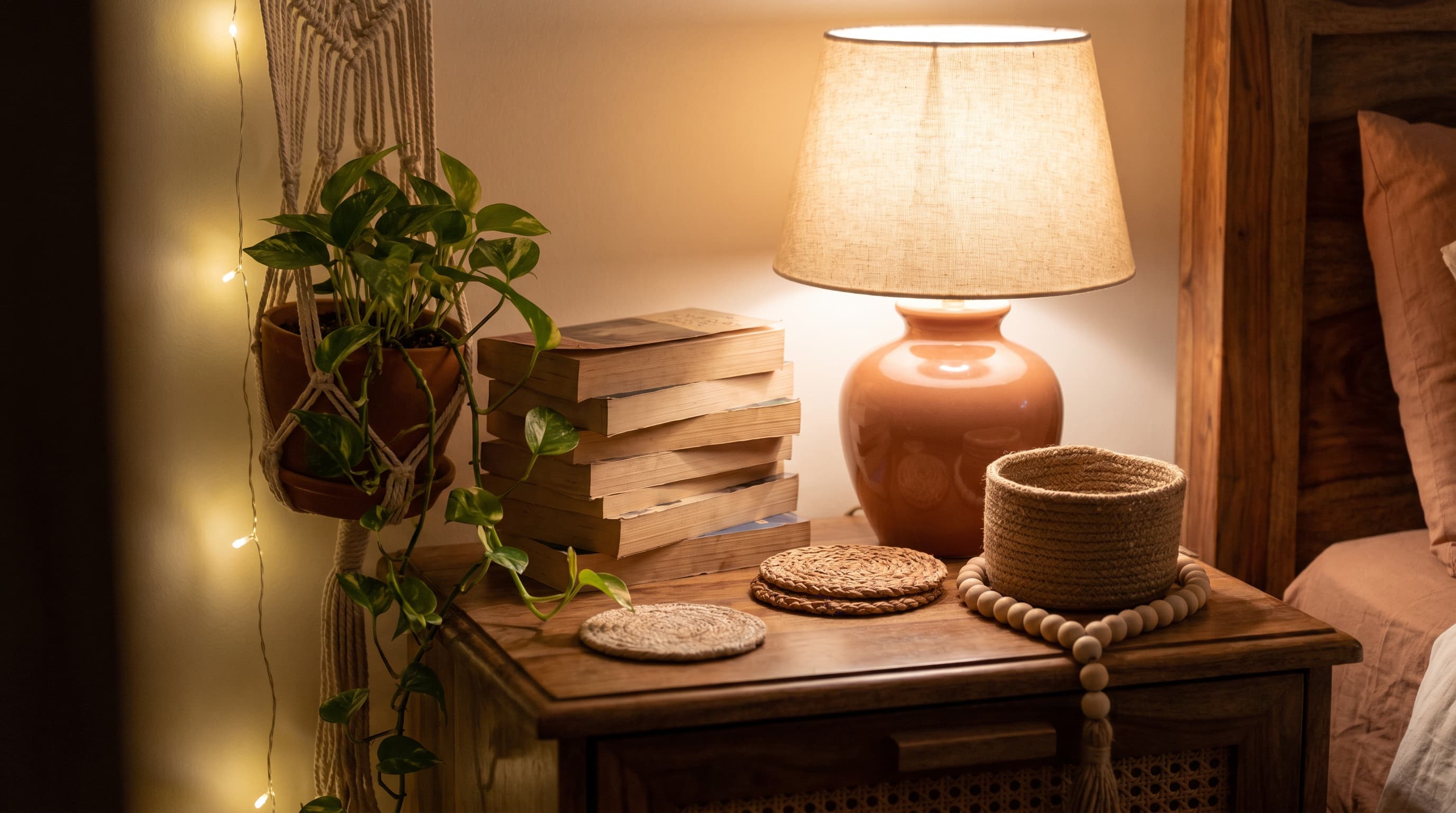
The bedside area in a boho bedroom works best with a small stack of books, a ceramic lamp with a woven shade, a trailing plant, and one or two meaningful objects.
Not a matched nightstand set with matching lamps from a catalog. The asymmetry and the mix of objects are what give it personality.
17. Bring the Boho Style Into the Bathroom
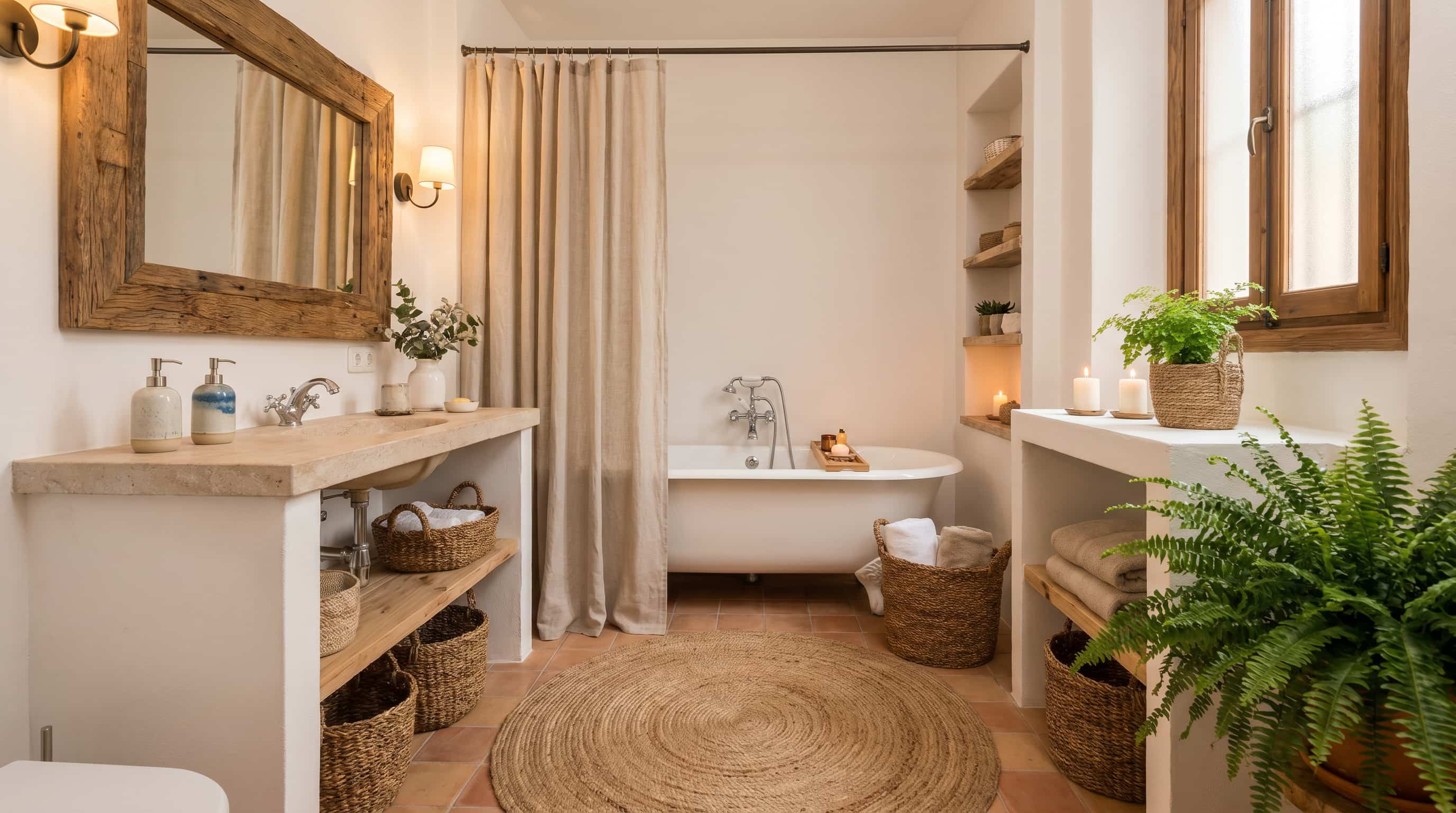
Even a small bathroom gets the boho treatment.
- Woven baskets for storage instead of plastic bins
- A jute bath mat instead of a synthetic one
- A potted plant on the counter or hanging from a hook
- A natural wood mirror frame
- A few hand-thrown ceramic pieces instead of mass-produced plastic dispensers
Small spaces suit boho well. The style relies on texture and warmth rather than scale.
18. Group Plants at Different Heights
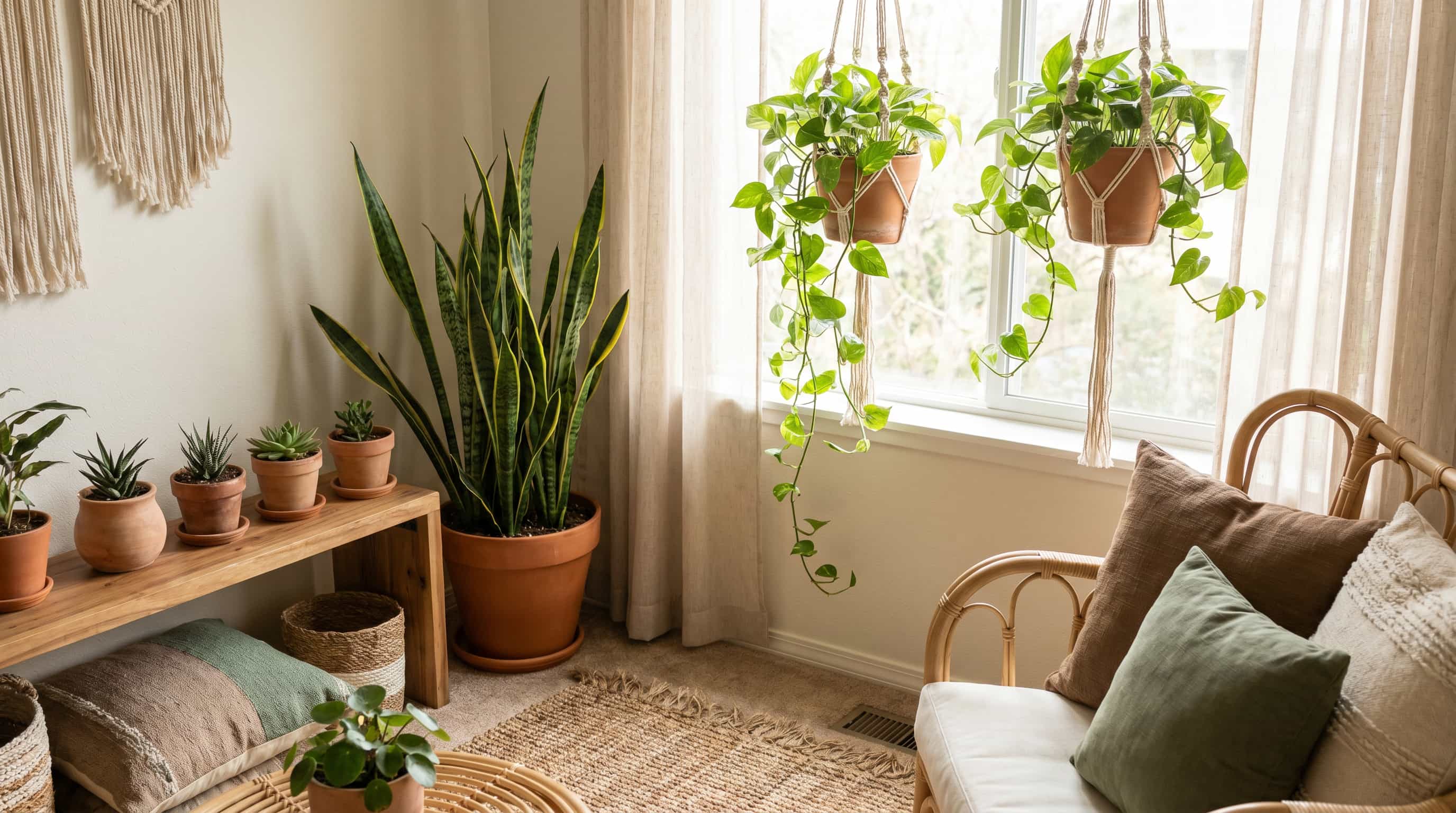
A single plant on a shelf alone does not carry the same visual weight as a cluster.
Group plants of different sizes together. A tall snake plant at the back, a medium trailing pothos in a hanging planter, and a small succulent in a clay pot at the front.
The variety of height and leaf shape creates something genuinely interesting.
Pro Tip: Easy boho plants include pothos, snake plants, fiddle leaf figs, and trailing ivy. All are low-maintenance and widely available.
19. Choose Natural Materials Over Synthetic Ones
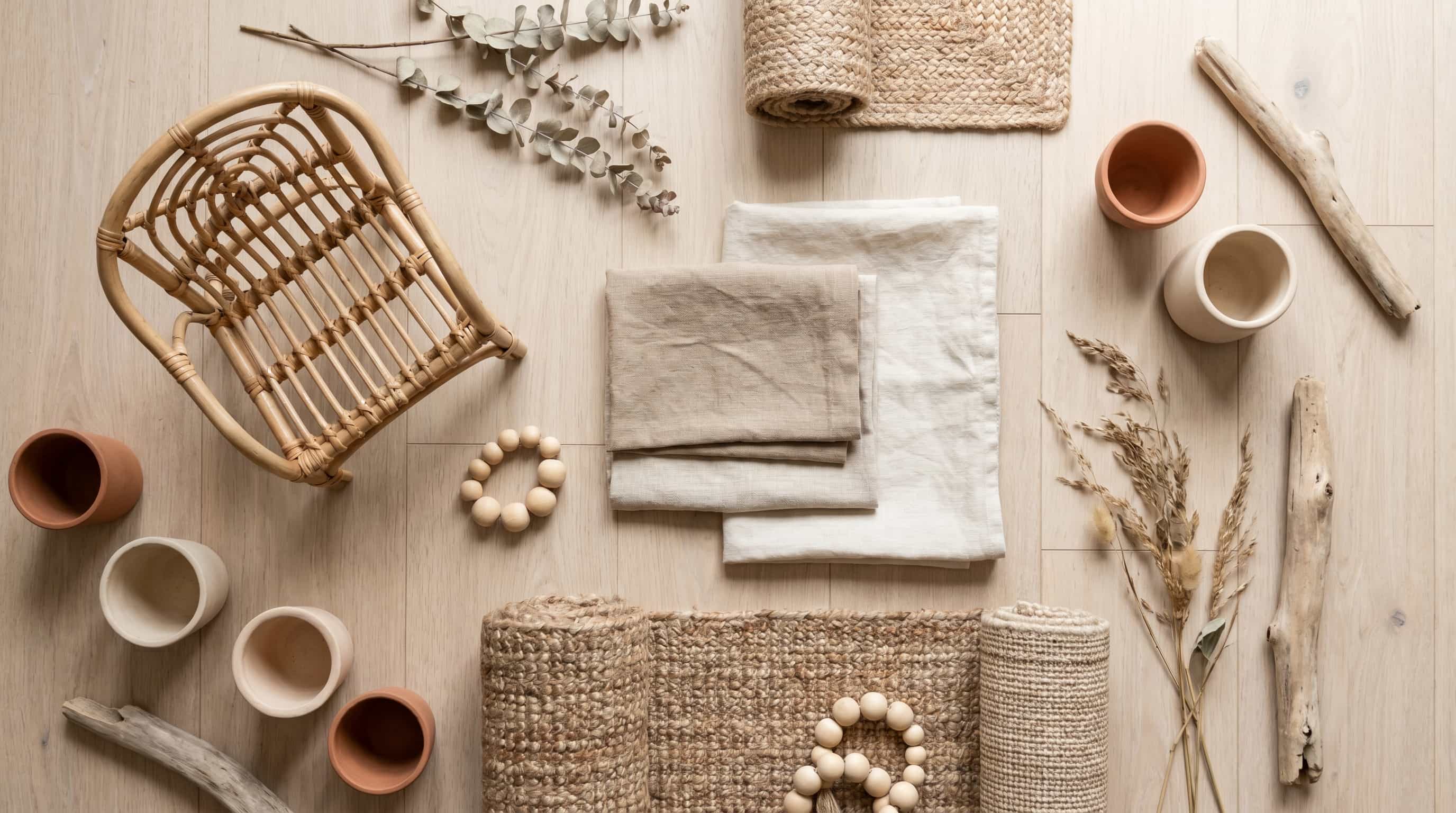
When buying anything new for a boho room, ask one question first: Is this made from a natural material?
Rattan over plastic. Linen over polyester. Clay over ceramic glaze. Wood over laminate. Jute over synthetic weave.
Natural materials have real texture. They age in ways that add character rather than show wear.
They also share a common visual language that makes very different pieces feel like they belong together.
20. Decide Between Classic Boho and Modern Boho
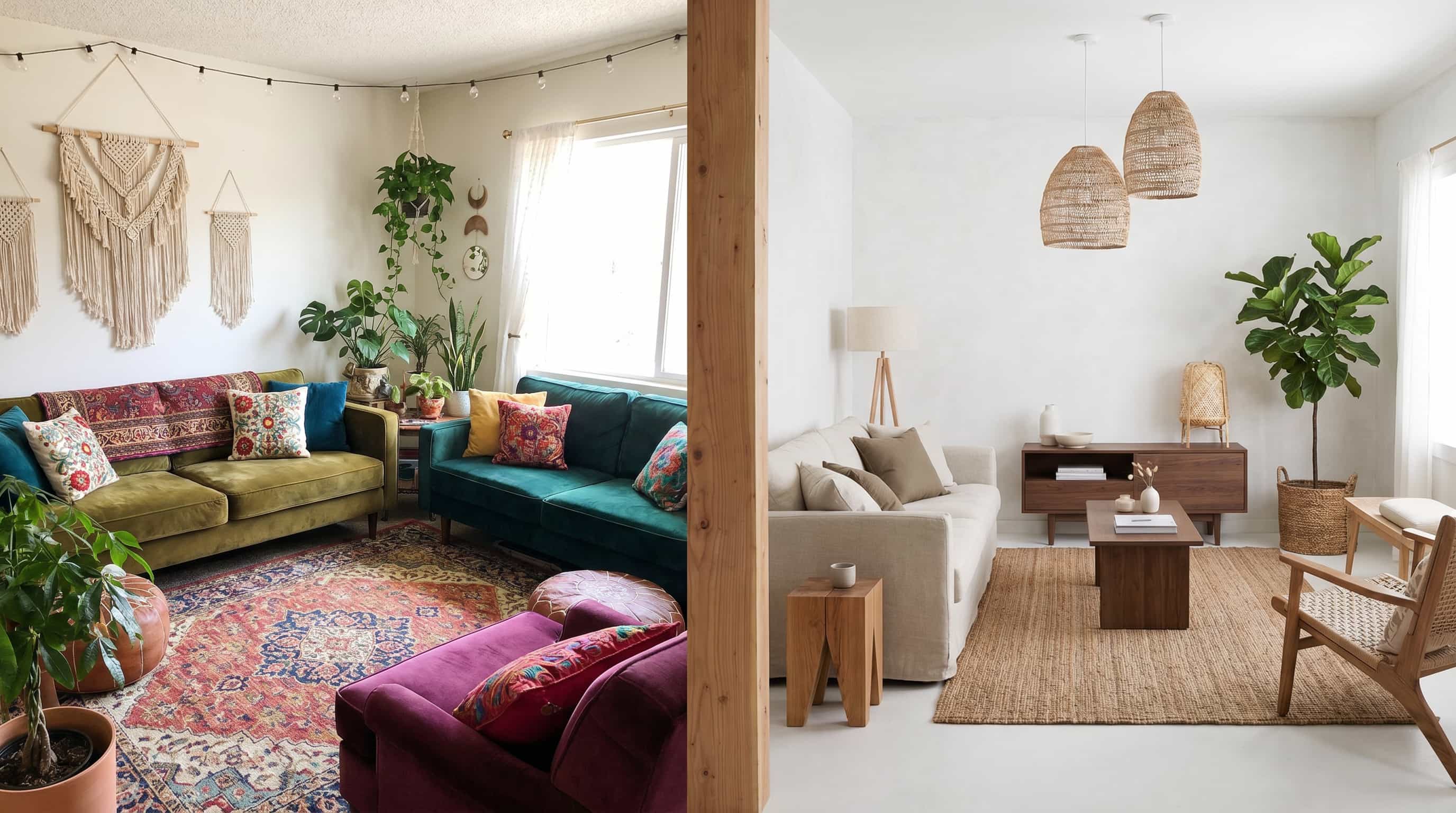
These two styles have different starting points. Knowing which one you want saves a lot of expensive mistakes.
- Classic boho goes all in. Rich colors, heavy layering, global artifacts, plants covering every surface, and not much visible wall space. Maximalist and intentional.
- Modern boho (also called “quiet boho” or “Scandi-boho”) is more edited. A neutral base. Fewer pieces chosen with more care. Natural materials are the main texture. One statement kilim instead of three overlapping rugs.
Neither is more correct. If you love color and maximalism, go classic. If you want something calmer but still warm and personal, modern boho is the easier place to start.
21. Start With One Corner, Not the Whole Room
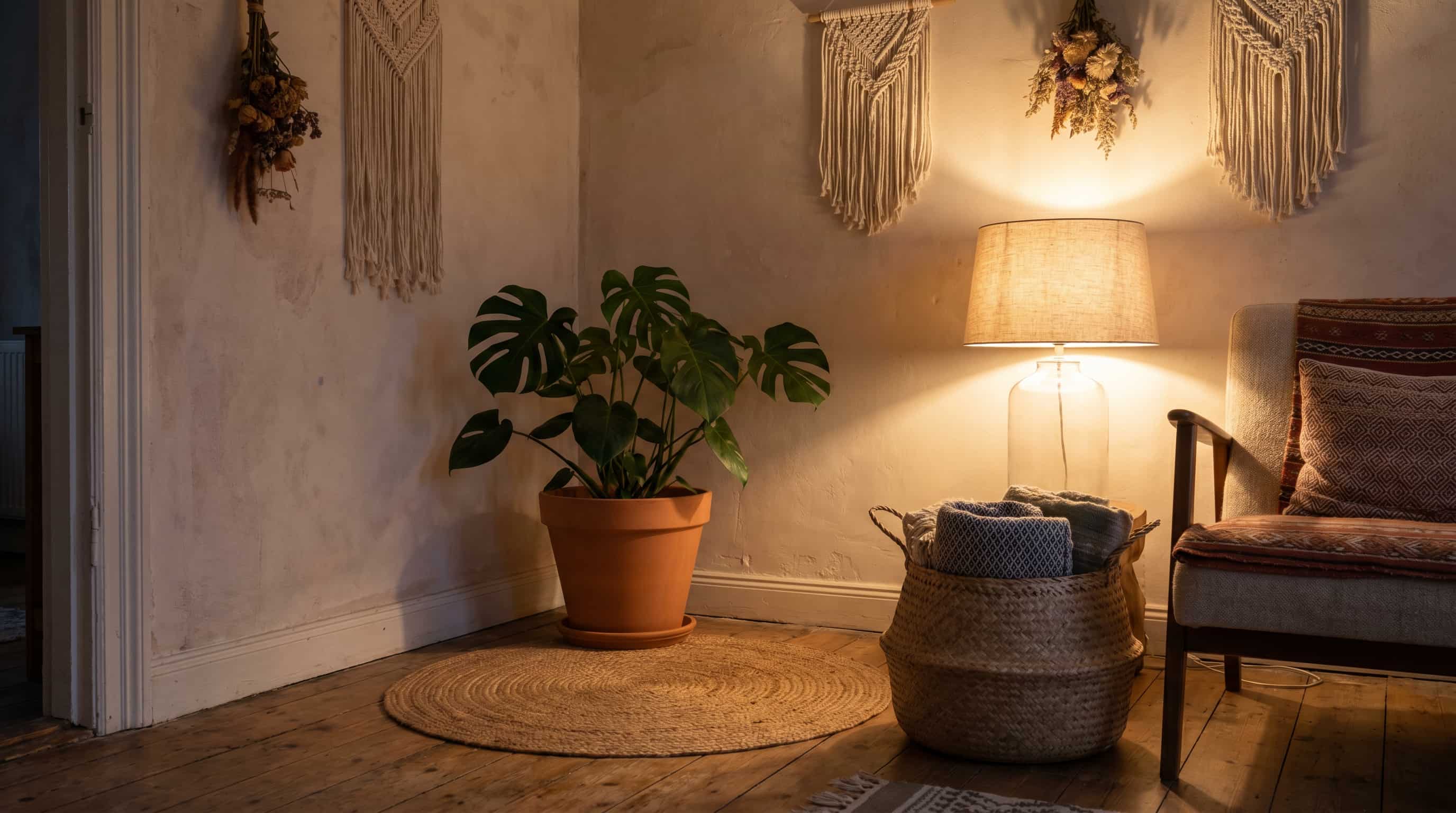
Boho is not a room you finish. It is a space you build over time.
The best boho rooms accumulate meaning gradually. A thrift store find here, a market piece there. A plant added one month, a rug swap the next.
The right place to start is not a full room makeover. Pick the corner that bothers you most. Lay down a textured rug. Add a plant in a terracotta pot. Find one piece with a story.
How to Build a Boho Home on a Budget
Boho style is one of the most budget-friendly decorating approaches. It works because it values creativity and story over newness and expense.
| Change | Cost Level | Visual Impact |
|---|---|---|
| Thrifted furniture | Low | Adds character and history |
| DIY macrame or wall art | Very low | Adds texture and personality |
| Plant cuttings from friends | Free | Adds greenery and warmth |
| Secondhand rugs | Low | Transforms the whole floor |
| Woven baskets | Low | Replaces plastic, improves storage |
| Warm bulb swap | Very low | Changes the entire mood of a room |
Bohemian Interior Design Room by Room
A quick reference for applying boho ideas in specific rooms.
1. Bohemian Living Room
Start with a neutral sofa. Add a kilim rug and macrame wall hanging. Use low seating: floor cushions, poufs, a woven ottoman. Choose one statement piece — a carved wooden coffee table or a vintage trunk. For more specific living room ideas, high-impact living room styling covers lighting, layering, and plant placement in detail.
2. Bohemian Bedroom
Add a sheer canopy. Layer the bed with linen, an embroidered quilt, and a printed throw. Use a low wooden frame. Style the bedside area with a ceramic lamp, books, a plant, and one or two objects that mean something to you.
3. Bohemian Bathroom
Replace plastic bins with woven baskets. Use a jute bath mat. Add a potted plant. Swap mass-produced dispensers for hand-thrown ceramic pieces. A natural wood mirror finishes the space.
4. Bohemian Kitchen
Open shelving works well in a boho kitchen. Style it with wooden accessories, ceramic dishes, trailing plants, and woven storage. Swap plastic utensil holders for clay or terracotta vessels. A woven table runner and mismatched ceramic mugs add warmth without any major changes.
Conclusion
Bohemian interior design is not about buying the right things. It is about building a space that feels like you over time.
The ideas above are starting points, not a shopping list. Pick one that fits where you are right now.
A rug swap. A plant cluster. A basket instead of a plastic bin. That single change shifts the feeling of a room more than you expect.
The style works because it rewards patience. Every piece you add with intention gets you closer to a room that looks collected, not decorated.
What corner of your home are you starting with? Tell us in the comments.
Frequently Asked Questions
Is Boho Out of Style?
Boho is not out of style in 2026. It has evolved into a cleaner, more refined “modern boho” with minimal silhouettes, neutral tones, and sustainable, layered textures.
What are Bohemians Called Today?
Today, bohemians are often described as creatives, free spirits, artists, or eclectic lifestyle enthusiasts who value individuality and unconventional style.
What is Boho Style for 50-Year-Olds?
Boho style for 50-year-olds focuses on relaxed elegance, with natural fabrics, layered textures, neutral tones, artisan decor, and timeless statement pieces rather than overly trendy elements.