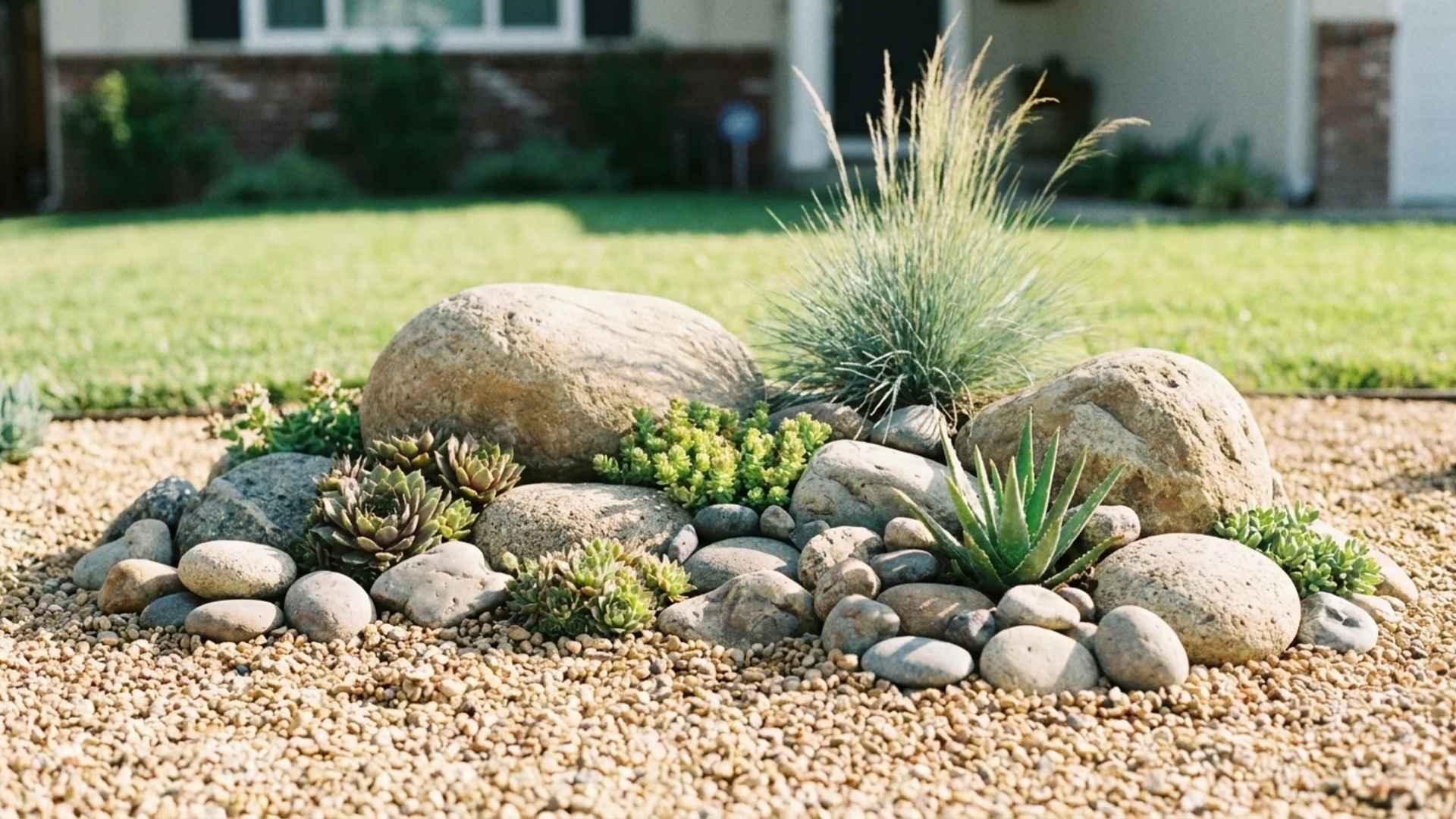
17 Low-Maintenance Small Rock Garden Ideas for Any Yard

Rock gardens are having a moment right now. And honestly, it makes sense.
You want your yard to look good. But you also want your weekends back. Mowing, weeding, watering, fertilizing. It eats up hours you could spend doing literally anything else.
A rock garden fixes that. It uses stones, gravel, and tough plants that barely need attention once they settle in. And the best part? You do not need a big yard to pull it off. Even a 4×6-foot patch can look great with the right setup.
This post covers low-maintenance small rock garden ideas that work for front yards, backyards, patios, and even balconies. Each one saves water, cuts yard work, and still gives your outdoor space real personality.
Why Go with a Low-Maintenance Rock Garden?
Rock gardens are a practical choice for reducing outdoor maintenance while improving the look of your space. They help conserve water because many of the plants used, such as succulents, sedums, lavender, and ornamental grasses, are drought-tolerant and can thrive with minimal watering once established.
They also significantly reduce routine yard work. No mowing is required, and when properly installed with landscape fabric and gravel or stone mulch, weed growth is greatly reduced. Unlike organic mulch, rocks do not break down quickly, so they do not need frequent replacement.
Rock gardens are especially useful in challenging areas of a yard. Slopes, poor soil, dry patches, and narrow spaces along driveways or pathways can all be transformed into functional, attractive landscapes using stone and low-maintenance planting.
In addition to practicality, rock gardens can enhance curb appeal when thoughtfully designed. A clean, well-planned layout with balanced planting and stone placement can make outdoor spaces look more structured and visually appealing, which may positively affect overall property value, depending on local market conditions.
17 Low-Maintenance Small Rock Garden Ideas
You do not need a huge budget or a degree in landscape architecture to build a rock garden that looks great. Here are ideas that work for front yards, backyards, patios, and even balconies.
1. Succulent and Stone Rock Bed
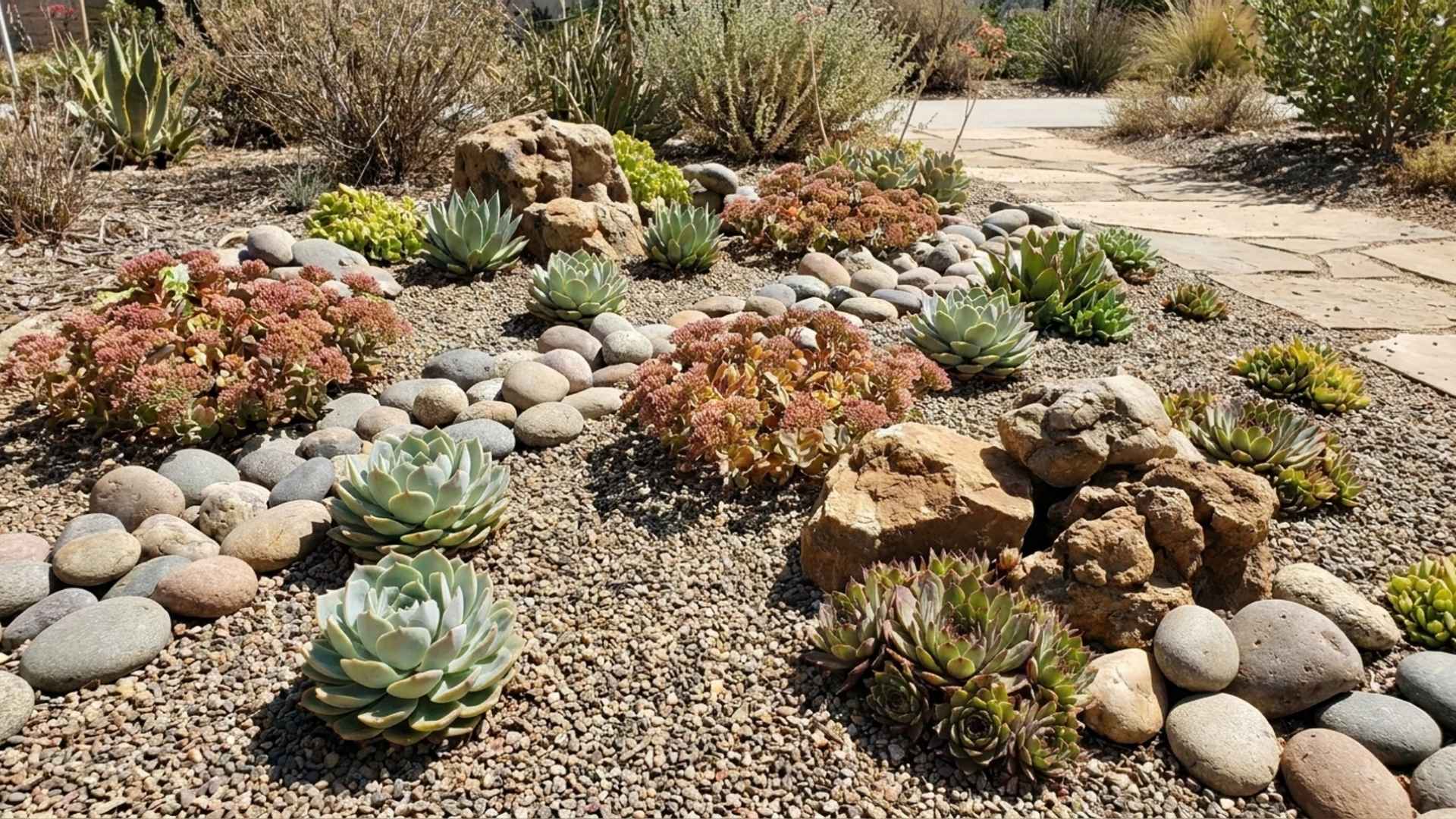
This is the simplest place to start. Pair a few sedums, sempervivums, or echeveria with river rocks, and you have an instant rock garden.
These plants store water in their leaves, so they barely need watering after the first few weeks. Pick a sunny spot with good drainage, arrange your rocks in small clusters, and tuck plants into the gaps.
You can do this in a ground bed or a raised planter.
2. Dry Creek Bed Garden

A dry-creek-bed garden is perfect for sloped areas or spots where water collects after rain. It improves drainage and adds a natural stream-like feature to your yard.
Use pebbles, river stones, and a few larger rocks to shape the “creek bed” look. Add ornamental grasses or small plants along the edges to soften the design.
Once built, a dry creek bed garden is very low maintenance and works well in both front and backyards.
3. Japanese Zen Rock Garden
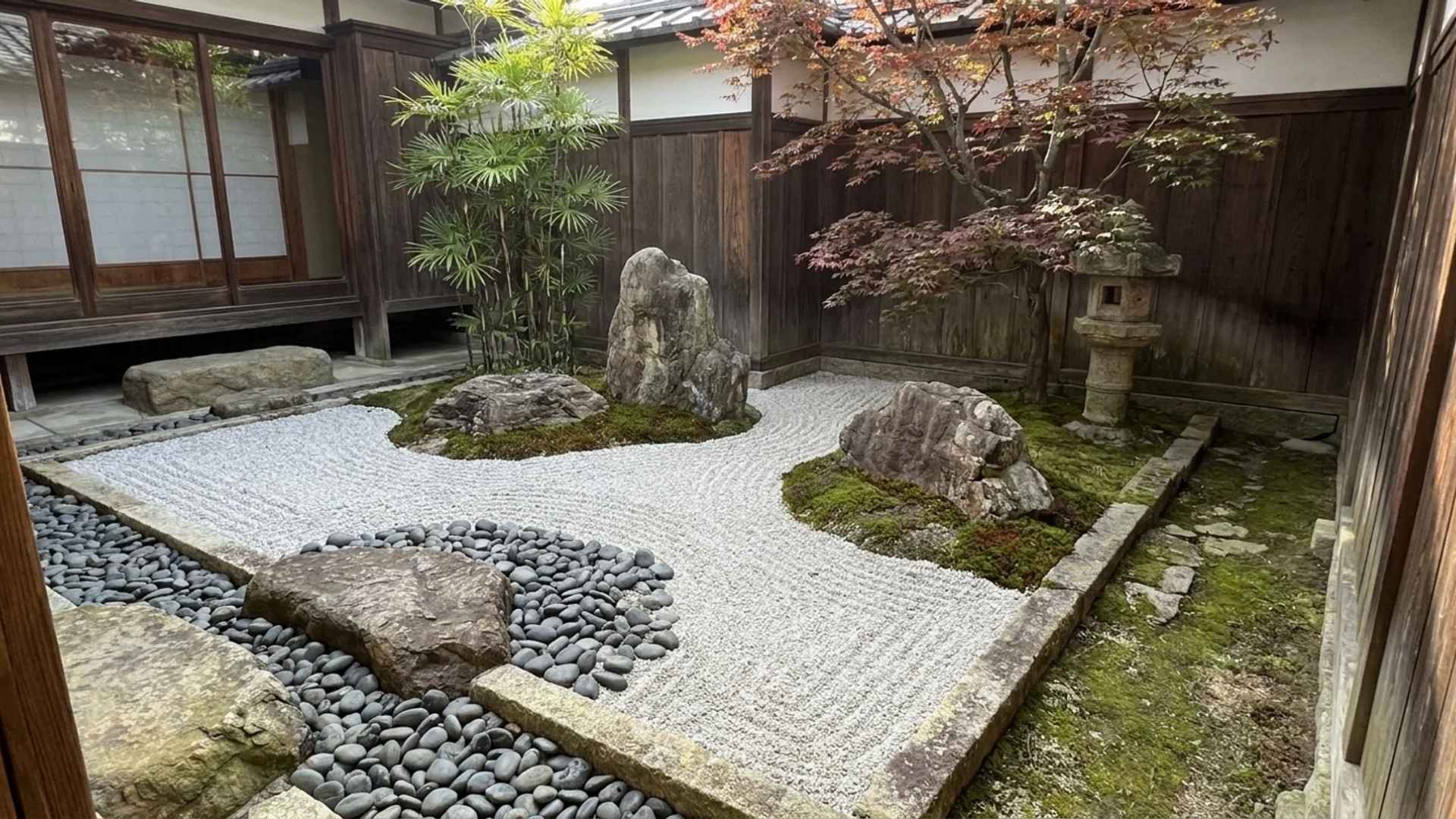
Zen gardens use raked gravel or sand to represent water, with a few carefully placed rocks standing in as mountains or islands.
You can skip plants entirely, or add a small patch of moss or a single bamboo stalk. This style works well in enclosed spaces like side yards, courtyards, or corners.
It is one of the most low-maintenance small rock garden ideas because there is almost nothing to water or trim.
4. Gravel and Boulder Front Yard
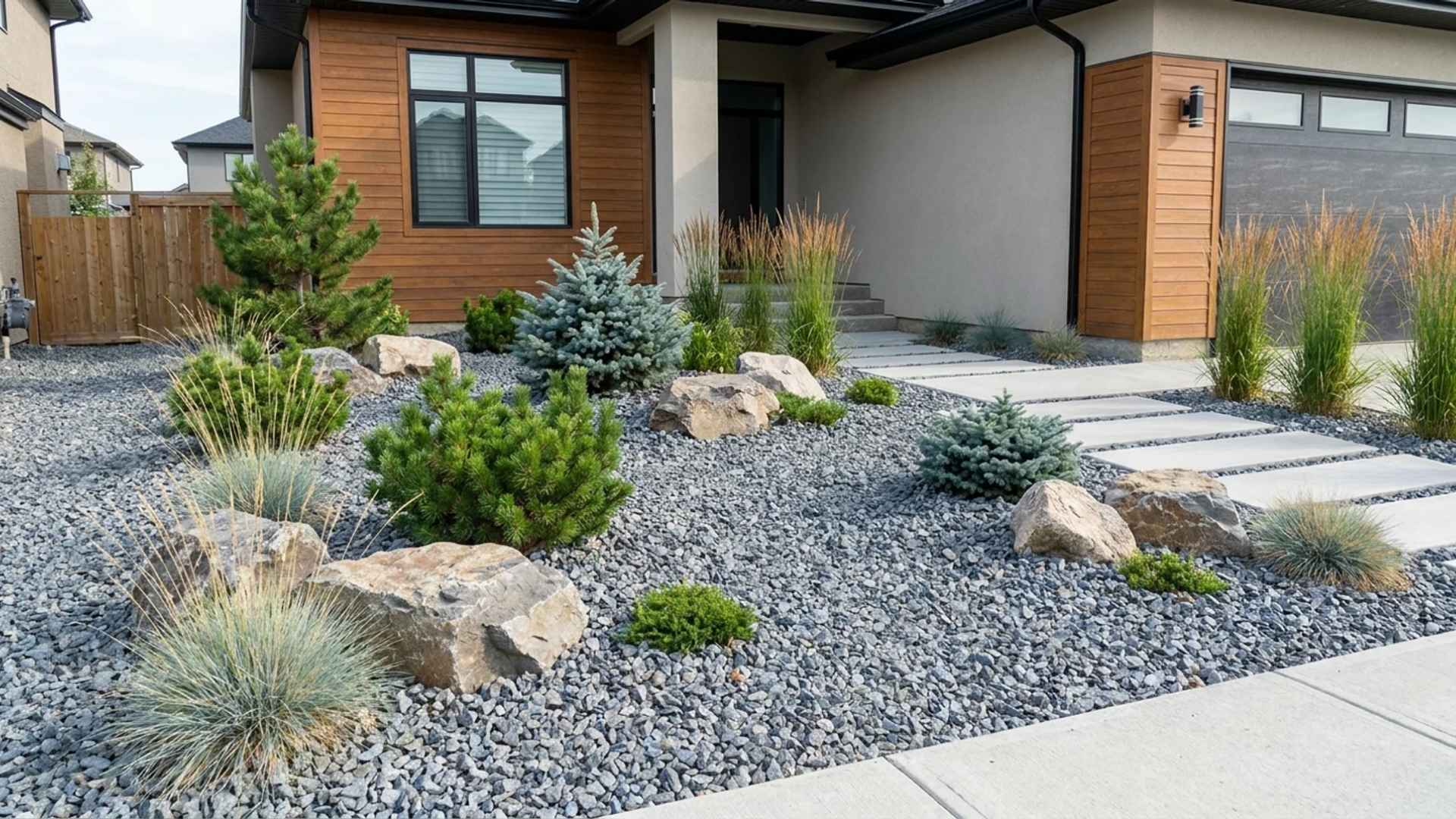
Replace part of your front lawn with a gravel base and scatter a few boulders across it. Add one or two dwarf conifers or a clump of ornamental grass for contrast.
Lay weed barrier fabric underneath the gravel, and you will spend almost no time on upkeep. This gives your front yard a clean, modern look that holds up in every season.
5. Alpine Rock Garden
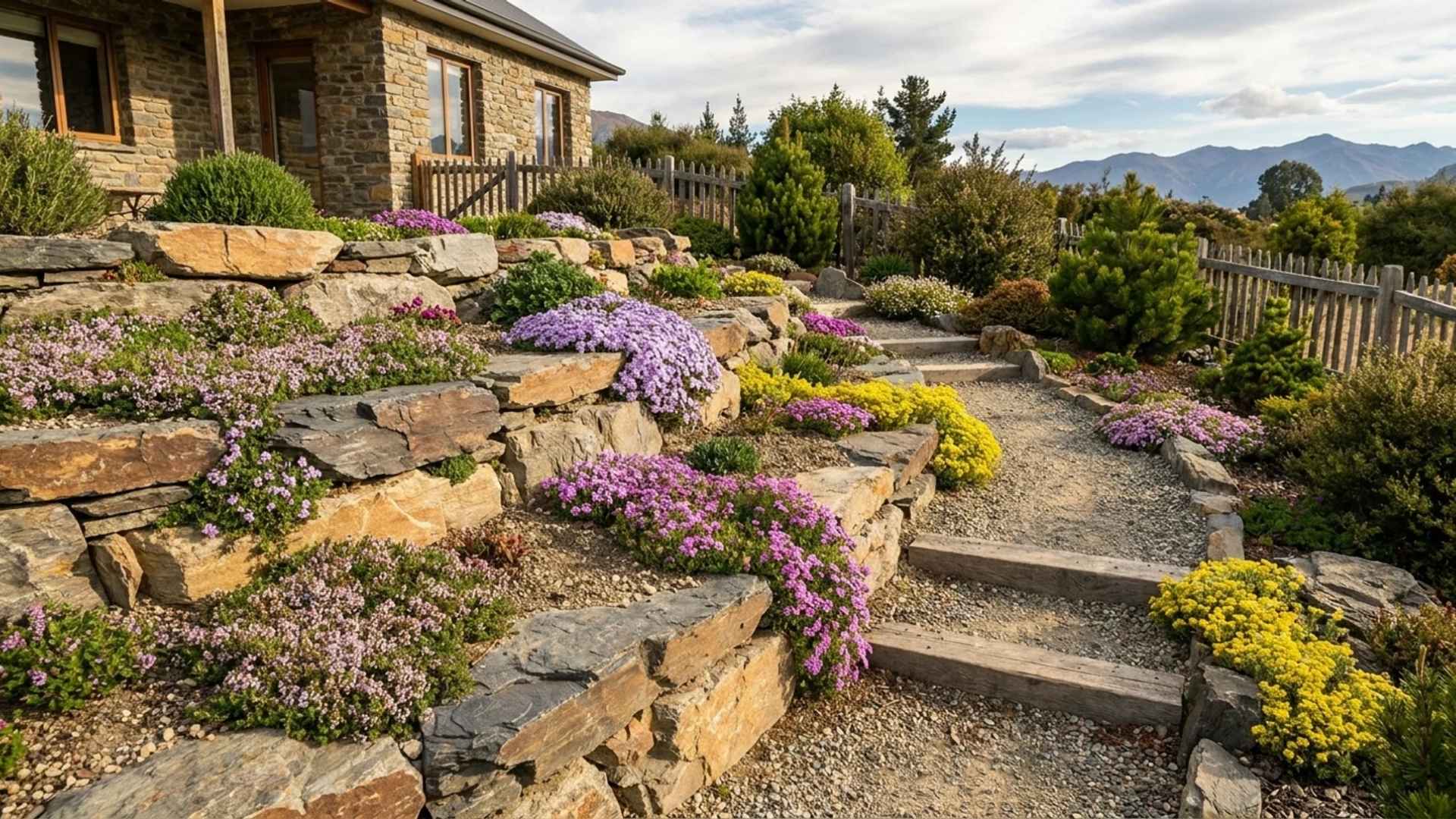
If you like the look of wildflowers growing between mountain rocks, this one is for you. Use creeping thyme, phlox, and aubretia in the gaps between stones.
These plants stay low, spread on their own, and bloom with color in spring. For the soil, mix equal parts loam, horticultural grit, and leaf mould.
Sloped or terraced spots work best for this style because alpines need sharp drainage.
6. Container Rock Garden
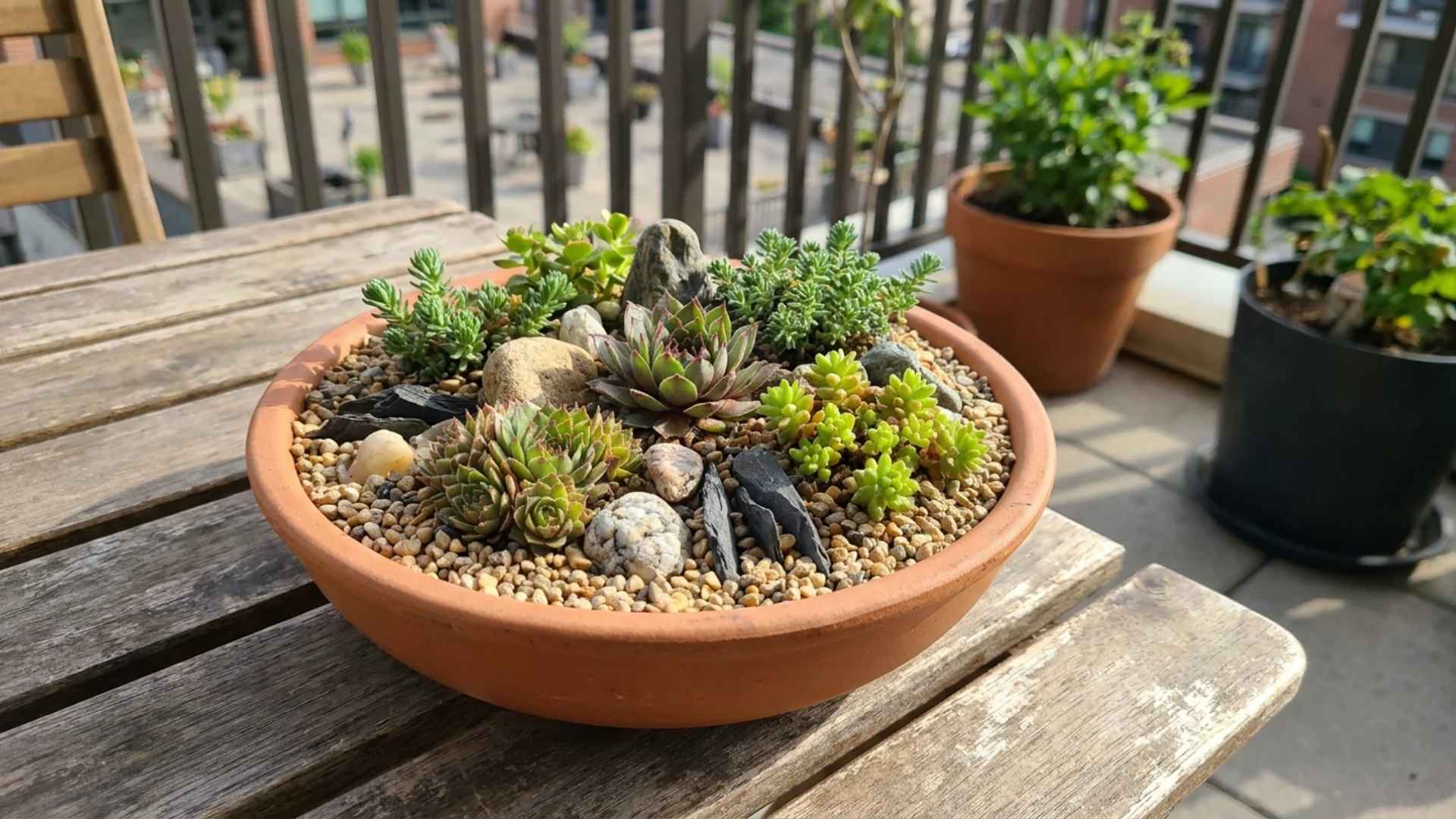
No yard? No problem. Grab a wide pot, an old butler sink, or a terracotta bowl. Fill it with miniature alpines and succulents, then add a layer of gravel.
You get a full rock garden look on your patio or balcony with zero groundwork. These are also easy to rearrange or bring indoors during harsh winters.
Pro Tip: Flat, wide containers called “pans” use less soil, which keeps plants from sitting in cold, wet conditions. That is exactly what rock garden plants prefer.
7. Rock Garden Along a Pathway
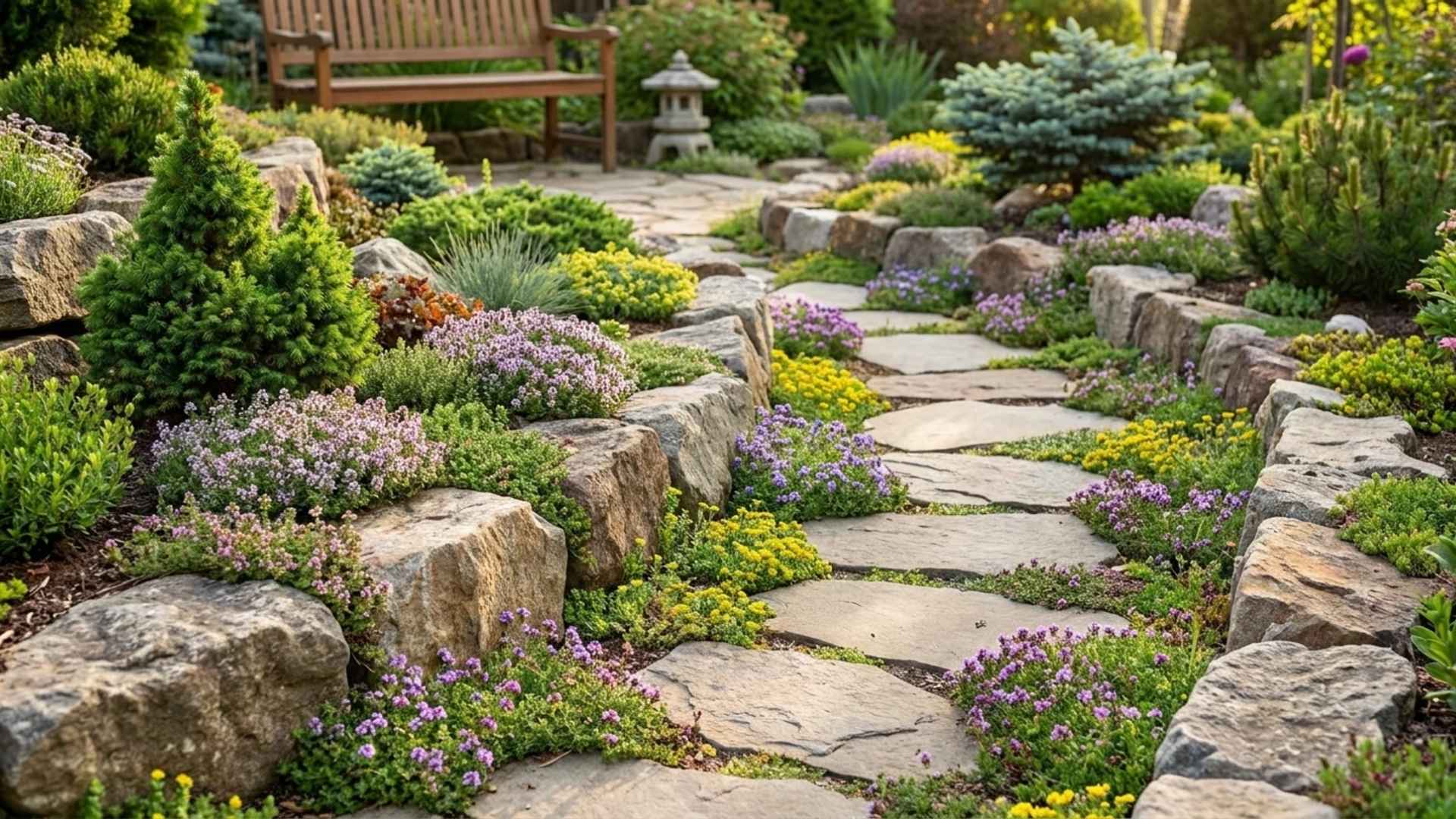
Line your walkway with natural stone borders and plant low-growing ground covers between stepping stones.
Creeping thyme and sedum work well here because they stay flat and can handle foot traffic. This approach adds structure to your yard and keeps the lawn from creeping into your paths.
8. Hillside or Slope Rock Garden
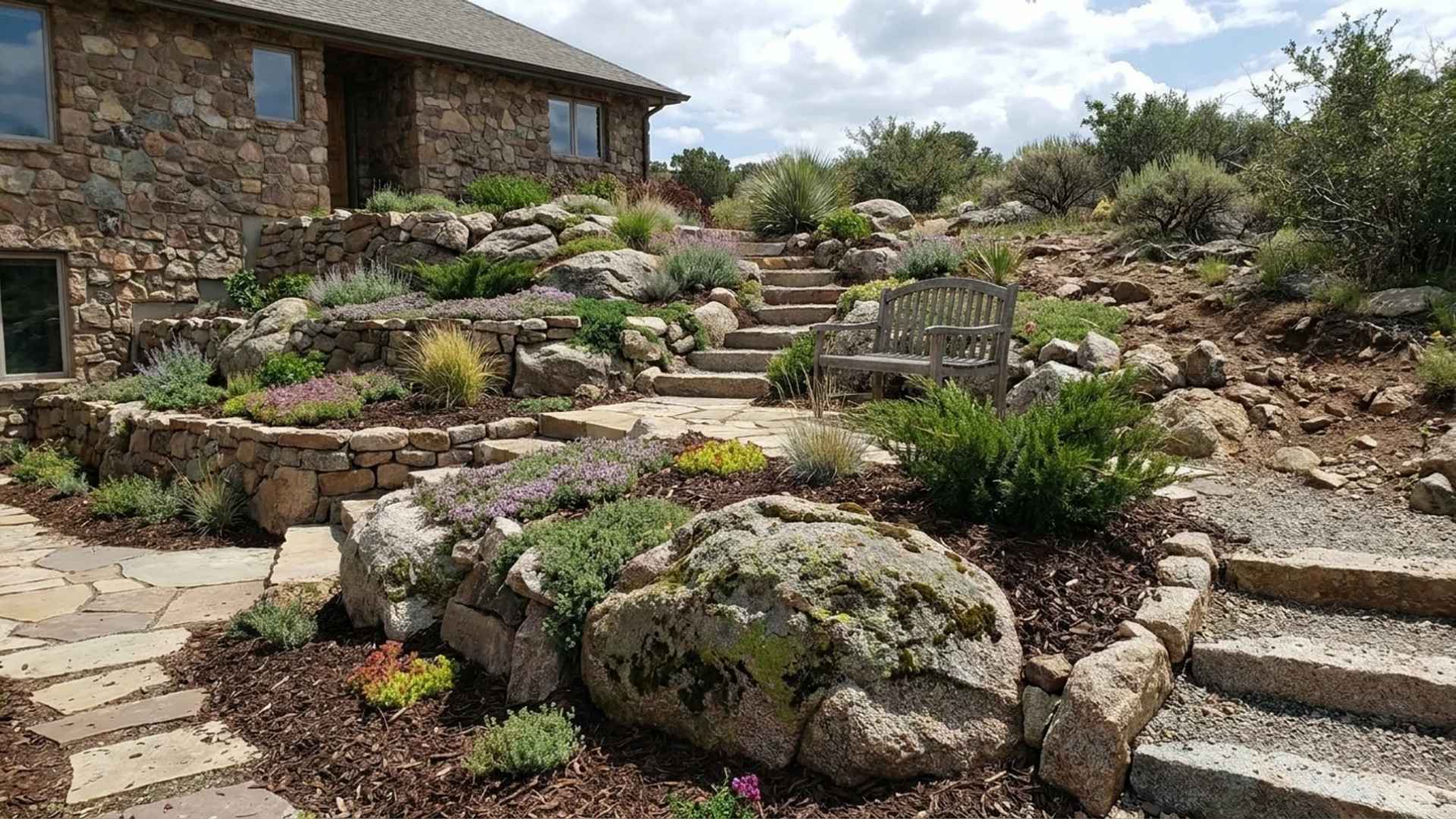
Got a steep spot that is impossible to mow? Large rocks will hold the soil in place while sprawling ground covers fill in the gaps.
Mulch the bare areas between plants to keep things tidy. This is one of the most practical landscape rock ideas for anyone dealing with uneven terrain.
It stops erosion and looks natural at the same time.
9. Cottage Style Rock Border
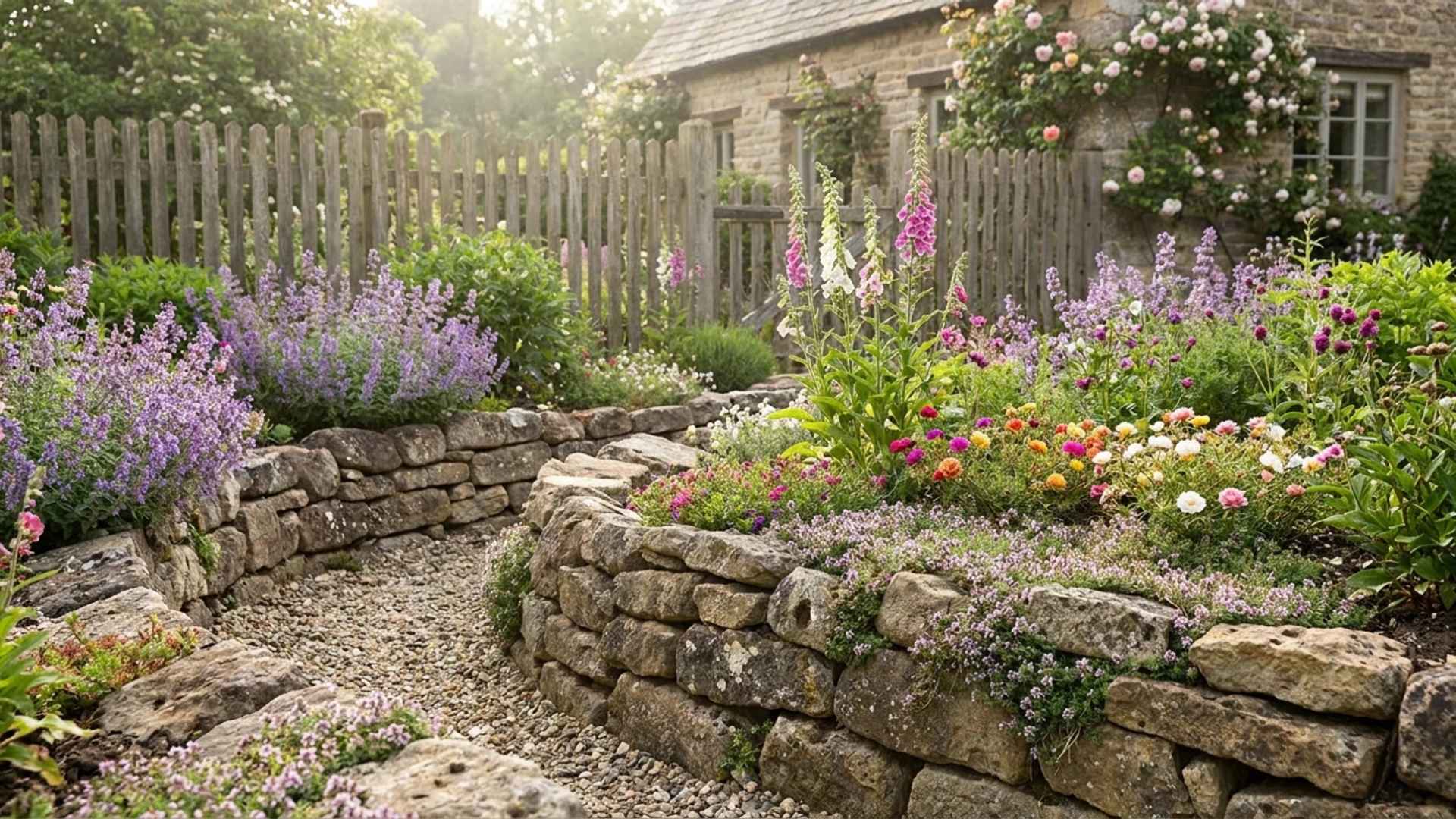
Not every rock garden needs to look rugged. A cottage border uses irregularly shaped rocks with soft, flowering plants spilling over them.
Moss roses, catmint, foxglove, and thyme all work well here. Place them along a garden edge, around a tree base, or between flower beds. The look is relaxed and lived-in.
10. Desert-Inspired Xeriscape Rock Garden
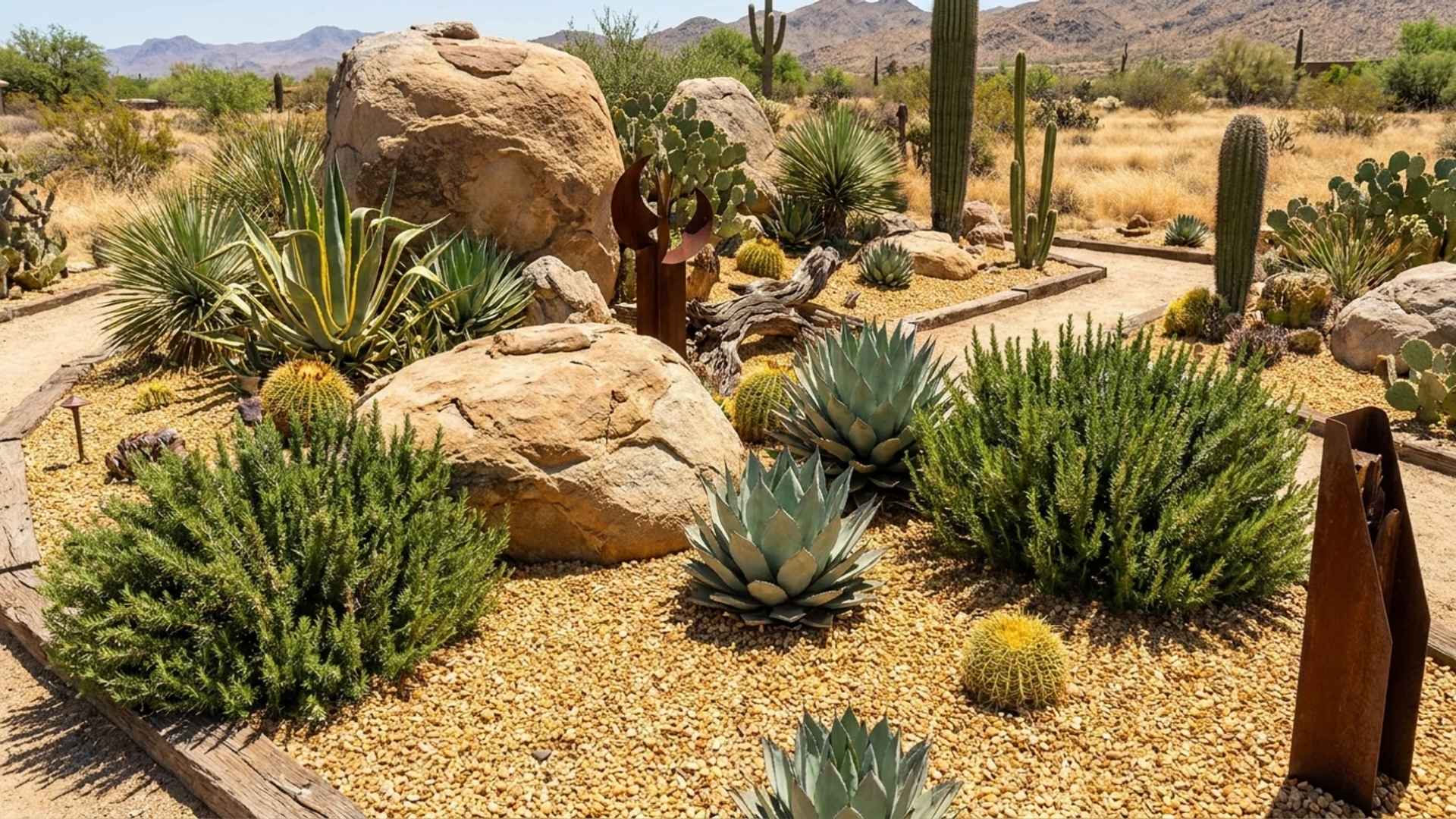
If you live in a hot, dry climate or have a south-facing wall that bakes in the sun, this style is built for you. Use agave, cacti, and aromatic herbs like rosemary among boulders.
Spread pea gravel or decomposed granite as ground cover. Once these plants take root, they need no extra water. This is about as easy as rock garden ideas get.
11. Rock Garden with a Small Water Feature

A bubbling rock fountain or a small recirculating waterfall adds sound and movement to your rock garden. The rocks around the base hide the pump and tubing.
Recirculating systems use very little water since they cycle the same supply. It is a small addition that makes the space feel much more alive.
12. Miniature Rock Garden for Tight Spaces
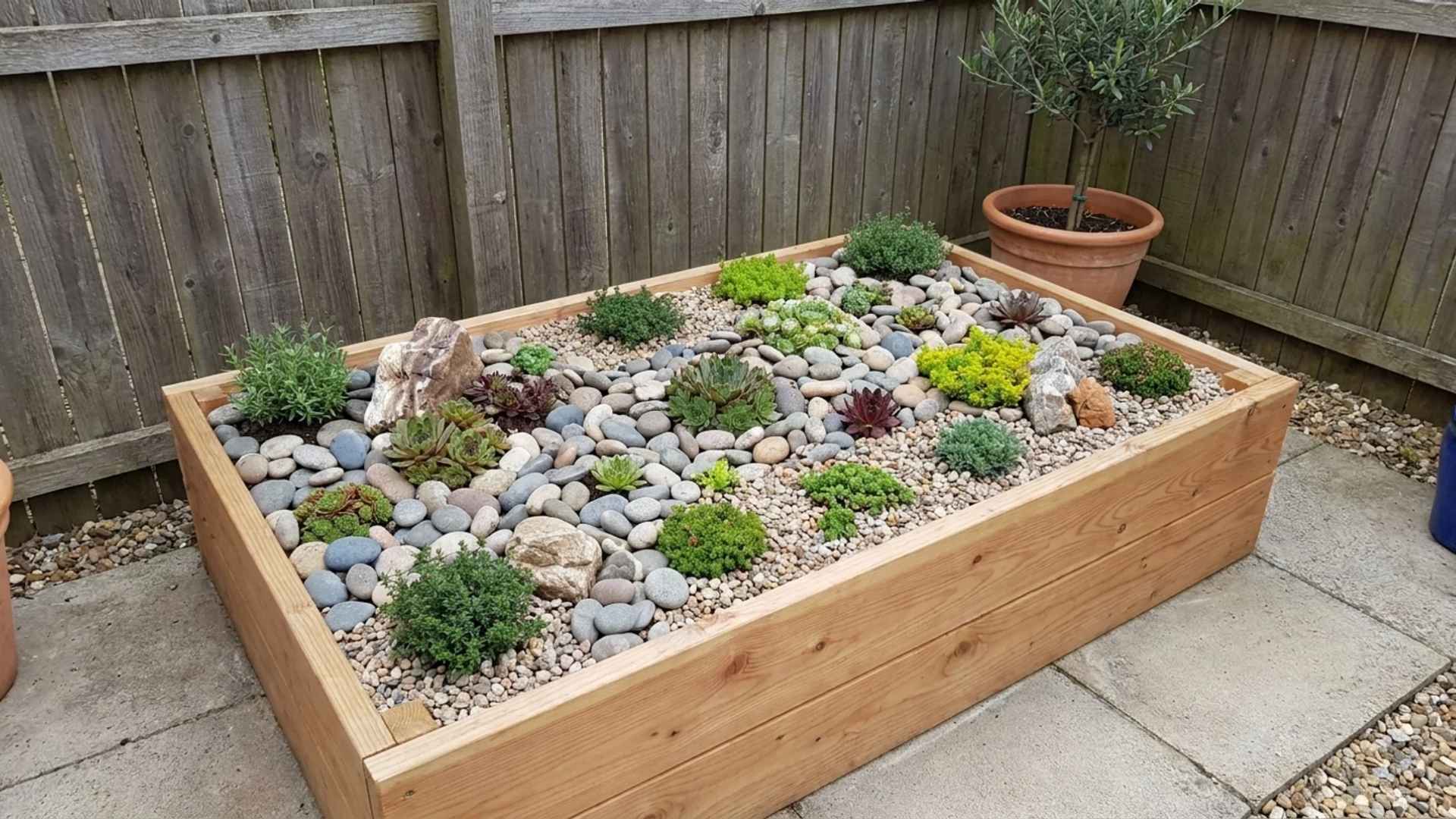
Start with a 4×6-foot area or a raised bed. Mix small stones with two or three compact plants. This works for apartment patios, townhouse fronts, or narrow side yards.
Experts at Gardening Know How recommend this as a starter project before taking on anything bigger. It lets you test your layout and plant choices with very little cost.
13. Rock and Mulch Combo Bed
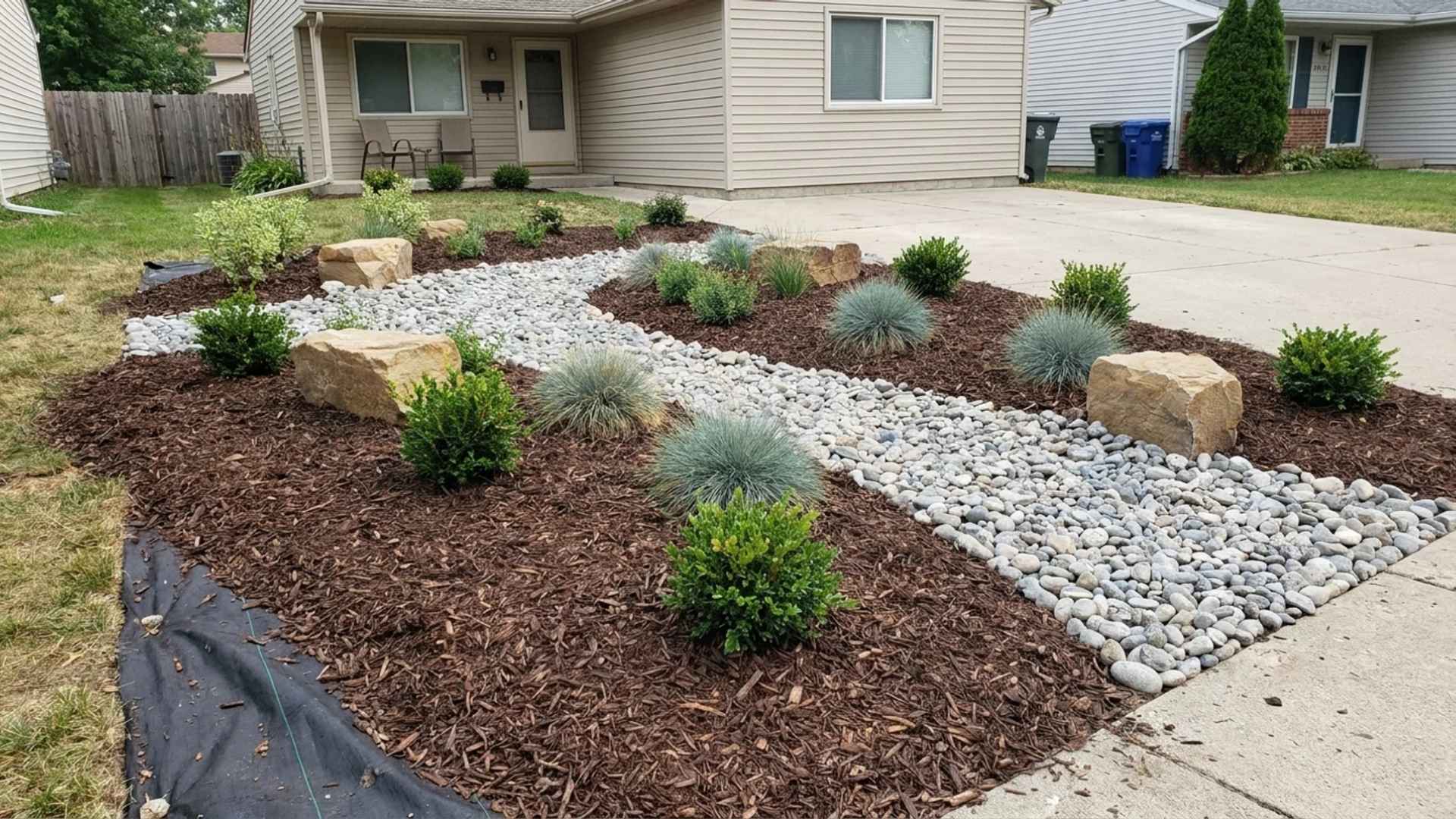
Layer landscape rocks over weed barrier fabric, then mix in some bark mulch for texture. Add one or two low-care shrubs or grasses.
This is a quick, budget-friendly way to refresh your front yard without planting a full garden. The combination of rock and mulch gives you visual variety without adding work.
14. Ornamental Grass and Rock Garden
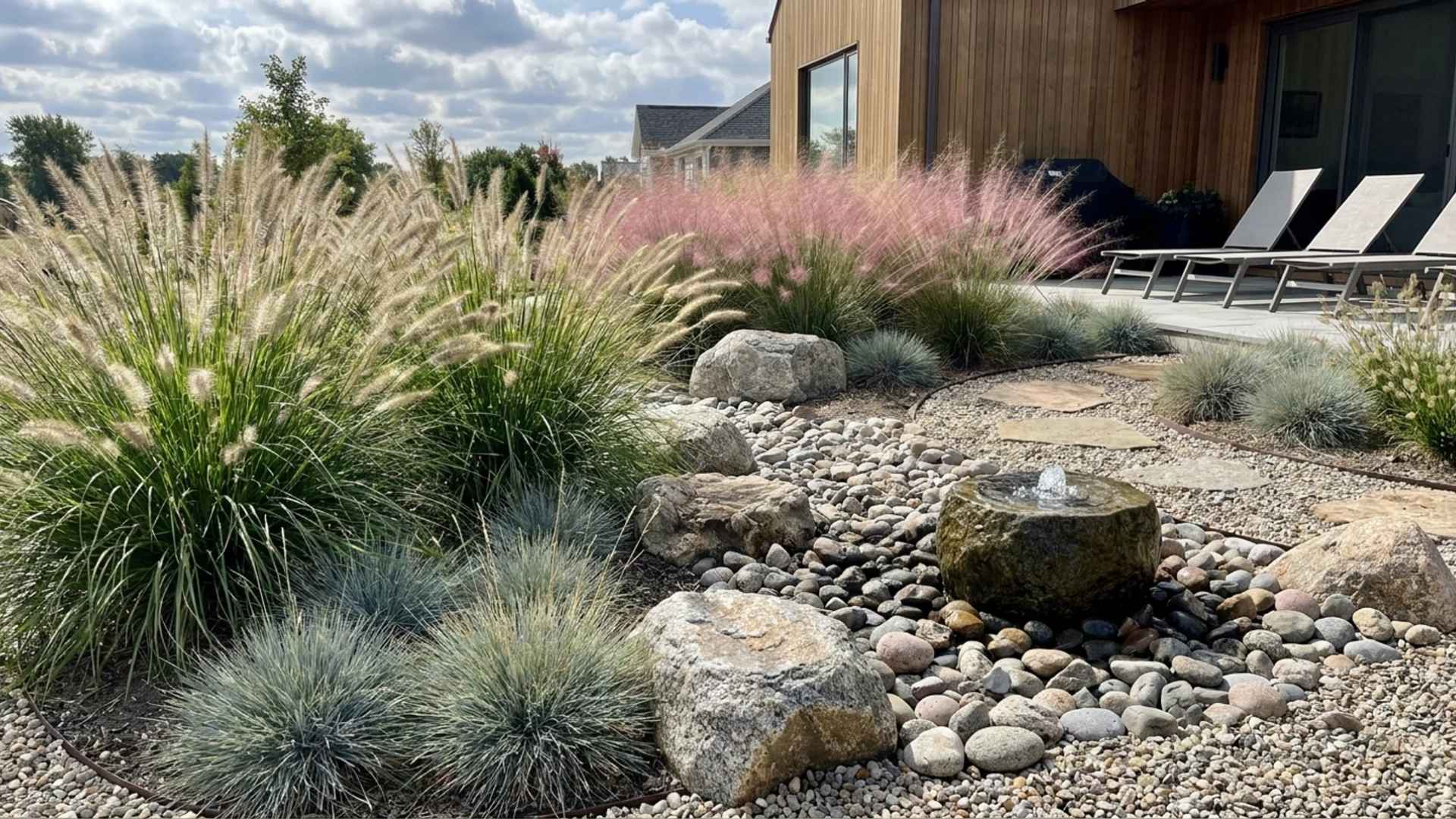
Fountain grass, blue fescue, and muhly grass all look stunning next to stones. Grasses add movement when the wind blows and soften the hard edges of rocks.
They need almost nothing once they take root. This pairing works in full sun or light shade and gives your garden a sense of rhythm that stone alone cannot provide.
15. Shade Rock Garden with Hostas and Ferns
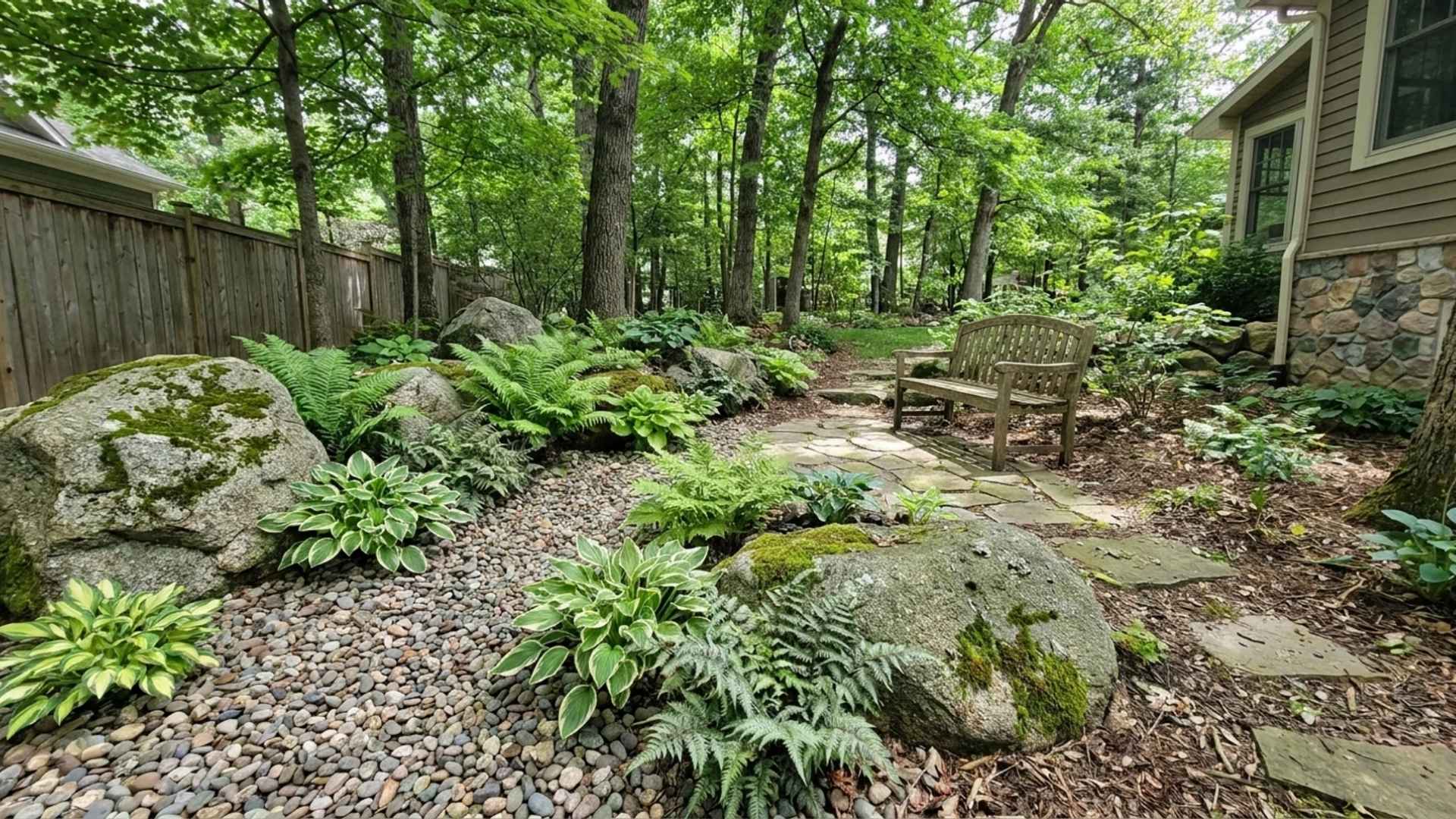
Most rock garden guides focus on sunny spots. But what about that shady patch under your tree or the north-facing side of your house? Use larger boulders with pebble mulch, and plant hostas and ferns in the gaps.
These plants love shade and stay lush with very little watering. It fills dead zones with life and gives you a calm, cool-looking garden.
16. Terraced Rock Wall Garden
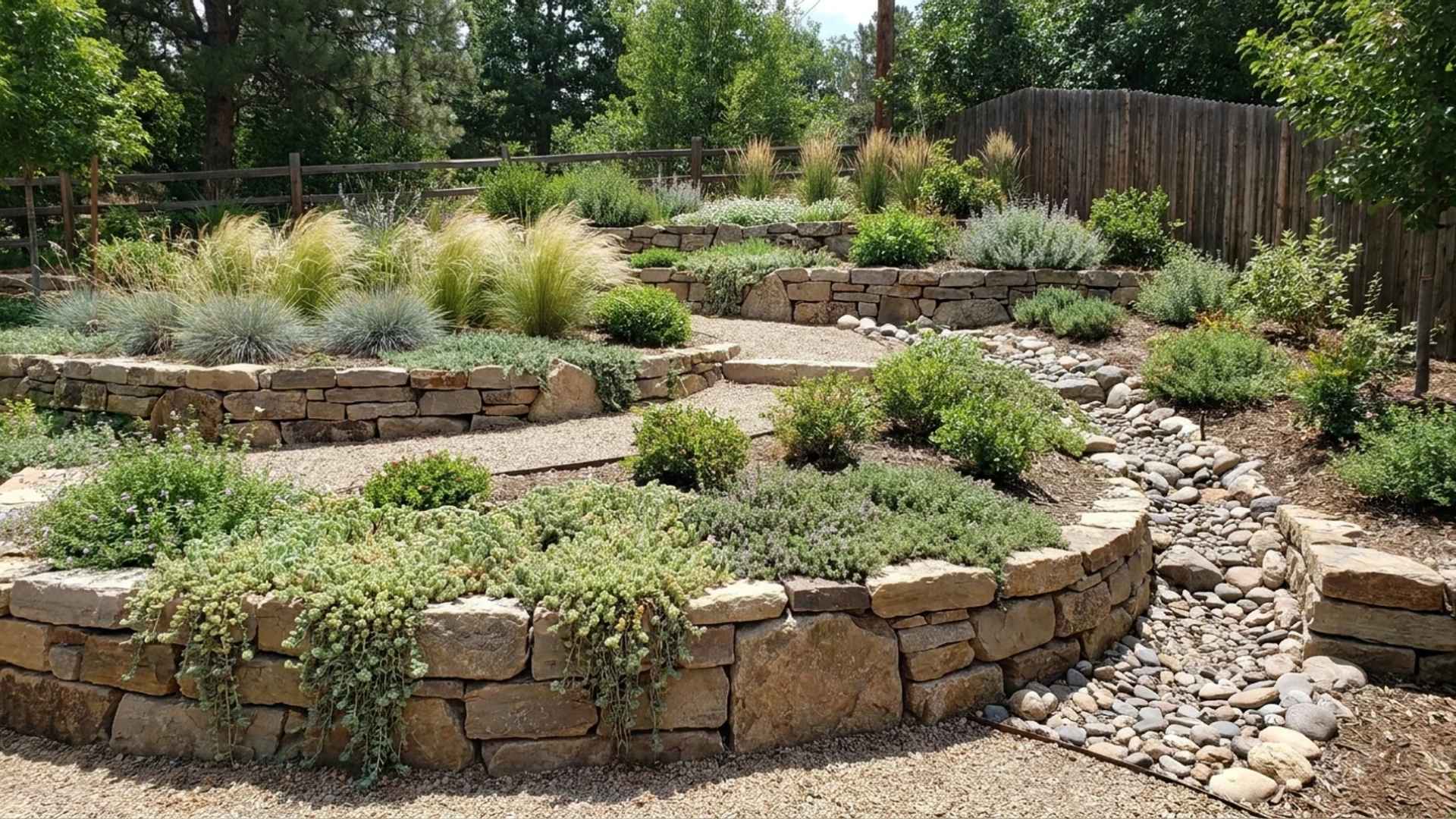
Build low retaining walls with natural stone and plant different species at each level. This works well on sloped ground where flat garden beds are not an option.
Each terrace can hold different plants, from trailing sedums on the lower walls to ornamental grasses up top. It prevents soil erosion and adds real depth to your yard.
17. Geometric Rock Garden

For something bold and modern, create boxed sections and fill each one with a different type of rock. White gravel in one box, black pebbles in another, maybe lava stone in a third.
You can skip plants entirely or add a single sculptural succulent. This art-inspired look works well in small front yards and gives you a clean design with near-zero upkeep.
Best Plants for Easy Rock Gardens
Choosing the right plants makes all the difference. Here are some reliable picks for a low-maintenance rock garden:
- Succulents like sedums and sempervivums store water in their leaves and thrive in dry, rocky soil with very little care.
- Creeping thyme and creeping phlox spread naturally across stones and add seasonal color with minimal maintenance.
- Ornamental grasses such as blue fescue and fountain grass bring soft movement and texture to hard stone landscapes.
- Lavender and California poppies add fragrance, color, and attract bees and butterflies to the garden.
- Dwarf conifers like mugo pine and bird’s nest spruce provide year-round structure and stay compact with little pruning.
- Hostas and ferns thrive in shaded rock garden areas where most sun-loving plants cannot survive.
- Agave and catmint handle heat, poor soil, and drought conditions without needing much attention.
Pro Tip: Use mat forming plants that cover the ground between rocks. They keep weeds down naturally and reduce the bare soil you need to maintain.
Common Mistakes to Avoid in a Rock Garden
A rock garden is simple to build, but a few mistakes can turn it into extra work.
| Mistake | What Goes Wrong | Better Approach |
|---|---|---|
| Overcrowding plants | Plants compete for space, trap moisture, and increase weeding work | Give each plant enough space to grow naturally |
| Picking the wrong plants | High-water plants need constant care and replacements | Use drought-tolerant plants like succulents and grasses |
| Mixing too many rock types | Too many stones make the design look messy and unplanned | Stick to 2–3 rock types for a clean, natural look |
| Skipping weed barrier fabric | Weeds grow through gravel quickly and increase maintenance | Always install landscape fabric before adding stones |
| Ignoring drainage | Poor drainage causes root rot and unhealthy plants | Improve soil with sand/grit or build raised beds |
| Placing rocks too evenly | Symmetrical layouts look unnatural and flat | Use odd groupings and bury rocks partly for a natural effect |
How to Build a Small Rock Garden Step by Step
You do not need a landscaper to create a rock garden. With the right preparation and materials, you can build one yourself in a few simple steps.
Step 1: Choose the right location: Pick a spot with good drainage or a natural slope, as rock gardens perform best in areas where water does not collect.
Step 2: Clear and prepare the ground: Remove grass, weeds, and debris, then level the area if needed. Lay down landscape weed barrier fabric to help prevent weed growth.
Step 3: Place the largest rocks first: Position boulders or large stones as anchor points. Bury about one-third of each rock to make them look naturally embedded in the ground.
Step 4: Add smaller stones and gravel: Fill the gaps between larger rocks with pebbles and gravel to create a natural layered effect and improve drainage.
Step 5: Prepare planting pockets: Add a well-draining soil mix such as loam combined with grit or sand to support rock garden plants.
Step 6: Plant drought-tolerant species: Place succulents, grasses, or alpine plants in the prepared pockets and gently firm the soil around the roots.
Step 7: Add gravel mulch: Spread a layer of gravel around plants to help retain moisture, reduce weeds, and keep the design tidy.
Step 8: Water and establish: Water thoroughly after planting, then reduce watering gradually as plants settle and become established.
Optional: Install a drip irrigation system for efficient, low-maintenance watering directly to the plant roots.
Conclusion
A rock garden is one of the smartest changes you can make to your yard. It saves water, cuts down your weekly yard work, and holds up through every season.
And you do not need a massive budget or a degree in landscape architecture to build one.
Pick one idea from this list and start small. Even a single container garden or a patch of gravel with a few succulents counts. You will spend less time on upkeep and more time actually enjoying your outdoor space.
Which of these easy rock garden ideas are you planning to try first? Drop your pick in the comments below.
Frequently Asked Questions
What Is the Lowest-Maintenance Garden?
The easiest garden to maintain is a native perennial and shrub gardenpaired with heavy mulch.
What Is the 3-Hour Gardening Rule?
The 3-hour gardening ruleis a safety and plant-care guideline that advises against doing any strenuous outdoor gardening between 11 a.m. and 2 p.m.during the summer months.
What Is the 70 30 Rule in Gardening?
In gardening, the “70/30 rule” is a versatile guideline used to establish balance, reduce maintenance, and support local ecosystems.