Coordinating Dumpster Delivery With Roofing Material Drop-Off

Roof replacement projects involve a steady flow of materials moving on and off the job site. Roofing crews bring in new shingles, underlayment, and flashing while simultaneously removing old roofing layers during the tear-off phase. When these logistics are not coordinated carefully, debris can pile up quickly and create unnecessary disruptions for both contractors and property owners.
For roofing contractors, coordinating dumpster delivery with roofing material drop-off is an important part of jobsite planning. Proper timing and placement allow crews to work efficiently, reduce handling time, and maintain a safer work environment during roof replacement projects.
Understanding the Roofing Project Timeline
Roofing work typically follows a predictable sequence. Materials are delivered first so that crews can begin tear-off and installation immediately once work starts. As the existing roof is removed, debris such as old shingles, felt paper, flashing, and damaged decking begins accumulating rapidly.
Because tear-off often happens early in the project, waste containers should already be in place before demolition begins. If dumpsters arrive late, roofing crews may be forced to temporarily stack debris on the ground, which creates extra work and slows the overall process.
Aligning dumpster delivery with the project timeline ensures the container is available the moment debris removal begins.
Managing the High Volume of Roofing Debris
Roofing materials generate significant waste during tear-off. Asphalt shingles, for example, are dense and heavy when removed in large quantities. Even smaller homes can produce several tons of roofing debris during a full replacement.
The most common materials disposed of during roofing projects include:
- Old asphalt shingles
- Underlayment and roofing felt
- Flashing and metal components
- Damaged plywood or decking
- Packaging from new roofing materials
Because these materials accumulate quickly, having a dumpster positioned nearby allows crews to dispose of debris immediately rather than storing it temporarily on the property.
Timing Dumpster Delivery Before Tear-Off
One of the most effective strategies for roofing contractors is scheduling dumpster delivery before the crew arrives to begin the tear-off process. When the container is already onsite, the crew can begin loading debris immediately as materials are removed.
If the dumpster arrives after demolition begins, crews may need to handle debris twice. First it is moved off the roof and placed in a temporary pile, and then it must be relocated again once the dumpster arrives.
Avoiding this double handling helps roofing teams maintain efficiency and focus on installation work.
Coordinating With Roofing Material Deliveries
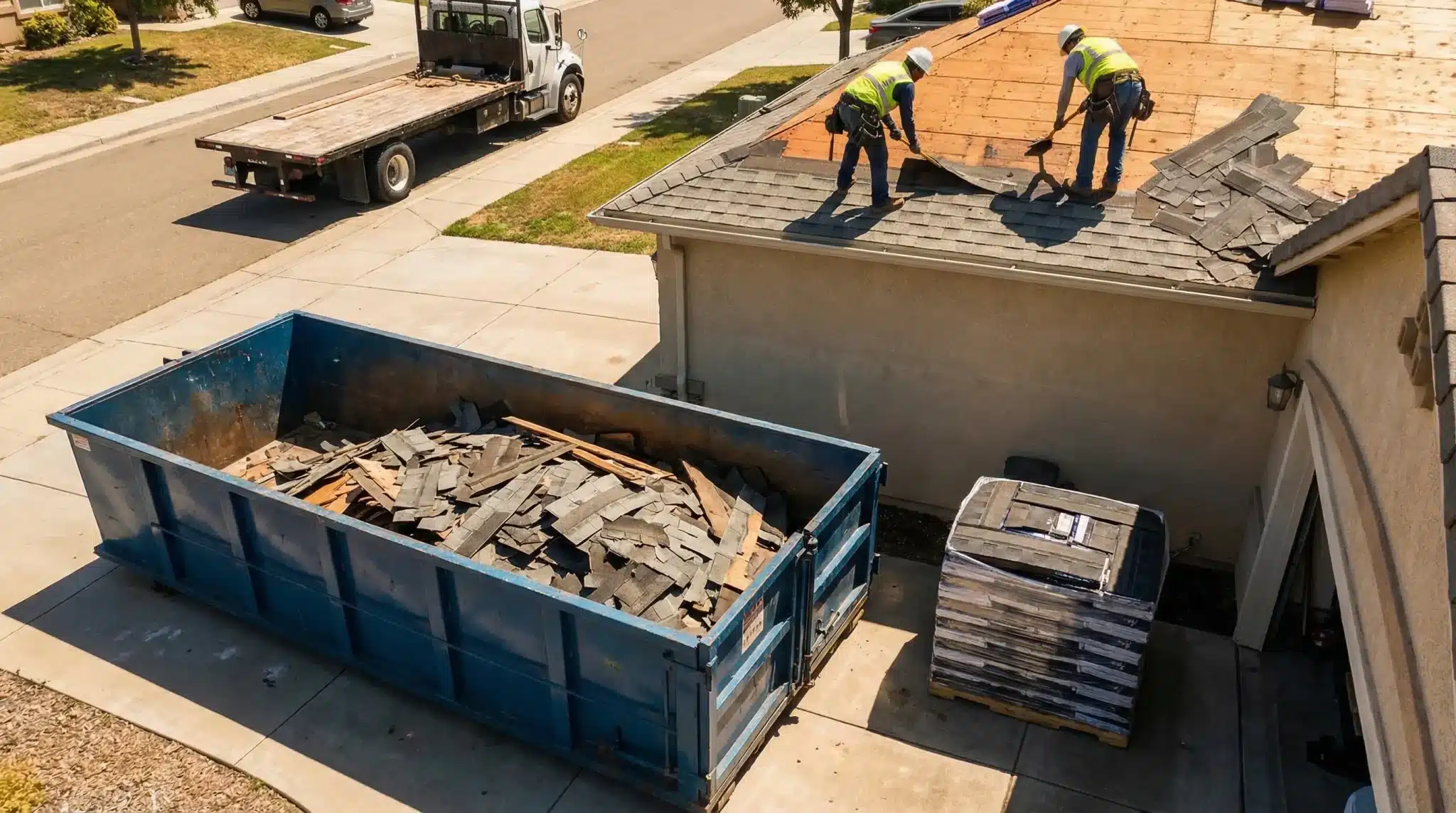
Roofing projects often involve separate deliveries for new materials such as shingles, ridge caps, ventilation components, and underlayment. These materials are frequently dropped off on pallets near the home or building.
To prevent congestion around the jobsite, contractors should plan the placement of both the dumpster and material deliveries carefully. Ideally, these deliveries should not block each other or interfere with vehicle access.
Typical planning considerations include:
- Ensuring trucks have enough room to access the property
- Avoiding placement that blocks driveways or garage access
- Leaving space for material staging near the roofline
- Positioning the dumpster within reach of debris disposal areas
Good coordination ensures that both the dumpster and roofing materials can be delivered without delay.
Choosing Strategic Dumpster Placement
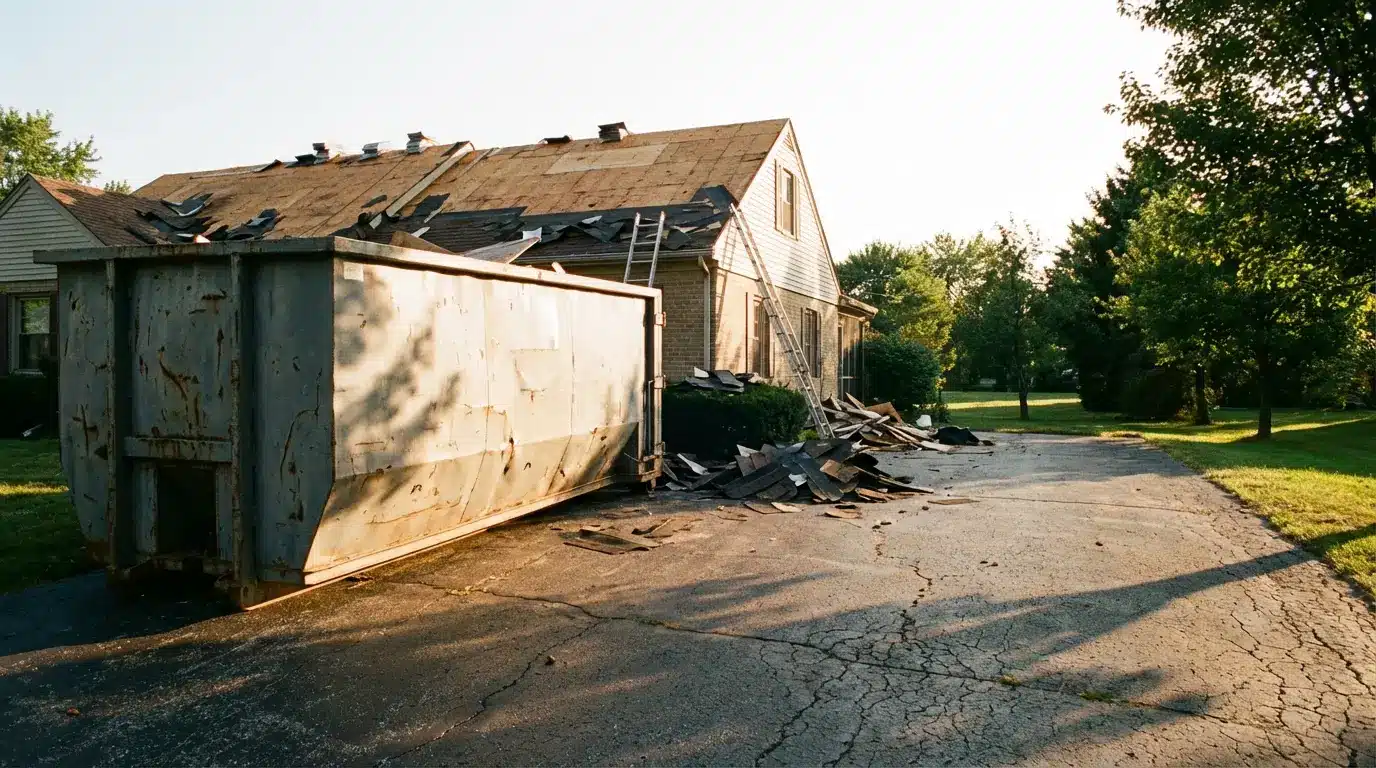
Where the dumpster is positioned on the property affects how efficiently debris can be removed. Roofing crews usually aim to minimize the distance debris must travel from the roof to the container.
In many cases, dumpsters are placed along the driveway or near the side of the house where debris can be directed safely from the roofline. Strategic placement helps crews dispose of materials quickly while maintaining control over where debris lands.
Proper placement also helps prevent materials from spreading across lawns, landscaping, or walkways.
Protecting Driveways and Property Surfaces
Roofing dumpsters can become extremely heavy once filled with shingles and other materials. Contractors often take precautions to protect driveways and paved surfaces from potential damage caused by the container’s weight.
Common protective steps include:
- Placing wooden boards beneath the dumpster rails
- Choosing placement areas with solid support
- Avoiding weak pavement or decorative surfaces
These measures help distribute the container’s weight and reduce the risk of surface damage during the project.
Maintaining a Clean and Organized Work Area
Roof replacements generate debris throughout the workday. Without a nearby dumpster, materials may accumulate around the property, creating tripping hazards and slowing the crew’s workflow.
A properly placed dumpster allows crews to maintain a continuous cleanup process. Workers can dispose of debris immediately as it is removed from the roof, keeping the jobsite organized throughout the project.
An organized site not only improves efficiency but also helps maintain a professional appearance for homeowners and neighbors.
Accounting for Weight Limits
Roofing debris is heavier than many other types of construction waste. Asphalt shingles in particular can add significant weight to a container in a short period of time.
Contractors should be aware of weight allowances associated with dumpster rentals and select a container size appropriate for the project. Overloading a container can lead to transport issues or additional disposal costs.
Working with experienced providers of roofing dumpster rentals helps contractors select containers suited for the heavy materials typically generated during roof replacement.
Planning for Multi-Day Roofing Projects
While many residential roofing projects are completed within one or two days, larger buildings or complex roofs may take longer. In these situations, the dumpster should remain onsite until the project is fully completed.
This allows crews to continue disposing of debris generated during installation, trimming, and cleanup. Scheduling pickup after final cleanup ensures the property is left free of roofing debris.
Supporting Safety on Roofing Job Sites
Safety is a major concern during roofing work. Loose shingles, nails, and broken materials can easily create hazards if they accumulate on the ground.
Having a designated dumpster allows crews to remove debris quickly and prevent it from spreading across the work area. This reduces the risk of slips, trips, and puncture injuries caused by exposed roofing materials.
Maintaining clear ground space also allows ladders, scaffolding, and equipment to be positioned safely.
Coordinating With Experienced Waste Providers
Roofing contractors often rely on experienced waste removal providers to ensure containers are delivered on time and positioned correctly for the project. Clear communication about the roofing schedule allows providers to coordinate delivery with material drop-offs and crew arrival times.
Many contractors coordinate debris management through services such as roofing dumpster rentals, which are designed to support the high-volume waste produced during roof replacement projects.
Working with knowledgeable providers helps roofing crews focus on installation while waste logistics are handled efficiently.
Coordinating dumpster delivery with roofing material drop-offs is an important step in managing roof replacement projects efficiently. When containers arrive before tear-off begins and are placed strategically on the property, roofing crews can remove debris quickly and maintain organized job sites.
By planning deliveries carefully, protecting property surfaces, and selecting dumpsters suited for heavy roofing materials, contractors can reduce delays and keep projects moving smoothly. Effective waste coordination ultimately supports faster installations, safer work environments, and more efficient roofing operations.